

What is the Ideal Running Cadence?
Running cadence is simply how many steps you take per minute (SPM). Beginners tend to care because a steadier cadence often feels more comfortable, looks smoother, and can help reduce those early aches that show up when you overstride.
There’s no single magic number for everyone, but there is an ideal running cadence range that works well for most new runners on easy runs. For many beginners, a practical target sits around 150 to 170 SPM (often closer to 160 to 170 once you settle in), and it changes with pace, height, and current fitness.
In this post, you’ll learn how to find your baseline cadence, what range to aim for on easy days, and how to nudge it up safely without turning every run into a workout. You’ll also see simple ways to tell if the change is helping, like quieter footfalls, less braking, and fewer niggles after runs.
Back to RunDreamAchieve Training Plans
Build Your Running Performance System
Move from research to action with training, recovery, nutrition, pacing, and performance tools built for runners.
More Guides for This Runner Goal
What running cadence is, and why it matters more than you think
Cadence is just how many steps you take per minute. It sounds simple, yet it shapes how your running feels. When your cadence is a bit steadier, you often get less pounding, better balance, and a smoother breathing rhythm.
Here’s the big idea: your speed comes from two parts, how often you step and how long each step is. Beginners who try to “go faster” often reach forward with long steps, especially when they’re tired. That can feel powerful for a moment, but it usually creates more impact and more aches.
Cadence vs stride length: the simple math behind your pace
Your pace is basically: cadence x stride length = speed. So you can run faster by:
- taking longer steps,
- taking quicker steps,
- or doing a little of both.
In practice, most beginners do better with the second option, slightly quicker steps, while keeping strides a bit shorter. It tends to feel smoother, and it usually reduces the “heavy” feeling in your legs.
Picture two runners moving at the same speed down the path:
- Runner A reaches forward with each step. Their foot lands far ahead, and you can hear each landing.
- Runner B keeps steps a touch quicker. Their foot lands closer under them, and they look quieter and more in control.
Both are covering the same ground per minute. The difference is how it feels on the body. For many people, a modest cadence bump is the simplest path toward an ideal running cadence for easy runs, because it encourages a lighter, less jarring stride.
How a slightly quicker cadence can reduce overstriding
Overstriding means your foot lands too far in front of you, like you’re reaching for the ground. When that happens, it often feels like a tiny brake on every step.
A few common signs show up fast:
- Loud footfalls, like you’re slapping the ground
- A braking or “stuck” feeling, especially on downhills
- Sore shins or irritated knees after easy runs
- A sense that you’re bouncing up, not moving forward
Here’s why cadence helps: when you nudge your step rate up a little (not sprinting, just quicker), your body usually has less time to reach forward. As a result, your foot tends to land closer to under your hips. That often means less braking, less impact, and a smoother roll into the next step.
A good cue: think “quick and quiet,” not “big and hard.”
One safety note: don’t jump your cadence too much at once. A sudden big change can irritate your calves and Achilles, since they take on a new pattern of work. Small increases, then time to adapt, is the smart move.
Why “180 SPM” is not a rule for beginners
You’ve probably heard that 180 steps per minute is “the” number. That idea came from watching fast, experienced runners, not beginners jogging easy miles. It also came from race settings, where people naturally step quicker.
Cadence shifts with speed and effort. It usually rises when you run faster, and drops when you jog easy. Height matters too, because taller runners often sit a bit lower on easy runs, even with solid form.
So instead of copying one number, focus on your personal trend. If your cadence gradually moves up into a comfortable range (often 150 to 170 SPM for beginners on easy runs), and your runs feel quieter and smoother, you’re heading the right way.
So what is the ideal running cadence for beginners on easy runs?
Easy runs are where beginners build the engine. You should be able to talk in full sentences, keep your shoulders relaxed, and finish feeling like you could do a bit more. Your cadence on these days does not need to be perfect, it just needs to be steady and repeatable.
The simplest way to think about ideal running cadence is this: you want a step rate that helps you avoid reaching way out in front, without turning your jog into a frantic shuffle. Start where you are, then make small changes that your calves, feet, and hips can handle.
A realistic target range: about 150 to 170 steps per minute
For most beginners on easy, conversational runs, a realistic target is about 150 to 170 steps per minute (SPM). This range fits the pace most new runners actually do, not the pace they wish they were doing.
A common starting point is 150 to 160 SPM on slow jogs. That is normal, especially if you are new, returning after time off, or mixing in walk breaks. As your fitness and coordination improve, many runners settle closer to the mid to upper end of the range on the same easy effort.
Some very new runners will sit below 150 SPM at first, particularly on super slow “I’m just trying to run for 60 seconds” jogs. That is fine. Your first goal is consistency, not forcing your legs into a rhythm that feels awkward.
If you want a quick gut check on an easy run, these cues usually line up with a good beginner cadence:
- Your steps sound quieter, not like slapping the ground.
- Your foot lands closer under you, not far out front.
- Your breathing stays calm, because you are not straining to keep up.
The best cadence target is the one that feels smooth at an easy effort, and still feels good the next day.
Use your baseline, then bump it up by about 5 percent
Instead of chasing a fixed number, use your own baseline as your starting line. Most watches and running apps show cadence. If you do not have one, count one foot’s steps for 30 seconds and double it, then double again to estimate total SPM.
Next, increase by about 5 percent, then give your body time to adapt. Here is what that looks like in real life:
- Baseline easy-run cadence: 160 SPM
- A 5 percent bump: 168 SPM (160 x 1.05)
That change is small enough to keep your form familiar, yet big enough to reduce the “reaching” that often causes overstriding. Big jumps tend to shift stress into the calves and Achilles too fast, which is why gradual changes often feel better and can lower injury risk compared to forcing a huge leap.
Also, “ideal” can mean ideal next step for your body right now. If 168 feels choppy, aim for 164 to 166 first. You can also add cadence in short doses, then let it fade back to normal.
A simple approach for an easy run:
- Warm up normally for 8 to 10 minutes.
- Run 4 to 6 bursts of 30 to 60 seconds at your “plus 5 percent” cadence.
- Jog easy between bursts and keep the effort comfortable.
- Stop if your calves tighten or your stride gets bouncy.
How pace, height, and fatigue change your cadence
Cadence is not a fixed trait, it moves with the run. It usually rises as you run faster, because quicker speed needs quicker turnover. On the other hand, cadence often drops when you shuffle, climb a steep hill, or get tired and start sitting back.
That is why tracking matters. Compare cadence on similar runs so you are not mixing apples and oranges. For example, check your step rate on a flat route, at an easy effort, in similar shoes. Then you can spot real progress instead of normal day-to-day noise.
A few common patterns are completely normal:
- Very slow jogs often show lower cadence, even with decent form.
- Hills can lower cadence if you grind, or raise it if you take short “quick feet” steps.
- Fatigue tends to lower cadence late in a run, especially if your stride starts to reach.
Taller runners and slower runners should not panic if their easy-run number is slightly lower. Long legs can cover ground with fewer steps, and an easy shuffle day is not the same as a steady aerobic jog. Efficiency is the goal, not bragging rights. If your cadence trends upward over time and your easy runs feel smoother, you are moving toward your ideal running cadence.
How to measure your cadence in under two minutes (no fancy gear needed)
You don’t need a lab test to find your cadence. You just need a steady stretch of running and a simple count. The goal is to get a repeatable baseline you can compare over time, especially if you’re working toward an ideal running cadence range on easy runs.
The key is consistency. Measure while you’re running smoothly, not right after you stop, and not while you’re dodging corners or crossing streets.
The quick count method you can do on any run
This is the fastest no-gear option, and it’s accurate enough for beginners.
- Warm up first for 8 to 10 minutes so your stride settles.
- Find flat ground and run at your normal easy pace for at least 30 seconds.
- Pick one foot to count (left or right), then start a timer.
- Count how many times that foot hits the ground in 15 seconds.
- Multiply that number by 8 to get that foot’s steps per minute.
- Double it to get total steps per minute (SPM), because total cadence counts both feet.
For example, if you count 20 left-foot hits in 15 seconds:
20 x 8 = 160(left foot per minute)160 x 2 = 320total would be wrong, because step counts already alternate
So here’s the clean way to avoid confusion:
- If you count one foot only, use this shortcut:
15-second one-foot count x 16 = total SPM
Example: 20 x 16 = 320 still looks wrong because 20 in 15 seconds implies 80 one-foot per minute and 160 total. The correct math is:
- 20 in 15 seconds equals 80 in 60 seconds for that foot (
20 x 4 = 80) - Then double for both feet:
80 x 2 = 160 SPM
So use either of these two safe formulas:
- 15 seconds (one foot):
count x 4 x 2 - 30 seconds (one foot):
count x 2 x 2
To make it more reliable, do it twice, then average the two totals.
Count only when you’re already moving smoothly. Counting during a surge or right after a slowdown will skew the number.
Using a running watch or app without getting obsessed
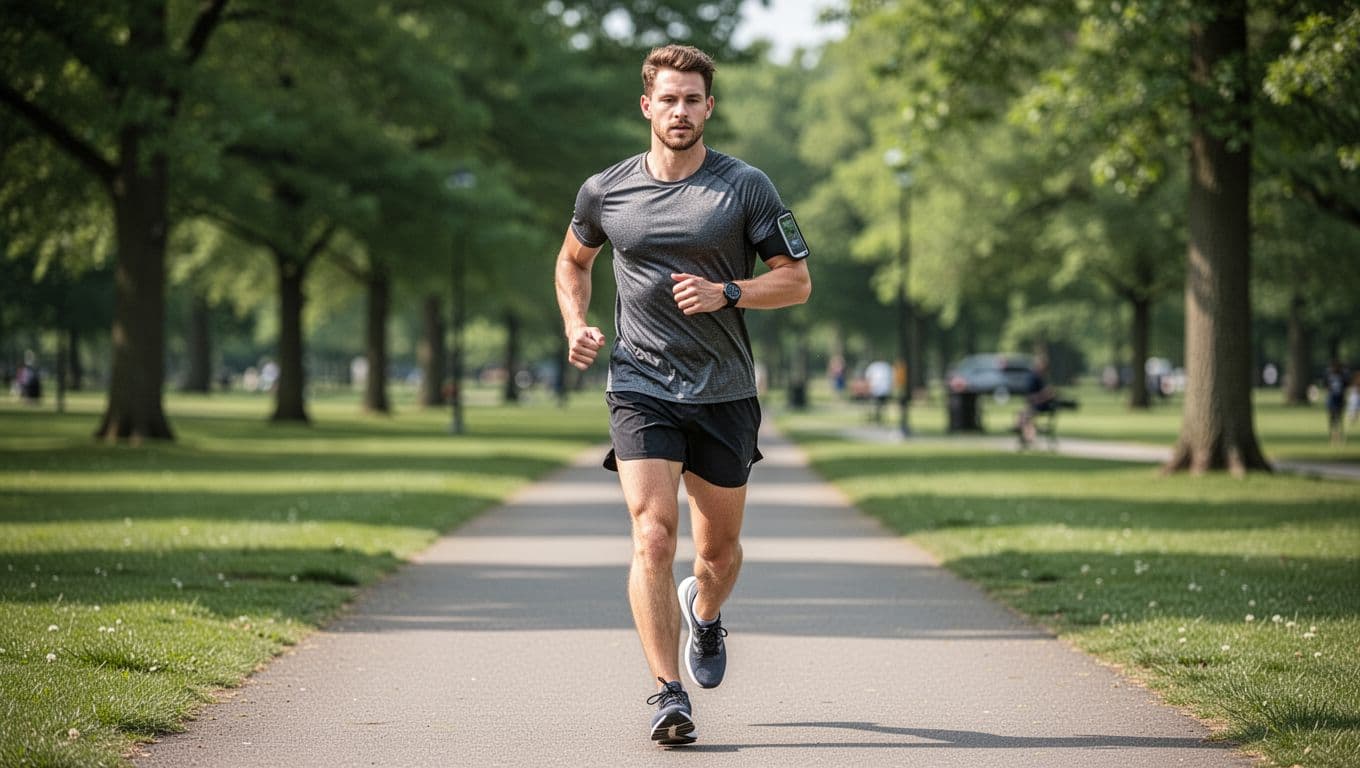
If you have a watch or a phone app, cadence usually shows up as current cadence (live SPM) and average cadence (for the lap or the whole run). Both are useful, as long as you don’t stare at the second-by-second number.
Live cadence jumps around because your stride changes a little with turns, wind, and tiny pace shifts. Instead, use this approach:
- Check average cadence for your easy run to understand your baseline.
- Then, on that same run, add a short faster segment (like 30 to 60 seconds at a “comfortably quicker” effort) and notice how your cadence naturally rises.
That comparison matters because beginners often chase a number on easy days, then feel forced. Watching how cadence changes with effort helps you find a realistic ideal running cadence for your pace.
When and where to measure so the number actually means something
Cadence is only useful when you measure it in a similar situation each time. Otherwise, you’re comparing different runs.
For the cleanest reading, measure:
- After your warm-up, once breathing and stride feel steady
- On flat, straight ground
- At a steady effort for at least 30 to 60 seconds
On the other hand, expect weird numbers when you hit:
- Hills (up or down)
- Trails with rocks, roots, or tight turns
- Stoplights and crowded paths
- Walk breaks (totally fine, just don’t use those minutes to judge cadence)
If you’re tracking changes, jot down one quick note after the run, such as surface (road vs treadmill) and shoes, because both can change how your stride feels.
Finally, don’t crown your “true cadence” from one day. Repeat your measurement on three runs over a week, then use the average. That’s the number worth reacting to.
A beginner friendly plan to improve cadence safely (without getting injured)
A small cadence increase can make running feel smoother, but your body needs time to adapt. Quicker steps often shift a bit more work to your calves, Achilles, and feet, especially if you have a history of tight calves or sore heels.
The goal here is simple: practice a slightly quicker rhythm in short doses, keep the run easy, and stack small wins. Done this way, you can move toward your ideal running cadence without turning every run into a form overhaul.
The safest rule: change one thing, in small doses
If you only remember one rule, make it this: change one thing at a time, and change it in small doses. Cadence practice is not the time to also add more miles, new shoes, hills, and speedwork. Keep everything else boring so your body can learn the new rhythm.
Also, expect a different kind of soreness at first. When you shorten your stride and step a bit quicker, you may feel:
- A mild calf pump during or after the run
- A new sensation around the Achilles (not pain, just awareness)
- More work in the arches and feet, because they help control quicker contacts
Start with one run per week of cadence practice. If that feels good for two weeks, move to two runs per week. On those runs, keep the cadence segments short, then return to your natural rhythm. Think “sprinkles,” not “a whole new recipe.”
Back off early if your body sends any of these signals:
- Sharp pain anywhere (especially heel, Achilles, or the top of the foot)
- Soreness that lingers and changes how you walk or run two days later
- Achilles tightness that worsens as you keep running, or feels stiff first thing in the morning
Mild muscle fatigue is normal. Pain that changes your stride is a stop sign.
A simple 4 week cadence workout you can add to an easy run
This progression fits inside a normal easy run. Warm up first, then add short “quicker steps” intervals with easy running between. Keep your effort easy the whole time. You should be able to breathe through your nose for parts of it, or talk in full sentences.
Pick a target that is about 3 to 5 percent higher than your current easy-run cadence, or simply “a little quicker than normal.” If you chase a number and tense up, you picked too high.
Here’s the week-by-week plan:
- Week 1 (introduce the feel): 5 x 1 minute at your target cadence, with 2 minutes easy between.
- Week 2 (add time, not speed): 4 x 2 minutes at target cadence, with 2 minutes easy between.
- Week 3 (smooth it out): 3 x 4 minutes at target cadence, with 2 to 3 minutes easy between.
- Week 4 (longer, calm segments): 2 x 6 to 8 minutes at target cadence, with 3 minutes easy between.
During the “on” minutes, keep your pace relaxed. The goal is quicker steps, not sprinting. If your breathing spikes, slow down slightly and keep the rhythm. It should feel like you’re turning the legs over faster while staying in the same easy gear.
A simple way to finish the run: jog easy for 5 to 10 minutes and check in with your calves. If they feel tight, end with a gentle walk before you stop.
Cues that work: “shorter steps,” “quiet feet,” and “run tall”
Cadence improves fastest when you focus on simple, physical cues. Pick one cue for an interval, then switch if it stops working. If you try to fix everything at once, you usually get stiff.
Here are cues that tend to work well for beginners, plus what each should feel like:
- “Shorter steps”: Imagine the ground is slightly “hot,” so you don’t reach forward. You should feel your foot land closer under you. Avoid stepping so short that you start bouncing in place.
- “Quiet feet”: Aim for softer, lighter contact. It often reduces overstriding without you forcing form. Avoid tiptoeing, you still want a stable, natural landing.
- “Run tall”: Think of a string lifting the top of your head. Your chest stays open, and your hips stay under you. Avoid leaning back or sticking your chin forward.
- “Relax your shoulders”: Let them drop away from your ears. Your arms should swing easily, not pump like a sprint. Avoid clenching fists, it spreads tension everywhere.
- “Quick hands, quick feet”: Slightly speed up your arm swing (still relaxed). Your legs usually follow. Avoid swinging your arms across your body, keep them moving forward and back.
Use this quick form check once per interval:
- Keep arms relaxed, elbows near your sides.
- Hold a slight forward lean from the ankles, not a bend at the waist.
- Let your feet land closer under your hips, not far in front.
If you feel yourself bouncing up, tense in the shoulders, or leaning back, slow down and reset. The rhythm should feel controlled, not frantic.
Tools that make cadence practice easier: metronomes and music
A metronome or a beat-matched song can help because it gives your brain a steady rhythm. Use it as a temporary guide, not a rule you obey at all costs.
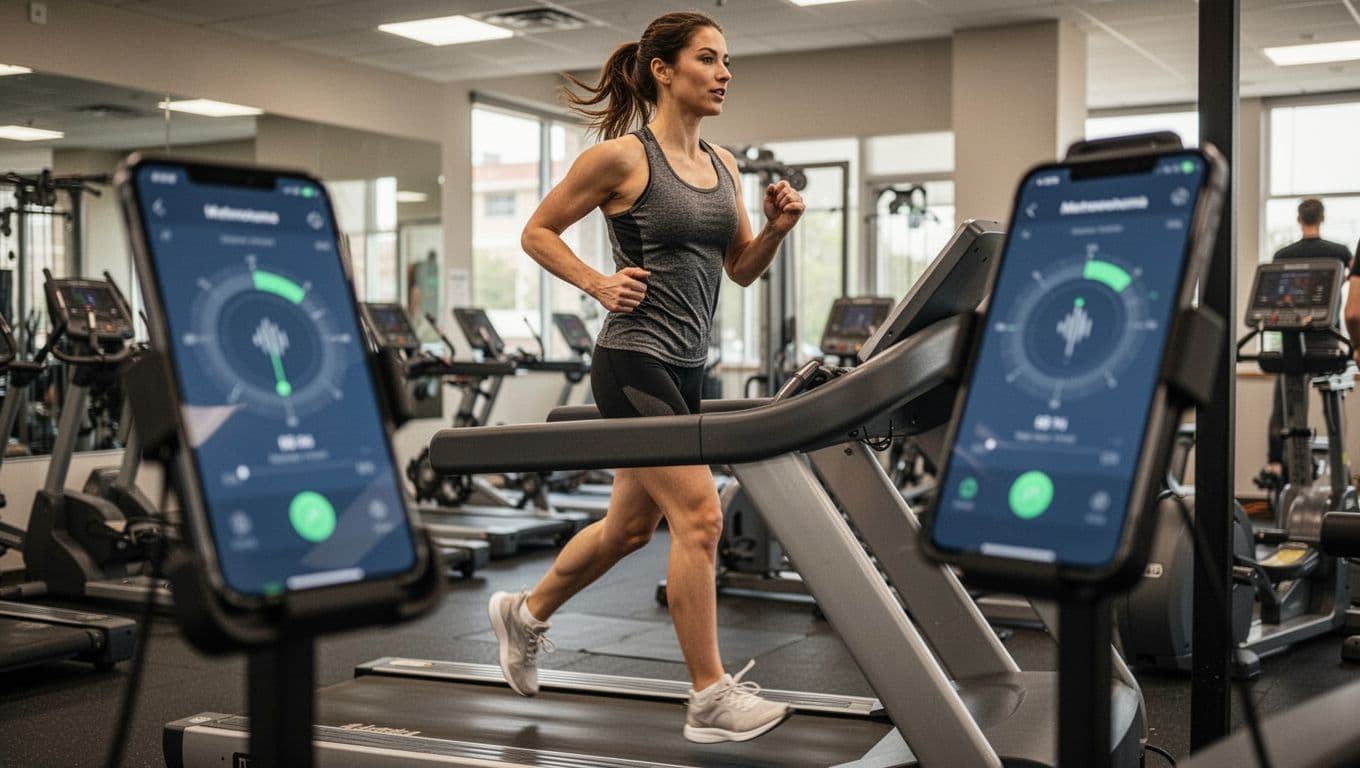
For short cadence intervals, try one of these:
- Metronome app: Set it to your target steps per minute and match your footfalls lightly to the beep for 30 to 90 seconds.
- Music with a set BPM: Choose a song near your target rhythm and let it guide your steps during one interval.
Keep it gentle. If matching the beat makes you tighten up, shuffle awkwardly, or feel strained, drop the rate a few beats or turn it off. Comfort matters more than “perfect” syncing.
How to know your cadence change is helping
Early on, the best signs are about comfort and control, not speed. If cadence work is helping, you’ll usually notice changes like these within a few weeks:
- Running feels smoother, with less fighting your own stride.
- You sense less braking, especially when you get tired.
- Footfalls sound quieter, even on firm surfaces.
- It feels easier to keep an easy pace, because you aren’t reaching.
- You get fewer nagging aches after runs, especially in shins or knees.
If your pace improves at the same effort, treat that as a bonus. In the beginning, the win is finishing runs feeling better, then waking up the next day without new hot spots.
Recheck your baseline cadence every 4 to 6 weeks on a similar easy run. If your average has crept up a little and your body feels good, you’re on the right track.
Conclusion
Your ideal running cadence is personal, because it depends on your pace, height, and how tired you are that day. Still, most beginners feel best on easy runs when they land somewhere around 150 to 170 SPM, since it often leads to shorter steps, less braking, and quieter footfalls.
Instead of chasing a perfect number, use the simple method that works: find your baseline, then add about 5 percent in short practice blocks. That small bump is usually enough to guide you toward a smoother stride without lighting up your calves or Achilles.
Back to Running Form Technique


