

How to Fix Poor Running Posture for Stronger Runs
Wondering how to fix poor running posture? I learned the hard way that poor running posture can mess with more than your form. During training runs, my shoulders slumped, my head drifted forward, and my arms started flailing, and that mix left me with knee pain and slower times I could feel in every mile. If you’ve ever finished a run feeling beat up instead of strong, I know how frustrating that is.
Poor posture shows up in simple ways, like slouching, a forward head, tight shoulders, and wild arm movement that throws off your rhythm. It can make your stride feel heavy, steal speed, and add stress to your knees, hips, and back. That’s why how to correct posture for running matters so much, because small changes can make runs feel smoother, safer, and a lot more enjoyable.
I’m going to keep this simple and practical, because you don’t need fancy gear or a complete rebuild to run better. I’ll start with how to spot the signs of bad posture, then move into what usually causes it, quick fixes you can use right away, and a few easy exercises you can do at home. After that, I’ll cover the habits that help the change stick and the best ways to track your progress without overthinking it.
The goal is to help you feel more in control of your form on every run. Once I cleaned up my own posture, running stopped feeling like a grind and started feeling smooth again.
Build Your Running Performance System
Move from research to action with training, recovery, nutrition, pacing, and performance tools built for runners.
More Guides for This Runner Goal
Spot the Red Flags: Common Signs of Poor Running Posture
When my form starts slipping, I can feel it before I see it. The run gets choppy, my breathing feels tighter, and I stop moving like one smooth unit. These red flags usually show up together, and if I catch them early, I can fix them before they turn into a rough workout.
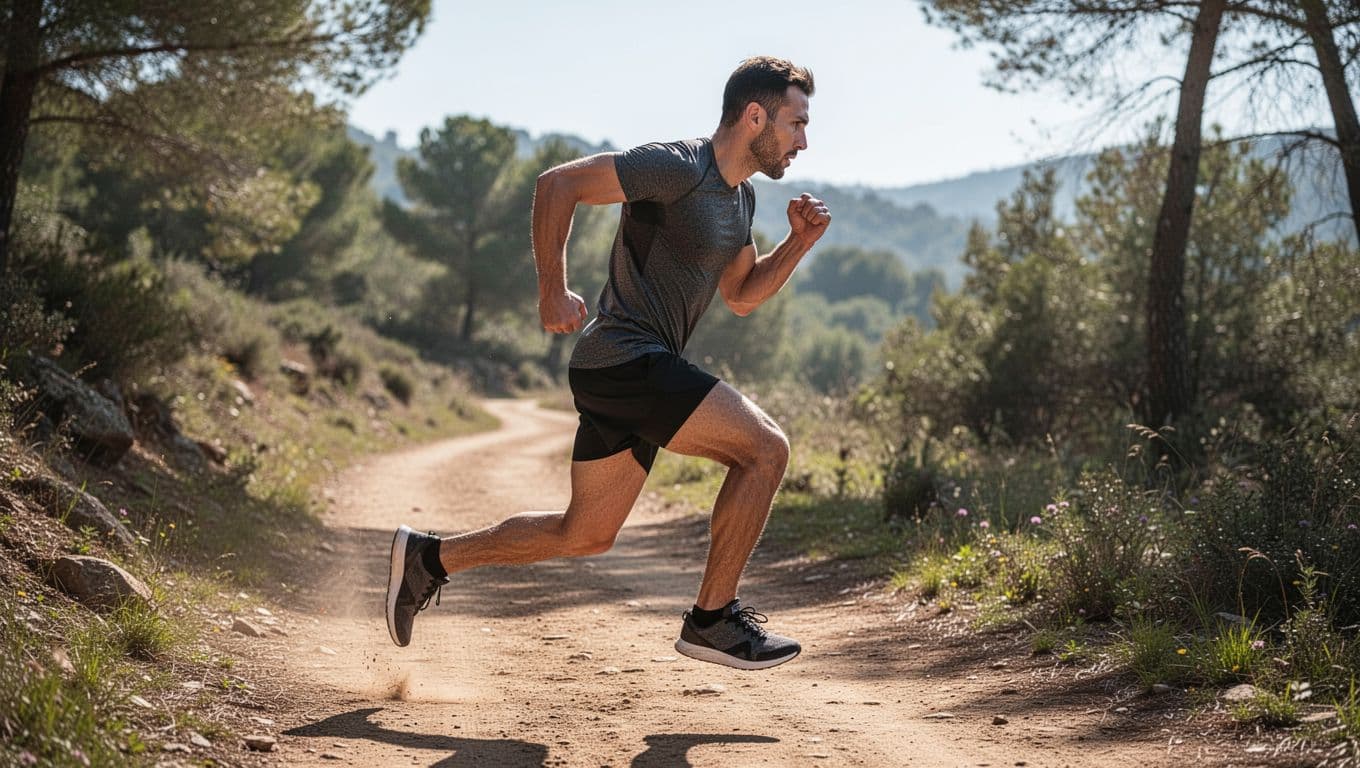
A few form problems show up again and again. I look for a forward head, slumped shoulders, tight arms, sagging hips, and heavy heel striking. Those little mistakes can drain energy fast, especially when I’m tired and trying to hold pace.
Forward Head and Neck Strain
One of the first signs I notice is a poked chin, almost like I’m reading my phone while I run. My neck tightens fast, and after about 5 miles, I can feel the strain creeping up into my shoulders and upper back.
That forward head position pulls on the spine and makes the neck muscles work harder than they should. It also makes me feel less open through the chest, so my breathing gets shorter and more forced. I keep one cue ready for this: keep eyes 20 feet ahead.
Slumped Shoulders and Tight Arms
Rounded shoulders are another clear warning sign. When I let them roll forward, I feel like I’m folding in on myself, and my breathing gets shallow because my chest has less room to open.
My arm swing can go bad in two ways. Sometimes I clench my fists and waste energy. Other times, my elbows flare out and my arms cross too much, which throws off my rhythm and slowed my pace on harder runs. A quick reset helps: shoulders down and back.
If I’m already tight through the upper body, I remind myself to loosen my hands first. That small change often calms everything else down.
Hips Sagging or Twisting
When my hips drop or twist, my stride feels uneven right away. One side starts doing more work, and my low back usually complains before the run is over. It feels a lot like walking when I’m tired, only faster and more costly.
This is also where my posture can start to look sloppy from the waist down. I run less efficiently, and each step feels a little heavier. What helped me most was a simple cue: engage the core lightly.
A soft core does more for running posture than a hard, braced one.
Heavy Heel Striking
Heavy heel striking usually shows up when I’m reaching out in front of myself. The landing feels loud and jarring, almost like I’m slamming the brakes with each step. That extra impact can make my legs feel beat up sooner than they should.
A quick self-check helps me spot it early on my next run:
- My head stays tall instead of poking forward.
- My shoulders stay loose, not rounded.
- My arms swing straight and relaxed.
- My hips feel level, not dropped or twisted.
- My feet land softly under me, not way out front.
When I see these signs, I know my form is slipping. That’s the moment to reset before the run gets away from me.
Why Bad Posture is Wrecking Your Runs and Body
Bad posture does more than make me look sloppy on a run. It steals energy, changes how my feet hit the ground, and puts stress where I don’t want it, like my knees, shins, hips, and lower back. When I started paying attention to how to fix poor running posture, I realized the damage was showing up long before pain got bad enough to stop me.
Bad posture puts more strain on my joints
When I slouch or reach forward with my head, my body stops moving as one smooth line. My steps get heavier, my hips lose support, and my knees take more force than they should. That is when small aches start turning into bigger problems like shin splints, IT band pain, and runner’s knee.
A systematic review on running biomechanics found links between biomechanical changes and running injuries, and that lines up with what I’ve felt in my own training. In plain terms, bad form changes how force moves through my body. When that force piles up mile after mile, my joints pay for it.
I also noticed my own injury story followed this pattern. My posture slipped first, then my knee started barking, and after that my back felt tight on almost every longer run. Once I ignored the warning signs, the pain spread faster than I expected.
Bad posture rarely hurts all at once, it usually wears you down one mile at a time.
Poor form wastes energy and slows me down
Upright posture helps me run taller and cleaner. I waste less motion, breathe easier, and keep my stride under control. When I slump, my chest closes, my arms tense up, and I work harder for the same pace.
That energy loss matters more than most runners think. Even a small form breakdown can make a run feel like I’m dragging a parachute. Over time, that extra effort shows up in slower splits, higher fatigue, and less left in the tank for a strong finish.
For more context on how posture connects to efficiency, I also use my long distance running form guide as a reminder of what good alignment feels like on tired legs.
Poor breathing and weak posture feed each other
When I fold at the waist or let my shoulders creep up, breathing gets shallow fast. My chest has less room to open, so each breath feels short and tight. That makes hills, heat, and late-race miles feel harder than they should.
The good news is that better posture works both ways. When I run tall, my lungs have more room, my core stays steadier, and my stride feels more relaxed. That simple change can make the difference between surviving a run and actually enjoying it.
Bad posture also raises the chance of injury, and some running studies put that risk increase at about 30% to 50%. That number matters because it explains why form work is not just about looking better. It helps me stay healthy enough to keep chasing pain-free miles, better workouts, and PRs I can be proud of.
Uncover the Real Causes Behind Sloppy Running Form
When I started paying closer attention to my posture, I realized sloppy form usually had a clear cause. My body was sending signals long before my stride fell apart, and those signals came from daily habits, tired muscles, and poor recovery.
That matters because I can’t fix what I don’t understand. If I know what’s pulling my form off, I can stop guessing and start making sense of the pattern. In my experience, the biggest issues usually come from the same few places, and they show up again and again in runners I coach or talk with.
Muscle Imbalances from Daily Life
A desk job can quietly undo good running posture. When I sit for hours, my hips tighten, my glutes switch off, and my lower body stops supporting me the way it should. Then I head out for a run and wonder why my stride feels stiff from the first mile.
The biggest issue is often a weak posterior chain, especially the glutes. Sitting gives those muscles less work, so they get lazy over time. Once that happens, the body leans on smaller muscles to do a bigger job, and that usually shows up as slumped posture, hip drop, and a stride that feels unstable.
Tight hip flexors are part of the same problem. They pull the pelvis into a position that makes upright running feel harder, and that can make me fold at the waist without even noticing. I also see this a lot in runners who train hard but spend most of the day at a desk, best posture for running efficiency starts to feel harder to hold when daily life works against it.
Fatigue and Mental Lapses
Fatigue changes everything. Early in a run, I can usually keep my posture tall and my arms relaxed, but that control fades when my legs get heavy. My shoulders creep up, my head drops forward, and my stride starts looking rushed instead of smooth.
I notice this most on long runs after the halfway point. Once my mind gets tired, my body follows, and I start making lazy choices with every step. That is when form slips from a smooth groove into a survival shuffle.
This is also where mental lapses matter. I stop checking my posture, I tune out my arm swing, and I drift into old habits without realizing it. According to RUN’s guide on poor running form, bad form often shows up with muscle weakness and range-of-motion limits, and that matches what I see when fatigue opens the door.
When form breaks late in a run, I treat it as a warning sign, not a willpower problem.
Poor Footwear or Overtraining
Shoes can change my form more than I want to admit. If a pair is too worn out or doesn’t match how I run, I start landing in ways that feel forced. That often leads to a harder heel strike, more noise on the ground, and less control through the hips.
Too much training can do the same thing. When I stack miles without enough recovery, my legs stop absorbing impact well, and my posture gets sloppy fast. I have seen this in myself and in friends who kept pushing through heavy weeks, only to look flat and ragged by the end of every run.
Overtraining and bad shoes often work together. The body gets tired, the stride gets clunky, and then every step feels heavier than it should. That is why I look at both load and footwear when I want to understand how to fix poor running posture for real, not just patch it for one run.
Quick Posture Checks and Cues to Use on Your Next Run
I use simple posture checks during a run because they work fast. When my form starts to slip, I do not need a full reset. I just need one cue that brings my body back together.
These fixes help me stay tall, loose, and steady when fatigue kicks in. They also make it easier to clean up my stride without thinking about every body part at once. If I keep them small and repeat them often, they stick.
The “Run Tall” Mantra and Mirror Test
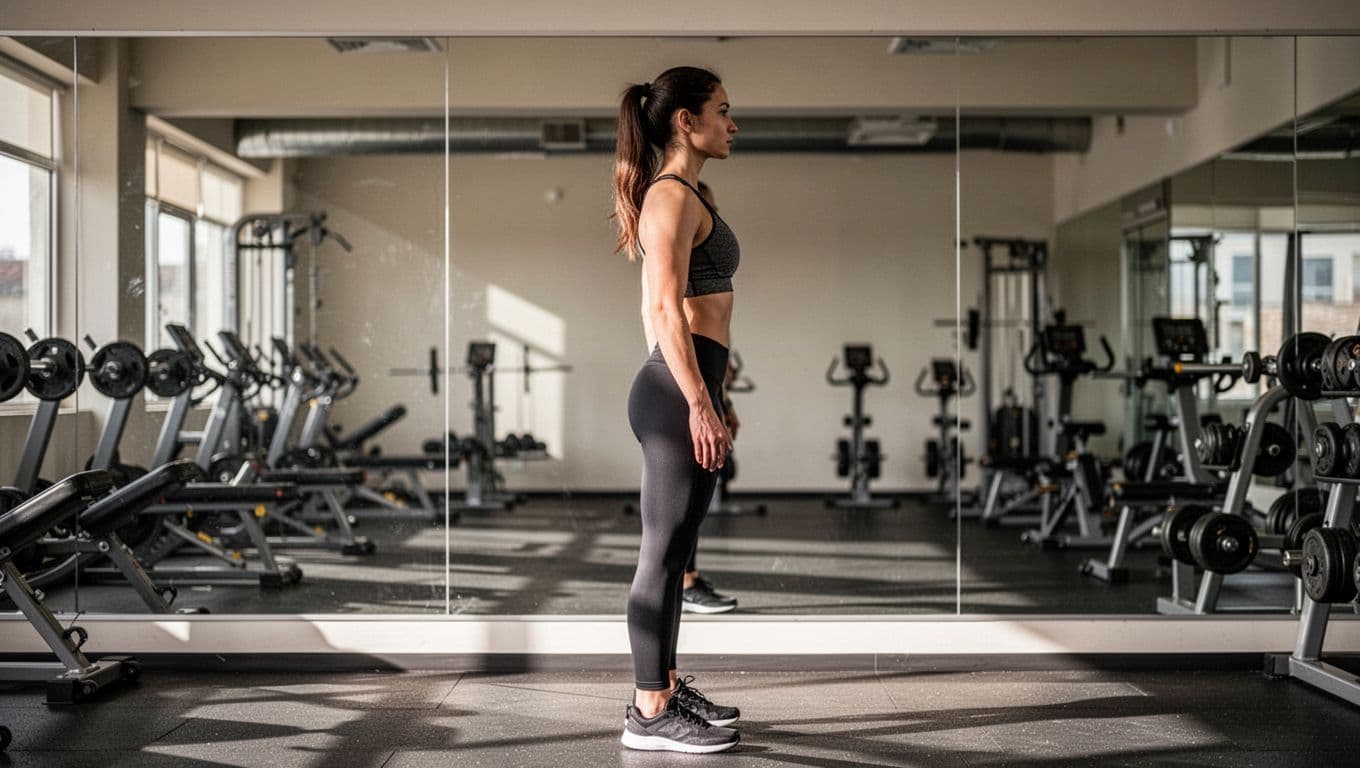
I start at home or in the gym with a mirror test. I stand sideways, soften my knees, and check that my ears sit over my shoulders and my shoulders sit over my hips. If I look folded at the waist, I reset and try again.
My cue is simple: run tall. I do not puff my chest or arch my back. I just lengthen my spine and keep my chin level, like a string is lifting the top of my head.
I usually run through this quick sequence:
- Stand sideways to the mirror.
- Relax my shoulders and unclench my jaw.
- Lift my chest slightly without leaning back.
- Tighten my core just enough to stay stacked.
- Notice if my hips sit under me instead of behind me.
That check helps me build the feeling before I hit the road. A tall torso running form also helps my breathing stay open, which makes the cue easier to hold on tired miles. Once I feel the shape, I try to keep the same posture outside the mirror, mile after mile.
I only need a few seconds of good form to remind my body what normal should feel like.
Arm and Hand Position Tweaks
My arms can fix or wreck my rhythm in a hurry. When I let my hands clench, my shoulders follow. When my elbows swing across my chest, my torso twists and my stride feels messy.
I keep my hands loose, my elbows bent around 90 degrees, and my swing moving straight forward and back. That small change often makes my upper body feel calmer within a few steps.
A quick drill helps me lock it in. I shake out my hands, make soft fists, then run in place for 20 seconds with my elbows pinned close to my sides. After that, I move into an easy jog and keep the same loose feel. If my hands start to tense again, I repeat the drill mid-run.
I also use a store window or car mirror for a fast check when I pass one. If my arms are crossing too much or my shoulders look shrugged, I know I need to reset. That tiny visual cue can save an entire workout.
For a deeper look at arm mechanics, I keep this running form for beginners guide in mind because the basics are often the fix.
Core Engagement Without Crunching
I keep core work gentle when I run. If I brace too hard, my breathing gets tight and my stride feels stiff. Instead, I breathe into my belly and let my midsection hold just enough tension to keep my hips steady.
That feeling is more like support than a crunch. I want a light brace, not a hard squeeze. If I can breathe smoothly and keep my ribs from flaring, I know I have it right.
A wall lean drill works well before a run. I stand a foot from a wall, lean in from the ankles, and keep my body in one straight line. Then I hold that shape, step away, and try to keep the same stacked position while I jog.
Mid-run, I use one quick cue: ribs down, belly soft, hips level. It keeps me from collapsing when I get tired. Practice makes permanent, so I repeat these checks often until they feel automatic.
Strengthen Your Body for Posture That Lasts
I stopped trying to fix poor running posture with cues alone, and my runs changed fast. Strength work gave my body the support posture needs after the first few miles, when fatigue usually starts to win. That is the part many runners miss when they ask how to fix poor running posture, because posture is not just a position, it is a skill backed by strength and mobility.
I keep this routine simple and repeat it three times a week. I aim for 3 sets of 10 to 30 seconds on each move, and I focus on clean reps instead of rushing through them. That steady approach built the kind of control that helped my stride feel taller, smoother, and less beat up on long runs.
Core Stabilizers Like Planks and Dead Bugs
Planks taught me how to resist twisting, which matters more than most runners realize. Every stride creates a small rotation force, and a strong core keeps that motion from spilling into my lower back and hips. Dead bugs do the same job from a different angle, since they train me to move one arm and one leg while the trunk stays quiet.
For a plank, I set my elbows under my shoulders, squeeze my glutes lightly, and keep my body in one straight line. I start with 10 to 15 seconds if needed, then build toward 30 seconds as my form improves. If my low back sags, I shorten the hold and fix the position first.
Dead bugs work best when I move slowly. I keep my back flat, lower one heel and the opposite arm, then switch sides without letting my ribs pop up. If I want a progression, I extend the leg lower before I add speed. That makes the work harder without turning it into a sloppy crunch.
A strong core does more than flatten my stomach, it helps me stay tall when my legs get tired.
Glute and Hip Exercises
My glutes are the engine that keeps my hips from dropping. When they get lazy, my stride gets noisy, my knees drift inward, and my posture starts to collapse. Bridges woke mine back up, and fire hydrants helped me keep the sides of my hips stable on one-leg support.
For glute bridges, I lie on my back, plant my feet hip-width apart, and lift until my shoulders, hips, and knees form one line. I pause for a second at the top and squeeze hard through the glutes, not the lower back. To progress, I add a longer hold or move to single-leg bridges once the double-leg version feels easy.
Fire hydrants build the side hip strength that keeps me steady when one foot is on the ground. I start on hands and knees, keep the knee bent, and lift one leg out to the side without twisting my torso. I keep the range small at first, because control matters more than height.
A strong glute routine gives me two clear benefits on the run:
- Better hip stability, so I waste less motion.
- Less collapse late in long runs, so my posture stays cleaner.
For more options, I also like these glute strengthening moves for runners, because they fit well with the same posture work.
Stretches to Loosen Tight Spots
Strength helps me hold posture, but tight spots can still pull me out of shape. My hip flexors tighten after sitting and running, and my chest can feel locked from hours at a desk. That is why I pair the strength work with stretches that open the front of my hips and upper body.
I use a half-kneeling hip flexor stretch first. I tuck my pelvis slightly, squeeze the back-side glute, and shift forward just enough to feel a stretch in the front of the hip. I hold it without arching my lower back, because that turns the stretch into a fake fix. When I do it right, my stride feels freer almost immediately.
Next, I open my chest with a simple doorway stretch or standing chest opener. I clasp my hands behind me or place my forearm on a doorway, then gently lift through the sternum. That helps undo the rounded shape that makes it hard to run tall. For a useful reference on upper-back mobility, I also like this thoracic mobility guide for runners.
I finish with single-leg balance work to connect everything. I stand on one foot for 10 to 20 seconds, keep my pelvis level, and avoid letting the standing knee cave in. If that gets easy, I close my eyes or stand on a folded towel. That challenge teaches my body to hold posture when the ground feels less stable, which is exactly what I need on tired miles.
Daily Habits and Gear Choices for Sustained Good Form
Good running posture gets easier when I support it outside the workout. A few small habits keep my body stacked, loose, and ready to run well, while the right gear takes away the little friction points that wreck form over time. That means I do not just fix posture on the run, I build it into my day.
Build posture into my day, not just my workouts
I use standing desk breaks, short walk breaks, and a posture reminder app to keep my body from settling into a slouch for hours. Every 30 to 45 minutes, I stand up, reset my shoulders, and take a few deep breaths. That tiny reset helps more than waiting until my warm-up to fix stiffness.
I also check my screen height, chair position, and phone habit. If I spend the day folded forward, my running form usually pays for it later.
A simple daily reset looks like this:
- Stand tall and relax my jaw.
- Roll my shoulders back once.
- Squeeze my glutes lightly.
- Take 5 slow breaths.
- Walk for one minute.
Warm up like I mean it
I never jump straight into a run when I want clean form. Instead, I use a short warm-up that wakes up my hips, core, and shoulders before I ask them to hold posture under load. Dynamic moves like leg swings, arm circles, and high knees help me feel springy instead of stiff.
For more mobility ideas, I like this stretching and mobility guide from Runner’s World. It lines up with what I feel in my own runs, a better warm-up gives me better control.
Choose gear that supports, not distracts
Shoes matter too. If my pair feels unstable, overly worn, or wrong for the run, my posture changes fast. When I’m ready, I test footwear that matches my stride and training, including how shoes affect running form and, for some runners, minimalist shoes if ready after a gradual transition.
I also keep foam rolling in the mix after harder runs. It helps me ease tight calves, hips, and upper back muscles that pull me out of alignment. On the nutrition side, I focus on enough protein, carbs, and fluids so my muscles recover well and hold form better the next day.
My best habits now are simple. I move more during the day, warm up with purpose, film my form with my phone every so often, and pick gear that supports the way I actually run. That keeps my posture cleaner without making running feel like homework.
Track Progress and Know When to Call in a Pro
I keep posture work on track by treating it like training, not a one-day fix. Small changes stack up, but they only matter if I check them often and stay honest about what I feel on the run.
I film my form once a week
Once a week, I set up a short side-view video and run at my normal easy pace. I watch for the same few things every time, my head position, shoulder tension, arm swing, hip level, and where my foot lands. That makes it easier to spot change instead of guessing from feel alone.
I use the video to answer one simple question, am I moving better or just hoping I am? If my stride looks smoother and my body looks less folded, I know the work is paying off. For a fuller visual check, I also like spotting overstriding with side-view video analysis and comparing it with how I track foot landing under my hips.
I watch the signs that matter most
I do not chase perfect form. I track a few practical wins that tell me I am heading in the right direction:
- Easier breathing, because my chest stays more open.
- Less fatigue, especially late in runs.
- Quieter steps, which usually means less braking.
- Fewer aches, especially in my knees, hips, and back.
If those signs improve, I keep going. If they stall, I slow down and simplify the work.
I call a pro when pain keeps showing up
Persistent pain is the red flag I never ignore. If the same knee, hip, shin, or back pain keeps coming back, I stop trying to self-correct and get help. A physical therapist can spot patterns I miss, especially when form, strength, and mobility all overlap. I also pay attention to common running form mistakes, because repeated collapse or twisting often needs more than cues.
I have seen my own posture improve in layers, not leaps. Some weeks feel clunky, then one day the stride clicks and stays there a little longer. Patience matters here, because cleaner running form grows the same way strong legs do, one honest mile at a time.
Conclusion
Fixing poor running posture changed the way I run, because it gave me more control over every mile. Once I learned to spot the warning signs, understand what was causing them, and use simple cues like running tall, relaxing my shoulders, and landing under my body, my runs felt smoother and less stressful.
What helped most was treating posture as a daily habit, not a one-time fix. Strength work, mobility, better shoes, and small check-ins during the run all made the change last longer, and cadence work also helped my form stay cleaner when I got tired. If I keep those basics in place, I can protect my joints and run with more ease.
If you’re working on proper running posture for long distances, start with one drill today and keep it simple. That single step can shift how the rest of your training feels, and I always come back to the same goal, fix your posture and love every mile.


