

How Many Miles in a Marathon
A marathon is 26.2 miles, which equals 42.195 kilometers. That number hasn’t changed as of 2026, and it’s the official standard used by major races and governing bodies.
People ask how many miles in a marathon for a simple reason, the distance drives everything. It sets your long-run schedule, your pace calculator, your fueling plan, and even whether that bucket list race feels doable this year or next. If you’re training for your first 26.2, getting the exact number right matters more than most runners expect.
In this post, you’ll get the precise marathon distance, plus the quick story of why it’s such a specific measurement (down to the yard). You’ll also see how a marathon compares to common race lengths like the 5K, 10K, half marathon, and ultra distances, so the jump in training makes sense.
Most importantly, you’ll walk away with practical ways to plan pacing and prep, including how to estimate finish time, how to think about mile splits, and what “pace per mile” means once fatigue sets in. By the end, you’ll know the number, what it really feels like, and how to train for it without guessing.
The official marathon distance in miles and kilometers
When people ask how many miles in a marathon, they usually want the clean, official number, not a rough estimate. Marathon distance is set by World Athletics, and it’s a standard used worldwide so times and qualifying marks stay comparable. As of February 2026, the official marathon distance has not changed.
The short answer: 26.2 miles (42.195 km)
An official marathon is 26.2 miles, which equals 42.195 kilometers. You’ll also see the more precise mile conversion: 26.219 miles. Races and training plans stick with 26.2 because it’s easy to read and remember, even though the standard is defined in kilometers.
A quick mental-math tip helps it stick:
- Think 26 miles plus 0.2 miles.
- That 0.2 miles is about 352 yards (since 1 mile is 1,760 yards).
If you want a simple table idea for later in your article, this format works well for quick scanning:
| Race distance | Miles | Kilometers |
|---|---|---|
| Marathon | 26.2 | 42.195 |
| Half marathon | 13.1 | 21.0975 |
| 10K | 6.2 | 10 |
| (Reverse conversions) | Kilometers | Miles |
| Marathon | 42.195 | 26.2 |
| Half marathon | 21.0975 | 13.1 |
| 10K | 10 | 6.2 |
That small “.195” in kilometers is why the marathon feels so oddly specific. It is.
Why some race signs say 26.22 or show a little extra distance
If you’ve ever seen a marker like 26.22 near the finish, you’re not imagining things. Certified road courses are measured under strict standards, often using an accredited measurer and a calibrated bicycle method. The key idea is simple: a marathon course should be designed so runners cover at least the full distance, not a hair short.
A certified course aims to avoid coming up short, even if runners don’t take the perfect line.
Your GPS watch or phone can also make the number look “off” either long or short. Common reasons include:
- Curves and tangents: The measured course follows the shortest legal route, while you might run wide on turns.
- Weaving and passing: Every small move adds extra feet.
- Tall buildings and tree cover: Signal reflections and dropouts change distance.
- GPS drift: Small errors add up over hours.
So if your device reads 26.35 and the course is certified, it usually means your path (or your GPS) added distance, not that the race director secretly made it longer.
Is every marathon exactly 26.2 miles?
In practice, an official marathon means the event uses the standard distance (42.195 km) on a measured course, with proper permitting and rules that allow fair comparisons. That’s what makes results eligible for things like qualifying standards and record consideration.
At the same time, some events use “marathon” more casually, especially on trails or adventure routes. They may be close to marathon length, or they may be longer or shorter due to terrain, safety, and logistics. There’s nothing wrong with those races, it just helps to know what you’re signing up for.
If your goal is a true marathon time, or you’re chasing a qualifier, look for language like certified course and the listed distance of 26.2 miles (42.195 km). That’s the benchmark runners mean when they ask how many miles in a marathon.
Why a marathon is 26.2 miles, the real story behind the number
If you have ever wondered why how many miles in a marathon has such a oddly exact answer, it helps to see it as a quick timeline. The marathon started as a story, turned into an Olympic experiment, then got “locked in” by one famous course choice in London.
What surprises most runners is this: 26.2 miles was not chosen because it is a perfect, ancient distance. It is the result of tradition, logistics, and one very specific finish line placement.
The Marathon to Athens legend that inspired the race
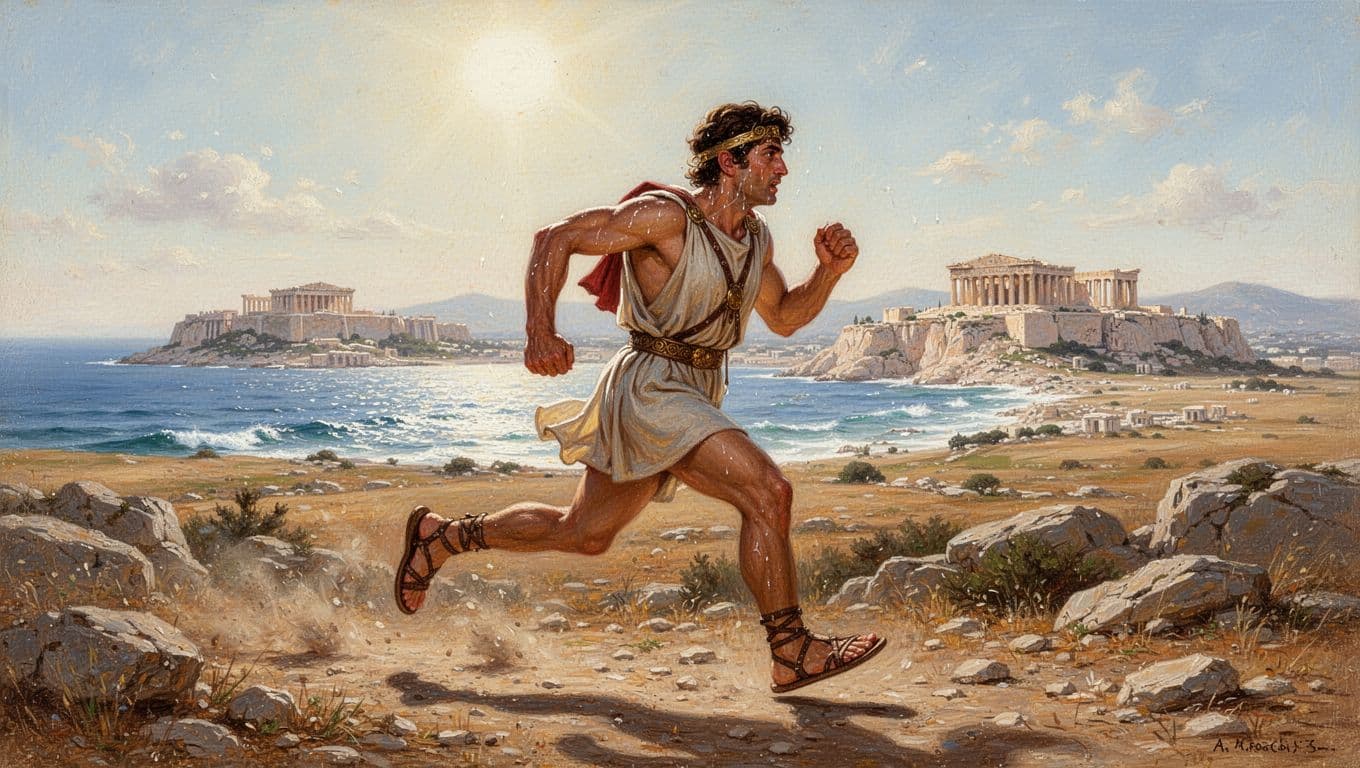
The marathon traces back to a Greek legend about Pheidippides, a messenger linked to the Battle of Marathon. In the common version, he runs from the town of Marathon to Athens to deliver news of victory, then collapses. It is a dramatic image, one runner with one message, pushing to the limit.
Here is the part that often gets missed. The legendary route is closer to about 25 miles, not 26.2. Also, ancient sources and later retellings do not agree on every detail, including who ran, what was said, and which run mattered most. Historians debate parts of the story, but the inspiration is clear: the modern marathon borrowed the idea of a long, heroic run from Marathon to Athens, even if the history is messy.
The marathon’s origin story explains the spirit of the event, not the exact measurement.
Early Olympic marathons were not the same length
When the modern Olympics brought back the marathon, organizers did not start with one fixed distance. They picked a route that fit local roads and a reasonable point-to-point challenge. As a result, early Olympic marathons landed around 25 miles to a bit over 26 miles, depending on the course.
That variation makes sense when you picture how events worked then. Course measuring was less standardized, city layouts were different, and race directors cared more about a meaningful route than a precise global number. In other words, the marathon began as a concept first, then became a measurement later.
If you are looking for the simple takeaway, it is this: the marathon did not begin as 26.2 miles, and nobody in the earliest Games treated that number as sacred.
London 1908: the royal start and the extra 385 yards
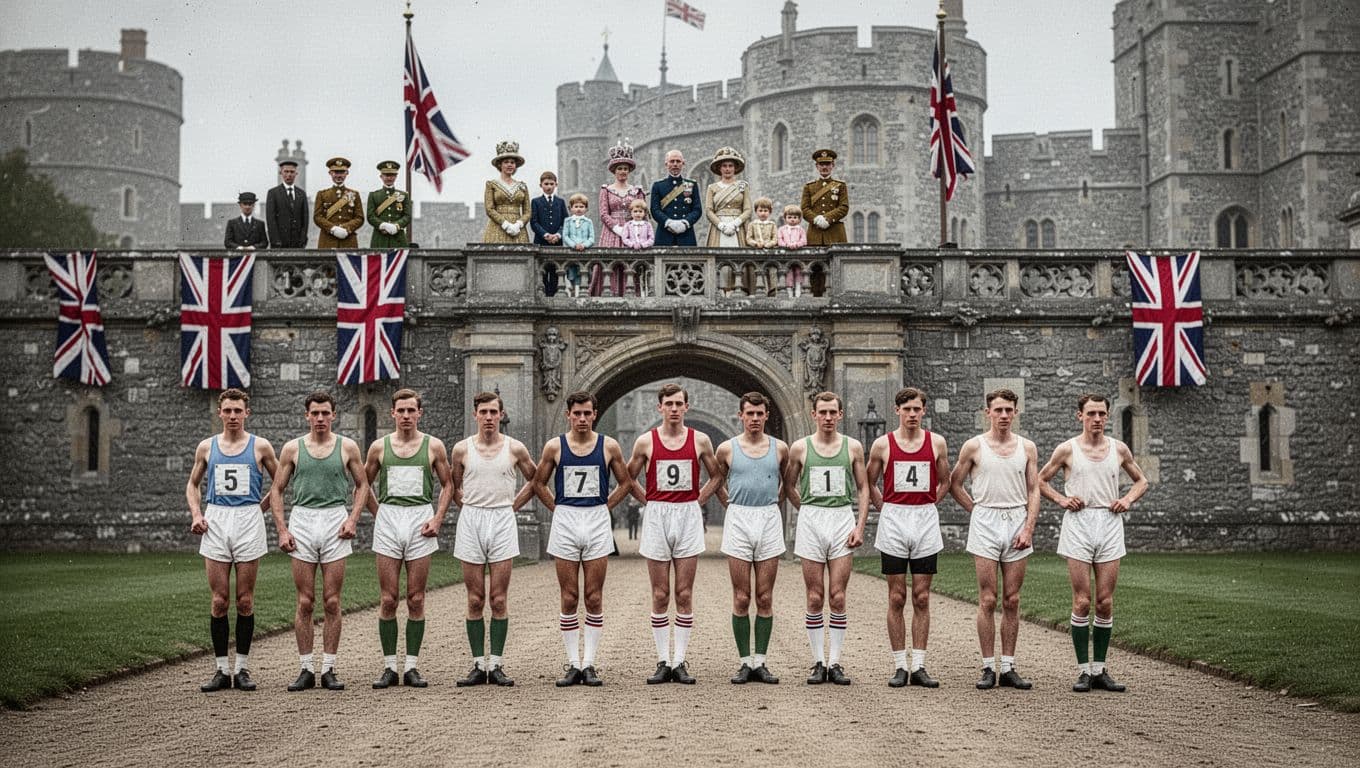
The most important turning point came in London in 1908, and it happened for a very human reason. Organizers wanted the race to start at Windsor Castle so the royal children could watch. That choice anchored the start location.
Then came the finish. The end of the race was placed inside the Olympic stadium, and the final placement mattered because they wanted the runners to finish in front of Queen Alexandra’s royal box. To make that happen, officials adjusted where the finish line sat on the track. That small decision added an extra slice of distance.
The final result became 26 miles 385 yards. That equals 26.2 miles (42.195 km).
So, yes, the famous number has a surprisingly practical origin. It is less like a myth carved in stone and more like measuring a room after the furniture is already in place. The course fit the day’s stage, and the math followed.
1921: when the marathon distance became official worldwide
After 1908, races still did not all match that distance. Some big events copied London’s length, while others used their own local routes. That created confusion for athletes and fans because “marathon” could mean different totals in different places.
In 1921, the sport’s governing body (now World Athletics, then the IAAF) standardized the marathon at 42.195 km, matching the London 1908 distance. That decision ended the guessing and made marathon results comparable across countries and courses.
Since then, the official standard has stayed put. As of February 2026, the marathon remains 42.195 km, which is 26.2 miles, or 26 miles 385 yards. That is why the answer to how many miles in a marathon is so exact, and why it still matters for qualifying times and record-legal courses today.
What 26.2 miles feels like, in everyday terms
Knowing how many miles in a marathon is the easy part. The harder part is picturing what those miles feel like in your body and in your head, especially when your watch keeps ticking and the finish still feels far away.
A helpful way to think about 26.2 is this: it’s a long, steady day on your feet. Early on, it can feel almost “too easy,” then the middle gets repetitive, and the final stretch asks for patience more than speed. The goal for most runners is simple, stay calm early so you can stay strong late.
How long does it take to run 26.2 miles at common paces?
Marathon time depends on your pace, but also on how well you hold it when fatigue shows up. On paper, the math looks clean. In real life, mile 3 and mile 23 rarely feel the same.
Here are sample finish times if you ran the same pace for every mile:
| Pace (min/mile) | Marathon finish time |
|---|---|
| 8:00 | 3:39 |
| 9:00 | 4:06 |
| 10:00 | 4:33 |
| 11:00 | 5:00 |
| 12:00 | 5:27 |
The catch is that pacing gets harder later. Your breathing may stay under control, yet your legs can feel heavy and stiff. Because of that, many beginners aim for even splits (steady pace) or a very small positive split (a little slower late). Going out too fast is the classic mistake, because it feels great until it doesn’t.
If you want a simple pacing mindset, try this:
- First 10 miles: Hold back enough that you feel almost bored.
- Middle 10 miles: Settle in, fuel on schedule, protect your rhythm.
- Last 10K: Stay patient, then push only if you still have it.
A marathon pace that feels “easy” early is often the right pace.
The last 6.2 miles are a full 10K, not “just a little more”
When you hit mile 20, you’re not basically done. You’re starting a 10K with tired legs. Framing it this way makes the marathon feel more honest, and it helps you plan smarter.
So why does fatigue often hit after 20 miles? Two big reasons explain it in plain terms:
- Energy gets low: Your body stores a limited amount of quick fuel (glycogen). If you haven’t fueled well, you start running on fumes.
- Muscles take a beating: Each step causes tiny damage. Over hours, that adds up, and your stride can fall apart.
This is where runners talk about “the wall.” It doesn’t have to be dramatic, though. For many people, it’s just a slow fade. Your pace slips 15 to 60 seconds per mile, and it suddenly takes focus to keep running.
A practical tip that works: plan to feel steady early and patient late. That means you don’t “race” the first half. Instead, you bank calm decisions, consistent fueling, and relaxed form. Then, when the last 6.2 miles arrive, you treat it like a separate event: small targets (the next mile marker, the next aid station), not the whole finish line at once.
Why your GPS may not show exactly 26.2 miles on race day
It’s common to finish a certified marathon and see 26.3, 26.4, or more on your watch. That doesn’t mean the course is wrong. It usually means your route was longer than the measured line.
A few normal race-day factors add distance fast:
- Weaving around runners: Tiny side steps for 4 hours can add a lot.
- Not running the tangents: Certified courses measure the shortest legal path. Wide turns cost extra yards.
- Aid station paths: Moving to the tables, slowing, then merging back adds distance.
- City GPS problems: Tall buildings and tight turns can cause signal bounce and drift.
The best approach is to use both tools wisely. Trust course mile markers for pacing, especially if you’re targeting a specific finish time. Meanwhile, use GPS as a guide to keep your effort steady, not as a judge that decides whether you “really” ran a marathon. If your watch says 26.35 at the finish, you still covered the full marathon distance, and then some.
Marathon distance compared to other popular races
You know the marathon covers 26.2 miles (42.195 km). Now picture how that stacks up against other races. This comparison shows where a full marathon fits in the running world. It also helps if you’re wondering where to start before tackling how many miles in a marathon yourself. Shorter events build skills. Longer ones test new limits. Let’s break it down.
Half marathon: 13.1 miles, the most common stepping stone
A half marathon measures 13.1 miles (21.0975 km) exactly. It splits the full marathon in two. Runners love it as a first big challenge because it demands real endurance without overwhelming most people.
This distance suits beginners who run 5Ks regularly. You train with long runs up to 10 or 12 miles, far less than the 20-plus miles for a full marathon. Weekly volume stays lower too, often 30 to 40 miles total versus 50 to 70 for marathon prep. As a result, recovery feels quicker. However, you still learn pacing and fueling basics. Most importantly, a strong half predicts marathon success. Finish one under four hours, and you’re ready to double it with smart training.
5K, 10K, and 10 milers: shorter races that still build fitness
Shorter races kickstart your journey. A 5K equals 3.1 miles (5 km). Next, the 10K hits 6.2 miles (10 km). Then comes the 10-miler at 10 miles (16.1 km).
These build speed and habits. For example, 5Ks sharpen your top end because they last 15 to 30 minutes. You focus on fast starts and strong finishes. Meanwhile, 10Ks stretch that to 40 to 60 minutes, teaching steady effort.
A 10-miler bridges to half marathon distance. It boosts confidence through longer efforts, around 60 to 90 minutes. All three teach race-day routines. You practice warmups, like easy jogs and dynamic stretches. Pacing becomes second nature too; hold back early to avoid burnout.
In addition, crowds and aid stations feel familiar. Therefore, these races prepare you for marathon chaos without the full commitment. Training differs because volumes stay low, 20 to 35 miles weekly. Speed work dominates over long runs.
Here’s a quick view of how they compare:
| Race | Miles | Kilometers |
|---|---|---|
| 5K | 3.1 | 5 |
| 10K | 6.2 | 10 |
| 10-miler | 10 | 16.1 |
| Half | 13.1 | 21.0975 |
| Marathon | 26.2 | 42.195 |
Ultramarathons: anything longer than 26.2 miles
Ultramarathons, or ultras, start right after the marathon. Any race over 26.2 miles counts. Common ones include the 50K (31.1 miles, 50 km), 50 miles (80.5 km), and 100 miles (161 km).

Ultras aren’t just “harder marathons.” Terrain shifts to trails, hills, and mud. Time on feet jumps to 5 hours for a 50K, or 20 to 48 hours for 100 miles. Fueling changes completely; you eat real food often, not just gels. Besides, walking sections becomes normal.
So, marathon speed training fades. Instead, you build hike-run strength and mental toughness. These suit trail lovers or marathon vets seeking adventure. Training ramps up too, with back-to-back long days. In short, ultras expand what 26.2 miles means, but they demand a different mindset altogether.
Training and pacing basics for your first 26.2-mile marathon
You now know a marathon covers 26.2 miles (42.195 km). That exact distance shapes your training. For beginners, success comes from smart buildup, not rushing. Start with a solid base of running 5-6 miles comfortably a few times a week. Then follow a plan that adds miles slowly. This keeps injury risk low. In addition, focus on recovery and consistency. Most people finish strong when they treat the 26.2 as a long, steady effort.
How long it usually takes to train for a marathon
Most beginner plans last 16 to 20 weeks. Therefore, count back from your race date. For a fall 2026 marathon, start in May or June. This timeline lets you build endurance safely. You ramp up long runs to 20-22 miles, add easy runs, and taper before race day.
First, check your base. Run 5-6 miles without strain before week one. Plans peak at 30-45 miles weekly, then cut back. Every third week, reduce miles by 20-30% for recovery.
A typical week looks like this. Run four days: three easy short runs and one long run. Rest or cross-train the rest.
| Day | Workout Example (Mid-Plan) |
|---|---|
| Monday | Rest or easy walk (20-30 min) |
| Tuesday | Easy run: 4-5 miles |
| Wednesday | Rest or strength (squats, planks) |
| Thursday | Easy run: 4-5 miles |
| Friday | Rest |
| Saturday | Easy run: 5-6 miles |
| Sunday | Long run: 10-16 miles (build slowly) |
As a result, you gain fitness without burnout. Run easy paces where you can talk. Add strength twice weekly for legs and core. Adjust if tired, but prioritize long runs.
The long run: why many plans top out around 18 to 20 miles
You don’t need a full 26.2-mile practice run. Most plans max at 18 to 20 miles. This builds enough endurance for race day. Time on feet matters most. A 20-mile run takes three to four hours, like the first 75% of your marathon.

Recovery costs too much for longer runs. After 20 miles, your body needs days to heal. Besides, the last 6.2 miles rely on race-day fuel and mental grit, not exact practice. Long runs boost confidence. They teach you to stay steady when legs tire. In short, hit 18-20 miles a few times, and you’re set for the full distance.
Fueling and hydration over 26.2 miles
Carbs power your body through 26.2 miles. They act as quick fuel from glycogen stores. Without them, you fade late. Practice on long runs to find what works.
Typical options include sports drinks, gels, and chews. Sip drink every 20 minutes. Take a gel every 45 minutes after hour one. Needs vary by person. Some prefer chews; others mix salt tabs
Hydrate too. Drink before thirst hits. Follow race aid stations; they offer water and electrolytes. Test everything in training. If unsure, talk to a sports nutritionist. Above all, match race rules on what you carry.
A simple pacing plan that helps you finish strong
Start slower than goal pace for the first few miles. Crowds excite you, so hold back. Settle into rhythm by mile 3. Hold steady through mile 20.
Then push late only if you feel good. This even-split approach saves energy. Run-walk works too. Many use 4 minutes run, 1 minute walk. It cuts fatigue and helps you finish smiling. Use mile markers over GPS for accuracy. In the end, patience wins the 26.2.
Conclusion
A marathon covers 26.2 miles, or 42.195 kilometers. That exact distance came from the 1908 London Olympics route. Organizers started at Windsor Castle and finished in front of the royal box. It added 385 yards to make 26 miles and 385 yards. Then, in 1921, World Athletics locked it in as the global standard. No changes since.
You now know more than just how many miles in a marathon. The number shapes pacing, fueling, and training. For example, build a 16-to-20-week plan with long runs up to 20 miles. Practice even splits to stay steady. Fuel with gels every 45 minutes and sip drinks often. These steps turn the distance into a finish line you cross strong.
Back to Beginner Running Tips


