

Best Hotels Near the Vancouver Marathon With Connecting Rooms
Race weekend starts before sunrise. You’ll face an early alarm, nervous energy, limited parking, and the need for quiet sleep before several demanding miles, so choosing the right hotel near the Vancouver Marathon can shape your entire race morning.
Connecting rooms give families, training partners, and support crews the space to stay close without sharing one crowded room. You can protect your pre-race routine, keep gear organized, and make room for a family member or friend who needs a separate sleeping space. A hotel near reliable transit or the start area can also reduce driving stress when streets close and parking fills quickly.
The Vancouver Marathon may refer to the BMO Vancouver Marathon, so confirm the official race date, start line, course map, and planned road closures before booking. Hotel policies matter too, especially when you need connecting rooms, early breakfast, luggage storage, late checkout, or a secure place for your gear.
This practical Vancouver Marathon hotels guide will help you compare Vancouver hotel areas, room layouts, race-day access, runner-friendly amenities, expected costs, and the questions to ask before making a reservation. First, we’ll look at which locations make race morning easier.
Key Takeaways
- Hotels near the Vancouver Marathon with connecting rooms give families and training partners privacy while keeping everyone close.
- Choose a location near the start area, public transit, or a reliable race-day shuttle to reduce early-morning stress.
- Confirm connecting-room availability directly with the hotel, since online booking systems may not show adjoining layouts.
- Ask about breakfast hours, luggage storage, parking, late checkout, and secure spaces for race gear.
- Check the official race date, start line, course map, and road closures before booking your Vancouver hotel.
Hotels Near the Vancouver Marathon With Connecting Rooms: Start With the Right Area
Your hotel location affects more than how far you walk to the start line. Race-day road closures, early breakfast needs, tired family members, and vehicle restrictions can make a hotel several blocks away more practical than one directly beside the course. When comparing hotels near the Vancouver Marathon with connecting rooms, prioritize a reliable route, nearby essentials, and a room setup that supports your whole group.
Downtown and Coal Harbour Offer the Easiest Mix of Walkability and Race Access
Downtown and Coal Harbour are strong choices for runners who want most race-weekend needs within walking distance. You can grab coffee before sunrise, pick up snacks at a grocery store, visit a pharmacy for forgotten supplies, or find a simple post-race meal without arranging a ride. These areas also put you near the waterfront and central downtown streets that may connect conveniently with race activities.
A central hotel can make race morning feel calmer. Your support crew can reach restaurants and attractions while you prepare, and family members won’t need to spend the entire day inside the room. If your hotel sits near a SkyTrain station, that access may matter more than being marginally closer to the start. Trains can provide a predictable option when downtown streets become difficult to cross or drive through.
However, convenience comes at a price. Downtown and Coal Harbour hotels often carry higher rates during popular race weekends, especially when demand rises for larger rooms or connecting layouts. Busy streets can also bring traffic noise, nightlife, construction, and event-related activity when you’re trying to sleep.
Vehicle access requires careful planning. A road that looks close on a map may be closed to cars, blocked by barriers, or difficult to cross on race morning. Ask the hotel where taxis, rideshares, and family drop-offs can stop during closures. A hotel across a restricted street may be harder to reach than one a few blocks farther away with a clear transit connection.
A short map distance doesn’t always equal easy race-day access. Check the walking route and the road-closure plan together.
West End and Yaletown Can Work Well for Families and Longer Stays
The West End and Yaletown often suit groups that need more space and a less hurried place to stay between race activities. Families can use nearby parks, casual restaurants, and neighborhood shops, while longer-stay guests may find accommodation choices with kitchenettes, suites, or living areas that make shared travel easier.
West End hotels can offer practical access to Stanley Park, downtown attractions, and waterfront routes. Yaletown places you close to restaurants, the seawall, and central transit connections. Walking times vary by the exact hotel, so measure the route to your start area rather than relying on the neighborhood name alone.
Transit can also reduce pressure on your support crew. A nearby SkyTrain station or dependable bus route gives non-runners a way to move around while you race. Before booking, confirm whether your route crosses streets scheduled for closures, and ask the hotel about the best pedestrian exit. A slightly longer walk on open sidewalks may beat a shorter route interrupted by barricades.
How to Confirm a Hotel Really Has Connecting Rooms
Booking two rooms beside each other doesn’t automatically give you an interior connecting door. Hotels near the Vancouver Marathon with connecting rooms may have only a small number of these layouts, and demand can rise during marathon weekends, holidays, and large conventions. Confirm the arrangement with the hotel before you pay, then check again before arrival.
Connecting, Adjoining, and Side-by-Side Rooms Are Not the Same
A connecting room has a private interior door between two guest rooms. You can open that door and move directly between rooms without entering the hallway. For example, a parent can check on a child at night, or two runners can share gear and race-day plans while keeping separate beds and bathrooms.
Hotel descriptions often use adjoining, adjacent, or side-by-side in different ways. One property may use “adjoining” to mean rooms with an interior door, while another may mean rooms next to each other on the same floor. Side-by-side rooms can share a wall but still require everyone to walk into the hallway to visit.
Ask the reservation agent to confirm the exact phrase: “Do these two rooms have a lockable interior connecting door?” Also ask whether the door opens from both rooms and whether guests can lock it from either side. That detail matters for families with children, roommates, and runners sharing early-morning logistics.
Booking two room numbers together confirms proximity, not a connecting-door setup.
Read the confirmation carefully after booking. If it says “request,” “adjoining rooms,” or “near each other,” call the hotel and ask whether the connection is guaranteed or only based on availability. Get the answer in writing whenever possible, especially if your group depends on direct access during the night.
Ask These Booking Questions Before You Pay
A short phone call can prevent a major race-weekend problem. Before you submit payment, ask:
- Do the rooms have a true interior connecting door, or do they only share a wall?
- Which bed types are available in each room, and can the layout sleep everyone comfortably?
- What is the maximum occupancy for each room, including children?
- Does either room include accessible features, such as a roll-in shower, wider doorway, or visual alarm?
- What deposit is required, and when will the hotel release or refund it?
- What is the cancellation deadline, and does the policy change for marathon weekend?
- Can the hotel provide early check-in if your group arrives before the standard time?
- Is late checkout available after the race, and what fee applies?
- Can the connecting door lock securely from both sides?
- What happens if the hotel can’t provide the connecting arrangement at check-in?
Save the confirmation email, your reservation number, and the name of the staff member who confirmed the layout. Call again a few days before arrival, because room assignments can change as the hotel manages event demand. If the connection is essential, ask what alternative the property will provide, such as nearby rooms, a suite, or a cancellation without penalty.
What Runners Should Look for Beyond Two Connected Rooms
Connecting rooms solve the space problem, but race weekend demands more than an interior door. When you compare hotels near the Vancouver Marathon with connecting rooms, look for conditions that protect sleep, preserve your normal fueling routine, and make race morning predictable for everyone.
Protect Sleep, Nutrition, and Recovery Before the Start
Request a room away from elevators, stairwells, bars, loading areas, and busy streets. Ask whether the hotel can place your group on a higher floor or on the quieter side of the building. A quiet room can reduce stress and help you get more consistent sleep, which supports recovery before the race.
Pack an eye mask, earplugs, and any sleep equipment you already trust. Check the curtains when you arrive, because streetlights can brighten a room well before your alarm. If the room has a refrigerator, use it to store familiar breakfast foods, recovery items, and chilled drinks. Still, confirm that the refrigerator is available and cold enough for your needs. Hotel amenities and breakfast schedules can change.
Keep your hydration plan simple. Bring the bottles, electrolyte mix, or other products you have already used in training. Avoid testing unfamiliar hotel foods, rich restaurant meals, or new supplements on race morning. Early food access matters only when it helps you follow a practiced pre-race meal plan.
A few minutes of light mobility can help you settle after travel, but don’t turn the evening into an extra workout. Lay out your clothes, charge your devices, and limit late-night sightseeing. Vancouver offers plenty to see, yet a short, relaxed evening usually supports your performance better than a packed schedule and a late bedtime.
A refrigerator and early breakfast can support your plan, but neither replaces the fueling routine you tested during training.
Make Race Morning Easier for the Whole Group
Two bathrooms may matter as much as two bedrooms when several people wake at once. Ask whether both connected rooms include full bathrooms, then decide who showers, dresses, and eats first. Confirm elevator hours and wait times, especially if your room is on an upper floor. Choose a lobby meeting point, such as the front desk or a specific seating area, so family members don’t search for one another before sunrise.
Ask about luggage storage if you need to leave bags after checkout. Confirm whether the hotel accepts race-day luggage, where it stores items, and when you can collect them. Nonrunning guests may also need breakfast options, transit information, charging access, or a place to rest while supporting you along the course.
Use this simple timeline to remove last-minute decisions:
- The evening before, check the official route, pin the start location, and confirm your walking or transit path.
- Before bed, prepare clothes, shoes, bib supplies, safety pins, watch, nutrition, and hydration.
- Set alarms for the entire group and agree on the lobby meeting time.
- On race morning, leave with extra time for bathroom use, elevator delays, street closures, and wrong turns.
Family communication should have a backup plan. Share the hotel address, start location, and a meeting point in advance, then keep phones charged. A calm support crew gives you more attention for pacing, breathing, and executing the race plan you trained to follow.
Compare Hotel Costs, Transportation, and Race-Weekend Tradeoffs
The lowest room rate rarely shows the full cost of race weekend. Compare the hotel, transportation, parking, meals, fees, and cancellation terms together. A slightly more expensive room near dependable transit may save money and stress compared with a cheaper hotel that requires parking or a long drive before sunrise.
Walking and SkyTrain May Beat Driving on Marathon Morning
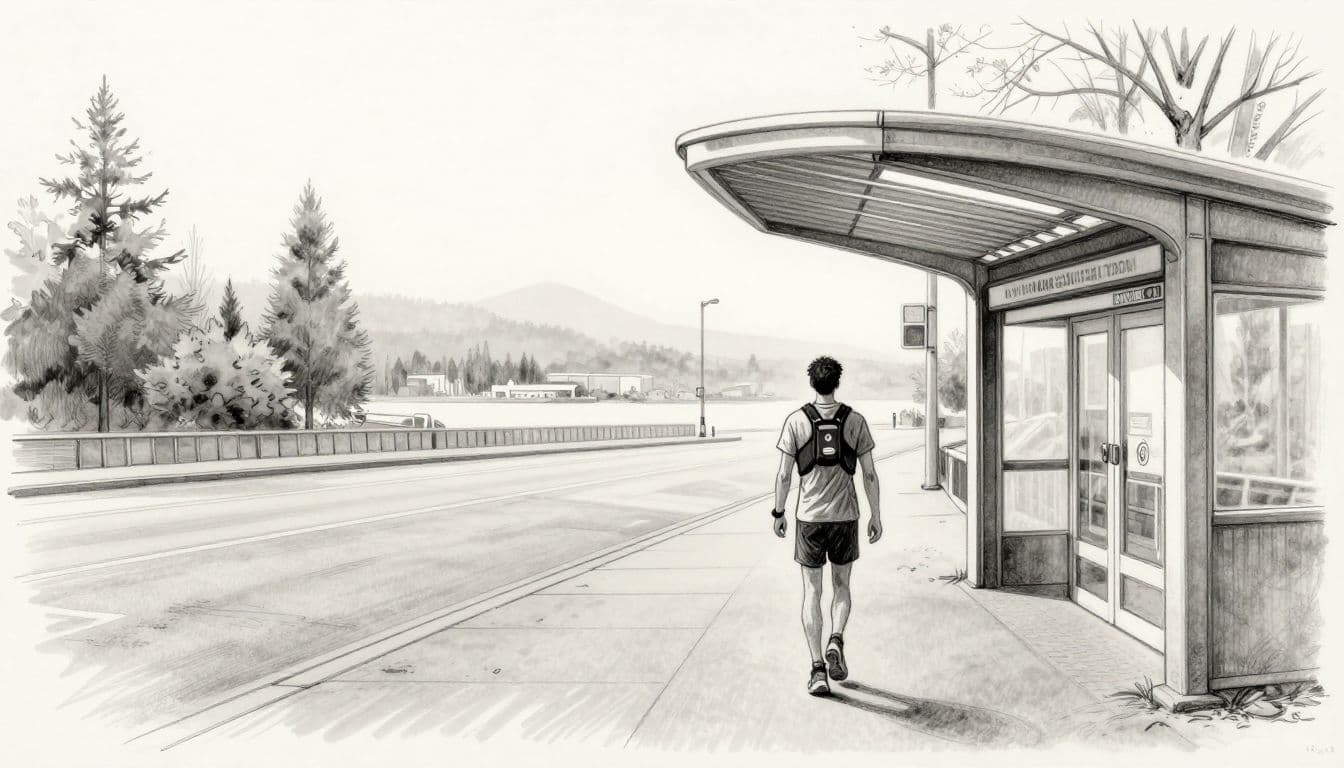
Walking is often the simplest option when your hotel sits near the official start area. You avoid parking fees, traffic, blocked intersections, and the worry that a vehicle route will change overnight. However, measure the route carefully. Your group may need to reach bag drop, a specific wave corral, or a meeting point after the finish, not just the start line.
SkyTrain can offer a more predictable alternative when the route fits your race schedule. Check current service details through TransLink’s marathon service information, then confirm the first train, station entrance, walking distance, and any bus detours. Race-day service can change, and some stations or sidewalks may be busier than usual.
 Driving gives your group more control over gear, children, and post-race plans, but it carries the most uncertainty. Parking may cost extra, garages can fill, and road closures may prevent you from reaching the hotel or start area by car. Review the organizer’s official marathon road closure notices before choosing a driving route.
Plan around the details that shape your morning:
- Confirm the official start location, bag-drop area, wave time, and required arrival time.
- Identify where non-runners will meet you after the finish, since it may differ from the start.
- Check whether the walking route crosses closed roads or restricted intersections.
- Complete a test walk or transit trip the day before whenever possible.
- Keep a backup route and meeting point saved on every adult’s phone.
Build a Booking Budget That Includes the Second Room
A connecting-room reservation needs a wider budget than the advertised nightly rate. Add the cost of both rooms, taxes, parking, breakfast, transit, deposits, and any fees for early arrival or late checkout. Then review the cancellation policy, because a strict nonrefundable rate can become expensive if the race date, course, or travel plans change.
Use the hotel’s current fee list rather than relying on an old review or booking-site estimate. Ask whether parking charges apply per night, whether breakfast begins early enough for your group, and whether the hotel places a temporary authorization on your card. Transit costs may be modest, but parking and rideshare expenses can quickly erase a cheaper room rate.
Two connected rooms may cost more than a family suite. Still, a suite might not provide two bathrooms, separate sleeping areas, or the bed arrangement your group needs. Compare the actual layout, occupancy limits, privacy, and connecting-door guarantee before choosing the lower total.
A simple comparison should include:
- Both room rates and applicable taxes.
- Parking, breakfast, transit, and rideshare costs.
- Deposits, resort or facility fees, and incidental holds.
- Early check-in, late checkout, and luggage-storage charges.
- The financial risk of changing or canceling the reservation.
The best value is the arrangement that supports sleep, race access, and your group’s privacy without creating surprise costs.
Book Family-Friendly Vancouver Marathon Rooms With Less Risk
The best room setup depends on your group’s size, sleep needs, and tolerance for booking uncertainty. Connecting rooms are often the safest choice for families, but a suite, apartment, or vacation rental may offer more usable space for a longer stay.
When a Family Suite or Two Adjacent Rooms May Be Better
A family suite can work well when everyone needs to stay together but the runner still needs a separate bedroom. Suites often include a living room, sofa bed, and sometimes a kitchenette. However, confirm the bed count carefully. A sofa bed may not provide the same sleep quality as a proper mattress, especially before a marathon.
Two adjacent rooms offer more privacy and usually provide two bathrooms, which helps when several people wake early. The drawback is certainty. “Adjacent” may only mean rooms beside each other, while a connecting room has an interior door. Ask the hotel to confirm the exact layout in writing.
Apartments and vacation rentals often provide the most space and best kitchen access. A full refrigerator, microwave, cookware, and dining table make it easier to store and prepare familiar food. That can help the runner follow a tested fueling routine while the rest of the group eats on its own schedule.
Still, rentals bring different risks. Cleaning fees, service charges, deposits, and minimum-stay rules can raise the final price. Cancellation terms may also be stricter than a flexible hotel rate. In addition, the advertised layout may not guarantee two full bathrooms, separate beds, or a quiet bedroom away from the living area.
Use the runner’s needs as the deciding factor:
- Choose connecting rooms when children need quick access to parents, privacy matters, and two bathrooms are useful.
- Choose a suite when your group wants one reservation and shared living space during a short stay.
- Choose an apartment when you need a kitchen, laundry access, or room for a longer family visit.
- Choose a vacation rental only after confirming the exact beds, bathrooms, fees, check-in process, and cancellation terms.
A larger space does not automatically mean better sleep. If children or guests will stay up late in the shared area, the runner may sleep better in a hotel room with a firm quiet-hours policy and a door that closes between sleeping spaces.
A Simple Booking Checklist for Race Week
Save this checklist before reserving hotels near the Vancouver Marathon with connecting rooms:
- Check the official race date, start location, course map, wave time, bag-drop rules, and road closures.
- Get written confirmation that the rooms have a lockable interior connecting door.
- Confirm every bed, sofa bed, crib, maximum occupancy limit, and bathroom.
- Ask about accessible entrances, elevators, bathrooms, and parking if anyone needs them.
- Record the cancellation deadline, deposit terms, taxes, cleaning fees, and incidental hold.
- Plan walking, transit, rideshare, or drop-off access around race-morning closures.
- Confirm breakfast hours, refrigerator access, microwave availability, and nearby food options.
- Request a quiet room away from elevators, loading areas, bars, and busy streets.
- Ask about luggage storage, late checkout, and post-race shower access.
- Call the hotel again several days before arrival, then reconfirm the room connection at check-in.
- Save the hotel’s direct phone number, reservation number, and a second contact method.
That final confirmation protects your plan. The athlete gets a quiet room and familiar routine, while family members can enjoy Vancouver without adding avoidable race-morning pressure.
Frequently Asked Questions
A few practical questions often remain after you compare neighborhoods, room layouts, and race-day transportation. These answers can help you make a final decision before reserving a Vancouver hotel for marathon weekend.
How far in advance should I book connecting rooms for the Vancouver Marathon?
Book as soon as your race plans and travel dates are firm. Connecting rooms are limited, and hotels may sell standard rooms long before they assign the remaining connecting layouts. A flexible reservation gives you more room choices and protects you if the race schedule or travel plans change.
For popular weekends, start checking several months ahead. Call the hotel directly after booking to confirm that your request is attached to the reservation, then follow up again before arrival.
Can I arrive late at a Vancouver hotel after traveling to the race?
Yes, but contact the hotel if you expect to arrive after the property’s normal evening routine. Most staffed hotels can hold a reservation for a late arrival, yet some may cancel a reservation if no arrival details are provided.
Give the front desk your expected arrival time and ask about parking access, after-hours entry, key pickup, and luggage assistance. If you are driving, confirm whether the garage remains accessible late at night and whether construction or event barriers affect the entrance.
Should my support crew stay near the finish line instead of the start?
That depends on how your group plans to support you. Staying near the start makes your pre-race routine easier, while a hotel near the finish may give family members faster access to post-race meals, showers, and recovery space.
Review the course and spectator rules before choosing a location. If the finish area is far from the start, your support crew may have difficulty moving between both points during the race. A hotel near transit can offer a better compromise than choosing one area based only on walking distance.
Are connecting rooms a good option for runners with accessibility needs?
They can be, but the room connection alone doesn’t confirm that the layout will meet your needs. Ask about accessible entrances, elevator access, bathroom clearances, roll-in showers, visual alarms, bed height, and the width of the connecting doorway.
Request the exact room features in writing before paying. If a family member uses mobility equipment, ask whether both rooms provide enough turning space and whether the route from the hotel entrance to the room is step-free.
Can I store race gear at the hotel after checkout?
Many hotels offer luggage storage, but policies and storage hours vary. Ask whether the property will hold race bags after checkout, whether the storage area is monitored, and when you can collect your belongings.
Keep valuables, medication, identification, and race-day electronics with you. Pack your running shoes, nutrition, bib supplies, and recovery clothing in one easy-to-access bag so you aren’t searching through multiple suitcases.
What should I do if my marathon plans change after booking?
Check the cancellation deadline as soon as you reserve the room. Race dates, travel conditions, injuries, and family plans can change, so a flexible rate may be worth more than a small upfront discount.
Save the hotel’s policy with your confirmation email. If your plans change, contact the property before the deadline and ask for a date change, credit, or refund according to the terms of your reservation.
Conclusion
Choosing among hotels near the Vancouver Marathon with connecting rooms is about more than finding two bedrooms on the same floor. The best Vancouver Marathon hotel gives your group a confirmed connecting-room layout, reliable race-day access, quiet sleep, practical amenities, and a price everyone can manage. That combination protects the runner’s routine while giving family and friends enough space to rest, eat, and enjoy Vancouver.
Before booking, verify the current course, start location, road closures, hotel fees, and room availability. Confirm the interior connecting door directly with the property, then review transportation, breakfast hours, luggage storage, parking, and checkout policies. These details can prevent avoidable stress when the alarm rings before sunrise.
With the right hotel base, race morning feels more controlled. The runner can focus on pacing, fueling, and finishing strong, while family and friends enjoy the weekend with fewer logistical problems.


