

Best Hotels Near the Tokyo Marathon With Free Breakfast
Race morning leaves little room for friction. You need a quiet hotel, a convenient route to the Tokyo Marathon start line, and an early breakfast that gives you enough fuel without forcing you to search for food before sunrise.
The closest hotel isn’t always the best choice. Road closures, crowded stations, and race-day train changes can make a nearby property harder to reach than one in a well-connected area farther away. A hotel near the Tokyo Marathon with free breakfast can also reduce costs and simplify your morning, but breakfast hours and menu policies vary, so check the details before booking.
This Tokyo Marathon hotels guide compares the best hotel areas, real accommodation options, breakfast policies, race-day timing, expected costs, and booking tips. Start by finding the location that gives you the clearest route and the calmest morning.
Key Takeaways
- Choose hotels near Shinjuku, Tochomae, or major rail lines for a simpler route to the Tokyo Marathon start area.
- Confirm that complimentary breakfast begins early enough, or request a takeaway meal if the dining room opens late.
- Prioritize quiet rooms, flexible cancellation, luggage storage, and convenient access over a hotel’s exact distance from the start.
- Plan your train route the night before, since road closures and traffic restrictions can affect race-morning travel, as Tokyo Marathon race-day guidance explains.
- Pack familiar race fuel, arrive early, and avoid testing unfamiliar foods before the starting gun.
Hotels Near the Tokyo Marathon With Free Breakfast: Best Areas and Options
The Tokyo Marathon starts near the Tokyo Metropolitan Government Building in Shinjuku and finishes near Tokyo Station. The course then passes through major districts including Iidabashi, Nihombashi, Asakusa, Ueno, Akihabara, Ginza, and Hibiya. Review the official Tokyo Marathon course map before choosing a hotel, because the best location depends on whether you value an easy start or a simple return after the finish.
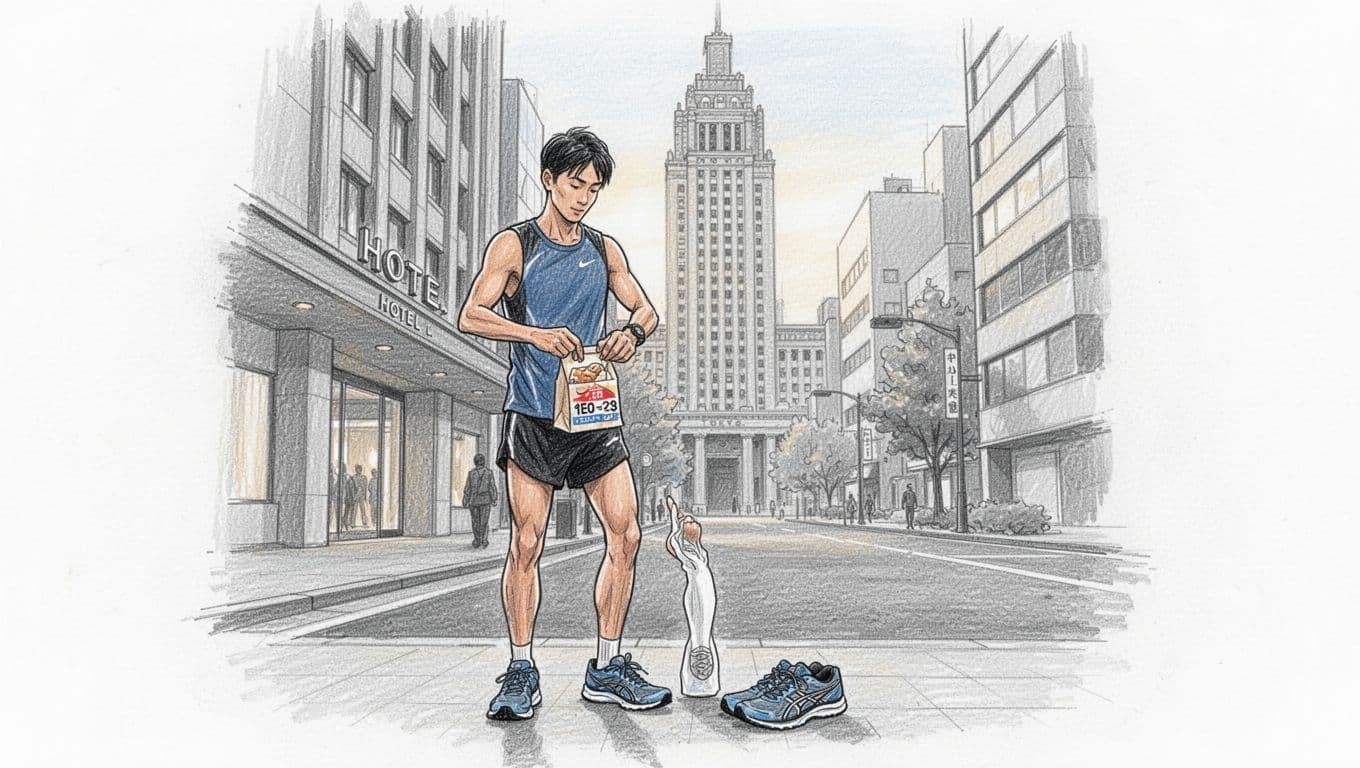
Shinjuku hotels for the easiest start-line morning
Staying near the Tokyo Metropolitan Government Building gives you the shortest pre-race journey. You can leave later, use the bathroom at your hotel, warm up without rushing, and spend more time checking your gear. That calm preparation can matter when your race plan depends on arriving rested and focused.
Hotels around Shinjuku and Tochomae also offer access to several train lines, including the Toei Oedo Line and Tokyo Metro routes. However, Shinjuku is busy, noisy, and full of pedestrians. Some streets near the start include slopes, so check the walking route rather than relying on a straight-line map distance.
Race-day restrictions can change the practical value of a hotel. Confirm whether your property sits inside or outside closure zones, and ask the front desk which entrance remains accessible on race morning. A hotel that appears close may become difficult to reach if surrounding roads or station exits are restricted.
Breakfast requires separate planning. A hotel may advertise complimentary breakfast, yet open the dining room too late for marathon runners. Ask whether the property can prepare a takeaway meal, or pack familiar food such as a bagel, banana, or sports drink the night before.
Tokyo Station, Nihombashi, and Ginza for finish-line convenience
Tokyo Station, Nihombashi, and Ginza suit runners who care more about the post-race experience. After 26.2 miles, a short route back to your room can feel far better than crossing the city while tired. These areas also provide restaurants, convenience stores, pharmacies, and major rail connections.
Toyoko Inn Tokyo-eki Yaesu Kita-guchi is one property to research, along with hotels near Nihombashi that advertise complimentary breakfast. Check the exact breakfast hours, menu, eligibility rules, and current pricing for your race dates. Hotel policies can change between booking and arrival.
The tradeoff is a longer trip to Shinjuku before the start. You may need an earlier train and should allow extra time for crowded platforms, transfers, and race-day access controls. In return, you finish near Tokyo Station and can reach your hotel, luggage, and post-race meal more easily.
Ueno, Asakusa, and Akihabara for value and rail access
Ueno, Asakusa, and Akihabara can offer better value while keeping you near strong rail connections and casual restaurants. Toyoko Inn and Super Hotel locations in these districts may include breakfast, but the policy belongs to each property, not the brand as a whole.
Compare hotels using the full morning route:
- Check walking time to the station, including stairs and large intersections.
- Count transfers between your hotel and the Shinjuku start area.
- Confirm the first train times for your race morning.
- Map the route from the final station exit to the assigned start-area entrance.
A hotel beside a useful station is often more practical than one that looks closer on a map. Before booking, test the route at the expected departure time and keep a backup option in case an entrance or train connection changes.
How to Choose a Marathon Hotel With a Free Breakfast That Actually Helps
A complimentary breakfast only helps if it fits your race morning. Before booking hotels near the Tokyo Marathon with free breakfast, compare the opening time, food options, room conditions, transport access, and booking terms. A low room rate means little if you leave hungry, sleep poorly, or face a long trip to the start.
Check whether breakfast starts early enough for the race
Many hotel dining rooms open after runners need to leave. Ask the property whether it offers an early opening, a breakfast box, or a grab-and-go bag. Some hotels may also allow guests to take simple items away, such as bread, fruit, yogurt, or a drink.
Get the answer in writing before you book. Race-day access details can change, so review the official Tokyo Marathon participant guidelines as your travel plans develop.
Bring familiar foods when the hotel’s schedule or menu feels uncertain. Rice, bread, bananas, and sports nutrition are safer choices than rich or unfamiliar dishes on race morning. Your breakfast should support your plan, not become an experiment before 26.2 miles.
Look for familiar foods and a runner-friendly menu
A useful hotel breakfast may include rice, bread, fruit, yogurt, eggs, soup, water, tea, coffee, or juice. Those choices give you room to follow a proven fueling routine. Still, free food is a bonus, not a reason to abandon the meal that has worked during training.
Check the menu if possible, then consider your own needs:
- Athletes who prefer a high-carbohydrate breakfast may need extra rice, bread, fruit, or oats.
- Runners with allergies should ask about ingredients, cross-contact, and packaged alternatives.
- Anyone who relies on caffeine should confirm coffee or tea availability and timing.
- Runners who eat in stages can take a small meal early, then finish with a banana or sports drink later.
If you normally eat in your room, confirm whether a kettle, refrigerator, microwave, or adequate table space is available. A reliable breakfast plan should work even when the dining room does not.
Compare beds, bathrooms, noise, and recovery space
Sleep quality can matter more than a small breakfast discount. Check the bed size, blackout curtains, air conditioning, and recent reviews for elevator noise, street noise, and thin walls. A quiet room protects the recovery you need before the start.
Bathroom details matter after the race, too. Confirm whether the room has a comfortable shower or bathtub, enough space for your gear, and a place to dry clothing. After a long flight or a marathon effort, a calm shower and a bed you can stretch out on may be worth more than a larger breakfast buffet.
Review cancellation rules, deposits, and marathon-week prices
Tokyo Marathon demand can push hotel rates higher and bring stricter cancellation terms. Compare the full cost, including taxes, companion breakfast charges, luggage storage, and transport to the start.
Flexible booking is usually the safer first move. Check the reservation again later for a better rate, but keep the original room until the replacement has confirmed cancellation terms, breakfast access, and the same race-day location.
Race-Day Logistics From Tokyo Hotels to the Start Line
A good hotel location only helps when you turn it into a clear race-morning plan. Map the journey, confirm the official instructions, and leave enough time for crowds, security, baggage drop, and the walk to your assigned starting area.
Plan the route from the hotel to the Tokyo Metropolitan Government Building
Start with the nearest station, not the hotel’s straight-line distance from the start. Map the walk to the station, the train line, every required transfer, and the correct exit near the Tokyo Metropolitan Government Building. Large stations can involve several minutes of walking between platforms, so review the route inside the station as well.
Save a primary route and a backup route on your phone. Check the first available trains, then make a practice trip before race day if possible. A short trial reveals confusing signs, long corridors, stairs, and exits that look close on a map but sit several blocks apart.
Allow extra time for crowded platforms, temporary station closures, security checks, and controlled access around the start area. The train journey may be short, yet the walk from the platform to your assigned entrance can take much longer than expected. Use the official Tokyo Marathon participant guidelines for the latest start procedures, wave times, access instructions, and baggage rules.
Build a breakfast and departure schedule around your start wave
Don’t copy a fixed race-morning timetable from another runner. Instead, work backward from the arrival time required for your wave, then add each task you must complete:
- Set time to wake up, drink water, and eat familiar food.
- Add bathroom time, dressing, bib checks, and final gear preparation.
- Include the walk to the station, the train journey, transfers, and station exits.
- Reserve time for baggage drop, toilets, security, and the walk to your corral.
The dining room may open too late, so arrange a takeaway breakfast or keep familiar food in your room. Set two alarms, with one away from the bed, and avoid relying on a hotel elevator at the last minute. Other runners may fill it, or the lobby may become crowded just as you need to leave.
Prepare for baggage drop, weather, and long waits outdoors
Pack your race bag the night before and bring only items allowed by the event. Check the official Tokyo Marathon FAQ for current baggage restrictions, collection procedures, and prohibited items. Policies can change, so the official race guide should control your final packing decisions.
Tokyo mornings can feel cold while you wait. Bring gloves, a disposable or donateable warm layer when event rules allow it, and rain protection that won’t interfere with security or racing. Add sunscreen if the forecast calls for sun, and protect your shoes and bib from rain.
A hotel beside a station still may require a long outdoor walk. Crowds can slow every intersection, while barriers may force you toward a different entrance. Dress for the wait, not only the race.
Make the return trip easier after the finish
Save your hotel’s address in Japanese, take a screenshot, and carry a fully charged phone. Choose a meeting point outside the busiest station area in case you become separated from your group. Crowded trains may make the simplest route feel exhausting after the finish.
Ask about luggage storage, late checkout, and post-race shower access before booking. A hotel with a simple route from the finish area can be worth more than a cheaper room that requires several transfers and a long walk. Tired legs turn every staircase into part of the marathon.
Free Breakfast Hotel Options Compared With Other Tokyo Stays
A complimentary breakfast can simplify race morning, but it shouldn’t decide your hotel by itself. Compare the room, station access, breakfast timing, sleep conditions, cancellation policy, and total cost before choosing among Tokyo hotels.
Toyoko Inn and Super Hotel for simple value
Business hotel chains such as Toyoko Inn and Super Hotel appeal to runners who want predictable service and practical locations. Many properties sit near major stations, which can make the trip to the Tokyo Marathon start area easier to plan. Their compact rooms also keep the nightly rate manageable, especially when you need a clean base rather than a place to spend the day.
Breakfast is often included in the room rate, but each property sets its own rules. Toyoko Inn promotes free breakfast at participating hotels, yet menus, dining space, and service times can differ. Review the Toyoko Inn breakfast information before assuming the same arrangement applies to every location.
A small dining room may become crowded with runners, and the menu may offer fewer choices than a full buffet. Before booking, ask the hotel:
- Does breakfast begin early enough for your assigned wave?
- Can guests take a breakfast box or simple items to their rooms?
- Is breakfast included for every reservation type?
- Will service continue during marathon week?
- Does “free breakfast” include drinks and the foods you plan to eat?
These chains work best when you value location and price over extra space. Confirm the details early, then keep backup race food in your room.
When a larger full-service hotel may be worth the cost
A larger hotel can justify a higher rate when recovery and sleep are your top concerns. More floor space gives you room to organize race gear, while stronger soundproofing may protect your sleep in a busy district. A bathtub, fitness area, room service, and late checkout can also make the stay easier before and after the race.
Breakfast service may offer more flexibility, with a wider menu, longer hours, or takeaway options. However, full-service hotels often charge separately for breakfast. Compare the total stay cost, including breakfast, taxes, transport, and late-checkout fees, instead of comparing nightly rates alone.
When booking without breakfast is the smarter choice
A room-only rate can suit runners with a strict fueling plan, food allergies, or a very early departure. It may also cost less when a convenience store sits near the hotel or station. Buy familiar foods in advance, such as packaged rice, bread, bananas, yogurt, sports drink, or your usual nutrition products.
Your breakfast should match what you have tested in training. Reliable nutrition and quality sleep matter more than using a hotel perk. If the dining room opens too late or contains unfamiliar foods, eating in your room may give you better control.
A quick scorecard for choosing between your top hotels
Rank your top three hotels before booking. Give each category one to five points:
| Category | What to check |
|---|---|
| Start-line travel | Few transfers, clear station exits, and a realistic race-day route |
| Breakfast timing | Early service or dependable food in your room |
| Sleep quality | Quiet rooms, blackout curtains, and a comfortable bed |
| Flexibility | Cancellation terms, luggage storage, and late checkout |
| Total price | Room, breakfast, taxes, and transport combined |
| Recovery | Shower, bathtub, fitness area, and an easy return route |
| Food access | Convenience stores and suitable post-race meals nearby |
Choose the hotel with the strongest overall race-day plan, not simply the lowest price or shortest map distance. A slightly longer trip can work well when it gives you better sleep, dependable food, and a calmer return after the finish.
How to Book the Right Tokyo Marathon Hotel Before Rooms Disappear
Tokyo Marathon weekend can fill rooms around Shinjuku, Tokyo Station, Nihombashi, and major rail hubs well before race day. Reserve a practical option early, then keep checking for a better rate or more useful policy.
Reserve early, then monitor the rate and policy
Shinjuku is closest to the start, while Tokyo Station and Nihombashi sit near the finish. Those districts also connect travelers to several rail lines, so runners, families, and spectators compete for the same limited inventory. Hotels near major stations can sell out first, especially when travelers book several nights around the event.
Reserve as soon as your race entry and travel dates are reasonably certain. A refundable room with no immediate payment gives you a secure base while you compare options. Read the complete terms before clicking confirm, including the cancellation deadline, deposit rules, taxes, breakfast eligibility, room occupancy, and any race-week restrictions.
Check the hotel’s page and the official Tokyo Marathon participant guidelines again as the event approaches. The race organization can update access instructions, start procedures, baggage rules, and other details that affect your preferred neighborhood.
Choose Your Distance, Duration and Goal Time
Make three quick selections and open the exact plan built for your race target.
Looking for a Fully Personalized Training Plan?
The training plans above are an excellent choice if they match your goal. However, if you’d rather train with a plan built specifically around your current fitness, goal race, preferred training days, weekly mileage, and target finish time, our RDA Custom Training Plans provide a personalized solution. We also have running courses available for runners seeking to run faster from the mile to the marathon.
Why Choose a Custom Training Plan?
| Standard Training Plan | RDA Custom Training Plan |
|---|---|
| Follows a fixed schedule | Built around your schedule |
| Standard weekly mileage | Peak mileage customized for you |
| Fixed workout days | Train on the days you choose |
| Same structure for everyone | Designed around your current fitness |
| Static plan | Updated as your fitness improves |
| One-time purchase | Ongoing personalized coaching and support |
What You’ll Receive
- A training plan built specifically for your goal
- Personalized training paces
- Long runs, tempo runs, threshold workouts, interval sessions, recovery runs, and easy runs
- Peak weekly mileage matched to your experience level
- Flexible training schedule that fits your life
- Ongoing plan adjustments as your fitness improves
Ready to Train Smarter?
Stop guessing and start following a plan built specifically for you, your schedule, and your racing goals.
Rates may drop later, or another hotel may offer earlier breakfast and easier station access. Compare again, but never cancel your original reservation until the replacement is fully confirmed. Save the new confirmation, verify its cancellation terms, and check that it covers the same number of guests and nights.
Ask the hotel these questions before finalizing
A “free breakfast” label doesn’t tell you whether the meal helps on race morning. Contact the property directly, and request clear answers in writing. Ask:
- What time does breakfast open on marathon morning?
- Can runners receive a takeaway meal or breakfast box?
- Is breakfast included for every guest in the room, including non-runners?
- Can the hotel store luggage before check-in and after checkout?
- Is early check-in available, and does it cost extra?
- Can guests request late checkout or access a shower after the race?
- Can you reserve a quiet room away from elevators, traffic, and smoking areas?
- Which convenience stores or pharmacies are closest?
- Which station entrance is easiest to use on race morning?
- Will road closures change the walking route to the station?
Check the hotel’s reply against your race schedule and the latest official Tokyo Marathon information. Save the email, chat transcript, or booking confirmation on your phone and as a screenshot. If the breakfast arrangement differs at check-in, you have a record of what the property promised.
Plan for traveling companions and race-day support
Your hotel affects more than your own start-line journey. Spectators, family members, and coaches may need to reach viewing points, move between course sections, or return to the finish area. Review the official spectator cheering information before choosing a hotel for the whole group.
Confirm the room’s maximum occupancy and bed arrangement before booking. A couple may need separate beds if one person has a different sleep schedule, while a support crew may need extra luggage space, a refrigerator, or more than one room.
Non-runners also need breakfast, so ask whether the complimentary meal covers every registered guest. Discuss luggage storage early if your group checks out before the finish. Finally, choose a meeting point outside the busiest station area, such as a specific hotel lobby or nearby cafe. Mobile service can become unreliable in dense crowds, so agree on the location and time before leaving the hotel.
Frequently Asked Questions
Choosing among hotels near the Tokyo Marathon with free breakfast raises a few practical questions that room listings rarely answer. These details can affect your sleep, fueling, and race-day timing more than a small difference in nightly price.
Should I book a hotel before my race entry is confirmed?
If you expect to run, booking early can protect you from sold-out rooms near Shinjuku and Tokyo Station. Choose a reservation with free cancellation and no restrictive deposit, then confirm the policy before paying.
Keep checking the reservation details after booking. Breakfast inclusion, room rates, and cancellation deadlines can change when you modify the dates or switch room types.
How many nights should I stay for the Tokyo Marathon?
Two nights usually gives you a calmer experience than arriving the day before the race. You can collect your bib, check the station route, buy familiar foods, and settle into the room before race morning.
A one-night stay can work if your travel schedule is reliable and you arrive early. However, flight delays, jet lag, or a long airport transfer can leave you short on sleep before the start.
Is a capsule hotel a good choice for marathon weekend?
A capsule hotel may reduce your accommodation cost, but it can limit privacy, storage, and sleep quality. Shared lights, conversations, alarms, and bathroom traffic may disrupt the rest you need before a marathon.
Choose one only if you have used similar accommodation comfortably. A private room is usually the safer option when sleep, food preparation, and recovery space matter more than the lowest price.
Can I ship race gear to my Tokyo hotel?
Some hotels accept packages before arrival, but each property sets its own limits and storage rules. Contact the front desk before shipping anything, and include your full name, reservation dates, and confirmation number on the package.
Never mail irreplaceable items without confirmation. Keep your passport, race documents, medication, shoes, and essential nutrition in your carry-on instead.
How should I handle jet lag before the race?
Arrive early enough to shift your sleep schedule before race morning. Get outside during daylight, keep your first day easy, and set alarms that match your planned Tokyo bedtime.
Avoid using the hotel breakfast as a test of your stomach while adjusting to the time change. Pack familiar foods, drink fluids steadily, and follow the event’s latest official participant guidelines for race procedures.
What should I check after booking my hotel?
Save the hotel’s address in Japanese, confirmation number, phone number, and breakfast policy offline. Then review the official Tokyo Marathon FAQ for updated baggage, arrival, and race-day restrictions.
A final check 48 hours before departure can catch changed breakfast hours, access instructions, or transportation plans before they create stress.


