

Best Hotels Near the Tokyo Marathon With Connecting Rooms
Finding Tokyo Marathon hotels for a group can be harder than finding a room. Families, couples, and running clubs need to stay close together, but sharing one room isn’t practical, and connecting rooms are limited at many properties.
Hotels near the Tokyo Marathon may sit close to the Shinjuku start, near the Tokyo Station finish, or along key points of the course. However, a booking page may show available rooms without confirming that they connect, so you’ll need to check the room layout, request adjoining accommodations, and confirm the arrangement directly with the hotel.
This review compares convenient areas and named hotel options, including properties that may suit families and larger running groups. You’ll also find practical booking checks, advice for choosing a location based on race morning transportation, and answers to common questions about hotels near the Tokyo Marathon with connecting rooms. Start by comparing the best areas for balancing course access, hotel space, and an easier race-day morning.
Key Takeaways
- Choose hotels near Shinjuku for easier access to the start, or Tokyo Station for convenient post-race transport and sightseeing.
- Connecting rooms require direct confirmation, since booking sites may show adjoining rooms without guaranteeing an internal connection.
- Check bed layouts, occupancy limits, bathroom access, cancellation terms, and whether the hotel can hold your room request.
- Use the official Tokyo Marathon course map to compare hotel locations with the start, finish, and major course points.
- Book early, especially for families and running groups, then reconfirm the connecting-room arrangement shortly before arrival.
Hotels Near the Tokyo Marathon With Connecting Rooms: Best Areas and Picks
Your best hotel area depends on which part of race day matters most. Shinjuku reduces the stress of reaching the start, while Tokyo Station and Marunouchi make the finish, trains, and sightseeing easier. Nihombashi and Ginza sit between those priorities, with more restaurants and shopping nearby.
The official Tokyo Marathon course map can help you compare each hotel’s location with the start, finish, and planned meeting points. Whichever area you choose, treat connecting rooms as a request that needs direct confirmation, not as a standard booking assumption.
Shinjuku Hotels Make the Start Line Easier to Reach
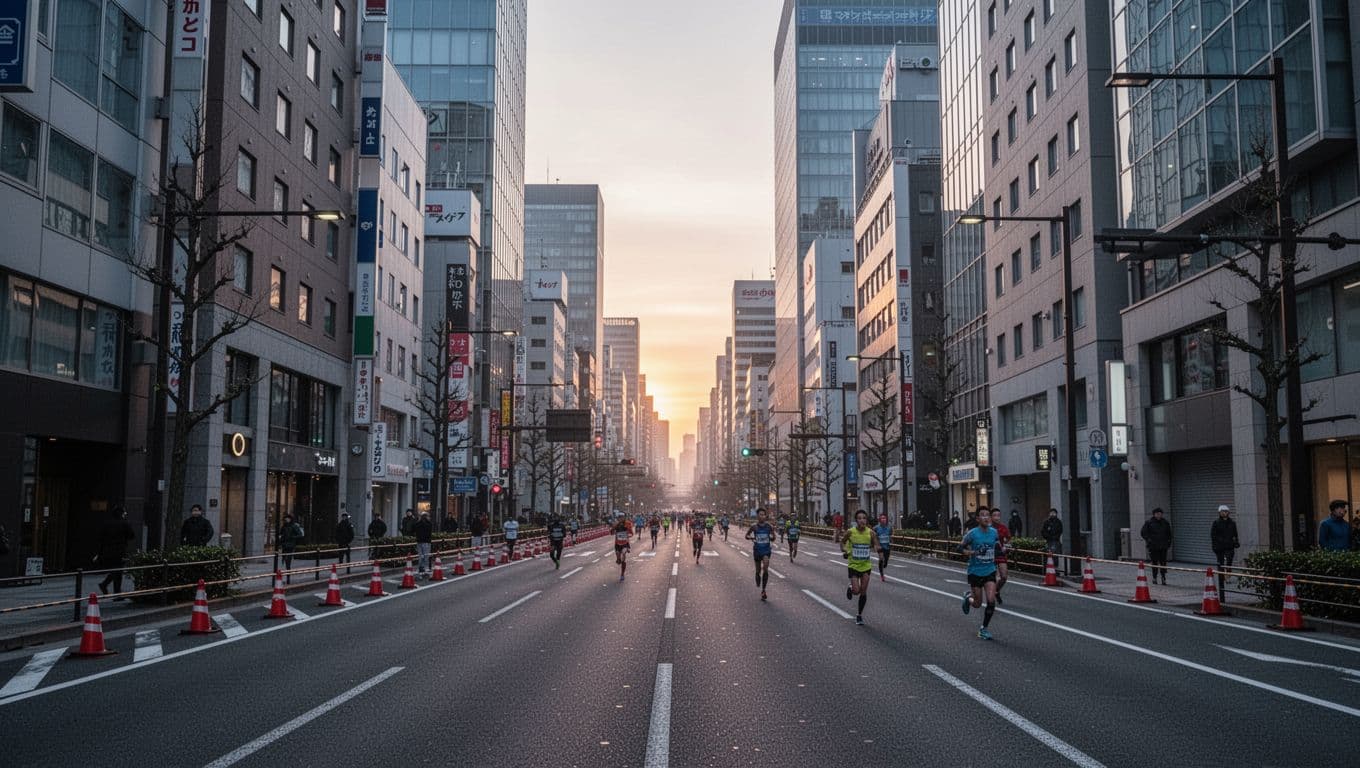
Shinjuku is the practical choice for runners who want a shorter trip before an early start. The Tokyo Metropolitan Government Building area is near the race start, and Shinjuku Station connects with JR lines, the Tokyo Metro network, and several private railways. That gives your group more options if one route feels crowded or inconvenient.
The tradeoff is the setting. Shinjuku is busy, bright, and highly urban, with constant foot traffic around the station, department stores, restaurants, and entertainment areas. Some travelers enjoy that energy, while families with young children may prefer a quieter neighborhood after the race.
Properties to investigate include Hilton Tokyo, Keio Plaza Hotel Tokyo, and Hyatt Regency Tokyo. Their room inventories may include layouts suitable for families or groups, but the available configurations change by date. Ask the hotel whether the specific room categories can connect internally, whether they are only adjacent, and whether your request can be attached to the reservation.
Tokyo Station and Marunouchi Hotels Suit Families Near the Finish
Tokyo Station and Marunouchi work well when your group wants a convenient finish-area base. The location also helps travelers arriving by Shinkansen, since luggage transfers and onward train connections are simpler near the station. After the race, your group can reach major shopping, dining, and sightseeing areas without changing hotels.
Possible options include The Tokyo Station Hotel, Shangri-La Tokyo, Palace Hotel Tokyo, and Hotel Metropolitan Tokyo Marunouchi. Check each property for connecting-room categories, bed sizes, maximum occupancy, and bathroom arrangements before paying a nonrefundable rate.
Being near the finish does not mean you can walk freely through every nearby street on race day. Road closures, barriers, security controls, and restricted crossings can change the most direct route. Leave extra time, follow official race-day instructions, and confirm whether your hotel can recommend an open entrance or crossing.
Nihombashi and Ginza Offer a Central Middle Ground
Nihombashi and Ginza suit travelers who want central Tokyo without staying directly beside the start or finish. Both areas offer restaurants, department stores, cafes, and convenient subway access. They also place your group near central sections of the course, although a nearby street does not guarantee a clear view or direct access during the race.
Consider Mandarin Oriental, Tokyo, Mitsui Garden Hotel Nihonbashi Premier, and Hotel Ryumeikan Tokyo. Luxury is only one factor here. Two smaller rooms can give a family more usable space, separate sleeping arrangements, and an easier bathroom routine than one large room. Ask whether the hotel can place rooms side by side or provide a true connecting door, then confirm the arrangement again before arrival.
Which Tokyo Hotels Offer Connecting Rooms for Families and Groups?
Hotels near the Tokyo Marathon can offer several ways to keep a group close, but the room names do not always describe the same layout. A connecting room has an internal door between two separate rooms, while an adjoining room may only sit next door. Confirm the exact arrangement, occupancy rules, and bed configuration before booking.
Best Room Setups for Parents Traveling With Children
Connecting twin rooms often give families more usable space than one large room. Children can sleep in separate beds, parents get privacy, and everyone has access to a bathroom without sharing one sleeping area. The internal door can usually remain open, but ask the hotel whether guests may keep it unlocked or propped open.
Safety needs a direct conversation with the property. Check that the connecting door has a secure lock, that children cannot easily reach the main entrance, and that staff can explain how both rooms are secured at night. Also ask whether the hotel can place the rooms away from elevators, provide bed rails, or arrange a crib. Cribs are often limited, and age restrictions may apply. For example, InterContinental Tokyo Bay’s guest room policy explains its rules for children and baby cribs.
Confirm the age of every guest and the maximum occupancy for each room, including infants. A hotel may count children differently from booking websites, and a room that looks suitable online may not meet its fire-safety or bedding rules.
Room Options for Running Clubs and Large Travel Groups
Running clubs and larger groups can combine connecting rooms with adjoining rooms or several rooms on the same floor. That arrangement keeps people nearby without requiring every room to have an internal door. However, hotels may not be able to connect three or more rooms because connecting doors depend on the building’s fixed layout.
Ask early about a room block or group reservation, especially around marathon weekend. Include requests for:
- A shared meeting room or lounge for race briefings.
- Early breakfast options or takeaway meals before the start.
- Luggage storage before check-in and after checkout.
- Laundry facilities or same-day laundry service.
- Late checkout for runners returning at different times.
Put the room layout in writing. The hotel may confirm rooms in the same hallway rather than guarantee an internal connection, so request written confirmation of every connecting pair and the assigned room categories.
When a Suite or Two Nearby Rooms May Be Better
A suite suits families who want a shared living area, space to organize race gear, and a more comfortable place to relax after the marathon. It may cost less than two premium rooms, but check the floor plan carefully. Some suites have only one bathroom or one main sleeping area, so they may offer less privacy than connecting rooms.
Two nearby rooms usually provide the most predictable sleeping capacity because each room has its own beds and bathroom. The tradeoff is that the hotel may place them in the same hallway without guaranteeing an internal door.
| Room setup | Best for | Privacy | Main risk |
|---|---|---|---|
| Connecting rooms | Parents with children or small groups | High | The connection may require confirmation |
| Family room | Families wanting one shared space | Low to medium | Fewer separate sleeping areas |
| Suite | Guests needing a living area | Medium to high | One bathroom or limited bed space |
| Nearby rooms | Groups prioritizing capacity | High | Rooms may only be close together |
The Imperial Hotel Tokyo’s family connecting room layout shows how much a property can vary from a standard two-room setup. Always ask for the floor plan, then request written confirmation before choosing a nonrefundable rate.
How to Find and Confirm Connecting Rooms Before You Book
Room categories can sound similar while offering very different layouts. Before booking hotels near the Tokyo Marathon with connecting rooms, confirm the physical setup, guest rules, and guarantee in writing.
Questions to Ask the Hotel About the Room Layout
Contact the hotel directly, especially when the booking site uses terms such as “adjoining,” “interconnecting,” or “family rooms.” Ask these questions before you pay:
- Do the two rooms share an interior connecting door, or are they only next door to each other?
- Does each room have its own private bathroom?
- Do the beds match the listing, including king, queen, twin, or sofa-bed arrangements?
- Can the rooms be placed on the same floor and near an elevator?
- Is the connecting-room arrangement guaranteed, or is it only subject to availability at check-in?
- What are the maximum occupancy limits for each room, including infants and children?
- Does the hotel charge extra for children, rollaway beds, or cribs?
- Can the hotel provide an accessible connecting setup, wider doorways, a step-free route, or an accessible bathroom?
- Are both rooms nonsmoking, and does the property prohibit smoking on balconies or near the connecting door?
- How close are the rooms to the elevator, and can the hotel assign a quieter location?
- Will there be enough luggage space for two rooms, race bags, and winter clothing?
- Can the hotel store luggage before check-in or after checkout?
A request is a preference added to your reservation. A guarantee means the hotel has agreed to provide the stated arrangement, usually in written confirmation or a group contract. “We will do our best” doesn’t carry the same weight as “connecting rooms are confirmed.”
Use a clear message that gives the hotel the details it needs:
Hello, I would like to reserve two nonsmoking rooms with an interior connecting door for two adults and two children, ages 8 and 11. We prefer one room with a king bed and one room with two twin beds. Please confirm whether both rooms have private bathrooms, whether the rooms can be placed on the same floor, and whether the connecting-door arrangement is guaranteed or only subject to availability. Please also confirm the total occupancy, child fees, and luggage storage options.
Save the hotel’s reply with your reservation details. Bring a printed or saved copy at check-in, then reconfirm the arrangement shortly before arrival because room assignments and hotel policies can change.
Booking Rules That Matter During Tokyo Marathon Weekend
Tokyo Marathon weekend can bring higher rates, faster sellouts, and fewer connecting-room combinations. Hotels may also add minimum-stay rules, require a deposit, or collect payment in advance. Connecting rooms are limited by the building’s fixed floor plan, so a hotel can have rooms available without having two compatible rooms available together.
Compare the hotel’s direct rate with prices on trusted booking sites, but read the exact terms for each option. A refundable rate may still have a strict cancellation deadline, and some reservations become nonrefundable after a set date. Check the local cancellation time, deposit rules, payment schedule, and penalties before entering your card details.
If the connecting arrangement matters, don’t rely on a cheaper rate that leaves the room layout unconfirmed. Book early, request the connection immediately, and ask the hotel to restate the guarantee in writing before race weekend.
What to Look For in a Marathon Weekend Hotel
The best hotel near the Tokyo Marathon balances race-day convenience, recovery comfort, and total cost. A central address may save time, but a quieter property with better facilities can matter more once the race is over. Before booking, compare the hotel’s location, room setup, services, and access arrangements as one package.
Choose the Right Location for Runners and Supporters
Runners often prefer Shinjuku because it keeps the pre-race journey short. A nearby hotel can reduce early transportation stress, limit walking before the start, and make it easier to return for forgotten gear. However, staying near the finish at Tokyo Station or Marunouchi may suit a group that plans to spend more time sightseeing after the race.
Supporters usually have different priorities. They may want simple access to viewing points, restaurants, cafes, shopping, and the finish area. Check the official Tokyo Marathon course map before choosing a hotel, since road closures and restricted crossings can change how easily everyone moves around.
Your group doesn’t need to follow one schedule all weekend. Runners can rest near the hotel while supporters visit Ginza, Asakusa, or another neighborhood, then everyone can meet for dinner at the same property. A central station, reliable subway access, and nearby restaurants often provide better group convenience than a hotel beside one race location.
Check Accessibility, Noise, and Recovery Needs
Race weekend can bring crowded sidewalks, blocked roads, and noisy streets. Ask the hotel which entrance will remain open, whether taxis can reach the property, and how guests should enter during race-day closures. Step-free entrances and a large elevator also make a difference when guests have luggage, mobility needs, or sore legs.
Inside the room, look for practical recovery features rather than relying on attractive photos. Confirm whether the bathroom has a walk-in shower, whether accessible rooms include adequate turning space, and whether the hotel can provide a firm or softer mattress preference. Quiet rooms away from busy roads, elevators, nightlife, and ice machines may help runners sleep before an early start.
A fitness room or designated stretching area can help, but don’t assume marathon services are included. Ask whether the hotel offers race-week information, recovery equipment, an early breakfast, or a place to stretch. Compare these comforts with the price, since a more expensive hotel is not automatically better for post-race recovery.
Plan Meals, Laundry, and Checkout After the Race
Breakfast hours can matter as much as the bed. Confirm when the restaurant opens, whether takeaway food is available, and whether the hotel permits guests to request an early meal. Also check nearby food options for the hours after the race, when a tired runner may not want a long train ride.
Laundry can reduce the amount of clothing your group needs to pack, especially for longer stays. Ask whether the hotel has self-service machines, same-day service, or a nearby laundromat. Confirm luggage storage before check-in and after checkout, too.
Late checkout is useful, but hotels may have little flexibility during a busy marathon weekend. Ask about the cost and availability before booking. If the hotel can’t extend the room, check whether it offers a hospitality room, day-use room, or a secure place to shower and change. A runner may need only a few hours of comfort, not an entire extra night, but confirm every service in advance.
Choose Your Distance, Duration and Goal Time
Make three quick selections and open the exact plan built for your race target.
Looking for a Fully Personalized Training Plan?
The training plans above are an excellent choice if they match your goal. However, if you’d rather train with a plan built specifically around your current fitness, goal race, preferred training days, weekly mileage, and target finish time, our RDA Custom Training Plans provide a personalized solution. We also have running courses available for runners seeking to run faster from the mile to the marathon.
Why Choose a Custom Training Plan?
| Standard Training Plan | RDA Custom Training Plan |
|---|---|
| Follows a fixed schedule | Built around your schedule |
| Standard weekly mileage | Peak mileage customized for you |
| Fixed workout days | Train on the days you choose |
| Same structure for everyone | Designed around your current fitness |
| Static plan | Updated as your fitness improves |
| One-time purchase | Ongoing personalized coaching and support |
What You’ll Receive
- A training plan built specifically for your goal
- Personalized training paces
- Long runs, tempo runs, threshold workouts, interval sessions, recovery runs, and easy runs
- Peak weekly mileage matched to your experience level
- Flexible training schedule that fits your life
- Ongoing plan adjustments as your fitness improves
Ready to Train Smarter?
Stop guessing and start following a plan built specifically for you, your schedule, and your racing goals.
Race Morning Transport, Costs, and Booking Strategy
Your hotel choice affects more than sleep. On marathon morning, the right area can shorten the trip to the start, while the wrong room setup can add fees, stress, and an uncomfortable night before the race.
Use this simple location rule: choose Shinjuku for start-line convenience, Tokyo Station or Marunouchi for rail connections and sightseeing after the race, and Nihombashi or Ginza for a middle ground. Check the official race route and transportation guidance before you book, because street closures can change the easiest route from your hotel.
Compare the True Cost of Two Connected Rooms With a Suite
Compare the full stay, not just the nightly rate shown in search results. A pair of cheaper rooms may cost more after breakfast charges, extra child fees, taxes, resort-style fees, or other property charges.
Two connected rooms usually provide two bathrooms, separate beds, and more privacy. Those benefits can make morning routines easier for families and give runners space to prepare without waking everyone else. A suite may offer a shared living area, but it could have only one bathroom or limited sleeping space.
Ask for the total price for every guest, including breakfast. Then compare:
- The cost of breakfast for adults and children.
- Taxes, service charges, and added fees.
- The number and type of beds.
- Whether both rooms have private bathrooms.
- Cancellation deadlines and deposit rules.
- Whether the connecting door is guaranteed or only requested.
A connecting-room request may not be honored if the hotel sells the rooms separately or assigns them at check-in. Therefore, a slightly higher refundable rate with written confirmation can be safer than a lower rate with no layout guarantee.
Avoid These Common Connecting-Room Booking Mistakes
Several booking errors can leave a group with the wrong room arrangement. Some travelers reserve one room and assume the hotel will add a second later, but marathon weekend availability may disappear quickly. Others confuse adjoining rooms, which are next door, with connecting rooms that share an interior door.
Child occupancy rules also matter. Hotels may count children by age, limit the number of guests per room, or charge for breakfast, cribs, or extra beds. Waiting until race week creates fewer choices, higher rates, and less flexibility.
Before making the final payment, use this quick check:
- Reserve both rooms under linked reservations.
- Confirm an interior connecting door in writing.
- Verify beds, bathrooms, and child occupancy.
- Choose a refundable rate when possible.
- Check the cancellation deadline and payment schedule.
- Ask how road closures affect hotel entrances, taxis, and rail access.
- Reconfirm the room layout before race weekend.
Use a Backup Plan if Connecting Rooms Are Unavailable
If connecting rooms disappear, ask for two rooms on the same floor, a family room, a suite, or a larger apartment-style hotel room. A second hotel may also offer a more flexible layout, especially if privacy matters more than staying in one property.
For families with young children, nearby rooms require extra care. Ask for rooms close together, keep the main doors locked, and avoid leaving children alone while adults move between rooms. A suite or apartment-style room may provide better supervision, but confirm its door locks, sleeping areas, and bathroom access.
You can hold a backup reservation while continuing to search, but keep it only when the cancellation terms are clear. Set a calendar reminder for the final cancellation date, then cancel the unused booking before charges apply.
Monitor hotels as soon as your race plans are firm. Reserve a refundable option, keep checking for better layouts, and replace a simple room note with written confirmation that the connecting rooms are secured.
Frequently Asked Questions
These questions cover details that often come up after comparing hotels near the Tokyo Marathon with connecting rooms. Small planning decisions can affect your group’s comfort, timing, and arrival experience.
How early should I reserve connecting rooms for the Tokyo Marathon?
Reserve as soon as your race plans are firm, especially if you need a particular bed arrangement or two rooms with an internal door. Hotels may still have rooms available while compatible connecting combinations have already sold out. A refundable reservation gives you time to compare options without losing your place.
Can hotel guests cross the marathon course on race day?
Course crossings may close temporarily or operate only at designated points. Your route can change even when the hotel looks close on a map, so allow extra time and follow instructions from race officials and local staff. Supporters should choose viewing locations with a planned return route to the hotel.
Can I check in before the marathon starts?
Most hotels set check-in for the afternoon, so early-morning access to your room isn’t guaranteed. You can ask about early check-in, but plan to store luggage with the hotel and leave for the start without using the room. If you need a place to rest after finishing, ask about day-use rooms or late checkout before booking.
Should runners stay near the start or the finish?
Stay near Shinjuku if minimizing the pre-race journey is your top priority. Choose Tokyo Station or Marunouchi if your group values easier rail connections, sightseeing, and access after the finish. Nihombashi and Ginza offer a central compromise, although road closures can affect travel in every area.
Are connecting rooms suitable for children of different ages?
They can work well when the rooms have compatible beds, secure connecting doors, and clear occupancy approval. Tell the hotel each child’s age, then confirm whether staff can provide a crib, bed rail, or other requested equipment. Families should also ask how the connecting door locks and whether both rooms can be assigned near a staffed elevator.
What should I do if the hotel cannot guarantee the connecting door?
Ask for adjoining rooms on the same floor, a suite, or an apartment-style room with separate sleeping areas. Keep a refundable backup reservation if the layout is essential, and cancel it before the stated deadline once your preferred hotel confirms the arrangement. Save the hotel’s written confirmation and show it at check-in if the front desk has a different room assignment.


