

Best Hotels Near the Tokyo Marathon With Airport Shuttle
Tokyo Marathon race morning starts long before the starting gun. After a long flight, jet lag, unfamiliar train routes, and pre-race nerves, even a short trip across the city can feel harder than expected. You need to reach the start line on time, with enough sleep and energy left to run well.
The best hotel isn’t always the one closest to the course. A strong choice among hotels near the Tokyo Marathon with airport shuttle service should also offer dependable airport transportation, convenient access to race areas, quiet rooms, breakfast or nearby food, and practical recovery options for sore legs. These details can protect your sleep, simplify race morning, and reduce avoidable stress.
This Tokyo Marathon hotels guide will help you compare Tokyo hotel areas, airport shuttle types, and routes to the marathon start and finish areas. You’ll also find booking advice, runner-friendly amenities, typical costs, and answers to common questions about staying in Tokyo for race weekend. First, we’ll look at which neighborhoods offer the best balance of airport access, transportation, and race-day convenience.
Key Takeaways
- Choose hotels near the Tokyo Marathon start in Shinjuku, or stay near a direct train route to reduce race-morning stress.
- Confirm whether the airport shuttle serves Haneda, Narita, or both, and reserve your seat before arrival.
- Prioritize quiet rooms, early breakfast options, luggage storage, and nearby convenience stores for practical race-weekend support.
- Check the official Tokyo Marathon race information for current start times, course details, and event requirements.
- Book early, compare the full transportation plan, and leave extra time for security, bag drop, and crowded stations.
Hotels Near the Tokyo Marathon With Airport Shuttle: What Runners Should Look For
A suitable race-weekend hotel offers more than an airport shuttle. You also need a practical route to the start area, dependable sleep, easy access to food, and enough flexibility for a delayed flight or late checkout. Compare the entire travel plan before choosing a room.
Choose a Hotel That Reduces Race-Morning Stress
Start by measuring the full journey, not just the distance shown on a booking map. Check walking time to the nearest station, the number of train changes, and the likely walking distance after Tokyo Marathon road closures begin. A hotel near the start may still create problems if you must cross busy streets or transfer between several crowded stations.
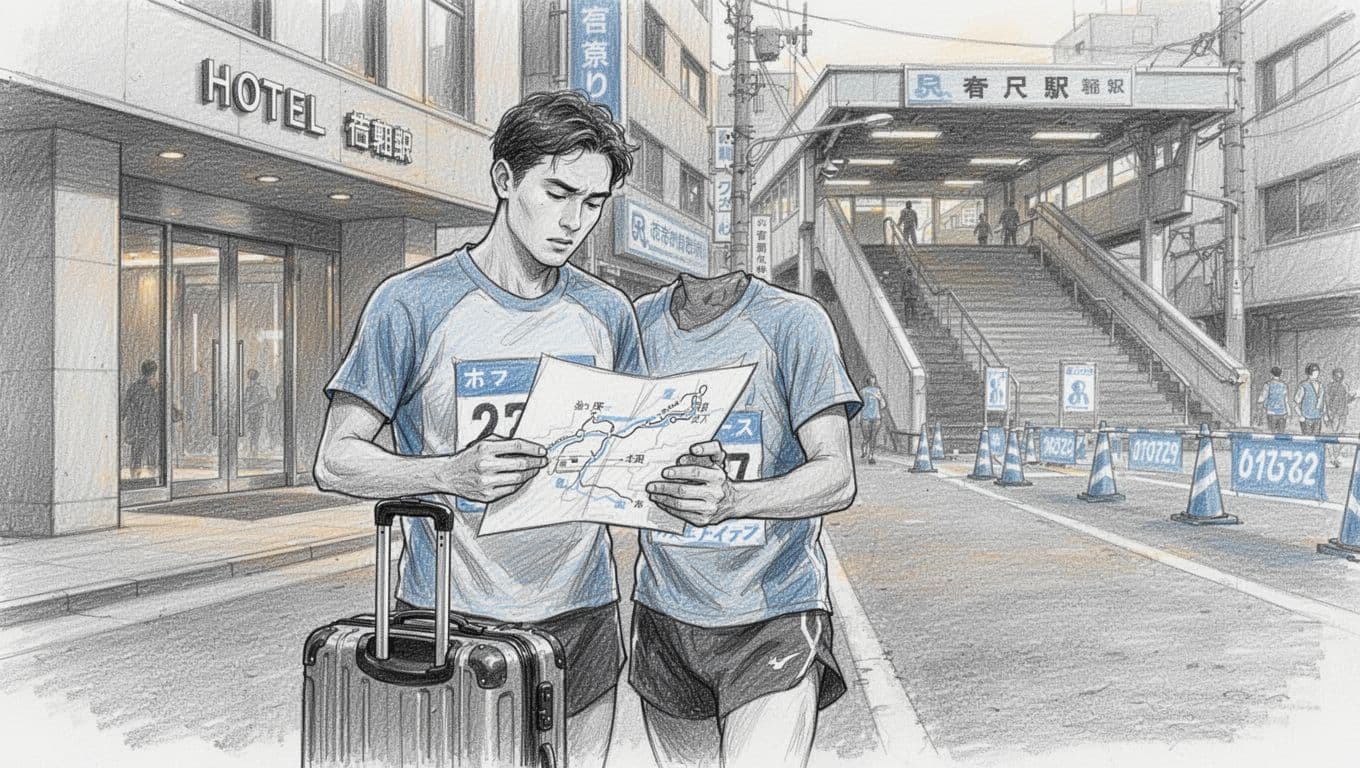 Elevator reliability matters when you carry luggage, especially after a long flight or on tired legs after the race. Ask for a quiet room away from elevators, bars, restaurants, and major roads. Also check whether the hotel offers luggage storage, flexible check-in, an early breakfast, room refrigerators, laundry facilities, and late checkout.
A property a little farther from the course can be the better choice when it offers a simple airport connection and a direct train route to the race area. Ten extra minutes on a predictable train may be easier than a short but confusing walk through closed streets. Check current Tokyo Marathon race information because start details, course access, and road closures can change.
Understand the Different Airport Shuttle Options
The phrase “airport shuttle” can describe several services, and they don’t offer the same experience. A free hotel-operated bus may be convenient, but seats can be limited and departures may run only at certain times. Some hotels instead sit near an Airport Limousine Bus stop, which is a paid service with luggage storage and scheduled routes. Review the Airport Limousine Bus routes and tickets before assuming the bus stops at your hotel.
Shared vans can provide door-to-door service at a moderate price, although waiting for other passengers may extend the journey. Private transfers cost more but offer the most control, especially after an overnight flight or with bulky race gear. Taxis are flexible and easy to arrange, yet traffic can make travel times unpredictable.
Rail connections from Haneda or Narita often cost less and may run frequently. However, stairs, transfers, crowded platforms, and limited luggage space can make them tiring. Haneda publishes current bus access details through its official airport bus information.
Before booking, confirm the exact airport, terminal, operating hours, reservation rules, luggage limits, and race-week schedule. Ask whether the service runs on your arrival date and whether the hotel requires advance payment. Prices, routes, and shuttle timetables can change, so verify details with both the hotel and the marathon organizers.
Best Tokyo Areas for Marathon Weekend and Easy Airport Access
Your hotel location can shape the entire race weekend. The Tokyo Marathon typically starts near the Tokyo Metropolitan Government Building in Shinjuku, while the finish area and race-day road closures can change how easily you move through the city. Check the current Tokyo Marathon course map and participant guidance before booking.
Shinjuku and the Tokyo Metropolitan Government Building Area
Shinjuku is a strong choice when you want to stay close to the start. Many runners can walk to the Tokyo Metropolitan Government Building, while others can take a short train ride and avoid a long cross-city journey before dawn. The area also offers major rail lines, restaurants, convenience stores, pharmacies, and large full-service hotels with luggage storage and early breakfast options.
Airport access is practical, too. Depending on the property, you may find an Airport Limousine Bus stop nearby or a direct rail option from Haneda. That combination makes Shinjuku one of the most useful areas for travelers searching for hotels near the Tokyo Marathon with airport shuttle service.
The tradeoff is energy and noise. Shinjuku stations and surrounding streets can feel crowded, especially during peak travel periods. Hotel rates may rise for marathon weekend, and the station’s many exits can turn a simple trip into a confusing walk. Before race day, locate your correct exit and confirm whether construction, security barriers, or road closures affect your route.
Tokyo Station, Marunouchi, and Ginza for Central Connections
Tokyo Station, Marunouchi, and Ginza suit runners who want polished hotels, excellent dining, taxis, and easy sightseeing for family or friends. These districts provide a calmer, more refined base than Shinjuku, with restaurants for pre-race meals and comfortable hotels for post-race recovery.
Central Tokyo also connects well with both Haneda and Narita through rail services, buses, and taxis. A hotel near a station or airport bus stop can make arrival day much easier, particularly when you carry a suitcase, running shoes, and race gear.
Race morning requires more planning here. You will likely need a train, taxi, or a combination of walking and rail travel to reach Shinjuku. Road closures can affect taxi routes, while busy stations may add time to transfers and platform changes. Leave earlier than the normal travel estimate, then follow the event’s current access instructions rather than relying on a route saved from a previous year.
Ueno, Asakusa, and Haneda for Value or Airport Convenience
Ueno and Asakusa can work well for travelers who want culture, traditional streets, and simpler accommodations. Ueno offers strong rail access and practical dining, while Asakusa places you near temples, older neighborhoods, and a slower evening atmosphere. Both areas may offer better value than central Shinjuku or Ginza, but you will need more travel time to reach the start.
That extra distance matters when you must arrive early and conserve energy. Choose a direct or simple rail route, check the first available trains, and allow time for walking between stations and race facilities.
A Haneda-area hotel makes sense for a late arrival, an early departure, or a single airport night before flying home. It reduces transfer stress and may provide a hotel shuttle or easy airport bus access. However, Haneda is usually less convenient for race-morning travel because reaching the Shinjuku start requires crossing much of Tokyo. For the main race nights, stay closer to the start unless airport timing makes an airport hotel the safer choice.
How Airport Shuttle Travel Works From Haneda and Narita
Airport transportation can shape your race weekend before you reach the hotel. Haneda usually offers the shorter trip into central Tokyo, while Narita may provide more flight choices but demands more time, planning, and patience after landing.
Haneda Versus Narita for a Race Trip
Haneda is generally closer to central Tokyo, so it often feels easier after an overnight flight. Airport limousine buses, trains, taxis, and private transfers connect Haneda with major hotel districts. Bus stops are located on the first floor of each terminal, according to Haneda’s official bus information.
Narita is farther from the city, but it can offer better airfare, more international flight options, or a schedule that fits your trip. The longer ride may add substantial time, especially when traffic affects a bus or taxi. Before choosing, compare four details:
- Your total airfare, including baggage and transfer costs.
- Your arrival time and the airport’s available transport departures.
- Your hotel’s location and its direct connections.
- Your need for sleep, food, and recovery before the marathon.
A cheaper Narita flight may lose its value if you arrive late, pay for a private transfer, or spend hours traveling while jet-lagged. On the other hand, Narita can work well when the fare is much lower and your hotel offers a convenient direct bus route.
Airport limousine buses usually depart from marked bus bays outside the arrival level. Check the terminal number before walking to the stop, then confirm the destination hotel or nearest listed stop. Use the official limousine bus route and fare information because schedules, stops, and ticket rules vary.
Questions to Ask Before Reserving a Shuttle
A hotel shuttle may sound direct online but serve only one terminal, one airport, or a nearby hotel cluster. Ask these questions before paying:
- Where exactly does pickup happen at my terminal?
- Does the shuttle run during my arrival and departure hours?
- What is the booking deadline, and do I need a reserved seat?
- Can I pay online, by card, or only in cash?
- What happens if my flight arrives late?
- Is luggage included, and are oversized bags allowed?
- Are child seats available if my family needs one?
- Does the vehicle stop at my hotel entrance or a nearby bus stop?
- What is the cancellation policy?
Save the confirmation on your phone and keep an offline copy. Mark the pickup point on the airport map before departure. If the hotel website uses unclear wording, contact the property directly and ask for the exact terminal, meeting area, and last available shuttle.
For arrival day, allow extra time for immigration, baggage collection, customs, and finding the vehicle. A shared bus or shuttle may cost roughly $20 to $40 per person, while taxis and reserved private transfers can range from about $50 to $150 or more. Prices change with the date, luggage, vehicle type, traffic, and provider.
For your return flight, reserve a pickup that leaves a generous buffer. Add at least three hours before an international departure, then allow more time when staying near the Tokyo Marathon course or traveling during heavy traffic.
How to Book the Right Marathon Hotel Without Overpaying
Book around your race plan, not just a tempting room rate. Start with the marathon date, your route to the Shinjuku start area, airport, flight times, and preferred Tokyo neighborhood. Then compare what each hotel will cost from arrival through checkout.
Compare the Full Cost, Not Just the Nightly Rate
A lower room price can disappear once you add airport transportation, race-area travel, breakfast, laundry, luggage storage, taxes, deposits, and early check-in fees. A hotel near a direct train route may cost less overall than a cheaper property requiring several transfers before sunrise.
Road closures can change that calculation. A short taxi ride on an ordinary day may become slow or expensive when marathon streets close. Likewise, a distant hotel may require extra rail fares, a longer walk, or a private transfer after the race.
Use this process before booking:
- Enter the race date, airport, flight times, and preferred hotel area.
- Add the room total, taxes, breakfast, shuttle fee, deposit, and local transportation.
- Check the walking route to the station and the race start, including possible closure detours.
- Compare the final total against nearby alternatives with simpler race-morning access.
| Stay type | What to prioritize |
|---|---|
| Budget | Direct transit, included breakfast, luggage storage, and low cancellation risk |
| Mid-range | Reliable airport bus access, quiet rooms, laundry, and flexible payment terms |
| Luxury | Airport transfer coordination, early dining, late checkout, and concierge support |
The best value is the booking that protects your sleep and keeps race morning predictable.
Use Cancellation Rules and Race Details to Protect Your Budget
Tokyo Marathon weekend creates heavy demand, so hotels may raise rates, require multiple nights, or restrict date changes. Read every condition before paying. Look for free cancellation, the cancellation deadline, payment dates, nonrefundable labels, minimum-stay rules, and limits on changing your reservation.
A flexible rate may cost more, but that extra amount can protect you if your flight changes, the official schedule shifts, or you find a better hotel later. Confirm the current Tokyo Marathon participant guidelines and official race information before making a final decision.
When possible, reserve a sensible backup with free cancellation. After confirming your preferred hotel, cancel the backup promptly so another runner can use the room. Book through a trusted platform or the hotel’s official website, read recent reviews, and contact the property in writing to confirm airport, terminal, shuttle hours, reservation rules, and race-week availability. Keep that confirmation with your travel documents.
Runner-Friendly Hotel Features That Make Tokyo Marathon Week Easier
The right hotel can protect your sleep, fueling routine, and race-morning focus. Before booking, look beyond the airport shuttle and check whether the room supports the habits that help you perform well.
Plan Sleep, Food, and Hydration Around the Time Change
Japan is several hours ahead of the United States, so your first night may feel unusually early or late. Keep your arrival-day schedule simple. Drink water during and after the flight, take a short walk outside, and avoid turning jet lag into an all-night sightseeing tour.
A quiet, higher-floor room can make sleep easier. Ask for a room away from elevators, restaurants, bars, and busy streets. Blackout curtains, a comfortable bed, reliable climate control, and a small refrigerator also help you follow a familiar recovery routine.
Food deserves the same attention. Hotel breakfast may open too late, offer unfamiliar choices, or lack the foods you normally eat before a long run. Test your race-day breakfast during training, then pack the same items for Tokyo. Carry dependable snacks such as energy gels, bars, crackers, or other products your stomach already handles well.
Convenience stores are useful, but their options may not match your fueling plan. Keep your own snacks in your room, and bring hydration supplies if you prefer a specific drink mix or bottle. Confirm whether the hotel has room service, an early breakfast, a refrigerator, and access to a pharmacy for basic supplies.
After the race, hot water in the shower, extra towels, laundry access, and luggage storage can make recovery much easier. Request these details before arrival, along with late checkout if your flight allows it.
Pack race shoes, required documents, familiar snacks, hydration products, backup clothing, and any medication you use. Treat your hotel room as a small training base, not just a place to sleep.
Prepare for Race-Day Transportation and Road Closures
Normal taxi and train estimates may not apply during the Tokyo Marathon. Road closures, traffic restrictions, security checks, crowded stations, and controlled access can turn a routine journey into a much longer trip.
Map your route to the start area before race morning. Identify the nearest station, the correct exit, walking directions, and the first train that can get you there with time to spare. Allow additional time for security, bag drop, restroom lines, and the walk from the station to your assigned area.
Keep your hotel’s full address written in Japanese on your phone and on a paper card. This helps if you need a taxi, ask for directions, or return after the course has closed nearby.
Follow the current Tokyo Marathon participant guidelines and review the event’s official race-day FAQs before leaving the hotel. Your property’s usual taxi route may be blocked, and a route that worked during a previous visit may no longer be available.
Race morning rewards preparation, not speed. Leave early enough that a missed train or closed street doesn’t threaten your start.
After booking, ask the front desk to confirm the quietest room available, a higher floor, extra towels, luggage storage, and late checkout. Those small requests can protect your energy before the race and reduce discomfort afterward.
A Practical Hotel and Airport Shuttle Plan for Different Types of Runners
The best hotel plan depends on your race goal, travel companions, budget, and flight schedule. A personal-best attempt needs a different setup than a family trip or a late-night arrival. Compare the entire route, including airport transfer, sleep conditions, race access, and backup options, before you book.
The Best Setup for a Performance-Focused Runner
A performance-focused runner should choose the most predictable race-morning route available. Shinjuku may offer the shortest access to the start, while a quieter hotel near a direct train line can work better than a fashionable area with nightlife and crowded transfers.
Prioritize a quiet room away from elevators, bars, restaurants, and major roads. Confirm blackout curtains, reliable climate control, an early breakfast option, a refrigerator, and luggage storage. Pack familiar race foods instead of relying on an unfamiliar menu.
For airport travel, reserve a direct hotel shuttle, Airport Limousine Bus, or private transfer when the schedule fits. Public rail may cost less, but extra transfers can drain energy after a long flight. Check the Tokyo Marathon participant guidelines for current access instructions and transportation warnings.
The Best Setup for Families and First-Time Visitors
Families and first-time visitors benefit from larger rooms, connecting rooms, dependable elevators, and staff who can help with luggage. Shinjuku offers convenient race access, while Tokyo Station, Marunouchi, or Ginza may provide better dining and sightseeing for companions.
Choose a hotel near restaurants and convenience stores so the runner can keep a stable meal and sleep schedule while others explore Tokyo. A simple airport bus or reserved transfer also reduces the stress of handling luggage through crowded stations.
Before race weekend, agree on one meeting point. Pick a hotel lobby, a clearly identified station exit, or another location outside the busiest race barriers. Phones may lose service, trains may separate the group, and road closures can prevent a taxi from reaching the usual spot.
The Best Setup for Budget Travelers
Budget travelers can save without adding race-week risk. Look for a clean hotel near a useful station, preferably with a direct or one-transfer route to Shinjuku. Ueno may offer practical value and strong rail access, although the longer race-morning journey requires an earlier departure.
Public airport transportation can reduce costs, especially when a train or scheduled airport bus reaches your hotel area. Still, compare the total price after adding local fares, luggage fees, breakfast, and possible taxis. A distant room may look cheap until extra transfers consume the savings.
Choose free cancellation whenever possible. Also confirm the airport route, shuttle schedule, race access, sleep quality, food plan, and backup transportation before paying. Travelers arriving late or leaving early may benefit from a Haneda-area hotel for one night, even if they move closer to the start afterward.
Choose Your Distance, Duration and Goal Time
Make three quick selections and open the exact plan built for your race target.
Looking for a Fully Personalized Training Plan?
The training plans above are an excellent choice if they match your goal. However, if you’d rather train with a plan built specifically around your current fitness, goal race, preferred training days, weekly mileage, and target finish time, our RDA Custom Training Plans provide a personalized solution. We also have running courses available for runners seeking to run faster from the mile to the marathon.
Why Choose a Custom Training Plan?
| Standard Training Plan | RDA Custom Training Plan |
|---|---|
| Follows a fixed schedule | Built around your schedule |
| Standard weekly mileage | Peak mileage customized for you |
| Fixed workout days | Train on the days you choose |
| Same structure for everyone | Designed around your current fitness |
| Static plan | Updated as your fitness improves |
| One-time purchase | Ongoing personalized coaching and support |
What You’ll Receive
- A training plan built specifically for your goal
- Personalized training paces
- Long runs, tempo runs, threshold workouts, interval sessions, recovery runs, and easy runs
- Peak weekly mileage matched to your experience level
- Flexible training schedule that fits your life
- Ongoing plan adjustments as your fitness improves
Ready to Train Smarter?
Stop guessing and start following a plan built specifically for you, your schedule, and your racing goals.
Frequently Asked Questions
Choosing among hotels near the Tokyo Marathon with airport shuttle service involves more than comparing room rates. These answers cover practical details that can affect your sleep, luggage plan, and race-morning schedule.
Should I stay near the start or near the airport?
Stay near the Tokyo Marathon start if you arrive at least two nights before the race and want the simplest morning routine. Shinjuku reduces travel time to the Tokyo Metropolitan Government Building, while a Haneda hotel makes more sense for a late arrival or early departure.
For most runners, staying closer to the start protects sleep and reduces transportation risk. You can use an airport shuttle when you arrive, then rely on a short train ride or walk on race morning.
Can I leave my suitcase at the hotel on race day?
Many hotels offer luggage storage after checkout, but you should confirm the service, hours, and capacity before booking. Ask whether the hotel will store your bags until evening and whether you need a claim ticket.
Race-day baggage rules may differ from normal hotel storage. Review the official Tokyo Marathon services before assuming you can check a bag at the event.
How early should I leave my hotel on race morning?
Plan to leave early enough for station walking, security checks, restroom lines, bag drop, and crowd delays. Your target arrival time should come from the current participant instructions, not a standard travel app estimate.
Before race weekend, walk the route from your hotel to the station exit you need. Save a backup route in case road closures block a taxi or make your usual entrance unavailable.
What should I do if my airport shuttle is delayed?
Contact the hotel or shuttle provider as soon as you know your flight has changed. Keep a backup plan that includes the nearest train station, Airport Limousine Bus stop, and taxi pickup area.
If you arrive late, don’t spend time searching for a cheaper option while exhausted. A more expensive private transfer may protect your sleep and help you reach the hotel without additional changes.
Should I book a hotel breakfast for marathon morning?
Book breakfast only if the hotel opens early enough and offers foods you already tolerate before long runs. Otherwise, pack your tested breakfast and store it in your room when possible.
Your race morning is the wrong time to experiment with unfamiliar foods. Confirm whether the hotel has a refrigerator, kettle, microwave, or convenience store nearby, then follow the same fueling routine you practiced in training.
Conclusion
Choosing among hotels near the Tokyo Marathon with airport shuttle service starts with one decision: plan the hotel and airport transfer together. Judge the full arrangement by room quality, sleep, race access, schedule reliability, and total cost. A lower room rate does not help if a long transfer or complicated train route leaves you tired before the starting gun.
Before booking, confirm the shuttle airport, terminal, timetable, reservation rules, and luggage policy. Check the current Tokyo Marathon road closures and participant instructions, protect your tested fueling routine, and save a backup route to the start. These details remove uncertainty when the city is crowded and race morning arrives early.
The right logistics let you conserve energy for pacing, focus, and the course instead of spending it on airport delays and confusing commutes. That preparation gives you a calmer start and a stronger chance to run the race you trained for.


