

Best Hotels Near the Seattle Marathon Finish Line
Choosing a hotel near the Seattle Marathon finish line can mean less stress before the race and an easier recovery afterward. After miles on the course, you’ll appreciate having a short walk back to your room instead of dealing with crowded roads, unfamiliar transit, or a long ride across the city.
The Seattle Marathon typically finishes near Seattle Center, but the start and finish layout can change each year. Check the current course map and race-day updates from the race organizer before booking, especially if location matters more than amenities. The best hotels near the Seattle Marathon finish line balance walking distance with a comfortable room, fair rates, convenient parking, and access to race-day services.
This Seattle Marathon hotels guide compares walkable hotels and nearby neighborhoods, along with transportation options, prices, parking details, and practical booking advice. You’ll also find tips for choosing a place that works for your race schedule, recovery plans, and budget.
Key Takeaways
- The Seattle Marathon finish location can change, so verify the current course details before booking your hotel.
- For the latest race information, check the official Seattle Marathon course details.
- Hotels near Seattle Center offer convenient access to race services, restaurants, and pre-race transportation.
- A downtown or waterfront hotel may work better when the finish line moves toward Pier 66.
- Compare walking distance, parking fees, room rates, breakfast hours, and cancellation policies before reserving.
Hotels Near the Seattle Marathon Finish Line: Best Places to Stay
Hotels near Seattle Center can make race weekend easier, but the best choice depends on your priorities. Before booking, compare the current Seattle Marathon course map with the hotel’s location and pedestrian routes. The finish area may change, so treat walkability as a planning factor rather than a guarantee.
Plan Your Complete Marathon Weekend
Choosing the right hotel can reduce race-day stress, shorten travel time, improve sleep, and make your entire marathon weekend smoother.
More Seattle Marathon Hotel Guides
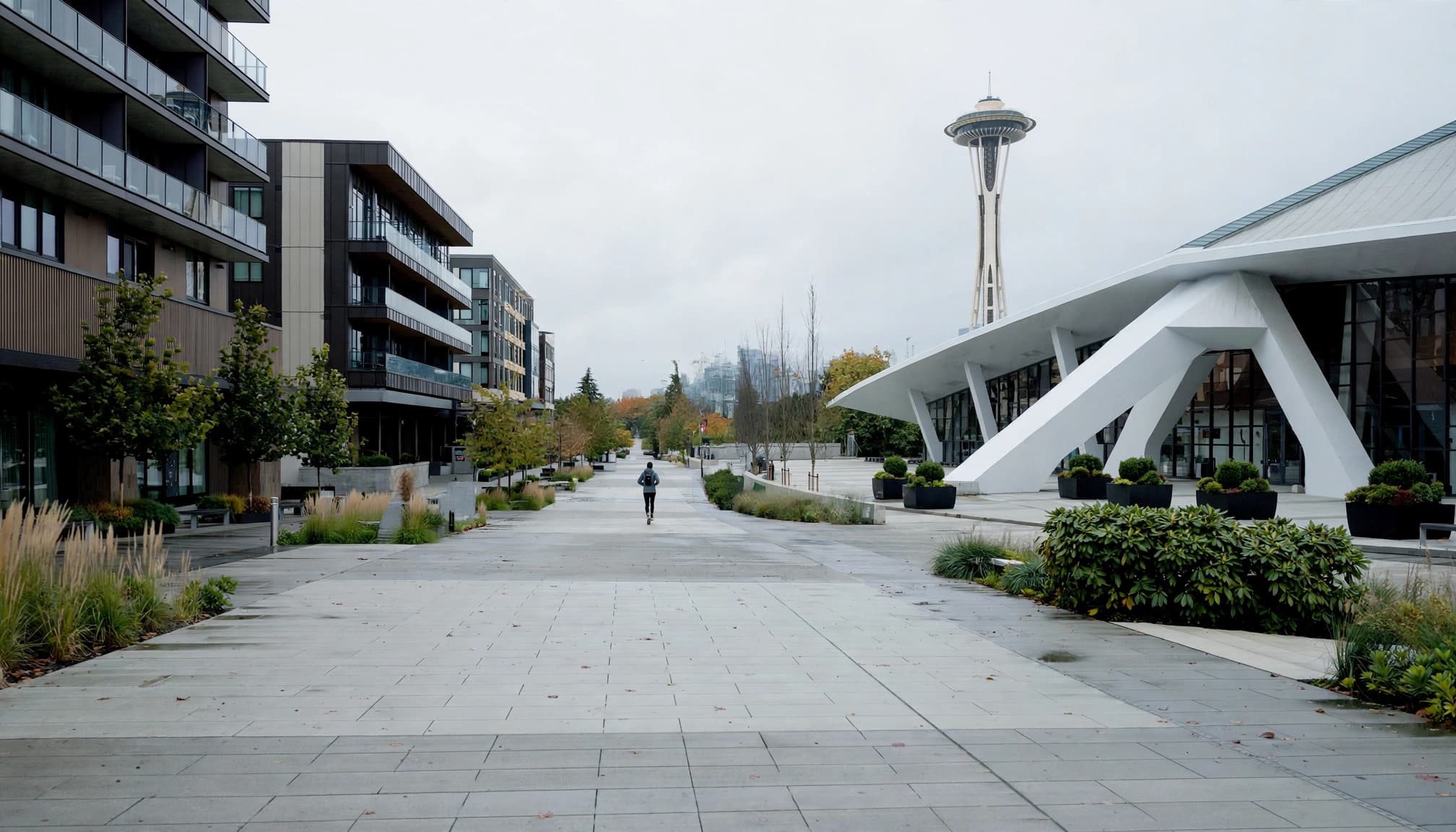
Best hotels closest to Seattle Center
Hotels around Seattle Center put you near the Space Needle, Climate Pledge Arena, museums, restaurants, and race-weekend activity. They suit runners who want to keep the post-race walk as short as practical.
Hyatt House Seattle/Downtown is a strong choice for families and runners who want extra space. Many rooms include kitchen areas, and the property sits close to Seattle Center attractions. That setup can help when you want to prepare a simple meal instead of searching for a restaurant after the race.
The Mediterranean Inn also appeals to guests who prefer larger rooms and in-room conveniences. Its location near Seattle Center makes it useful for runners who want a walkable base, while some rooms offer kitchen facilities and more living space than a standard hotel room.
StayPineapple properties, including Hotel FIVE, fit travelers who value a lively, design-focused stay near downtown and Seattle Center. Hotel FIVE can work well for couples or solo runners who prefer a smaller-room setup and easy access to nearby dining. Meanwhile, The MarQueen Hotel offers historic character and larger rooms in the Uptown area, making it a better match for guests who want atmosphere alongside location.
Check the Seattle Center transportation information before race weekend. Pedestrian access, street closures, and transit conditions can affect the most convenient route.
Choose Your Distance, Duration and Goal Time
Make three quick selections and open the exact plan built for your race target.
Looking for a Fully Personalized Training Plan?
The training plans above are an excellent choice if they match your goal. However, if you’d rather train with a plan built specifically around your current fitness, goal race, preferred training days, weekly mileage, and target finish time, our RDA Custom Training Plans provide a personalized solution. We also have running courses available for runners seeking to run faster from the mile to the marathon.
Why Choose a Custom Training Plan?
| Standard Training Plan | RDA Custom Training Plan |
|---|---|
| Follows a fixed schedule | Built around your schedule |
| Standard weekly mileage | Peak mileage customized for you |
| Fixed workout days | Train on the days you choose |
| Same structure for everyone | Designed around your current fitness |
| Static plan | Updated as your fitness improves |
| One-time purchase | Ongoing personalized coaching and support |
What You’ll Receive
- A training plan built specifically for your goal
- Personalized training paces
- Long runs, tempo runs, threshold workouts, interval sessions, recovery runs, and easy runs
- Peak weekly mileage matched to your experience level
- Flexible training schedule that fits your life
- Ongoing plan adjustments as your fitness improves
Ready to Train Smarter?
Stop guessing and start following a plan built specifically for you, your schedule, and your racing goals.
Downtown hotels with a simple route to the finish
Downtown hotels sit farther from Seattle Center, but they offer more dining, shopping, transit, and room-service choices. The Seattle Center Monorail connects downtown with Seattle Center in about 90 seconds under normal conditions, although race-day service and access may differ. Review current details through Climate Pledge Arena transportation guidance.
Hyatt Regency Seattle and Sheraton Grand Seattle suit runners who want a full-service hotel with elevators, fitness facilities, restaurants, and larger public spaces. The Westin Seattle is another practical option, especially for guests who value central access and a familiar full-service format.
For a more traditional stay, consider Hotel Theodore or Mayflower Park Hotel. Both place you near downtown dining and transit, while Hilton Motif Seattle, when available, can appeal to travelers who prefer spacious accommodations and broad city access. A slightly longer walk may be worthwhile if it gives you more breakfast options, easier transit connections, and flexible dinner choices.
Suite hotels and lower-cost alternatives for race weekend
Suite-style and extended-stay hotels can lower the cost per person when several runners share a room. Homewood Suites Seattle Downtown is one example to investigate, particularly for families or groups that want a separate living area, breakfast, and kitchen facilities. Comparable suite properties may also offer useful amenities, but verify current availability, rates, parking fees, and breakfast hours before reserving.
Hotels outside the immediate Seattle Center area may cost less or provide better parking. The tradeoff is a longer trip after the race, with possible reliance on buses, light rail, or a rideshare. Compare the full stay cost, not just the nightly rate, because parking and transportation can erase the savings.
Which Seattle neighborhood is best for marathon weekend?
The best place to stay depends on what you value after the race. Seattle Center and Uptown offer the easiest finish-line access, while Belltown and downtown provide more restaurants and transit. South Lake Union can feel calmer, but its longer route may matter when your legs are tired.
| Area | Best for | Walkability | Main drawback |
|---|---|---|---|
| Seattle Center and Uptown | Shortest post-race walk and family attractions | Excellent for the finish area | Event crowds, closures, and higher rates |
| Belltown | Restaurants, nightlife, and a central location | Manageable, with some hills | Busier streets and more noise |
| Downtown | Shopping, transit, and airport connections | Good, but farther from Seattle Center | Longer walk or reliance on transit |
| South Lake Union | Newer hotels and quieter rooms | Fair, with a longer route | Fewer tourist attractions nearby |
Seattle Center and Uptown for the shortest post-race walk
Seattle Center and Uptown, the neighborhood formerly known as Lower Queen Anne, are the most convenient choices for runners who want to reach a hotel quickly after finishing. A short walk can make a major difference when your legs feel heavy and standing in a rideshare pickup line sounds unpleasant.
The area has coffee shops, casual restaurants, grocery stores, and attractions such as the Space Needle, MoPOP, and Climate Pledge Arena. Family members can stay busy while you rest, and many nearby hotels offer larger rooms or kitchen facilities. Rates often fall in the midrange to upper range, with race weekend demand pushing prices higher.
However, the shortest route on a normal day may not be the best route on race morning. Crowds, barricades, road closures, and limited sidewalks can change how you reach the start or finish area. Check Seattle Center transportation updates before leaving the hotel.
Belltown and downtown for restaurants and transit
Belltown and downtown give you more choices for dinner, breakfast, shopping, and late-night snacks. Hotels range from mid-priced options to upscale properties, so you can often find a better fit for your budget than in the immediate Seattle Center area.
The walk to Seattle Center is manageable for many visitors, but hills, traffic, and post-race fatigue can make it feel longer. Downtown also offers the Seattle Center Monorail, buses, and light rail connections. The Seattle Center Monorail links Westlake with Seattle Center, though race-day hours, queues, and pedestrian access may differ.
Choose this area if dining and airport connections matter as much as finish-line distance. Expect a busier setting, more street noise, and heavier crowds around major attractions.
South Lake Union for modern hotels and quieter rooms
South Lake Union suits travelers who prefer newer properties, larger business hotels, and a less tourist-heavy atmosphere. Room rates often sit in the midrange to upper range, while weekday business demand can affect availability and pricing.
The neighborhood has coffee shops, restaurants, and a calmer feel at night. Still, reaching Seattle Center usually requires a longer walk, a bus, or the South Lake Union Streetcar. Review the Seattle Streetcar route and compare it with the race-day transportation plan before booking.
How to choose a marathon hotel beyond walking distance
Walking distance matters, but it shouldn’t be your only filter when comparing hotels near the Seattle Marathon finish line. A room with early coffee, reliable elevators, flexible checkout, and enough space for race gear may make your weekend easier than a slightly closer property with fewer practical amenities.
Look for race-morning breakfast and coffee
Ask whether the hotel restaurant starts serving breakfast early enough for your race schedule. Many runners need food well before normal dining hours, so confirm whether the property offers grab-and-go options, such as fruit, oatmeal, yogurt, or packaged snacks.
In-room supplies matter, too. Check whether your room includes a coffee maker, mini-fridge, and microwave. A mini-fridge lets you store familiar pre-race foods, while a microwave can help you prepare oatmeal or warm a simple meal without leaving the hotel.
Hotel restaurant hours can change for race weekend. Contact the property directly rather than assuming its normal breakfast service will continue.
Check late checkout, showers, and luggage storage
Late checkout can be especially useful after a marathon. It gives you time to shower, change clothes, rest, and pack without rushing through recovery. However, hotels don’t guarantee late checkout, and some charge an added fee or approve requests only on the morning of departure.
Ask about the policy before booking. If the hotel can’t extend your checkout, consider booking an additional night when the price difference is reasonable. You can also confirm whether the front desk offers luggage storage and whether guests may use a fitness-center shower after checkout.
The official Seattle Marathon information can help you verify race details while you plan your departure time and transportation.
Compare parking, resort fees, and cancellation policies
Compare the full stay cost, not just the advertised nightly rate. Add hotel parking, valet charges, destination or facility fees, taxes, deposits, and any incidental hold placed on your card.
Cancellation rules deserve the same attention. Check the exact deadline, refund terms, and conditions for changing dates. Race plans can shift if your travel schedule changes or the event’s arrangements are updated.
Call the property about event-weekend restrictions, including parking access, minimum-stay rules, shuttle changes, and loading-zone limits. Save the confirmation email and write down the name of anyone who explains the policy.
Prioritize quiet rooms and accessible layouts
Request a room away from elevators, ice machines, busy event areas, and street-facing windows. If you sleep lightly, also ask about rooms on higher floors or away from conference spaces. Leave the request on your reservation, then repeat it during check-in.
Runners with mobility needs, medical considerations, or traveling companions should confirm accessible entrances, bathrooms, elevators, and room features before arrival. Ask the hotel to describe the route from the property to the finish area, including hills, stairs, barricades, and likely crowd congestion.
Finally, check whether the room has enough space for shoes, recovery supplies, clothing, and bags. A little floor space and a usable luggage rack can make race gear much easier to organize.
Race-day logistics from Seattle hotels
The start and finish may be in different parts of Seattle, so don’t plan your race-day travel around the hotel-to-finish distance alone. A short drive can become slow or impossible when streets close, sidewalks narrow, and race traffic redirects vehicles.
Plan the route to the start before race morning
Map the start and finish as separate trips. Trace the walking route from your hotel to the start, then identify the nearest Link light rail station, King County Metro stop, taxi stand, and rideshare pickup area. Check each route again after the final course map and race-day instructions are published.
Allow extra time for security checks, barricades, crowded sidewalks, and detours. A route that usually takes 20 minutes may take much longer before the race. Recent Seattle Marathon coverage reported closures on more than 50 streets, with reopening times spread across the day, so a vehicle route may not work even when the distance looks short. Read the latest Seattle Marathon traffic closure report alongside the organizer’s official updates.
Walking is often the simplest option when your hotel sits near the start. However, wear shoes that can handle wet pavement, and leave early enough to avoid rushing. Link light rail and King County Metro can help when the start is farther away, but check first-service times, stop locations, route changes, and scheduled weekend work before race morning.
Download transit information to your phone, then save a backup route. For example, you might plan to walk to a different station if the nearest entrance sits inside a closure zone. Keep a taxi company number or hotel transportation contact available as well.
Rideshare can help, but don’t depend on a driver reaching a closed street. Use the race’s designated pickup and drop-off zones when available, and expect to walk several blocks from the vehicle. Ask the hotel whether it offers a race-morning shuttle, where it stops, and when reservations open.
A hotel can be close to the finish and still be inconvenient for the start. Check both routes before you book.
Know how to return from the Seattle Marathon finish
The finish area may be crowded, especially near gates, medal distribution, medical services, and family viewing areas. Arrange a meeting point away from the busiest entrances, such as a named hotel lobby, a quiet corner of a public building, or a specific block outside the event perimeter. Avoid relying on a phone call at the finish because service can be slow when thousands of people gather.
Carry your hotel key, identification, and a charged phone. A small portable charger can help if you need directions, contact your group, or request transportation after finishing. If you use a digital room key, save access details before leaving the hotel.
Ask the hotel whether it can store bags before check-in or after checkout. Confirm the storage hours, retrieval process, and whether staff can hold a larger race bag. After the race, walking back may be easiest, but Link light rail, Metro, taxis, rideshare zones, and hotel shuttles can all work when you know where to find them.
Prepare for Seattle weather and hilly streets
Seattle race conditions can shift during the morning. Cool rain, wind, wet sidewalks, and changing temperatures can affect both your trip to the start and your walk back to the hotel.
Pack layers, waterproof outerwear, dry socks, and comfortable recovery clothes. Also check the forecast close to race day, then adjust your clothing and transportation plan. If your route includes hills, allow time for a slower walk after the finish, particularly if rain makes pavement slick.
How much do Seattle Marathon hotels cost, and when should you book?
Seattle Marathon hotel prices can change sharply by race weekend. Your final cost depends on the hotel’s class, room type, booking date, nearby events, holiday demand, and cancellation terms. A basic room outside Seattle Center may cost less than a walkable hotel, but the difference can shrink after parking, transportation, and extra meals.
Compare the total price, not just the room rate
Start with the complete cost for your entire stay. Hotel listings may show a nightly rate before taxes and additional charges, so review the booking breakdown before comparing properties. Washington’s lodging tax guidance explains that lodging-related charges can include more than the advertised room price.
Add these costs to your comparison:
- State and local lodging taxes can raise the final bill.
- Self-parking and valet parking may add a substantial daily charge.
- Breakfast may cost extra, especially at full-service hotels.
- Destination, facility, or amenity fees can apply even when you don’t use every listed service.
- Pet fees, extra-person charges, and incidental deposits can affect the total.
- Transit, rideshare, or taxi costs may offset a cheaper room in another neighborhood.
A walkable hotel near the Seattle Marathon finish line may cost more per night but save money on race-day transportation. On the other hand, a less expensive hotel in South Lake Union, downtown, or another nearby area could still work if parking and transit are affordable. Compare both options in one simple calculation: room charges, taxes, fees, parking, transportation, and every night you plan to stay.
Book early, then keep checking the terms
Reserve a cancellable room once you know the race date and your travel plans. Early inventory gives you more choices near Seattle Center, while waiting can leave you with fewer room types or stricter conditions. You can keep checking later for a lower price, a better location, or a room with breakfast and parking included.
A flexible reservation usually lets you cancel by a stated deadline without paying the full room cost. A prepaid nonrefundable rate may be cheaper, but you could lose most or all of the payment if your plans change. Compare the actual savings with the risk before choosing it.
Cancellation deadlines often use the hotel’s local time. Confirm that the deadline is listed in Pacific Time, then set a reminder at least one day early. Read the policy for every night of the reservation, since some rates require a minimum stay or charge one night’s room rate and tax after the deadline.
Consider staying an extra night
Arriving one night before the Seattle Marathon can make race morning calmer. You’ll have time to pick up your bib, organize clothing, learn the route to the start, and buy familiar food without rushing through travel. That extra night also protects you from flight delays or late arrivals.
Staying after the race can help with recovery, particularly if you plan to fly home. You can shower, eat, walk at an easy pace, and visit Seattle attractions without watching the clock. If the full stay feels expensive, compare a split reservation, such as one night near Seattle Center and another in a less costly neighborhood.
Hotel loyalty points can also change the calculation. Check whether an award night includes resort or destination fees, compare the points value with the cash price, and confirm the cancellation rules before transferring points or booking.
Frequently Asked Questions
Race weekend plans depend on more than finding a room near Seattle Center. Confirm the current course, check hotel policies, and plan both your trip to the start and your return from the finish.
Where does the Seattle Marathon finish?
The finish has often been associated with the Seattle Center area, but the exact location can change by year. For example, the official 2026 race information lists Seattle Center as the start and Pier 66 as the finish. Check the official Seattle Marathon course details and current course map before booking a hotel, since access points, spectator rules, and road closures may change.
How early should I arrive at my Seattle Marathon hotel?
If you’re arriving the day before, allow enough time for hotel check-in, bib pickup, dinner, and race preparation. Ask whether the front desk can store luggage if your room isn’t ready, and confirm the hotel’s breakfast and checkout hours before race morning.
Traveling into Seattle on race morning requires a larger buffer. Traffic, event-related closures, transit changes, and crowded streets can add significant time, so avoid scheduling a tight arrival before the start.
Can I walk from downtown Seattle hotels to the finish line?
Many downtown and Belltown hotels may be walkable to Seattle Center or other central finish locations. However, hills, crowds, barricades, and temporary street closures can make the normal map route unavailable or slower than expected.
Check the race-day pedestrian route instead of relying on ordinary walking directions. Also confirm whether your hotel sits near an open sidewalk or inside a restricted event area.
Do Seattle hotels offer special marathon rates or runner services?
Some properties may offer group rates, runner breakfasts, early coffee, late checkout, luggage storage, or access to a post-race shower. These benefits aren’t standard, and availability can depend on the hotel’s staffing and weekend occupancy.
Ask the hotel directly before booking, then confirm every promised benefit in writing. Pay close attention to breakfast hours, storage limits, checkout fees, and whether the rate requires a minimum stay.
Should I stay near the finish or near the marathon start?
Choose a hotel near the start if you dislike early transportation, want the shortest possible race-morning route, or expect to feel anxious about delays. A finish-area hotel is often better if you value a short walk back for a shower, food, and recovery after the race.
The best choice depends on the official course layout for your race year. Compare both hotel routes, not just the distance from the property to the finish.
What should I do if nearby hotels are sold out?
Search beyond Seattle Center, including downtown, Belltown, South Lake Union, Capitol Hill, and neighborhoods with reliable transit connections. Add your name to hotel cancellation lists, check loyalty-program inventory, and revisit flexible reservations as race weekend approaches.
Vacation rentals may provide another option, but confirm that the property follows local rules and has clear cancellation terms. You can also stay outside central Seattle if you plan a dependable transit route and verify first-service times before race morning.
Conclusion
Choosing among hotels near the Seattle Marathon finish line is mainly a question of convenience, cost, and race-day logistics. A hotel near Seattle Center can shorten the walk after the race, but a downtown or transit-connected property may offer better value, more dining choices, and easier access to the start. The best location is the one with a reliable route for both parts of your race day.
Before booking, compare the full price, including taxes, parking, transportation, breakfast, and any added fees. Also look for recovery-friendly features such as early coffee, a mini-fridge, luggage storage, late checkout, and a quiet room. These details can matter more than saving a few blocks of walking distance.
Most importantly, choose a reservation that fits your budget and schedule, preferably with flexible cancellation terms. Before your trip, confirm the official course, road closures, pedestrian routes, hotel policies, and current amenities. Careful planning can turn your hotel into a comfortable base for race morning and a practical place to recover afterward.


