

Best Hotels Near the Philadelphia Marathon Finish Line
Race morning on Benjamin Franklin Parkway begins with tight nerves, cool air, and thousands of runners waiting for the start. Hours later, the relief of crossing near the Philadelphia Museum of Art feels even better when your hotel is only a short walk away.
Choosing hotels near the Philadelphia Marathon finish line makes recovery easier after 26.2 miles. You can reach a warm bed, meet family without crossing the city, request a late checkout, and avoid a long ride through race-day street closures.
This Philadelphia Marathon hotels review compares nearby hotels and walkable neighborhoods, along with useful amenities, transportation options, pricing factors, and smart booking advice. Since the course, finish area, closures, and hotel policies can change, confirm race-year details through the official Philadelphia Marathon website before booking.
Key Takeaways
- Hotels near the Philadelphia Marathon finish line reduce post-race walking, transportation stress, and exposure to street closures.
- Prioritize a room with late checkout, breakfast options, luggage storage, and a quiet space for recovery.
- Benjamin Franklin Parkway and Eakins Oval become secure race zones, so confirm access details through the official Philadelphia Marathon FAQ.
- Book early because nearby rooms fill quickly, and marathon-weekend rates can rise.
- Check the latest Philadelphia Marathon road closure updates before choosing parking or transportation.
Hotels Near the Philadelphia Marathon Finish Line: What Runners Should Know
The Philadelphia Marathon finish area is generally located along Benjamin Franklin Parkway near Eakins Oval and the Philadelphia Museum of Art. That location makes nearby lodging appealing, but the closest property isn’t automatically the most convenient. Race fencing, security zones, closed roads, and restricted entrances can turn a short map distance into a tiring detour.
Check the current Philadelphia Marathon course information before booking. The exact finish layout and pedestrian routes can change between race years.
How Close Is Close Enough After 26.2 Miles?
Judge a hotel by the walk you can manage after the race, not by the straight-line distance on a booking site. A comfortable route with reliable sidewalks may beat a closer property that requires crossing blocked streets or waiting for a rideshare.
Before choosing among hotels near the Philadelphia Marathon finish line, consider:
- Walking time: Account for your post-race pace, not your training pace.
- Terrain: Hills, stairs, uneven pavement, and long ramps feel different with sore calves.
- Weather: Cold wind, rain, or wet clothing can make even a moderate walk unpleasant.
- Baggage: A rolling suitcase becomes difficult when your legs are stiff and tired.
- Road closures: Rideshares may face detours, canceled pickups, or limited access near the finish zone.
A hotel within a manageable walk often gives you more control than one that looks close but depends on vehicle access. Use a current map to inspect the actual pedestrian route, then call the property and ask where guests can enter on race day. Also confirm whether runners can reach the lobby from the finish area without passing through a restricted zone.
The Amenities That Matter Most on Marathon Weekend
Race-weekend comfort starts before you reach the finish. Ask whether the hotel offers early breakfast, grab-and-go food, or a mini-fridge for your own recovery meal. Coffee, hot water, and a reliable shower can matter more than a stylish lobby.
A bathtub may help you unwind, while a strong shower is often enough to wash away salt and sweat. Request a quiet floor, an elevator-accessible room, and an accessible room if you need specific mobility features. Luggage storage also helps when your room isn’t ready or you’ve already checked out.
Look for flexible cancellation terms and ask about late checkout before paying a premium. A place to meet family away from the secured race area can prevent confusion after you finish.
Call the hotel directly to confirm every marathon-specific service. Early breakfast, late checkout, luggage storage, and special runner rates may be limited, paid extras, or unavailable despite appearing in a general listing.
The Best Philadelphia Neighborhoods for a Finish-Line Hotel
The best Philadelphia Marathon hotel depends on one decision: do you want the shortest walk after the race, or more dining, space, and room choice? Logan Square is the most practical base for finish-line access, while Center City, Rittenhouse Square, and University City offer different comforts at varying distances.
Use the Philadelphia visitor maps to understand how the neighborhoods connect before booking. The Philadelphia Museum of Art sits at the northwest end of Benjamin Franklin Parkway, while City Hall is farther southeast. That distance matters when road closures change normal walking and driving routes.
Logan Square and the Benjamin Franklin Parkway
Logan Square is the most natural choice for runners who want to minimize post-race walking. The neighborhood sits near the Parkway finish corridor, with the Philadelphia Museum of Art, The Franklin Institute, and green public spaces close by. Your companions can explore nearby attractions while you rest, and everyone can avoid crossing much of Center City after the finish.
The Logan Philadelphia, Curio Collection by Hilton and The Windsor Suites are two properties to investigate. Before reserving, verify current room availability, breakfast options, late checkout, luggage storage, race-day access, and the actual walking route to the hotel entrance. Security fencing may make a short route longer.
Center City and Rittenhouse Square
Center City and Rittenhouse Square suit runners who want more restaurants, coffee shops, pharmacies, and hotel room types. Hyatt Centric Center City Philadelphia and Sonesta Philadelphia Rittenhouse Square are examples to research through their official websites, along with other currently operating properties.
These areas can offer better value or more choice than Parkway hotels, especially for families sharing rooms. However, a property farther south or east may require extra planning when the Parkway is closed. Ask about pedestrian access, rideshare pickup points, and the best route back after finishing.
Rittenhouse Square also gives companions an easy place to wait, eat, or walk while you recover. The tradeoff is clear: more neighborhood convenience usually means more distance from the finish.
University City for Space, Transit, and a Quieter Stay
University City is an option for families, groups, or runners who value larger rooms and a calmer setting. The Study at University City and AKA University City are examples worth researching, particularly when extra space matters more than being steps from the finish corridor.
The Schuylkill River separates University City from the Parkway area, so runners must plan the crossing. Walking, transit, and vehicle routes may change during race operations. Confirm race-morning pedestrian and vehicle access with the hotel before booking, then compare the route against current closure information. A quieter room can aid recovery, but a longer crossing may add stress when your legs are already spent.
Recommended Hotels Near the Philadelphia Marathon Finish for Different Travelers
The best hotel depends on what you need after 26.2 miles. A short walk may matter more than luxury, while families often need extra beds, meals, and room to spread out. Compare each hotel’s official website with trusted booking platforms before you reserve.
Best for the Shortest, Simplest Route Back to Your Room
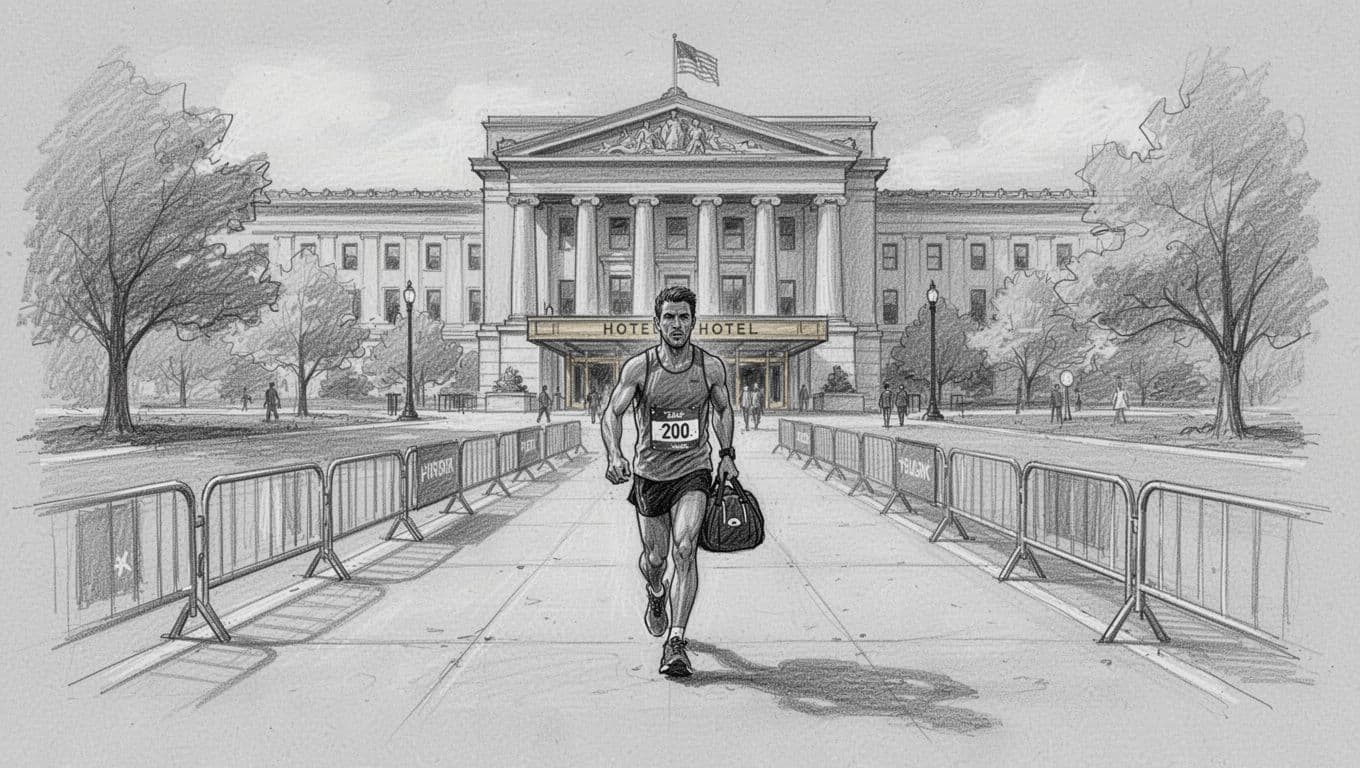
Properties around Logan Square and the Parkway deserve attention when your priority is getting off your feet quickly. The Logan Philadelphia, Curio Collection by Hilton is close to the finish area, while The Windsor Suites offers an extended-stay format near the Parkway.
After the race, a familiar lobby entrance, working elevators, and a dependable shower may matter more than a rooftop bar or elaborate decor. Wet clothes, stiff hips, and salt-covered skin change your idea of comfort. A few extra blocks can feel like another mile.
Barricades and security zones may change the apparent route, even when the hotel looks close on a map. Review the Philadelphia Marathon road closure information and ask the hotel where runners should enter on race day.
Best for Families, Spectators, and Longer Stays
Families need a usable base, not just a bed. The Windsor Suites may appeal to groups seeking more living space, while hotels such as Hyatt Centric Center City Philadelphia can be worth comparing for standard rooms and different occupancy options. Connecting rooms, sofa beds, kitchenettes, and in-room laundry can simplify a weekend with children, but availability varies by room type.
A room with extra space lets spectators leave for the race, return for a break, and meet again for a post-race meal. Longer stays also make a kitchenette or nearby grocery store more useful than a small room discount.
Before booking, confirm:
- Maximum occupancy and bed configuration.
- Parking costs and vehicle access during closures.
- Cancellation deadlines and nonrefundable terms.
- Whether connecting rooms or sofa beds require advance requests.
Best for Restaurants, Coffee, and Recovery Meals
Center City and Rittenhouse Square usually provide more dining choice than the immediate finish area. Hyatt Centric Center City Philadelphia and Sonesta Philadelphia Rittenhouse Square put runners near restaurants, coffee shops, pharmacies, grocery stores, and takeout options.
Check Sunday hours before race weekend, then look for places that can handle a high-carb meal without a long walk. A simple pasta dish, rice bowl, sandwich, or breakfast order may be easier than waiting for a crowded dining room. Still, don’t assume any business will open on race day. Confirm hours, reservations, delivery coverage, and pickup policies directly.
Budget-conscious runners should compare total costs, including breakfast, parking, resort-style fees, and transportation. A room farther from the finish can save money, but only if the return route remains manageable after the race.
How to Choose a Marathon Hotel by Budget, Room Needs, and Recovery Plans
The best hotel near the Philadelphia Marathon finish line fits your recovery plan, not just your race budget. Compare the full stay, confirm the room setup, and read every policy before you pay. Race weekend demand can raise prices and shrink room inventory, so book early enough to preserve your options.
Compare the Total Cost, Not Just the Nightly Rate
An advertised nightly rate is only the starting point. Add taxes, destination or resort fees, parking, breakfast, baggage fees, pet fees, early arrival charges, and transportation to your comparison. A room that costs less per night may become more expensive after parking and rideshare costs enter the picture.
Use this simple calculation:
Total stay = room charges + taxes and fees + parking + meals + transportation + extras
A slightly higher rate can offer better value if the hotel removes a parking charge or lets you walk back from the finish. Also, check whether race-day road closures could make a short vehicle trip much longer. The Philadelphia Marathon FAQ provides current race-weekend information that can affect hotel access and transportation planning.
Match the Room to Your Race-Day Routine
Your room should support the hours after you finish. Confirm the maximum occupancy, bed layout, refrigerator access, bathroom accessibility, elevator reliability, and floor space for shoes, compression gear, coolers, and luggage. A couple may need one king bed and a refrigerator, while a family could need two beds, a sofa bed, or connecting rooms.
Request a quiet room away from elevators, ice machines, stairwells, and street noise. Hotels cannot guarantee these requests, so ask what alternatives they offer if the property is full. Quiet hours, a reliable elevator, and a bathroom you can use comfortably may matter more than a larger lobby or upgraded view.
Use this quick fit check:
- Solo runners should prioritize a quiet room, refrigerator, and easy finish-line access.
- Couples should confirm bed size, occupancy limits, and space for recovery gear.
- Families need enough beds, bathroom access, meal options, and luggage storage.
- Groups should compare connecting rooms, shared suites, parking, and cancellation terms.
Understand Cancellation, Deposit, and Late Checkout Rules
Flexible rates usually cost more, but they can protect you if weather, injury, travel delays, or race schedules change. Prepaid rates often have stricter deadlines, deposit requirements, and no-show policies. Read the exact cancellation date and time, then check whether the hotel charges the first night or the full stay after that deadline.
Ask about late checkout, luggage storage, and whether a late departure is guaranteed or offered only when rooms remain available. Marathon-weekend rules may differ from the hotel’s normal policy, especially when demand is high. Get unusual terms in writing before booking, because a recovery plan built around an unconfirmed late checkout can fail when you need it most.
Race-Day Logistics From Philadelphia Hotels to the Finish Area
Your hotel location helps, but race-day logistics still require a plan. Review the official Philadelphia Marathon race information for the current event map, start and finish zones, corrals, bag drop, spectator rules, road closures, and recommended arrival times. Hotel staff can explain property access, but they can’t override event barricades or restricted streets.
Walking, SEPTA, Rideshare, or Driving: Which Works Best?
For nearby hotels, walking is often the simplest option. It costs nothing, avoids traffic, and gives you a predictable route when roads around Benjamin Franklin Parkway close. Check the actual entrance route, though. Fences can force runners and spectators several blocks away from the path shown on a map.
SEPTA can help travelers staying farther from the finish area, especially when a station is close to the hotel and the route remains open. Confirm service schedules, station access, elevator availability, and any race-related changes before race morning. Build in extra time rather than relying on the next train.
Rideshares and taxis offer door-to-door convenience, but they face detours, pickup restrictions, surge pricing, and limited access near the finish zone. Ask your hotel about an approved pickup location away from the Parkway. A hotel shuttle can work well if the property offers one, but confirm its schedule and whether it operates during race closures.
Driving toward the Parkway at the last minute is usually the least reliable choice. Parking restrictions, blocked intersections, and one-way detours can leave you far from the hotel or finish area. Check the Philadelphia Marathon FAQ and current city guidance before using a car.
Choose Your Distance, Duration and Goal Time
Make three quick selections and open the exact plan built for your race target.
Looking for a Fully Personalized Training Plan?
The training plans above are an excellent choice if they match your goal. However, if you’d rather train with a plan built specifically around your current fitness, goal race, preferred training days, weekly mileage, and target finish time, our RDA Custom Training Plans provide a personalized solution. We also have running courses available for runners seeking to run faster from the mile to the marathon.
Why Choose a Custom Training Plan?
| Standard Training Plan | RDA Custom Training Plan |
|---|---|
| Follows a fixed schedule | Built around your schedule |
| Standard weekly mileage | Peak mileage customized for you |
| Fixed workout days | Train on the days you choose |
| Same structure for everyone | Designed around your current fitness |
| Static plan | Updated as your fitness improves |
| One-time purchase | Ongoing personalized coaching and support |
What You’ll Receive
- A training plan built specifically for your goal
- Personalized training paces
- Long runs, tempo runs, threshold workouts, interval sessions, recovery runs, and easy runs
- Peak weekly mileage matched to your experience level
- Flexible training schedule that fits your life
- Ongoing plan adjustments as your fitness improves
Ready to Train Smarter?
Stop guessing and start following a plan built specifically for you, your schedule, and your racing goals.
Plan a Family Meeting Point Away From the Finish Chute
The finish chute is a poor place to reunite. Crowds press against fencing, spectators may have limited movement, and phone service can become unreliable when thousands of people gather. Runners also need time to move through the finish process before they can leave.
Choose one clear location outside the controlled zone. A hotel lobby, restaurant entrance, museum area, or visible corner several blocks away is easier to find. Share the exact address, not just a neighborhood name, and choose a backup location if the first site becomes crowded.
Pick a meeting point that works even when your phone battery is low and the nearest street is closed.
What to Pack for a Comfortable Post-Race Return
Pack a small recovery bag with dry clothes, warm layers, recovery shoes, snacks, hydration, blister care, medication, and a phone charger. Cold rain and wind can make the walk back uncomfortable, even when your hotel is nearby.
Before race weekend, ask whether the hotel can store bags before check-in or after checkout. Also, don’t build your plan around getting into the room early. Treat early check-in as a bonus, then prepare to recover in the lobby or at your planned meeting point if the room isn’t ready.
When to Book Hotels for Philadelphia Marathon Weekend
There is no single perfect booking date, but waiting until race week is a poor strategy. Popular hotels near the Parkway can sell out months ahead because the marathon shares the city with other events, college weekends, and holiday travel. Reserve a refundable room early once your race plans are firm, then keep comparing your options.
A Simple Booking Timeline for Runners and Support Crews
Start by identifying your preferred area, room type, and maximum total budget. If you find a suitable property near the Philadelphia Marathon finish line, book a flexible rate before nearby inventory disappears. A refundable reservation gives you a secure backup while you continue checking prices and policies.
When the race organizers publish the course and street closures, review the actual walking route from the hotel. A property that looks close on a map may sit behind barricades or require a longer pedestrian detour. The official Philadelphia Marathon FAQ includes race-weekend information that can affect hotel access and transportation.
Several weeks before travel, contact the hotel and confirm breakfast hours, luggage storage, parking, late checkout, accessibility, and race-day entrance instructions. Ask for written confirmation when a service matters to your recovery plan.
Shortly before arrival, check the final route, closure notices, and weather forecast. Philadelphia street restrictions can affect driving and rideshare pickup, as shown in the published road closure information. Keep your cancellation deadline visible in your calendar and booking email. Recheck rates as the marathon approaches, but don’t cancel your original room until the replacement reservation is confirmed.
Common Hotel Booking Mistakes to Avoid
A map pin doesn’t show fencing, hills, crowds, or the entrance you’ll use. Check the walking distance from the finish area to the hotel’s actual front door, not just the property’s listed address.
Before paying, ask whether the reservation requires a one-night minimum or a longer stay. Also confirm:
- The room type, bed arrangement, and maximum occupancy.
- The full price, including taxes, parking, and added fees.
- Whether breakfast starts early enough for race morning.
- The cancellation deadline and refund terms.
- Late checkout availability and its cost.
- Accessible routes, elevators, and bathroom features.
- Race-day pedestrian access and vehicle restrictions.
Don’t choose a nonrefundable rate too soon unless your travel plans are certain. Parking can also change the value of a supposedly cheaper hotel, especially when closures force longer drives.
Families should choose a meeting location before race morning. A hotel lobby or restaurant away from the finish chute is easier than searching through a secured crowd. Finally, never assume the hotel provides race transportation. Ask whether a shuttle operates, confirm its schedule in writing, and check where it drops runners and spectators.
Compare the official hotel website with reputable booking sites, then call the property with your specific questions before finalizing the reservation.
Make Your Philadelphia Marathon Hotel Stay Part of Your Race Strategy
A hotel near the Philadelphia Marathon finish line can do more than shorten your walk. It can protect your sleep, reduce decisions, and give you a calm place to recover. However, don’t sacrifice a quiet, comfortable room for a few blocks of distance.
Arrive early enough to settle in, sleep on your normal schedule, and limit extra sightseeing before race morning. Lay out your race clothes, bib supplies, shoes, and fuel before bed so you don’t search through a suitcase at 4 a.m.
Use the Room to Protect Sleep and Race-Morning Focus
Request a quiet room away from elevators, ice machines, stairwells, and busy streets. The hotel cannot guarantee silence, but asking early gives the staff a chance to place you in a better location. Bring familiar snacks, your usual sleep aid if you already use one, and any race nutrition you have tested in training.
Keep meals predictable. Hotel restaurants and room-service menus can be convenient, but race weekend is a poor time to experiment with unfamiliar food, supplements, or large portions. Choose foods your stomach knows, drink fluids normally, and avoid turning dinner into a last-minute nutrition test.
Set two alarms, preferably on separate devices, and keep your phone charged. Then make the morning routine almost boring: wake up, eat your planned breakfast, dress, check your bib and gear, and leave with enough time for closures and crowds.
The best room supports the routine you already trust. It doesn’t require a new supplement, unusual breakfast, or late-night sightseeing plan.
Build a Gentle Post-Race Recovery Plan
Plan the first few hours before you cross the finish line. Change out of wet or sweaty clothing, put on warm layers, and take small, regular drinks rather than forcing a large amount at once. A familiar meal with carbohydrates can help you refuel, while a short, easy walk may prevent you from becoming completely stiff.
Back in the room, take a warm shower and rest. If it feels comfortable, elevate your legs with pillows, but stop if any position increases pain. Companions can pack dry clothes, food, fluids, and chargers, then respect your need for quiet instead of filling the afternoon with plans.
Rest and sleep matter that night, especially after a long effort. Seek urgent medical care for chest pain, confusion, trouble breathing, fainting, severe pain, or symptoms that worsen rather than improve. Post-race warning signs deserve prompt attention, even when a nearby hotel makes recovery feel easier.
Frequently Asked Questions
Planning around the finish line involves more than choosing the closest hotel. Confirm the race-year course, check access rules, and match your reservation to your recovery needs.
Where does the Philadelphia Marathon finish?
The Philadelphia Marathon finish is generally on or near Benjamin Franklin Parkway by the Philadelphia Museum of Art and Eakins Oval. The exact finish chute, fencing, entrances, and pedestrian routes can change, so review the official Philadelphia Marathon course information for your race year.
Can I walk from a hotel to the Philadelphia Marathon finish line?
Many hotels around Logan Square, the Parkway, Center City, and nearby areas may offer a walkable route. However, barricades, security zones, and pedestrian restrictions can force detours that normal map directions won’t show.
Check race-day access before booking, then ask the hotel where runners should enter the property after finishing. The Philadelphia Marathon FAQ explains that the Start/Finish area is a secure zone, which can affect movement around the Parkway.
Should I stay near the start or near the finish?
A hotel near the start can simplify your early-morning routine and reduce transportation before the race. Staying near the finish gives you a shorter return trip when your legs are tired and your body needs warmth, food, and rest.
Choose based on your preferred routine, the official start and finish logistics, and your group’s priorities. If morning transportation causes stress, stay near the start; if recovery convenience matters most, choose lodging near the finish.
Do Philadelphia hotels offer marathon discounts or runner packages?
Some Philadelphia properties may offer seasonal marathon packages, flexible policies, or runner-focused deals. These offers aren’t guaranteed, and availability can depend on the hotel, room type, and booking date.
Check official promotions and ask directly about breakfast timing, late checkout, luggage storage, and race-day access. A modest discount has limited value if breakfast starts too late or you can’t reach the entrance after the race.
What should I do if nearby hotels are sold out?
Check refundable inventory in Center City and University City, along with hotels near reliable SEPTA routes. Cancellations often appear closer to race weekend, so monitor availability while keeping a confirmed backup.
Compare the full transportation cost, not only the room rate. Verify the route around road closures before assuming a train, rideshare, or car will provide easy access.
How many nights should I book for the marathon?
One night may work for a local runner with a short trip and a simple schedule. Two nights can reduce travel stress, support better sleep, and give you more time to recover after the race.
Consider your check-in time, race start, travel distance, family plans, and cancellation policy. If reaching Philadelphia requires a late arrival or long drive, an extra night often creates a calmer race weekend.
Conclusion
The cool air and tight nerves at the start of the Philadelphia Marathon eventually give way to sore legs and a hard-earned finish near the Philadelphia Museum of Art. Choosing one of the best hotels near the Philadelphia Marathon finish line can make those final hours easier, but the closest address isn’t always the best choice.
Prioritize a location near Benjamin Franklin Parkway or a dependable transit route. Then compare runner-friendly amenities, including late checkout, breakfast options, luggage storage, quiet rooms, and easy pedestrian access. Flexible cancellation terms, transparent fees, and a clear family meeting plan also protect your weekend when road closures or race schedules change.
Book early when possible, especially if you want a specific neighborhood or room type. Before race weekend, confirm every detail with the hotel and review the official Philadelphia Marathon website for current course, access, and closure information. The right Philadelphia marathon hotel protects your sleep, simplifies transportation, supports recovery, and keeps the total cost within budget, leaving you ready to enjoy the finish you worked so hard to reach.


