

Best Hotels Near the Nagoya Women’s Marathon Start Line
Before sunrise on marathon morning, dark skies hang over Nagoya as cool March air moves through the streets and runners make their way toward Vantelin Nagoya Dome. With the start-line energy building before the gun, your hotel choice can protect your sleep, simplify breakfast and bathroom access, and remove unnecessary race-day travel stress.
The closest Nagoya Women’s Marathon hotels are not always the best option for performance. A reliable subway ride, a quiet room, late checkout, and easy access to familiar food may matter more than saving a few minutes on foot, especially when you’re managing nerves, fueling, and an early wake-up. That balance matters to first-time marathoners and runners chasing a specific finish time.
This guide compares the best areas for hotels near the Nagoya Women’s Marathon start line, then covers transportation planning, booking strategy, and a practical race-morning checklist.
Key Takeaways
- Choose hotels near Vantelin Dome Nagoya, Nagoya Dome-mae Yada Station, or central Nagoya with a dependable subway route.
- The official Nagoya Women’s Marathon outline confirms that Vantelin Dome Nagoya hosts both the start and finish.
- Prioritize quiet rooms, early breakfast access, nearby convenience stores, and enough bathroom time before leaving.
- Staying farther away can work if your train route is simple and you allow extra time for race-day crowds.
- Book early, check the first train schedule, and rehearse your morning trip before marathon weekend.
Hotels Near the Nagoya Women’s Marathon Start Line: Best Areas and Hotel Types
Vantelin Nagoya Dome hosts both the start and finish, so location can shape your entire race morning. Measure hotel convenience by actual walking time, subway access, station exits, and road closures rather than map distance alone. A hotel that looks close may require a longer route once barriers and restricted streets appear.
Ozone and Nagoya Dome are best for the shortest race-morning trip
Ozone and the area around Nagoya Dome-mae Yada Station offer the simplest start-line access. Depending on your hotel, you may walk to the venue or take one short subway ride on the Meijo Line. Vantelin Dome Nagoya is about five minutes on foot from Exit 1 of Nagoya Dome-mae Yada Station, according to Japan Travel’s venue access guide.
This area suits runners who want to wake up, eat a familiar breakfast, and reach the venue without navigating central Nagoya. Business hotels are the most practical choice, while apartment-style stays can help runners who want a kitchenette or extra space. Hotel inventory is limited, however, and marathon-weekend rates may rise sharply.
Event crowds can also make the immediate dome area feel busy. Dining choices may be narrower than in Sakae or Nagoya Station, and road closures can change the route you expect to use. Before booking, check:
- The exact station exit and walking route from the hotel.
- Whether the hotel entrance remains accessible during race-day closures.
- The first available subway service and any event transport changes.
- Elevator access, luggage storage, laundry facilities, and nearby convenience stores.
A room beside the dome saves time, but it may offer less flexibility for sightseeing or dinner after the race.
Chikusa, Imaike, and Sakae balance access, food, and comfort
Chikusa, Imaike, and Sakae give you more restaurants, convenience stores, and evening activity while keeping the dome within a manageable subway trip. Look for hotels near the Higashiyama Line or Meijo Line, then choose a route with no long transfer and no late-night walk.
Chikusa and Imaike often suit runners seeking practical business hotels and better value. Sakae has a broader selection of full-service and upscale properties, along with more choices for a pre-race dinner or post-race meal. Still, a lively neighborhood can mean street noise, crowded platforms, and longer waits at popular restaurants.
For race morning, a short walk to the station matters more than a hotel’s neighborhood name. Confirm the entrance you will use, allow time for crowds, and avoid a route that depends on several transfers. A quiet room, reliable elevator, and nearby convenience store may help more than a larger lobby or premium view.
Nagoya Station and Kanayama suit travelers who need rail connections
Nagoya Station works well when you arrive by Shinkansen, use airport connections, or plan to continue traveling after the marathon. Kanayama also offers strong rail access and a wide range of hotels, dining options, luggage services, and early transportation choices.
The tradeoff is extra race-morning travel. A hotel near Nagoya Station is convenient for travel, but it isn’t necessarily near the start line. Plan the first train, every transfer, and the walk from the final station before race weekend. Check the official Nagoya Women’s Marathon outline for the current start details and event information, then allow extra time for runners and road restrictions.
If a dome-area room is unavailable, choose a hotel within a short walk of a station. That simple decision can make a farther location feel far more manageable.
How to Reach the Nagoya Women’s Marathon Start Line Without Race-Day Stress
Race morning should feel controlled, not improvised. Before booking hotels near the Nagoya Women’s Marathon start line, build your plan around the current event instructions, your assigned wave, and the route from your room to Vantelin Dome Nagoya.
Build a route around the first train, station exits, and race closures
A route that looks easy on a map can fail before sunrise. A station entrance may be closed, a taxi may be unable to reach your hotel, or barriers may force you to walk around the venue. Check the official race outline for the current start location, assembly instructions, entry rules, and traffic restrictions before you finalize your hotel.
Complete a dry run after check-in. Walk from the hotel entrance to the dome or subway platform at the same early hour you expect to travel. Note the correct station exit, elevator locations, restrooms, convenience stores, and any long stairways. Save an offline map and mark a second route in case the first entrance is blocked.
Also confirm the following details:
- The first subway train and any race-day service changes.
- Which station entrances remain open for runners.
- Whether road closures affect hotel access or taxi drop-offs.
- Where you can leave luggage and collect it after the race.
- Whether the hotel can provide early breakfast, hot water, or a packed meal.
Walking, subway, taxi, or shuttle: choose the right option
Each transport choice has a different weakness, so select a primary route and a backup route for every hotel.
Walking is predictable when the distance is reasonable. It avoids train crowds and road traffic, but weather, darkness, and extra standing can drain energy. The subway is usually efficient for hotels in Chikusa, Imaike, Sakae, or central Nagoya. However, platforms may be crowded, and a short ride can still require a long walk through the venue.
Taxis offer door-to-door convenience, especially with a hotel far from a station. Race closures can block the final approach, while demand may exceed supply before the start. Hotel shuttles can help when officially arranged, but never treat an informal shuttle promise as your only plan. Confirm its departure time, reservation process, luggage policy, and drop-off point.
Keep an IC card ready, but carry backup cash in case a machine or payment reader creates a delay. Agree on a meeting point outside the start area if you travel with someone, since phone service and crowd movement can make reunions difficult.
A good hotel plan has two routes, but only one primary decision. Choose it before race morning.
A race-morning schedule that protects your energy
Use a flexible framework rather than copying another runner’s timetable. Work backward from your assigned corral access time, then allow space for your normal breakfast, hydration, bathroom use, dressing, bag drop, security, and warm-up.
A practical sequence might look like this:
- Wake early enough to eat the breakfast you have already tested in training.
- Drink your usual amount, then use the bathroom without rushing.
- Dress, check your bib and gear, and leave the room with time to spare.
- Reach the station or walking route before the busiest period.
- Arrive at the dome early enough for bag drop, another bathroom visit, and a short warm-up.
- Enter the correct start area and reach your corral according to the official schedule.
Adjust every step to your assigned wave and hotel distance. Avoid unnecessary standing, frantic walking, and last-minute food experiments. Your goal is to reach the corral with warm muscles, settled digestion, and enough calm to focus on pacing.
What to Look For When Choosing a Marathon Hotel in Nagoya
Choosing among hotels near the Nagoya Women’s Marathon start line takes more than comparing star ratings and room photos. Your room should protect sleep, support familiar fueling, and make race morning predictable. A shorter commute helps, but a quiet, well-equipped room can be the better choice when the closest hotel lacks basic comforts.
Prioritize sleep, noise control, and a familiar pre-race routine
Sleep quality affects how prepared you feel when the alarm rings before sunrise. Look for a comfortable bed, adjustable room temperature, blackout curtains, and dependable air conditioning or heating. Then request a room away from elevators, ice machines, bars, restaurants, and busy streets. Even small bursts of hallway noise can interrupt the rest you need before 26.2 miles.
A reliable bed and normal breakfast routine usually matter more than luxury extras. Before arrival, contact the hotel to confirm:
- Whether late-night check-in is available.
- Which quiet room locations the property can provide.
- What time breakfast begins on race morning.
- Whether staff can store food in a refrigerator.
- Whether luggage storage is available after checkout.
If the hotel cannot provide your usual breakfast, bring tested foods instead of experimenting with an unfamiliar buffet. Oatmeal, bread, rice, bananas, sports drink, or another familiar meal can keep your stomach and pacing plan steady.
Check breakfast, fueling, laundry, and recovery facilities
Race-ready hotel planning continues after you book the room. Confirm whether you can access an early breakfast, kettle, refrigerator, or microwave. A nearby convenience store can fill gaps, especially when restaurants open late or race-weekend crowds limit seating. However, carry the foods and hydration products you already tested during training. Hotel menus may not match your dietary needs or carbohydrate plan.
Laundry can help international visitors, relay groups, and runners staying several nights. A private bathroom with a dependable shower matters after the race, while a bathtub may help you relax if that is part of your normal recovery routine. Also ask whether the hotel offers late checkout, luggage storage, Wi-Fi, and a place to sit after checkout if your train leaves later.
The official Nagoya Women’s Marathon outline is the best place to verify current venue and event details before finalizing those arrangements. Flexible cancellation also gives you protection if travel plans, race entry, or health circumstances change.
Match the hotel to your race-day goals and travel group
A Boston qualifier or personal-best attempt may justify the shortest, quietest commute available. Every saved minute can protect your breakfast, bathroom schedule, and warm-up. A first-time marathoner may prefer a hotel with simple transit, helpful staff, nearby food, and flexible services, even if it sits farther from Vantelin Dome Nagoya.
Your room layout should fit the people sharing it. Solo runners can prioritize silence and a firm routine. Couples may need separate beds or a clear bathroom schedule. Families and supporter groups benefit from extra floor space, luggage storage, and a meeting point outside the venue. International visitors should check payment methods, English-language support, Wi-Fi, and access to familiar foods.
Use this comparison before booking:
| Priority | Hotel closest to the venue | Quieter hotel farther away |
|---|---|---|
| Commute | Short walk or simple route | Requires a planned train or taxi |
| Sleep | May face event crowds | Often offers better noise control |
| Food | Fewer nearby choices in some areas | More convenience stores and restaurants |
| Recovery | Easy return after finishing | Longer trip when tired |
The right hotel is the one that supports your race plan, not the one with the most impressive lobby.
When to Book Nagoya Marathon Accommodation and How to Compare Prices
Marathon weekend rooms near Vantelin Dome Nagoya can disappear early because runners, families, volunteers, and event staff compete for the same limited inventory. As the race approaches, hotels may raise rates, restrict cancellation, or leave only less convenient room types. Once your race plans are firm, reserve a refundable room and keep comparing prices.
Check the current Nagoya Women’s Marathon event outline before booking. Race dates, start arrangements, transportation, and hotel policies can change for the relevant event year.
Reserve a flexible room before the best locations sell out
A refundable booking protects your options while you wait for travel companions, race entry results, or final schedules. Look first at hotels near Nagoya Dome-mae Yada Station, Ozone, Chikusa, and simple subway routes toward the dome. You can cancel later if a better room appears, but you can’t recover a sold-out location.
Set a calendar reminder several days before the cancellation deadline. Check the exact time zone and cutoff hour, then save the confirmation number, booking email, hotel address, and phone number offline. A free cancellation label may not cover every charge. Taxes, deposits, prepaid portions, payment-processing fees, or separate breakfast bookings can follow different rules.
Compare the hotel’s direct website with a reputable booking platform, using identical dates, room types, occupancy, and payment terms. The cheapest headline rate may require full prepayment or offer no changes. Also check whether the direct rate includes breakfast, late checkout, or a more useful cancellation window.
Compare the real cost, not just the nightly rate
A low room rate can become expensive when you add race-weekend necessities. Calculate the total for every night, then include:
- Breakfast or food you need to purchase elsewhere.
- Airport or station transfers, taxis, and local transit.
- Parking, extra nights, baggage storage, and possible late checkout.
- Taxes, service charges, deposits, and payment restrictions.
- Cancellation costs if your plans change.
A slightly more expensive room beside a station may cost less overall if it removes taxi fares and makes race morning predictable. Likewise, a hotel with breakfast included may offer better value than a cheaper room that forces you to find food before sunrise.
Use the accommodation package details as a reminder to check event-specific dates and terms, but verify every rate and condition for your race year.
Ask the hotel these questions before race weekend
A short email or phone call can reveal restrictions that a booking page doesn’t show. Ask whether breakfast begins early enough for your start time, whether the hotel can store luggage after checkout, and whether late checkout is available on race day.
Also ask about showers after the race, quiet-room requests, transport advice, and the nearest convenience store open before dawn. Confirm whether staff can store a small food item in a refrigerator and whether luggage storage requires a fee or advance request.
Keep the answers with your reservation details. Then compare hotels by total race-day convenience, including commute time, station access, room quality, food options, and checkout policy. The best value is the room that protects your sleep and removes avoidable decisions when your legs and focus matter most.
Your Nagoya Marathon Hotel Plan for the Night Before and After the Race
Turn your hotel stay into a simple race-weekend plan. After arrival, confirm your route to Vantelin Dome Nagoya, collect your race materials, check transportation times, and ask the front desk about race-day access. The official Nagoya Women’s Marathon outline should be your reference for current venue and event details.
Avoid filling the day with sightseeing. Hours of walking can leave your legs heavy before the start. Choose familiar meals, skip alcohol, drink your normal amount, and keep bedtime close to your usual schedule. One imperfect night won’t ruin your marathon, but a rushed morning can create problems you could have prevented.
Set up your room and race gear before bedtime
Prepare everything before you feel tired. Keep your race items together in one visible place, preferably beside the door or on a chair. That setup turns a dark, sleepy morning into a simple sequence.
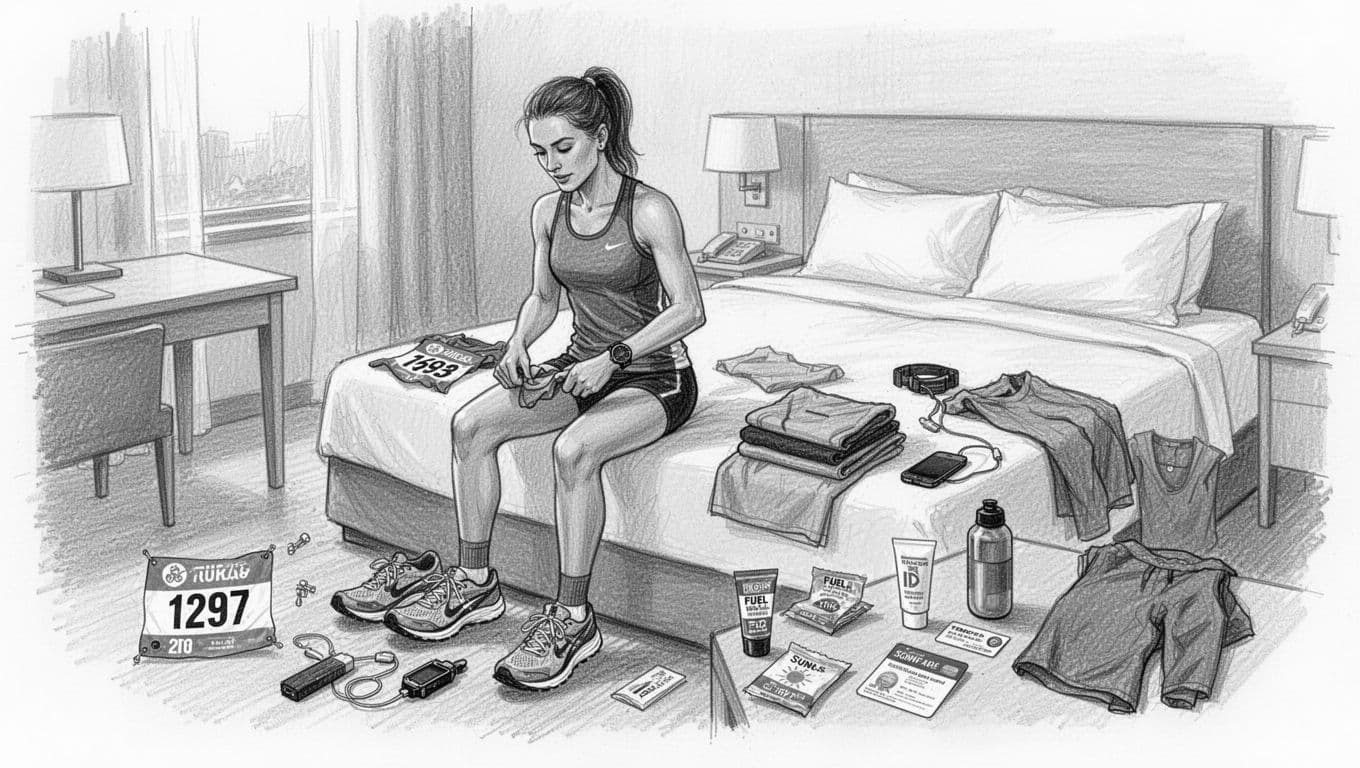
Organize:
- Your bib and pins, running shoes, socks, and clothing layers.
- Your watch, phone, charger, and any required cables.
- Tested fuel, fluids, sunscreen, ID, and transit card.
- Comfortable post-race clothes, including fresh socks and underwear.
Charge your phone and watch overnight, then test both alarms. Use the hotel’s alarm clock as your primary alarm and set a personal backup alarm on your phone. Place the phone where you must sit or stand to turn it off. Before sleeping, check your breakfast, bathroom, departure, and transportation plan one more time.
Protect your sleep and avoid last-minute surprises
Keep the evening calm and familiar. Eat the same type of meal you have tolerated during training, limit screen time before bed, and avoid trying a new restaurant, supplement, or large dessert. Poor hydration can also disturb sleep, so drink according to your normal routine rather than forcing extra fluids.
Choose Your Distance, Duration and Goal Time
Make three quick selections and open the exact plan built for your race target.
Looking for a Fully Personalized Training Plan?
The training plans above are an excellent choice if they match your goal. However, if you’d rather train with a plan built specifically around your current fitness, goal race, preferred training days, weekly mileage, and target finish time, our RDA Custom Training Plans provide a personalized solution. We also have running courses available for runners seeking to run faster from the mile to the marathon.
Why Choose a Custom Training Plan?
| Standard Training Plan | RDA Custom Training Plan |
|---|---|
| Follows a fixed schedule | Built around your schedule |
| Standard weekly mileage | Peak mileage customized for you |
| Fixed workout days | Train on the days you choose |
| Same structure for everyone | Designed around your current fitness |
| Static plan | Updated as your fitness improves |
| One-time purchase | Ongoing personalized coaching and support |
What You’ll Receive
- A training plan built specifically for your goal
- Personalized training paces
- Long runs, tempo runs, threshold workouts, interval sessions, recovery runs, and easy runs
- Peak weekly mileage matched to your experience level
- Flexible training schedule that fits your life
- Ongoing plan adjustments as your fitness improves
Ready to Train Smarter?
Stop guessing and start following a plan built specifically for you, your schedule, and your racing goals.
Leave enough time for bathroom needs, dressing, and questions about the route. Ask the front desk about the nearest open entrance, the first train, taxi restrictions, and any event-related road closures. Supporters may need their own route because they finish moving around at a different time, while race-day roads and station access can change.
Your goal is to remove decisions before morning, not to create a perfect night of sleep.
Plan recovery, checkout, and the journey home
Ask about late checkout, post-race showers, elevator access, luggage storage, and nearby recovery meals before race morning. If late checkout isn’t available, confirm whether you can shower or use a changing area after finishing. Also ask where your bags will remain and when you can collect them.
Plan the trip home while your legs still feel fresh. A route that seems easy before the race may feel long after 26.2 miles, so identify a taxi pickup point, station entrance, or supporter meeting place. Keep recovery essentials in your day bag rather than burying them in checked luggage. Pack fresh clothes, fluids, familiar food, medication, and any compression gear you normally use.
After finishing, walk gently for a few minutes, eat a familiar recovery meal, and change into dry clothing. Then collect your luggage, confirm checkout, and travel home without rushing.
Phone checklist: route checked, race materials collected, gear laid out, devices charged, fuel packed, alarms tested, breakfast confirmed, transportation planned, shower and luggage storage confirmed, recovery clothes accessible.
Frequently Asked Questions
Choosing among hotels near the Nagoya Women’s Marathon start line is easier when you plan around race-morning logistics, not distance alone. These answers cover the details that can affect your sleep, breakfast, transportation, and arrival at Vantelin Dome Nagoya.
What is the closest area to the Nagoya Women’s Marathon start line?
Hotels around Vantelin Nagoya Dome and Ozone are typically the most convenient choices. Depending on the property, you may walk to the venue or take a short trip to Nagoya Dome-mae Yada Station.
The closest available room isn’t always the best room for your race. Before booking, verify the official start entrance, your walking route, station access, and any race-year restrictions in the official marathon outline. Barriers and restricted streets can change the route shown on a regular map.
How early should I arrive at the Nagoya Women’s Marathon start area?
Follow the official runner instructions rather than relying on a generic rule, such as arriving one hour before the start. Your assigned wave, assembly time, and corral access time should control your schedule.
Allow extra time for the first train, security checks, restrooms, bag drop, warm-up, and the walk through the venue. If you need a bathroom visit after arriving, a few spare minutes can prevent a stressful rush to your assigned area. Work backward from your assembly deadline, then add a margin for crowds and delays.
Can I stay near Nagoya Station and still reach the start line easily?
Yes, Nagoya Station can work well if you plan the trip in advance. Check the first train, every transfer, the station exits, and any race-day service changes before you commit to the hotel.
Nagoya Station offers excellent connections for Shinkansen travelers, airport transfers, and post-race travel. However, reaching the dome usually requires more planning than staying near Vantelin Nagoya Dome or Ozone. Save your route offline and identify a backup option in case a station entrance or road is restricted.
When should I book a hotel for the Nagoya Women’s Marathon?
Book as soon as your race participation and travel dates are reasonably certain. Start with a flexible cancellation policy, then keep checking for better rates or a quieter room as the event approaches.
Popular areas can fill quickly, especially near the dome, Ozone, and major subway stations. Rooms with two beds, early breakfast options, and flexible checkout may sell before standard rooms. Read the cancellation terms carefully, including the deadline, deposit rules, and charges for changing dates.
Do Nagoya hotels offer early breakfast or late checkout for marathon runners?
Some hotels may provide an early meal, takeaway breakfast, luggage storage, or late checkout for race participants. However, you shouldn’t assume any of these services are available without written confirmation from the property.
Ask when breakfast begins, whether staff can prepare food to go, and whether luggage storage or post-race showers require an advance request. Bring your own tested breakfast and recovery food as a backup. Race morning is a poor time to test an unfamiliar buffet, supplement, or convenience-store meal.
What should I do if my hotel is not within walking distance of the dome?
Create one primary subway or taxi route and one backup plan before race morning. Test the route after check-in, including the hotel exit, station entrance, transfer points, and final walk to the start area.
Leave earlier than you would on a normal day because crowds, closures, and limited early services can add time. Keep your transit card ready, save the hotel address in Japanese, and confirm where a taxi can legally drop you off. A farther hotel can still work when the route is simple, tested, and supported by extra time.
Conclusion
The best hotel near the Nagoya Women’s Marathon start line is the one that makes race morning feel routine. Choose an area that gives you dependable access to Vantelin Nagoya Dome, whether you stay near the venue, Ozone, a convenient subway station, or central Nagoya. Station distance matters, but so do a quiet room, familiar breakfast options, flexible cancellation terms, and enough space to prepare without rushing.
Before finalizing your reservation, confirm the official race information for your event year. Check the start and assembly details, first train times, station entrances, road closures, luggage arrangements, and your backup transport plan. A refundable room near a simple route is often a stronger choice than a cheaper hotel that creates extra decisions before sunrise.
Your hotel cannot run the marathon for you, but it can protect the habits that support performance. Sleep well, eat food your body knows, reach the dome on time, and plan your recovery before the finish. Thoughtful logistics conserve energy for the only part of the day that matters most, the marathon itself.


