

Best Hotels Near the Eiffel Tower for the Paris Marathon
Running the Paris Marathon means facing an early start, crowded streets, and a long finish near the Arc de Triomphe. Your hotel location can shape the entire race weekend, especially when you need to reach the start line before sunrise and protect your energy for the miles ahead.
Choosing one of the hotels near the Eiffel Tower for the Paris Marathon can make those logistics easier. The area offers access to public transportation, restaurants for pre-race meals, and a calm base for sightseeing, stretching, and recovery after the race. You’ll also be close to one of Paris’s most recognizable landmarks without giving up the practical comforts that matter to runners.
This guide compares nearby neighborhoods and hotel options, explains race morning transportation, and covers booking prices, cancellation policies, and room features. You’ll also find help choosing a stay that fits your budget, comfort preferences, and performance goals.
Key Takeaways
- Hotels near the Eiffel Tower for the Paris Marathon offer convenient access to restaurants, transit, sightseeing, and post-race recovery.
- Choose a location with a reliable route to the start, since early-morning travel and road closures can add stress.
- Prioritize quiet rooms, elevators, breakfast timing, luggage storage, and flexible cancellation policies when comparing hotels.
- Book early because marathon weekend demand can raise prices and reduce room availability.
- Use this Paris Marathon hotel guide to compare stays near the race’s start and finish areas.
Luxury hotels with memorable views and premium recovery comfort
A high-end stay near the Champ de Mars or Trocadéro can make marathon weekend feel calmer, especially after a long international journey. Larger rooms give you space to organize race gear, while room service, flexible dining, deep bathtubs, spa access, and quiet floors support recovery when your legs need a break.
Hotels such as Shangri-La Paris, Hôtel Plaza Athénée, Pullman Paris Tour Eiffel, and Hôtel San Régis are useful examples to investigate, but treat them as starting points rather than guaranteed rankings. Compare the exact room category, cancellation terms, breakfast hours, and route to the race start before booking.
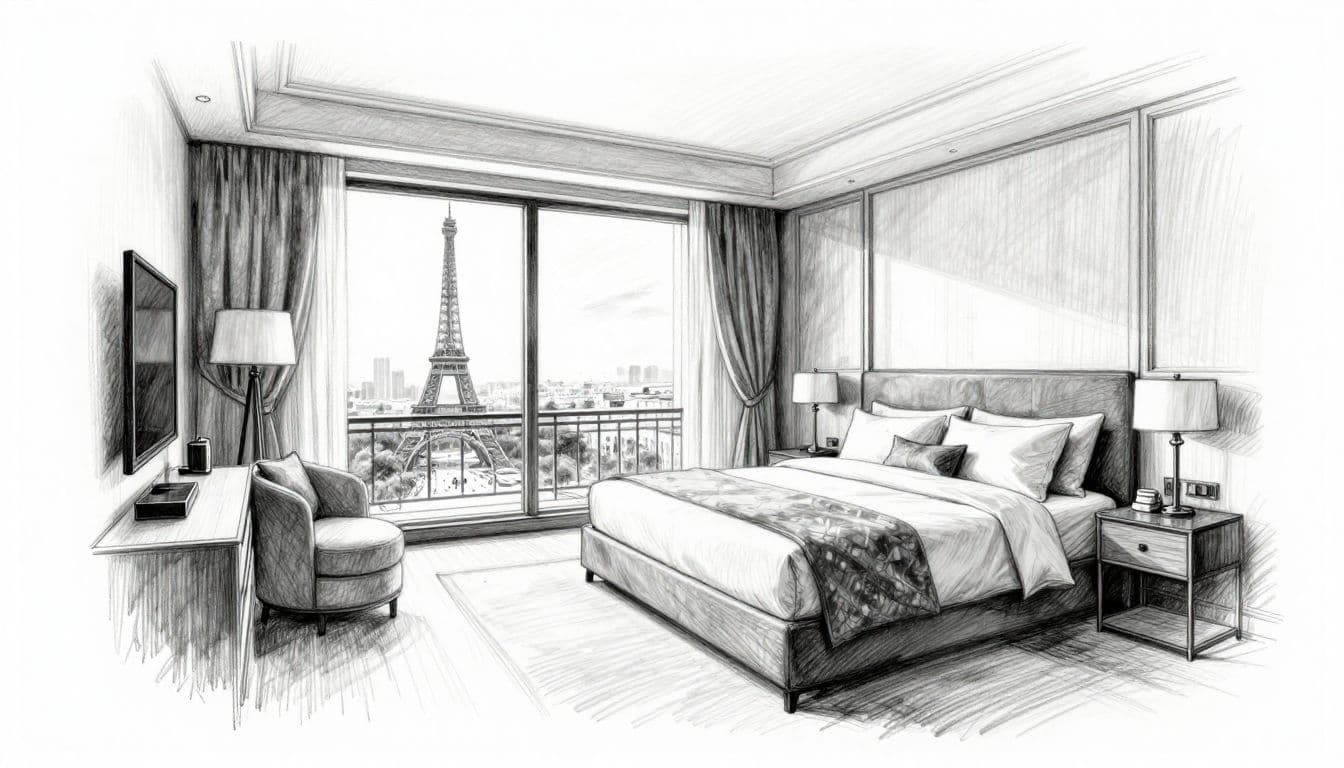 A beautiful Eiffel Tower view does not guarantee a quiet room. Ask whether the room faces a courtyard, a busy avenue, or a hotel facility. Also check the fastest race morning route, since a landmark can be close while the start area remains inconvenient by transit.
Mid-range hotels that balance location, sleep, and value
Dependable three- and four-star hotels around Bir-Hakeim, Grenelle, École Militaire, and La Motte-Picquet often give runners the best balance. You stay close to the Eiffel Tower, but you avoid paying only for a famous address. Examples worth comparing include Hôtel de l’Exposition – Tour Eiffel, Hôtel France Eiffel, Hôtel Le Relais Saint Charles, and Hôtel de la Motte Picquet.
Room quality varies, so check more than the star rating. Air conditioning and soundproofing matter when you need uninterrupted sleep before an early start. A comfortable bed helps, but a room facing a lively street can still undermine your night. Look for recent guest comments about noise, elevators, and temperature control.
Breakfast deserves equal attention. Some hotels open early enough for coffee and a light meal, while others begin service after runners need to leave. Ask about takeaway breakfast bags, luggage storage after checkout, and whether staff can store a suitcase while you race or travel onward.
The neighborhood can also lower race-weekend stress. A nearby supermarket helps you buy familiar breakfast foods, fruit, water, and post-race snacks. Metro stations near Bir-Hakeim, La Motte-Picquet-Grenelle, and École Militaire provide useful connections, although you should confirm service changes and event-day closures before relying on one route. For additional comparisons, review Paris Marathon hotel options, then verify details directly with each property.
Budget-friendly stays for runners who spend more time outside
Lower-cost rooms become easier to find when you search a few metro stops beyond the Eiffel Tower. Areas such as Grenelle, Commerce, Javel, and parts of the 15th arrondissement can provide practical access without the premium charged for landmark views.
A budget hotel may offer a smaller room, limited breakfast service, shared facilities, or a longer walk to the station. Those tradeoffs can work well if you spend most of the day sightseeing, attending the expo, or resting in a park. Prioritize a private bathroom, reliable heating or air conditioning, and a quiet sleeping arrangement before choosing decorative extras.
Aparthotels can reduce daily costs during a longer trip. A kitchenette lets you prepare oatmeal, pasta, eggs, or simple recovery meals instead of eating every meal out. Choose a property near a grocery store, and confirm whether the room includes a refrigerator, cookware, and usable counter space.
Laundry access also helps runners pack lighter and wash training clothes after arrival. Before booking, check whether laundry is inside the property, shared with guests, or available at a nearby laundromat. A modest room with these practical features can support your marathon better than an expensive room that lacks breakfast flexibility and basic storage.
Choose the right distance from the Eiffel Tower and race start
The Eiffel Tower area is scenic, well connected, and convenient for restaurants and sightseeing. However, it isn’t the same place as the Paris Marathon start or finish. Race morning may require walking, a metro ride, or a pre-booked taxi, while the finish near the Arc de Triomphe can create another long journey after several hours on your feet.
Before booking, compare the entire route rather than measuring distance on a hotel map. Check the official Paris Marathon start-area information, then review transport notices for your specific race edition. Road closures, station changes, and restricted taxi access can alter the easiest route.
A short walk is usually the simplest option when your hotel sits near a practical station or a direct path to the start. One direct metro ride can also work well, especially when it avoids stairs, crowded interchanges, and uncertain connections. A longer commute may offer a lower room rate, but it demands an earlier alarm and a larger travel buffer.
A hotel can be close to the Eiffel Tower yet inconvenient for race morning. Judge it by the route to the start, not the landmark view.
Look for runner-friendly amenities before you book
A rooftop view looks great in a listing photo, but it won’t help much when you need sleep, breakfast, and a fast exit before sunrise. Focus on the details that support your routine before and after the marathon.
Look for:
- A firm but comfortable bed that supports a full night of sleep.
- Blackout curtains to block early light and busy street lighting.
- Reliable heating or air conditioning, with controls that work inside the room.
- A refrigerator for drinks, fruit, recovery food, or medication.
- A kettle for coffee, tea, oatmeal, or another familiar pre-race meal.
- An elevator, particularly if your room is on an upper floor or your legs are sore after the race.
- Luggage storage if you need to check out before the finish.
- A bathroom with a useful shower, enough space to move, and dependable hot water.
Ask the hotel whether it offers early breakfast on marathon morning. If the dining room opens too late, staff may prepare a takeaway bag with bread, fruit, yogurt, or a hot drink. Don’t assume this service exists, since some properties require advance notice or charge an additional fee.
Also confirm late checkout before you reserve. A few extra hours can give you space to shower and change after collecting your medal, but availability may depend on occupancy. If late checkout isn’t possible, secure luggage storage and identify a nearby place where you can clean up comfortably.
Match the hotel to your budget and travel group
Your ideal room depends on who is traveling with you. A solo runner may prefer a compact room near direct transit, while a couple might value a larger bed, a quiet floor, and enough space to organize two race kits. Training partners often save money by sharing a twin room, provided both guests can sleep without disturbing each other.
Families need a different calculation. A suite, connecting rooms, or an aparthotel may cost more upfront but provide better sleep and easier meals than two small rooms. Check the actual bed arrangement, bathroom count, refrigerator size, and elevator access before paying a nonrefundable rate.
Price the full stay, not only the nightly room charge. Add taxes, breakfast, airport transfers, metro fares, meals, luggage fees, and extra nights. A cheaper hotel farther away can lose its advantage after repeated taxis and longer travel. One additional night may also protect your recovery and reduce pressure on departure day.
When possible, reserve a refundable rate, then read every cancellation condition. Check the deadline, penalty amount, deposit rules, and whether the hotel allows date changes. Marathon plans can shift because of flight delays, illness, or registration changes, so flexibility has practical value.
Plan the trip from your hotel to the start line
A hotel near the Eiffel Tower can make race weekend comfortable, but you still need a precise plan for reaching the Paris Marathon start. Test the route before race morning, allow extra time for closures, and keep your morning simple enough to protect your energy.
Use walking directions to check the route from your hotel to the nearest practical station or directly to the start area. Then compare that walk with a Paris Metro or RER journey. The best option may be a hotel near Bir-Hakeim, Trocadéro, or a convenient metro line rather than the closest possible address to the Eiffel Tower.
Check the first-service times for your race morning, then add a generous margin for station closures, security controls, crowds, and slower walking. Avoid unnecessary transfers, especially if they involve long underground passages or multiple staircases. Choose one primary route and identify a backup route that uses a different station, walking path, or taxi pickup point.
The official Paris Marathon route information can help you understand the start area and surrounding roads. Race-day transport notices may also list affected metro stations and recommended services, so review the latest RATP marathon transport guidance before leaving your hotel.
Build a calm pre-race routine in a Paris hotel room
Treat the evening before the race as a staging period. Put your bib, shoes, race kit, fuel, and weather layers in one place before you go to sleep. Confirm that the bib is attached correctly, since searching for pins or adjusting it at the last minute creates avoidable tension.
Lay out clothing for the forecast, including a light layer you can remove if the morning feels cold. Pack a small trash bag for discarded gear, blister supplies, tissues, and a phone battery pack. Keep your familiar gels, chews, or sports drink with you rather than assuming a nearby shop will stock the exact products your stomach tolerates.
Breakfast should follow the routine you practiced during marathon training. Choose known foods such as oatmeal, toast, a banana, or another meal that has worked before. Don’t experiment with unfamiliar French pastries, rich sauces, new supplements, or unusual sports products before the race. A beautiful meal can still be a poor performance decision when your gut is under stress.
Drink normally through the evening and morning instead of forcing large amounts of water. Plan bathroom timing around breakfast, departure, and your expected arrival at the start. Leave enough time for a final visit without rushing to the station.
Recover after the finish and reconnect with your group
Returning to a hotel near the Eiffel Tower can take longer than expected. Crowded streets, barriers, spectators, and tired legs can turn a short map distance into a slow walk after the finish near the Arc de Triomphe.
Set a clear meeting point before the race, preferably away from the busiest exit area. Carry identification, a charged phone, and your hotel address. If your group loses contact, each person should know the backup meeting place and the simplest route back.
Before booking, ask whether the hotel offers luggage storage, showers, a sauna, or late checkout. These services can make the hours after the race far more manageable, especially if your room is no longer available. Afterward, walk gently, replace fluids, eat a familiar recovery meal, and keep sightseeing light. Your marathon already fills the day, so avoid an overloaded schedule that turns recovery into another endurance event.
Book early, then compare the full cost of the stay
Start researching as soon as the Paris Marathon date is confirmed, especially if the race falls on a popular spring weekend. Rooms near the Eiffel Tower can disappear quickly, and remaining rates may carry stricter conditions. Reserve a suitable option early, then compare the total cost carefully before committing.
Look at the hotel’s direct rate and at least one reputable booking platform. The lowest nightly price may not be the lowest final price after taxes, breakfast, deposits, resort-style fees, transportation, or extra nights. Check the same room type and dates on every site, then verify the final terms before payment.
 An additional night may give you more time to recover, shower, and leave Paris without rushing after the finish. However, it also adds another room charge, taxes, meals, and possibly transportation. Price both options, then decide whether the extra comfort justifies the higher total.
Understand cancellation, deposit, and marathon date risks
Hotel policies use similar-sounding terms that can create very different financial results. Read the booking conditions before entering your card details.
- Free cancellation usually means you can cancel without a room penalty until a stated deadline. After that time, the hotel may charge one night or the full reservation amount.
- Partial refund rates may return only part of your payment after cancellation. The exact refund can depend on the date, number of nights, and rate conditions.
- Nonrefundable reservations generally offer a lower price but restrict cancellations and date changes. If you withdraw from the race, become ill, or change travel plans, the hotel may still keep the payment.
- Card authorization holds are temporary amounts placed on your card to check available funds or cover incidentals. They aren’t always a final charge, but they can reduce your available credit until the hotel releases the hold.
A deposit policy is separate from cancellation flexibility. One property may take a deposit at booking, while another may authorize the card and collect payment later. Confirm whether the deposit is refundable, when the balance is due, and what happens if you shorten the stay.
Save the confirmation email, rate rules, payment receipt, and any messages exchanged with the property. If a hotel representative promises a date change or special arrangement, ask for that agreement in writing. Keep the booking number available on your phone and in a separate travel document.
Race plans and hotel plans are connected, but they follow different rules. The Paris Marathon cancellation and insurance policy may restrict race-entry refunds, while your hotel has its own contract. A postponed, canceled, or rescheduled race does not automatically require the property to refund your room.
Ask the hotel directly: “If the race date changes, can you move my reservation to the new dates, and what fees would apply?”
Use smart alternatives when Eiffel Tower hotels are full
If hotels near the Eiffel Tower for the Paris Marathon sell out, widen the search without abandoning race-day practicality. Passy, Grenelle, Invalides, and Montparnasse can offer better availability with a straightforward Metro connection or manageable walk.
Aparthotels work well for runners who want a refrigerator, kitchenette, or extra space. Guesthouses may provide a quieter, more personal stay, while chain properties often offer clearer loyalty benefits, consistent room standards, and familiar breakfast arrangements. Always check the actual route to the start before choosing based on neighborhood alone.
A clean, quiet room near a reliable transit line can support your race better than an expensive room with an Eiffel Tower view. Fewer transfers, dependable sleep, and a simple morning exit protect your energy when the alarm rings before sunrise. After comparing the full price, choose the booking that leaves you rested, mobile, and financially comfortable.
Choose Your Distance, Duration and Goal Time
Make three quick selections and open the exact plan built for your race target.
Looking for a Fully Personalized Training Plan?
The training plans above are an excellent choice if they match your goal. However, if you’d rather train with a plan built specifically around your current fitness, goal race, preferred training days, weekly mileage, and target finish time, our RDA Custom Training Plans provide a personalized solution. We also have running courses available for runners seeking to run faster from the mile to the marathon.
Why Choose a Custom Training Plan?
| Standard Training Plan | RDA Custom Training Plan |
|---|---|
| Follows a fixed schedule | Built around your schedule |
| Standard weekly mileage | Peak mileage customized for you |
| Fixed workout days | Train on the days you choose |
| Same structure for everyone | Designed around your current fitness |
| Static plan | Updated as your fitness improves |
| One-time purchase | Ongoing personalized coaching and support |
What You’ll Receive
- A training plan built specifically for your goal
- Personalized training paces
- Long runs, tempo runs, threshold workouts, interval sessions, recovery runs, and easy runs
- Peak weekly mileage matched to your experience level
- Flexible training schedule that fits your life
- Ongoing plan adjustments as your fitness improves
Ready to Train Smarter?
Stop guessing and start following a plan built specifically for you, your schedule, and your racing goals.
Frequently Asked Questions
The best hotel for Paris Marathon weekend depends on more than its distance from the Eiffel Tower. Sleep quality, race morning transport, breakfast timing, and post-race comfort can matter more than a landmark view.
Use the questions below to compare your options before booking. For additional neighborhood ideas, see this Paris Marathon hotel guide.
How close should I stay to the Eiffel Tower for the Paris Marathon?
There is no single ideal distance. A hotel five minutes from the Eiffel Tower may create more race morning stress than one farther away with a direct, reliable route to the start.
Prioritize a quiet room, dependable access to transportation, nearby food options, and a route with few transfers. Then check the official race information for that year’s event, because the start area, road closures, and transit arrangements can change.
Is it better to stay near the Eiffel Tower or near the marathon start?
The better choice depends on the start location, your morning routine, and your sightseeing plans. Staying near the start may reduce travel stress, while an Eiffel Tower hotel can make sightseeing and evening meals more convenient.
A hotel near a direct Metro or RER route may offer the best balance. You can reach the start without several connections, then return to a pleasant neighborhood after the race. Compare the actual journey, not just the number of miles between landmarks.
What should I ask a hotel before booking for race weekend?
Contact the property before paying, and request important answers in writing. Ask about:
- Breakfast hours and whether the hotel offers takeaway food.
- Luggage storage before check-in or after checkout.
- Elevator access and the possibility of a quiet room.
- Late checkout, post-race showers, and hot water availability.
- Cancellation terms, deposits, and date-change rules.
- Local road closures that could affect taxis, walking routes, or transfers.
Written confirmation can prevent confusion when different staff members handle your request. Save the response with your reservation details.
Can I walk from an Eiffel Tower hotel to the Paris Marathon start?
You may be able to walk, but the time depends on that year’s start area and road restrictions. Streets that look open on a normal map may close to vehicles, pedestrians, or hotel pickups during race preparations.
Map the route in advance and walk part of it if you arrive early. Allow extra time for crowds, security checks, closed streets, barriers, and finding the correct entrance. A route that appears simple can take much longer when thousands of runners move through the same area.
Should I book breakfast at my hotel before the marathon?
Book hotel breakfast only if its timing and menu match your tested race plan. An early opening helps, but unfamiliar foods or a rushed dining room can disrupt your stomach and departure schedule.
A takeaway option may work better. You can also pack familiar foods from home, such as oatmeal, toast, a banana, or an approved sports drink. Race morning is a poor time to test a new meal, even when the hotel restaurant looks appealing.
Where can I stay if hotels near the Eiffel Tower are too expensive?
Check Metro-connected neighborhoods such as Grenelle, La Motte-Picquet, Invalides, Passy, and Montparnasse. These areas may offer better room rates while keeping you within reach of the start and the Eiffel Tower.
Before choosing a farther hotel, compare its total transit time, neighborhood noise, room amenities, and complete cost. Include breakfast, Metro fares, taxis, and any extra night required by the commute. A modest room near a direct line can beat a cheaper stay that demands multiple transfers before sunrise.
Conclusion
The best hotel near the Eiffel Tower for the Paris Marathon is the one that protects your sleep, simplifies race morning, supports familiar fueling and recovery, and fits your travel budget. A landmark view is a bonus, but a quiet room and a dependable route to the start will serve you better when the alarm rings before sunrise.
Compare Champ de Mars, Trocadéro, Grenelle, Invalides, and other Metro-connected areas before booking. Each offers a different balance of price, sightseeing access, transport, and post-race comfort.
Check official race updates, confirm breakfast and transit details, and choose a rate with clear cancellation policies. With the logistics settled, you can enjoy Paris while keeping your attention on the race ahead.


