

Best Hotels Near the Denver Colfax Marathon Finish Line
Race morning starts before sunrise: an early alarm, cool Denver air, quiet streets, and a familiar question about whether you planned every detail. As closed roads reshape the city, finding the City Park finish area ahead can bring a wave of relief, especially when your hotel is close enough to simplify the final miles of race-day logistics.
Still, choosing among hotels near the Denver Colfax Marathon finish line takes more than finding the shortest map distance. You’ll also need to consider a quiet room, dependable breakfast access, transportation, late checkout policies, and a comfortable place to recover after the race. This guide compares useful hotel areas and named properties, then covers expected costs, transportation details, booking decisions, and recovery-focused advice for runners.
The finish area, course map, road closures, and hotel policies can change, so confirm current information through the official Denver Colfax Marathon site and directly with each property before booking. First, let’s look at the hotel locations that make race morning and the hours after the finish easier to manage. Looking for where to stay for the Denver Colfax Marathon? Make sure to reserve your rooms early.
Key Takeaways
- Choose hotels near the Denver Colfax Marathon finish line for a shorter, calmer race-morning trip to City Park.
- Prioritize quiet rooms, early breakfast access, secure parking, flexible checkout, and a comfortable place to recover.
- Confirm the current course, finish area, transportation plan, and road closures through the official Denver Colfax Marathon site.
- Book early, since nearby rooms can fill quickly around race weekend and rates may rise.
- Check walking distance carefully, then compare it with shuttle access, rideshare restrictions, and your post-race mobility.
Best Hotels Near the Denver Colfax Marathon Finish Line
The Denver Colfax Marathon finish area is associated with City Park, but runners should verify the official course and finish-line map for their race year before booking. A hotel that appears nearby may still require a longer walk because of park entrances, barricades, pedestrian routes, and closed roads.
Plan Your Complete Marathon Weekend
Choosing the right hotel can reduce race-day stress, shorten travel time, improve sleep, and make your entire marathon weekend smoother.
More Denver Colfax Marathon Hotel Guides
Closest-feeling stays for runners who want a simple morning
Queen Anne Bed & Breakfast, Capitol Hill, Uptown, and nearby central Denver hotels can suit runners who want a calmer start with less dependence on race-morning traffic. Warwick Denver may appeal to runners who prefer a full-service hotel, while properties such as The Ramble Hotel, The Source Hotel, and Catbird Hotel offer distinctive stays in neighborhoods with dining and local character.
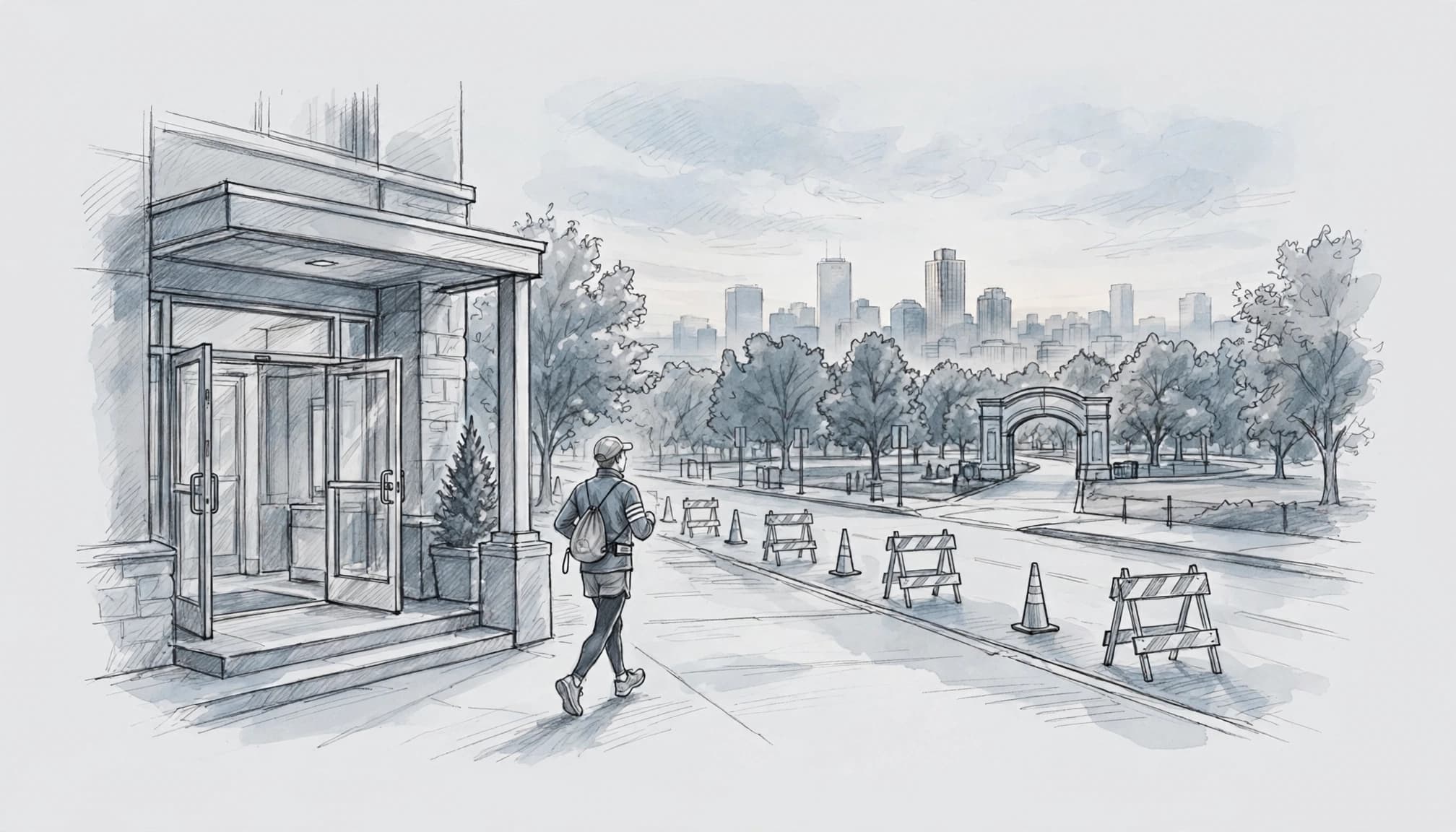
These options aren’t automatically walkable to the start or finish. Check the hotel’s front door against the actual runner entrance, start area, bag drop, and post-race pickup point. The official Colfax course map and closure information can show why a short-looking route may become awkward on race morning.
Before reserving, confirm:
- Whether you can walk from the lobby to the correct park entrance without crossing restricted roads.
- Where race-day restrooms, bag drop, and runner access points are located.
- Whether the hotel can arrange early transportation if walking isn’t practical.
- Where family members or rideshares can meet you after the finish.
- Whether elevators, parking areas, and the lobby remain accessible during closures.
A nearby address helps most when the route is simple. Otherwise, a short rideshare or transit trip may be more reliable than an ambitious walk through unfamiliar streets.
Downtown and Cherry Creek hotels with more dining and comfort
Downtown Denver gives runners more restaurants, larger hotel inventories, fitness facilities, and family-friendly services. Hyatt Centric Downtown Denver, Grand Hyatt Denver, Hotel Teatro, and The Oxford Hotel may work well for visitors who want comfort and easy access to post-race meals. However, road closures can make a short drive slow, so don’t judge convenience by normal traffic times.
Cherry Creek offers another practical choice, especially for families or runners who want shopping and restaurant options nearby. The Jacquard, Halcyon, Hotel Clio, and Moxy Denver Cherry Creek may provide a comfortable base, but they generally require a planned transit trip or rideshare rather than true walkability to City Park.
Ask each hotel about Saturday-night dining hours, early Sunday transportation, parking, elevators, noise reviews, cancellation terms, and race-weekend availability. A restaurant that closes before your pre-race meal or a transportation desk that opens late can create more stress than a slightly longer hotel commute. The best room is the one that supports your schedule from dinner through recovery, not simply the one closest to the finish-line pin.
Which Denver Neighborhood Works Best for Your Race Weekend?
The best neighborhood depends on what happens after the finish. A runner who wants the shortest possible walk needs a different base than a family planning meals, sightseeing, and several nights in Denver. Neighborhood labels are broad, so always compare the exact hotel address with the race entrances, road closures, and your likely post-race route.
City Park, Uptown, and Capitol Hill for short post-race travel
These central areas are strong choices when you want to limit transportation after the race. City Park puts green space, open sidewalks, and the finish-area surroundings nearby, while Uptown and Capitol Hill add cafes, restaurants, and central streets within reach. After several hard marathon miles, that shorter return can feel more valuable than a larger room.
Still, nearby doesn’t always mean direct. Once barricades go up, park entrances, crossing points, and restricted roads can force a longer walking route. Review the official course map and closure information before assuming a hotel near City Park offers a simple finish-line walk.
Older buildings may have smaller elevators, limited parking, or less sound insulation. Weekend noise, uneven sidewalks, and hills can also affect sleep and recovery. Ask for a quiet-facing room, confirm elevator access, and identify a flat route that works when your legs are tired.
Downtown Denver for transit, restaurants, and family plans
Downtown fits groups with different race-weekend needs. Runners can find full-service hotels, fitness rooms, room service, and restaurants, while spectators and children have more dining and activity choices between race events. Transit access can also help companions reach viewing areas without driving.
The tradeoff is race-day traffic. Rideshare pickup zones may shift, and closed streets can turn a normal downtown trip into a slow, indirect journey. Check the traffic plan rather than relying on ordinary Sunday travel times. Local coverage of Colfax Marathon road closures and transit impacts can help your group plan separate routes.
RiNo and Cherry Creek when comfort matters more than proximity
RiNo suits travelers who want restaurants, coffee, and a lively setting after the race. Music and nightlife can continue late, however, so request a room away from bars, event spaces, and busy streets. Cherry Creek may work better for families or runners who value upscale amenities, shopping, larger rooms, and convenient recovery meals.
Both areas usually require extra travel to City Park. Busy roads, race closures, and post-race congestion can affect cars and rideshares, even when the map distance looks manageable. Build in extra time, arrange pickup details before race morning, and prioritize a quiet-facing room.
Use this quick comparison when narrowing your hotel search:
| Area | Walking access | Quiet rooms | Restaurants | Parking | Transit | Post-race recovery |
|---|---|---|---|---|---|---|
| City Park, Uptown, Capitol Hill | Best potential | Varies | Strong | Often limited | Good | Best for less travel |
| Downtown | Usually limited | Varies | Strongest | Hotel-dependent | Strong | Best for groups |
| RiNo | Usually limited | Nightlife risk | Strong | Varies | Good | Best for atmosphere |
| Cherry Creek | Limited | Often comfortable | Strong | Often better | Moderate | Best for amenities |
Choose the exact address, not just the neighborhood name.
What Runners Should Check Before Booking a Marathon Hotel
The best hotels near the Denver Colfax Marathon finish line support your schedule before, during, and after the race. A short distance helps, but practical details often matter more when your alarm rings before sunrise and your legs need recovery afterward.
Call the hotel before booking, then ask specific questions that booking sites often leave unanswered. Confirm the answers by email so you have a written record if staff members change before race weekend.
Breakfast, coffee, and food storage for an early start
Many hotel restaurants open too late for marathon runners. Ask whether the property offers grab-and-go bags, early coffee, or a breakfast area before the race. A coffee maker in the room can help, but confirm that it will be available and working when you arrive.
An in-room refrigerator gives you space for familiar food and drinks. Some rooms also include microwaves, although you may need to request one or use a shared guest area. Ask whether you can store simple race foods, such as oatmeal, bananas, bagels, or sports drinks. Hotels may have rules about outside food, especially in rooms without refrigerators.
Nearby grocery stores can make race-weekend planning easier, particularly for families with different schedules. Use the Denver Colfax course and closure information to check whether a nearby store remains accessible by foot or car.
Don’t test unfamiliar hotel breakfast items on race morning. Bring foods you have already used during training, and keep family members’ needs in mind without turning the hotel room into a full kitchen.
Choose Your Distance, Duration and Goal Time
Make three quick selections and open the exact plan built for your race target.
Looking for a Fully Personalized Training Plan?
The training plans above are an excellent choice if they match your goal. However, if you’d rather train with a plan built specifically around your current fitness, goal race, preferred training days, weekly mileage, and target finish time, our RDA Custom Training Plans provide a personalized solution. We also have running courses available for runners seeking to run faster from the mile to the marathon.
Why Choose a Custom Training Plan?
| Standard Training Plan | RDA Custom Training Plan |
|---|---|
| Follows a fixed schedule | Built around your schedule |
| Standard weekly mileage | Peak mileage customized for you |
| Fixed workout days | Train on the days you choose |
| Same structure for everyone | Designed around your current fitness |
| Static plan | Updated as your fitness improves |
| One-time purchase | Ongoing personalized coaching and support |
What You’ll Receive
- A training plan built specifically for your goal
- Personalized training paces
- Long runs, tempo runs, threshold workouts, interval sessions, recovery runs, and easy runs
- Peak weekly mileage matched to your experience level
- Flexible training schedule that fits your life
- Ongoing plan adjustments as your fitness improves
Ready to Train Smarter?
Stop guessing and start following a plan built specifically for you, your schedule, and your racing goals.
Sleep quality, room location, and recovery-friendly features
A luxury label doesn’t guarantee good sleep. Request a room away from elevators, ice machines, stairwell doors, bars, ballrooms, and busy streets. Ask whether the hotel has a quiet floor, blackout curtains, reliable air conditioning, and beds that match the room photos and description.
Bathroom setup matters after a long race. Check whether the shower has strong water pressure, enough hot water, grab bars if needed, and space for your toiletries. A pool, fitness room, or luggage storage can also help, although availability may change during busy weekends.
Before confirming a room, ask about Wi-Fi, elevator access, and the time luggage storage opens. Pack familiar sleep aids, earplugs, an eye mask, and any recovery items you already trust. A room that looks impressive online may still be a poor choice if noise interrupts your sleep.
Parking, cancellation terms, and marathon-weekend policies
Ask whether the hotel offers valet or self-parking, the full overnight rate, in-and-out access, and secure entry. If you drive, find out whether your vehicle can leave during road closures or whether returning guests must use a different entrance. Race-day traffic can change quickly, so review the official Colfax closure guidance before relying on a car.
Flexible cancellation protects you if an injury, weather issue, travel delay, or race schedule change affects your plans. Also ask about late checkout, day-use rooms, post-race showers, luggage storage, and marathon-related minimum stays.
Before booking, run through this short checklist:
- Confirm the room location, bed, curtains, air conditioning, bathroom, and noise policy.
- Ask about breakfast, coffee, refrigeration, microwave access, and Wi-Fi.
- Verify parking fees, security, in-and-out access, and road-closure procedures.
- Review cancellation deadlines, late checkout, luggage storage, and minimum stays.
- Request every important answer in writing.
Written confirmation turns a verbal promise into something you can reference when race weekend arrives.
How to Get From Your Hotel to the Denver Colfax Marathon Finish Line
Race-day transportation depends on your hotel’s exact location, the year’s road closures, and how you plan to leave City Park afterward. A route that works on an ordinary Saturday may fail on marathon morning, so compare walking, public transportation, rideshare, driving, and drop-off plans before race day.
Walking and public transit can beat a short race-day drive
Walking is often the simplest choice when your hotel sits near the finish area and you can reach the correct park entrance without crossing restricted roads. Walk the route once before race day, including the return trip, so you know where sidewalks, crossings, restrooms, and alternate paths are located. Save offline directions because cell service can become unreliable around large crowds.
Public transportation may reduce stress when the hotel is farther away or when driving would require several detours. However, confirm current station access, service alerts, modified routes, and operating hours instead of relying on an old travel guide. Check RTD service updates and the official Colfax closure information close to race day.
Carry identification, your phone, payment method, required medication, and a small amount of water. Allow extra time for barricades, crowded platforms, security directions, and walking between the station and the finish area. Also check whether your route reaches the start or the finish, since those locations may have different access rules.
Why rideshare and parking plans need a backup
Rideshare pickup zones can move during the event, while surge pricing and blocked streets can make a short trip expensive and slow. Curb access may be limited, and drivers might stop several blocks away. Meeting family near the finish can also be difficult when spectators, runners, fencing, and temporary signs fill the surrounding streets.
Agree on a meeting point outside the busiest zone, such as a clearly identified hotel lobby, open café, or cross street beyond the closure area. Carry a fully charged phone, and choose a backup location in case your group loses contact. If you need accessible transportation, confirm curb space, walking distance, and entrance access with the hotel and race organizers.
Drivers should ask the hotel about garage access, in-and-out privileges, alternate entrances, and road closures before race morning. A drop-off plan needs the same review. The driver may need to leave you several blocks away, so allow time for the final walk and changing weather.
Plan the trip back to your room after the finish
The return trip deserves as much attention as the morning journey. Tired legs, wet clothes, heat, cold, and post-race crowds can drain your patience quickly. Store a change of clothes, recovery food, water, and a light jacket at the hotel or with a permitted support person.
Ask about late checkout, luggage storage, nearby showers, and a reserved day-use room. If the hotel cannot extend checkout, confirm whether you can use a fitness-center shower or store bags securely. A planned recovery stop can make the difference between a comfortable afternoon and a long, uncomfortable wait for transportation.
Hotel Costs and Booking Strategy for Denver Marathon Weekend
The cheapest nightly rate isn’t always the cheapest race weekend. When comparing hotels near the Denver Colfax Marathon finish line, calculate the full stay, then weigh convenience against the cost of getting to City Park and back.
Compare the full stay price, not just the nightly rate
Start with the room rate, then add every charge that appears before payment:
- Room taxes and local assessments.
- Self-parking or valet parking.
- Destination, resort, facility, or urban fees.
- Breakfast, room service, and coffee costs.
- Pet fees, if you bring a dog.
- Transit fares, rideshares, or race-day shuttles.
- An extra night if you want a slower recovery day.
- Storage, late checkout, or post-race shower fees.
A hotel with a higher room rate may cost less overall if it removes a daily parking charge or lets you walk to the finish area. Meanwhile, a cheaper property farther away can lose its advantage after several rideshares, parking fees, and meals on the road.
Road closures can also change the calculation. Review the official Colfax course and closure information before assuming a short driving route will work on race morning. The map lists closure periods and affected roads, so you can judge whether a nearby hotel truly reduces travel.
Use this checklist before paying:
- Compare the final total for the entire stay, not only the base rate.
- Check whether taxes and facility fees appear in the displayed price.
- Confirm parking costs, valet tips, in-and-out access, and closure restrictions.
- Add breakfast, groceries, transit, rideshares, and recovery meals.
- Decide whether an extra night protects your recovery and travel schedule.
- Save a screenshot or confirmation showing the total and cancellation terms.
When should you book, and what should you confirm?
Book once your race date, travel plans, and room needs are firm. Marathon weekend can increase demand near City Park, especially when runners need two beds, an accessible room, a refrigerator, several rooms, or a particular cancellation policy.
Waiting may produce a better deal, but only monitor prices when your current reservation allows free cancellation. A refundable rate can be worth the premium when injury, travel delays, or changing race plans could cost more than the difference. If you find a lower rate later, cancel the original booking only after the new reservation is confirmed.
Check the hotel’s direct website before using a third-party booking site. Direct booking may offer clearer policies, easier changes, loyalty points, or member benefits. Hotel points can help when you already have a balance, but compare the points required with the cash rate and taxes. A vacation rental may suit a larger group or longer stay where legal and appropriate, though check its cleaning fees, cancellation rules, distance from race access, and transportation needs. Splitting the stay between two properties only makes sense when the savings outweigh the hassle of moving luggage before or after the race.
Call the hotel and confirm:
- Early coffee, breakfast, refrigerator access, and race-morning food options.
- Late checkout, luggage storage, showers, and a quiet recovery space.
- Parking access during closures and the nearest usable entrance.
- Walking routes, shuttle timing, rideshare pickup, and road restrictions.
- Accessible entrances, elevators, room features, and bed arrangements.
Ask for important answers in writing. A clear final total and confirmed race-day plan are worth more than a tempting rate that leaves key costs hidden.
Build a Recovery-First Race Weekend Around Your Hotel
A hotel near the Denver Colfax Marathon finish line can support more than race-morning access. Use it as a controlled base for the final 24 hours, then as a recovery station during the first hours after you finish. That means fewer decisions, less unnecessary travel, and more attention available for pacing and execution.
Before making plans, check the current Denver Colfax Marathon course information. Start locations, closures, runner access, and finish-area rules can change from year to year.
Use the room to protect sleep and race-morning focus
Treat the night before the marathon as a quiet preparation window. Lay out your bib supplies, shoes, socks, clothing, fuel, phone charger, and directions before you go to bed. Put everything in the order you’ll use it, so a dark room and an early alarm don’t force you to search through luggage.
Keep race-morning food familiar. Pack the breakfast and fluids you’ve already used during training, whether that means oatmeal, a bagel, a banana, or a sports drink. Race weekend is a poor time to test a hotel buffet, new supplements, or an unfamiliar coffee routine.
Room conditions matter too. Set the temperature to a comfortable level, close the curtains, and use earplugs or white noise if the hallway is active. Hydrate normally rather than drinking large amounts right before bed, and set a simple backup alarm on a second device if possible.
A short shakeout may help if it matches your normal routine, but keep it easy and brief. You don’t need sightseeing miles or a late dinner after traveling. Every unnecessary decision takes a small amount of attention, and those choices add up before the start.
Make post-race comfort part of the booking decision
After 26.2 miles, a hotel room that seemed a manageable walk away can feel much farther. Ask about shower access, elevator reliability, lobby seating, luggage storage, nearby food, and late checkout before booking. A place to sit and change clothes may matter as much as a lower room rate.
If you plan to walk back, identify a flat, permitted route and avoid adding sightseeing immediately after the marathon. Eat, drink, change, and rest first. Later, gentle movement may help you loosen up, but don’t force a long walk when your legs are painful or unsteady.
Ask the property about accessible entrances, elevator routes, seating, and bathroom features if you have mobility limits or are traveling with someone who does. Confirm whether staff can store luggage and whether a post-race shower is available if late checkout isn’t.
A recovery-friendly hotel reduces the distance between the finish line and your next useful decision: getting clean, fueled, and safely rested.
If you develop chest pain, severe shortness of breath, confusion, fainting, unusual weakness, or symptoms that concern you, seek qualified medical care rather than simply returning to your room.
Frequently Asked Questions
Choosing among hotels near the Denver Colfax Marathon finish line involves more than checking a map pin. These answers cover the race-day details that can affect your booking, route, meals, and recovery plans.
Where is the Denver Colfax Marathon finish line?
The finish area has been associated with City Park, and the official marathon information describes the race as starting and finishing there. However, the exact finish-line setup, runner entrance, fencing, spectator zones, and post-race pickup areas can vary by race year.
Before booking, review the official marathon course overview and read the race-week instructions. Use those details instead of relying on an older map, hotel listing, or straight-line distance.
How early should I book a hotel for the Denver Colfax Marathon?
Book as soon as your race date and travel plans are clear, especially if you need two beds, an accessible room, several rooms, or a refrigerator. Popular room types near City Park can disappear before the general room supply does.
A refundable reservation gives you room to monitor prices later. You can rebook at a lower rate if one appears, but only cancel the original reservation after confirming the new booking and its terms.
Can I walk from a Denver hotel to the marathon finish line?
Possibly, but walkability depends on the exact address, open park entrance, barricades, pedestrian crossings, and the official race layout. A hotel that looks close on a map may require a longer route once streets and paths close.
Test the route before race morning, including the return trip after the race. Also confirm the official pedestrian plan, since your condition after 26.2 miles may make a route that seemed easy feel much longer.
Do Denver hotels offer early breakfast for marathon runners?
Some properties may provide early coffee, a grab-and-go breakfast, or limited food service before the race. Those options aren’t guaranteed, and restaurant hours may differ during marathon weekend.
Ask the hotel directly about service times, food storage, and room coffee before you arrive. Bring familiar race-morning food as a backup, since race day is a poor time to depend on an unfamiliar breakfast.
Is it better to stay near the finish or near downtown Denver?
The better choice depends on your priorities. A hotel near City Park may simplify the finish, shorten the post-race trip, and make recovery easier, while downtown offers more restaurants, transit options, and room choices.
Downtown can still work well, but you’ll need a careful transportation plan around road closures and changing pickup zones. Review the current Denver Colfax Marathon information before assuming normal Sunday travel times apply.
What should I do if my hotel is sold out or too expensive?
Widen your search to nearby neighborhoods, then compare refundable and nonrefundable rates carefully. Check different room types, consider sharing with a trusted teammate, and look at lodging near reliable transit rather than focusing only on City Park.
Before committing, verify cancellation rules, legal rental requirements, parking, cleaning fees, taxes, and transportation costs. A lower nightly rate may cost more after added fees and multiple race-day rideshares.
Conclusion
The best hotel near the Denver Colfax Marathon finish line isn’t always the one with the smallest map distance. The right choice protects your sleep, makes food and transportation easier, supports recovery after 26.2 miles, and fits your budget and support crew. A slightly farther hotel can work better when it offers a quiet room, dependable access, and a clear race-day plan.
Before you reserve, verify the official finish location and compare the full cost, including parking, meals, transportation, taxes, and late checkout. Confirm hotel policies for breakfast, luggage storage, showers, cancellation, room access, and road closures. Map your route to City Park, review the return trip, and choose a backup-friendly rate when possible.
The strongest plan gives you fewer decisions on race morning. You’ll arrive at the start calm, fueled, and prepared, then return to a room that helps your body recover instead of adding another challenge to the day. When comparing hotels near the Denver Colfax Marathon finish line, choose the stay that supports the entire race weekend, not just the shortest walk on a map.


