

Best Hotels Near the Champs-Élysées for the Paris Marathon
Before sunrise, the Champs-Élysées is already awake. Runners move through the cool Paris air toward the start area, checking watches, sipping water, and trying to stay calm as the avenue fills with marathon energy. Choosing one of the best hotels near the Champs-Élysées for the Paris Marathon can make that morning far easier.
Your location affects more than the walk to the start. A quiet room can protect your sleep, while a nearby bakery or hotel breakfast helps you fuel without rushing. Shorter routes to warm up, bag drop, transportation, and post-race recovery also leave you with more time and fewer decisions before and after 26.2 miles.
This guide compares the most practical areas around the Champs-Élysées, hotel types for different budgets, and property examples such as Hôtel Barrière Le Fouquet’s Paris and citizenM Paris Champs-Élysées.
You’ll also find booking advice, race-day logistics, likely costs, and questions to ask before reserving, so you can choose a base that supports your race plan. First, we’ll look at which neighborhoods give runners the best balance of convenience, sleep, and access to the course.
Key Takeaways
- Hotels near the Champs-Élysées reduce race-morning walking, helping you reach the start calmer and better prepared.
- Choose a quiet room, reliable breakfast, and easy access to Metro stations over impressive views alone.
- Compare luxury, mid-range, and budget properties before booking, since Paris Marathon demand can raise prices quickly.
- Confirm cancellation terms, breakfast hours, luggage storage, and late checkout directly with the hotel.
- Review this Paris Marathon hotel guide alongside your race-day route and transportation plan.
Hotels Near the Champs-Élysées for the Paris Marathon: Where to Stay
The Champs-Élysées area puts you close to the Paris Marathon’s central race atmosphere, but nearby hotels are not equally convenient. Before booking, confirm your race year’s official start and finish locations, road closures, runner transport, and bag-drop arrangements. These details can change the best walking route.
Choose the right side of the avenue for an easier race morning
A hotel near the Arc de Triomphe may suit runners who want the shortest practical route to the upper Champs-Élysées. Depending on the start layout and your assigned wave, you may be able to walk out, warm up, and reach the entrance area without crossing the full avenue. The setting also gives you quick access to the western end of the course, although restaurants and groceries can be less convenient than in other nearby zones.
Hotels closer to Concorde or Madeleine often offer more choices for dinner, coffee, pharmacies, grocery stores, and Metro connections. That extra convenience helps when you need a simple pre-race meal or want to return to your room after finishing. Trocadéro can provide a quieter base and strong transport links, but the route to the start may involve more walking, a Metro transfer, or barriers around major intersections.
 Do not judge a hotel by straight-line distance alone. Marathon fencing, police controls, closed crossings, and one-way pedestrian routes can turn a short map measurement into a long walk. Open the likely walking route in a map app, then check it against the Paris Marathon route guide once race information is published.
A hotel 0.4 miles away can be less practical than one 0.8 miles away if the closer property sits behind race barriers.
The features marathon runners should prioritize
Race morning rewards function over spectacle. A dramatic Champs-Élysées view won’t help if traffic noise cuts into your sleep or the elevator leaves you waiting in the lobby.
Prioritize these details when comparing hotels:
- Ask for a quiet room away from the street, elevator, bar, and service areas.
- Confirm blackout curtains, especially if you need daytime rest after arrival.
- Look for reliable elevators and a bathroom with a bathtub or enough space for recovery.
- Check whether breakfast starts early, or whether the hotel can provide takeaway food.
- An in-room kettle and mini-fridge make it easier to prepare coffee, drinks, and familiar snacks.
- Flexible check-in, late check-out, and luggage storage can simplify your arrival and post-race plans.
- Choose a front desk that can help with taxis, Metro questions, and the pedestrian route around closures.
Sleep quality and race-day access should usually outrank a landmark view. Ask the hotel for written confirmation of breakfast hours, luggage storage, and late checkout before you reserve, since marathon weekend demand can limit these services.
The Best Hotel Options for Different Paris Marathon Budgets
Your ideal hotel near the Champs-Élysées depends on more than its nightly rate. Race-day convenience, sleep quality, breakfast timing, and recovery space can matter just as much as the room itself. Compare each property against your budget and race plan before booking.
Luxury hotels for comfort, service, and recovery
Five-star hotels such as Hôtel Barrière Fouquet’s Paris, Hôtel de Crillon, and Hôtel Plaza Athénée offer a high level of comfort before and after the Paris Marathon. Larger rooms, strong sound insulation, room service, concierge support, and spa facilities can make the stay feel easier when your legs are tired and your schedule is tight.
A concierge may help arrange transportation, restaurant reservations, or practical directions around race-day closures. Room service can also give you more control over meals, especially if you prefer familiar food before an early start. Some luxury properties may offer flexible service, such as early food options or late checkout, but never assume these benefits are included.
Luxury comes with limits. A five-star address doesn’t automatically provide the best route to the start, and a beautiful room cannot replace a quiet night’s sleep. Before reserving, ask whether the hotel can provide:
- Early breakfast, takeaway food, or in-room dining before the race.
- Late checkout or secure luggage storage after you finish.
- Help with pedestrian routes, taxis, and road closures on marathon morning.
- A quiet room away from the avenue, elevators, restaurants, and service areas.
Apartment-style suites for families and longer stays
Serviced apartments such as Fraser Suites Le Claridge Champs-Élysées and La Clef Champs-Élysées Paris suit families, couples, and runners staying several nights. A kitchen lets you prepare oatmeal, coffee, recovery meals, and familiar snacks without relying on restaurant hours. Separate sleeping areas can also help one person rest while another prepares for the day.
Extra living space matters when you travel with children, share the room with a partner, or bring substantial running gear. However, apartment-style properties vary widely. Confirm the kitchen equipment, refrigerator size, cookware, elevator access, grocery options, and cancellation terms before paying a nonrefundable rate.
Also check the walking route to the start during likely road closures. A property may appear close on a map but require a long detour around barriers. Ask the hotel how guests usually reach nearby Metro stations and main avenues on race morning.
More affordable stays without giving up race-day convenience
Upscale options such as Paris Marriott Champs-Élysées Hotel and Warwick Paris may appeal to runners who want a central location with fewer luxury extras. For a lower-cost stay, compare Hôtel Beauchamps and citizenM Paris Champs-Élysées by sleep quality, cleanliness, transit access, and recent guest reviews, not star rating alone.
A smaller hotel with good blackout curtains and a short walk may serve you better than a cheaper room far from the course. That bargain can lose its value if a long commute forces an early alarm, adds transfers, or creates stress around closures. Review the route, breakfast hours, luggage policy, and cancellation terms before choosing the lowest rate.
How to Book a Champs-Élysées Hotel Around the Paris Marathon
Booking one of the best hotels near the Champs-Élysées for the Paris Marathon takes more planning than choosing a room for an ordinary weekend. Race demand can push rates higher, reduce available room types, and add minimum-stay rules. Use a clear booking process so your hotel supports your race plan instead of creating new problems.
Compare total trip cost, not just the nightly rate
Start by calculating the full cost of your stay. Add the nightly room rate, city taxes, breakfast, parking, airport transfers, extra guests, and any resort or service charges shown during checkout. Also include additional nights caused by flight schedules. A low rate can lose its appeal when an inconvenient arrival or departure forces you to book another night.
Compare the hotel’s direct website with reputable booking platforms, then check what each rate includes. Review the total for the same room, occupancy, dates, cancellation terms, and payment schedule. Some properties show taxes late in the booking process, while others charge a deposit immediately.
A slightly higher rate may be the better choice when it includes a useful breakfast, a kitchen, or a shorter race-morning journey. For example, a room with a kitchen can reduce restaurant costs and give you control over familiar pre-race food. A nearby hotel may also save money on taxis and reduce the need to wake up earlier.
Ask the hotel these questions before paying
Contact the property before you finalize your reservation, especially if your race plan depends on early access or special arrangements. Ask these questions:
- Can the hotel provide an early breakfast, breakfast box, or takeaway coffee?
- Will staff store your luggage after checkout, and is there a fee?
- Is late checkout available on marathon day, and when will the final decision be made?
- Can you request a room away from elevators, street noise, bars, and nightlife?
- How will guests reach the hotel during road closures and pedestrian restrictions?
- Can the front desk arrange a taxi pickup, and where can the vehicle stop?
- Will the elevator operate early in the morning and after the race?
- Has the property hosted Paris Marathon guests before?
Request written confirmation by email. Keep details about breakfast, luggage storage, late checkout, access, and fees with your booking records. Phone promises can be difficult to verify when the lobby is busy.
When should runners reserve their room?
Reserve as soon as your race registration and travel dates are secure. Popular central hotels often lose their best room types first, while marathon weekend demand can raise prices across the area. Waiting may leave you choosing between a higher rate, a longer walk, or a nonrefundable room.
A practical strategy is to reserve a refundable room first, provided the cancellation deadline suits your plans. Then monitor rates, occupancy, and policies without assuming the price will drop. If you find a better option later, cancel the original reservation within its stated deadline.
Before paying, check the minimum-stay rule, deposit amount, payment date, room occupancy, and exact cancellation cutoff. Confirm whether the hotel applies marathon-specific policies, then ask for those terms in writing. Set a calendar reminder several days before the deadline so your booking remains a choice, not an accidental commitment.
Race-Day Logistics From Hotels Near the Arc de Triomphe and Champs-Élysées
Staying near the start can remove much of the race-morning stress, but only if you plan the route before the streets fill. Build your morning around your assigned wave, access point, security checks, bag drop, and the time you need to feel ready at the starting line.
Build a simple marathon morning timeline
Work backward from your required corral entry time rather than choosing an arbitrary alarm. Allow enough time to wake up without rushing, eat your familiar breakfast, use the bathroom, dress, leave the hotel, and reach the correct access point. Add extra minutes for pedestrian diversions, security, bag drop, and a short warm-up.
A practical framework looks like this:
- Wake early enough to eat calmly and drink the amount of water you normally tolerate.
- Leave the room with time for a restroom stop and any final gear check.
- Follow the official Paris Marathon instructions for your exact wave, corral, and access route.
- Reach the start area early enough to handle barriers, security, bag drop, and crowd movement.
- Complete a short, easy warm-up before entering your assigned corral before the cutoff.
Race access can change by year, so don’t rely on a previous runner’s route or a familiar map pin. Check the official instructions when they are released, then save the details on your phone and write down your corral location.
Walk the route from your hotel the day before. This shows you where the sidewalks narrow, which crossings may be blocked, and how long the journey takes at an easy pace. Identify a backup route as well. A second path through a nearby street or Metro station can protect your plan if police barriers close the most direct road.
Your hotel may be close to the Arc de Triomphe, yet the correct start entrance could require a longer approach than the map suggests.
Getting around when central Paris roads are closed
Walking is often the most predictable option near the start because traffic restrictions can prevent cars from reaching the Champs-Élysées. However, barriers may block streets you used the previous day, so follow race signage and allow extra time.
The Metro can work well when stations remain open and your route avoids restricted areas. Check operating updates before leaving, and don’t assume every nearby station will run normally on race morning. Taxis and rideshares offer less certainty because drivers may need to stop several blocks away. A hotel-arranged car can help, but confirm the permitted drop-off point instead of depending on a vehicle reaching the entrance.
Carry your hotel’s full address, keep your phone charged, and save an offline map. If you use a taxi, show the address rather than naming only the Champs-Élysées. Avoid any plan that depends on a car reaching the hotel entrance after the race, when closures may last for hours.
Breakfast, hydration, and gear storage
Protect the meal your body knows. Pack familiar oats, bread, sports drink, gels, or another simple option if hotel breakfast begins too late. Avoid testing rich pastries, unfamiliar dairy, or new supplements on marathon morning. Keep coffee in your routine if you regularly drink it, but don’t add extra caffeine or water without practice.
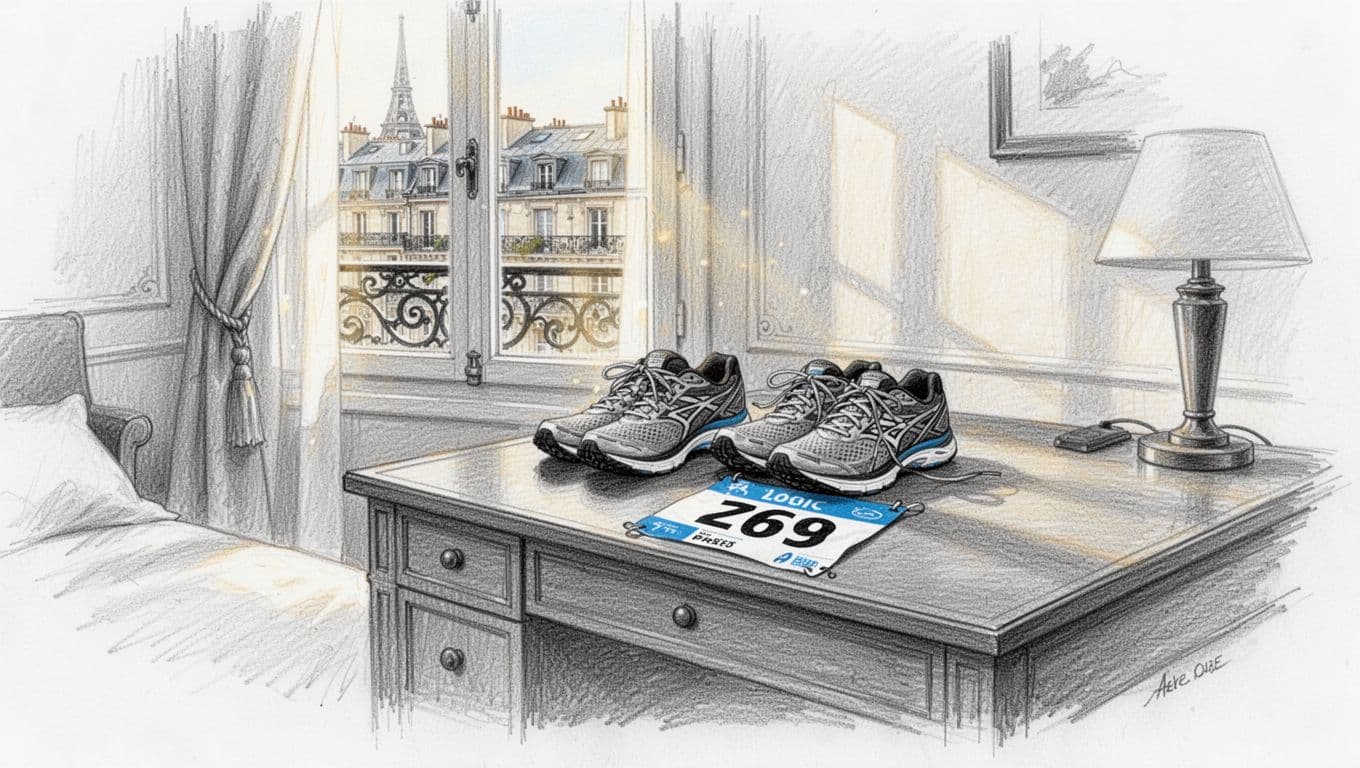
Set out your bib, safety pins, shoes, socks, layers, phone, and fueling supplies before bed. Store race essentials in your carry-on or personal bag, never in checked luggage. Ask about the hotel’s luggage storage policy, including the storage location, collection process, and any fee.
Returning to the hotel after the finish
A known recovery route matters because the walk back can feel much harder than the morning walk. Before race day, identify a Metro option, a taxi pickup area, and a meeting point away from the busiest finish crowds.
Confirm whether the hotel offers late checkout, a shower option, or secure luggage storage. If you need an accessible route, elevator, wheelchair space, or reduced walking distance, arrange it in advance. Families should choose a clear meeting point and agree on a backup plan in case phones fail or crowds separate the group.
How to Pick the Right Location for Sleep, Food, and Recovery
Distance from the start matters, but it shouldn’t decide your hotel by itself. For the Paris Marathon, the best location also protects your sleep, keeps familiar food within reach, and makes recovery manageable after the finish.
Quiet streets can be better than the closest address
A hotel directly on the Champs-Élysées puts you near the race atmosphere, yet the avenue can stay busy late into the night. Traffic, nightlife, construction, celebrations, and early-morning deliveries may disrupt sleep. Elevators, lobby activity, and street-facing rooms can create noise even when the neighborhood seems calm during the day.
When you book, request a rear-facing or upper-floor room away from elevators, bars, restaurants, and service areas. Ask whether the windows and walls provide effective soundproofing. Recent guest reviews often reveal details that hotel descriptions leave out, especially comments about traffic, thin walls, air-conditioning noise, or weekend crowds.
Once you arrive, test the room before unpacking fully. Lie on the bed for several minutes, check whether the mattress supports your usual sleeping position, and adjust the temperature. Confirm that the curtains block streetlights and sunrise, then inspect the bathroom, shower pressure, towels, and space for toiletries. If something affects your sleep, request a change immediately rather than waiting until race eve.
Find reliable meals near your hotel
Check restaurant menus and opening hours before arrival, with extra attention to the night before and morning of the race. A nearby bakery may open early for bread, bananas, or coffee, while a supermarket can provide oats, yogurt, rice, snacks, and recovery drinks. Pharmacies are also useful for basic supplies, blister care, and toiletries.
Choose simple, familiar meals that match what you eat during marathon training. A dependable plate of rice, pasta, potatoes, lean protein, or bread is usually easier to manage than a rich meal chosen because you’re visiting Paris. Trying unfamiliar sauces, heavy desserts, or large portions immediately before racing can leave your stomach unsettled.
Keep a backup plan. Grocery delivery, packaged food in your room, and hotel room dining can protect your schedule if restaurants close early or fill up. Ask whether the hotel can provide breakfast before the race, a breakfast box, or takeaway coffee. Depending on one restaurant creates unnecessary risk during a crowded marathon weekend.
Make recovery easier after 26.2 miles
After the finish, every extra decision feels heavier. Look for enough room space to stretch, a comfortable shower or bath, easy access to water, and nearby food you can tolerate when appetite is low. A pharmacy within walking distance can help with essentials, while a reliable elevator reduces the strain of climbing stairs.
Before booking, confirm the route from the street to your room. A short walk through a crowded lobby is easier than a long detour, multiple elevator changes, or stairs with tired legs. Late checkout and luggage storage can also make the afternoon less stressful.
A hotel with a spa or pool may sound appealing, but basic recovery deserves priority. Hydration, familiar food, sleep, and a comfortable bed will usually help more than a luxury amenity you never use. Choose the location that makes those fundamentals easy during the days before and after the race.
Common Booking Mistakes Marathon Travelers Should Avoid
A hotel near the Champs-Élysées can simplify race weekend, but only when the booking matches your full plan. Distance, price, and reputation matter less than sleep, access, food, transportation, and what happens after you cross the finish line.
Do not confuse a famous address with a useful race base
A prestigious Champs-Élysées address may still create problems. Street noise, late-night traffic, limited grocery choices, and expensive restaurants can make race preparation harder. Road barriers may also force you away from the most direct route to your start corral.
Check the walking route, not just the map distance. A hotel listed as 0.5 miles from the start may require a long detour if crossings close. Confirm your assigned corral and entrance through the official race instructions, then identify a backup route. A quieter hotel slightly farther away may protect your sleep and offer better access to breakfast, pharmacies, and Metro stations.
Protect your plan with flexible policies
Race schedules can change, while flights may face delays, cancellations, or baggage problems. Illness, injury, and family emergencies can also affect your trip. A nonrefundable room booked too early can turn an unavoidable change into a costly loss.
Before paying, review the cancellation deadline, date-change rules, deposit schedule, payment timing, and no-show policy. Check whether the hotel applies special marathon-weekend terms or minimum-stay requirements. A flexible rate may cost more, but it gives you room to adjust when your travel plans move.
Save the confirmation email, booking number, payment record, and the hotel’s direct phone number. Keep those details available offline as well. Never assume the hotel will waive a fee because your flight was disrupted or you became ill. Only rely on the written policy or a written agreement from the property.
Use a final marathon-week checklist
One week before departure, confirm your corral, bib pickup location, official race instructions, transportation plan, and hotel breakfast hours. Check the weather forecast, then pack clothing for changing conditions, including warm-up layers and rain protection if needed.
Review your fueling supplies, medication, prescriptions, race shoes, bib accessories, and phone charger. Ask the hotel about luggage storage, elevator operation, early breakfast, and late checkout. Save emergency contacts for your travel companion, hotel, airline, race organizer, and local medical services.
On arrival, walk the route to bib pickup and the start entrance. Locate a grocery store, pharmacy, Metro station, and practical post-race meal. Place your bib, shoes, clothing, fuel, medication, and charging cable where you can reach them easily.
Use this final check:
- Confirm race access, road closures, and your corral entrance.
- Test your room’s noise level, temperature, curtains, and elevator access.
- Buy familiar breakfast food and recovery snacks.
- Charge your phone, watch, and headphones before race eve.
- Share your hotel address and meeting point with your travel companion.
- Save a return route for after the finish, including a walking backup.
A good hotel booking removes decisions from race morning. Check each detail before you leave home, then verify the plan once you arrive in Paris.
Frequently Asked Questions
The best hotel near the Champs-Élysées depends on your race schedule, sleep preferences, and plans after the finish. These answers cover practical details that can affect your Paris Marathon weekend more than a hotel rating.
How close should my Paris Marathon hotel be to the start?
The ideal distance depends on your assigned wave, official access route, sleep needs, and comfort with walking. A runner with an early corral may value a hotel within a short walk, while another runner may prefer a quieter room farther away and leave earlier.
Prioritize a predictable journey over a specific number of minutes. Check the official Paris Marathon instructions for your access point, corral, bag-drop location, and any road closures before deciding whether a hotel location works.
Can I walk from a Champs-Élysées hotel to the Paris Marathon start?
Many hotels near the Champs-Élysées may be walkable from the start area. However, race barriers, police controls, and closed crossings can change the route, even when the hotel appears close on a map.
Check the official pedestrian access map when it becomes available, then walk the route in advance. Leave extra time for security, crowd movement, bag drop, and corral entry. A familiar route reduces decisions when you are tired, nervous, or carrying race gear.
What should I ask a hotel about marathon weekend breakfast?
Ask whether breakfast opens early enough for your assigned wave and whether the hotel can prepare a takeaway box. Confirm the availability of coffee, water, room service, and simple foods you already tolerate before long runs.
Tell the hotel about food allergies and ask how staff handle cross-contact. If you plan to bring oats, yogurt, drinks, or other food, check whether the room has a refrigerator and whether outside food can be stored. Get these answers before booking, or at least before you arrive in Paris.
Is it better to stay near the start or finish of the Paris Marathon?
Staying near the start creates a simpler pre-race morning, with less travel before you enter your corral. A hotel near the finish may make the post-race return easier, especially when your legs are sore and central streets remain crowded.
Choose based on your personal priorities, mobility, family plans, and the official course for that year. Consider where your travel companions will wait, how you will collect your belongings, and whether you want a short walk before the race or afterward.
How much do hotels near the Champs-Élysées cost during marathon weekend?
Prices vary widely by property, room type, booking date, demand, and cancellation terms. Compare current rates for your exact dates instead of relying on a fixed average, since marathon weekend can change availability quickly.
Calculate the full stay, including taxes, breakfast, transportation, parking, and any minimum-stay rules. A room with a higher nightly rate may cost less overall if it includes breakfast or eliminates several taxi trips.
Can I leave my luggage at the hotel after checkout?
Many hotels offer luggage storage after checkout, but policies, capacity, security procedures, and access hours vary. Confirm the service in advance, particularly if you plan to shower, change, or collect your bags several hours after finishing.
Keep valuables, medication, race documents, electronics, and essential travel items with you. Pack those belongings in a small personal bag so you aren’t dependent on the hotel’s storage room after the marathon.
Choose Your Distance, Duration and Goal Time
Make three quick selections and open the exact plan built for your race target.
Looking for a Fully Personalized Training Plan?
The training plans above are an excellent choice if they match your goal. However, if you’d rather train with a plan built specifically around your current fitness, goal race, preferred training days, weekly mileage, and target finish time, our RDA Custom Training Plans provide a personalized solution. We also have running courses available for runners seeking to run faster from the mile to the marathon.
Why Choose a Custom Training Plan?
| Standard Training Plan | RDA Custom Training Plan |
|---|---|
| Follows a fixed schedule | Built around your schedule |
| Standard weekly mileage | Peak mileage customized for you |
| Fixed workout days | Train on the days you choose |
| Same structure for everyone | Designed around your current fitness |
| Static plan | Updated as your fitness improves |
| One-time purchase | Ongoing personalized coaching and support |
What You’ll Receive
- A training plan built specifically for your goal
- Personalized training paces
- Long runs, tempo runs, threshold workouts, interval sessions, recovery runs, and easy runs
- Peak weekly mileage matched to your experience level
- Flexible training schedule that fits your life
- Ongoing plan adjustments as your fitness improves
Ready to Train Smarter?
Stop guessing and start following a plan built specifically for you, your schedule, and your racing goals.
Conclusion
Before sunrise, the Champs-Élysées fills with runners preparing for the Paris Marathon. The right hotel can make that early start calmer by protecting your sleep, simplifying access to your corral, and keeping familiar food within reach. After 26.2 miles, a convenient return route, comfortable room, and luggage plan can make recovery less demanding.
When comparing hotels near the Champs-Élysées for the Paris Marathon, look beyond the map pin and nightly rate. Check the exact walking route around race barriers, breakfast hours, luggage storage, late checkout, cancellation terms, room noise, and the total cost of your stay. Recent guest reviews can also reveal practical details that hotel descriptions leave out.
The best hotel near the Champs-Élysées is the one that supports your race plan at every stage, from a quiet night to a reliable breakfast and an easier post-race return. Reducing travel stress gives you more energy for the performance that matters on race day.


