

Best Hotels in the 8th Arrondissement for the Paris Marathon
Before sunrise, the Champs-Élysées can feel almost still, with closed streets, cool air, and runners moving toward the starting line as Paris wakes around them. A few hours later, the avenue fills with race-day energy, making your hotel location a practical part of your marathon plan.
Hotels in the 8th Arrondissement for the Paris Marathon put you near the start while keeping restaurants, Metro connections, and post-race comfort within easy reach. A short walk can reduce pre-race stress, while a comfortable room gives you space to rest, refuel, and recover after 26.2 miles.
Hotel rates, road closures, start details, and transport plans can change each year, so confirm current information on the official Paris Marathon website and with your chosen property. The guide ahead covers recommended hotels, the best parts of the arrondissement, race-morning planning, and booking tips for a smoother Paris Marathon stay.
Key Takeaways
- Hotels in the 8th Arrondissement for the Paris Marathon place you close to the Champs-Élysées start, reducing race-morning travel and stress.
- Choose a property with quiet rooms, reliable breakfast options, luggage storage, and late checkout when available.
- Check Metro access, restaurant hours, and road closures before booking, since race-day travel differs from a normal Paris visit.
- Plan your pre-race walk, breakfast, hydration, and clothing the night before to protect your routine.
- Review the Paris Marathon route details and confirm current race instructions before traveling.
Best Hotels in the 8th Arrondissement for the Paris Marathon
Choosing among hotels in the 8th Arrondissement for the Paris Marathon comes down to more than distance. Your room, breakfast plan, noise level, and route to the start can shape the entire morning. The 8th Arrondissement hotel guide can help you compare locations, but always confirm current details directly with the property.
Luxury hotels near the start and finish areas
High-end hotels near the Champs-Élysées, Avenue Montaigne, Rue de la Boétie, and the Arc de Triomphe appeal to runners who want service and minimal race-morning travel. Hôtel de Crillon offers an elegant setting near Place de la Concorde, while Le Bristol Paris sits farther west along Rue du Faubourg Saint-Honoré. Four Seasons Hotel George V and Hôtel Barrière Fouquet’s Paris place you near the Golden Triangle and the Arc de Triomphe side of the avenue.
These properties may offer quieter interior rooms, larger bathrooms, strong service, wellness facilities, and flexible dining arrangements. A comfortable bath, massage area, or calm breakfast can help you preserve your routine before and after the race. Shorter travel also reduces the risk of confusion caused by road closures or limited early-morning transportation.
Still, luxury does not guarantee better sleep. A room facing a busy avenue may be louder than a less expensive room on a side street. Ask about interior-facing rooms, mattress comfort, air conditioning, breakfast timing, luggage storage, and late checkout before booking.
 ### Comfortable mid-range and modern stays for runners
Practical choices can suit runners who want a strong location without paying for extensive hotel services. citizenM Paris Champs-Élysées has a modern, compact layout that works well for solo travelers who value technology and an efficient room. Hotel Marignan Champs-Elysées offers a boutique feel near the avenue, while Rochester Champs-Élysées and Warwick Paris provide central bases with useful access to nearby Metro stations and restaurants.
Elysées Régencia, near the Arc de Triomphe, may suit travelers who prefer a smaller property and a calmer atmosphere. Maison Albar Champs-Élysées is another option for runners who want contemporary design close to the western end of the avenue.
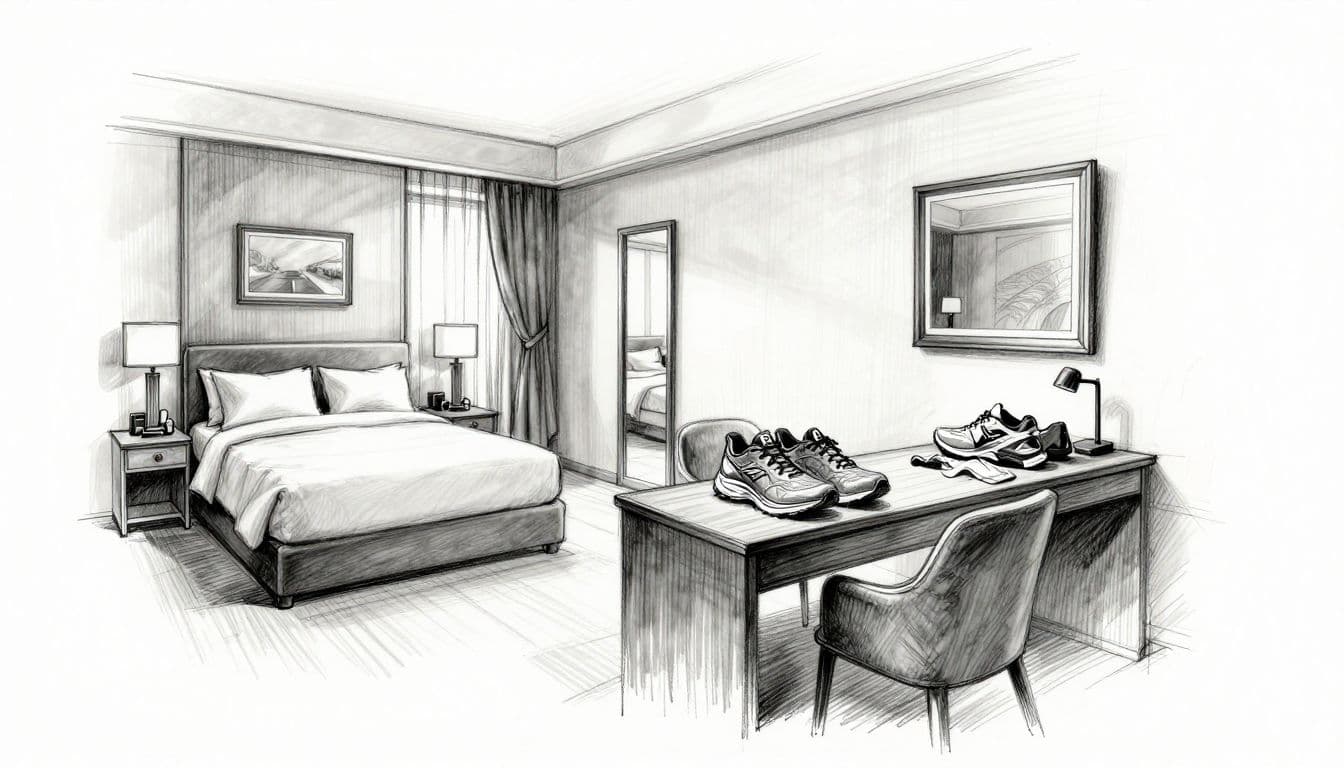
Room sizes and layouts vary, so consider where you will organize shoes, gels, clothing, and recovery supplies. Before reserving, read recent reviews for mattress comfort, street noise, elevator sounds, and air conditioning. Also verify current rates, cancellation terms, breakfast arrangements, luggage storage, and any checkout policy directly with the hotel.
Which hotel style fits your marathon weekend?
- Solo runners often benefit from citizenM or a compact boutique hotel with simple transit access.
- Couples may prefer a luxury room or a larger boutique layout with a comfortable bathroom and breakfast flexibility.
- Running groups should compare room configurations, storage space, and nearby dining rather than booking only by proximity.
- First-time Paris visitors may value full-service help, central landmarks, and easy access to the Champs-Élysées.
- Athletes with family often need quieter rooms, more space, and dependable restaurant options.
The closest hotel is not always the best choice. A room facing a busy avenue, an unsuitable breakfast schedule, or no practical checkout plan can outweigh a short walk to the start.
Choose the right part of the 8th arrondissement for race weekend
The 8th arrondissement changes character across a few blocks. The Champs-Élysées and Arc de Triomphe offer the easiest race-morning access, while Madeleine and Saint-Augustin provide calmer streets, more dining choices, and strong Metro connections. Rue du Faubourg Saint-Honoré and Avenue Montaigne sit between those extremes, with luxury shopping, polished hotels, and varying levels of street noise.
Your best location depends on how much you value a short walk before the race. Check the current course map, start wave instructions, bag-drop details, and road closures before booking, because Paris Marathon procedures can change each year.
 ### Stay close to the Champs-Élysées starting area
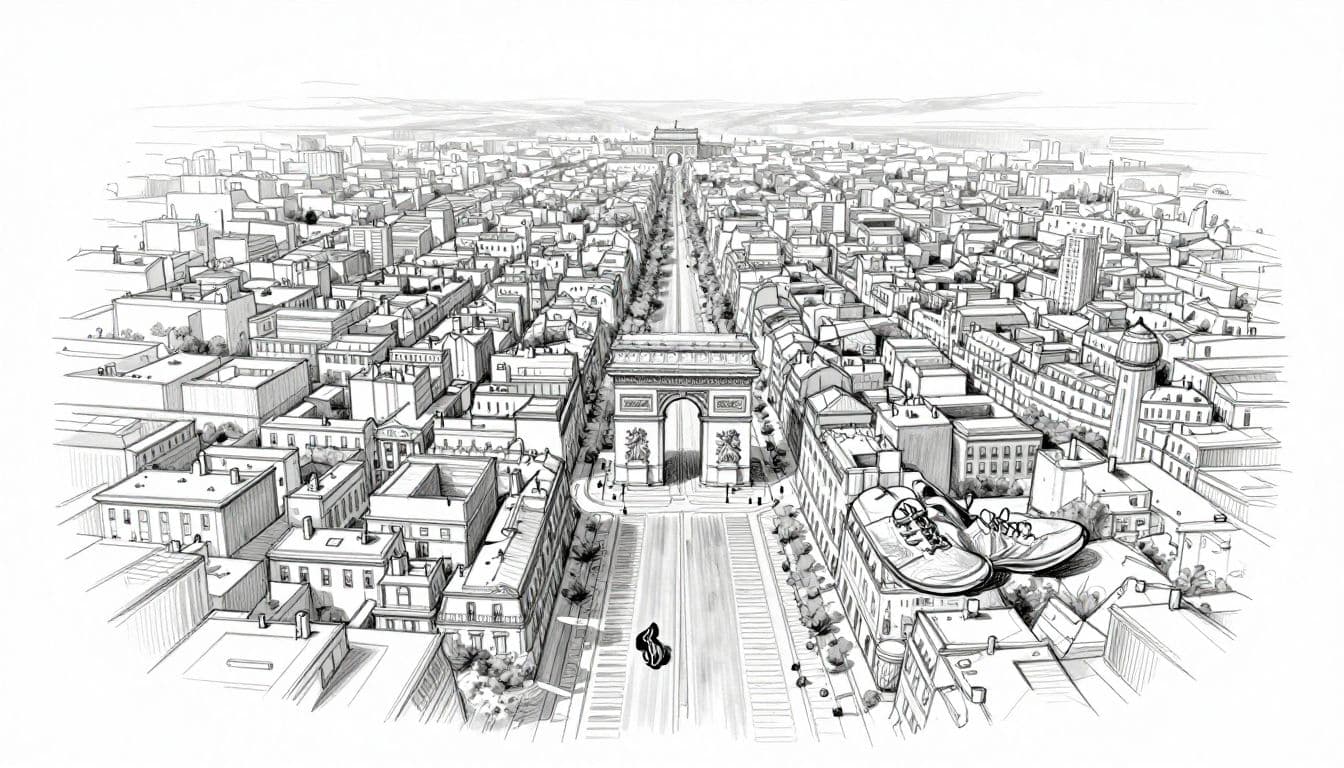
Hotels near the Champs-Élysées, Arc de Triomphe, and nearby avenues give you the most control on race morning. You can wake up later, eat in your room, dress without rushing, and walk toward the start instead of relying on early transit. That shorter journey can protect your warm-up and reduce the chance of arriving flustered.
The tradeoff is cost and disruption. Weekend rates often rise, especially near the avenue and the Arc de Triomphe. Crowds, event barriers, traffic restrictions, and late-night activity can also affect sleep and movement. Ask for a quiet, interior-facing room, then confirm how the hotel handles breakfast, luggage, and race-day access.
Consider Madeleine and Saint-Augustin for a quieter base
Madeleine and Saint-Augustin, along the northern and northeastern side of the 8th, usually feel less dominated by race crowds. You may find broader restaurant choices, grocery stops, and a calmer evening routine than directly beside the Champs-Élysées. The area also connects well with Metro stations, which can help if walking to the start feels too long.
That convenience requires planning. Your route may involve a longer walk or a short transit ride, and race barriers could block a normally simple crossing. Before reserving, check the nearest station entrance, elevator availability, Sunday opening hours, and the walking route during event restrictions.
A nearby Metro station is useful only if you can reach its open entrance without crossing a closed race zone.
What you can reach on foot after the marathon
After 26.2 miles, choose the simplest route available. Depending on your hotel and the day’s barriers, you may be able to reach the Arc de Triomphe, Grand Palais area, or Place de la Concorde without arranging another journey. Nearby cafes and restaurants can provide an easy meal, but check Sunday hours before race weekend.
Rue du Faubourg Saint-Honoré offers restaurants and shops, while Avenue Montaigne places you near major landmarks and hotels. Still, a packed sightseeing schedule can turn recovery into another endurance event. Favor water, familiar food, a comfortable recovery space, and a short walk back to your room. For route context, compare the current Paris Marathon course analysis with the organizer’s latest instructions before finalizing your plan.
What marathon runners should look for before booking a Paris hotel
The right hotel room supports four race-weekend needs: sleep, fueling, mobility, and a low-stress morning. Distance from the Champs-Élysées matters, but so do the details you may overlook while comparing booking-site photos.
Before paying, contact the hotel directly with clear questions. Room labels such as “city view” or “standard room” rarely tell you whether the mattress is comfortable, the curtains block light, or the elevator opens beside your bed. A practical Paris Marathon hotel guide can help with location research, but the property should confirm its current policies.
Breakfast, coffee, and fueling access
Protect the breakfast routine you already trust. Ask when the dining room opens, whether the hotel offers takeaway bags, and whether room service can deliver coffee and familiar food before your start time. Some hotels may adjust hours for race weekend, while nearby cafes, bakeries, and supermarkets may open later than usual or change their schedules.
Don’t experiment with a rich French breakfast on race morning, even if the pastries look tempting. Stick with the foods and drink amounts you have practiced during long runs. A banana, plain bread, oatmeal, coffee, or a familiar sports drink may be more useful than an unfamiliar meal.
Check whether your room includes a refrigerator, kettle, microwave access, or a place to store simple foods. If the hotel cannot provide these items, identify a nearby supermarket before arrival and pack stable options that travel well.
 ### Sleep quality matters more than a postcard view
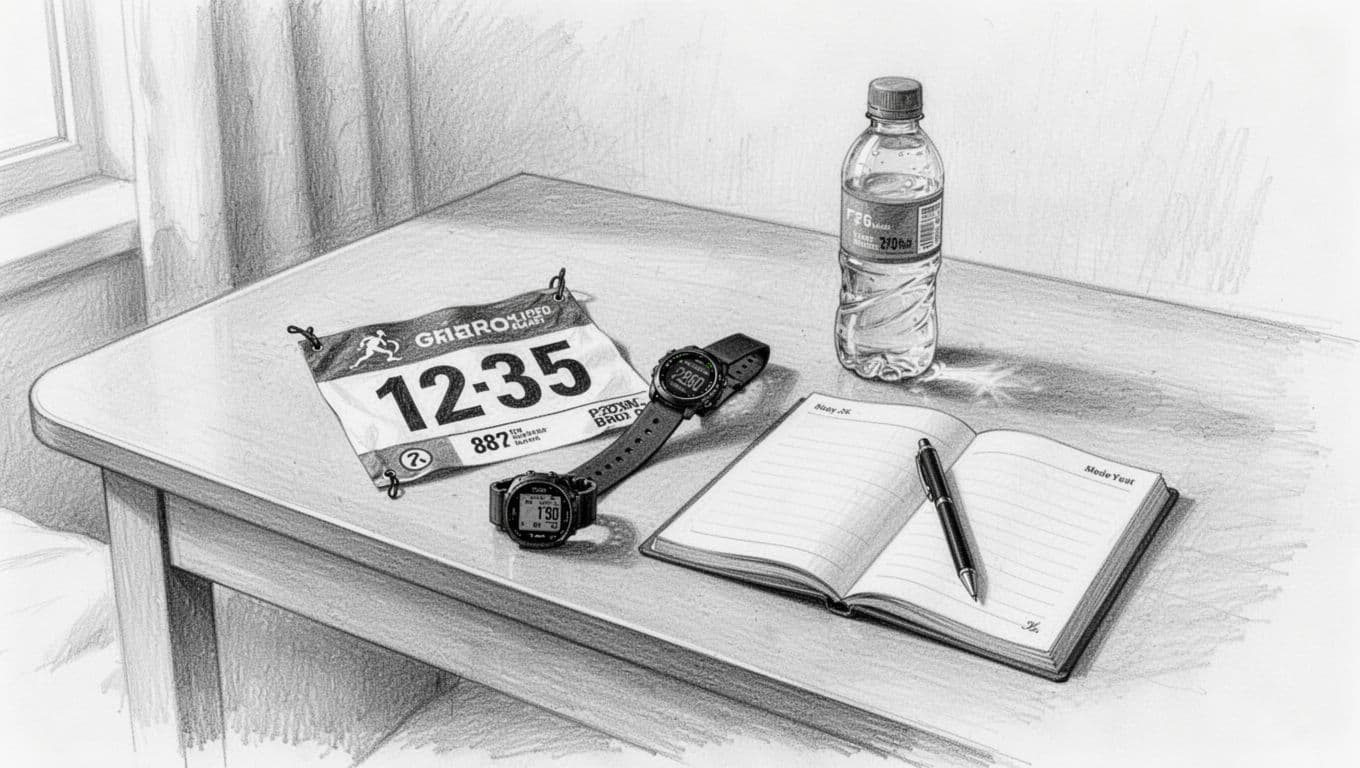
Central Paris can stay active late into the night. Traffic, nearby bars, nightlife, early deliveries, thin walls, and hallway conversations may interrupt the sleep you need before the marathon. A beautiful Champs-Élysées view won’t help if headlights shine through the curtains or street noise keeps waking you.
Request a quiet, interior-facing room on a higher floor, away from elevators, stairwells, service areas, and busy streets. Also ask about blackout curtains, air conditioning, mattress quality, and window insulation. A dark, cool room with a comfortable bed is more useful than a postcard view for race preparation.
Flexible policies and useful hotel services
Review the free-cancellation deadline, payment schedule, and rules for changing dates before you reserve. Race plans can shift, and a flexible booking protects you if travel, qualification, or event details change.
Ask about early arrival, luggage storage, laundry, late checkout, and shower access after checkout. Staff may also help arrange a taxi or explain transit options when race barriers affect normal routes. However, late checkout and post-race showers are requests, not guarantees. Confirm availability, added fees, and the latest departure time before arrival, then keep written confirmation of every special arrangement.
Finally, look for enough clear floor space to stretch, organize race clothing, and prepare your gear. Save this short checklist before booking:
- Confirm the bed, room temperature, blackout curtains, and noise level.
- Ask about breakfast timing, takeaway food, room service, and refrigerator access.
- Verify cancellation terms, payment rules, luggage storage, and laundry.
- Request written confirmation for late checkout or a post-race shower.
- Check that the room has space for stretching and race-day organization.
Plan your race morning from an 8th arrondissement hotel
A hotel in the 8th arrondissement can simplify race morning, but only if you prepare before sunrise. Confirm the latest Paris Marathon race information, then test your route on foot before race day. Starting procedures, corrals, access points, and baggage rules can change by edition.
The night-before checklist
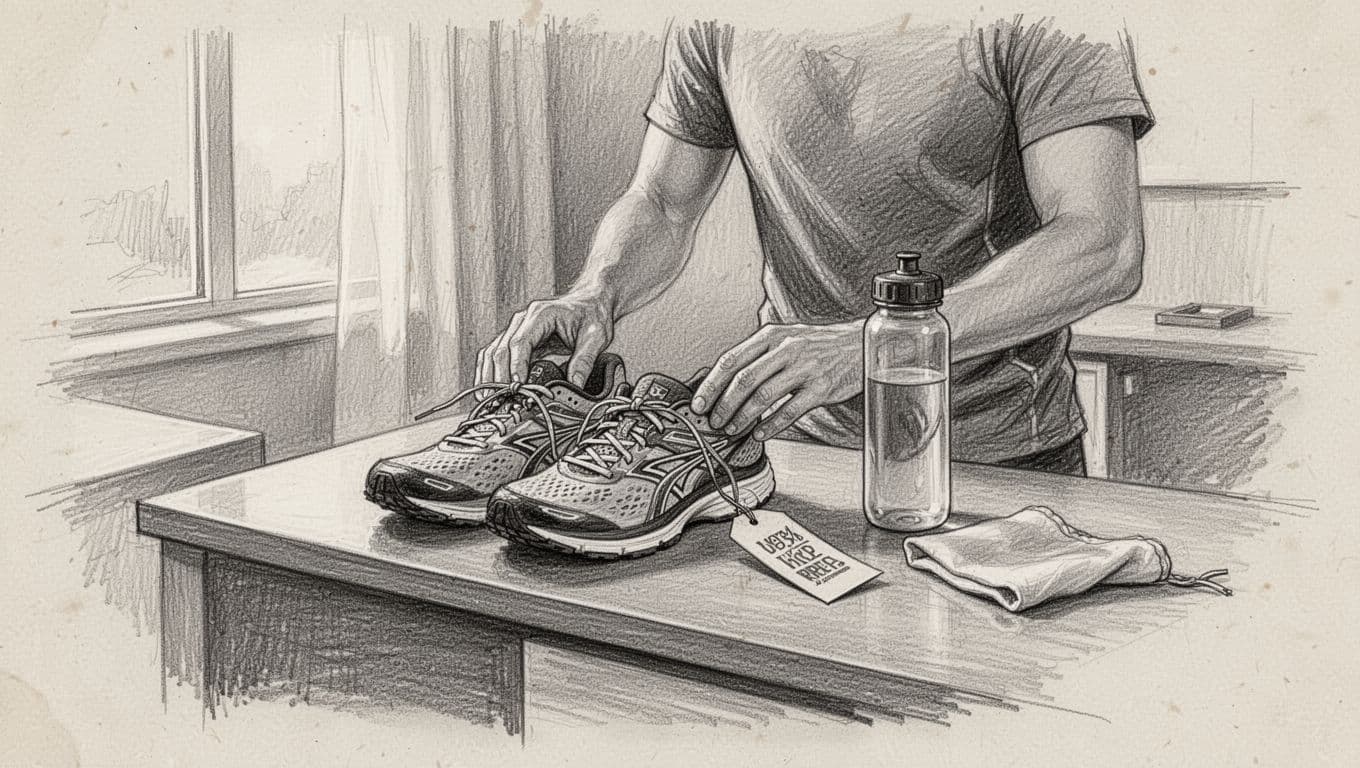
Set up your race exactly as you would for a long run. Lay out your shoes, bib, pins, watch, clothing, nutrition, sunscreen, identification, and a light layer for after the finish.
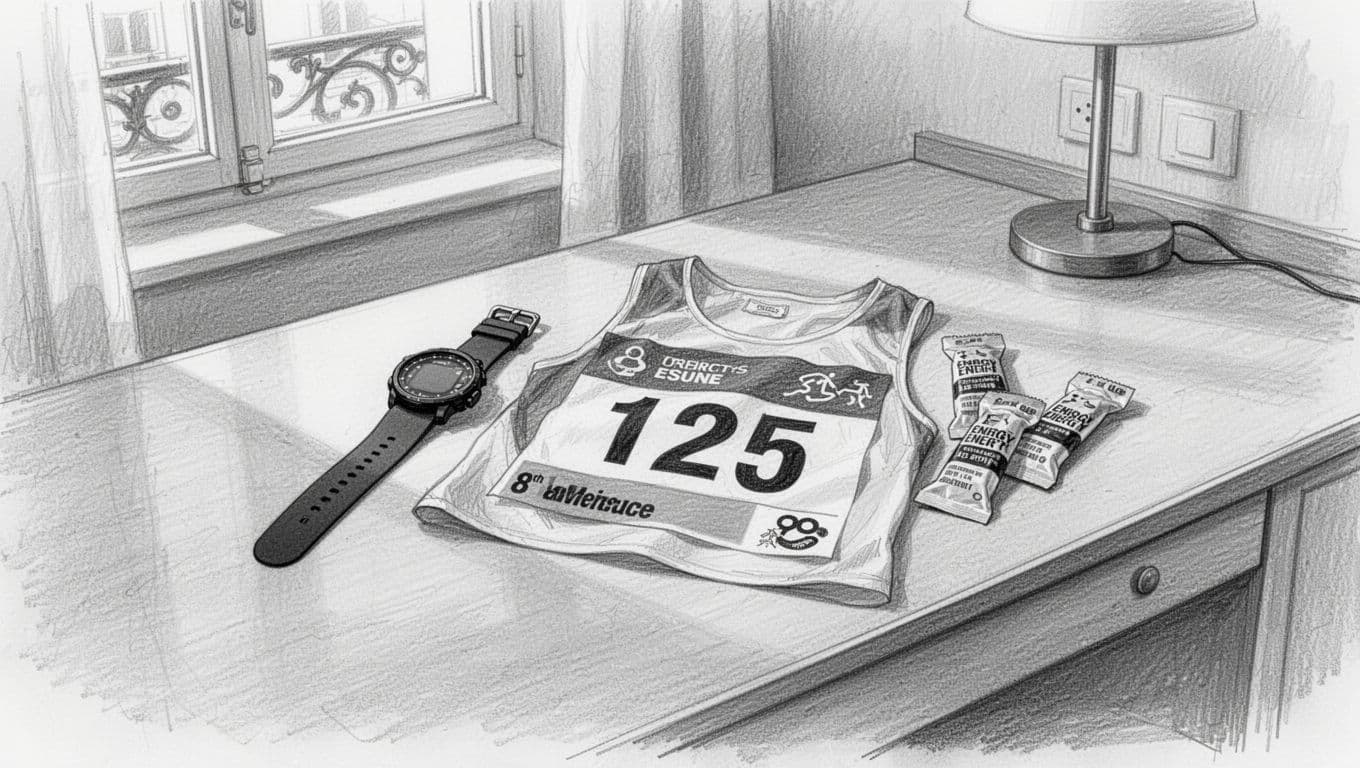 Keep your bib and essential items in your carry-on luggage, not checked baggage. Then check the hotel address, the nearest open grocery store, Metro status, breakfast arrangements, and the weather forecast. Review official race updates before bed, especially instructions about your wave, start access, and bag drop.
Avoid unnecessary late-night sightseeing. Your legs and nervous system will benefit more from a familiar meal, light mobility, and a full night of rest than from another walk through central Paris. Set out water and breakfast, charge your watch, and place your room key and phone where you can reach them easily.
Walking, Metro, taxi, or rideshare to the start
Walking is often the simplest option when your hotel sits near the Champs-Élysées or Arc de Triomphe. It gives you control over the route and avoids waiting for transport. Walk at an easy pace, allow extra time, and follow event signage rather than assuming every usual crossing remains open.
The Metro can help runners staying near Madeleine, Saint-Augustin, or the farther edges of the 8th. However, crowds, closed entrances, service changes, and restricted streets can disrupt a familiar journey. Confirm that your intended station and exit will be accessible on race morning.
Taxis and rideshares offer convenience, but roadblocks may prevent a driver from reaching your hotel or the start area. Treat pickup locations as flexible, not guaranteed. If you use a car, identify a practical drop-off point away from the busiest barriers and keep walking time in your plan.
After the finish: recovery before sightseeing
Returning to the hotel may take patience, especially when the finish area is far from your room. Walk slowly, collect your belongings, and agree on a meeting point before the race if you’re traveling with someone. Drink gradually, eat familiar carbohydrates, and put on a warm layer before leaving the finish area.
A hotel shower and luggage storage can make the afternoon easier. If checkout has passed, confirm those services in advance. A nearby meal may be better than crossing Paris immediately, while a short taxi ride can help when your legs are tired. Road closures may change where the driver can meet you.
For a performance-focused runner, recovery comes before sightseeing. Give yourself time to rehydrate, refuel, shower, and rest. Paris will still be there after your body has had a chance to recover.
Paris Marathon hotel prices, booking timing, and travel costs
Hotel costs can become one of the largest parts of your Paris Marathon budget. Demand rises around race weekend because runners book near the Champs-Élysées, spring tourism fills central Paris, and the 8th arrondissement has limited room inventory. Compare the complete trip cost, not only the nightly rate.
When to reserve and what to compare
Start searching soon after securing your race place. Waiting for a last-minute bargain can leave you choosing between higher rates, inconvenient locations, and restrictive policies. A flexible reservation gives you a practical safety net while you confirm flights and race arrangements.
Compare the hotel’s direct rate with a reputable booking platform, then read the payment and cancellation terms line by line. A lower headline rate may require full payment immediately or provide no refund if your plans change. A refundable option may cost more, but that difference can protect your budget if travel dates, flights, or race plans shift.
Check the total displayed at checkout, including taxes, breakfast, service fees if applicable, and any required deposit. Also account for airport transportation, Metro or taxi journeys, meals outside the hotel, and the cost of adding extra nights. A hotel that appears cheaper can cost more after breakfast, transport, or cancellation protection.
Room details matter for runners. Confirm the number of beds, room size, storage space, air conditioning, breakfast inclusion, and distance to the start. A room with one double bed may not suit two runners who need separate sleeping arrangements or space for race gear.
Use the Paris Marathon hotel guide to compare areas near the start and finish, then verify every detail with the property. Hotels with similar Champs-Élysées names may sit several blocks apart, or even in different parts of Paris. Copy the exact street address into a map before booking.
Should you stay extra nights around the race?
Arriving at least one night early reduces travel risk. You can collect race materials, find the hotel, buy familiar food, and adjust to Paris before race morning. That buffer also helps when flights run late, luggage takes time to arrive, or jet lag disrupts your normal sleep routine.
Your personal schedule matters. If you usually need a full night of sleep before racing, an overnight flight followed by a short hotel stay may leave you starting behind. Check flight arrival times, airport transfer duration, baggage needs, and the time required to reach the race-expo location before deciding.
An extra night after the marathon can also make recovery easier. You can shower, eat, sleep, and walk through the airport without rushing on tired legs. Compare the added room cost with flight-change fees, airport transportation, and the physical strain of leaving Paris immediately after the finish.
Make your 8th arrondissement stay support a faster, smoother race
A hotel in the 8th arrondissement can protect your performance when you use it as a base for consistency. The goal is simple: sleep well, reduce decisions, follow your proven marathon plan, and keep your body ready for the start.
Build a simple pre-race routine in your room
Use the room to remove avoidable stress before race morning. Set two alarms, silence notifications, and place your phone where you can reach it without scrolling. Then lay out your race clothing, shoes, bib, watch, nutrition, and identification in the order you will use them.
Review the course once, including the start access, wave time, bag arrangements, and your planned meeting points. Avoid repeatedly checking updates late into the night. Familiar information helps you settle, while constant notifications keep your mind active.
Eat the same familiar foods you have used before long runs. Pack them if the hotel breakfast opens too late, and fill bottles only if the event and hotel rules allow it. Don’t test a new supplement, unfamiliar sports drink, or rich meal in Paris.
Spend a few minutes on gentle mobility, such as ankle circles, leg swings, or easy hip movements. Keep the work comfortable and familiar. You are preparing to run, not trying to gain flexibility the night before a marathon.
Keep the room cool and dark, using blackout curtains or an eye mask if needed. Limit alcohol and late-night sightseeing, since both can interfere with sleep and leave you starting the morning behind. A consistent sleep routine supports the habits outlined in this sleep and nutrition recovery guide.
Pack for changing spring weather and long days
Paris spring weather can shift between cool mornings, sunshine, wind, and rain. Pack light layers that you can remove easily, plus a light rain shell for hotel-to-start travel. Check the forecast close to departure, then adjust rather than relying on an old prediction.
Your race bag should include anti-chafing supplies, practiced nutrition, sunscreen, and any clothing you need after finishing. Add comfortable walking shoes for sightseeing and a clean shirt or jacket for the trip back to the hotel. Warm, dry clothing can make the first hour after the race much easier.
Follow the event’s current rules for bags, bottles, and clothing. Some items may need to fit inside an approved bag or remain outside restricted areas. The right gear keeps travel, waiting, and post-race recovery from becoming extra work for tired legs.
Use nearby food and transit without overcomplicating recovery
Before arrival, identify one reliable pre-race meal, one grocery store, and one post-race restaurant near your hotel. Choose familiar foods, reserve dinner when appropriate, and call ahead if race-day hours matter. Major events can change restaurant schedules and access routes.
Save offline maps and write down your hotel address, race start details, and emergency contacts. Carry a small amount of cash and keep your phone charged. If service fails or your battery runs low, those basic details can keep a simple plan intact.
After the finish, prioritize fluids, familiar carbohydrates, a shower, and rest before sightseeing. A short walk back to your hotel may be enough for the day. Your room should make recovery easy, with gear organized, food available, and as few new decisions as possible.
Choose Your Distance, Duration and Goal Time
Make three quick selections and open the exact plan built for your race target.
Looking for a Fully Personalized Training Plan?
The training plans above are an excellent choice if they match your goal. However, if you’d rather train with a plan built specifically around your current fitness, goal race, preferred training days, weekly mileage, and target finish time, our RDA Custom Training Plans provide a personalized solution. We also have running courses available for runners seeking to run faster from the mile to the marathon.
Why Choose a Custom Training Plan?
| Standard Training Plan | RDA Custom Training Plan |
|---|---|
| Follows a fixed schedule | Built around your schedule |
| Standard weekly mileage | Peak mileage customized for you |
| Fixed workout days | Train on the days you choose |
| Same structure for everyone | Designed around your current fitness |
| Static plan | Updated as your fitness improves |
| One-time purchase | Ongoing personalized coaching and support |
What You’ll Receive
- A training plan built specifically for your goal
- Personalized training paces
- Long runs, tempo runs, threshold workouts, interval sessions, recovery runs, and easy runs
- Peak weekly mileage matched to your experience level
- Flexible training schedule that fits your life
- Ongoing plan adjustments as your fitness improves
Ready to Train Smarter?
Stop guessing and start following a plan built specifically for you, your schedule, and your racing goals.
Frequently Asked Questions
Choosing among hotels in the 8th Arrondissement for the Paris Marathon becomes easier when you separate race logistics from sightseeing plans. These answers address the practical details that can affect your sleep, breakfast, transport, and recovery.
Is the 8th arrondissement a good place to stay for the Paris Marathon?
Yes, it can be an excellent choice. Much of the arrondissement sits close to the Champs-Élysées start, central Metro connections, restaurants, and major Paris landmarks. A nearby hotel can reduce the number of decisions you make before the race.
However, central Paris usually brings higher rates, heavier crowds, and possible street noise. Compare the exact street, room position, and route to the start rather than relying only on the “8th arrondissement” label. A quieter side street may suit your sleep better than a hotel directly on a famous avenue.
How far should my hotel be from the Paris Marathon start?
A short, predictable walk is often ideal because it removes uncertainty from race morning. Still, there isn’t one perfect distance for every runner. Your wave time, official access points, road closures, bag-drop requirements, and comfort with walking all affect the decision.
Use the current race map and walk your planned route before race day. Check where you need to enter, which streets may close, and how long the journey takes at an easy pace. The Paris Marathon race-day FAQ can provide additional preparation guidance, but follow the organizer’s latest instructions first.
Do hotels near the Champs-Élysées offer early breakfast for runners?
Some hotels may open breakfast early, prepare takeaway items, or offer room service. Policies and hours vary, even among properties with similar prices and locations, so contact the hotel directly about its marathon weekend schedule.
Ask whether your room has a refrigerator, kettle, or suitable food-storage space. Bring familiar shelf-stable foods as a backup, especially if breakfast service starts after your wave time. Race morning is the wrong time to depend on an unconfirmed meal plan.
Can I leave my luggage at the hotel after checkout?
Many hotels provide luggage storage, but the service isn’t automatic. Available space, staffing, security procedures, and hotel policy can affect whether staff accept your bags after checkout.
Ask before booking and confirm how pickup works, including the latest collection time and any fees. Hotel storage is separate from the Paris Marathon’s official bag-drop rules, so don’t assume one replaces the other.
Is it better to stay near the start or near the finish?
Staying near the start usually simplifies breakfast, dressing, warm-up, and arrival. A hotel closer to the finish may make the return journey easier when your legs are tired, but course and finish logistics can change between race editions.
Check the current route before choosing. For most runners, good sleep and reliable transport matter more than being closest to either point.
How early should I book a hotel for the Paris Marathon?
Start searching as soon as you secure your race entry, especially if you want a popular 8th arrondissement hotel. A flexible, refundable rate can protect your preferred location while giving you time to compare prices later.
Before paying, review the cancellation deadline, payment schedule, taxes, and room occupancy rules. Also confirm whether the quoted rate covers every guest and whether changing the reservation could trigger a new price.
Conclusion
The best hotel in the 8th arrondissement isn’t always the most famous or expensive. It is the one that gives you dependable sleep, familiar fueling, easy access to the Paris Marathon start, and a realistic plan for recovery.
Compare each property’s exact location, confirm race-weekend services, choose clear cancellation terms, and review the official marathon instructions before traveling. A smooth hotel stay removes small barriers, leaving you free to focus on pacing, confidence, and crossing the finish line strong.


