

Best Hotels in Ternes for the Paris Marathon
Paris Marathon morning begins before sunrise, with runners stepping into cool streets, checking their bibs, and making their way toward the start area on the Champs-Élysées. Where you sleep the night before can shape the entire race, especially when every extra minute of rest and every easy step matters.
Hotels in Ternes for the Paris Marathon give you a practical base in a calmer neighborhood near the Arc de Triomphe. You’ll have restaurants and shops close by, along with transport options for reaching the start, while avoiding the busiest parts of central Paris. Still, the best hotel for you depends on more than location. Sleep quality, breakfast hours, room space, price, and features that support recovery all deserve attention.
This guide compares hotel options in Ternes, explains when to book and what to confirm before paying, and covers race-day logistics such as breakfast timing, transport, walking routes, and luggage plans. You’ll also find a runner-focused checklist to help you choose a room that supports your pacing goals and leaves you ready to run. First, let’s look at why Ternes works so well as a marathon base.
Key Takeaways
- Hotels in Ternes offer a calmer Paris Marathon base near the Arc de Triomphe, with restaurants, shops, and transport nearby.
- Prioritize quiet rooms, comfortable beds, early breakfast options, reliable Wi-Fi, and space for race-day gear.
- Book early because marathon-weekend demand can raise prices and reduce room choices, as outlined in this Paris Marathon hotel guide.
- Confirm the route to the start, Metro service, breakfast hours, checkout rules, and luggage storage before paying.
- Plan your morning in advance so you can protect sleep, fuel properly, reach the start calmly, and avoid unnecessary walking.
Why Ternes Works So Well for Paris Marathon Runners
Ternes sits in Paris’s 17th arrondissement, close to Place des Ternes, Avenue des Ternes, the Arc de Triomphe, and the western side of the Champs-Élysées. For marathon weekend, that location gives you access to the race area without placing you in the busiest tourist streets.
Plan Your Complete Marathon Weekend
Choosing the right hotel can reduce race-day stress, shorten travel time, improve sleep, and make your entire marathon weekend smoother.
More Paris Marathon Hotel Guides
The neighborhood also makes ordinary race preparation easier. Local bakeries, supermarkets, cafes, and restaurants sit among quieter residential streets, so you can buy breakfast, snacks, and water without crossing the city. That balance matters when your priority is sleep, steady fueling, and fewer decisions before the start.
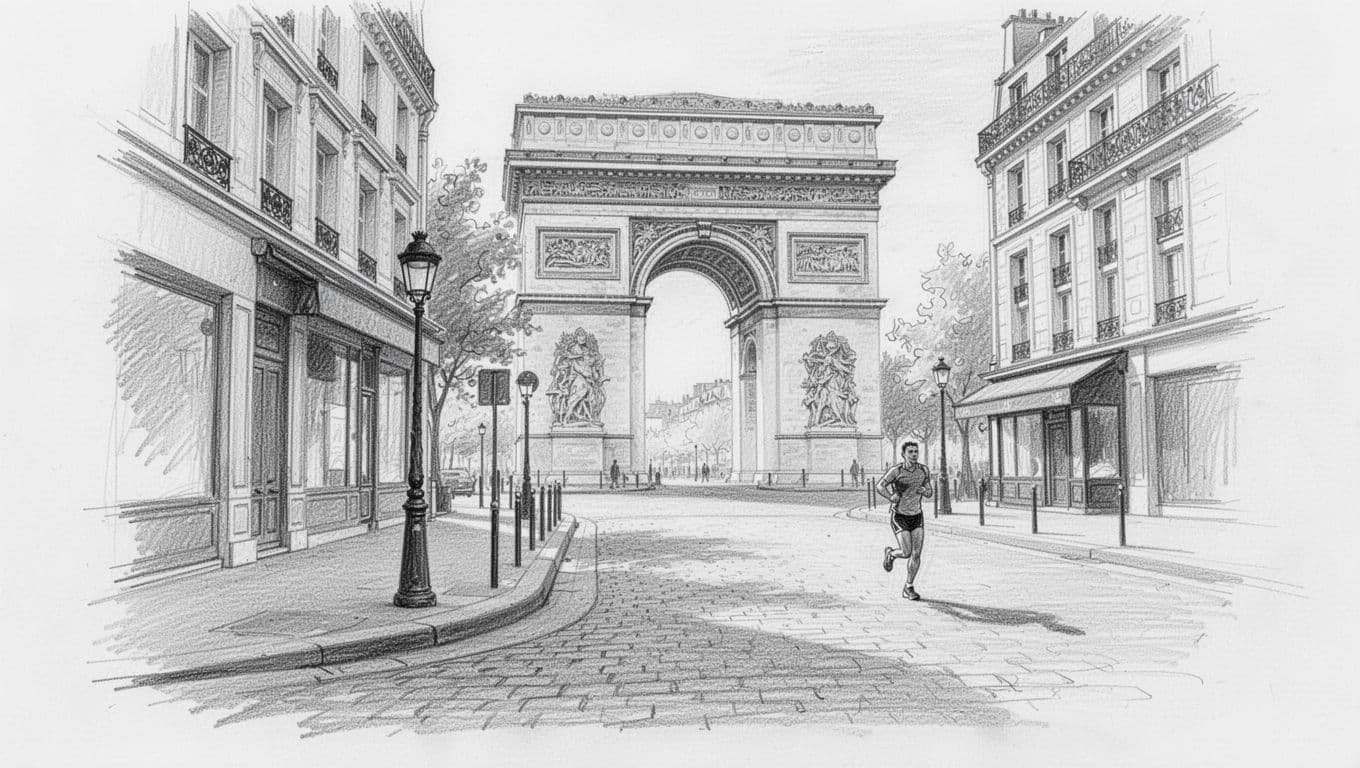
How close is Ternes to the Paris Marathon start area?
The Paris Marathon starts on the Champs-Élysées, near the Arc de Triomphe, so many Ternes hotels are well placed for reaching the start area. You can walk toward the avenue, which gives you a simple route with no timetable to monitor. Staying closer to the Arc de Triomphe can make that morning easier because you begin near the main race zone rather than adding a long cross-city journey.
Walking is only one option. Depending on your hotel’s exact location and the race-day plan, you may also use the Metro or another public transit connection. Check service details before leaving, since road closures, station access, and pedestrian restrictions can affect the route.
Allow more time than a normal sightseeing trip. Runners need to pass security checks, find the correct corral, wait for restrooms, and move through streets that may have restricted access. A route that looks short on a map can take longer when thousands of participants converge on the start.
The course and access arrangements can change each year. Review the Paris Marathon route details, then confirm the official race map, corral instructions, and transport notices during race week.
The local advantages runners notice after the race
Ternes becomes especially useful after you finish. Your legs may feel heavy, and even a short unnecessary walk can make the trip back feel longer. A nearby hotel lets you return to a familiar neighborhood, collect your belongings, and rest without planning another complicated journey.
Before race day, identify a bakery or cafe that opens early. Supermarkets can cover water, fruit, and simple snacks, while nearby restaurants provide an easier post-race meal than traveling across Paris. Ask your hotel about breakfast hours, takeaway options, and luggage storage before booking.
The Champs-Élysées and Parc Monceau are also close enough for a gentle walk when your body feels ready. Central Paris attractions remain accessible, but you don’t need to turn recovery day into a sightseeing schedule. Choose the nearby option, eat well, hydrate, and protect your sleep.
The Best Hotels in Ternes for the Paris Marathon
The best hotel in Ternes depends on how you plan to use it. A premium property may protect your sleep and simplify race morning, while a smaller hotel can offer a better neighborhood feel at a lower rate. Compare the room, services, and practical race-day details rather than choosing by star rating alone.
Best upscale stays near the Arc de Triomphe
Full-service hotels suit runners who want fewer surprises before and after the race. Hyatt Regency Paris Etoile offers a large property with strong transport connections, while Renaissance Paris Arc de Triomphe places you closer to the race area in an upscale setting. Le Tsuba Hotel is another option for travelers who value modern rooms and wellness features.
Before booking, confirm current amenities, room categories, breakfast times, and any renovation work. Premium hotels commonly provide features runners appreciate:
- Soundproofed rooms that reduce traffic and hallway noise.
- Elevators and 24-hour reception for early departures or late arrivals.
- Room service when you need familiar food without another trip outside.
- Larger rooms with space for shoes, kit, nutrition, and luggage.
- A reliable shower, comfortable bed, and fitness facilities.
- Clear luggage storage and a smooth checkout after the race.
These services cost more, but the price can make sense when sleep, recovery, and convenience matter most. Request a quiet room away from elevators, bars, and busy streets. Also ask whether the hotel can provide an early breakfast or a takeaway option.
Best boutique and mid-range hotels in Ternes
Smaller properties around Place des Ternes can give you a more personal stay and easy access to bakeries, restaurants, shops, and local transport. Hôtel Westside Arc de Triomphe offers a quieter boutique feel, while other independent hotels near Avenue des Ternes may provide practical rooms at moderate rates.
Check the details before focusing on the nightly price. Your room should have enough floor space to lay out race clothing and organize your gear without turning the bed into a packing table. Also confirm whether it includes:
- Air conditioning, especially for warmer spring nights.
- Blackout curtains for uninterrupted pre-race sleep.
- A mini-fridge and tea or coffee supplies.
- An elevator if you prefer to avoid stairs after racing.
- A bathroom setup that gives you reliable access and privacy.
A lower rate may lose its value if breakfast starts after you need to leave, the room faces a noisy street, or the hotel lacks luggage storage. Read the property’s current policies and contact the front desk with race-specific questions.
What to look for in a budget-friendly hotel
Affordable hotels in Ternes can work well, but compare practical value rather than relying on star ratings. Start with recent reviews that mention bed comfort, bathroom cleanliness, street noise, and weekend service. Review patterns often reveal problems that polished photos won’t show.
Check how close the hotel is to a Metro station, then confirm the route to the start during marathon weekend. Ask about reception hours, late arrival procedures, luggage storage, cancellation terms, and the added cost of breakfast. A cheap room becomes less useful if you can’t store your bag after checkout or must pay heavily for a meal you won’t have time to eat.
Book the room that protects your morning routine, not simply the room with the lowest rate.
Choose a Ternes Hotel Based on Your Race-Day Priorities
The best hotel in Ternes depends on how you plan to race and who is traveling with you. A personal-best attempt needs sleep and precise logistics, while a first marathon may call for reassurance and simple directions. Families, groups, and runners staying several nights have different needs too. Focus on the details that protect your routine, not glamorous extras you may never use.
The best setup for a personal-best attempt
If you are chasing a personal best, choose a quiet room with a comfortable bed and a short, uncomplicated route to the start. Ask for a room away from elevators, stairwells, bars, and busy streets. Dependable hot water also matters after a cold morning and after 26.2 miles on tired legs.
Breakfast should match your normal fueling plan. Before arrival, contact the hotel and ask whether it can provide an early breakfast, a takeaway bag, or access to coffee and simple food before regular service begins. Confirm that you can leave belongings securely after checkout, especially if your return train or flight leaves later.
Late-night walking, unfamiliar meals, and complicated transfers all add avoidable stress. Bring familiar snacks, choose a nearby restaurant you can reach easily, and rehearse the route to the start. Your hotel should remove decisions from race morning rather than create new ones.
The best choice for first-time marathoners
First-time runners often benefit from a hotel with 24-hour reception, clear directions, and straightforward public transit access. A friendly front desk can help you confirm the nearest station, explain the walking route, or arrange a taxi if plans change.
Complete a practice walk to the start area before race morning. Time the route, identify barriers, and note where you can stop for a restroom or water. Then write a simple plan with your wake-up time, breakfast, departure, transportation, and bag-storage arrangements.
Keep that plan on paper or in your phone. When nerves rise, you can follow the next step instead of making rushed choices in the dark.
The best option for families and race-day supporters
Families and couples should review room configuration before booking. A larger room, sofa bed, or adjoining rooms can protect everyone’s sleep and give race gear enough space. Ask about accessible entrances, elevators, bathroom access, and breakfast choices if children or older supporters are traveling.
Nearby restaurants help groups eat at different times without adding a long trip. Supporters should also select viewing spots separately from the runner’s route back to the hotel. Closed roads may make a short map route unusable, so check pedestrian access and public transit plans before race day.
Groups and athletes staying several nights need extra storage, dependable housekeeping, and a quiet place to recover. A hotel with simple meals nearby, luggage storage, and easy access to pharmacies or supermarkets may suit you better than a more luxurious property with a difficult layout.
Race-Morning Logistics, Transport, and Recovery in Ternes
Ternes gives marathon runners a manageable base, but race day changes the neighborhood’s rhythm. Roads close, stations may restrict access, and thousands of runners can turn a short trip into a slow one. Plan each stage before race weekend so your attention stays on pacing, fueling, and recovery.
Planning the trip from your hotel to the start
The Paris Marathon start area is near the Champs-Élysées and Arc de Triomphe, but access points can change. Save the official start location, runner instructions, and corral details on your phone. Then identify the nearest station that is scheduled to open and prepare a backup walking route from your hotel.
Metro or RER travel may be useful, yet major Paris events often bring closures, crowd controls, and service changes. Never assume a familiar line or station will operate normally. Official race transport instructions should take priority over a route suggested by a travel app.
Leave earlier than you would for sightseeing. Your morning may include security, restroom lines, bag drop, and a long walk to your corral. Keep your race essentials together:
- Bib and safety pins, plus photo ID if the event requires it.
- A charged phone, transit payment, and hotel address.
- Your race shoes, nutrition, water, and a light outer layer.
- Only the permitted bag-drop items, packed according to official rules.
Follow the organizer’s instructions for runner access, security screening, and baggage. A taxi can help if transport fails, but road closures may prevent it from reaching the start. Walking is often the simplest backup when your hotel sits close enough.
Breakfast, fueling, hydration, and late checkout
Ask your hotel about breakfast hours before booking. If service begins too late, reserve an early meal, request a takeaway breakfast, or pack familiar foods from home. Use only foods and drinks you have tested during training. Race morning is a poor time to experiment with a rich pastry, unfamiliar coffee, or a new supplement.
Keep water available in your room, but avoid drinking so much that restroom stops disrupt your schedule. Pack a post-race snack as well, such as a tested bar, pretzels, or another food your stomach handles comfortably.
The booking questions matter just as much after the race. Confirm whether the hotel offers:
- Late checkout and its exact fee.
- A shower after checkout.
- Secure luggage storage.
- Access to water, ice, or a post-race meal.
Getting back to the hotel after the finish
The return journey can take longer than the trip out. Crowds, road closures, fatigue, and limited taxi availability may affect Metro, RER, buses, and walking routes. Choose a clear meeting point with supporters away from the finish area’s busiest exits, and carry a fully charged phone.
Wear comfortable recovery shoes or pack them if race rules allow. Check an accessible route in advance, especially if stairs will be difficult after 26.2 miles. A short, predictable journey back to Ternes may matter more than being closest to the start.
Use this simple schedule as a planning guide:
- Eat breakfast, hydrate normally, and leave with extra time.
- Reach the start area early enough for security, restrooms, and bag drop.
- After finishing, collect your belongings, meet supporters, and eat your recovery snack.
- Return by the simplest available route, then shower, drink, and rest.
For Hotels in Ternes for the Paris Marathon, convenience means reducing decisions when your legs are tired. A reliable return plan can protect the hours after the finish as much as a good bed protects the night before.
How Much Do Hotels in Ternes Cost During Marathon Weekend?
Hotel prices in Ternes often rise during Paris Marathon weekend because demand concentrates around a single race date. Runners book early, supporters travel with them, and the most convenient rooms disappear first. Rather than relying on an advertised nightly rate, compare the complete cost of your stay and the flexibility attached to it.
Compare the total stay, not just the room rate
A room that appears affordable can become expensive after added charges. Before you pay, check whether the booking includes:
- Paris’s tourist tax or any other local charge, which may be collected separately.
- Breakfast, especially if the dining room opens after you need to leave for the start.
- Parking, if you’re driving into Paris. Garage fees can change the value of a hotel quickly.
- Airport or train-station transfers, including whether the quoted price covers one passenger or the entire vehicle.
- Baggage storage after checkout, particularly if your departure is later that day.
- Extra guests, children’s fees, or charges for a larger room configuration.
- Any resort-style, facility, or service fee listed in the final price.
- Early check-in or late checkout, including whether the hotel charges by the hour or for an additional night.
The number of nights also affects the total. A two-night reservation may cost less overall than three nights, but an extra night can reduce travel stress and give you more time to recover after the race. Check for minimum-stay policies before assuming you can book only Saturday night.
A slightly higher-priced hotel can be cheaper overall when it places you within walking distance of the start, includes breakfast, and reduces airport-transfer or Metro costs. It may also save money on meals if you can reach a bakery, supermarket, or restaurant without taking a taxi. Add every expected expense to one simple total before comparing properties.
The best value is the hotel that lowers your full marathon-weekend cost, not the one with the lowest headline rate.
When to book and which cancellation terms matter
Compare the hotel’s official website with reputable booking platforms, then review the final payment screen before confirming. Prices, room availability, breakfast inclusions, and cancellation rules can differ between channels.
A refundable rate usually allows cancellation until a stated deadline, although the hotel may charge a fee after that point. A prepaid rate often costs less, but payment happens immediately and the reservation may be fully nonrefundable. Check the payment deadline, cancellation cutoff time, and currency used for the transaction.
Name-change rules matter if a friend may take your place. Some hotels allow a guest name update, while others require the original guest to check in. Also confirm whether the rate requires a minimum number of nights.
Booking early with a flexible policy gives you room to adjust. You can recheck prices later, but only change the reservation if the original terms protect your rate and refund eligibility. Never cancel a secure booking before confirming the replacement room.
A Runner’s Checklist for Booking a Hotel in Ternes
A strong marathon hotel should make race morning predictable. Before you confirm a room, check the details that affect sleep, fueling, transport, and recovery rather than relying on photos or a short map distance.
Questions to ask the hotel before you book
Contact the hotel directly and request clear answers in writing. Save the email with your reservation details, then confirm the arrangements again shortly before arrival.
- What is the hotel’s exact street address, and which entrance should guests use?
- Can you describe the walking route to the Paris Marathon start area near the Champs-Élysées?
- Is the room away from the street, elevator, stairwell, bar, kitchen, and other likely sources of noise?
- Can guests control the room temperature, and does the air conditioning or heating operate during your stay?
- What bed setup does the room have, including bed size, mattress configuration, and sofa-bed details?
- Is the entrance accessible, and does the hotel have an elevator large enough for your luggage?
- What time does breakfast begin on race morning? Can the hotel provide a takeaway meal with familiar foods?
- What time do the restaurant and room-service options close the night before the race?
- Can you store luggage securely after checkout, and until what time?
- Is a shower available after checkout? Ask whether it is complimentary, shared, or subject to a fee.
- What are the reception hours, and how will you enter if you return late or leave before dawn?
- Is Wi-Fi included, and does it work reliably in guest rooms?
- What are the cancellation terms, payment deadlines, and fees for changing the reservation?
Ask the hotel to confirm any promised early breakfast, late checkout, luggage storage, or post-race shower by email. Policies can change between booking and race weekend, so check them again a few days before you travel.
A simple way to compare three hotel options
Choose three realistic hotels and score each one from one to five. Use the same standards for every property, then add the scores to see which option offers the strongest overall fit.
| Category | Hotel 1 | Hotel 2 | Hotel 3 |
|---|---|---|---|
| Sleep quality | /5 | /5 | /5 |
| Start-line access | /5 | /5 | /5 |
| Breakfast and fueling | /5 | /5 | /5 |
| Recovery comfort | /5 | /5 | /5 |
| Neighborhood convenience | /5 | /5 | /5 |
| Full cost | /5 | /5 | /5 |
Score sleep quality by reviewing noise exposure, bed comfort, blackout curtains, and temperature control. For full cost, include breakfast, transport, parking, storage, late checkout, and cancellation flexibility.
A runner chasing a time goal should give extra weight to sleep quality and logistics. A family may care more about room space, elevator access, restaurant hours, and nearby dining options. The highest total isn’t automatically the winner, but the comparison exposes weak points before you pay.
Choose Your Distance, Duration and Goal Time
Make three quick selections and open the exact plan built for your race target.
Looking for a Fully Personalized Training Plan?
The training plans above are an excellent choice if they match your goal. However, if you’d rather train with a plan built specifically around your current fitness, goal race, preferred training days, weekly mileage, and target finish time, our RDA Custom Training Plans provide a personalized solution. We also have running courses available for runners seeking to run faster from the mile to the marathon.
Why Choose a Custom Training Plan?
| Standard Training Plan | RDA Custom Training Plan |
|---|---|
| Follows a fixed schedule | Built around your schedule |
| Standard weekly mileage | Peak mileage customized for you |
| Fixed workout days | Train on the days you choose |
| Same structure for everyone | Designed around your current fitness |
| Static plan | Updated as your fitness improves |
| One-time purchase | Ongoing personalized coaching and support |
What You’ll Receive
- A training plan built specifically for your goal
- Personalized training paces
- Long runs, tempo runs, threshold workouts, interval sessions, recovery runs, and easy runs
- Peak weekly mileage matched to your experience level
- Flexible training schedule that fits your life
- Ongoing plan adjustments as your fitness improves
Ready to Train Smarter?
Stop guessing and start following a plan built specifically for you, your schedule, and your racing goals.
Frequently Asked Questions
Choosing among hotels in Ternes for the Paris Marathon becomes easier when you separate location from race-day logistics. These answers cover the practical details that can affect sleep, fueling, transport, and recovery.
Is Ternes a good area to stay for the Paris Marathon?
Yes. Ternes offers a calmer base near the Arc de Triomphe, with bakeries, supermarkets, restaurants, pharmacies, and transport within easy reach. The neighborhood often feels more residential than the busiest central districts, which can help you sleep before the race.
Still, verify the official start location and access plan for your race year. Road closures, security zones, Metro changes, and corral entrances can alter the easiest route from your hotel.
How many nights should I stay in Paris for the marathon?
Arriving the day before can work if you live nearby and travel reliably, but it leaves little margin for delays or fatigue. You may also need time for bib pickup, so check the event schedule before choosing a one-night stay.
Two nights usually offer a better balance. You can arrive, collect your bib, organize your gear, and sleep before racing. Adding a night afterward costs more, yet it avoids a rushed departure and gives your legs time to recover before a long train journey or flight.
Can I walk from Ternes to the marathon start?
You may be able to walk, but the answer depends on your hotel’s exact address and the official start area. Security restrictions, closed roads, crowd movement, and your planned race pace can turn a short map route into a slow morning journey.
Map the route before race day and save a backup option by Metro or taxi. Allow extra time rather than trusting a normal walking estimate, especially if you need security screening, bag drop, or a restroom stop.
Should I choose a hotel with breakfast included?
Included breakfast adds value when the price is reasonable and the hotel opens early enough for your schedule. However, standard service may begin too late for marathon morning, so ask about the menu, opening time, and takeaway option before booking.
Use foods and drinks you have already tested in training. If the hotel cannot provide suitable race-morning fuel, bring familiar snacks and choose a room with easy access to a bakery or supermarket.
What hotel amenities matter most after a marathon?
Prioritize a comfortable bed, a quiet room, a hot shower, a working elevator, and nearby food. Water access, luggage storage, and flexible checkout also matter when you finish tired and still have travel plans.
A pool, spa, or gym can help, but those features should not replace basic sleep and logistics. After 26.2 miles, a reliable shower and a short route to food usually matter more than a fitness center.
What if hotels in Ternes are fully booked?
Check nearby areas around the Arc de Triomphe, Courcelles, Monceau, Batignolles, and the western Champs-Élysées. Compare each hotel’s actual route to the start, because an arrondissement name alone doesn’t reveal walking distance, station access, or race-day barriers.
Flexible dates, cancellation lists, and refundable bookings can create another opening. Reliable transport access also gives you more options when the best-located Ternes rooms have sold out.
Conclusion
Choosing among hotels in Ternes for the Paris Marathon comes down to one practical question: will the room support your race plan? Prioritize a quiet night, a comfortable bed, simple access to the start, familiar breakfast options, and an easy route back after the finish. A convenient location matters, but it only helps when the hotel also protects your sleep and recovery.
Before traveling, confirm the official Paris Marathon route, start instructions, corral access, and road closures for your race year. Check your hotel’s breakfast arrangements, luggage storage, checkout policy, reception hours, and any promises about early service or post-race facilities. These details can prevent avoidable stress when the morning begins before sunrise.
A well-planned stay in Ternes gives you fewer decisions to make when your focus should be on pacing, fueling, and confidence. Choose the hotel that supports your routine, prepare the route in advance, and let a calm marathon morning set the tone for a strong performance.


