

Best Hotels Along the Boston Marathon Course
Marathon Monday turns Boston into a moving wave of runners and supporters, beginning at Hopkinton’s starting line and ending beneath the finish banner on Boylston Street. If you’re choosing among hotels along the Boston Marathon course, the right location depends on whether you’re racing, cheering for someone, spectating, or staying for the entire weekend.
Few hotels sit directly beside the full 26.2-mile course, so you’ll need to weigh access against sleep, convenience, and post-race travel. Hotels near Hopkinton, Framingham, Wellesley, Newton, Brookline, and downtown Boston offer different advantages, while limited race-day transportation and road closures can make a short map distance misleading.
Rooms also fill quickly, especially near Copley Square and the finish area, and prices often rise as Marathon Monday approaches. The sections ahead compare the main course areas, nearby hotel options, transportation limits, and race morning plans so you can choose a base that fits your Boston Marathon weekend.
Key Takeaways
- Hotels near Copley Square and Boylston Street offer the easiest finish-line access, but rooms often sell out early and rates rise quickly.
- Staying near Hopkinton or along the western course favors runners who prioritize start-line logistics over finish-line convenience.
- Newton, Wellesley, Brookline, and Framingham provide useful middle-ground options, though transportation requires careful planning.
- Expect road closures and crowded transit on Marathon Monday, so confirm hotel policies, parking, and race-day access before booking.
- Use this Boston Marathon hotel guide to compare spectator areas, dining, and nearby attractions.
Hotels Along the Boston Marathon Course: The Best Areas to Consider
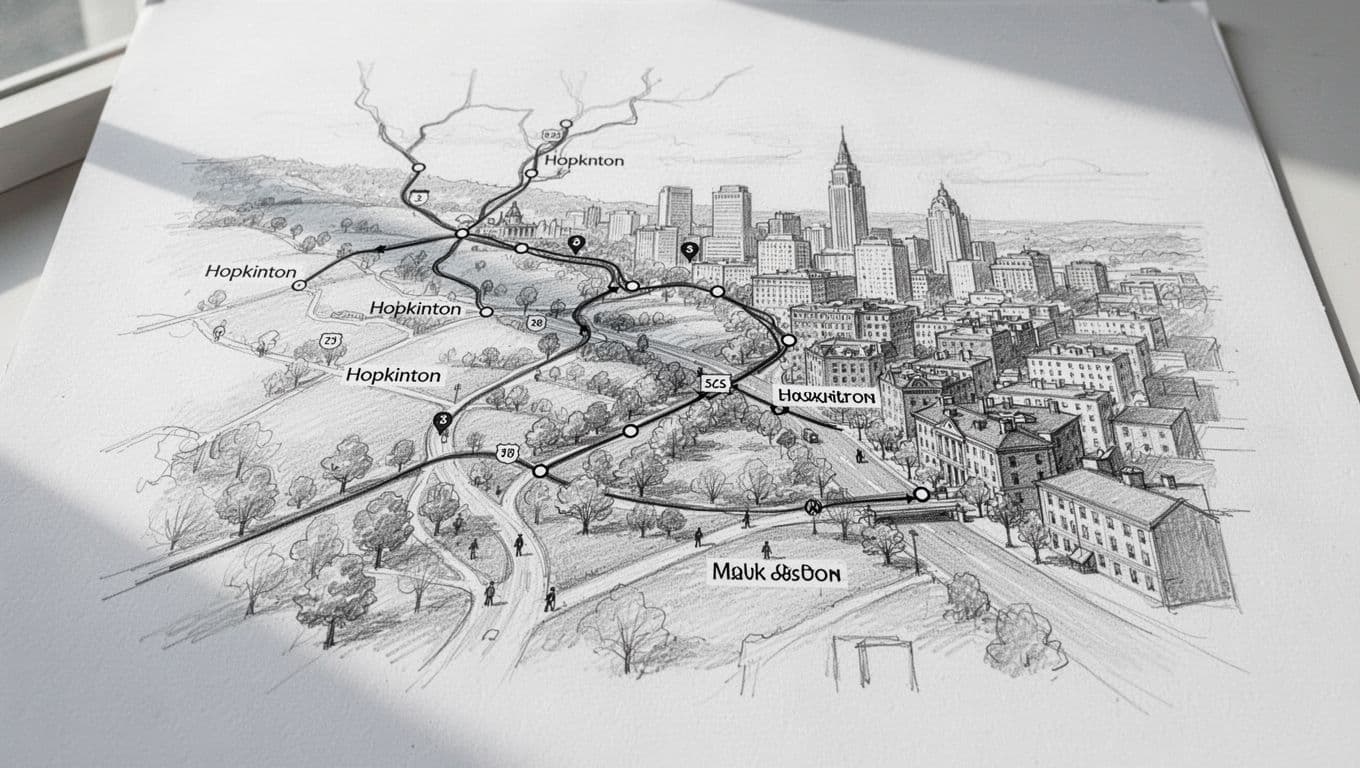
The Boston Marathon runs west to east through Hopkinton, Ashland, Framingham, Natick, Wellesley, Newton, Brookline, and Boston. Each area offers a different race-day experience, but few hotels sit directly beside the entire course. Compare the tradeoffs in this Boston Marathon hotel guide before booking.
Plan Your Complete Marathon Weekend
Choosing the right hotel can reduce race-day stress, shorten travel time, improve sleep, and make your entire marathon weekend smoother.
More Boston Marathon Hotel Guides
Stay Near the Hopkinton Start Without Chasing a Hotel on the Course
Hopkinton has limited large-hotel inventory, so runners often stay in nearby Milford, Southborough, Westborough, Framingham, or Natick. Options include Residence Inn by Marriott Boston Framingham, Sheraton Framingham Hotel & Conference Center, Courtyard by Marriott Boston Westborough, and several hotels around Milford.
These locations can work well if you use an official Boston Marathon bus, arrange a private drop-off, or join organized transportation. You may get more space, easier parking, and better breakfast access than you would near the finish. However, race morning begins early, and a hotel dining room may not open before you leave. Ask about grab-and-go breakfast, coffee service, late check-out, and parking restrictions.
Shuttle details also change by race year. Confirm the exact pickup location, departure window, and whether your hotel allows marathon-related drop-offs. A room that looks close to Hopkinton on a map can still require extra time on closed or congested roads.
Choose Newton or Wellesley for Mid-Course Spectating
Wellesley College is famous for its loud, energetic spectator point, while Newton offers access near the hills and Heartbreak Hill. Hotels in Wellesley, Needham, Natick, and Newton can give supporters a convenient base for seeing runners at more than one location.
Nearby examples include The Inn at Newton Highlands and Four Points by Sheraton Boston Newton. These areas are usually better for spectators than for runners who need simple access to the starting village. Wellesley College, Newton Hills, and surrounding streets can become difficult to reach once closures begin.
Course access matters more than the map suggests. Limited parking, police barriers, and one-way walking routes can turn a short drive into a long detour. Plan your viewing points in advance, then confirm the hotel’s race-day parking and transportation policies.
Book a Finish-Line Hotel in Back Bay or Downtown Boston
Back Bay and downtown offer the easiest post-race access, especially near Boylston Street, Copley Square, Boston Common, and the final stretch. Recognizable choices include Fairmont Copley Plaza, The Lenox, Boston Marriott Copley Place, Hilton Boston Back Bay, The Colonnade Hotel, and The Westin Copley Place.
Walking back to your room after 26.2 miles is the main advantage. Restaurants, recovery meals, shopping, and sightseeing are also close. The tradeoffs include higher rates, crowd noise, security zones, and restricted vehicle access.
A hotel can appear close to the finish while barriers or closed streets block the most direct route. Check the property’s exact entrance and walking access before booking, and review current Marathon Weekend policies directly with the hotel.
Where Should Runners, Families, and Spectators Stay?
Choosing the right base camp for Marathon Monday requires balancing the distinct needs of athletes, cheering family members, and casual spectators. Because the course stretches across eight cities and towns, your lodging choice shapes your entire weekend experience.
The Best Hotel Setup for a Boston Marathon Runner
Runners need an environment that prioritizes deep sleep, reliable transit to the start, and calm physical preparation. Therefore, look for a quiet room with effective soundproofing, a private bathroom, and reliable climate control. Arriving two or three days early helps you adjust to the time zone, reduce travel stress, and test your transit route to official pickup areas.
Proximity to the finish line is rarely the top priority for a runner on race morning. Since the race starts in Hopkinton, staying too close to Boylston Street can actually complicate your early morning departure. Instead, prioritize a reliable route to official runner buses or a quiet space near western lodging options.
Make sure your room includes breakfast access, a microwave, or a small refrigerator so you can control your pre-race fueling. After finishing 26.2 miles, you will appreciate a short walk or a direct transit line back to your bed.
What Families Need for Race Day Support
Supporters and family members face an entirely different set of logistics on Marathon Monday. Choose viewing points based on your runner’s expected pace and your own ability to navigate crowded subway lines. Review official guidelines such as the Boston Marathon Spectator Guide to map out accessible viewing corridors.
Crowds, street closures, and heavy data traffic make spontaneous communication nearly impossible on race day. Families must establish a backup meeting place away from the immediate finish line barriers before the race begins. Selecting one well-planned viewing spot is usually much easier than trying to chase a runner through multiple course towns. Ensure your hotel offers accessible elevators, reliable Wi-Fi, and laundry facilities so you can manage gear and weather protection efficiently.
How to Get From Your Hotel to the Start and Finish
Navigating Marathon Monday requires precision because standard travel habits fall apart when thousands of runners flood the streets. Whether you are heading west to the starting village or positioning yourself along the route, understanding local transit limits prevents race-morning panic.
Planning the Trip to Hopkinton on Marathon Morning
Your race morning begins long before the starting gun fires. Therefore, you must follow your assigned Boston Athletic Association bus departure time and instructions exactly.
Arriving at the designated boarding area early allows you to clear security, drop your gear bag, and secure a spot on the bus without rushing. Because the Athlete’s Village in Hopkinton exposes you to the elements for hours, pack old layers you can discard and keep waterproof gear handy.
Confirm critical details with your hotel front desk the night before the race. Verify your early morning wake-up call, check when grab-and-go breakfast items become available, and confirm your checkout arrangements if you plan to return after finishing. Avoid relying on last-minute rideshares from downtown Boston to reach the buses. Massive road closures, soaring surge pricing, and heavy traffic bottlenecks make street-hailing a high-risk gamble that can easily cause you to miss your mandatory transport window.
Moving Around the Course as a Spectator
Cheering for a runner across multiple towns requires strategic transit planning rather than spontaneous impulses. The MBTA commuter rail and green line subways are your best tools for reaching Wellesley, Newton, or Brookline, but expect packed cars and occasional station exit closures near popular viewing hubs. Committing to a single viewing location usually reduces stress, whereas trying to catch a runner at both Heartbreak Hill and the finish line often leaves you stranded in transit crowds.
Pack your spectator bag with a fully charged phone, a portable battery pack, extra layers for changing weather, and portable snacks. In addition, keep a printed card with your hotel address in your pocket because dead phone batteries and congested cellular networks happen frequently on race day. Coordinate exact meeting spots with your runner beforehand since mobile communication near the finish line is notoriously unreliable.
Getting Back to Your Hotel After the Finish
Crossing the finish line on Boylston Street unleashes a wave of emotion, but the physical reality of walking another mile through the post-race chute demands patience.
Security perimeters restrict access around Copley Square, so your family reunification plan must be established days in advance. If your hotel sits within Back Bay, you can shuffle slowly back to your room after collecting your medal and mylar blanket.
Lodging located outside the immediate downtown footprint requires a calculated transit strategy using the subway or commuter rail. Do not promise your family a curbside rideshare pickup near the finish line because street closures remain in effect for hours after the final runner passes. Instead, rely on walking, public transit, or prearranged meeting points well outside the restricted security zone to reunite safely.
How Much Do Boston Marathon Hotels Cost?
Marathon Monday pushes lodging prices across Greater Boston to their yearly peak because thousands of runners and supporters converge on the city at once.
Expect surge pricing, mandatory minimum-stay policies, and higher rates for refundable rooms. Taxes, parking fees, and resort charges can quickly inflate your bill, so you must calculate the full cost of the stay rather than focusing solely on the nightly rate. Premium Back Bay properties command top dollar for finish-line convenience, while suburban options offer more affordable base camps if you factor in transportation.
When to Reserve and What to Check Before Paying
Begin your lodging search the moment your qualification is official or your travel dates lock in. Because Marathon Monday week brings intense demand, waiting leaves you with inflated prices or fully booked properties. Review the exact hotel address on a map to see how road closures will impact your race morning.
Always verify cancellation deadlines, minimum-stay rules, parking fees, and breakfast hours before entering your credit card information. Confirm whether the property offers secure luggage storage after the race or shuttle details to official start-line transportation hubs. Booking directly with a hotel rather than a third-party site gives you more flexibility if your travel plans change or if you need special room accommodations.
Ways to Save Without Sacrificing Race-Day Sleep
Moving your base camp outside Back Bay unlocks significant savings without ruining your race preparation. Staying in suburban spots like Framingham or Westborough lowers your nightly rate, especially if you share a kitchen-equipped suite with trusted teammates.
However, avoid choosing an ultra-cheap motel that forces a grueling predawn commute or leaves you tossing and turning in a noisy room. Poor sleep and long travel times drain the physical energy you need for 26.2 miles. Balance your budget against your performance goals because saving money loses its value if travel stress compromises your race day.
How to Choose the Right Boston Marathon Hotel
Selecting a place to sleep during Marathon weekend requires more than clicking a booking link on a flat map. You must map your entire door-to-door travel plan before locking in your reservation. Therefore, evaluating specific property features protects your sleep and preserves your race-day energy.
Questions to Ask the Hotel Before Booking
Front desk policies change quickly when thousands of athletes flood the city. Always request written confirmation for your agreements to prevent confusion during busy weekend shift changes. When comparing properties, review this essential property checklist to ensure nothing is left to chance:
- Course access and local road closure impacts
- Race-weekend shuttles and start-line transportation links
- Early morning breakfast options for race morning
- Late checkout policies for after the finish line
- Secure luggage storage and bag delivery services
- Quiet-room availability and soundproofing quality
- Bed quality and climate control reliability
- Private bathrooms and working elevator access
- Parking availability and local traffic restrictions
- Public transit proximity and station crowding
- Flexible cancellation terms and minimum-stay rules
- Nearby food stores and recovery restaurants
Common Hotel Mistakes That Make Marathon Weekend Harder
Many runners stumble by relying only on straight-line map distance without checking road closures or public transit limits. For example, booking a hotel right next to the finish line sounds convenient, but it severely complicates your predawn trip to Hopkinton.
Conversely, staying far out west aids your start-line commute yet leaves you with a long, exhausting journey back after running 26.2 miles. Mid-course locations in Newton or Wellesley offer balanced spectating, but police barriers and heavy crowds trap vehicles for hours.
Other frequent errors include ignoring breakfast access, overlooking recovery space, and failing to plan a family meeting point away from tight security zones. Fix these missteps early by securing a property with transparent cancellation terms, a functional refrigerator, and a clear path to your destination.
A Simple Hotel Plan for a Smooth Marathon Weekend
Navigating Marathon Monday becomes much easier when you map out every milestone before your trip begins. A structured timeline shields you from race week chaos and protects your physical energy for the road ahead.
The Marathon Weekend Timeline from Booking to Recovery
Securing your lodging months in advance starts the process, and you should pivot to grocery shopping and meal planning as race week approaches. Upon arrival, conduct a brief course reconnaissance walk and pick up your bib at the expo.
Test your transportation route to the start line or spectator zones two days prior to eliminate guesswork. Check the weather forecast constantly, lay out your racing clothes the night before, and prioritize deep sleep above all else. Execute your race morning routine with precision, and finish the weekend with a slow, deliberate recovery process.
Sample Schedules for Runners and Families
A runner stationed in Back Bay keeps Saturday relaxed, rides the official athlete bus from a designated pickup point on Monday morning, and walks back to the hotel room after crossing the finish line. Meanwhile, a family staying in Wellesley stakes out a cheering spot near the college on Monday morning, tracks the runner using pre-arranged splits, and meets at a quiet rendezvous point far past the finish line barriers.
The strongest preparation protects your sleep, eliminates last-minute decisions, and leaves plenty of room for sudden weather or transit changes.
Frequently Asked Questions
Navigating race weekend requires clear answers to logistical puzzles. These details help you plan your lodging without second-guessing every choice.
Are there hotels directly on the Boston Marathon course?
The route cuts through residential streets and town centers rather than major hotel strips. Many properties sit within walking distance, but few open their front doors directly onto the running lane. Look toward Wellesley, Newton, Brookline, and downtown Boston, and always verify how local road closures affect your specific entrance.
What is the best area to stay for the Boston Marathon finish?
Back Bay and Copley Square offer unbeatable convenience for post-race recovery. Walking straight from Boylston Street to your room after 26.2 miles is a massive relief. However, expect higher nightly rates, heavy crowds, and strict security perimeters.
Where should I stay if I need to get to the Boston Marathon start?
Runners heading to Hopkinton should prioritize reliable morning transportation over map proximity. Staying in Framingham or Westborough simplifies access to official buses. Always follow current Boston Athletic Association instructions rather than relying on last-minute rideshares.
Can spectators watch the Boston Marathon at more than one location?
Moving between multiple viewing spots is possible, but street closures and packed subways create major bottlenecks. Supporters usually save time and energy by picking one prime location. Establishing a reliable backup meeting spot prevents confusion when cellular networks jam.
How far in advance should I book a Boston Marathon hotel?
Secure your room the moment your travel dates are locked in. Early booking gives you better choices and safer cancellation terms before inventory vanishes. Waiting until race week leaves you with inflated prices and limited availability.
Should I stay in Boston or near the middle of the course?
Boston proper delivers unbeatable dining and easy finish-line access. Suburban areas like Wellesley and Newton provide quieter surroundings and lower rates. Runners typically value start-line logistics and sleep, while spectators prefer viewing convenience.
Conclusion
Choose your lodging based on your complete race-day plan rather than a single appealing address. Every location requires balancing finish-line convenience against start-line access, quiet sleep, and spectator movement. Saving money on a distant suburb means little if morning transit drains the physical energy required for twenty-six point two miles.
Confirm official transportation schedules and local street closure rules before your trip begins. Booking early secures a room that protects the runner’s recovery and simplifies the journey across town. Small logistical choices often determine whether race morning feels smooth or entirely chaotic.
Stand near the quiet starting village in Hopkinton or watch the roaring crowds surge toward Boylston Street. The entire region comes alive because thousands of athletes push their limits across Greater Boston. Your hotel choice simply sets the stage for that unforgettable experience from the first mile to the last.


