

Best Hotel Suites Near the Cleveland Marathon
Arriving in Cleveland before marathon morning should feel calm, not rushed. After traveling, you need a quiet place to sleep, enough space to organize your gear, and simple access to the start area so your attention stays on pacing and performance.
A hotel suite near the Cleveland Marathon can give you room to stretch, lay out clothing, store shoes and race supplies, and prepare a familiar breakfast before dawn. After the finish, that extra space also makes it easier to shower, refuel, elevate your legs, and recover without feeling boxed in. Choosing the right location matters, but so do details such as kitchen access, bed quality, parking, transportation, and cancellation policies.
This Cleveland Marathon hotels post will help you compare where to stay, identify suite features that support race preparation, review nearby hotel examples, and plan your race weekend with fewer surprises. Next, we’ll look at the best areas and lodging options for a comfortable Cleveland Marathon stay.
Key Takeaways
- Choose hotel suites near the Cleveland Marathon for quiet sleep, room to organize gear, and easier race-morning preparation.
- Prioritize a comfortable bed, kitchenette or mini-fridge, reliable Wi-Fi, late checkout options, and space for recovery after the race.
- Downtown lodging reduces travel stress, but confirm parking costs, road closures, and walking distance before booking.
- Review the marathon’s public transportation information and race weekend parking details before choosing a hotel.
- Book early, then verify cancellation terms, breakfast hours, luggage storage, and check-in arrangements for race weekend.
How to Choose Hotel Suites Near the Cleveland Marathon
The best hotel suite depends on your race distance, start time, travel plans, and recovery needs. A full marathoner may value a short walk and late checkout, while a 10K runner or accompanying guest may save money by staying farther away.
Plan Your Complete Marathon Weekend
Choosing the right hotel can reduce race-day stress, shorten travel time, improve sleep, and make your entire marathon weekend smoother.
More Cleveland Marathon Hotel Guides
Before booking, confirm the official start and finish locations, road closures, shuttle details, and race-weekend policies. The Cleveland Marathon’s official road closure updates can change, and a route that looks simple on a map may take much longer by car on race morning.
Choose Location Before Luxury
Downtown Cleveland usually offers the simplest race-day setup. A short walk or a quick ride reduces the chance of traffic delays, missed shuttles, and last-minute parking problems. Playhouse Square and the Flats can also work well, depending on your route to the start area and the hotel’s access to major streets.
Ohio City may provide restaurants, larger rooms, or better rates while keeping you near downtown. University Circle offers a different atmosphere and may suit travelers who want museums, dining, or a quieter stay. Hotels near the airport corridor often cost less, but the extra distance adds transportation risk, especially before an early start.
Map distance doesn’t equal race-day travel time. Closed streets can force a driver onto an unfamiliar detour, and rideshare availability may change when thousands of runners need transportation at once. Review the marathon’s race weekend FAQ before choosing a hotel, then ask the property which entrance, parking garage, or transit stop remains accessible during closures.
Your race distance should guide the tradeoff. Full marathon runners benefit most from minimizing pre-race travel and protecting sleep. Half marathon and 10K participants may accept a longer ride if the savings are meaningful. If you’re accompanying another runner, prioritize dependable parking, breakfast access, and a comfortable place to wait after the start.
Look for the Suite Features Runners Actually Use
A suite should support your routine, not simply provide extra square footage. Separate sleeping and living areas let one person rest while another organizes fuel, clothing, or race equipment. A sofa or firm chair also gives you space for light stretching without taking over the bed.
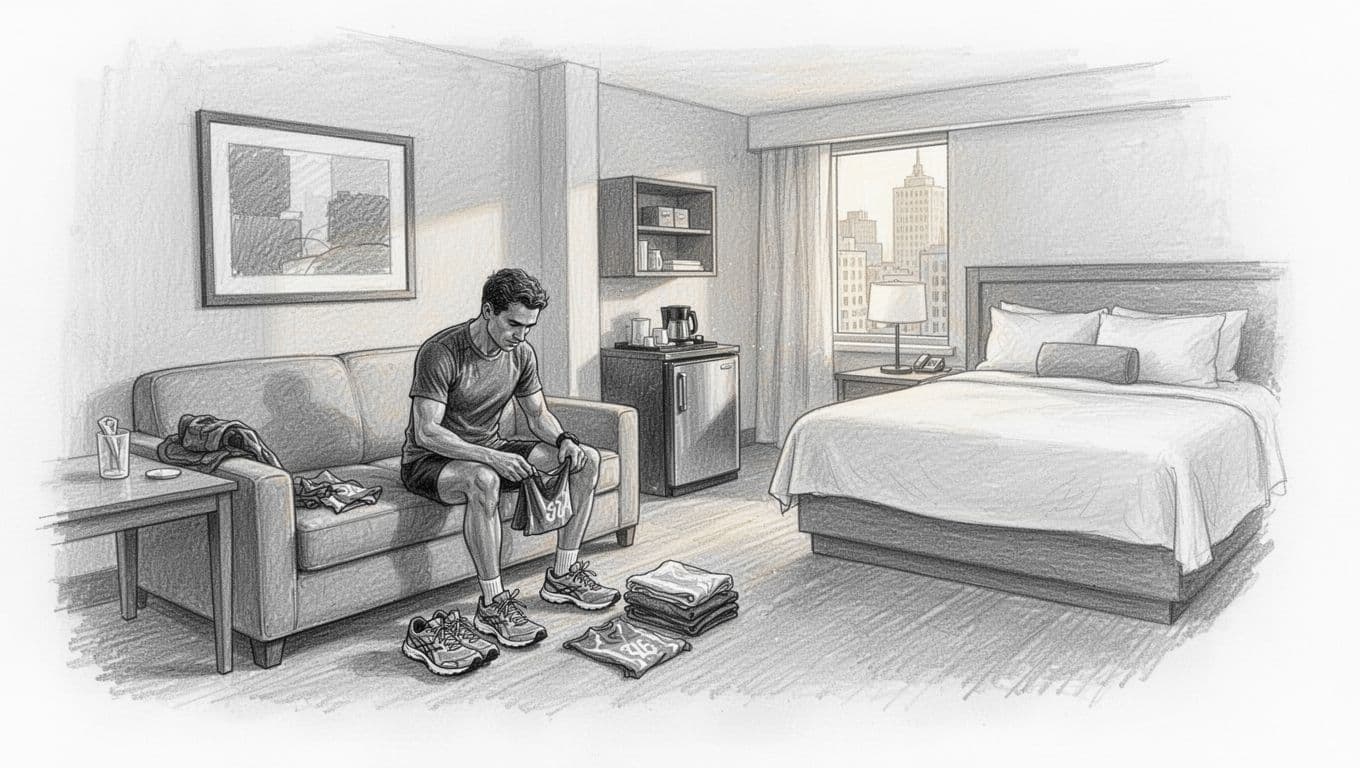
Prioritize features that reduce small race-weekend problems:
- A refrigerator and microwave make it easier to store and prepare familiar food.
- A coffee maker supports an early routine when the restaurant hasn’t opened.
- Blackout curtains and a quiet floor protect sleep before a demanding race.
- Strong Wi-Fi, a working elevator, and enough bathroom space help two people share the room comfortably.
- A chair, sofa, or open floor area gives you room to stretch and lay out gear.
Room labels can be confusing. A studio suite usually combines the bed and living area in one space. A one-bedroom suite separates the bedroom from the living room, while an extended-stay suite often adds a larger kitchen and storage area. Connecting rooms provide two separate bedrooms, but they may cost more and aren’t always guaranteed.
Ask whether each feature is guaranteed or available only by request. Confirm the room type, refrigerator size, microwave access, floor location, and connecting-room arrangement directly with the hotel.
Check Recovery and Race-Morning Policies
A hotel can look ideal online yet fail your race schedule. Ask when breakfast begins, whether staff can provide early coffee, and whether the restaurant will offer a limited race-day menu. Confirm late checkout, luggage storage, parking fees, fitness center hours, pool access, laundry facilities, and restaurant closing times.
Post-race details matter just as much. Ask whether the hotel can provide a post-race shower after checkout, store food safely, assign a quiet room, or accommodate an accessible room request. If you need to keep prepared meals, confirm whether the refrigerator allows food storage and whether the front desk can store bags after checkout.
Use this short call checklist:
- What time do breakfast and coffee service start?
- Can I request late checkout or a post-race shower?
- Is luggage storage available before check-in and after checkout?
- How much does parking cost, and will the garage remain accessible?
- Can you place me on a quiet floor away from elevators?
- Are accessible rooms and refrigerators available in the booked suite?
- Will road closures affect the hotel’s entrance or rideshare pickup?
A few minutes on the phone can reveal more than a polished booking page. That information helps you compare the room’s total cost, not just its nightly rate.
The Best Cleveland Areas for a Comfortable Marathon Weekend
Your hotel location can shape the entire race weekend. A short route to the start protects sleep and reduces transportation stress, while a neighborhood farther away may offer better parking, restaurants, or value. Before booking, compare walkability, road closures, noise, and the availability of a true suite.
Downtown Cleveland Keeps Race Morning Simple
Downtown is usually the first area runners should check because the Cleveland Marathon starts and finishes near Public Square. Staying nearby can reduce the need for a pre-dawn rideshare, a shuttle connection, or a long walk through unfamiliar streets. Review the marathon’s current road closure information, since closures can affect both driving routes and rideshare access.
Several recognizable properties are worth researching, including Drury Plaza Hotel Cleveland Downtown, Residence Inn Cleveland Downtown, Hotel Cleveland, Autograph Collection, Cleveland Marriott Downtown at Key Tower, Hilton Cleveland Downtown, and The Westin Cleveland Downtown. Their locations can put you near restaurants, coffee shops, attractions, and the race village, depending on the specific property and event layout.
Downtown does not automatically mean a traditional suite. Some hotels offer studio layouts, upgraded rooms, or separate living areas, while others may provide only standard guest rooms. Confirm the exact room category, bed setup, refrigerator, microwave, parking cost, renovation status, and race-weekend availability directly with the property.
Playhouse Square and the East Side Offer Walkable Options
Playhouse Square gives you a central, downtown-adjacent base with theaters, restaurants, coffee shops, and evening entertainment. It can suit travelers who want more to do after packet pickup, especially when a completely quiet suburban stay feels too isolated.
Residence Inn properties and larger rooms near the theater district may provide suite-style layouts, kitchenettes, or extra seating. However, room categories vary by hotel and date. Check the reservation details carefully rather than assuming every “suite” includes a separate bedroom.
The theater district also brings practical tradeoffs. A performance, busy restaurant, or weekend event can create noise when you’re trying to sleep. Ask about quiet floors, street-facing rooms, parking rules, and elevator locations. Then map the actual walking route to Public Square, not just the straight-line distance. Construction, closed streets, and barricades can turn a short map estimate into a longer race-morning route.
Ohio City and the Flats Add Food and Local Character
Ohio City and the Flats appeal to runners who want breweries, markets, restaurants, and a livelier Cleveland experience. West Side Market and nearby dining options can make the weekend feel more like a city visit than a quick overnight race trip. That atmosphere may help traveling companions enjoy the stay while you focus on preparation.
Roost Cleveland and nearby extended-stay properties are useful names to investigate when you want more residential space or a longer-stay layout. Still, don’t assume a specific suite, kitchen setup, early breakfast, or race-day service is available. Verify current room types, dates, rates, renovation status, and policies with each property.
These neighborhoods may require a longer walk or a rideshare trip to the start and finish. Road closures can also limit the most direct route, especially during early morning traffic restrictions. If you stay west of downtown, identify the pickup point, allow extra time, and keep a backup plan for reaching the race area.
University Circle and Airport Hotels Make Sense for Some Travelers
University Circle offers museums, hospitals, restaurants, and a quieter setting than downtown. It can work well for families, medical visitors, or travelers adding cultural activities to the weekend. The distance to an early downtown start, however, makes race-morning transportation more complicated.
Airport-area hotels often appeal to runners who value parking, highway access, or a lower nightly rate. They may be practical for the night before an early flight, particularly when you need predictable access to the airport. For race morning, the extra drive adds traffic, rideshare, and road-closure concerns.
A downtown suite is often the better choice when sleep and a simple start matter most. An airport hotel can still fit your plans, but confirm the drive time at race-hour conditions, not during a quiet afternoon.
Build the Right Marathon Weekend Plan Around Your Suite
Your hotel should support the race plan you already practiced in training. Use the suite to reduce decisions, protect sleep, keep nutrition familiar, and leave enough time for delays. A smooth weekend often comes down to simple choices made before fatigue and nerves arrive.
Plan Arrival, Packet Pickup, and the Final Meal
Arrive early enough to settle into the room before you handle race logistics. Once you check in, inspect the route to the start area, identify the correct building entrance, and confirm how you will travel around road closures. The Cleveland Marathon’s official race weekend schedule lists current event times, locations, and expo details, so check it before you leave home and again after arrival.
Complete packet pickup without rushing. If the expo runs across multiple days, choose a time that fits your travel schedule and leaves room for rest afterward. Bring your identification and review the event’s packet pickup and expo information for updated instructions.
Afterward, return to the suite instead of turning the evening into another endurance event. Walk only as much as you need, keep dinner simple, and choose foods you have already tested during long-run training. A refrigerator can hold yogurt, fruit, drinks, or prepared meals, while a microwave makes familiar rice, oatmeal, potatoes, or soup easier to manage.
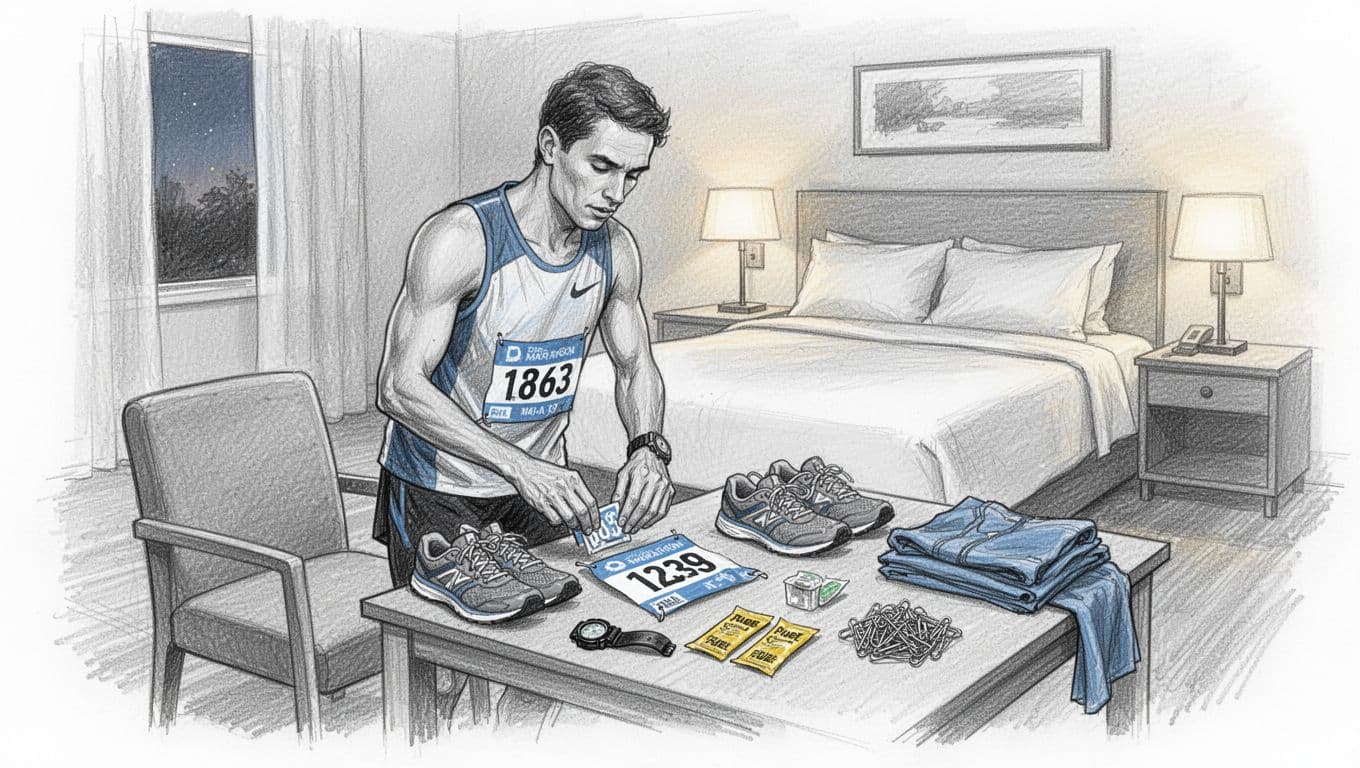 Avoid experimenting with rich restaurant meals, unfamiliar desserts, or large portions. Your goal is to finish eating early enough for digestion and sleep. Sightseeing can wait until after the race.
Create a Calm Race-Morning Routine
Prepare the entire morning before you go to bed. Lay out your shoes, socks, shorts, shirt, bib, watch, fuel, safety pins, sunglasses, and extra layers in the living area. A separate bedroom gives you space to organize without covering the bed or waking a roommate.
Use a sequence that matches your training routine:
- Wake with enough time for a calm bathroom visit and hydration.
- Eat your familiar pre-race meal, then allow time for digestion.
- Dress in the order you prefer and attach your bib before leaving.
- Check the weather, start instructions, and transportation plan.
- Leave with extra time for elevators, parking, security, shuttles, and closed streets.
A suite can function as a small staging area. Keep race essentials together, and place anything you cannot forget beside the door. If you share the room, your companion can sleep while you prepare in the living room.
Build a margin into every estimate. A five-minute elevator wait, a blocked entrance, or a full parking garage can disrupt a tight plan. Reaching the start early gives you time to use the bathroom, find your corral, and settle your breathing before the gun.
Use the Room for Post-Race Recovery
The first hours after finishing should focus on restoring energy and lowering stress. Start with fluids and carbohydrates, change into dry clothing, and eat a normal meal when your stomach allows. After showering, use gentle movement to avoid stiffening, then rest with your legs supported.
A suite helps when family or a training partner travels with you. They can eat, talk, or manage bags in the living area while you recover in the bedroom. Extra seating also gives you a place to change and refuel without balancing everything on the bathroom counter.
Ask about late checkout and luggage storage before race weekend. Hotels may limit both services when demand is high, and availability can depend on staffing or occupancy. Confirm the arrangement during booking, then verify it again at check-in so you know where you can recover after the finish.
Compare Suite Costs, Booking Terms, and Runner-Friendly Value
The cheapest nightly rate isn’t always the cheapest marathon stay. Compare the complete weekend cost, then weigh each option against sleep, recovery, and race-morning transportation. A hotel suite near the Cleveland Marathon may cost more upfront, yet save money and energy when it keeps you close to Public Square.
Calculate the Full Cost Instead of the Room Rate Alone
Start with the advertised nightly rate, then add every charge that could affect your budget:
- Include taxes, parking, resort or destination fees, and fees for extra guests.
- Price breakfast for each morning, especially if the restaurant opens after your race start.
- Add rideshare fares, rental-car costs, or public transit for the hotel-to-start trip.
- Include extra nights if your travel schedule requires a late arrival or post-race recovery day.
- Ask about late checkout fees, post-race shower access, and luggage storage charges.
A downtown suite may cost $40 or $60 more per night than an airport room. However, that difference can disappear after several rideshares, parking charges, and meals purchased because your room lacks a refrigerator or microwave. Airport lodging may also require a pre-dawn ride, a return trip after the finish, and backup transportation if road closures affect the route.
Public transit can lower the total. Check current RTA fares and passes, then compare the cost with rideshare pricing for your group. The airport’s public transportation information also explains Red Line service between Cleveland Hopkins International Airport and downtown.
Write the totals in one simple comparison:
Room price + taxes + parking + meals + transportation + extra nights + possible checkout fees = actual stay cost.
Then ask whether the premium buys something you will use. A separate bedroom, quiet location, kitchen area, and short walk to the start can protect sleep and reduce race-day decisions. If you spend most of the weekend outside the room, a standard room may offer better value.
Book Early, Then Recheck the Reservation
Book as soon as you know the race date and travel schedule. One-bedroom suites, rooms with kitchenettes, and properties near downtown often have limited inventory during marathon weekend.
After booking, call the hotel and confirm the details rather than trusting the room title alone. Verify the bed setup, refrigerator, microwave, quiet-room request, parking rate, breakfast schedule, and check-in time. Ask for the exact cancellation deadline and identify whether the policy changes for race weekend.
Keep checking prices after you reserve. If you find a lower refundable rate, secure the replacement reservation before canceling the original room. Compare the new room type, bed configuration, parking terms, taxes, and cancellation rules. A lower rate isn’t a better deal if it removes the kitchen feature or places you farther from the start.
Know When a Suite Is Better Than Two Standard Rooms
For a solo runner, a standard room may provide everything necessary. Couples often benefit from a one-bedroom suite because one person can sleep while the other prepares food, sorts gear, or gets dressed in the living area.
Families and training groups need a closer cost comparison. One suite offers shared space and may reduce the total price, but everyone shares a bathroom and may follow different sleep schedules. Two standard rooms cost more in some cases, yet they provide stronger privacy, separate bathrooms, and less concern about one runner waking another.
Choose Your Distance, Duration and Goal Time
Make three quick selections and open the exact plan built for your race target.
Looking for a Fully Personalized Training Plan?
The training plans above are an excellent choice if they match your goal. However, if you’d rather train with a plan built specifically around your current fitness, goal race, preferred training days, weekly mileage, and target finish time, our RDA Custom Training Plans provide a personalized solution. We also have running courses available for runners seeking to run faster from the mile to the marathon.
Why Choose a Custom Training Plan?
| Standard Training Plan | RDA Custom Training Plan |
|---|---|
| Follows a fixed schedule | Built around your schedule |
| Standard weekly mileage | Peak mileage customized for you |
| Fixed workout days | Train on the days you choose |
| Same structure for everyone | Designed around your current fitness |
| Static plan | Updated as your fitness improves |
| One-time purchase | Ongoing personalized coaching and support |
What You’ll Receive
- A training plan built specifically for your goal
- Personalized training paces
- Long runs, tempo runs, threshold workouts, interval sessions, recovery runs, and easy runs
- Peak weekly mileage matched to your experience level
- Flexible training schedule that fits your life
- Ongoing plan adjustments as your fitness improves
Ready to Train Smarter?
Stop guessing and start following a plan built specifically for you, your schedule, and your racing goals.
Connecting rooms can split the difference when the hotel guarantees the arrangement. Choose them when runners have different bedtimes, when children need supervision, or when each person wants a separate sleeping space. A suite is usually the better choice when shared recovery space and food preparation matter more than privacy.
Frequently Asked Questions
Booking a suite for marathon weekend involves more than comparing room rates. Your choice affects sleep, breakfast, transportation, recovery, and how much energy you spend before the start. These answers cover the practical details runners often discover too late.
How early should I book a suite for the Cleveland Marathon?
Reserve your room as soon as the race date and your travel plans are confirmed. Larger suites, one-bedroom layouts, and downtown Cleveland hotels have limited inventory, so popular options can sell quickly around race weekend.
When possible, choose a flexible cancellation policy. You can then recheck rates and policies as the event approaches without losing your original room. If you find a better refundable rate, compare the room type, parking charges, taxes, and cancellation deadline before changing reservations.
Are downtown Cleveland hotels close enough to walk to the race?
Some downtown properties may be close enough to walk, but the answer depends on more than the standard map estimate. Check the official Cleveland Marathon course maps, then consider the start area, your hotel’s actual entrance, road closures, weather, and how fresh you want to feel before the race.
A route that looks easy during a normal afternoon may feel different before sunrise or after several blocks of detours. Race-day walking time also depends on your pace, clothing, gear, and need to reach your corral. Confirm the race-weekend map before deciding that a hotel is walkable.
What is the best suite feature for marathon runners?
Quiet sleep conditions should come first. A comfortable bed, a quiet floor, blackout curtains, and a room away from elevators or busy streets can protect the night before your race.
After sleep, look for a refrigerator, microwave, extra floor space, reliable bathroom access, and a convenient route to the start. The best feature depends on your group. A solo runner may need only food storage and a calm room, while a family or training partner may benefit more from a separate bedroom and living area.
Can I get breakfast before the Cleveland Marathon starts?
Hotel breakfast hours may begin after the race starts, especially on a weekend. Ask whether the property offers early coffee, grab-and-go food, or access to a refrigerator and microwave before dawn.
Plan your pre-race meal around foods you’ve already tested during training. Pack familiar items if the hotel cannot provide breakfast early enough. Oatmeal, toast, fruit, or another dependable option is safer than trying an unfamiliar meal on race morning.
Should I stay near the airport or downtown Cleveland?
Airport hotels often offer easier parking, highway access, and lower rates. They can fit runners with early flights, rental cars, or a tight lodging budget, but the drive to downtown adds transportation time and more exposure to race-day closures.
Downtown Cleveland hotels usually reduce race-morning travel and place you closer to restaurants, event areas, and the start. Choose downtown when minimizing transportation is your priority. An airport hotel makes more sense when flight timing, parking, or price outweighs the convenience of staying near the course.
Can hotels provide late checkout after the race?
Late checkout is property-specific and may be limited when occupancy is high. Request it before arrival, ask whether the hotel charges a fee, and confirm the approved checkout time at the front desk.
If late checkout isn’t available, ask about luggage storage and access to a post-race shower. Some properties may offer a fitness center, pool locker room, or courtesy shower arrangement, but you need confirmation before relying on it. A clear backup plan makes the hours after the finish much easier.
Conclusion
The right hotel suite near the Cleveland Marathon can make race weekend feel controlled before the start and manageable after the finish. Choose a room that protects sleep, simplifies race-morning travel, supports familiar fueling, and gives you enough space to recover without adding unnecessary decisions.
Compare downtown Cleveland with nearby neighborhoods based on walking access, transportation, noise, parking, and suite features. Then calculate the full trip cost, including meals, parking, rideshares, extra nights, and possible checkout fees. Before booking, verify the current race details and confirm hotel policies for breakfast, luggage storage, late checkout, parking, refrigerators, and post-race shower access.
A lower room rate may look appealing, but convenience has real value when you’re preparing to run 26.2 miles or recover after the finish. The best hotel suite near the Cleveland Marathon is the one that supports your established routine and removes avoidable stress. Fewer logistical problems leave more energy for the miles ahead.


