

Hoka Bondi vs Clifton: Which is Better for 2026
Deciding on the Hoka Bondi vs Clifton really boils down to one question. Are you looking for a super plush, recovery-day shoe? Or do you need a versatile daily trainer that can handle a bit of everything?
The Bondi is Hoka’s cushioning king, hands down. It’s built for ultimate protection on those slow, easy runs. It is also great for long days when you’re on your feet for hours. The Clifton, on the other hand, is a lighter, more energetic option. This makes it a fantastic daily workhorse for runners who want a soft ride that still feels responsive.
Hoka Bondi vs Clifton: A High-Level Comparison
Picking the right daily trainer is a very important gear decision. It’s the key to staying consistent and keeping injuries at bay. Both the Hoka Bondi and Hoka Clifton get a ton of praise for their cushioning. However, they are designed for very different jobs in a runner’s lineup.
I like to think of the Bondi as a luxury recovery tool. It’s engineered to soak up every bit of impact and give your legs a break. The Clifton is more like your reliable, all-around sedan. It’s perfect for the daily miles. It still has enough pep for you to open it up a bit when you feel good.
Build Your Complete Race-Day Setup
The right shoe helps, but faster racing comes from better training, pacing, recovery, fueling, and execution.
More Guides for This Shoe
Getting a handle on their core differences right from the start makes the choice a lot easier. For a broader look at what makes Hoka unique, check this detailed review of Hoka running shoes. It’s a great resource that gets into their overall design philosophy.
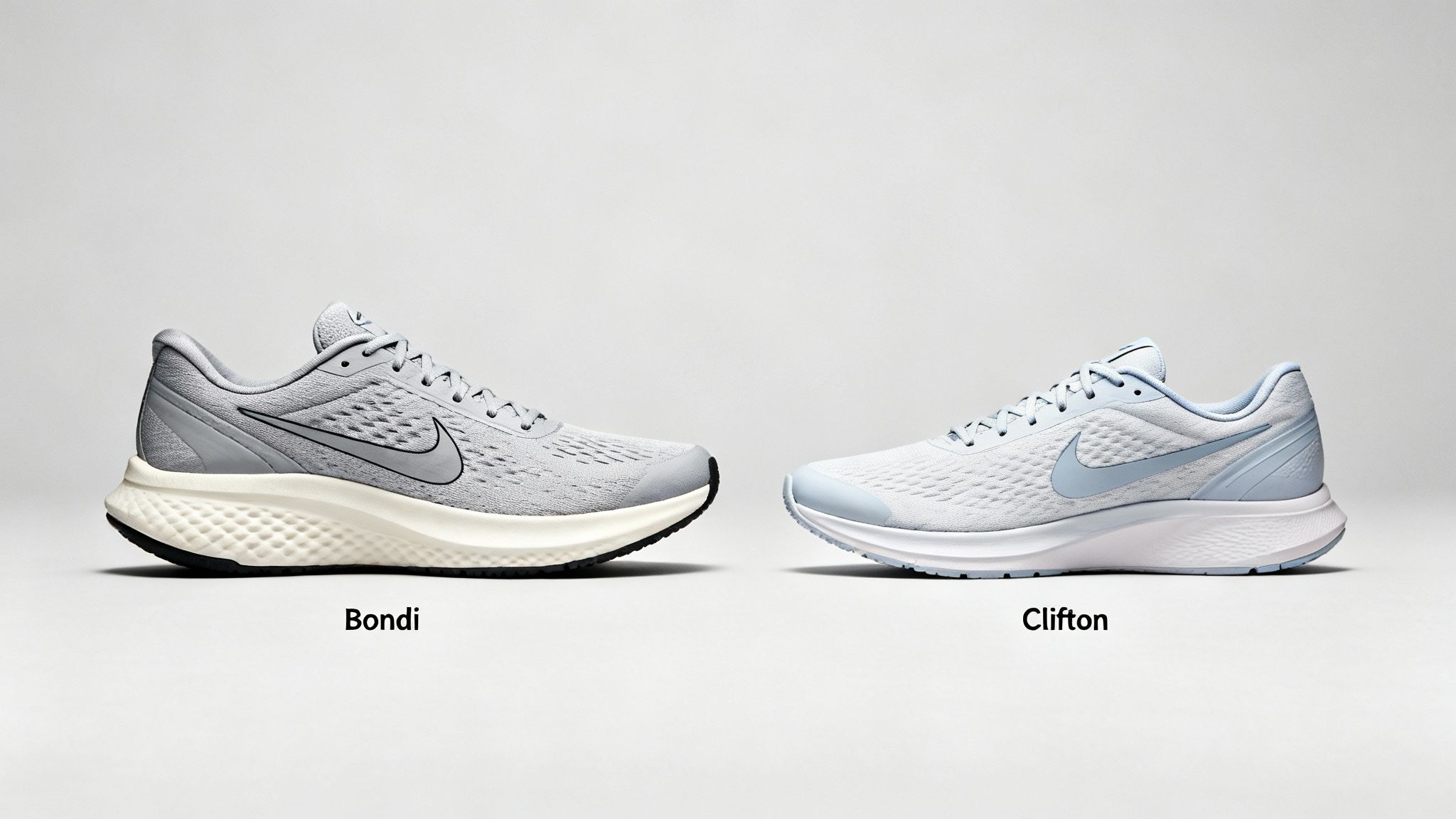
Hoka Bondi vs Clifton At a Glance
Let’s break down the essentials to see how these two stack up side-by-side. This table gives you a quick snapshot of what sets them apart.
| Feature | Hoka Bondi | Hoka Clifton |
|---|---|---|
| Primary Use | Recovery Runs, Long Walks, Max Comfort | Daily Training, Versatile Paces |
| Cushioning Feel | Extremely Plush, Soft, and Protective | Balanced Softness with Responsiveness |
| Best For | Runners seeking ultimate impact absorption | Runners needing one shoe for most runs |
| Weight | Heavier (approx. 10.5 oz for men’s 9) | Lighter (approx. 9.8 oz for men’s 9) |
| Energy Return | Low; focused on shock absorption | Moderate; provides a more lively feel |
| Ideal Pace | Slow, easy, and recovery paces | Easy to moderate paces |
| Price Point | Higher (premium cushioning) | More affordable (better value) |
The trade-offs become pretty clear when you look at it this way. The Bondi puts comfort above everything else. This makes it a true specialist for those easy days when your legs are toast. But that extra weight and ultra-soft foam can feel a bit sluggish if you try to push the pace.
In contrast, the Clifton’s lighter build and slightly firmer foam make it a true workhorse. It has plenty of protection for your daily mileage but doesn’t feel mushy. This gives you the responsiveness you need for tempo-ish efforts or strides. Your choice really depends on what gap you’re trying to fill in your shoe rotation.
Getting into the Nitty-Gritty: The Specs
To really get to the bottom of the Hoka Bondi vs Clifton conversation, you have to look past the marketing. You should check out this Hoka Cliffton 9 review I wrote on this amazing shoe.. You need to dive into the numbers. A running shoe’s core specs are not just trivia for shoe geeks. These include stack height, weight, and heel-to-toe drop. They are the blueprint for how a shoe feels and performs under your feet, mile after mile.
These three elements give the Bondi and Clifton their distinct personalities. One is an ultra-plush cruiser built for maximum protection. The other is a versatile daily workhorse. Let’s break down the technical details to see why each one shines in different situations.
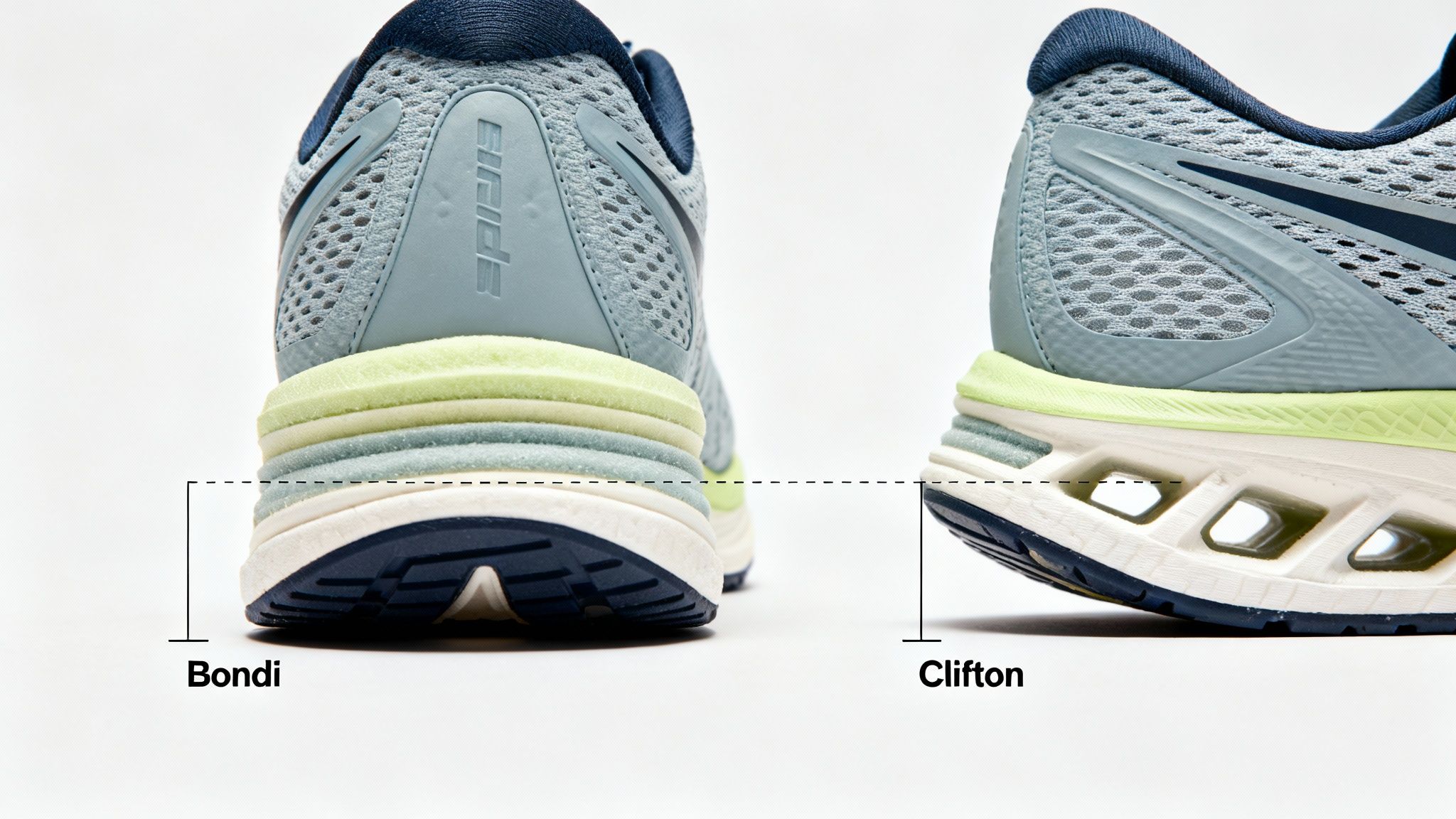
Stack Height and Midsole Foam
Stack height is simply how much material sits between your foot and the pavement. It’s the most obvious difference when you put the Bondi and Clifton side-by-side. It’s the main reason they feel so different on a run.
The Hoka Bondi 9 is the king of cushioning in Hoka’s lineup. It sports a massive 43mm stack height in the men’s heel. That huge slab of soft, supercritical EVA foam is all about one thing: impact absorption. Think of it as a premium suspension system for your body. It is built to smooth out the hard pavement and coddle your joints on recovery days.
The Clifton 10 is a bit more grounded, though it’s still a well-cushioned shoe. It uses a compression-molded EVA (CMEVA) foam. This foam feels a little firmer and gives you more energy back with each step. It’s still soft, but you get a better sense of the road and a snappier feel.
Key Insight: The Bondi’s sky-high, pillowy midsole is pure comfort and protection. The Clifton’s midsole is more of an all-rounder. It blends generous cushioning with just enough responsiveness to handle different paces. It won’t feel like you’re running in sand.
Heel-to-Toe Drop Explained
The “drop” is the height difference between the heel and the forefoot. It’s a small number that can have a big impact on your running form. It also affects which muscles do the most work.
- Hoka Bondi 9: Comes in with a 5mm drop. This lower drop encourages a more natural, midfoot landing. It helps spread the load more evenly. It’s a great feature if you spend a lot of time on your feet. It also takes pressure off the ball of your foot.
- Hoka Clifton 10: Features a more traditional 8mm drop. This feels more familiar to many runners, especially heel strikers. It can help take some strain off your Achilles and calves. This can be a lifesaver deep into a training cycle.
Ultimately, the right drop comes down to your personal running mechanics. If you’re a heel striker or have tight calves, the Clifton’s 8mm drop might feel better. If you prefer a flatter, more balanced platform, the Bondi’s 5mm drop will likely feel better.
Why Shoe Weight Matters
Every ounce counts, especially when you’re logging a lot of miles. Shoe weight directly affects how much energy you expend. The difference between these two models is definitely noticeable.
The Hoka Bondi 9 has a max-cushion design. It features a 43mm stack height and a 5mm drop. It tips the scales at around 10.5 oz for a men’s size 9. The Clifton 10 is noticeably lighter at 9.8 oz. It has an 8mm drop and a slightly lower stack. That 0.7 oz difference might not sound like much, but you can feel it. The Clifton just feels a bit quicker and less cumbersome on longer runs. To learn more, check out some technical running shoe breakdowns from experts.
Comparing the On-Foot Ride and Performance
Specs on a page can only tell you so much about a shoe. The real difference between the Hoka Bondi vs Clifton comes out when you hit the pavement. How they feel and perform underfoot is where you’ll find the right shoe for you.
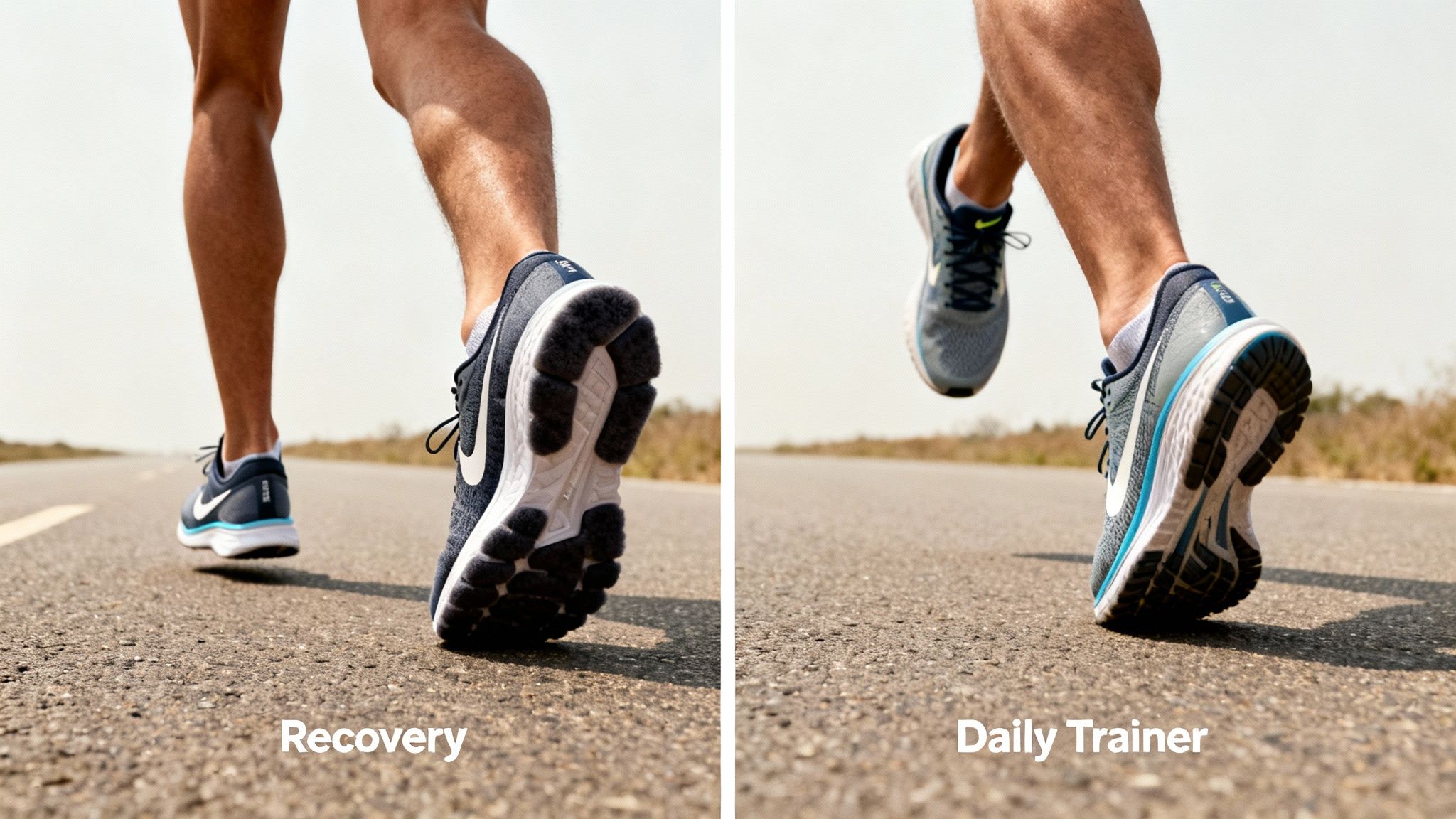
The Hoka Bondi is all about a deeply protective, almost absorbent ride. It’s built to soak up impact. It makes every single footstrike feel incredibly soft and cushioned. This is exactly what you want on easy days. It’s perfect when your legs are feeling beat up and just need a break.
The goal here isn’t energy return; it’s pure, unadulterated comfort. That massive stack of foam acts like a suspension system for your body. It smooths out the road and shields your joints from pounding. It’s no wonder this shoe is a go-to for runners focused on recovery.
The Clifton’s Balanced Energy
The Hoka Clifton gives you a much more dynamic experience. It’s still a very cushioned shoe. But the ride is a fantastic blend of softness and responsiveness. The compression-molded EVA foam feels a bit firmer. It gives you more feedback from the ground.
This means you get all the impact protection you need. You won’t feel like your feet are sinking into pillows. The Clifton has a noticeable “pop” that the Bondi just doesn’t. This makes it feel livelier and better suited for a wider range of paces. It’s perfectly comfortable on an easy day. But it won’t feel sluggish if you decide to pick things up for a few miles.
This balance is why the Clifton is a legendary daily trainer. It delivers protection for high-mileage weeks. It also has enough life to keep your runs feeling fun and engaging. For many runners, it’s the perfect “do-it-all” shoe in their rotation.
The Bondi is the ultimate comfort cruiser. It is built to pamper your feet on recovery days. The Clifton strikes a more balanced chord. It mixes plush cushioning with a dose of responsiveness for your everyday miles.
Get the Hoka Clifton 10 today by clicking here.
How the Meta-Rocker Shapes Your Stride
Both shoes feature Hoka’s signature Meta-Rocker geometry. That is the curved sole shape. The way it’s implemented feels quite different in each model. The rocker is designed to promote a smoother, more efficient gait cycle.
In the Bondi, the rocker feels more pronounced. It really helps to guide your foot forward through the stride. This is a huge benefit at slower paces. It creates a fluid, rolling motion. It makes your turnover feel almost effortless, reducing fatigue on long runs.
The Clifton’s rocker is engineered to work well across a wider spectrum of speeds. It helps you move from footstrike to toe-off more quickly. This adds to that energetic feeling. This design helps you lock into a consistent rhythm. It works whether you’re just jogging or pushing a moderate tempo.
Knowing how your own stride interacts with a shoe is key. Dialing in the fundamentals can make a world of difference. You can learn more by checking out our guide to proper running form.
The on-foot feel of each shoe lines up perfectly with its job description.
- Bondi’s Ride: Feels like running on clouds. It’s a slow, protective roll that puts comfort above all else.
- Clifton’s Ride: Feels like a cushioned bounce. It’s a quicker, more responsive transition for varied daily training.
Choosing between them comes down to what you want to feel on your run. Do you need a shoe that will coddle your legs? Or do you want one that gives a soft landing but still has life? Your answer will point you straight to either the Bondi or the Clifton.
Finding the Right Fit and Upper Comfort
A shoe’s ride doesn’t matter if it doesn’t fit your foot. When comparing the Hoka Bondi and Clifton, the fit and upper really shine. It makes a huge difference in how they feel miles into a run.
The Feel: Roomy vs. Secure
The Bondi has built its reputation on a generous, accommodating fit. You’ll notice it feels roomier all around from the moment you slide your foot in. This is especially true in the toe box. This is a game-changer for runners with wider feet. It is also good for those who like space for their toes to splay. It’s a lifesaver on long runs when your feet swell.
The Clifton gives you a more traditional, locked-in feel. It’s not tight or narrow. It definitely hugs your midfoot more snugly than the Bondi. This creates a secure sensation that many runners love for their daily miles. It ensures your foot isn’t sliding around when you pick up the pace.
Upper Construction and Breathability
Both shoes use modern materials with different goals. The Bondi 9 wraps your foot in a soft, engineered knit that feels plush. The padded tongue and pillowy heel collar are all about maximizing comfort.
The Clifton 9 uses a similar engineered knit. It’s designed to be more streamlined and structured for a solid lockdown. It also features a gusseted tongue. This small detail prevents it from shifting side-to-side during your run. While both uppers breathe well, the Bondi’s is noticeably softer and more relaxed.
The Bondi’s roomier design is often better for runners with foot issues. For more tailored recommendations, see our guide on the best running shoes for flat feet.
Sizing and Width Options
Both the Bondi and Clifton fit true to size. Your normal running shoe size is the best place to start. The real difference is in the internal volume. If you have a narrow foot, you might find the Bondi too spacious. You may prefer the dialed-in fit of the Clifton.
The Bottom Line: The Bondi is built for pure comfort with a wider platform and relaxed upper. The Clifton provides a more performance-oriented, secure fit that’s ready for daily training.
One of the Bondi’s biggest advantages is its wide range of sizing options. It’s available in regular, wide, and even extra-wide in most colorways. This makes it versatile for runners whose feet swell during a marathon. It’s also great for professionals on their feet all day. The Clifton also comes in a wide version. But the Bondi is the winner for anyone needing extra room.
Choosing between them comes down to your foot shape and what you prefer.
- Go with the Bondi if: You have wide feet, your feet swell, or you love a roomy fit.
- Go with the Clifton if: You have average-to-narrow feet and want a classic, locked-in feel.
Matching the Right Shoe to Your Run
All the specs and numbers don’t mean much until you translate them to the road. This is where the real differences between the Hoka Bondi vs Clifton come alive. It’s not about which shoe is “better.” It is about which one is the right tool for the job. Your job, your runs, and even your profession.
Let’s break down where each shoe shines. Think of the Bondi as your leg-saving specialist. Think of the Clifton as your dependable, everyday workhorse.
When to Reach for the Hoka Bondi
The Hoka Bondi is all about one thing: maximum comfort and protection. If cushioning is your top priority, this is your shoe. It’s built to absorb as much impact as possible. It gives your body a much-needed break.
It’s the perfect choice for:
- Recovery Runs: After a tough workout, the Bondi feels like a spa day for your feet. Its deep, plush cushioning is just what tired legs need to bounce back.
- Long, Slow Miles: For marathon training days with a goal of time on feet, the Bondi delivers. It provides consistent, protective comfort, hour after hour.
- All-Day Comfort: If you spend your days standing, the Bondi is a game-changer. Its wide, stable base and soft platform are ideal for nurses and teachers.
- New Runners: Just starting out? The Bondi provides a massive safety net of cushioning. It can help ward off common aches and pains.
The Bondi 9 leans into its role as a neutral stability cruiser. Its extended sidewalls and a 5mm drop make it a dream for long, slow miles. In lab tests, its cushioning feels 15% softer than the Clifton’s. This is why it’s so popular with walkers and professionals. At 10.5 oz, it’s no lightweight. Its wide platform is forgiving for heel strikers. It cuts joint impact by an estimated 20% compared to a standard trainer.
When the Hoka Clifton is Your Best Bet
The Clifton is the quintessential daily trainer. It strikes that perfect balance between soft cushioning and responsiveness. This makes it a far more versatile option than the hyper-focused Bondi.
Grab the Clifton for:
- Daily Training: This is the shoe you’ll lace up for the bulk of your weekly mileage. It’s comfortable for easy days yet has energy for moderate efforts.
- Runs with Varied Paces: If your daily run includes some strides or tempo work, the Clifton can handle it. Its lighter feel and energetic foam won’t feel sluggish.
- The “One-Shoe-Quiver” Runner: If you want one shoe that does almost everything well, the Clifton is a great choice. It’s a true jack-of-all-trades.
- Marathon Training: The Clifton is the ideal partner for most of a marathon training block. It handles daily miles and even some faster long runs with ease. For race day, you might want something faster. Check our guide on the best marathon race shoes.
The Bottom Line: Choose the Bondi for ultimate protection, recovery, and pillowy softness. Go with the Clifton for versatile, everyday performance that can handle everything.
This simple flowchart can also help you decide based on how you like your shoes to fit.
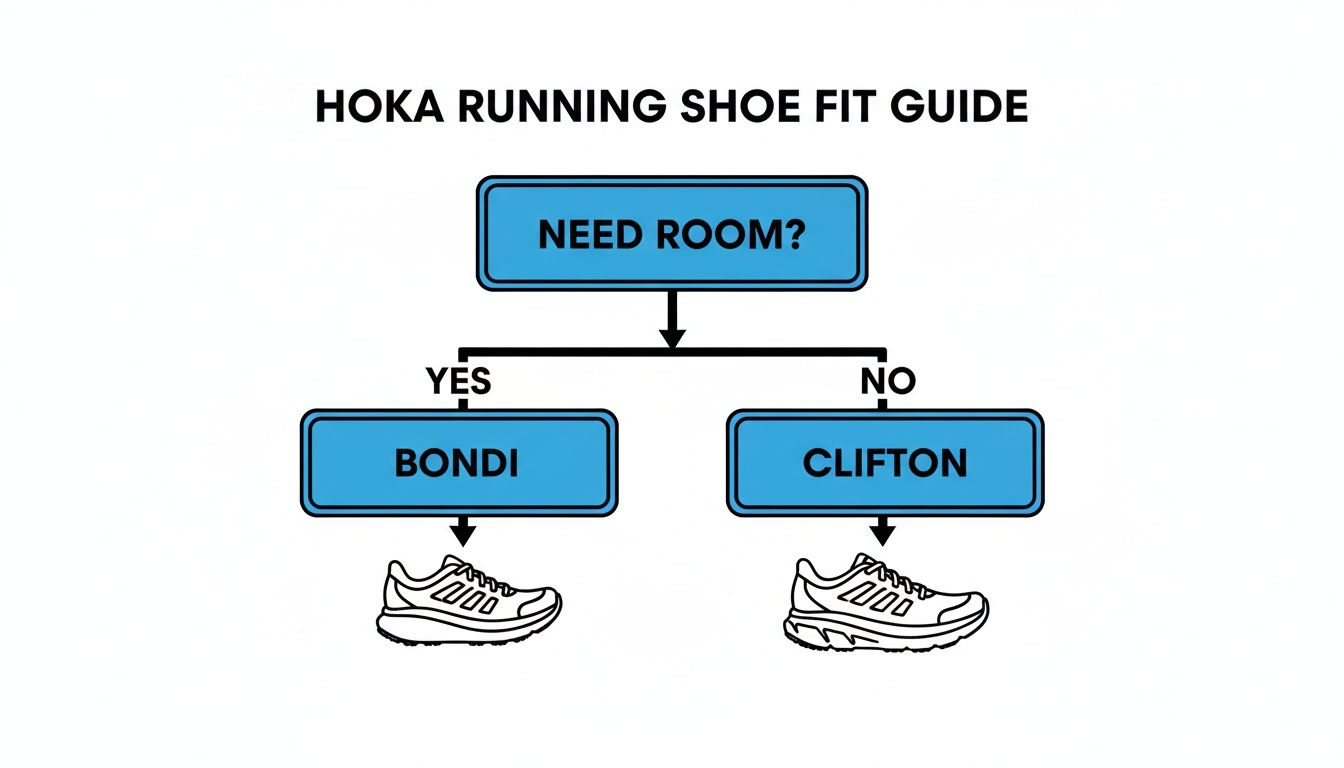
As the visual shows, if you need more space, the Bondi is your best match. This is especially true in the toe box. If you prefer a more traditional, secure fit, the Clifton is the way to go.
So, Which One Is It: Bondi or Clifton?
After logging miles in both, the choice between the Hoka Bondi and Clifton is clear. It really boils down to what you need your shoe to do. They both deliver on Hoka’s promise of big cushioning. But they have completely different personalities on the road. Let’s cut through the noise and figure out which one belongs in your rotation.
It’s a classic matchup: maximum, cloud-like comfort versus do-it-all versatility. There’s no “better” shoe here. There’s just a better shoe for you and your running style.
Are You All About Comfort or Do You Need an All-Rounder?
The easiest way to decide is to figure out which camp you fall into. Do you crave that bottomless, pillowy softness above all else? Or do you need a reliable workhorse for the day-in, day-out grind?
Go with the Hoka Bondi if you’re chasing ultimate comfort. If your main goal is to give your feet a five-star vacation, the Bondi is your shoe. That massive stack of foam absorbs every ounce of impact. It’s the perfect choice for slow recovery jogs or for standing all day.
Grab the Hoka Clifton if you need a versatile daily driver. If you want one shoe for most of your weekly miles, the Clifton is the answer. It has plenty of Hoka softness but doesn’t feel sluggish. It’s a true workhorse.
I often tell runners to think of it this way: The Bondi is a specialist tool for when your legs need a break. The Clifton is the jack-of-all-trades for almost any run on your training plan.
Let’s Talk Price and Value
Money is always part of the equation. The Hoka Bondi usually comes with a higher price tag. This makes sense for a premium, max-cushion shoe. The Bondi 9 is about $170. The Clifton 10 is a more wallet-friendly $150.
So, is the extra $20 for the Bondi worth it? If you need a dedicated recovery shoe, then yes. That extra cost buys you specialized gear. But if you’re looking for the best bang for your buck, the Clifton is smarter. Its ability to handle a wider range of runs makes it a better investment.
Your Final Checklist
Let’s make this super simple. This isn’t just about specs on a website. It’s about how the shoe feels and performs when you’re actually running.
Choose the Hoka Bondi if you:
- Crave a “walking on pillows” feeling and want maximum shock absorption.
- Need a dedicated shoe for slow, easy recovery days.
- Have wider feet and need a more generous, accommodating fit.
- Spend hours on your feet at work and need all-day comfort.
Choose the Hoka Clifton if you:
- Want one shoe to handle the bulk of your weekly training.
- Prefer a ride that balances soft cushioning with a touch of responsiveness.
- Run at different paces and need a shoe that feels good doing it all.
- Are looking for the best all-around value in a daily running shoe.
Common Questions: Bondi vs. Clifton
When you’re picking between the Hoka Bondi and Clifton, a few key questions always come up. Let’s break down the answers to help you lock in your choice.
Is the Hoka Bondi or Clifton Better for Walking?
If you’re on your feet all day, the Hoka Bondi is the clear winner. Its wider base feels more stable. The lower 5mm drop helps spread pressure out evenly. This is a lifesaver for long hours of standing or walking.
The Bondi’s cushioning is on another level of plushness. It’s built to soak up impact. This is why you see so many nurses and retail workers wearing them. The Clifton is fine for walking. But the Bondi is in a class of its own for all-day comfort.
Get the Hoka Bondi 9 today by clicking here.
Can I Use the Hoka Clifton for a Marathon?
Absolutely. The Hoka Clifton is a fantastic marathon training shoe. It has that perfect blend of cushion and responsiveness. It will get you through high-mileage weeks feeling good. It’s a true workhorse.
That said, some runners might reach for something lighter on race day. But for the actual training block? The Clifton is an outstanding choice to get you to the starting line healthy.
The Bondi is all about pure, pillowy comfort for walking and recovery. The Clifton delivers a more balanced, do-it-all ride. It can easily handle the grind of marathon training.
Which Shoe Lasts Longer?
Both shoes are built to last. However, the Hoka Bondi usually squeezes out a few more miles. If you flip it over, you’ll see more rubber covering the bottom. This is especially true in spots that take a beating. That extra rubber armor helps it hold up better against rough pavement.
The Clifton is no slouch in durability. But it does have more exposed foam on the outsole. That foam can get chewed up a bit faster than the Bondi’s more protected sole.
Ready to take your training to the next level with a plan that matches your ambition? At RunDreamAchieve, we provide expert-crafted training programs and coaching to help you smash your personal bests, from the 5K to the marathon. Be sure to check out our other resources to set yourself up for success.


