

Hiking Trails in Rhode Island: Best Scenic Hikes
Rhode Island packs a surprising range of scenery into a small state, with rocky shorelines, salt marshes, and quiet woodland paths all within reach. That variety means you can find a breezy coastal walk or a shaded forest route without committing to a long drive.
The best hike depends on your time, energy, and comfort with uneven ground. This guide highlights specific trails, what makes each one worth visiting, and practical details to help you choose a route that fits your day.
Start with these standout hiking trails in Rhode Island, then narrow your options by scenery, distance, and trail conditions.
Key Takeaways
- Rhode Island offers hikers a compact mix of coastal paths, salt marshes, and woodland routes, so scenery can change quickly across the state.
- Choose a trail based on your available time, preferred terrain, and comfort with uneven ground; coastal routes may feel exposed, while wooded paths offer more shade.
- Check trail conditions and access details before heading out, especially when a route crosses public parks or shoreline areas.
- Use the Rhode Island State Parks website to explore state-managed parks and find information that can help plan a hike.
Hiking Trails in Rhode Island for Every Kind of Day
Rhode Island’s small size makes it easy to choose a hike by mood and available time. Coastal paths offer salt air and open views, while inland parks bring pondside walks and shady forest trails. These three destinations give you a useful starting point, whether you want a scenic stroll or a longer woodland outing.
Try Newport’s Cliff Walk for ocean views and historic homes
Newport’s Cliff Walk covers roughly 3.5 miles along the shoreline, pairing Atlantic views with the Gilded Age homes that line the route. Some stretches follow a paved walkway; others cross rough, uneven terrain near the cliffs.
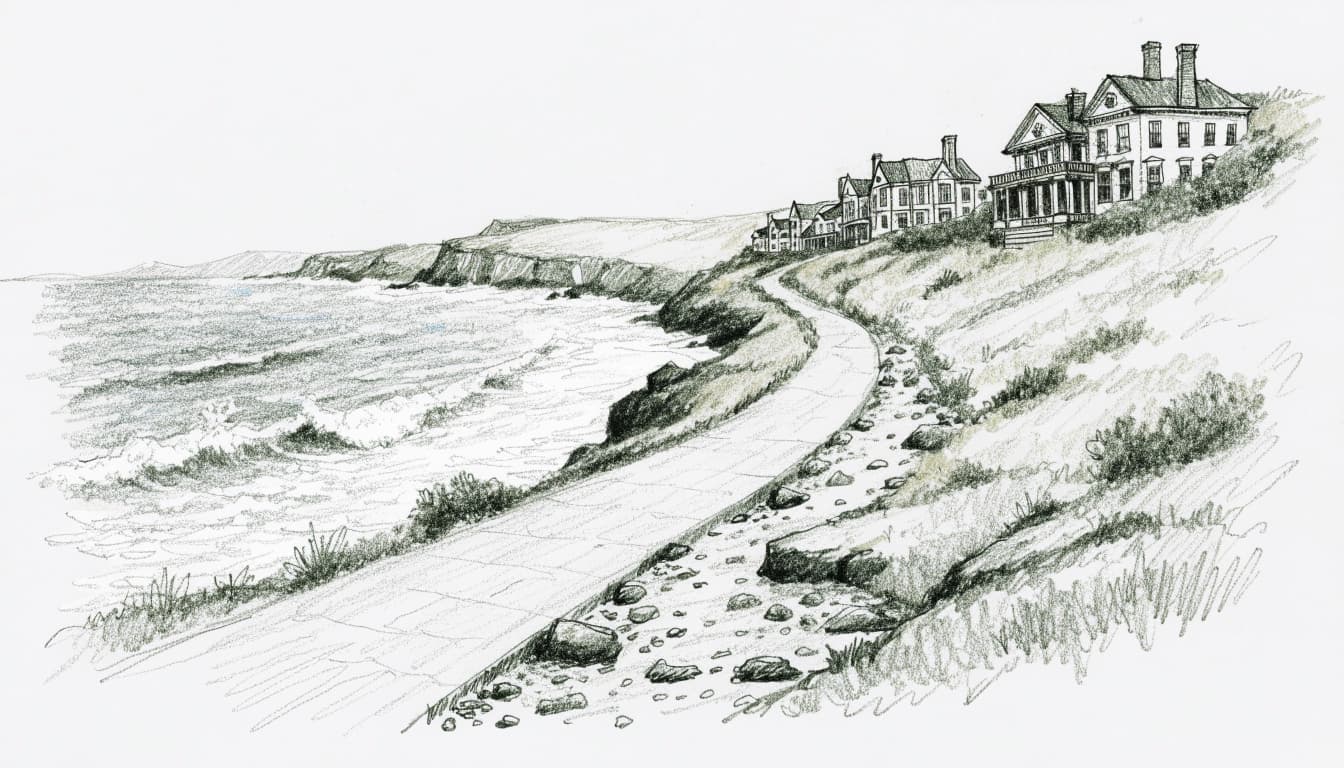
Because sections may close or require detours, check current Cliff Walk access information before setting out. Wear sturdy shoes, especially if you plan to continue beyond the smoother portions. This route suits hikers who want coastal scenery and historic architecture in the same walk.
Explore Lincoln Woods for a shorter woodland outing
Just outside Providence, Lincoln Woods State Park offers a convenient escape into the trees. Paths trace parts of Olney Pond, with wooded views and rocky footing in places. The setting works well for a shorter outing, though you can spend more time exploring the park’s trails.
Trail choices and distances vary, so decide how far you want to walk before choosing a loop. The Rhode Island parks directory can help you check park details as you plan. Bring footwear that feels secure on uneven ground, particularly after rain.
Choose Arcadia for a longer walk in the woods
In southern Rhode Island, Arcadia Management Area has a broad network of paths through forest and around ponds. For a longer outing, consider a section of the North-South Trail; shorter routes near Breakheart Pond offer a way to enjoy the woods without committing to a full-day hike. Arcadia’s official park information provides a starting point for planning.
Trail junctions can be confusing, especially when routes cross or follow different paths. Carry a map and check your route before leaving the trailhead. That extra planning makes it easier to choose a walk that fits your pace and return to your starting point.
Follow Rhode Island’s Coastal Trails for Salt Air and Wildlife
Coastal hikes in Rhode Island feel different from woodland walks. The paths offer wide-open water views, but they also expose you to sun and wind, with sandy stretches and uneven rock underfoot. These three destinations pair shoreline scenery with chances to spot wildlife, so check conditions and choose footwear for the terrain.
Walk the Sachuest Point loop for seabirds and sea views
On Aquidneck Island, Sachuest Point National Wildlife Refuge has roughly 2.5 miles of trails across exposed coastal terrain. The paths wind along grassy headlands, where ocean views open up on either side and seabirds may pass overhead. The refuge is also an important stopover and wintering area for migratory birds, according to the U.S. Fish and Wildlife Service.
With little shelter along the route, strong wind and direct sun can make the walk feel more demanding than its distance suggests. Bring water and sun protection, and stay on marked trails to avoid disturbing sensitive habitat. A pair of binoculars can help you watch birds without approaching them.
Choose Your Distance, Duration and Goal Time
Make three quick selections and open the exact plan built for your race target.
Looking for a Fully Personalized Training Plan?
The training plans above are an excellent choice if they match your goal. However, if you’d rather train with a plan built specifically around your current fitness, goal race, preferred training days, weekly mileage, and target finish time, our RDA Custom Training Plans provide a personalized solution. We also have running courses available for runners seeking to run faster from the mile to the marathon.
Why Choose a Custom Training Plan?
| Standard Training Plan | RDA Custom Training Plan |
|---|---|
| Follows a fixed schedule | Built around your schedule |
| Standard weekly mileage | Peak mileage customized for you |
| Fixed workout days | Train on the days you choose |
| Same structure for everyone | Designed around your current fitness |
| Static plan | Updated as your fitness improves |
| One-time purchase | Ongoing personalized coaching and support |
What You’ll Receive
- A training plan built specifically for your goal
- Personalized training paces
- Long runs, tempo runs, threshold workouts, interval sessions, recovery runs, and easy runs
- Peak weekly mileage matched to your experience level
- Flexible training schedule that fits your life
- Ongoing plan adjustments as your fitness improves
Ready to Train Smarter?
Stop guessing and start following a plan built specifically for you, your schedule, and your racing goals.
See the rocky shore and lighthouse at Beavertail State Park
Beavertail State Park in Jamestown is best enjoyed as a series of scenic shoreline walks, rather than as one long, formal trail. Follow the paths near the water for views of Narragansett Bay, then look toward Beavertail Lighthouse, built in 1856. The state park page has visitor information for planning a stop.
The shore is rugged, and some stretches have uneven rocks instead of a smooth walking surface. Wet rock can be slippery, so avoid climbing on it and keep a safe distance from the surf, especially when waves are high. Sturdy shoes help on rough ground, while a wind layer can make the exposed shoreline more comfortable.
Look for marshes and wildlife at Ninigret National Wildlife Refuge
Ninigret National Wildlife Refuge offers gentle walking routes through a changing mix of woods, wetlands, fields, and coastal scenery. Its habitats include fresh and saltwater ponds, sandy beaches, and dunes. The U.S. Fish and Wildlife Service visitor page describes the refuge, and its trail map can help you see available routes.
Trail conditions and access may vary, so check current information before setting out. Move at an easy pace and keep noise low near marshes and ponds, where patient observation may reveal wildlife along the water’s edge. As at other coastal refuges, stay on established paths and give animals room.
Find Forest Paths, Ponds, and Quiet Inland Walks
Inland hiking trails in Rhode Island trade open shoreline views for tree cover, pond edges, and a slower pace. These routes can feel cooler and more sheltered than exposed coastal paths, though shade does not guarantee smooth footing or simple navigation.
Take in ponds and wooded trails at Arcadia Management Area
Arcadia gives hikers room to shape an outing around the day they have planned. A brief walk near Breakheart Pond can offer water views and a forest setting, while longer routes lead deeper into the management area across varied terrain. The Rhode Island DEM listing for Breakheart Pond confirms its location within Arcadia.
Because Arcadia is large and has multiple access points, choose a route before leaving home. Mark the intended trailhead and parking area, then check how the paths connect. That simple step helps prevent a relaxing walk from turning into an unintended detour.
Pick a route that matches your time and energy
A short pondside walk suits a day when you want fresh air without a lengthy outing. For a longer hike, choose a route with more elevation changes, rough footing, or trail junctions, and leave enough time to retrace your steps or complete the loop.
Rhode Island has modest elevation compared with many hiking destinations, but that doesn’t make every trail easy. Roots, rocks, mud, and confusing intersections can slow your pace, especially after rain. Lincoln Woods and other state-managed areas offer wooded paths and pond scenery, but conditions vary by route. Check park information, carry a map, and wear shoes with dependable grip.
Add the North-South Trail for a longer adventure
For a bigger challenge, the North-South Trail crosses Rhode Island through a mix of parks, management areas, and other lands. The RIGIS trail overview lists it at 77 miles, making a section hike a more practical choice for many visitors than attempting the whole route in one day.
Plan transportation before setting out, especially if your chosen section begins and ends at different points. Check a current map, confirm access and parking, and note where the trail meets roads or changes land ownership. A carefully chosen segment lets you sample the route while keeping the day’s distance and logistics manageable.
Choose an Easy Rhode Island Hike for Families or Beginners
A beginner-friendly hike is less about finding the shortest trail and more about matching the route to your group. Check the distance, surface, shade, and available facilities before you go. A route described as easy may still be unsuitable for a stroller or mobility device.
Check the route surface before bringing a stroller
Even a short trail can cross roots, rocks, sand, or uneven ground. Those features can slow young hikers and make pushing a stroller difficult. If wheels are part of your plan, look for a paved or firm-surface path, then confirm that the route stays that way for its full length.
Colt State Park, for example, lists paved bike paths alongside hiking trails. That makes the park worth considering for a smoother outing, but it doesn’t mean every trail is stroller-friendly. Check the park’s current access details before choosing a route, and contact the park if you need information about a specific path.
Also, don’t treat “easy” as a guarantee of universal access. Trail surfaces, grades, and access points differ, and conditions can change after storms or maintenance work. Families bringing young children, strollers, or mobility devices should check current park details rather than relying on a trail’s length or general rating alone. Rhode Island State Parks also provides accessibility information for visitors.
Make a short hike feel like a full outdoor outing
A modest loop can feel complete when it includes a pond, shoreline, or another natural feature to pause beside. Choose a distance your group can enjoy without rushing, then set a relaxed turnaround time. For children, the walk may be as much about watching birds or taking a snack break as reaching the end of the trail.
Shade matters on warm days, while an exposed coastal route may feel hotter or windier than its distance suggests. Bring water and snacks, and check whether restrooms, picnic areas, or other facilities are available at your chosen park. Amenities vary, so don’t assume every trailhead has them.
With a little planning, Rhode Island hiking trails can offer a pleasant first outing without requiring a long trek. Pick a route that fits your group’s pace, confirm access and surface conditions, and leave time to enjoy the setting.
Plan Your Hike Around Weather, Access, and Trail Conditions
A little preparation helps you choose the right Rhode Island hike and avoid surprises at the trailhead. Before leaving home, check the season, route length, parking, and current access details, then pack for the ground and weather you expect.
Pick the right season and time of day
Spring trails can be muddy, and wet ground may make roots and rocks slippery. Conditions also shift quickly after rain, so allow extra time and wear shoes with reliable traction. In summer, heat and insects can make exposed paths tiring; start early, carry water, and use insect protection where appropriate.
Fall brings colorful woods, but daylight fades earlier. Check sunset before setting out and leave enough time to finish in daylight. Winter hikes call for warm layers and caution on icy or frozen ground. Near the coast, wind can make a mild forecast feel much colder, so bring an extra layer even on a sunny day. On hot or busy days, an early start can also mean cooler walking and easier parking.
Check parking, permits, and closures before you go
Access rules vary by park, refuge, and land manager. A trail may have a separate parking area, seasonal restrictions, fees, or a temporary closure, and conditions can change after storms or maintenance. Before driving, check the land manager’s current notices for your destination. Rhode Island State Parks updates share alerts and advisories that may affect visits.
For coastal outings, check parking details as well as trail access. The state beach parking status page can help when your route includes a state beach. If a familiar trailhead is closed or full, have another nearby route in mind rather than assuming you can park along the road.
Bring a map, water, and shoes for uneven ground
Choose a route length that fits your group’s pace and the time available. A short distance can take longer on sand, mud, or rocky paths, while multiple junctions can slow down hikers who haven’t checked the route. Carry a paper map or download one before leaving; don’t depend on a live signal to find your way.
Pack enough water for the outing, plus weather-ready layers. Shoes with good grip help on rocks and muddy stretches, while coastal paths may call for footwear that handles sand. For a longer or less familiar hike, tell someone where you’re going and when you expect to return.
Protect Rhode Island’s Trails and Hike Safely
Rhode Island’s coastal paths and woodland trails pass through habitats that can be damaged by a few steps off route. Small choices help protect these places and keep your hike safe, whether you’re walking beside a salt marsh or crossing rocky shoreline.
Stay on marked paths and leave plants and wildlife undisturbed
Dune grasses help hold fragile coastal soils in place, while marsh plants and woodland ground cover provide shelter and food for wildlife. Walking off-trail can crush vegetation, widen footpaths, and disturb nesting or feeding areas. Stay on marked routes, even when a shortcut looks harmless, and pack out every wrapper, bottle, and food scrap.
Watch animals from a distance rather than approaching or feeding them. If you bring a dog, follow the rules posted for that specific park or refuge. Leash requirements and pet access can vary, and seasonal habitat closures may keep visitors away from sensitive areas. Posted restrictions on fires also matter: open flames can damage habitat and create a risk in dry conditions. Check and follow signs at the trailhead, even if you’ve visited before.
Watch for ticks, changing tides, and slippery rocks
Ticks live in wooded and grassy areas, so use an EPA-registered repellent as directed and consider wearing long pants on brushy trails. After hiking, check your clothing and body, including behind the knees and around the waist. The Rhode Island Department of Health’s tick guidance outlines precautions for outdoor activities.
Along the coast, tides and surf can change the conditions of a route while you’re walking. Check NOAA tide predictions before heading to a shoreline trail, and keep a safe distance from breaking waves. Wet rocks can be slick, while loose or unstable stones can shift underfoot; avoid crossing them when a safer path is available.
Weather and trail surfaces can change quickly. A sunny start doesn’t guarantee calm conditions later, and rain can turn dirt, roots, and rocks slick. Slow down where footing is uncertain, and turn back if the route becomes unsafe.
Frequently Asked Questions
Rhode Island’s hiking routes vary in length, access, and terrain, so check current details before you head out. These answers can help you choose a trail that fits your plans.
What is the longest hiking trail in Rhode Island?
The North-South Trail is Rhode Island’s major long-distance hiking route. It runs about 77 miles through a mix of public and other lands, according to RIGIS trail information. You can hike a shorter section instead of attempting the full route at once; choose a segment, then confirm trail access and transportation before setting out.
Are there free hiking trails in Rhode Island?
Many Rhode Island trails are open to hikers without an admission charge. However, parking fees, seasonal rules, or other access restrictions may apply at some locations. Check the relevant land manager’s current information before you go, especially if your route begins at a state park or beach.
Can you hike in Rhode Island during winter?
Yes, many trails remain open for hiking when conditions allow. Ice, snow, strong wind, and shorter daylight can make familiar routes more challenging, so check for closures and the forecast before leaving. Choose footwear with dependable traction and dress for the expected temperature, wind, and precipitation.
Are dogs allowed on Rhode Island hiking trails?
Dog rules vary by park and trail, and some protected areas may limit pet access. For example, Lincoln Woods State Park allows leashed dogs, but that rule doesn’t apply everywhere. Check posted rules, keep your dog leashed where required, and pack out pet waste.
Which Rhode Island hikes are best for ocean views?
Newport’s Cliff Walk pairs coastal views with a mix of paved and rougher walking surfaces. Sachuest Point offers exposed headland paths and seabird habitat, while Beavertail State Park has rugged shoreline scenery and views across Narragansett Bay. Expect more wind and sun on exposed routes, and check conditions before choosing your walk.
Conclusion
The best hiking trails in Rhode Island offer an easy change of pace, whether you’re drawn to quiet woods or open shoreline. A memorable hike can be a short woodland loop or a breezy walk beside the sea.
Choose a route that fits your time and energy, check access and trail conditions before you leave, and stay on marked paths to protect the landscape. With a little planning, Rhode Island’s small size makes it easy to find a satisfying walk close to home or along the coast.


