

Hiking Trails in Florida: Wild Swamps & Coastal Adventures
Florida’s hiking trails may lead through shady pine forests and high bluffs, then open onto wetlands, coastal dunes, or quiet boardwalks. That variety means you can find a route to suit your day, but heat, rain, soft sand, and wildlife can make even a short walk more demanding than expected.
Use this guide to choose a hiking trail that fits your time and experience, prepare for Florida’s conditions, and make a safer plan before you set out. First, explore some of the state’s most memorable places to hike. Be sure to check out the RunDreamAchieve YouTube channel for weekly running tips.
Key Takeaways
- Florida’s hiking trails range from sandy pine paths and wetland boardwalks to coastal routes, so choose terrain that fits your time and ability.
- Start early, carry plenty of water, and plan for heat, humidity, sudden rain, soft sand, and insects.
- Check park alerts before leaving. Seasonal flooding can limit trail access, including at Charlotte Harbor Preserve State Park.
- Stay on marked paths, give wildlife room, and tell someone where you plan to hike and when you’ll return.
- Matching your route to conditions and preparing ahead makes Florida hikes safer and more enjoyable.
Hiking Trails in Florida Worth Putting on Your List
Florida’s best hikes show how much the state’s scenery can change across a few hours of driving. Choose a route for its terrain and distance, then check current park alerts and trail information before you leave.
Explore north Florida’s forests, rivers, and high bluffs
At Torreya State Park, steep ravines and high bluffs give the trail a hillier feel than many Florida walks. The forested routes suit hikers who want varied elevation and views of the Apalachicola River, though uneven ground calls for sturdy footwear. Check Torreya State Park’s current trail information before planning a visit.
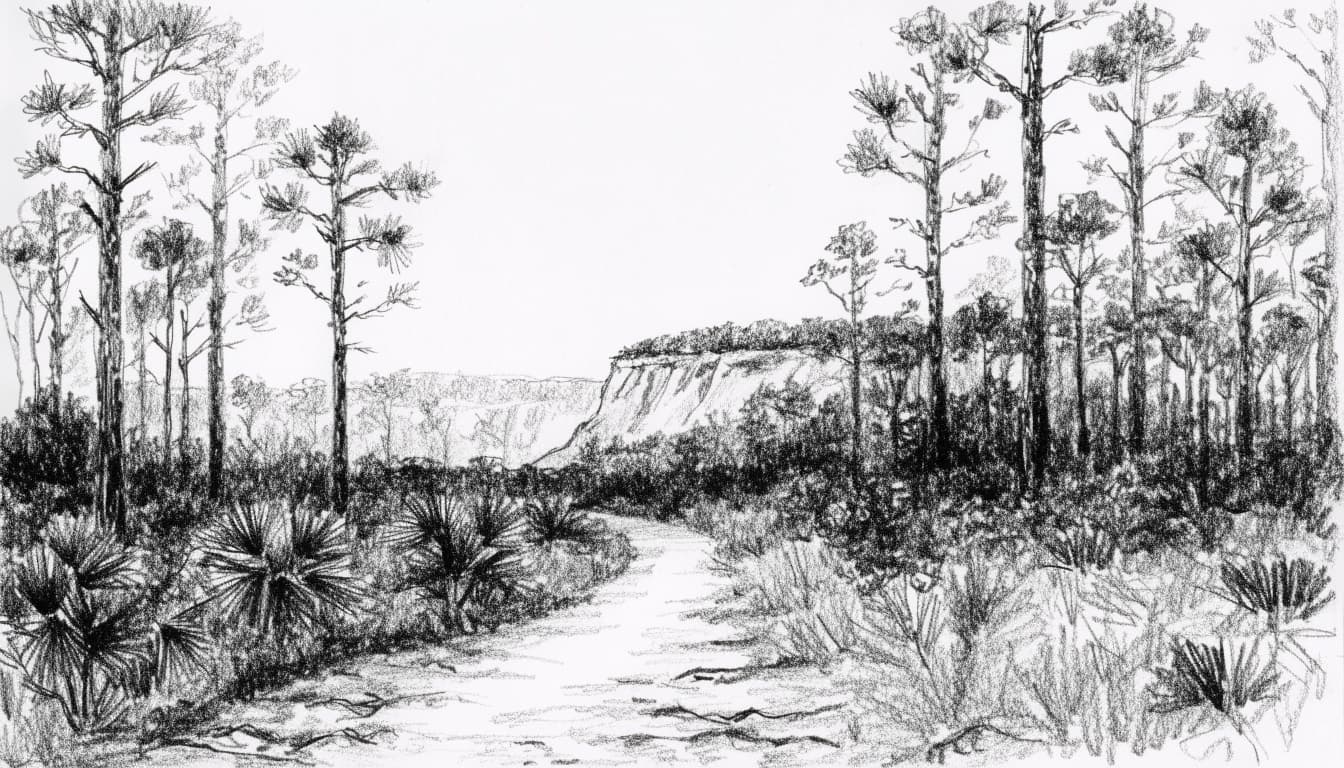
Blackwater River State Forest offers a different mood, with sandy paths winding through pine woods and quiet natural areas. These trails can appeal to hikers who prefer open forest scenery and gentler terrain.
For another north Florida option, choose a section of the Florida Trail, which crosses varied landscapes and includes longer stretches. The Florida Trail by region helps hikers explore its route. Long-distance sections need more planning than a short day hike, including careful attention to distance, water, navigation, and exit points. Find current trail details for Blackwater River State Forest before setting out.
Find shady loops and wildlife-rich paths in central Florida
In Ocala National Forest, trails near Juniper Springs pass through scrub, pine flatwoods, and open prairie. The scenery shifts as the path moves between sandy, sunlit stretches and patches of shade. Hikers looking for a short outing can choose a manageable segment; Florida Trail sections in the area may require more time and preparation.
Myakka River State Park pairs woodland paths with broad river and wetland views. Its natural areas suit hikers who enjoy watching for birds and other wildlife along the way. However, water levels and seasonal conditions can change which habitats are visible and how trails feel underfoot. Review the park’s hiking and nature information before choosing a route.
See South Florida wetlands and coastal scenery on foot
Everglades National Park makes wetland scenery accessible through short nature trails and boardwalks, including routes where visitors can look across sawgrass and shallow water. These are good choices for a brief, relatively easy walk. By contrast, Big Cypress National Preserve has remote routes that may be muddy or difficult to follow, especially after rain. Check current conditions and carry enough water for the route.
For coastal scenery, Anastasia State Park offers nature paths among dunes, tidal marsh, and coastal vegetation. These outings can suit visitors who want a shorter walk near the shore. Yet shade is limited in many wetland and coastal areas, so start early, bring sun protection, and check for current access updates. The Florida State Parks directory includes park details to help plan a visit.
Choose a Florida hike that fits your time and experience
The right Florida hike is one you can finish comfortably, with enough time and energy to enjoy the route. Match the trail to your fitness, mobility, available daylight, and comfort with heat and uneven ground.
Pick between boardwalks, loop hikes, and longer trail sections
Boardwalks are often simple to follow and work well for a brief outing, especially when you want to explore wetlands without walking directly through mud or sand. Still, check the route’s length, stairs, and surface before assuming it will meet your mobility needs.
A loop brings you back to your starting point without retracing the same path. That makes it easier to plan the full distance, though you’ll still need to account for terrain and conditions. Out-and-back routes and Florida Trail segments require a planned turnaround. Choose a point that leaves enough time to return before dark, and don’t keep going just because the trail continues.
Estimate your time using your pace on familiar trails, then allow extra time for heat, rest stops, photos, and rough footing. For an out-and-back hike, set a turnaround time before you start. If you have only a few hours, choose a short route near the trailhead rather than stretching a longer hike to fit.
Choose Your Distance, Duration and Goal Time
Make three quick selections and open the exact plan built for your race target.
Looking for a Fully Personalized Training Plan?
The training plans above are an excellent choice if they match your goal. However, if you’d rather train with a plan built specifically around your current fitness, goal race, preferred training days, weekly mileage, and target finish time, our RDA Custom Training Plans provide a personalized solution. We also have running courses available for runners seeking to run faster from the mile to the marathon.
Why Choose a Custom Training Plan?
| Standard Training Plan | RDA Custom Training Plan |
|---|---|
| Follows a fixed schedule | Built around your schedule |
| Standard weekly mileage | Peak mileage customized for you |
| Fixed workout days | Train on the days you choose |
| Same structure for everyone | Designed around your current fitness |
| Static plan | Updated as your fitness improves |
| One-time purchase | Ongoing personalized coaching and support |
What You’ll Receive
- A training plan built specifically for your goal
- Personalized training paces
- Long runs, tempo runs, threshold workouts, interval sessions, recovery runs, and easy runs
- Peak weekly mileage matched to your experience level
- Flexible training schedule that fits your life
- Ongoing plan adjustments as your fitness improves
Ready to Train Smarter?
Stop guessing and start following a plan built specifically for you, your schedule, and your racing goals.
Check distance, surface, shade, and accessibility before you go
Distance alone doesn’t tell you how hard a hike will feel. Soft sand can slow each step; mud and exposed roots demand more attention. In addition, a sunny trail with little shade can drain your energy faster than a shaded route of the same length, especially during hot, humid weather.
Before leaving, review the park’s official page and map for trail length, terrain notes, parking, restrooms, and current closures. The Florida State Parks directory links to park information, while the Florida Trail Association’s maps and databook provide route details for planning longer sections.
If you need an accessible route, look for clear information about surfaces, grades, and facilities rather than relying on a trail’s mileage or difficulty label. Call the park if details are unclear, since conditions and access can change. Pick a route that leaves a comfortable margin for your pace and the day’s conditions, not one that uses every minute of daylight.
Plan your hike around Florida’s heat, rain, and seasons
Florida weather can change how a trail feels and how safely you can finish it. Heat and humidity may wear you down even on a short route, while rain can bring lightning, muddy ground, or high water. Check conditions before you leave, then adjust your plan if the forecast or trail status changes.
Start early and prepare for hot, humid days
An early start helps you cover more ground before midday heat builds. It also leaves extra time for a slower pace, rest stops, or an unexpected delay, so you aren’t racing the clock near sunset. Choose a route that fits the day’s conditions, and carry enough water for the full hike.
Before departure, check the local forecast for temperature, humidity, heat advisories, and thunderstorm timing. The National Weather Service’s heat alert guidance explains when dangerous heat may call for rescheduling outdoor activity. Also review park alerts and any local warnings, since conditions can differ across Florida and change during the day.
If thunderstorms are forecast, avoid exposed trails and don’t assume a passing shower is harmless. Lightning can arrive before heavy rain, and wet paths may become slippery. Turn back or postpone the hike if heat, lightning, rising water, or another condition makes the route unsafe. A shorter hike is a better choice than pressing on without a safe way to finish.
Know what wet season and dry season can change
Summer often brings intense heat, high humidity, frequent rain, and more mosquitoes. Downpours can leave trails muddy or flood low-lying sections, while standing water and limited shade can make some routes feel especially demanding. These patterns vary by location and week, so a summer hike still needs a fresh conditions check.
Cooler months are often more comfortable for walking, but they aren’t a guarantee of dry trails or mild weather. Temperatures can shift, rain can still affect access, and conditions in South Florida may differ from those farther north. Even during a dry stretch, local fire restrictions or prescribed burns can change where visitors can go.
Check the specific park’s current trail status, water levels, and fire or burn notices before setting out. Park websites and alert pages can flag closures that a general weather forecast won’t show. For federal sites, the National Park Service alerts page lists updates that may affect visits; for state parks, review the individual park’s current information. If water covers the path or an alert closes your route, choose another trail rather than trying to cross or bypass the hazard.
Pack for Florida’s sun, water, insects, and wildlife
Florida trail conditions can shift quickly. A shaded path may open onto exposed sand, and a dry morning can turn muddy after a shower. Pack for the route, the forecast, and everyone in your group, even when you expect a short walk.
Bring water, sun protection, and shoes for the trail surface
Carry enough water for your hike, accounting for the heat, humidity, pace, and needs of each person. If the park has refill stations, check their location and availability before you go; don’t count on finding water along the trail. For longer outings, bring extra food in case the hike takes more time than planned.
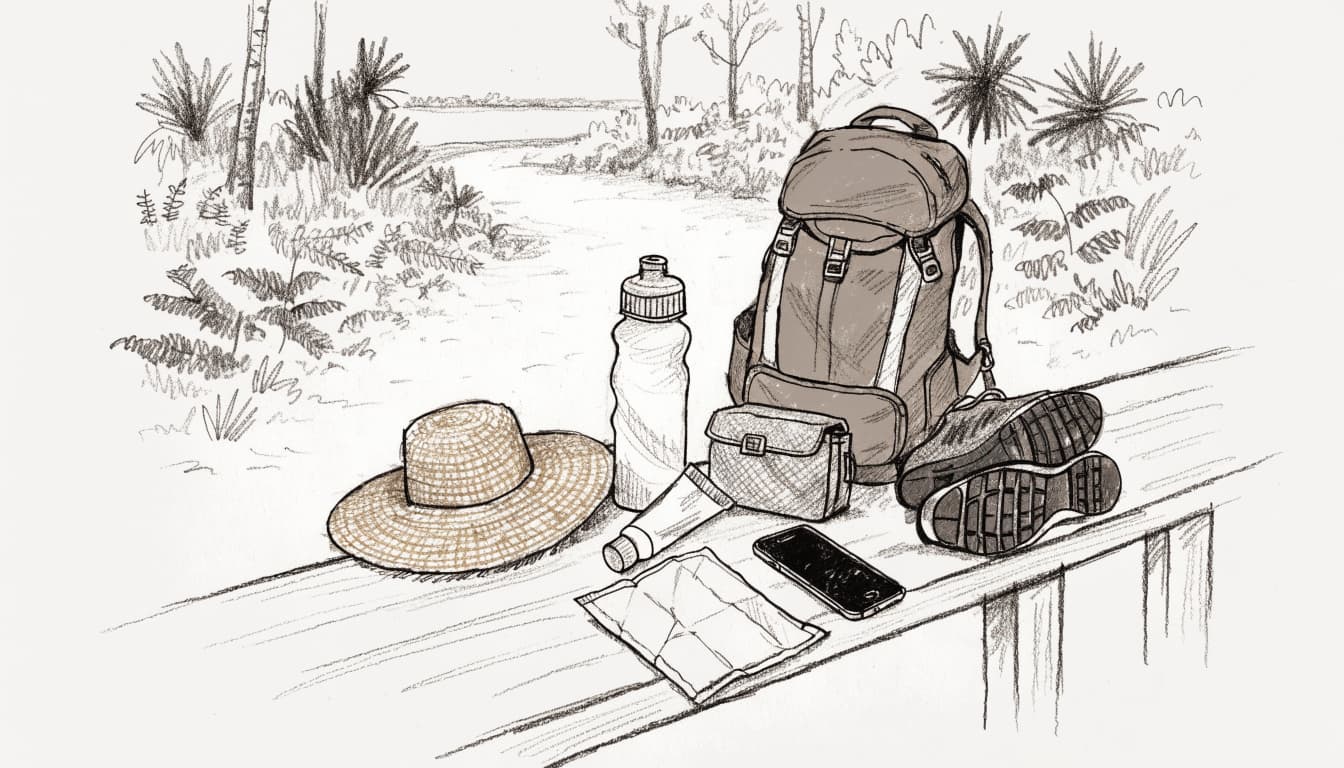
Wear lightweight, sun-protective clothing, apply sunscreen, and bring a brimmed hat. Insect repellent can help on buggy routes, especially near wetlands or after rain. Reapply sunscreen and repellent as directed on their labels.
Choose shoes for the ground you’ll cover. Sand can fill low-cut shoes, roots call for stable footing, and wet or muddy stretches need shoes with dependable grip. Check the park’s trail notes before you leave, and avoid brand-new footwear on a longer hike.
Bring a map, a fully charged phone, and a small first-aid kit with basics for blisters and minor cuts. Download or print route information if cell service may be limited. The National Park Service’s Ten Essentials for outdoor trips offers a useful planning reference. For a longer hike, add supplies based on the route and your group’s needs.
Give snakes, alligators, and other wildlife plenty of space
Wildlife encounters are possible on Florida’s hiking trails, even near busy parks. Stay on marked paths and watch where you place your feet, particularly near brush, logs, and the edges of wet areas. If you spot an animal, stay calm and give it room to move away. Never feed or approach wildlife, and follow posted park rules.
Near lakes, rivers, ponds, and marshes, keep a safe distance from the water’s edge because alligators may be present. Don’t let a good view draw you closer, and keep children and pets near you. The Florida Fish and Wildlife Conservation Commission’s alligator guidance advises visitors to keep their distance and never feed alligators.
A little preparation makes it easier to enjoy the scenery without rushing. Before you set out, check current park alerts, confirm your route, and make sure everyone has the supplies they need for the full hike.
Make a smooth, responsible start at the trailhead
A little planning at the trailhead can prevent a frustrating start or a risky detour. Rules, fees, hours, and facilities differ by park, and managers may change access when weather or trail conditions shift.
Check park access, parking, permits, and current trail notices
Before driving out, visit the official park or land manager website for current hours, entrance fees, parking details, and any reservation or permit requirements. Florida State Parks generally open from 8 a.m. to sunset, but individual facilities may follow different schedules. Check the Florida State Parks visit-planning information and the specific park page for current details.
Also confirm whether restrooms, water fountains, or visitor centers will be open. Don’t assume a trailhead has services just because the park does. If your route depends on a particular entrance, check road conditions and access notices before leaving, especially after heavy rain or during storm season. Closures, flooding, construction, and special events can affect parking or trail access.
When plans involve a reservation or permit, keep the confirmation accessible and check whether it covers parking or only a specific activity. For longer or remote hikes, send someone your route, planned start time, and expected return time. Agree on when they should follow up if you haven’t checked in. This gives them useful information if your plans change or you need help.
Follow trail etiquette and leave the landscape as you found it
Stay on marked routes, even when a shortcut looks tempting. Florida’s dunes, wetlands, and sandy scrub can be damaged by a few steps off-trail. Foot traffic may crush plants, loosen fragile soil, and widen paths that take time to recover. Yield courteously when the trail narrows, and step aside only where doing so won’t trample vegetation.
Pack out all trash, including food scraps and tissues. Give wildlife plenty of room, and leave plants, shells, and other natural features where you find them. The Leave No Trace principles offer practical guidance for reducing your impact on outdoor areas.
Rules for pets, fires, and swimming vary by location, so check posted notices and park guidance before your visit. Keep pets leashed where allowed, and don’t assume a lake or spring is open for swimming. Fires may be restricted or limited to designated areas. Following these rules protects wildlife and habitats while helping keep Florida’s hiking trails open and enjoyable for future visitors.
Frequently Asked Questions
These answers cover practical details to check before choosing among hiking trails in Florida, especially when weather, access, or trail rules could change your plans.
Are there beginner-friendly hiking trails in Florida?
Yes. Look for short, clearly marked loops, boardwalks, and routes near a visitor center or trailhead, where it’s easier to keep the outing manageable. Before you go, check the surface, available shade, forecast, and current access; a short sandy or sun-exposed trail can still feel strenuous in Florida’s heat.
Can you hike the Florida Trail in one day?
The Florida Trail is a long-distance route, but you can hike an individual section as a day outing. The Florida Trail Association lists day-hike options and route maps, which can help you find a section that fits your schedule. Before choosing one, account for distance, transportation between trailheads, reliable water access, and current conditions.
When are mosquitoes usually worst on Florida trails?
Mosquitoes are often more active in warm, wet conditions, but the timing varies by location and season. They may be more noticeable near wetlands or after rain, so check local conditions before setting out. Bring suitable insect protection and follow the product label for use.
Are dogs allowed on Florida hiking trails?
Pet rules vary by park, trail, and protected area, and some sensitive natural sites don’t allow dogs. Check the land manager’s current rules before bringing a pet; Florida State Parks’ pet policy explains requirements for parks that permit them. Where dogs are allowed, keep yours leashed and under control.
Do Florida hiking trails close during the rainy season?
There isn’t a statewide rainy-season closure, but flooding, storms, maintenance, or other hazards can temporarily limit access. Conditions may change after heavy rain, particularly on low-lying routes, so check the park or land manager’s official alerts on the day of your hike. Don’t assume a trail is open just because it was accessible on a previous visit.
What should I do if I see an alligator on a trail?
Stay calm, keep your distance, and never approach or feed the alligator. Follow posted guidance, and if the animal blocks the route or creates an immediate concern, turn back and contact park staff. The Florida Trail Association’s safety guidance also advises hikers not to approach or feed wild animals.
Conclusion
Hiking trails in Florida can take you around a shaded loop or into a remote stretch of wilderness. The best route is the one that fits your time, experience, group, and the weather that day.
Choose a trail that feels manageable, check current park conditions before you leave, and pack for the terrain and forecast. Then keep a steady, safe pace and give yourself time to enjoy Florida’s changing scenery, from pine woods and sandy paths to wetlands and coastal views. Good planning helps make the landscape the focus of your hike.


