Halifax Marathon Race Review
Before dawn, Halifax’s streets fill with runners pinning on bibs, warming up against the Atlantic chill, and waiting for the start. The event offers a distinctly coastal race-day experience, with an urban course, local spectators, and the practical demands of preparing for a fall race in Nova Scotia.
This review focuses on the 2026 Halifax Marathon, since routes, schedules, and race-day services can change each year. It looks at the course, runner support, and logistics, then considers who’s most likely to enjoy the event, whether you’re chasing a personal best or choosing your first marathon.
Make sure to book your Halifax Marathon hotels early to save money.
Key Takeaways
- The 2027 Emera Blue Nose Marathon takes place in Halifax in may. Participants could choose from running events including the marathon, half marathon, 10K, and 5K. Check the race results and event listings for recorded divisions, not evidence of a race record.
- Halifax’s coastal setting and urban streets give the race a distinct local feel, while weather and course details can shape your race-day plan.
- The event may suit runners who enjoy a city race with community support, but review the route and logistics before choosing it for a personal-best attempt.
- Since schedules and services can change, confirm current details for race weekend before booking travel or setting your training plan. Current listings may use the Scotiabank Blue Nose Marathon name, so verify the official event name rather than assuming it matches the 2024 edition.
What to Expect on Race Weekend
The 2027 event turned Halifax into a multi-day running festival, with races scheduled across the weekend. The marathon takes place in May along with the half marathon and other races. Because the organizer changes schedules and offerings between editions, check the current race information before making travel plans.
Race distances, start times, and event-day basics
The event offers an entry point for runners with different goals. A 5K or 10K can suit someone seeking a shorter race, while the half marathon gives newer distance runners a substantial challenge. Experienced runners can take on the marathon, and relay teams can share the distance. Check each edition’s event page for exact divisions, start times, and how to enter.
The organizer’s current marathon information identifies the Emera Oval as the marathon’s start and finish area. Confirm that location and any course updates for your race year, since routes and race-day arrangements can change.
The Halifax setting and the feel of the weekend
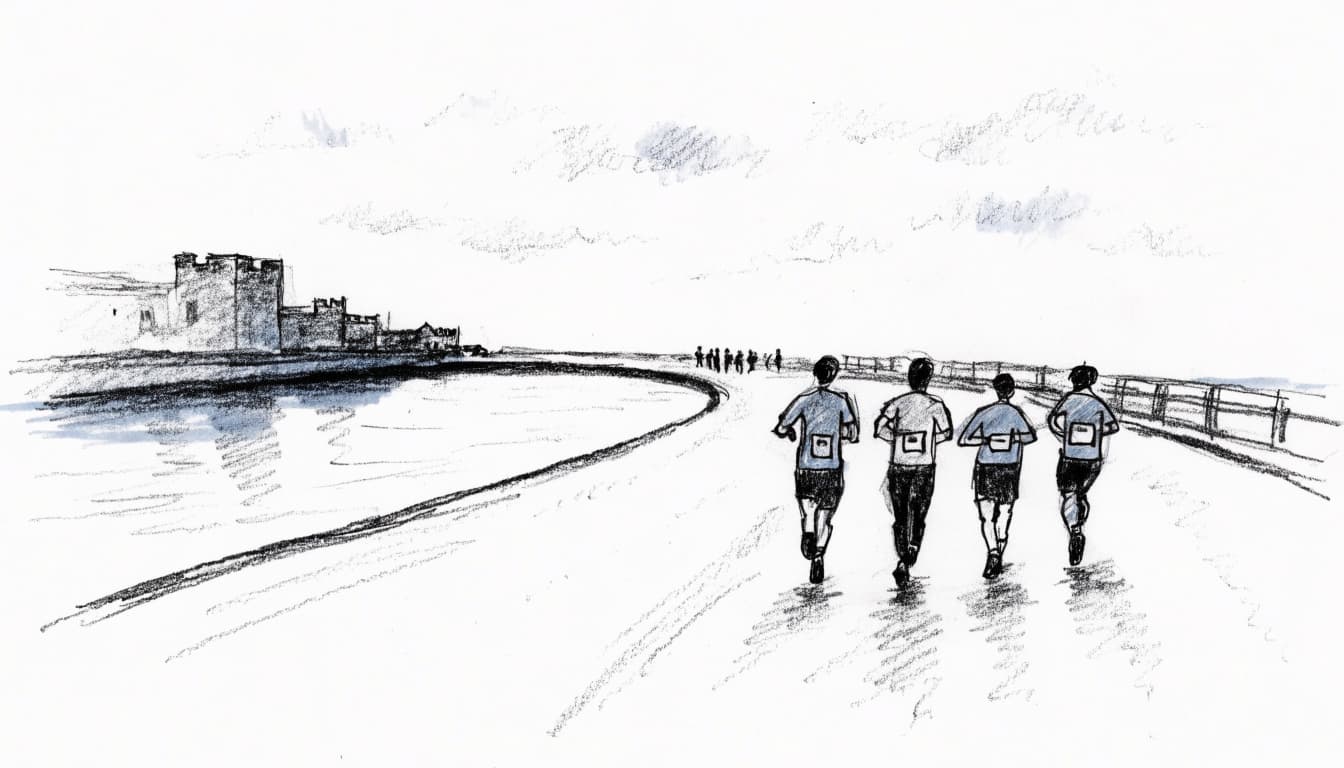
Halifax gives the event an urban, coastal backdrop, and the route extends across the harbor toward Dartmouth before returning to the start-finish area, according to the organizer. That setting makes logistics worth planning: review the route and local transportation details, especially if family members hope to watch at more than one point.
With multiple distances spread across the weekend, runners and visiting family can build a fuller race trip rather than focus on one start line. Still, base your expectations on the edition you’re entering. Check the event schedule, course map, and start-finish details before booking lodging or setting your race-morning routine.
How the Course Feels from Start to Finish
The course pairs city streets with an open-harbor crossing, so its character shifts as runners move through the race. The map shows the route, but wind, traffic exposure, and the day’s weather shape how each stretch feels.
Scenery, surfaces, and the route’s defining stretches
The organizer places the start and finish at the venue. From there, the course crosses the harbor toward Dartmouth before returning to Halifax, with views across the water. These landmarks give the route a clear shape, though runners should check the map for their edition before relying on specific turns or viewing spots. The organizer’s relay course details also describe the venue start and finish and views across the water.
As a road race, the route favors pavement rather than trail footing. However, the available course information doesn’t confirm every surface change, turn, or exposed stretch for the 2024 event, so don’t assume the full route stays uniform. The harbor crossing is the defining scenic section: it opens the view, but it can also leave runners more exposed to coastal wind.
The course map establishes the route and landmarks, not the sensory details of running them. Without firsthand race-day observation, it’s more accurate to describe likely conditions than to claim what the streets or crowd felt like on a particular day.
Elevation, wind, and pacing challenges
Treat the course as one to pace by effort, not by assumptions about flatness. The official event information links to interactive route details, but the available elevation figure of 177 meters applies to the Atlantic Chip Half Marathon, not the 42.2-kilometer route. Use the half-marathon route profile only for that distance, and check the current route map and elevation profile before setting a pace target.
Wind can affect effort even when the road looks straightforward. Across open sections near the harbor, a headwind may slow your pace, while a tailwind can make the same stretch feel easier. Because conditions change, keep your effort steady and avoid spending extra energy to match a pace that the weather won’t support.
A practical course strategy is to break the route into manageable sections: settle in near the start, stay controlled through the harbor crossing, then reassess effort on the return. That approach leaves room to adjust for hills, turns, and wind without turning an early split into a promise you have to defend for 26.2 miles.
Choose Your Distance, Duration and Goal Time
Make three quick selections and open the exact plan built for your race target.
Looking for a Fully Personalized Training Plan?
The training plans above are an excellent choice if they match your goal. However, if you’d rather train with a plan built specifically around your current fitness, goal race, preferred training days, weekly mileage, and target finish time, our RDA Custom Training Plans provide a personalized solution. We also have running courses available for runners seeking to run faster from the mile to the marathon.
Why Choose a Custom Training Plan?
| Standard Training Plan | RDA Custom Training Plan |
|---|---|
| Follows a fixed schedule | Built around your schedule |
| Standard weekly mileage | Peak mileage customized for you |
| Fixed workout days | Train on the days you choose |
| Same structure for everyone | Designed around your current fitness |
| Static plan | Updated as your fitness improves |
| One-time purchase | Ongoing personalized coaching and support |
What You’ll Receive
- A training plan built specifically for your goal
- Personalized training paces
- Long runs, tempo runs, threshold workouts, interval sessions, recovery runs, and easy runs
- Peak weekly mileage matched to your experience level
- Flexible training schedule that fits your life
- Ongoing plan adjustments as your fitness improves
Ready to Train Smarter?
Stop guessing and start following a plan built specifically for you, your schedule, and your racing goals.
What Race-Day Support and Crowd Energy Are Really Like
Race-day support can make a long course feel manageable, but the details matter more than broad promises. For the 2024 event, published information points to staffed hydration support and a finish at the Emera Oval. Check that year’s participant guide for exact station spacing and runner flow around the start and finish.
Aid stations, course signs, and volunteer support
The event’s 2027 race-weekend communication listed water and Gatorade at hydration stations, along with GU energy products. The organizer’s 2027 sustainability report also describes volunteer-supported hydration stations. However, the available information doesn’t establish the precise locations or spacing of every station on the course.
That distinction matters if you rely on a particular gel brand, carry your own bottles, or follow a planned fueling schedule. Check the current participant guide for station locations, product details, course-marking guidance, and timing instructions. Race services can change between editions, so don’t plan from an older route map or assume the aid setup stays the same every year.
Volunteers are a practical plus, especially at hydration points and around busy areas. Still, signs and volunteers support your navigation, but they don’t replace reviewing the map before race morning. Learn the major turns and harbor crossing in advance, then use official course information to confirm each station’s location.
The start, finish, and spectator experience
The organizer identifies the Emera Oval as the start and finish, giving runners and spectators a clear central landmark. The official Halifax Marathon information confirms that the route crosses toward Dartmouth before returning to the Oval. This gives family a simple place to meet before and after the race, although the bridge crossing makes it harder to follow runners on foot between course points.
The venue offers a useful anchor for finish-line plans, but choose a specific meeting spot instead of relying on a quick reunion in a busy crowd. Agree on where family will wait, keep your phone accessible, and allow time to move through the finish area. Check the participant guide for bag check, post-finish access, and spectator restrictions.
The available information confirms event logistics, not the exact crowd size or atmosphere on race day. Expect support to vary by neighborhood and time of day, and base your pacing plan on your own effort rather than assuming spectators will line every stretch.
Registration, Travel, and Race-Weekend Logistics
A smooth race weekend starts with checking the details for your specific race year. Registration rules, race-day arrangements, and local travel plans can change, so confirm them before you pay or book a room.
What to check before you register
The article’s reviewed edition was held in May 2026 under a different event name. Confirm whether the current official name is Scotiabank Blue Nose Marathon, and check the event dates.
For your event year, review the official marathon page for current distance options, fees, registration deadlines, and race requirements. Pricing can depend on the event and registration period, so use the listed fee for your chosen race. These registration details may change from year to year.
Before registering, check the organizer’s transfer and refund policies, bib pickup hours, and rules for collecting a bib on someone else’s behalf. Confirm what identification you need, whether race-day pickup is available, and whether the organizer assigns bib pickup or the marathon expo to Zatzman Sportsplex. Map transit from Downtown Halifax to Zatzman Sportsplex only if the current guide confirms that venue. These details can affect travel timing, especially if you arrive close to race weekend.
Where to stay and how to get around
Choose lodging based on the start and finish location confirmed for your race year, not only on a map pin for downtown Halifax. A room within a reasonable walk or short ride can simplify an early start, while a place farther away may require extra time for traffic, parking, or transit. Book a cancellable rate when possible, and check the route to the venue before committing.
If you’re flying in, Halifax Stanfield lists the Regional Express 320 airport bus as public transit between the airport and downtown. For local buses and ferries, check current Halifax Transit schedules and routes, then verify service times for race morning. Allow a buffer for an early start, and agree on a meeting point with your travel companions.
Plan meals around your usual race routine. Pick up familiar breakfast and fueling supplies before race morning, and check restaurant hours rather than assuming you’ll find an open option early. If you have dietary needs, confirm them with the restaurant or accommodation in advance.
What to pack for race weather
Halifax weather can shift, but the 2027 race takes place in May, not fall. Check the local forecast a few days before your event, then pack for the conditions that are actually expected. A lightweight layer, rain shell, and spare dry clothes may help, while overdressing can become uncomfortable once you warm up.
Test your race outfit, shoes, and any rain protection during training. That way, race morning brings fewer surprises, whether the air feels cool, damp, or mild.
Who Should Run, and How to Prepare
The event can suit runners with different goals, but the right fit depends on what you want from race day. A coastal route and a destination weekend may appeal more than a predictable personal-best course, so review the current map and conditions before committing to a pace goal.
Is this race a good fit for your running goals?
For a first-time marathoner, the event can be a motivating choice if you’re ready to follow a consistent training plan and handle the distance patiently. The city setting and harbor crossing offer memorable landmarks, while the marathon’s length still demands months of preparation. If your main goal is to finish feeling in control, choose a plan that builds gradually and leaves room for recovery.
Runners pursuing a personal best should study the current course map, elevation profile, and likely weather before deciding whether to race for a time. Wind or changing conditions can affect effort, especially on exposed stretches. Treat a fast finish as a possibility, not a promise, and set a pace goal you can adjust as the day unfolds.
The event may also appeal to runners who want a destination race. Runners in Halifax may enjoy the familiarity of a local event, while visitors should plan lodging, bib pickup, meals, and race-morning transportation early. If you prefer familiar surroundings and a simple routine, a local event may be easier to manage.
Training, pacing, and fueling for race day
Build your marathon preparation around steady training, not a sudden jump in mileage. Follow a gradual plan that fits your experience, current fitness level, schedule, and health, and take easy days seriously. Long runs help you practice staying comfortable as fatigue builds; increase their duration carefully, and scale back if pain or unusual exhaustion persists.
On race day, start at an effort you can sustain, even if the crowd and early excitement pull you faster. Use your training pace and recent workouts to set a realistic target, then adjust for wind, temperature, and how your body feels. A conservative opening can protect your energy for the later miles.
Practice your fueling and hydration during long runs instead of trying something new at the start line. Test the products, timing, and amounts that work for you, and check the current participant guide for available aid-station drinks and gels. For early starts, USA Track & Field’s pre-workout fueling guidance offers practical ideas, but use familiar foods that suit your own routine. Finally, rehearse your clothes and gear in similar weather, since a cool, damp, or windy morning can change what feels comfortable.
The Biggest Pros, Cons, and Final Verdict
The event has a clear appeal: it pairs a coastal city setting with several race options and a central start-finish area. Its trade-offs are just as practical, especially for visiting runners or those targeting a specific time.
What runners may love about the event
The harbor gives the race a sense of place that a route through generic city streets might lack. The Halifax-Dartmouth crossing adds a distinctive landmark, while the central start-finish area gives runners a clear place to begin and finish. For a destination race, that setting can make the weekend feel connected to Halifax rather than interchangeable with another road event.
The event has offered running events for different experience levels, though options can vary by year. In the 2024 edition, runners could choose a 5K, 10K, half marathon, or 26.2-mile race, and a relay gave teams another way to take part. That range can appeal to running groups or families with different goals. Published 2024 information also listed volunteer-supported hydration stations, a practical benefit for runners managing fuel and fluids over the distance.
Potential drawbacks to weigh before signing up
Coastal scenery comes with exposure to weather. Wind can change the effort required on open sections, so runners pursuing a personal best should review the current route and elevation profile before choosing a pace goal. A race-day forecast can help with clothing decisions, but it can’t guarantee calm conditions.
Travel adds another layer of planning. Visitors need to account for lodging, bib pickup, and transportation to the start, while the event’s May timing may not match runners expecting a fall marathon. The schedule and race services can change by year, so check the official Blue Nose Marathon site before booking or training around specific details.
The 26.2-mile distance also asks for serious preparation: months of training, practiced fueling, and disciplined pacing. The coastal setting may make the experience more memorable, but it doesn’t make the distance any less demanding.
For runners who value a distinctive city backdrop and want multiple event choices, the event is a strong option to consider. It may be a less obvious fit for someone whose only priority is a predictable, fast course or a simple local race morning. Review the current route and conditions, then decide whether the setting and event format match your goals.
Frequently Asked Questions
The details below refer to the 2024 edition reviewed here. Since schedules, routes, and access rules can change, verify the latest information before making plans.
When is the race held?
The 2027 42.2-kilometer race takes place in May, with other races scheduled across the May weekend. The event’s date can shift from year to year, so check the official Blue Nose Marathon site for the current schedule before booking travel or arranging time off.
Is the event suitable for a first-time marathoner?
It can be a good first marathon for runners who have completed a structured training plan, built up their long runs, and practiced fueling. The harbor crossing and coastal exposure may affect pacing, especially if wind picks up, so prepare to run by effort rather than forcing a time goal. If you’re comfortable adapting to race-day weather and have trained consistently, it’s a reasonable choice; if you’re underprepared, the course setting won’t make the distance easier.
Can spectators watch the race?
Spectators can plan around the route and start-finish area shown in the event information, but access depends on the current course layout and road restrictions. In 2027, the race starts and finishes at the start-finish area and crossed toward Dartmouth; check the event’s latest map and spectator guidance before choosing a viewing spot. Also review road closures and transit changes, since they can affect how easily friends or family move between locations.
Are there shorter races during the event weekend?
For the 2027 edition, runners could enter the 5K, 10K, or half marathon instead of the 42.2-kilometer race. A team relay was also listed, offering another way to cover the marathon distance with others. The event lineup can change, so confirm the race options and dates for the edition you plan to run.
What should runners bring to the start?
Pack your bib, weather-appropriate layers, and the nutrition you’ve already tested during training. Add any personal essentials you need, such as a small amount of gear for staying warm before the start, and follow the event’s rules for bags and prohibited items.
Conclusion
The race is a strong choice for runners who want a city event with a clear coastal identity and options for different experience levels. The harbor crossing and Halifax setting give the course character, while wind and travel logistics call for realistic pacing and advance planning. Runners focused only on a predictable personal-best course may want to compare the route with other options.
Before registering, verify the current schedule, course map, and participant guide, since details can change each year. Then choose a training plan that matches your goal, build your long runs gradually, and practice your race-day fueling. For runners who prepare well and value a destination race with a sense of place, the event is worth serious consideration.