

Half Marathon Pacing Strategy Guide to PR
My first half marathon taught me a hard lesson, I went out too fast, felt amazing for a few miles, and then hit the wall so hard that every step felt like a chore. Since then, I’ve treated every race with a half marathon pacing strategy guide mindset, because pacing isn’t guesswork, it’s the plan that keeps your best effort from falling apart halfway through.
If you want to finish strong, chase a personal best, and avoid that miserable late-race fade, pacing has to be part of your race plan from the start. I’ve learned that the right pace saves energy, protects your legs, and gives you a real shot at a strong finish instead of a desperate shuffle to the line. That’s why I use tools like a half marathon split calculator to turn a goal time into something I can trust mile by mile.
In this guide, I’m breaking down how I figure out pace, how I choose a smart race strategy, and how I train my body to hold that effort when it counts. I’ll also cover race day tips that keep me calm, plus the pacing mistakes that have cost me time and energy in the past. If you want a plan that feels clear, honest, and race-ready, keep reading, because the first step is knowing how to set the right pace before the gun even goes off.
Why Getting Your Pacing Right Transforms Your Half Marathon
Getting your pace right changes the whole race for me. When I run evenly, my breathing stays under control, my legs last longer, and I finish with something left in the tank.
That matters because a half marathon punishes wild swings. Go out too hard, and I burn through energy fast. Stay steady, and I give my body a chance to work the way it wants to work.
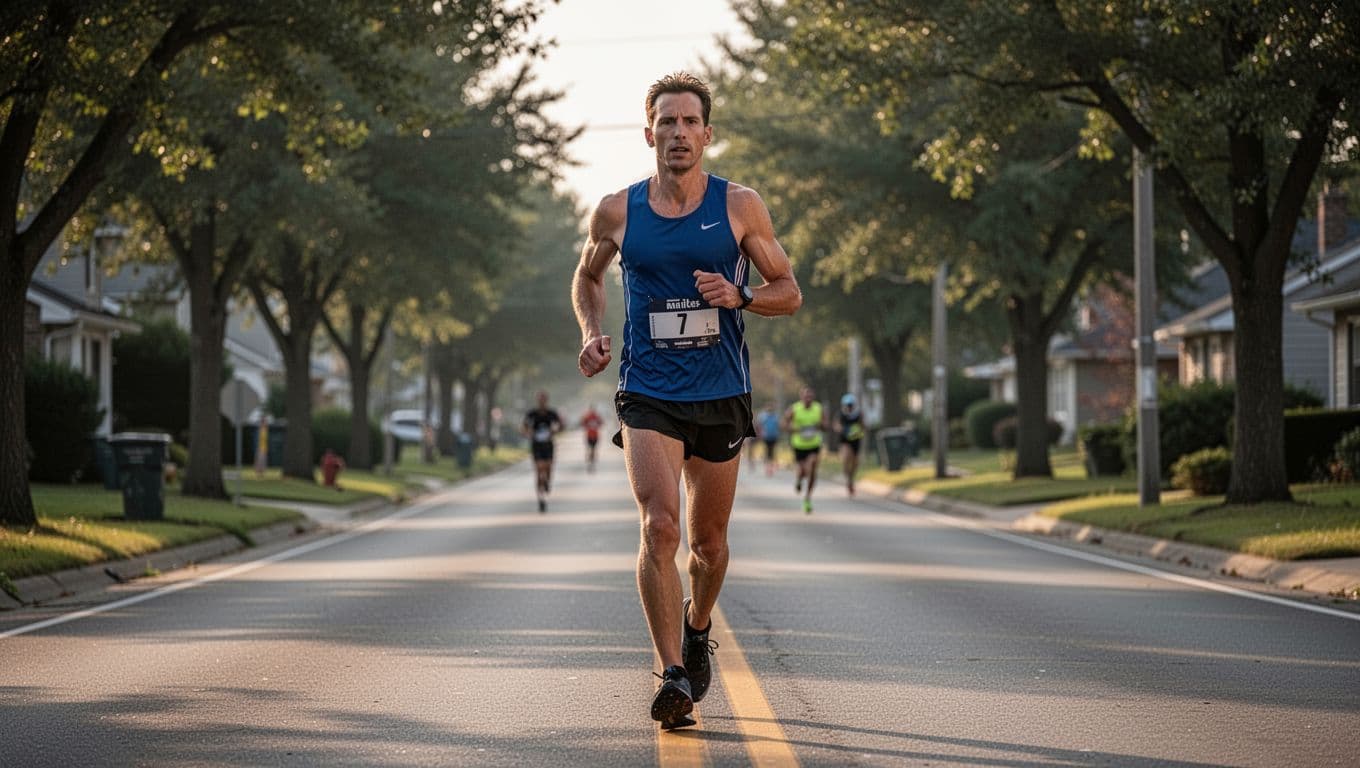
I’ve seen it time and again in my own races and in the splits readers share with me. The runners who blow up in the second half usually have one thing in common, they race the first few miles like the finish line is waiting around the next corner. Research on half marathon pacing patterns backs that up, and large race datasets keep showing the same trend, too. Even pacing gives runners a better shot at a clean, controlled finish, while big early surges usually lead to a drop-off later. For a deeper look at pacing mechanics, I also point readers to my half marathon pacing guide and my guide on how to pace a half marathon.
The Cost of Starting Too Fast
The start of a half marathon can feel electric. The crowd is loud, the adrenaline is high, and that first mile can feel almost effortless. That easy speed is the trap, because what feels smooth early often turns into heavy legs around mile 8 to 10.
I’ve fallen for that rush myself. I’ve also heard it from readers who say they felt great through mile 5, then spent the rest of the race hanging on. A recent reader poll on pacing mistakes showed the same pattern, most runners said their biggest blow-up came after an overexcited start, not from lack of fitness. The body pays for that choice later through faster glycogen use and more fatigue, and that bill always comes due.
A half marathon rewards patience more than bravado.
To resist the urge, I start with a pace cap for the first miles. I also remind myself that a race is not won in the first ten minutes. If I feel amazing early, I treat that as a sign I’m in control, not a reason to force it.
How Consistent Pacing Leads to Personal Bests
Consistent pacing makes every mile count. Instead of spiking effort early and fading late, I spread my energy more evenly, which helps delay fatigue and keeps my form cleaner.
That matters because the second half of a half marathon is where poor pacing usually shows up. Runners who go out too fast often slow down more than they realize, while even pacers usually hold their pace better and finish stronger. Studies on half marathon and marathon pacing show that smoother splits are tied to better outcomes, and that lines up with what I see in race data every season.
The payoff is real:
- Faster finish times because I spend less time recovering from surges.
- Lower injury risk because my stride stays smoother under fatigue.
- More enjoyment because I’m running with control instead of panic.
Elite runners show this clearly. When they run their best races, they usually build into the effort instead of forcing it from the gun. That same approach works for me, whether I’m chasing a PR or just trying to run smart from start to finish.
Calculate Your Target Pace with These Proven Methods
I never guess my half marathon pace anymore. I start with real data, then I trim it down to something I can actually hold on race day. That keeps my plan honest, and it gives me a much better shot at finishing strong.
The goal is simple, I want a pace that matches my current fitness, not the fitness I hope I have. A smart half marathon pacing strategy guide always starts there, because confidence is useful only when the number in your head fits your legs.
Using Race Predictors and Training Logs
I like to begin with my most recent race, usually a 10K or a full marathon. Tools like the VDOT02 calculator benefits help me turn that race result into a realistic target pace, while Jack Daniels and McMillan-style predictors give me a second opinion. If both numbers land close together, I know I’m on solid ground.
Here’s the process I use:
- I pick a recent all-out race from the last 4 to 6 weeks.
- I plug the time into a race predictor like McMillan’s running calculator or a VDOT-based tool.
- I compare the predicted half marathon pace with my recent long runs and workouts.
- I adjust down if the race was on a fast course, or up if it was hot, hilly, or windy.
My training log matters just as much as the calculator. If my long runs average slower than the predicted pace by a big margin, I do not force the faster number. I want the pace I can repeat, not a pace that looks good on paper.
A simple formula helps me stay grounded:
goal half marathon pace = predictor pace, adjusted for course + fatigue
For example, if a predictor gives me 8:00 per mile, but my long runs and workouts suggest I fade late, I might set my race pace closer to 8:05 to 8:10. That small change can save my race.
If you like side-by-side comparisons, this is where a pace table helps. I often map my goal pace in both miles and kilometers before race week, so I can glance at splits without doing math under pressure.
Adjusting for Half Marathon Specifics
The half marathon asks for more patience than a 10K, but less caution than a marathon. I have to respect that middle ground, because fatigue builds late even when the first half feels smooth. A pace that works for 10K often feels too hot after mile 8.
I also check effort, not just pace. Heart rate and RPE keep me honest when adrenaline tries to push me out too fast. If my breathing jumps early or my effort feels like a 7 out of 10 before halfway, I know I need to back off a touch.
On rolling courses, I adjust for terrain instead of chasing one exact split. A climb costs more than it looks, and a downhill can trick me into overpacing. I’d rather run even effort than perfectly even numbers, especially in the first 10K.
For a half marathon, I aim to feel controlled early and committed late. That means my target pace should leave a little room for the final miles, because the race always gets harder when the finish starts to matter.
Half Marathon Pacing Strategies: Which One Fits You?
I choose my pacing strategy before race day because the right plan keeps me calm when the miles start to bite. The best approach depends on my fitness, the course, and how much risk I’m willing to take.
I look at pacing in three main ways: even pacing, negative splits, and positive splits. Each one can work, but each one asks for a different kind of runner. A smart half marathon pacing guide helps me match the plan to my current fitness instead of forcing a pace that looks good on paper. If I want a sharper target, I also check a structured half marathon plan so my workouts support the race strategy I pick.
Even Pacing for Predictable Races
Even pacing is my most reliable choice on flat, fast courses. I hold a steady effort from start to finish, which makes the race feel controlled and simple. That matters because a half marathon can punish big swings in pace, especially when excitement tempts me to surge early.
When I practice even pacing, I use goal pace in workouts and keep an eye on effort, not just the watch. I’ll run tempo miles, long-run segments, or treadmill sessions at the same pace I want on race day. That teaches my legs what steady feels like, so race pace stops sounding like a guess.
The biggest advantage is predictability. I know what I’m getting, and I avoid the late-race panic that comes from going out too hot. Still, even pacing works best when the course is smooth and the weather is kind.
Negative Splits: Finish Stronger Than You Start
Negative splits are my favorite way to race when I want a strong finish. I start a little controlled, settle in, and then build pace as my body warms up and my rhythm locks in. That saves energy for the last 5K, when a lot of runners are fading.
This is also how many strong elites run big races. They stay patient early, then press once the field starts to crack. I like that approach because it turns the second half into a race I can actually attack, instead of one I only survive.
My personal best usually comes when I resist the urge to chase the first mile. I’ve had more success when I run the opening miles a few seconds slower than goal pace, then inch down after halfway. That small restraint pays off later when my legs still have life.
When Positive Splits Make Sense
Positive splits mean I go out harder and fade a bit later. I only use this when I’m chasing an aggressive goal and I know the risk. Sometimes that makes sense for very fit runners on fast days, especially if a fast start helps me settle into a hard but honest rhythm.
The upside is clear. I can bank time early, ride adrenaline, and put pressure on my goal from the gun. On a short, flat, or cool race, that can feel effective.
The downside is just as clear. If I overshoot even a little, the second half can fall apart fast. My breathing gets ragged, my form slips, and the final miles turn into damage control.
For most runners, that strategy is the least forgiving. I use it only when I’m confident my fitness can absorb the early push.
Factors That Mess with Your Pace and How to Counter Them
Even a solid half marathon pacing strategy guide can fall apart if I ignore the outside forces that shape race day. Hills, heat, wind, fuel, and even crowd energy all tug at pace in different ways. I get better results when I expect those changes and adjust before they cost me time.
Terrain and Weather Challenges
Hills change the math fast. I use effort on the climb, then I let the downhill give some time back without forcing the pace. If I chase the watch uphill, I burn matches early, so I shorten my stride, keep my chest tall, and stay smooth instead.
Weather can push pace around just as much. Heat and humidity raise heart rate and make goal pace feel harder, so I start with effort, not ego. On warm race days, I expect to slow a little and drink more often. Wind also matters, especially on exposed roads, because a headwind can turn a comfortable split into a grind.
For weather prep, I check the forecast the day before and again race morning. Then I decide whether I need a slightly softer start, extra hydration, or a more patient middle mile. I also think about how the course feels, because a flat map can still hide plenty of small rises.
A few simple race-day adjustments help me stay in control:
- Hills: run by effort, not exact pace.
- Heat and humidity: back off a few seconds early and sip at aid stations.
- Wind: tuck in behind runners when it makes sense, then stay relaxed.
- Poor footing or rain: keep cadence quick and avoid overstriding.
I also like to review course profiles before race day. A hilly course demands more patience than a flat one, and half marathon fueling strategies for endurance matter even more when the course keeps asking for extra effort.
If the course is tougher than expected, I protect the second half by staying calm in the first half.
Fueling and Mental Factors
Fuel timing can save a race. I’ve had strong runs with a gel around 30 to 40 minutes in, then another one later if I’m racing beyond 90 minutes. That steady drip of carbs keeps me from drifting into that flat, heavy feeling that shows up when I wait too long. A solid plan from what to eat before a half marathon also helps me start with enough energy in the tank.
Mental control matters just as much. The crowd can pull me out too fast, especially at the start or near a finish-line surge, so I lock in on effort instead of emotion. When the noise gets loud, I remind myself that a half marathon is a long race, and I still need legs at mile 10.
Fatigue changes my judgment, too. When I start to feel that dip, I break the race into smaller pieces, focus on the next mile, and keep my form tidy. I’ve found that one calm thought beats five panicked ones. If I stay patient, fuel on time, and ignore the urge to match every surge, my pace holds together much better.
A few habits keep me centered:
- I set a fuel alarm in my head before I feel empty.
- I run the first miles under control, even when the crowd is loud.
- I reset my focus at every aid station or mile marker.
- I treat late-race discomfort as part of the plan, not a sign to quit.
For a deeper breakdown of race-day pacing under pressure, I also like this half marathon pacing strategy because it matches what I’ve learned on my best runs.
Build Pacing Skills with These Training Workouts
I build pacing skills in training by making race pace feel ordinary. That means I practice control, not just speed, so I know what my target effort feels like when I’m tired.
These workouts help me do that. They teach me how to settle in, stay honest, and finish with better rhythm. They also give me a clear bridge between weekly training and race day execution, which is exactly what I want in a half marathon pacing strategy guide.
Key Workouts to Lock in Your Pace
I get the best results from workouts that ask me to start easy, then close hard. That change in effort teaches me how to control a half marathon without wasting energy early.
A progression run is one of my favorites. I might run 6 to 8 miles total, starting easy for the first 3 miles, then moving into steady pace for 2 miles, and finishing the last mile or two at goal half marathon pace. It feels close to the race because I have to manage the shift instead of forcing speed from the start.
A tempo run builds the kind of strength I need to hold pace under pressure. One solid option is 2 miles easy, 4 miles at tempo effort, then 1 mile easy. For many runners, that tempo section lands a little slower than 10K pace and a little faster than goal half marathon pace. If you want a deeper breakdown, I like the pacing ideas in McMillan’s half marathon strategy.
A marathon pace workout also helps more than people think. I’ll sometimes run 10 miles with 4 miles at marathon pace in the middle, because it trains me to stay smooth while a little fatigued. That steady effort carries over to half marathon racing when my legs start to tighten.
For runners chasing a sharper target, a session like 3 x 2 miles at goal half marathon pace with 3 minutes easy jogging between reps is strong practice. It gives me race-pace feel without overcooking the workout.
Tracking Progress in Training
I keep track of every quality workout because progress is easier to trust when I can see it. A training log shows me whether I’m holding pace with less effort, recovering faster, or fading less in the final reps.
I like to record the basics after each session, including pace, distance, effort, weather, and how the workout felt. A GPS watch helps a lot here, especially when I want split data from mile to mile. The watch gives me numbers, but my log gives those numbers context.
I also use simple tests every few weeks. A 5K time trial, a controlled tempo run, or a long run with goal pace miles can tell me if I’m ready to tighten my race target. If the pace feels smoother over time, I know the training is working.
The best pacing gains usually show up in the details, not in one huge workout.
A 4-week block can look like this:
- Week 1, progression run with a fast finish.
- Week 2, tempo run with a steady middle block.
- Week 3, marathon pace miles inside a long run.
- Week 4, a shorter tune-up workout, then review the log and adjust.
That pattern keeps me honest, and it keeps my race pace tied to real fitness instead of wishful thinking.
Race Day Tactics to Nail Your Pacing Plan
Race day is where the plan gets real. I want my first miles to feel controlled, my mid-race effort to stay honest, and my finish to come from patience, not panic. That starts before the gun, because pacing is easier when I remove the small decisions that drain focus.
I treat race morning like a checklist with a purpose. I warm up enough to wake up my legs, I line up where I belong, and I set my watch so it works for me instead of distracting me. Then I keep checking in at each mile, using effort, splits, and a few short mantras to stay steady when adrenaline tries to pull me forward.
Tech and Tools for Real-Time Monitoring
I keep my watch setup simple on race day. On a Garmin, I use pace alerts, lap pace, elapsed time, and distance so I can see whether I’m drifting too fast without staring at too many fields. Garmin’s own activity alert setup and PacePro guidance are useful when I want more structure, especially on rolling courses.
I do the same on Apple Watch, but I only keep the essentials on screen. A clean display helps me focus on running, not swiping through screens. If I use an app, I pick one that gives live pace and split feedback without too much noise, like the options reviewed in this Apple Watch running apps guide.
My setup usually looks like this:
- Warmup screen with pace and heart rate.
- Race screen with lap pace, average pace, and distance.
- Alert settings for pace drift, so I know when I’m outside my target range.
A short warmup also helps the watch data make sense. When my body is cold, pace can bounce around. Once I’m warm, the numbers settle, and I can trust them more. I like to keep the first mile under control, even if the watch says I feel great.
If I want a sharper target before race day, I also review my pacing plan for a 1:35 half marathon finish. That gives me a clear reference point for splits and effort.
Mental Tricks to Stay on Pace
I break the race into small chunks so the distance feels manageable. Mile by mile works well, but I like to think in phases too, such as the opening 5K, the middle stretch, and the final push. That keeps me from treating mile 3 like mile 12.
Before the start, I choose a calm spot in the corral. I stay near runners who match my goal pace, not the ones who look eager to sprint away. That positioning matters, because the first few hundred yards can drag you into a pace that feels free but costs you later.
My mental cues are short and plain. I repeat things like:
- “Easy first mile.”
- “Settle and breathe.”
- “Hold back now, earn it later.”
- “Smooth legs, calm chest.”
Those phrases sound simple, and that’s the point. Under pressure, simple wins.
When the race gets loud, I go back to one job, run the next mile at the pace I planned.
I also prepare a backup plan for bad days. If my legs feel flat early, I drop the goal by a few seconds and protect the second half. If the weather turns ugly, I run by effort and stop chasing exact splits. A smart half marathon pacing strategy guide leaves room for that kind of adjustment, because the best race plan is the one I can still follow when conditions change.
Pacing Pitfalls Every Runner Should Dodge
I’ve made enough pacing mistakes to know they come in simple forms, then hit hard later. The bad news is that most of them feel harmless early. The good news is that they’re easy to fix once I know what to watch for.
Starting too hard because the energy feels free
The biggest mistake I’ve made is chasing the rush of the start. The first mile feels smooth, but that borrowed speed shows up later when my legs fade and my form falls apart.
I fix this by setting a clear pace cap for the first 2 miles. If I feel great, I hold back anyway. That discipline has saved more races than any surge ever has.
Skipping the warmup and expecting your body to respond
I used to think a warmup was optional. It isn’t. Without it, my first mile felt awkward, my breathing spiked, and my watch numbers looked messy.
Now I jog, drill, and stride before the gun. Even 10 to 15 minutes helps me settle in faster and avoids that frantic first-mile feeling. A strong pacing mistakes to avoid in half marathons plan starts before the race does.
Letting other runners set my pace
Peer pressure can ruin a smart race. I’ve followed runners who looked easy and paid for it three miles later.
The fix is simple, I run my race. I line up with people near my goal pace and ignore the rest. That keeps me honest when adrenaline starts talking louder than reason.
Ignoring body signals until it’s too late
A watch helps, but my body tells the truth first. Tight shoulders, short breaths, and heavy legs usually mean I’m pushing too soon.
When that happens, I back off a few seconds and reset. If I keep forcing it, the damage gets worse fast. I’d rather lose a little time early than blow up later.
Trusting one perfect split instead of the full race
One fast mile does not make a strong half marathon. I’ve learned that chasing a single split can wreck the bigger plan.
I focus on patterns, not one number. That shift helps me stay steady, especially on rolling courses where effort matters more than exact pace.
Conclusion
I keep coming back to the same truth, a strong half marathon comes from control. When I set a realistic target, choose a pacing plan that fits the course, and practice that effort in training, I give myself a real chance to finish well instead of fading late.
This half marathon pacing strategy guide works because it puts patience first. I want my first miles to feel smooth, my middle miles to stay honest, and my final stretch to come from fitness I built before race day. That approach has saved me from blow-ups, and it has given me better races than chasing the clock ever did.


