

Gold Coast Marathon Pacers: Pace Groups, Goal Times & How to Choose
Before sunrise, the Gold Coast is already alive: shoes tap across the pavement, race lights glow along the road, and thousands of runners wait for the marathon to begin. Once the gun goes off, excitement can push you into an unsustainable pace, especially when your goal still feels like a number rather than a race plan.
That’s why many runners search for Gold Coast marathon pacers before race day. A pacer can turn a vague target into a steady, manageable rhythm, helping you control your effort through the early kilometers and stay focused when fatigue builds. However, a pacer can’t replace consistent training, smart fueling, or your own judgment if conditions and course congestion change.
This guide explains how official pacers work, what pace groups may be available, how to choose a realistic target, and how to use race-day pacing without becoming dependent on the group. You’ll also learn the common mistakes runners make and how to confirm the latest pacer and event details before lining up on the Gold Coast. Remember, be sure to book your Gold Coast marathon hotels far in advance to save on costs.
Key Takeaways
- Gold Coast marathon pacers help you hold a controlled rhythm instead of chasing an unrealistic opening pace.
- Choose a group that matches your recent training, goal time, and ability to maintain even effort.
- Check the official Gold Coast pace groups before race day, since available targets and pacer details can change.
- Stay near the group without crowding it, and adjust for heat, congestion, hills, or changing energy levels.
- Use the pacer as a guide, not a guarantee. Your breathing, fueling, and race-day judgment still matter most.
Gold Coast Marathon Pacers: What They Do and How They Help
Gold Coast marathon pacers help runners turn a finish-time goal into a steady race rhythm. Instead of chasing your watch through every kilometer, you can follow a trained runner who guides the group toward a set target.
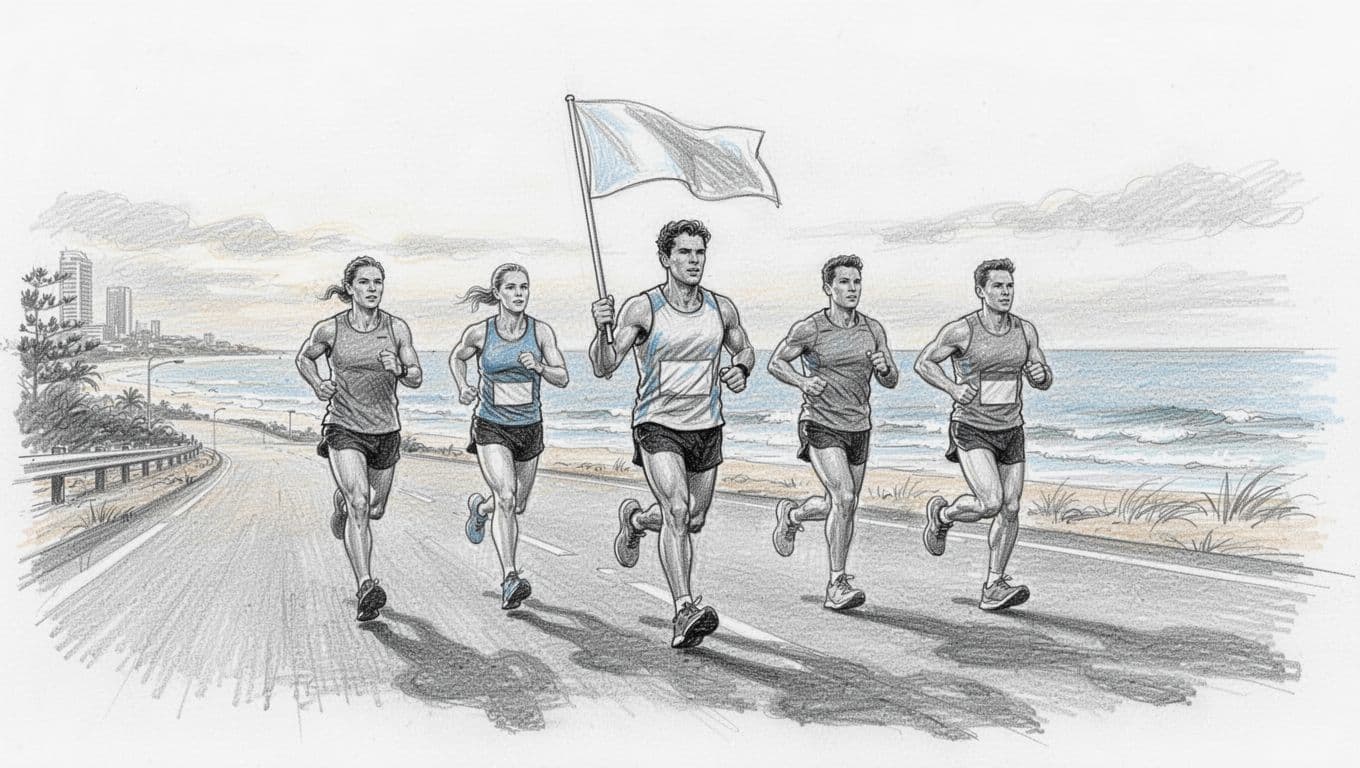
Official pacers usually run to net time, which starts when you cross the timing mat rather than when the starting gun fires. The ASICS Gold Coast Marathon states that each pace time has at least two pace runners, giving runners a second visual reference if the group spreads out.
How an official pacer supports your race
A pacer aims to maintain an even effort, or at least keep the group close to the required finish-time pace. That doesn’t mean every kilometer will show the exact same split. Turns, aid stations, congestion, wind, and changes in elevation can affect short-term pace.
Their value often becomes clear in the opening kilometers. Race-day adrenaline can make your goal pace feel too slow, so you surge ahead without noticing. Staying near a pacer gives you a physical reminder to settle down and protect your energy.
Pacers also provide visual and mental support. You can focus on the flag or singlet ahead instead of repeatedly checking your watch. When the course feels crowded or fatigue starts to cloud your judgment, that steady reference can keep your effort controlled.
Still, the group cannot remove every race-day problem. You may need to slow briefly at a water station, move around a congested turn, face a headwind, or stop for the bathroom. In hot conditions, your safe effort may need to differ from the planned pace. A pacer offers guidance, not a guarantee.
Use the pace group to control your effort, but let your breathing, fueling, and race conditions guide your final decisions.
Official pacers versus informal pace groups
An official Gold Coast marathon pacer is connected with the event’s pace-runner program and follows a designated finish-time target. Running with a friend is different. Your friend may understand your training and offer encouragement, but they aren’t necessarily responsible for holding an official pace.
You may also find runners forming informal groups around a shared goal. These groups can help, yet their speed may change as people move around aid stations or lose contact. They also may not account for net time or the event’s published pacing plan.
Before race day, check the official Gold Coast pace runners page and the ASICS Gold Coast Marathon website for the current program. Confirm available finish times, meeting points, pacer details, and any limits or changes before choosing your group.
Which Gold Coast Pace Group Fits Your Marathon Goal?
The right Gold Coast pace group starts with a realistic finish-time goal, then works backward to an average pace you can sustain for 26.2 miles. The fastest available group may look appealing, but a slightly slower target often produces a stronger finish.
Use these figures as planning estimates only. Always verify the official Gold Coast pace times for your specific race year before publication or race day.
| Marathon goal | Approx. pace per mile | Approx. pace per kilometer |
|---|---|---|
| 3:00 | 6:52 | 4:16 |
| 3:15 | 7:26 | 4:37 |
| 3:30 | 8:01 | 4:58 |
| 3:45 | 8:35 | 5:20 |
| 4:00 | 9:09 | 5:41 |
| 4:30 | 10:18 | 6:24 |
| 5:00 | 11:27 | 7:07 |
These numbers describe average pace, not every split. Aid stations, turns, congestion, wind, and brief slowdowns can change individual kilometers.
Use Recent Race Results to Set a Sensible Target
Your recent performances provide useful evidence, but they don’t tell the whole story. A strong 5K can show speed, while a 10K gives a better view of sustained effort. A half marathon offers more useful endurance information, and long runs reveal whether your body can keep working after two hours.
Race-time calculators can convert those results into a predicted marathon time. However, they don’t fully account for Gold Coast heat, humidity, sun exposure, fueling, hills, or your training history. A calculator may predict 3:30, but that result means little if your longest run was short or your weekly mileage has been inconsistent.
Compare your goal with:
- Recent 5K, 10K, and half marathon results.
- Long runs that include controlled sections at marathon pace.
- Your average weekly mileage and recovery between sessions.
- How comfortably you can repeat marathon-pace workouts while tired.
Set a goal range instead of treating one number as a promise. Your A goal can reflect an excellent day, your B goal can match your current preparation, and your safe-finish goal can protect the race if conditions or fatigue turn against you.
A pace group should match the runner you have trained to become, not the runner you hope appears on race morning.
Why Gold Coast Weather and Course Conditions Matter
The Gold Coast Marathon course is known for its flat coastal route, but flat doesn’t mean effortless. The beachfront setting can bring humidity, direct sun, and wind exposure. Conditions may also change between the early start and the final kilometers, so don’t plan around an unverified forecast.
Heat and humidity raise cardiovascular strain at the same pace. Your watch may show 5:00 per kilometer, yet your breathing and heart rate can feel closer to threshold effort. Use pace as your guide, then check your breathing, perceived effort, and heart rate as backup signals.
If the pace group feels too hard early, move behind it or let it go. You can also step into a slower group after a warm section, preserve your fueling rhythm, and reassess later. Finishing a little slower with control is far better than losing large amounts of time after 30 kilometers.
How to Run With a Pacer From the Start Line to the Finish
A good pace group gives your marathon structure, but you still control the race. Arrive early enough to locate your assigned corral, check the pacer flag, and review the aid-station plan before the start. Stand near the group without forcing your way into its center. You want a clear visual reference, not a crowded pocket of runners.
The First 10 Kilometers: Stay Calm and Hold Back
The opening miles should feel controlled, even when the start line is loud and electric. Let the group settle before you judge your pace. Relax your shoulders, keep your hands loose, and use smooth breathing as an early check. If you can’t speak a short sentence comfortably, the pace may already be too aggressive.
Check your perceived effort every few minutes. Ask yourself whether the pace feels sustainable or merely exciting. Keep the pacer within a comfortable visual distance rather than running directly beside them. This reduces crowding and lets you avoid sudden weaving when runners slow near turns or aid stations.
A small gap isn’t automatically a problem. Crowded corners, narrow sections, or a brief stop for water can separate you from the flag. Hold your rhythm, move safely, and reconnect gradually. Chasing hard for 20 seconds can cost more energy than the gap itself.
The Middle Miles: Protect Your Energy and Fuel Early
Use the fueling routine you practiced during long runs. Carry enough carbohydrates for your plan, then take them before you feel empty. Many runners begin with regular small doses, while others follow a schedule based on gels, chews, or sports drink. The Korey Stringer Institute’s marathon fueling guide discusses a general range of 30 to 60 grams of carbohydrates per hour, but your stomach decides what you can tolerate.
Drink according to your training and the conditions. Take fluids at aid stations without stopping abruptly in front of the group. Move toward the side, slow briefly, and rejoin when the road clears. Electrolytes may help during a hot, sweaty race, but don’t add unfamiliar products on race day.
A pacer can’t carry your fuel or remember your nutrition schedule. Heat, humidity, and stomach trouble may require smaller amounts, more time between doses, or a slower pace. Protect your ability to keep running rather than forcing the original plan.
The Final 10 Kilometers: Decide When to Stay, Slow, or Push
After 32 kilometers, assess your legs, breathing, posture, and remaining fuel. If your stride stays stable and the pacer feels controlled, remain with the group. Their steady rhythm can prevent fatigue from turning into an unnecessary surge.
Dropping behind is smart when your breathing becomes strained, your form collapses, or your stomach won’t accept fuel. Slow slightly, regain control, and keep moving. If you still have strong reserves, increase effort in small steps, but don’t sprint because your watch shows a favorable split. GPS readings can drift around buildings and turns. Let your body confirm the pace before you push.
Pacer Strategy for Different Types of Gold Coast Runners
The same Gold Coast marathon pace group can feel completely different depending on your training, race experience, weather, and crowd conditions. Use the pacer to create structure, but match the group to your own effort limits and race plan.
First-Time Marathoners Who Want a Reliable Finish
If this is your first marathon, choose a conservative pace group that supports a controlled finish. A slower target may feel less exciting at the start, but it gives you more room to handle heat, crowded roads, missed fluids, or late-race fatigue.
Practice the target pace during long runs before race day. Include fueling, water stops, and sections when your legs already feel tired. That preparation helps you learn whether the pace feels relaxed enough to maintain for several hours.
Stay near the Gold Coast marathon pacer during the opening miles, but don’t treat the flag as a guarantee. The pacer may slow around an aid station or adjust slightly for congestion. You may also lose a few seconds while taking fluids or making a bathroom stop. Avoid chasing every gap, since a hard surge can cost more energy than the time you lost.
Keep your shoulders relaxed and your breathing easy early on. Take fuel at regular intervals, even when you still feel strong. If the weather becomes hotter or fatigue arrives sooner than expected, accept a slower pace and protect your ability to keep running.
Your first marathon doesn’t need to prove how fast you can start. Focus on reaching the final miles with enough strength to maintain good form and finish with confidence.
Experienced Runners Chasing a Personal Best
Experienced runners can use a pacer to reduce the mental work of checking every split. A steady group helps protect an even pace, especially when excitement pushes other runners into repeated surges. Before race morning, know your goal pace, course strategy, fueling schedule, and maximum sustainable effort.
The pacer should support your plan, not replace it. If the group crowds an aid station, weaves through runners, or surges after a slow kilometer, create a little space. You can run a few seconds away from the flag while keeping your effort steady, then reconnect when the road opens.
Your watch may also show misleading pace readings near turns or tall buildings. Use lap pace and perceived effort together, then check your breathing before making a correction. A small gap is harmless if you maintain rhythm.
If the group runs faster than your planned effort, let it move ahead. Personal-best attempts depend on controlled execution, not perfect contact with one flag.
Runners Using a Backup Goal or Negative-Split Plan
A negative-split strategy requires patience. Choose a slower early pace group if your plan calls for a controlled first half, then resist the urge to move up before your body is ready.
After halfway, reassess your form, breathing, and fuel reserves. If your stride remains smooth and your effort feels contained, gradually move toward a faster group. Practice this approach during long runs so the early restraint and late increase feel familiar.
Conditions may also change your timing. Heat, wind, crowding, or a long aid-station stop can cost time, but you don’t need to recover every second immediately. Protect your energy, then increase effort only when your body gives you a clear reason to do so.
Common Mistakes to Avoid When Following Marathon Pacers
Gold Coast marathon pacers can help you control the race, but poor decisions can turn that support into a problem. The biggest errors usually come from chasing seconds, ignoring personal warning signs, or treating the pace group as a substitute for your own race plan.
Trying to Make Up Time After a Slow Split
One slow kilometer near a turn, aid station, or crowded section doesn’t require a hard surge. Course conditions can create small pace variations, even when official pacers are following a sound overall strategy. Instead, return smoothly to your planned effort and judge progress across several miles.
For example, suppose your goal pace is 9:09 per mile, but congestion around an aid station produces a 9:25 split. Surging to run the next mile at 8:45 may recover those seconds, but it also raises your breathing rate and burns energy earlier than planned. That extra effort can leave your legs heavy by mile 18, when you need those reserves most.
Stay calm, create space, and let the group come back into view naturally. A small gap is harmless when your breathing and form remain controlled. Running too close in a crowded pack can cause clipped heels, sudden braking, and unnecessary weaving, so hold a safe position near the edge of the group rather than forcing your way toward the flag.
Letting the Pacer Decide Everything
A pacer doesn’t know your training history, injury status, fueling needs, or tolerance for Gold Coast heat and humidity. Use the pace group as one source of information alongside perceived effort, breathing, posture, and your practiced race plan.
Choose a group that matches your current fitness, not a finish time based only on an old personal best or an optimistic calculator prediction. If the pace feels hard during the first few miles, step back before fatigue becomes difficult to reverse. Likewise, take fuel and fluids according to the routine you practiced, even if the group continues past an aid station.
Your watch can also mislead you around turns, tall buildings, and crowded roads. Check longer-term pace trends instead of reacting to every GPS fluctuation. Most importantly, slow down or stop for help if you experience:
- Sharp or worsening pain that changes your stride.
- Dizziness, confusion, chills, or unusual disorientation.
- Loss of coordination, stumbling, or difficulty maintaining form.
- Breathing that remains distressing after you reduce effort.
Heat makes stubborn pacing especially risky. If the weather feels harder than expected, let the pacer move ahead and protect your ability to finish. A slower, controlled second half is a far better result than defending a number that your body can no longer support.
How to Prepare Before Race Day and Confirm the Official Pacer Details
A strong Gold Coast Marathon starts with preparation that removes avoidable decisions. In the final weeks, rehearse your target pace, test your race setup, and confirm the latest event information before you trust any pace group.
Practice the Pace Before You Trust the Group
Include controlled marathon-pace segments in your long runs and shorter workouts. For example, finish a long run with several miles at your planned pace, or add repeated 10- to 20-minute blocks after an easy warmup. These sessions show whether you can hold the effort when your legs are already tired.
Your watch can confirm the numbers, but it shouldn’t control every step. Look down occasionally, then focus on breathing, posture, stride rhythm, and effort. Your target pace should feel familiar enough that you can recognize it without staring at your screen.
Use these workouts to rehearse your full race plan. Test the same:
- Gels, chews, sports drinks, or other fuel.
- Fluids and electrolyte products.
- Shoes, socks, shorts, and shirt.
- Hat, sunglasses, and any anti-chafing product.
A gel that works during a relaxed run may feel different at marathon effort. Find out during training, not beside an aid station on race morning.
Build a Simple Race-Day Checklist
Write your checklist several days before the ASICS Gold Coast Marathon, then review it the night before. Include the practical details that are easy to overlook when the start area becomes crowded and noisy.
- Confirm your bib, race number, timing information, and required attachments.
- Check the pacer meeting location and learn what flag, shirt, or bib color to look for.
- Review the course map, elevation profile, weather forecast, and expected conditions.
- Confirm transport, parking, public transit, road closures, and your route to the start.
- Plan restroom timing so you aren’t rushing into your corral at the last minute.
- Lay out tested clothing, shoes, socks, fuel, hydration supplies, and sunscreen.
- Save emergency contacts and any medical information you may need.
- Decide where you’ll meet your support crew after the race.
Arrive early enough to collect yourself, locate the start area, and find the pace group without sprinting across the venue. If the group is crowded or difficult to spot, follow your backup plan: use your watch, run by perceived effort, or join the next suitable group instead of chasing a moving flag.
Know When the Official Details May Change
Pacer finish times, bib colors, meeting locations, course details, and race procedures can change between race editions. Old blog posts, screenshots, and social media comments may describe a previous setup, so don’t treat them as current instructions.
Check the event website, runner guide, race app, official social channels, and expo information close to race day. Look for the latest pace-runner list, start-line instructions, transport updates, and course notices. If two sources disagree, follow the most recent official race communication.
Save the confirmed details on your phone and note the key information on paper if your battery fails. A few minutes of checking can prevent confusion when you arrive, leaving you free to focus on the steady rhythm your training has prepared you to run.
Choose Your Distance, Duration and Goal Time
Make three quick selections and open the exact plan built for your race target.
Looking for a Fully Personalized Training Plan?
The training plans above are an excellent choice if they match your goal. However, if you’d rather train with a plan built specifically around your current fitness, goal race, preferred training days, weekly mileage, and target finish time, our RDA Custom Training Plans provide a personalized solution. We also have running courses available for runners seeking to run faster from the mile to the marathon.
Why Choose a Custom Training Plan?
| Standard Training Plan | RDA Custom Training Plan |
|---|---|
| Follows a fixed schedule | Built around your schedule |
| Standard weekly mileage | Peak mileage customized for you |
| Fixed workout days | Train on the days you choose |
| Same structure for everyone | Designed around your current fitness |
| Static plan | Updated as your fitness improves |
| One-time purchase | Ongoing personalized coaching and support |
What You’ll Receive
- A training plan built specifically for your goal
- Personalized training paces
- Long runs, tempo runs, threshold workouts, interval sessions, recovery runs, and easy runs
- Peak weekly mileage matched to your experience level
- Flexible training schedule that fits your life
- Ongoing plan adjustments as your fitness improves
Ready to Train Smarter?
Stop guessing and start following a plan built specifically for you, your schedule, and your racing goals.
Frequently Asked Questions
Gold Coast marathon pacers can make race day feel more manageable, but they aren’t a substitute for preparation or judgment. These answers cover the practical details runners often need before choosing a pace group.
Are there official pacers at the Gold Coast Marathon?
The event may offer official pacers or designated pace groups for selected marathon finish times. However, available targets, pacer numbers, meeting points, and race-day procedures can vary with each edition.
Check the latest runner information on the official event website before relying on a pacer. Confirm the published finish times and start-line instructions, since older race reports may describe a different setup.
Can I join a Gold Coast Marathon pace group without registering for it?
Runners generally don’t need a separate entry to join an informal pace group. You still need a valid race registration, the correct bib, and a starting position that follows the event’s corral and wave rules.
Some official programs may include special meeting arrangements, group limits, or instructions about where runners should line up. Review the current runner guide before race morning, then join the appropriate group without pushing ahead of runners assigned to earlier areas.
Should I follow a pacer if the group feels too fast?
No. Slow down if the group takes you above your planned effort, especially during the opening miles or in hot, humid conditions. A pacer is a guide, not a command, and protecting your finish matters more than staying with one flag.
Move behind the group, switch to a slower target, or run by breathing and perceived effort. You can lose contact early and still have a strong marathon, but recovering from an aggressive start becomes much harder after halfway.
Do marathon pacers run exactly the advertised finish time?
Pacers target a specific finish time, but their pace may vary slightly throughout the course. Turns, hills, aid stations, crowds, wind, and small differences in course measurement can affect individual kilometer or mile splits.
Treat the pacer as a practical pacing guide rather than a second-by-second guarantee. The group may slow briefly at a water station and make up time gradually, while your own bathroom, fueling, or medical stop can change your final result.
What should I do if I lose my pacer in a crowd?
Stay calm and return to your planned effort instead of sprinting after the group. Use your watch, kilometer markers, breathing, and perceived effort to maintain control until the crowd thins.
A short gap doesn’t ruin your pacing plan. Chasing the flag during the first half can create a costly surge, so hold your rhythm and reconnect only if the group comes back naturally.
Is running with a pacer a good idea for a first marathon?
Yes, a suitable pacer can help a first-time marathoner stay controlled and reduce the number of decisions required during the race. The group provides a steady visual reference when excitement, fatigue, or crowded roads make pacing difficult.
You still need a personal fueling plan, a realistic goal, and the willingness to adjust for fitness and weather. If the conditions become harder than expected, let the pace group go and protect your ability to keep moving late in the race.
Conclusion
Gold Coast marathon pacers can give race day a steady rhythm when the start-line excitement makes every pace feel easy. Choose a realistic group based on your recent training and marathon goal, then practice that effort during long runs so it feels familiar before race morning. Check the latest official pacer details and race updates, since finish times, meeting points, and procedures can change.
Once the race begins, use the pacer as a guide rather than a guarantee. Fuel early according to the plan you tested, drink based on the conditions, and let your breathing, form, and energy levels shape your decisions. If heat, congestion, wind, or fatigue changes the effort, slow down before the problem grows.
A strong marathon comes from patience and control. Gold Coast marathon pacers can support smart pacing, but your preparation and judgment determine how well you use them. Hold back when needed, adapt when conditions change, and trust the steady work that brought you to the start line.


