Gold Coast Marathon Elevation: How Flat Is the Course & How to Pace It
As dawn breaks over the Gold Coast, runners stream beside the ocean, past cheering crowds and bright waterfront landmarks. The road looks inviting, but marathon pace can change quickly when a bridge rises ahead, a turn breaks your rhythm, or coastal wind pushes against you.
The Gold Coast Marathon elevation is widely known for a fast, mostly flat course, which makes it attractive for personal-best attempts. Still, “flat” doesn’t mean perfectly level. Small rises, bridges, repeated turns, weather, and any course updates can affect effort, even when the total climbing appears modest.
Elevation gain matters because uphill sections cost more energy than their length suggests, while downhill running can load your legs before the final miles. A smart plan uses effort, pace, and course position together instead of chasing the watch through every change in grade.
Next, I will examine the course profile, explain how to read elevation data, and connect it to training adjustments and practical race-day decisions. Remember, book your Gold Coast Marathon hotels far in advance to save on funds.
Key Takeaways
- The Gold Coast Marathon elevation is low, with roughly 62 meters of total climbing across the course, according to course elevation data.
- Small rises, bridges, turns, and coastal wind can still change your effort and rhythm.
- Pace by effort on inclines, then return smoothly to goal pace instead of forcing the watch.
- Use the official Gold Coast course maps to identify key turns and course features.
- Practice even pacing, controlled surges, and late-race patience during long training runs.
Gold Coast Marathon Elevation: Is the Course Really Flat?
The Gold Coast Marathon is a fast, coastal race with relatively little climbing. Still, a flat course is rarely perfectly level, so runners should understand what the elevation numbers actually measure before setting a pacing plan.
What elevation gain actually tells you about the race
Elevation gain is the total amount of uphill running added together across the entire course. It does not mean the race reaches one tall hill. A course can climb several times, descend between those rises, and still finish with a modest total gain.
The course’s highest point is different. That figure shows the greatest elevation reached at any single location. A route might reach only a low bridge or gentle overpass, yet collect more climbing through repeated ramps and road changes.
For example, a course could include four short rises of 3 meters each. Even if none feels like a significant hill, those sections add 12 meters of climbing. If the route descends between them, the highest point may remain low while the total elevation gain continues to increase.
Average grade adds another layer. It describes the average steepness of a section, based on vertical change divided by horizontal distance. A short ramp can have a noticeable grade without adding much total elevation, while a longer gentle rise can affect your legs over several minutes. Runner’s World explains how to read race elevation maps and distinguish grade from total climbing.
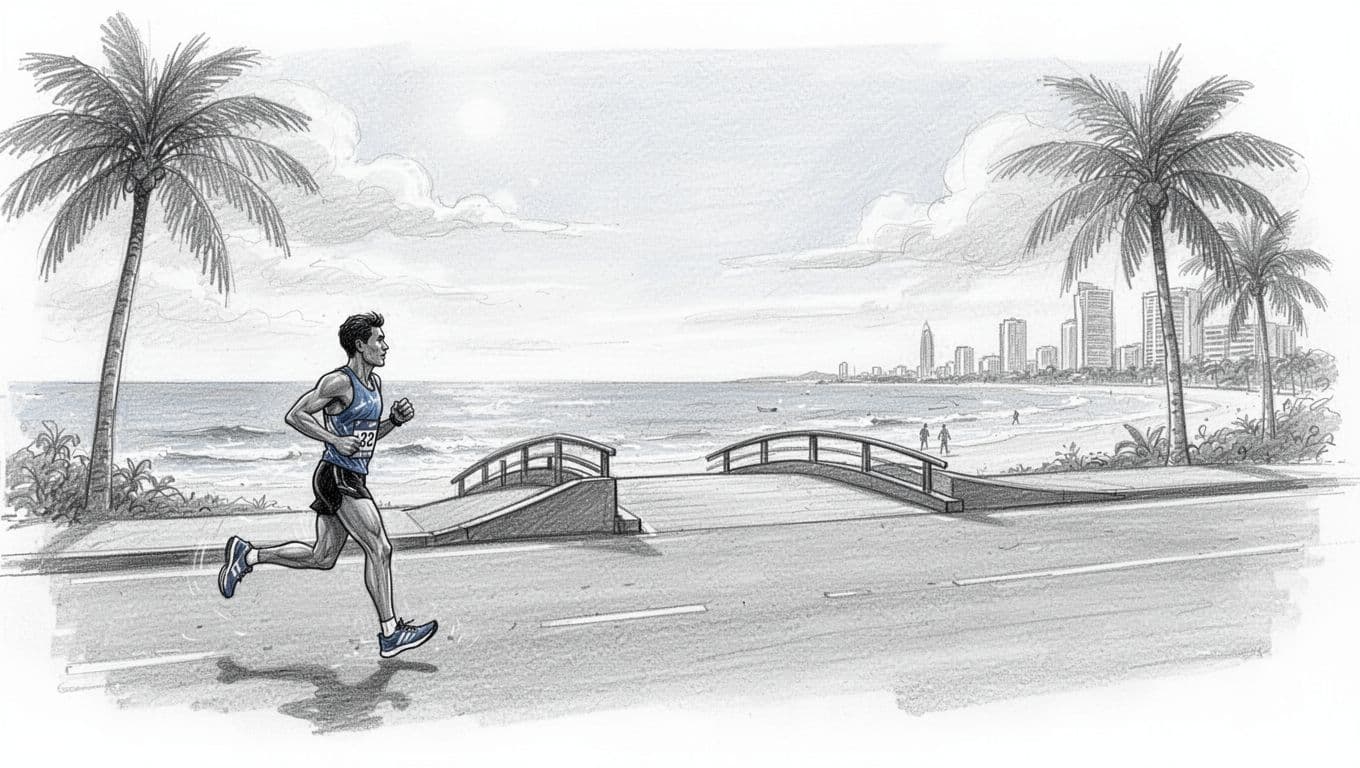
For Gold Coast runners, the practical takeaway is simple: low elevation gain supports consistent pacing, but you still need to respond to short ramps, bridges, flyovers, and gentle rises without forcing your watch to show perfect splits.
Why a flat course can still feel difficult
Limited hills remove one major source of fatigue, but they don’t make 26.2 miles easy. You still need to hold marathon pace for a long time, often with little variation in movement or muscle recruitment.
On a hilly route, the terrain changes your stride. On a flat course, the same muscles may absorb each landing for hours. That repetitive leg loading can create more muscular fatigue than the climbing itself, especially after the halfway point.
Coastal conditions can add pressure too. Exposed sections may leave you facing a headwind with little shelter, while humidity and heat can raise your effort at a familiar pace. Sharp turns also interrupt rhythm, and an aggressive opening few miles can turn a fast course into a painful final 10K.
Use the flat profile to settle into a controlled rhythm, not to sprint early. If wind, heat, or a short rise increases effort, protect your breathing and return smoothly to goal pace when conditions improve.
How the Gold Coast Course Profile Shapes Your Marathon Pace
The Gold Coast course rewards runners who keep effort controlled and resist unnecessary surges. Its elevation profile is low, with about 62 meters of total climbing, but small rises and sharp turns can still disturb your rhythm. Use your goal marathon pace as a guide, then confirm it with breathing, heart rate, and how smoothly you are moving.
The best way to pace small rises and turns
Bridges, ramps, corners, and short inclines deserve small adjustments rather than dramatic reactions. As the road rises, shorten your stride slightly and keep your cadence steady. This helps you maintain momentum without reaching forward or pushing harder than necessary.
Relax your shoulders, keep your hands loose, and let your effort rise only a little. Your watch may show a slower split for a few seconds, but protecting your breathing matters more than forcing exact pace on every change in grade.
At the top, allow your stride to lengthen naturally. Return to target pace on the other side instead of sprinting to recover every lost second. Repeated surges can raise fatigue early, and those extra efforts may cost far more than the few seconds you tried to regain.
Turns need the same patience. Brake gently before a corner, follow the cleanest line, and rebuild speed after you straighten out. Reviewing the official Gold Coast course map can help you recognize where these rhythm changes may occur.
A simple negative-split plan for a fast course
A negative split means running the second half slightly faster than the first. On a fast course, that usually begins with restraint.
During the first 5K, stay just under control. Run near your planned marathon effort, but avoid racing other runners or chasing a pace that feels unusually easy in the cool opening conditions. Your heart rate should rise gradually rather than jump during the first few kilometers.
Through halfway, lock into a sustainable rhythm. Check your split every few kilometers, but also assess your breathing, posture, and leg tension. If goal pace feels harder than expected, ease back slightly before fatigue builds. A flat course gives you room to regain rhythm later.
Between 25K and 32K, reassess your energy. If your effort remains steady and your form is strong, move toward the faster end of your planned range, perhaps increasing effort by 2% to 3%. Beginners can hold their current rhythm instead of speeding up. Finishing strong is a better result than forcing a late pace they cannot sustain.
Use the final 10K as a race based on remaining energy. Runners chasing a personal best can gradually press after 32K, while newer marathoners should focus on steady effort, fueling, and relaxed mechanics. The goal is controlled progression, not one dramatic surge.
Training for a Flat Marathon Without Ignoring Hills
The Gold Coast Marathon elevation profile favors steady rhythm, but your training shouldn’t happen on perfectly flat roads every day. Flat running teaches you to hold marathon pace, while moderate hills build strength for bridges, ramps, and small changes in grade.
You don’t need to copy the course elevation in every workout. Instead, build a week that includes flat-specific practice, sensible strength work, recovery, and gradual progression. Your current fitness, injury history, and goal pace should guide the balance.
Workouts that match the Gold Coast race demands
Long runs with a controlled marathon-pace finish teach you to settle into pace after fatigue appears. Run most of the session easily, then finish with a sustained block near goal marathon effort. Use these runs to practice fueling, hydration, and pacing, not only speed. Your late-race routine needs to feel familiar before race morning.
Sustained tempo efforts improve your ability to hold a strong pace without crossing into all-out effort. A tempo session might include one continuous block or several longer intervals with short recoveries. Schedule this workout when you are rested, but keep it separate from your hardest long run.
Marathon-pace blocks on flat roads develop the specific rhythm required for a fast, low-elevation course. Focus on relaxed form, even breathing, and controlled effort rather than forcing a perfect split through every turn or wind gust. These sessions can sit inside a medium-long run or follow an easy warm-up.
Short hill repetitions build power and improve your ability to maintain form when the road rises. Run each repetition with strong but controlled effort, then recover fully on the way down. One focused hill workout every week or two is often enough for runners preparing for a mostly flat marathon. Learn more about hill workout structure.
Progression runs teach patience. Begin comfortably, then increase the effort in stages until the final portion approaches marathon pace or slightly faster. This workout helps you finish with control instead of spending too much energy during the opening miles.
How much hill training do you really need?
The right amount depends on your local terrain, experience, and injury risk. If you already train on rolling roads, you may receive enough strength stimulus without adding extra climbs. More hills can increase soreness and interfere with the flat-paced work that matters most for Gold Coast.
Runners in flat areas can use a short bridge, treadmill incline, or safe, legal parking-garage ramp. Short hill repetitions also work well when no natural slope is nearby. Keep the effort controlled and progress gradually, especially if your calves, Achilles tendons, or knees are not used to climbing.
Treadmill settings for flat-course preparation
Use the treadmill for steady marathon-pace blocks when weather, darkness, or safety limits your outdoor options. A level setting lets you focus on rhythm, while controlled incline intervals can prepare your legs for short rises without turning the workout into a hill race.
Remember that treadmill pace and incline don’t perfectly match outdoor running. Heat, limited airflow, belt movement, and the absence of wind can change how hard a pace feels. Run outside whenever possible so you practice turns, varied surfaces, coastal wind, hydration access, and realistic pacing. The strongest preparation combines treadmill control with outdoor conditions that resemble race day.
Elevation Is Only One Part of the Gold Coast Marathon Challenge
The Gold Coast Marathon elevation profile is flat enough for fast pacing, but low climbing doesn’t remove every source of fatigue. Weather, crowd movement, road details, and the long second half can change how marathon pace feels.
How wind and humidity can overpower a flat profile
Air resistance rises when you run into a headwind. You must produce more effort to maintain the same pace, even though your watch shows no change in elevation. Coastal wind can also shift direction, so a protected section may suddenly open into an exposed stretch.
Warmth, humidity, and direct sun create another problem. Your body sends more blood toward the skin for cooling, which can leave less available for working muscles. As heat stress builds, marathon pace may feel harder long before your legs show obvious fatigue.
Run by effort rather than pace when conditions turn difficult. Keep your breathing controlled, shorten your stride slightly, and allow your speed to drop for a short period if needed. When the wind eases or shade returns, settle back into pace gradually. Sudden surges waste energy and can damage the final 10K.
Nearby runners can provide some shelter from a headwind, but stay only when the group feels comfortable. Avoid weaving across the road to find protection, and don’t force yourself into a crowded pack. Drink according to the hydration plan you practiced during long runs, using the race’s official aid station information to prepare for available fluids and personal refreshments.
Course logistics that affect effort
A large field can make the opening kilometers feel faster than planned. Starting corrals, tight positioning, and crowd energy often encourage runners to accelerate before their bodies are ready. Hold your planned effort, leave space around your stride, and let congestion clear rather than fighting for every gap.
Turns create smaller losses that can accumulate. Brake before corners, take the cleanest legal tangent, and rebuild speed after you straighten out. Weaving around runners adds distance and forces repeated accelerations, which matters when you’re chasing an exact personal-best time.
Aid stations require the same discipline. Move toward your chosen side early, reduce speed slightly if necessary, and take fluids without stopping abruptly in the racing line. Road camber can also load one side of your body more than the other, especially on long crowned sections. Relax your shoulders and avoid correcting every surface change with a sharp stride adjustment.
A flat course removes many hills, but it doesn’t remove decisions. Every unnecessary surge, wide turn, or rushed aid stop takes energy from the final miles.
After halfway, the course can feel mentally longer because the scenery and pace may remain repetitive. Break the race into manageable sections, check your effort at regular points, and save your strongest push for the final stages. Before race morning, review the current Gold Coast Marathon event information and check the forecast close to the start. A past edition can show the course character, but only current conditions can guide your final pacing and hydration choices.
How to Check the Current Gold Coast Marathon Elevation Before Race Day
Elevation data can change when organizers adjust roads, turns, or start and finish areas. Before building your pacing plan, verify the current Gold Coast Marathon elevation with official race materials, then use personal GPS data as a second opinion.
Start with the official Gold Coast Marathon course page. Check the current course map, runner guide, and any downloadable GPX or elevation file. The official course maps can also help you identify bridges, exposed waterfront sections, tight turns, and surface changes that a simple elevation line may hide.
How to read an elevation chart without overreacting
An elevation chart can make a gentle rise look like a mountain. The chart’s vertical scale may cover only a small range, while the horizontal scale spans the full marathon. When the graph stretches that small vertical change across the screen, a short ramp can appear much steeper than it feels on the road.
Read the chart as a group of measurements, not as a drawing. Check:
- The distance covered by each rise.
- The grade, or average steepness, of each section.
- The total elevation gain across the route.
- The vertical scale used on the chart.
Then ask better questions about the profile. Is the climb long enough to affect your breathing? Is it steep enough to change your stride? Does it repeat several times, or does one rise appear late when your legs are already tired? A series of small rollers may matter more than one brief ramp, even when the chart makes the ramp look dramatic.
Pay attention to where the changes occur. A short rise near the opening kilometers may require only a minor pace adjustment. The same rise after 30 kilometers deserves more respect because fatigue has reduced your ability to respond. Review the official route alongside the profile so you can connect each change in elevation with a real road feature.
What GPS data can and cannot tell you
GPS watches estimate elevation through satellite positioning, barometric pressure, or a combination of both. Each method has limits. Satellite errors can create small vertical spikes, while barometric sensors can drift when temperature or air pressure changes. Tall buildings, tree cover, bridges, and signal interruptions can also distort the recording.
Your watch may therefore show a different elevation total from a friend’s watch on the same course. Running apps can produce another result after smoothing the route, correcting points against a map, or using different start and finish coordinates. Even a small difference in where each recording begins can change the total gain.
Use GPS as a planning aid, not as the only authority. Compare the official route and GPX file with a recent course preview or a safe training run. Record which features are confirmed by race materials and which details are only estimates from your device.
On race day, let pace, breathing, course markers, and perceived effort guide your decisions. If the watch reports a sudden rise that you cannot see or feel, avoid an unnecessary surge. The road beneath your feet and the current race instructions deserve more trust than one unstable elevation reading.
A Race-Day Strategy for Running Strong on a Low-Elevation Course
A flat course can make race morning feel deceptively easy. Use that speed wisely by following a plan built during training, not the excitement of the starting line. Your goal is simple: stay relaxed early, protect your energy, and give yourself room to run the final 10K with control.
The day before, prepare everything you have already tested. Set out your shoes, socks, clothing, bib, watch, gels, and fluids. Avoid changing your footwear, nutrition, or race kit because the course looks fast. A smooth morning removes decisions before the work begins.
Fueling and hydration when the course feels fast
An easy-looking profile can cause runners to delay fueling. You may feel strong at 10 miles, especially when the road stays flat, but waiting until fatigue arrives makes it harder to maintain your plan. Fueling should begin before you feel empty.
Follow the schedule you practiced on long runs. Base the timing on your individual tolerance, expected finish time, and the amount of carbohydrate your stomach handles well. Many marathoners use regular small doses rather than one large intake. The Korey Stringer Institute’s marathon fueling guide discusses starting with a practiced carbohydrate routine during training.
Take fluids at planned aid stations, but don’t grab every drink simply because it is available. Sip according to your training plan and adjust for heat, humidity, sun, and wind. Weather can change your fluid needs, so review the forecast and choose a sensible approach without overcorrecting.
Never test a new gel, sports drink, salt product, or breakfast on race morning. Familiar nutrition gives you one less problem to solve while your legs are working.
The biggest pacing mistakes on a flat marathon
Use this race-day checklist to keep a fast course from pulling you away from your plan:
- Starting too quickly: Position yourself with runners near your planned pace, then hold back during the opening minutes. Use the cue “patient.”
- Chasing every early split: Check your watch after the pace settles instead of reacting to every kilometer. A slightly quick split deserves restraint, not another surge.
- Weaving through runners: Move toward open space early and keep your line. Small detours and repeated accelerations waste energy.
- Ignoring wind: Protect effort into a headwind and let pace vary briefly. Take shelter near a compatible group without fighting for every position.
- Overstriding on small downhills: Keep your feet landing beneath you and let the slope increase speed naturally. Stay “tall” and relaxed.
- Forcing minor inclines: Shorten your stride, maintain cadence, and accept a small pace change. Return smoothly at the top instead of sprinting.
- Waiting too long to fuel: Take your planned gel or carbohydrate dose before fatigue appears, with fluids when required by the product.
- Racing the first 5K: Keep breathing controlled and your shoulders loose. Personal-best runners should preserve energy, while runners seeking a steady finish should prioritize rhythm over ambition.
- Ignoring pace checks: Review pace, effort, and form at planned points, such as 5K, halfway, and 30K. Use “smooth” to settle any tension.
- Spending everything before 32K: Hold your trained marathon effort through the early and middle miles. In the final 10K, press only if your form, breathing, and energy support it. Otherwise, keep moving steadily toward the finish.
Choose Your Distance, Duration and Goal Time
Make three quick selections and open the exact plan built for your race target.
Looking for a Fully Personalized Training Plan?
The training plans above are an excellent choice if they match your goal. However, if you’d rather train with a plan built specifically around your current fitness, goal race, preferred training days, weekly mileage, and target finish time, our RDA Custom Training Plans provide a personalized solution. We also have running courses available for runners seeking to run faster from the mile to the marathon.
Why Choose a Custom Training Plan?
| Standard Training Plan | RDA Custom Training Plan |
|---|---|
| Follows a fixed schedule | Built around your schedule |
| Standard weekly mileage | Peak mileage customized for you |
| Fixed workout days | Train on the days you choose |
| Same structure for everyone | Designed around your current fitness |
| Static plan | Updated as your fitness improves |
| One-time purchase | Ongoing personalized coaching and support |
What You’ll Receive
- A training plan built specifically for your goal
- Personalized training paces
- Long runs, tempo runs, threshold workouts, interval sessions, recovery runs, and easy runs
- Peak weekly mileage matched to your experience level
- Flexible training schedule that fits your life
- Ongoing plan adjustments as your fitness improves
Ready to Train Smarter?
Stop guessing and start following a plan built specifically for you, your schedule, and your racing goals.
Frequently Asked Questions
The Gold Coast Marathon elevation is only one part of your race plan. These answers cover practical questions that often remain after you review the profile, pacing strategy, and race-day demands.
Will my watch show the same elevation gain as the course data?
Probably not. GPS watches can record different totals because satellite accuracy, barometric pressure, signal quality, and start-line positioning affect elevation readings. One course database lists approximately 62 meters of gain, but use the official Gold Coast course maps to confirm the current route rather than chasing an exact watch total.
Should I change my goal time because the course has small rises?
Most runners don’t need to change a goal time solely because of the course’s modest elevation. Instead, allow your pace to slow slightly on short rises and regain speed naturally once the road levels. Weather, wind, heat, and your current fitness usually matter more than a few brief ramps.
How should a first-time marathoner pace the Gold Coast course?
Start at an effort that feels controlled and repeatable, even if the cool conditions make your goal pace feel easy. Hold that rhythm through halfway, then reassess your breathing, form, and fueling before deciding whether to increase speed. A steady finish is a stronger first marathon than an aggressive opening that leads to extended walking.
Are the bridges difficult enough to practice before race day?
You don’t need to recreate every bridge, but short inclines should appear in your preparation. Include occasional bridge or hill repetitions, then practice returning to marathon effort without sprinting over the top. Runners who train only on flat roads may find even a mild rise unfamiliar late in the race.
What should I do if my pace drops on an uphill section?
Keep your effort steady and shorten your stride slightly. A few slower seconds on a rise won’t ruin your race, while forcing pace can raise fatigue far beyond the length of the incline. Once the road levels, settle back into your target rhythm rather than accelerating sharply to erase the split.
Where can I verify course changes before the event?
Check the race organizer’s current Gold Coast Marathon course page and runner information close to race day. Organizers can adjust roads, turns, start areas, or aid stations, so older GPS files and race reports should guide preparation, not replace the latest official information.
Conclusion
The Gold Coast Marathon elevation profile gives runners a strong platform for even pacing and a personal best. With roughly 62 meters of total climbing, the course favors a steady rhythm, but small rises, bridges, turns, wind, and humidity can still raise the effort. Treat the road as fast, not effortless.
Preparation matters more than the elevation number alone. Practice marathon-pace running on flat roads, include occasional hills, and rehearse your fueling and hydration plan during long runs. On race day, protect your energy early, adjust pace slightly on short rises, and let effort guide you when weather or wind makes the course feel harder.
Before setting your final splits, check the latest official Gold Coast course map and elevation information. Older charts and personal GPS files may not match the current route. With accurate course details, disciplined pacing, and patience through the opening miles, you can turn a low-elevation course into a controlled performance that gives your best effort room to appear late.