

Four Week Half Marathon Training: 28-Day Plan to Finish Strong
A four week half marathon training plan is a bold goal, but achievable if you have solid running fitness. It is an ambitious goal. Think of this plan less as a “couch-to-half-marathon” program. It’s more of a final sharpening phase. It’s a way to fine-tune your existing endurance and get you race-day ready. The real goal here is to cross that finish line feeling strong and confident. Most importantly, you want to remain injury-free.
Is a 4-Week Half Marathon Plan Right for You?
Jumping into a half marathon with only a month of focused training is a big step. You’ve got to be brutally honest with yourself about where you stand. An accelerated timeline like this does not offer much of a buffer. This is not about scaring you off. It’s about making sure you have a fantastic, successful race day experience.
A four-week plan is really for maintenance or a final tune-up. It is not for building a fitness foundation from the ground up. It’s perfect for runners who are already consistently logging 15–25 miles per week. This should be your routine for at least the last couple of months. Someone without that base might still be able to finish. However, their time will likely be slower. The experience might not be as enjoyable. For a deeper dive into running stats, the data on RunRepeat.com offers some fascinating insights.
Before you commit, let’s figure out if this aggressive timeline is a good match for you. The table below breaks down different runner profiles to help you decide.
Build Your Running Performance System
Move from research to action with training, recovery, nutrition, pacing, and performance tools built for runners.
More Guides for This Runner Goal
Runner Profile Assessment for a 4-Week Plan
| Runner Profile | Is a 4-Week Plan Recommended? | Primary Goal |
|---|---|---|
| Consistent Runner: Logs 15-25 miles/week. Has run a 10K or similar distance recently. | Yes. | Fine-tune race pace and endurance. |
| Occasional Runner: Runs 1-2 times a week, less than 10 miles total. | No. | Build a consistent base first. |
| Returning from Injury: Just cleared to run after a significant break. | No. | Rebuild fitness gradually to prevent re-injury. |
| Beginner: New to running or has never run more than 3-4 miles. | Definitely Not. | Start with a 12-16 week plan. |
This quick check helps set realistic expectations. If you’re not in that “Consistent Runner” category, that’s perfectly okay. It just means a longer plan will serve you better.
What’s Your Current Fitness Level?
Take a second to think about your last month of running. Have you been getting out there three or four times a week? Can you comfortably run for 45-60 minutes without feeling like you need to stop? If you’re nodding your head “yes,” then you’re in a great position. You can likely tackle this kind of training schedule.
On the other hand, if you’re just getting back into the swing of things, a longer training cycle is smarter. You can learn more about finding the right timeline in our guide on how long you should train for a half marathon. Trying to force your body to adapt too quickly is a classic recipe for burnout or injury.
Set a Realistic Goal for Race Day
With only four weeks on the calendar, the number one goal should be to finish feeling good. This probably isn’t the time to chase a new personal record (PR). That kind of pressure can lead you straight into overtraining territory. Focus on the process. Celebrate the incredible achievement of running 13.1 miles.
The real win in a short training block isn’t what the clock says. It’s the discipline it took to get to the starting line healthy and prepared. Shift your mindset from pure performance to confident completion.
Making this mental switch is huge. It gives you permission to listen to your body and respect the training. You can truly appreciate what you’ve accomplished when you cross that finish line.
Understand the Risks and Rewards
The biggest reward of a four-week plan is its efficiency. It gives an already-fit runner a structured, intense final push. But the risks are just as real and need to be respected.
- Higher Injury Risk: A fast ramp-up in mileage can strain muscles and joints. This is true if they aren’t fully prepared for the load.
- Real Potential for Burnout: This is a condensed, demanding schedule. It can be just as mentally draining as it is physically.
- No Wiggle Room: Getting sick or having a crazy week at work can throw a wrench in your plans. Missing a key workout has a much bigger impact than in a 12-week plan.
Keeping these factors in mind will help you train smarter. You’ll know to prioritize recovery and make good decisions. This ensures you show up to the race ready to go.
Your Day-by-Day Four Week Training Schedule
Alright, this is where the rubber meets the road. Your four week half marathon training plan is designed to be tough but smart. We’re focusing on key workouts that build real endurance and race-day confidence. This happens without running you into the ground.
Every single day on this schedule has a purpose. This is true whether it’s building mileage or actively recovering.
But let me be clear: this plan is a roadmap, not a rigid set of rules. Your body gets the final say. If you’re feeling sharp pain—not just tired muscles—take an extra rest day. Pushing through is the fastest way to get sidelined.
Understanding Your Workouts
Before you even think about lacing up, let’s get on the same page. Let’s discuss what these different runs actually do. This isn’t just about logging miles; it’s about training with intention.
- Easy Runs: Think of these as your bread and butter. The pace should be truly conversational. You could hold a chat with a friend without gasping for air. The goal here is simple: build your aerobic base. Also, help your body recover from the harder days.
- Tempo Runs: This is where you start to push. After a good warm-up, you’ll settle into a “comfortably hard” pace. If you can only spit out short, clipped phrases, you’re in the right zone. This teaches your body to run faster for longer.
- Long Slow Distance (LSD) Runs: This is the most important run of your week. You’ll do these at an easy, conversational pace. This builds the physical endurance and mental grit you’ll need.
- Cross-Training (XT): Activities like swimming, cycling, or hitting the elliptical are your best friends. They build cardio fitness without the constant pounding of running. This is a huge bonus for injury prevention.
- Rest: This is non-negotiable. Your muscles rebuild and strengthen on your days off. Skipping rest is a recipe for disaster.
This simple graphic breaks down the first three things you need to do before starting the plan.
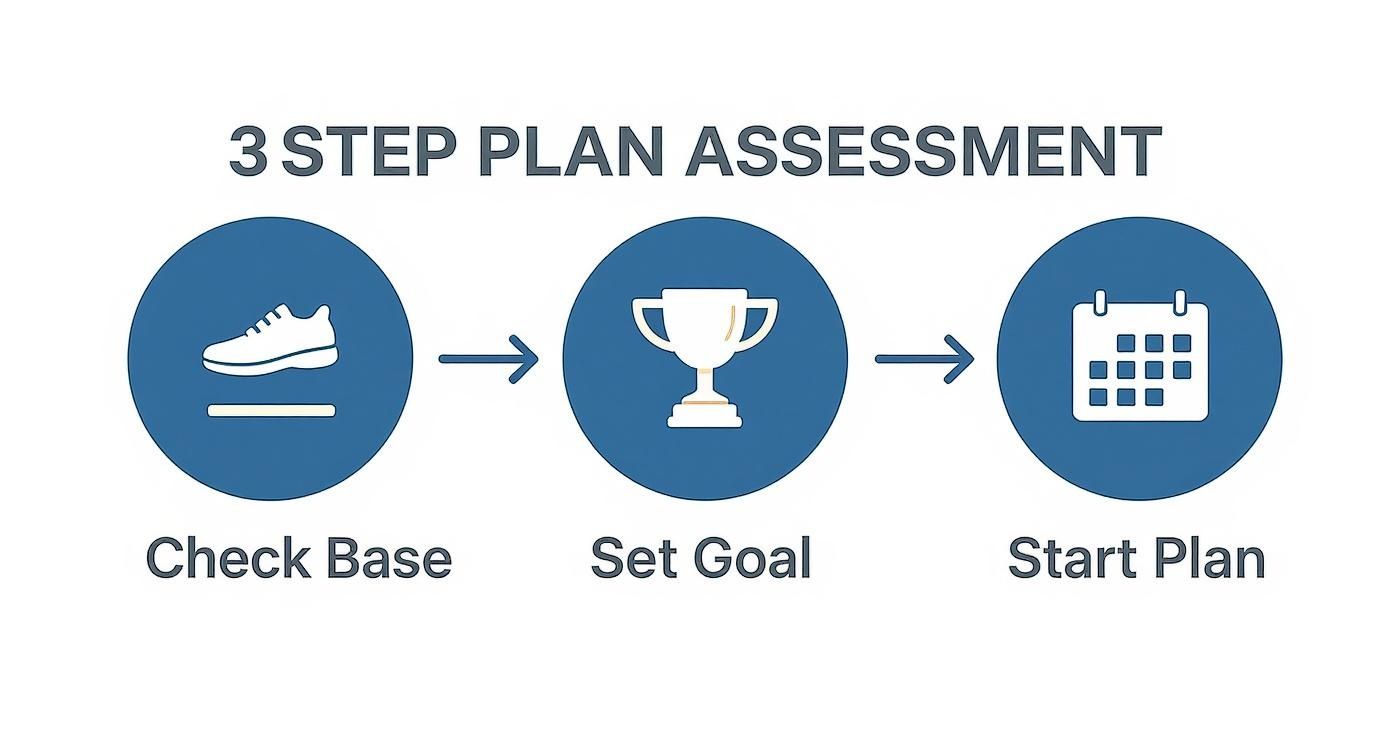
It’s a great reminder: before you dive in, know where you’re starting from. You also need to know where you want to go.
Week 1: Building the Foundation
The first week is all about getting into a rhythm. We’re focused on consistency. We’re also getting your body used to the weekly mileage without going too hard, too soon. Think of it as laying the concrete for the house we’re about to build.
- Monday: Rest or Cross-Train (30-40 minutes of easy cycling or swimming)
- Tuesday: Easy Run (3 miles at a conversational pace)
- Wednesday: Tempo Run (1-mile warm-up, 2 miles at tempo pace, 1-mile cool-down)
- Thursday: Easy Run (3 miles at a conversational pace)
- Friday: Rest
- Saturday: Long Slow Run (5 miles at an easy, conversational pace)
- Sunday: Active Recovery (A light walk or some gentle stretching)
That tempo pace should feel tough but manageable. It should not feel like an all-out sprint. A good rule of thumb is to find a speed you could hold for about an hour if needed. Don’t stress about hitting perfect numbers this week—just get a feel for the effort.
Your only goal for Week 1 is to finish it feeling strong, not wiped out. This sets you up for the bigger weeks to come. Resist the temptation to push the pace on your easy days!
This first week lets your body adapt. By Sunday, you should feel like you’ve put in good work. You should still be hungry for more.
Week 2: Increasing the Intensity
With one solid week in the bank, it’s time to turn up the dial. We’re going to add a little distance to your long run. We will also extend the tempo portion of your midweek workout. This is where you’ll really start to feel your fitness coming along.
- Monday: Rest or Cross-Train (30-40 minutes of moderate effort)
- Tuesday: Easy Run (3.5 miles at a conversational pace)
- Wednesday: Tempo Run (1-mile warm-up, 3 miles at tempo pace, 1-mile cool-down)
- Thursday: Easy Run (3.5 miles at a conversational pace)
- Friday: Rest
- Saturday: Long Slow Run (7 miles at an easy, conversational pace)
- Sunday: Active Recovery (Light walk or gentle stretching)
That 7-mile long run is a huge checkpoint, both mentally and physically. Use it as a chance to practice your race-day fueling. Test out those energy gels or chews now. Do not wait for the morning of the race.
It’s also important to have realistic expectations. A 2022 analysis of over a million half marathoners found key data. Runners who trained for only 4–8 weeks finished in the 2:15–2:45 range. In contrast, sub-2-hour finishers typically trained for 12–20 weeks. This shows a shorter plan is about finishing feeling good. It’s not about chasing a personal best. You can review the study on runner preparation times.
Week 3: Peak Week
Welcome to your biggest week of training. We’re going to push your limits. This will give you rock-solid confidence you’ll need to tackle 13.1 miles. The long run this week is the longest you’ll do before the race.
- Monday: Rest or Cross-Train (30 minutes of easy effort)
- Tuesday: Easy Run (4 miles at a conversational pace)
- Wednesday: Tempo Run (1-mile warm-up, 3.5 miles at tempo pace, 1-mile cool-down)
- Thursday: Easy Run (3 miles at a conversational pace)
- Friday: Rest
- Saturday: Long Slow Run (10 miles at an easy, conversational pace)
- Sunday: Active Recovery (Light walk or gentle stretching)
That 10-mile run is your dress rehearsal. Wear the shorts, shirt, and socks you plan to race in. Practice your nutrition strategy exactly as you plan to on the big day. The goal is to eliminate any and all surprises.
Once you get through this week, take a deep breath. The hardest work is officially behind you.
Week 4: Taper and Race
The final week is all about one thing: the taper. Tapering means cutting back your mileage. Your body can fully recover, repair, and store up energy for race day. It feels weird to run less right before a race. But trust me, it’s one of the most important parts of your training.
- Monday: Rest
- Tuesday: Easy Run (2 miles easy, with 4-5 short “strides” of 100 meters at race pace)
- Wednesday: Rest or very light cross-train (20 minutes easy)
- Thursday: Easy Run (1.5 miles, very easy pace)
- Friday: Complete Rest
- Saturday: Rest (Focus on hydrating and eating well)
- Sunday: RACE DAY! (13.1 miles)
Those short bursts of race-pace running on Tuesday are called strides. They are just to keep your legs feeling fresh and snappy without causing any fatigue.
You have to trust the taper. You aren’t losing fitness; you’re banking energy. Arriving at the starting line well-rested is infinitely better. It’s better than cramming in one last hard workout. Your four week half marathon training all comes down to this. Go enjoy the race you’ve worked so hard for.
Nailing Your Nutrition and Recovery
When you’re cramming half marathon training into just four weeks, what you eat is huge. Think of it this way: your runs are the work. Nutrition and recovery are how your body actually gets stronger. If you neglect this part, you’re putting cheap fuel in a finely-tuned engine. It just won’t perform.
The key is giving your body the right fuel at the right time. That means leaning heavily on carbohydrates for pure energy. It also means protein to rebuild your muscles after you break them down.

What to Eat Before You Run
Topping off your glycogen stores before a run is non-negotiable. This is the easily accessible energy your body will burn through first. About 60-90 minutes before you head out, grab a small, simple snack. It should be carb-focused.
A few reliable go-tos are:
- A banana with a spoonful of peanut butter
- A small bowl of oatmeal
- A slice of toast with a drizzle of honey
Steer clear of anything high in fat or fiber right before a run. Trust me, you don’t want digestive issues when you’re miles from home.
Refueling for Recovery
What you do after the run is just as critical. For about 30-60 minutes post-workout, your muscles are like sponges. They are ready to soak up nutrients and kickstart the repair process. This is your prime recovery window.
Your ideal post-run meal should hit a 3:1 carb-to-protein ratio. This combo is the magic formula for restocking your energy and giving your muscles the raw materials they need to rebuild.
A fruit smoothie with a scoop of protein powder is a classic choice. Another great option is grilled chicken with a sweet potato. If you want to get really dialed in, see a half marathon nutrition plan. It can give you a meal-by-meal structure.
Practice Your Race Day Fueling Strategy
Your weekly long run is your race day dress rehearsal. This is not just for your legs, but for your stomach. This is the time to test out energy gels, chews, and sports drinks. Find what works for you without causing any unpleasant surprises.
The golden rule: Nothing new on race day. Use the long runs in Weeks 2 and 3 to nail down your fueling plan. A good starting point is to take in one gel every 45-60 minutes. Always take it with a bit of water.
Don’t Forget Hydration and Electrolytes
Proper hydration starts days before your run, not hours. If you wait until you feel thirsty, you’re already behind.
For any run longer than an hour, water alone won’t cut it. You sweat out essential electrolytes like sodium and potassium. Losing too much can lead to cramps and a serious drop in performance.
Here’s how to stay on top of it:
- Sip Throughout the Day: Don’t just chug water right before you run. Drink small amounts consistently.
- Bring in Electrolytes: On your long runs, use a sports drink. Or, drop an electrolyte tablet in your water bottle.
- The Urine Test: Your urine should be a pale yellow color. If it’s dark, you need to drink more.
These principles are the bedrock of any solid endurance plan. Getting nutrition right is a huge piece of the puzzle for even bigger challenges. You can see this in a complete Ironman training plan.
Staying Healthy: Your Guide to Injury Prevention and Recovery
When you’re cramming a build-up into four weeks, your body is under stress. That makes smart recovery and proactive injury prevention your most important job. You can’t out-train a bad recovery plan. With only a month on the clock, there’s zero room for setbacks.
This accelerated schedule can be a fast track to common overuse injuries. Runners on a compressed timeline are often 30–50% more likely to run into issues. These include shin splints or IT band syndrome. Getting to the starting line healthy is the real win here.

Listen to Your Body
Your best tool for preventing injuries isn’t a fancy gadget—it’s your own intuition. You have to learn the difference between “good pain” and “bad pain.” One is normal muscle soreness from a hard workout. The other is a warning sign.
- Normal Fatigue: Think heavy legs or a general tiredness. This gets better with a day of rest. That’s your body adapting.
- Concerning Pain: This is the stuff you can’t ignore. It’s sharp, specific, or gets worse as you run. Pain that makes you change how you run is a major red flag.
If you feel that sharp, persistent pain, the answer is never to “push through it.” It’s always smarter to take an extra rest day. You can also swap a run for some time on a bike or in the pool.
Warm-Ups and Cool-Downs Are Not Optional
I know it’s tempting to skip the “boring” stuff. But blowing off your warm-up and cool-down is one of the quickest ways to get hurt. These short routines are critical for prepping your body. They also help it recover afterward.
Dynamic Warm-Up (Before Every Run)
Your goal here is to get the blood flowing. You want to wake up your running muscles. Do not do deep, static stretches on cold muscles. Spend 5-10 minutes on movements that mimic running.
- Leg Swings: Forward/back and side-to-side to open the hips.
- High Knees & Butt Kicks: These get the heart rate up. They also activate your hamstrings and hip flexors.
- Walking Lunges: A great way to engage your glutes, quads, and hamstrings all at once.
Static Stretching (After Every Run)
The cool-down is the time for those classic “hold” stretches. Your muscles are warm and pliable. Holding each stretch for 20-30 seconds will help release tension. It will also improve your flexibility over time. Focus on the big players: calves, quads, hamstrings, and hip flexors.
The Hidden Power of Strength Training
Many runners think that more running is the only thing that will make them better. But a strong body is a resilient body. Adding a little strength work is one of the best things you can do. It helps prevent injuries and can even help you run faster. This practical guide to strength training for runners is a fantastic resource.
You don’t need to live in the gym. Focus on simple exercises that build stability in your core, hips, and glutes. These are the foundation of good running form. Things like planks, glute bridges, and bodyweight squats make a massive difference. You only need to do them twice a week.
Don’t think of strength work as another chore. See it as building armor for your body. Just two 20-minute sessions a week can be a total game-changer for staying healthy.
Your Recovery Toolkit
The real magic of training happens during recovery. Beyond stretching, a few key habits and tools can speed up the process. They can also keep you feeling good.
- Foam Rolling: A runner’s best friend. Use a foam roller to work through tightness in your muscles. It’s like a deep-tissue massage you can do yourself. It helps break up knots and ease soreness.
- Sleep: This is your number one recovery tool. Aim for 7-9 hours a night. Sleep is when your body does most of its repair work. It releases hormones that are essential for rebuilding muscle.
- Fuel and Hydration: As we’ve covered, what you eat and drink is foundational. Getting in protein and carbs soon after a hard workout is crucial. It kickstarts the recovery process.
By making these recovery techniques a non-negotiable part of your routine, you’re giving yourself the best shot. You can finish this four-week plan healthy, strong, and excited for race day.
Executing Your Race Day Game Plan
All the hard work of your four week half marathon training is in the bank. Now, it’s about putting the pieces together on race day. A great race isn’t just about fitness. It’s about a smart game plan that starts the night before. It carries you all the way through the finish line.
The Night Before The Race
Your race day success really begins with a calm, organized evening. The last thing you want is to be scrambling or stressing. Stick to what you know. A simple, carb-focused dinner—think pasta or rice—is perfect. It tops off your energy stores without risking an upset stomach.
I always lay out my entire kit the night before. It’s a simple ritual that works wonders for pre-race nerves. It also makes the morning a breeze.
- Your full running kit: Get it all together—shirt, shorts, socks, and shoes.
- Race bib and safety pins: Pin your bib to your shirt right now. You don’t want to be fumbling with this in the morning.
- GPS watch: Plug it in and make sure it’s fully charged.
- Nutrition: Have your gels, chews, or whatever fuel you plan to carry ready.
- Extras: Put your anti-chafe balm and sunscreen with your gear.
Try to get to bed a little earlier than usual. You might be too amped up to sleep soundly, and that’s okay. Just resting your body in bed is still hugely beneficial.
Race Morning Routine
Give yourself plenty of time. Waking up at least two to three hours before the start is a good rule. This gives you a relaxed window to eat and let your breakfast digest. You can also deal with any last-minute things without feeling rushed. Your breakfast should be the exact same meal you’ve practiced with.
Plan to get to the race venue about 60-90 minutes before the start time. This might seem early, but it gives you a buffer. You can park, navigate the crowds, and wait in those long porta-potty lines. About 10-15 minutes before the gun goes off, start a light dynamic warm-up. This will wake up your muscles and get your head in the game.
Pacing Your Half Marathon
Here’s the single biggest mistake I see runners make: starting out way too fast. The adrenaline is pumping, and the crowd is electric. It’s easy to get swept up and run the first mile like it’s a 5K. Don’t do it.
Your goal for the first one or two miles is to feel like you’re holding back. It should feel almost too easy.
The secret to a strong half marathon is running the second half at the same pace or even slightly faster than the first. This is called a “negative split,” and it’s the sign of a perfectly executed race.
Mentally break the 13.1 miles into smaller pieces. Just focus on getting to the 5K mark, then the 10K, and so on. This makes the full distance feel much less overwhelming. Our guide on how to pace a half marathon breaks down specific strategies. And remember to grab a sip of water at the aid stations. Staying ahead of dehydration is key.
Post-Race Recovery
You did it! Crossing that finish line is an amazing feeling. Once you have your medal, resist the urge to immediately sit down. Instead, keep walking for a good 10-15 minutes. This helps your body cool down gradually. It can also prevent your muscles from tightening up.
Within 30-60 minutes of finishing, it’s time to start recovery. Your body is screaming for fuel. Find a snack that has a mix of carbs and protein. Most races have things like bananas or chocolate milk at the finish line. Grab something, keep sipping on water, and go celebrate. You earned it.
Your Questions, Answered
Jumping into a four week half marathon training plan is a bold move. It’s totally normal to have questions pop up. It’s an aggressive timeline, after all. Let’s tackle some of the most common things runners ask. This will help you can train with confidence.
What Should I Do If I Miss a Training Run?
First off, don’t panic. Trying to cram two workouts into one day to “catch up” is a classic mistake. It often leads to injury or burnout. It’s just not worth it. The best way to handle a missed run depends on which run you missed.
- Missed an easy run? Honestly, just let it go. Move on and stick to the schedule. These runs are helpful, but one missed session won’t tank your race.
- Missed a long run? This one is a bit more critical. The best-case scenario is to shift your schedule slightly. Maybe do the long run on Sunday and take your rest day on Monday. The one non-negotiable? Never skip your final rest day before the race. Remember, consistency is way more important than perfection.
Can a Beginner Really Use This Four Week Plan?
I’ve got to be direct here: this plan is not for someone starting from zero. It’s designed for runners who already have a solid base. We’re talking a consistent 15-25 miles per week for at least a few months.
For a true beginner, diving into this compressed timeline is a recipe for injury. Your body simply needs more time to adapt.
If you’re brand new to running, a 12 to 16-week training plan is a much safer and smarter way to go. It gives your muscles, tendons, and bones the time they need to build up, setting you up for a long and healthy running journey.
What Kind of Cross-Training Is Best?
On an aggressive schedule like this, cross-training is your best friend. The goal is to choose low-impact activities. These should boost your aerobic fitness without the extra pounding of another run. It’s your secret weapon for building strength while preventing burnout.
A few of my favorites include:
- Swimming: It’s a fantastic full-body workout with absolutely zero impact on your joints.
- Cycling: Great for building that cardiovascular engine. This is true on a stationary bike or on the road.
- Strength Training: Don’t neglect this! Focus on your core and glutes with exercises like planks and bridges. A strong core is the bedrock of good running form.
At RunDreamAchieve, we live and breathe this stuff. We build expert-led training plans and offer coaching to help runners hit their goals. We help you finish a first race or chase down a new personal best. Be sure to check out our other resources to help set you up for success.


