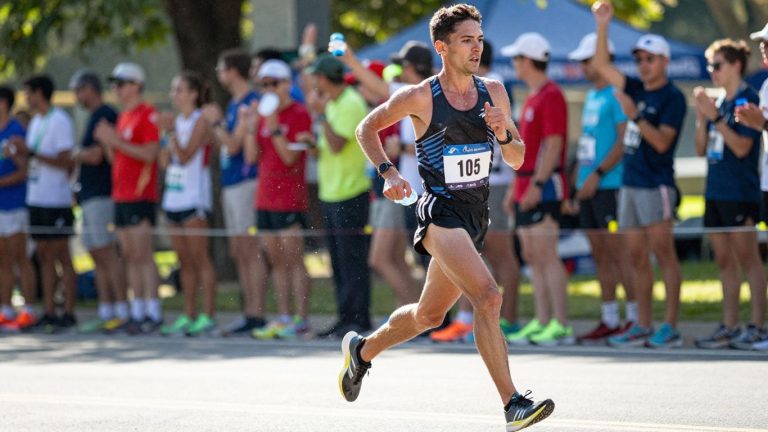
What is the Fastest 2 Mile Run
Wondering what is the fastest 2 mile run ever run? If so, then welcome to RunDreamAchieve. It is awesome that you have arrived here to my site. My hope is that these running tips in this post and the fitness resources located here will be what you were looking for.
Be sure to subscribe to the RunDreamAchieve YouTube channel. My focus there is on making new videos there weekly to help runners like you surpass your training and racing goals.
Thinking about the fastest 2 mile run might bring to mind those incredible athletes who seem to float across the track. It’s a distance with a long history, even if it’s not run as often as some other races these days. I will be looking at who’s run it the quickest, what that pace even looks like, and what goes into making a record-breaking run happen. It’s pretty wild to see how fast humans can actually go over two miles.
Fastest 2 Mile Run Post Takeaways
- The current men’s world best for the 2-mile run is 7:54.10, set by Jakob Ingebrigtsen in 2023.
- Meseret Defar holds the women’s world best at 8:58.58, achieved in 2007.
- The 2-mile distance, while historic, is less common now, often replaced by 3000m or 5000m races.
- To achieve the fastest 2 mile run, athletes maintain a pace that’s just under four minutes per mile.
- Factors like track surface, the competition’s speed, and an athlete’s personal strategy play a big role in setting new records.
Ready to set your next two-mile personal record? Check out our extensive 2 mile training guides.
Understanding The Fastest 2 Mile Run

The Two-Mile Distance in Athletics
The two-mile run, while not as common as some other track distances today, holds a special place in running history. It’s a test of both speed and endurance, sitting in that interesting middle ground between shorter sprints and longer distance events.
Think of it as a challenging middle-distance race that really pushes an athlete’s limits. It’s about maintaining a high pace for a sustained period, which requires a specific kind of training and mental toughness. Unlike the mile, which is often about pure speed, or the 5k, which leans more towards endurance, the two-mile demands a blend of both. This unique balance makes it a fascinating event to watch and a tough one to master.
Historical Significance of the Two-Mile
This distance has roots going way back, especially in the United States and the United Kingdom. It was a standard event for a long time, and its history is tied to the development of track and field itself.
While newer, metric distances like the 3000 meters and 5000 meters have become more standard in international competition, the two-mile persists in certain invitational meets. It’s a nod to the past, a way to honor the traditions of the sport. Seeing athletes compete over this distance connects us to the generations of runners who came before.
Evolution of Middle-Distance Events
Middle-distance running has changed a lot over the years. Events have shifted, and what was once a premier distance might now be less common. The two-mile is a good example of this evolution. It’s been largely replaced by the 3000m and 5000m in major championships.
In high school in the US, the 3200m is now the standard. This shift reflects a global move towards metric measurements and a standardization of events. However, the spirit of the two-mile – that test of sustained speed – lives on in these other distances, and its legacy continues to influence how we think about middle-distance running.
Current World Records for the 2 Mile
The two-mile run, while not as common as some other track distances, has seen some incredible performances. Because it’s not a standard Olympic event, World Athletics officially recognizes these times as ‘world bests’ rather than world records. Still, these marks represent the absolute pinnacle of human speed over this specific distance.
Men’s World Best Performance
The current men’s world best for the two-mile run is an astonishing 7:54.10, set by Norway’s Jakob Ingebrigtsen on June 9, 2023, at the Meeting de Paris. This performance was particularly remarkable as it broke a record that had stood for 26 years. It means Ingebrigtsen averaged just under a 3:57 mile pace for the entire distance – truly mind-boggling stuff.
Women’s World Best Performance
On the women’s side, the world best belongs to Ethiopia’s Meseret Defar. She achieved her incredible time of 8:58.58 back on September 14, 2007, in Brussels. This mark has stood the test of time, showcasing Defar’s exceptional talent and endurance.
Indoor vs. Outdoor Records
It’s worth noting that the official world bests mentioned above are for outdoor performances. Indoor tracks, often being shorter and with banked turns, can sometimes lead to different record-setting conditions.
While World Athletics doesn’t maintain separate official ‘world bests’ for indoor two-mile runs in the same way, there are recognized top performances.
For instance, Josh Kerr of Great Britain holds an impressive indoor mark of 8:00.67 from 2024, showing the continued pursuit of speed even when racing indoors. Similarly, Genzebe Dibaba of Ethiopia ran 9:00.48 indoors in 2014, a time very close to Defar’s outdoor best.
Here’s a quick look at the top outdoor marks:
| Athlete | Nation | Time |
|---|---|---|
| Jakob Ingebrigtsen | Norway | 7:54.10 |
| Daniel Komen | Kenya | 7:58.61 |
| Joshua Cheptegei | Uganda | 8:08.19 |
| Athlete | Nation | Time |
|---|---|---|
| Meseret Defar | Ethiopia | 8:58.58 |
| Hellen Onsando | Kenya | 9:02.49 |
| Sifan Hassan | Netherlands | 9:02.59 |
Notable Performances in the 2 Mile
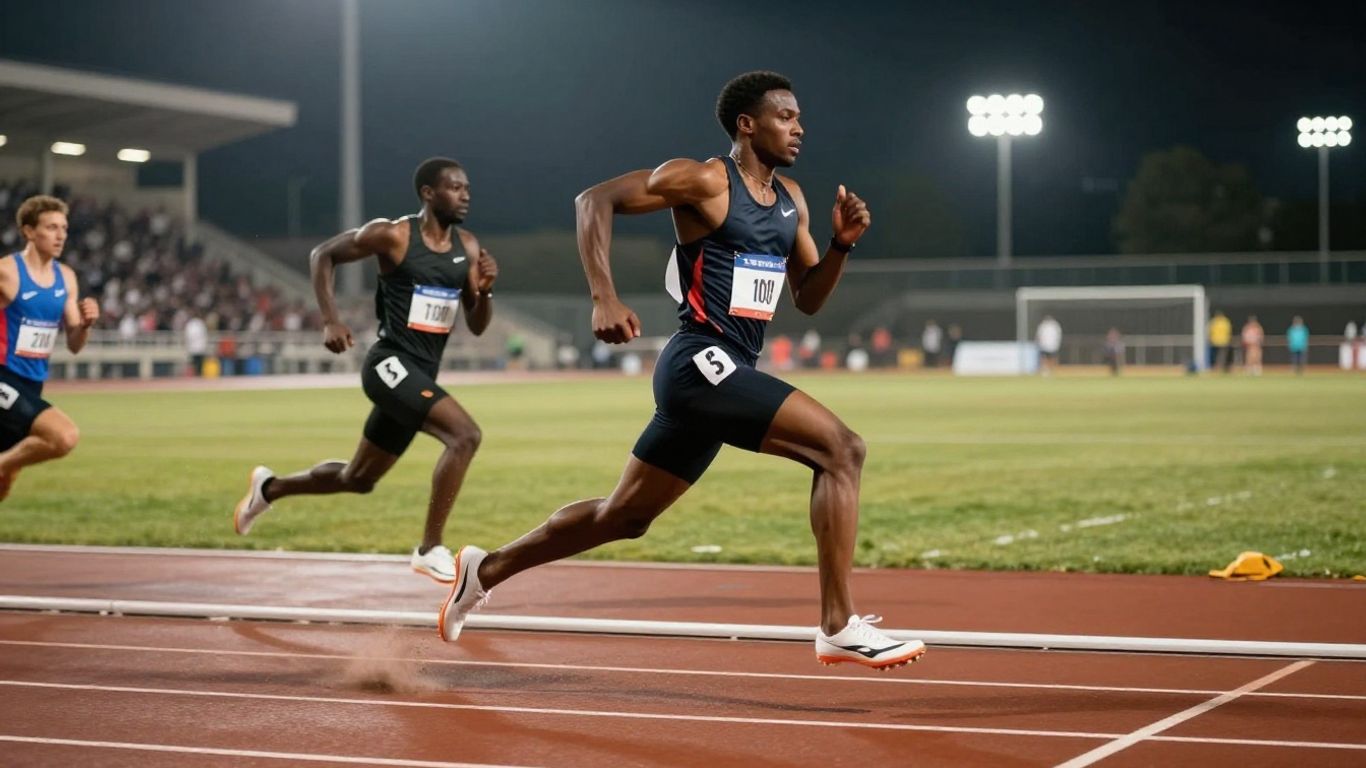
Jakob Ingebrigtsen’s Record-Breaking Run
In the world of track and field, some performances just stand out. Jakob Ingebrigtsen’s run to break the two-mile world best is definitely one of those moments. On June 9, 2023, at the Paris Diamond League meet, the Norwegian phenom clocked in at an incredible 7:54.10. This wasn’t just a small improvement; it shattered the previous mark. This performance means he ran two miles at a pace just under 3:57 per mile, back-to-back. It’s a testament to his incredible talent and training.
Daniel Komen’s Previous World Best
Before Ingebrigtsen’s historic run, the name Daniel Komen was synonymous with fast two-mile times. The Kenyan runner set a world best of 7:58.61 back in 1997.
For over two decades, this time stood as the benchmark. It’s important to note that because the two-mile isn’t a standard Olympic distance, official world records aren’t kept by World Athletics; instead, these are recognized as ‘world bests’. Komen’s performance was so dominant for its time that it remained unbeaten for a very long period.
Meseret Defar’s Dominance
On the women’s side, Meseret Defar has made her mark on the two-mile distance. The Ethiopian runner holds the women’s world best with a time of 8:58.58, set in Brussels on September 14, 2007. This was a significant achievement, showcasing her speed and endurance. Defar has a history of setting records in middle-distance events, and her two-mile performance is a shining example of her capabilities on the track.
Here’s a look at some top performances:
| Athlete | Nationality | Time |
|---|---|---|
| Jakob Ingebrigtsen | Norway | 7:54.10 |
| Daniel Komen | Kenya | 7:58.61 |
| Meseret Defar | Ethiopia | 8:58.58 |
The two-mile, while not as common as the 1500m or 5000m in major championships, continues to produce some truly astonishing times. Athletes who excel at this distance often possess a unique blend of speed and stamina, pushing the limits of human performance.
The Fastest 2 Mile Run Pace
Sub-Four-Minute Mile Pace
Running two miles is a serious test of endurance and speed, and when we talk about the fastest times, we’re often looking at paces that seem almost superhuman. The key to understanding these incredible performances lies in the concept of the sub-four-minute mile.
For decades, breaking the four-minute barrier in a single mile was a huge deal. Now, elite athletes are not just running one sub-four-minute mile, but two of them back-to-back to set the two-mile record. Jakob Ingebrigtsen’s world best of 7:54.10 means he averaged just under 3:57 per mile. That’s an astonishing speed to maintain for that duration.
Average Speed Over Two Miles
When you break down the top performances, the average speed is mind-boggling. For men, the current world best pace translates to roughly 13.4 miles per hour. For women, the record pace is still incredibly fast, averaging around 12.5 miles per hour. It’s not just about sprinting; it’s about sustaining a very high level of speed for an extended period.
Implications of Record Times
These record times tell us a lot about human potential and the evolution of training and racing strategies. They push the boundaries of what we thought was possible.
When an athlete like Ingebrigtsen shatters a long-standing record, it often inspires others and can lead to a new wave of athletes aiming for similar feats. It also highlights how important pacing is in these longer sprint events. Getting the rhythm right from the start is key to finishing strong and achieving those record-breaking times.
Here’s a look at how the top times translate:
| Athlete | Time | Average Pace per Mile |
|---|---|---|
| Jakob Ingebrigtsen | 7:54.10 | ~3:57 |
| Daniel Komen | 7:58.61 | ~3:59 |
| Meseret Defar | 8:58.58 | ~4:29 |
The two-mile race, while not as common as the 1500m or 5000m in major championships, offers a unique challenge. It demands a blend of speed and stamina that few can master. The athletes who excel here are often those who can maintain an incredibly fast pace without faltering, pushing the limits of human endurance.
Progression of Top 2 Mile Times
Looking at how fast people have run the two-mile distance over the years really shows how much the sport has changed. It’s not an everyday event like the mile or the 5k, but it has a cool history. We’ve seen some incredible leaps in performance, especially when you look at the top times.
Men’s All-Time Top Performances
The men’s two-mile has seen some truly mind-blowing runs. For a long time, the mark to beat was incredibly tough. Jakob Ingebrigtsen’s current world best of 7:54.10, set in Paris on June 9, 2023, is a testament to modern training and talent. Before him, Daniel Komen held a previous world best that stood for a long time. It’s amazing to think about running that distance in under 8 minutes, which means averaging a pace just shy of a four-minute mile for both miles.
Here’s a look at some of the top performances:
| Time | Athlete | Nationality | Date | Location |
|---|---|---|---|---|
| 7:54.10 | Jakob Ingebrigtsen | NOR | 2023-06-09 | Paris, France |
| 7:58.61 | Daniel Komen | KEN | 1997-09-20 | Rieti, Italy |
| 8:00.67 | Josh Kerr | GBR | 2024-02-11 | New York, USA |
| 8:03.40 | Mo Farah | GBR | 2015-02-21 | Birmingham, UK |
| 8:04.35 | Kenenisa Bekele | ETH | 2008-02-16 | Birmingham, UK |
Women’s All-Time Top Performances
On the women’s side, the progression has also been remarkable. Meseret Defar has been a dominant force, holding the world best for a significant period. Her time of 8:58.58, achieved in Brussels on September 14, 2007, is a benchmark that many aspire to. It’s fascinating to see how these athletes push the boundaries of what’s considered possible in middle-distance running. You can find more details on these incredible achievements at Meseret Defar’s record.
The two-mile distance, while not as common as the 3000m or 5000m in major championships today, holds a special place in athletics history. Its progression reflects advancements in training, nutrition, and sheer human determination.
US High School Boys’ Records
Looking back at US high school records for the two-mile gives us a glimpse into the early days of serious middle-distance running for young athletes. These times, often set decades ago, were groundbreaking for their era. Figures like Gerry Lindgren and Steve Prefontaine set marks that were incredibly fast for high schoolers at the time. It’s important to note that the history of this event for high school girls is more recent, largely due to changes in athletic opportunities over time.
Some notable US high school performances include:
- Gerry Lindgren: 8:40.0 h (indoor)
- Steve Prefontaine: 8:41.5 h
- Lukas Verzbicas: 8:29.46
These times show the dedication and talent that has always been present in high school track and field.
Factors Influencing 2 Mile Race Records
Track Surface and Conditions
Ever wonder why some races feel faster than others, even with the same athletes? A big part of it comes down to the track itself. Older cinder tracks, for example, can be a bit softer and absorb more energy with each stride. Modern synthetic tracks, on the other hand, are designed to be springy, giving runners a bit more bounce and speed. Think of it like running on a trampoline versus running on sand – there’s a noticeable difference!
Weather plays a huge role too. A calm, cool day is ideal. Wind can be a real killer for speed, especially if it’s a headwind. Even humidity can make things tougher, making it harder for the body to cool down. So, when you see a record broken, it’s often on a day with near-perfect conditions.
Competition Level and Pacing
It’s not just about the runner; it’s about who they’re running against. A race with a deep field of talented athletes often pushes everyone to run faster. When you have multiple runners capable of winning, they tend to set a strong, consistent pace from the start, which helps break records. It’s like a snowball effect – one fast runner can pull others along.
Pacemakers, or ‘rabbits’ as they’re sometimes called, are also super important, especially in longer races like the two-mile. These runners aren’t usually competing to win; their job is to set a fast, even pace for the main contenders for a certain number of laps. This takes the mental burden off the lead runners, allowing them to focus purely on maintaining speed. Without good pacing, it’s easy for athletes to go out too fast and burn out, or too slow and not hit their potential.
The two-mile is a bit of an odd distance these days, not as common as the 3000m or 5000m. This means that sometimes, when a record is attempted, there might not be a dedicated group of pacemakers, or the competition might not be as deep as in a more standard event. This can make breaking a record even more challenging, requiring an athlete to be incredibly self-motivated and perfectly execute their own race plan.
Athlete Training and Strategy
Of course, the athlete’s preparation is paramount. Years of dedicated training, focusing on speed, endurance, and strength, are what build the foundation for a record-breaking performance. This includes everything from interval training on the track to strength work in the gym and proper recovery.
Race strategy is also key. Does the athlete plan to go out hard and try to hold on, or hang back and kick in the final laps? This depends on their strengths and how they anticipate the race unfolding. Sometimes, a runner might have a specific goal time in mind and adjust their strategy based on the pacemakers and competitors. It’s a delicate balance of pushing limits while managing energy reserves effectively.
Wrapping Up the Two-Mile Dash
The two-mile run might not be as common as some other races, but it’s got some serious history and some incredibly fast times attached to it. Jakob Ingebrigtsen’s current world best is just mind-blowing, showing what humans are capable of when they push the limits.
Whether you’re a runner aiming for a personal best or just someone who enjoys watching athletes perform at their peak, the two-mile distance offers a fascinating glimpse into speed and endurance. It’s a race that proves even less-talked-about events can produce truly spectacular moments.
Frequently Asked Questions
What is the two-mile run?
The two-mile run is a race where athletes run a distance of two miles on a track. It’s a bit longer than a mile but shorter than many other common track races like the 5,000 meters. While not as common as it used to be, it’s still a historic race that pops up in special events.
Who holds the current world record for the fastest two-mile run?
The current fastest time for the two-mile run is held by Jakob Ingebrigtsen from Norway. He set this record in 2023 with an amazing time of 7 minutes and 54.10 seconds.
Has anyone else run the two-mile race very fast?
Yes! Before Jakob Ingebrigtsen, Daniel Komen from Kenya held a very fast time. Both Ingebrigtsen and Komen are the only runners to have finished the two-mile race in under 8 minutes. This means they ran each mile in under 4 minutes, which is incredibly fast!
Is the two-mile run an official world record event?
Actually, the two-mile run isn’t an official world record event anymore. Instead, the fastest times are called ‘world best performances.’ This is because the main international athletics group has focused on standard distances like the 3,000 and 5,000 meters.
What is the pace like for a record-breaking two-mile run?
To run a two-mile race in a record time, athletes need to maintain a super-fast pace. For example, Jakob Ingebrigtsen’s record pace is just under 3 minutes and 57 seconds per mile. Imagine running two miles that quickly – it’s like running two races faster than most people can run just one mile!
Are there different records for indoor and outdoor two-mile runs?
Yes, there can be. Sometimes, races are run indoors on a track, and other times they are held outdoors. The conditions can be a bit different, and athletes might achieve slightly different times. For instance, there are separate ‘world best’ times recorded for indoor performances.
Ready to level up your training and racing? Check out our extensive 2 mile training tips.