

Eugene Marathon Results Guide
Race morning in Eugene, Oregon, brings packed starting corrals, cool air, and the steady buzz of runners chasing a goal. Once the finish line is behind you, though, finding your official time can feel less straightforward than the race itself.
When runners search for Eugene marathon results, they usually want more than a finishing time. They may be looking for an athlete’s official result, gun and chip times, pace, course splits, overall ranking, or age-group placement. This guide focuses mainly on the Eugene Marathon and its official result records, while also noting that Eugene hosts other running events with separate results pages.
You’ll find practical guidance for locating a runner, reading finish-time details, understanding split data, and checking how a performance compares with other finishers. You can also use past Eugene Marathon results to study pacing and shape a smarter plan for your next race. Start by learning where the official records are published and how to search them accurately.
Remember, make sure to book your Eugene marathon hotels early to save on prices.
Build Your Running Performance System
Move from research to action with training, recovery, nutrition, pacing, and performance tools built for runners.
More Guides for This Runner Goal
Key Takeaways
- Find official Eugene marathon results through the Eugene Marathon results page, which includes marathon, half marathon, and 5K records.
- Search by runner name or bib number to locate official finish times quickly.
- Compare gun time, chip time, pace, course splits, overall rank, and age-group placement.
- Use split data to spot pacing changes, especially late-race slowdowns that can shape future training.
- Check the correct event and race year, since Eugene hosts multiple races with separate result records.
Where to Find the Latest Eugene Oregon Marathon Results
The fastest place to check Eugene Oregon marathon results is the official Eugene Marathon results page. Start there before using search engines, third-party race databases, or social media posts. The event website is the best source for the correct race year, distance, result status, and updated files.
Race organizers may also link to a timing partner or registration platform, such as the Eugene results portal. Event social accounts sometimes share those links after the race. Still, use the official event page as your starting point, then check the page’s publication date and last-update notice before sharing a result.
How to Search for a Runner by Name or Bib Number
Select the correct race year first. Eugene events can include a full marathon, half marathon, 5K, and other distances, so choose the marathon category before searching. Then use the lookup field with the runner’s exact name or bib number.
A practical search process looks like this:
- Open the official results page and choose the race year.
- Select the full marathon rather than the half marathon or 5K.
- Search by bib number when you have it, since this usually produces the cleanest match.
- If you search by name, try the runner’s last name first, then add the first name.
- Review the finish time, pace, splits, overall place, and age-group ranking.
Name searches can miss runners when records use a shortened first name, middle initial, nickname, or different spelling. Try variations such as “Michael” and “Mike,” or search without the middle initial. Common names may return several athletes, so compare the bib number, age group, hometown, or finish time before choosing a record.
Privacy settings can also limit the information displayed. In addition, timing records may take time to appear if a runner’s chip did not register at a mat or if the timing team is still uploading data.
Official, Unofficial, and Updated Results Explained
Preliminary or live results show early timing data while runners continue to finish. Unofficial results are more complete, but the race team may still review course records, duplicate entries, missing timing chips, or possible disqualifications.
After those checks, the organizer publishes official results. Rankings can change if officials correct an age-group detail, remove a duplicate timing record, review course cutting, or disqualify a runner. Therefore, use the final official file when you need a race record, qualifying claim, or accurate performance history.
A result shown on race day is a useful snapshot, but the final official file is the record to trust.
How to Read Eugene Marathon Finish Times and Placements
Eugene Oregon marathon results usually show more than one time and several types of rankings. Read each field together rather than judging the race from one number. Your chip time may measure your personal performance best, while your gun time may matter for awards or qualifying rules.
Gun Time Versus Chip Time at the Finish
Gun time starts when the race officially begins. It matches the finish-line clock, so runners in a crowded starting area may cross the start several minutes after the race has started. Chip time, also called net time, starts when your timing chip crosses the starting mat and ends when you cross the finish mat.
That difference explains why the finish clock can show a slower time than your personal result. For example, if the gun sounds at 7:00 a.m. but you reach the start mat at 7:04, a 3:55 finish may produce a 3:59 gun time and a 3:55 chip time.
For personal performance, training review, and pace analysis, chip time is usually the more useful measure. However, race organizers may use gun time for overall awards, especially for the first finishers. Qualifying standards can also specify which time counts. Check the event’s published rules before treating either result as official for an award or standard. This gun-time and chip-time explanation provides a helpful timing overview.
Overall, Gender, and Age-Group Rankings
Your overall place shows where you finished among all runners in that race distance. Gender place compares you with runners listed in the same gender category, while age-group place compares you with runners in your assigned bracket, such as 35-39 or 50-54.
Those numbers can differ sharply because each category has a different field size and level of competition. A runner might finish 420th overall, 275th in their gender category, and 18th in an age group with 96 competitors. Ties may receive the same place or follow the timing company’s ranking rules.
Age-group awards depend on the event’s policies, including whether officials use gun time or chip time and how ties are resolved. Placement also reflects that year’s field, so it isn’t a fixed measure of ability. Compare your time, pace, and splits across races before comparing rank.
What a Missing or Abandoned Result May Mean
Common status labels include:
- DNF means “did not finish.”
- DNS means “did not start.”
- DSQ means “disqualified.”
- Missing split means a timing mat did not record one checkpoint.
- No result means the system has no complete published record.
A missing result doesn’t always prove that a runner failed to finish. A damaged chip, missed mat, spelling error, delayed upload, or timing review can leave a record incomplete.
First, check the timing company’s help page and the final results file. Then contact race support with the runner’s full name, bib number, distance, and approximate finish time. Keep a photo of the bib or finish clock if you need to support a correction request.
What Eugene Marathon Results Reveal About the Race
Eugene Oregon marathon results tell more than who finished first. They show how weather, course design, field size, and pacing shaped the race for everyone from the leaders to the final finishers.
How Weather and Course Conditions Shape Finish Times
Temperature and humidity affect how efficiently your body releases heat. Wind adds resistance, especially on exposed sections, while rain can leave pavement slick and make clothing heavier. Shade may offer relief on a warm day, but a cool headwind can still slow runners even when the course looks flat.
Hills are an obvious challenge, yet turns and pavement also influence rhythm. Frequent corners interrupt momentum, rough surfaces demand more from the legs, and late-race fatigue can make a gentle incline feel severe. As a result, a flat-looking course can still produce slower times when runners face heat, wind, poor footing, or accumulated fatigue after 20 miles.
Before judging a performance, compare race-day conditions with results from other years. Check the start-time temperature, humidity, wind direction, rainfall, and cloud cover when those details are available. A slower winning time may reflect difficult conditions rather than a weaker field, while a fast result may have benefited from cool air and calm roads.
A finish time has context. Weather and course conditions can move the entire results list, not just one runner.
Using Results to Compare Years Without Misleading Yourself
Year-to-year comparisons only work when the races match. Confirm the distance, course layout, start location, timing rules, and result status before comparing times. A route change, relocated timing mat, altered start procedure, or different weather pattern can make two apparently similar races difficult to measure directly.
Use more than finishing place. Track each year’s:
- Winning time and pace.
- Median or middle-of-the-field time.
- Number of finishers.
- Your own time, pace, and split pattern.
- Percentile or position within the field.
- Time gap between leaders and later finishers.
The median often describes the typical race better than the winner’s time. Finisher counts also matter because a larger or deeper field can change rankings without changing your performance. Review official archives first, then use the event’s timing provider, such as an official race results portal, when the organizer directs runners there.
A simple comparison table can keep the analysis honest:
| Year | Winning time | Median time | Finishers | Your time | Field position |
|---|---|---|---|---|---|
| [Verify year] | [Verify] | [Verify] | [Verify] | [Verify] | [Verify] |
For a fictional example, a runner who finishes faster but places lower may have faced a stronger field. Compare the pace and splits first, then use placement to add context rather than define the entire performance.
Choose Your Distance, Duration and Goal Time
Make three quick selections and open the exact plan built for your race target.
Looking for a Fully Personalized Training Plan?
The training plans above are an excellent choice if they match your goal. However, if you’d rather train with a plan built specifically around your current fitness, goal race, preferred training days, weekly mileage, and target finish time, our RDA Custom Training Plans provide a personalized solution. We also have running courses available for runners seeking to run faster from the mile to the marathon.
Why Choose a Custom Training Plan?
| Standard Training Plan | RDA Custom Training Plan |
|---|---|
| Follows a fixed schedule | Built around your schedule |
| Standard weekly mileage | Peak mileage customized for you |
| Fixed workout days | Train on the days you choose |
| Same structure for everyone | Designed around your current fitness |
| Static plan | Updated as your fitness improves |
| One-time purchase | Ongoing personalized coaching and support |
What You’ll Receive
- A training plan built specifically for your goal
- Personalized training paces
- Long runs, tempo runs, threshold workouts, interval sessions, recovery runs, and easy runs
- Peak weekly mileage matched to your experience level
- Flexible training schedule that fits your life
- Ongoing plan adjustments as your fitness improves
Ready to Train Smarter?
Stop guessing and start following a plan built specifically for you, your schedule, and your racing goals.
Eugene Marathon Winners, Course Records, and Notable Performances
Eugene Oregon marathon results can reveal much more than one fast finish. They show the winning time, podium gap, depth of the field, and performances that deserve attention. However, a single-year winner is not automatically the course-record holder. Those claims require separate checks.
How to Verify a Winner or Course Record
Begin with the official Eugene Marathon results archive. Choose the correct year and distance, then confirm the overall winner, podium finishers, official times, and division labels. Save the final results file or page because live and preliminary standings can change after timing reviews.
A reliable course-record claim should include:
- The final official results file for the relevant race year.
- The event’s published course-record page or archive.
- The timing provider that recorded the finish and split data.
- The race rules, including timing, eligibility, and award policies.
- Confirmation that the runner completed the approved course.
An overall result list may show the fastest performance from one race, but it doesn’t always prove a course record. The route may have changed, the start or finish may have moved, or the organizer may recognize separate records for men, women, masters, wheelchair, or other divisions. Weather and field strength add useful context, but they don’t replace the event’s record rules.
For example, the official page currently identifies separate men’s and women’s marathon course records. Treat those listings as the record reference, then compare them with the year’s complete results before naming an athlete or time in your article. The Eugene Marathon FAQ can also help clarify bib tags, timing procedures, and race-day operations.
Why Elite Results and Everyday Runner Results Tell Different Stories
Front-of-pack runners race for position, awards, and seconds. Their results show how quickly a highly trained athlete can cover the course under competitive conditions. A close podium battle may also reveal more than the winner’s time, especially when the top finishers stay together late into the race.
Most readers need a broader frame. Median finish time, age-group placement, percentile, personal best, and split pattern often say more about an everyday runner’s performance than overall rank. A first-time marathoner who finishes steadily has achieved something different from an elite athlete chasing a course record, yet both efforts deserve accurate recognition.
When presenting a notable performance, use a consistent format:
Year | Division | Athlete | Official time | Source
Separate the overall winner from masters, wheelchair, and other recognized divisions when the event publishes those categories. Finally, verify names and times against the final official archive before reporting results from the current race year.
Use Your Eugene Marathon Results to Improve Your Next Race
Your Eugene Oregon marathon results can become a training review, not just a finishing-time record. Save the official time, calculate your average pace, study the splits, and compare your race plan with what actually happened.
Read Your Splits Before You Judge the Final Time
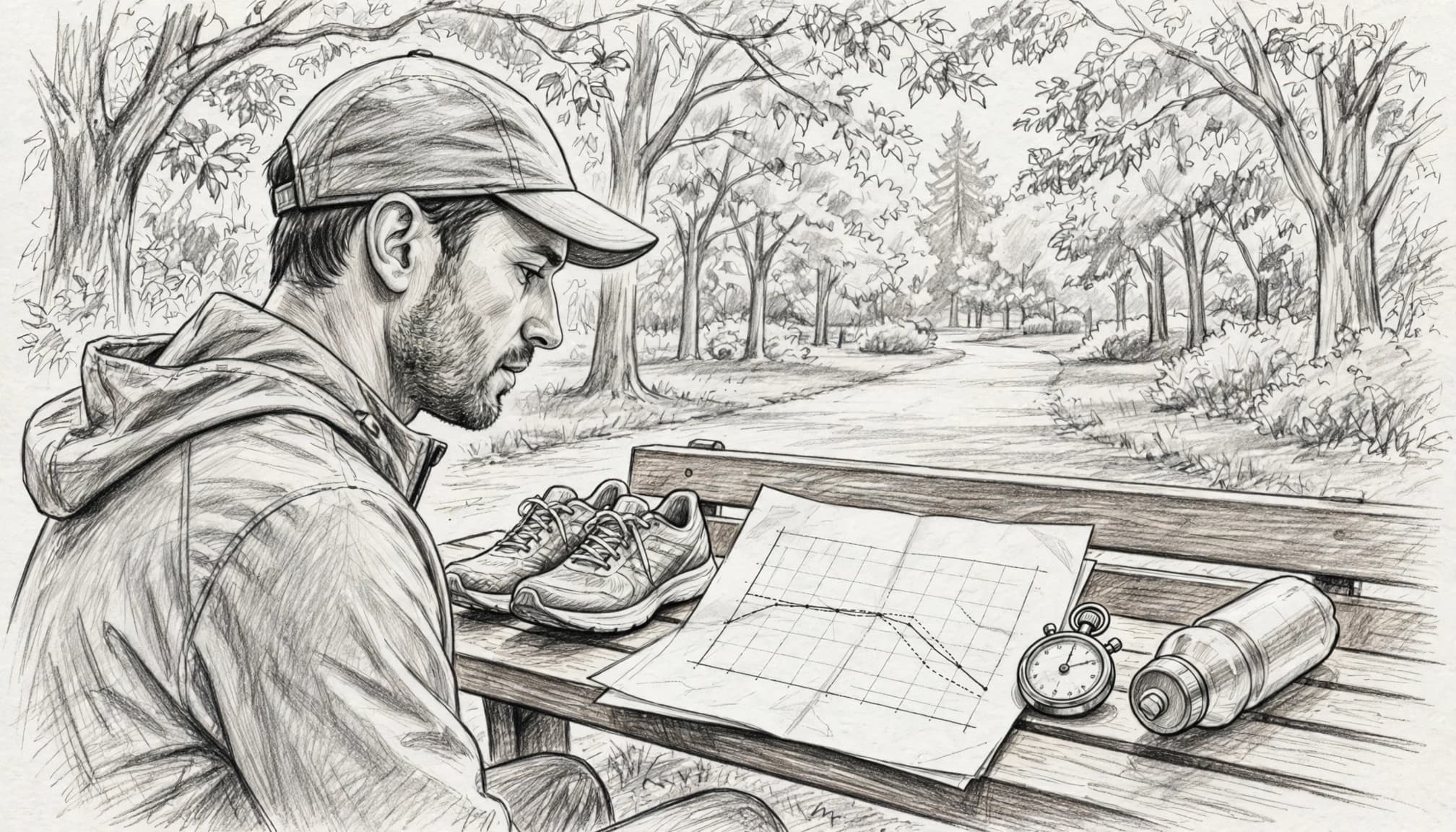
Two runners can finish in 4:00:00 yet experience completely different races. One may run even splits near 9:09 per mile, while another starts faster, fades late, and loses several minutes after mile 20.
Calculate average pace by dividing your chip time by 26.2 miles. Then compare that average with your halfway split, each available course split, and your pace during the final 10K. Look for a pattern rather than blaming one difficult mile.
- Even pacing often shows controlled effort and a sound race plan.
- Positive splits mean the second half was slower than the first, often because of early surges, excessive starting pace, heat, or depleted energy.
- Negative splits mean you finished faster than you started, which may show strong restraint or leave room for a more ambitious goal.
- A sharp late slowdown can point to pacing, fueling, hydration, muscular endurance, or mental fatigue.
A single slow mile may reflect congestion, a hill, or a missed timing mat. Several slower miles in a row offer better evidence.
Connect Results With Training, Fueling, and Recovery
Suppose a fictional runner finishes in 4:05 after holding goal pace through mile 20, then slows sharply over the final 10K. The next step isn’t to rewrite the entire training plan. First, that runner should review weekly mileage, long-run duration, marathon-pace sessions, carbohydrate intake, hydration, sleep, strength work, and recovery between hard workouts.
Research on marathon training volume and long runs supports reviewing endurance preparation alongside race pace. Long runs also provide a safe setting to practice the fueling and hydration plan recommended by University of Utah Health.
Change only one or two controllable habits at a time. For example, extend selected long runs gradually, add marathon-pace work late in a run, or practice taking carbohydrates before fatigue becomes severe. If sleep was poor or recovery was rushed, correct that before adding more intensity. One race can reveal a pattern, but it can’t diagnose every cause.
Set a Smarter Goal From Your Eugene Race Data
Use verified race data, recent workouts, course conditions, and your current training before choosing a goal. An elite winning pace may inspire you, but it says little about your own sustainable effort.
Set three targets:
- An ambitious goal that requires strong conditions and excellent execution.
- A realistic goal supported by recent long runs and marathon-pace workouts.
- A minimum-success goal based on controlled pacing, fueling, and finishing without a major collapse.
If your Eugene splits show a late fade, choose a realistic opening pace rather than chasing a faster prediction. Build confidence by reaching mile 20 with energy still available, then adjust the goal after training provides better evidence.
How Eugene Marathon Results Help With Qualifying and Personal Records
An official Eugene Marathon result can do more than confirm that you finished. It can support a qualifying application, establish a personal record, and give your race history a reliable point of reference. Before using any time, confirm the rules of the organization accepting it. Qualifying standards belong to that organization, not automatically to the Eugene Marathon.
Check Whether Your Time Meets a Qualifying Standard
An age-based qualifying time may look simple, but several details can affect acceptance. Use this checklist before submitting an Eugene result:
- Save the official result, preferably as a PDF, screenshot, or permitted link to the race’s final results page.
- Confirm that you completed the full marathon distance, not a half marathon, relay, or shorter event.
- Verify that the course had the certification required by the organization receiving your application. For example, the Boston Athletic Association qualifying rules require a certified full marathon.
- Check whether the organization accepts gun time, net time, or chip time. The New York Road Runners qualifying guidance is one example of rules that use net time rather than gun time.
- Use your age on race day, or the age definition stated by the accepting organization. Some standards use age on race day, while others apply a separate age-group rule.
- Confirm that the Eugene race date falls inside the current qualifying window.
- Review application deadlines, required proof, approved race lists, and any limits on result corrections.
A fast chip time may help your application, but it doesn’t guarantee acceptance. Rules can change between race seasons, so read the current requirements before paying an entry fee or submitting documents.
Build a Personal Record History That Actually Helps
A personal record is easiest to compare when the distance and timing terms remain consistent. Record your race date, course, official time, net time, average pace, splits, overall placement, and age-group placement. Add weather, fueling, footwear, sleep, injuries, and key training details while the race is still fresh.
Your notes might show that a new personal best came on a cool, flat course with even pacing. They may also reveal progress when the clock doesn’t improve. A tougher Eugene result could include a stronger second half, better fueling, or a smaller fade after mile 20.
Keep each race in one history, but compare similar performances fairly. Separate certified full marathons from shorter or altered courses, and compare gun times with gun times or net times with net times. A difficult result still gives your next training cycle useful evidence about pacing, endurance, recovery, and race-day decisions.
Common Problems When Looking Up Eugene Marathon Results
Searching for Eugene Oregon marathon results should be simple, but race-day systems can create confusion. A crowded website, delayed timing upload, incorrect spelling, or similar race names can hide an otherwise valid performance.
Why a Result May Not Appear Right Away
Timing mats record data as runners cross checkpoints, but the system still needs to upload and process those records. On race day, thousands of runners may access the results page at once, which can slow the website or cause search pages to load incompletely.
Live tracking is also different from final results. A live page may show a projected time, partial splits, or an unverified finish while officials review timing data. Manual checks can involve a missed mat, duplicate chip record, course issue, or a possible discrepancy between the start and finish data.
Wait for the official update before assuming your result is missing. Refresh the page later, try the timing provider’s search portal, and check the official Eugene Marathon website for updated race information. Keep your bib number nearby because it usually produces a cleaner search than a common name.
A blank search result on race day often means the record is still processing, not that the finish never happened.
Confusing race names create another common problem. Confirm that you selected the full marathon, the correct year, and the correct Eugene event rather than the half marathon, 5K, or another local race.
What to Do If Your Name, Time, or Division Is Wrong
First, save evidence before contacting support. Gather your bib number, registration details, timing screenshots, available split records, finish-line photos, and the exact error. Note whether the problem involves spelling, chip time, gun time, age group, gender category, or a duplicate profile.
Then contact the race organizer or timing company through the support details listed on the event website. Write a short, polite message that identifies the race year, distance, runner name, bib number, and requested correction. If the age group is missing, include the date of birth used during registration.
Corrections may take several days after the finish because staff must compare registration records with timing data. Don’t edit a screenshot or present an unverified social media post as official proof. For awards, qualifying applications, or personal records, use the final results page or an official file instead. Older links can also stop working, so save your bib number and download permitted result records while the archive remains available.
Frequently Asked Questions
Finding Eugene Oregon marathon results is usually easy once you know which race year, distance, and timing page to use. These answers cover common questions about posting delays, older records, performance standards, official times, and saving results.
When are Eugene Marathon results usually posted?
Preliminary times may appear during the race or soon after runners finish. Timing staff still need to review missing reads, duplicate records, course issues, and division details before publishing verified results.
For the current posting status, check the official Eugene Marathon website first. If the event directs runners to a separate timing platform, use that page for live updates and final records.
Can I find Eugene Marathon results from past years?
Many races keep an online archive, but older Eugene Marathon records may move to a different timing platform or appear under a separate results page. Some early years may also use different event names, race formats, or search tools.
Search for the race name plus the year, then check official archive pages before relying on third-party databases. If you still can’t find a record, contact the organizer with the runner’s name, bib number, distance, and approximate year.
What is a good marathon time in Eugene?
A good marathon time depends on your age, experience, training, race-day weather, course conditions, and personal goal. A first marathon completed with controlled pacing may be a strong result, even if it doesn’t match an experienced runner’s personal best.
Compare your performance with your training plan and verified age-group or field data. Your splits, finishing strength, and execution often provide a more useful measure than one universal time standard.
Does Eugene Marathon net time count as my official time?
Net time, also called chip time, measures the period between crossing the starting mat and the finish mat. Gun time begins when the race starts, so it includes any delay before you reach the start line.
Both values may appear in the official result. However, the race rules and the organization receiving your result determine which time counts for awards, rankings, or qualifying standards. Review both times on the Eugene Marathon timing results page before submitting proof of your performance.
How can I share or save my Eugene Marathon result?
Save the official results page, download a permitted certificate, and record your bib number with the race year. A screenshot can help, but a final results file or permanent official link is better for future records.
Before posting another runner’s result publicly, check privacy settings and avoid sharing personal details they haven’t made public. Your own finish time is easy to celebrate, but someone else’s race information deserves the same care.
Conclusion
Eugene Oregon marathon results are more than a finishing time on a results page. They confirm what happened on race day, while your splits, race conditions, placement, and personal notes help explain why the performance unfolded that way. Verify the final official result, then save the details you can use for future comparison.
Celebrate the work behind the finish, whether you earned a personal best, held a steady pace, or learned how your body responds late in the race. A difficult result still provides useful information when you review it honestly and connect it with your training, fueling, recovery, and race plan.
Use that information to set a smarter next goal. Consistent training builds the fitness, honest review reveals what needs attention, and patient adjustments create lasting progress. Return to the starting line stronger, better prepared, and ready to trust the work you have completed.


