

Edmonton Marathon Race Review
Race morning in Edmonton begins with cool air, crowded start corrals, and runners finding their pace before the city wakes up. But choosing a marathon takes more than knowing the 42.2-kilometer marathon distance. Before registering, weigh the course, support on race day, cost, and overall feel to see if the event suits you.
This balanced review looks at what first-time marathoners should consider and what experienced runners may want from race day. Event details can change from year to year, so confirm the latest course, schedule, and fees with the organizer before you register. Remember, make sure to reserve your Edmonton Marathon hotels early to save on higher prices later.
Key Takeaways
- The 42.2-kilometer event covers a full marathon distance, so course profile, pacing, and preparation matter as much as race-day atmosphere.
- The route offers an urban Edmonton experience, but check the current course map before registering because details can change between years.
- Race-day support includes more than 400 volunteers. Participants should confirm current aid-station and medical details in the official race-day FAQ.
- Registration costs vary by year and may include taxes and fees, so compare the current price with your travel and lodging budget.
- The event can suit both first-time marathoners and experienced runners, provided the course, timing, and support match your goals.
Edmonton Marathon Review: What the Race Is Really Like
The full-distance road race combines downtown scenery with views of the North Saskatchewan River valley. Its range of events gives runners several ways to take part, while the late-summer date makes weather and course conditions worth checking before race day. Overall, it looks like a strong option for runners seeking a city race with shorter-distance choices, but the current course map and event details should guide your decision.
A quick look at the race and its distance options
The 2026 event listing schedules the race for August 16. The full marathon covers 42.2 kilometers, and the event also lists a half marathon, Army 10K, 5K, and 1K. Since offerings can change, confirm the distances, start times, and eligibility rules on the official Edmonton Marathon event site before registering.
That range suits different goals. A first-time racer can choose a shorter distance, while a half marathon offers a substantial test without the training load of 42.2 kilometers. Experienced marathoners may find the full course appealing as a goal race or Boston qualifier; check the marathon course details for the organizer’s current description.
The setting adds character without changing the basics of race preparation. The 21.1-kilometer route is described as passing through downtown and neighborhoods overlooking the river, giving participants an urban start and a scenic stretch beyond the center.
The best parts, and the main trade-offs
A city-and-river setting, multiple race options, and substantial volunteer support are clear advantages. The organizer describes the marathon as flat and fast, and its race page lists more than 400 volunteers. Still, course descriptions are no substitute for reviewing the latest map: turns, surface, elevation changes, and exposed sections can all affect pacing.
Late summer can make for comfortable running, but August weather isn’t guaranteed to cooperate. Heat, wind, or rain may change how the race feels, so plan for more than the ideal forecast. A fast course also calls for disciplined pacing: a promising first few miles won’t protect you from going out too hard.
For a runner choosing a first marathon, the event’s shorter-distance options offer an easier entry point, while the full race calls for a training plan suited to its distance and demands. The event is worth considering if you want a supported city race with several ways to take part. Before committing, verify the current edition’s distances and map, then judge whether the profile and timing match your goals.
How the Edmonton Marathon Course Tests Your Pacing
A course can look fast on a map and still ask for steady judgment over 26.2 miles. Scenery, changes in effort, and race-day weather all affect how sustainable your pace feels. Treat the published route as your guide, then adjust your goals to the conditions you actually face.
River valley scenery and city views along the route
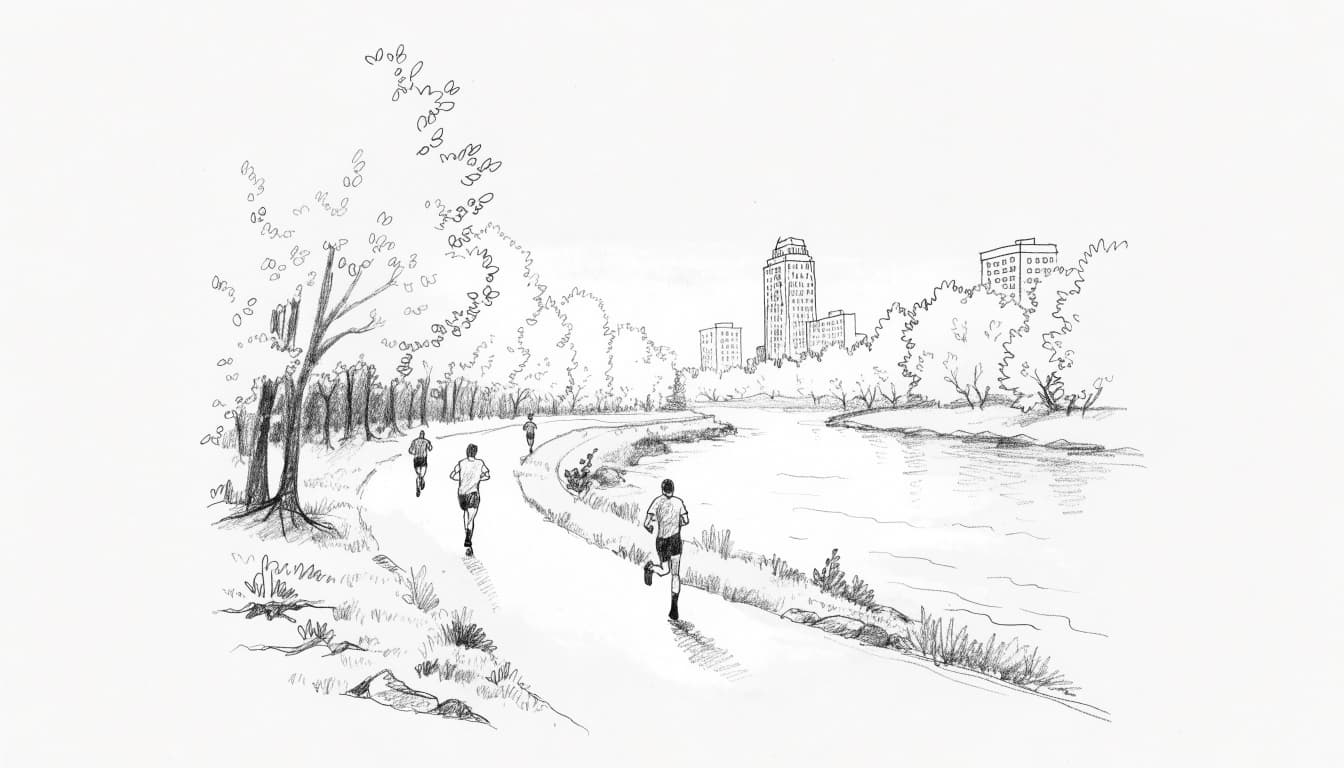
The marathon route combines city streets with Edmonton’s river valley setting. The organizer describes a course that passes through historic neighborhoods and downtown, while the event’s route information highlights views around the city. Check the current Edmonton Marathon course details before race day, since route changes can alter what you see and where the scenery appears.
A changing view can help break up a long race. Downtown buildings give way to greener surroundings, offering a welcome shift when the miles start to feel repetitive. Enjoy the scenery, but keep your effort even. A lively stretch or cheering crowd can tempt you to surge, and those extra seconds per mile may cost more later.
Choose Your Distance, Duration and Goal Time
Make three quick selections and open the exact plan built for your race target.
Looking for a Fully Personalized Training Plan?
The training plans above are an excellent choice if they match your goal. However, if you’d rather train with a plan built specifically around your current fitness, goal race, preferred training days, weekly mileage, and target finish time, our RDA Custom Training Plans provide a personalized solution. We also have running courses available for runners seeking to run faster from the mile to the marathon.
Why Choose a Custom Training Plan?
| Standard Training Plan | RDA Custom Training Plan |
|---|---|
| Follows a fixed schedule | Built around your schedule |
| Standard weekly mileage | Peak mileage customized for you |
| Fixed workout days | Train on the days you choose |
| Same structure for everyone | Designed around your current fitness |
| Static plan | Updated as your fitness improves |
| One-time purchase | Ongoing personalized coaching and support |
What You’ll Receive
- A training plan built specifically for your goal
- Personalized training paces
- Long runs, tempo runs, threshold workouts, interval sessions, recovery runs, and easy runs
- Peak weekly mileage matched to your experience level
- Flexible training schedule that fits your life
- Ongoing plan adjustments as your fitness improves
Ready to Train Smarter?
Stop guessing and start following a plan built specifically for you, your schedule, and your racing goals.
Hills, turns, and the effort they add
The race is promoted as flat and fast, but that description doesn’t mean every mile feels identical. Even modest rises, descents, turns, or changes in pavement can interrupt a comfortable rhythm. Uphill, shorten your stride and maintain effort rather than forcing your usual pace. Downhill, stay relaxed and avoid overstriding, which can leave your quads sore before the final miles.
Review the official course map and elevation profile before setting a pace target. Verify the current course certification rather than assuming one applies. Certification can reduce the risk of course mismeasurement or extra distance, supporting more reliable finishing times.
If you search “athletic canada,” verify that the governing body’s official name is Athletics Canada. Then include varied terrain in training, such as gentle hills and turns, so your legs don’t meet those demands for the first time on race day. On a road course, repeated direction changes and small adjustments in footing can also add up. The goal is to run by effort when the terrain shifts, then return to target pace when the route allows.
Weather and smart pacing for a spring race
Weather can change the effort behind every mile. Edmonton race conditions may bring cool temperatures, wind, rain, or a warmer stretch, and each can affect comfort and pace. A headwind raises the work of holding speed, while rain or wet pavement can make footing less predictable. Check the forecast close to race day, and consult Environment and Climate Change Canada’s climate information for local historical context, not a promise of race-day conditions.
Start conservatively, especially if the weather differs from what you trained in. If heat or wind pushes effort higher, slow down early rather than trying to recover lost time later. A steady opening gives you room to respond as conditions change. Let your breathing and perceived effort guide the pace, and save any push for the final miles if your legs and the weather support it.
What to Expect From Race-Day Support and Organization
A well-organized race makes it easier to focus on pacing instead of logistics. For the Edmonton Marathon, participants should check the current edition’s guide before traveling, since pickup details, start and finish locations, services, and course arrangements can change. Confirm current event information with the race organizers, and use the event site map and participant information to find the latest guide.
Before the start: packet pickup and race-morning plans
Confirm when and where you need to pick up your bib, and whether someone else can collect it for you. Check the guide for your start time, assigned start area, bag-drop rules, and any restrictions on what you can leave. Don’t assume pickup is available on race day.
Next, plan how you’ll reach the start. Review parking options and transit service for that date, then allow extra time for traffic, walking, security, and finding your corral. A simple plan might be to pick up your bib the day before, lay out race clothes and gear that night, and set an arrival time that leaves room for bathroom lines and a warm-up. Keep your bib and timing instructions easy to reach.
Aid stations, volunteers, and finish-line services
Aid stations shape your race more than many runners expect. Their spacing and offerings affect when you drink or take fuel, while clear course signs help you stay on route without breaking focus. Check the current aid-station plan for fluid types, nutrition, and station locations. If you rely on a specific gel or drink, bring your familiar product rather than counting on the course to supply it.
Volunteers can help you find supplies, follow directions, and get assistance when you need it. Before the event, review how the course marks turns and ask the race director about available medical support. Also confirm the timing system and instructions for wearing your bib, since missed reads or incorrect placement can affect your recorded result and the official results.
At the finish, check what services runners receive and where to find them. Water, recovery food, medals, bag retrieval, and medical care may follow different arrangements by edition. Knowing the finish-area layout helps you regroup, especially if you’re meeting family or friends.
Spectators, atmosphere, and support on the course
The race can feel lively near gathering points and quieter along stretches with fewer convenient viewing spots. Crowd size and access vary by year, so spectators should use the current course map and event notices rather than assume a familiar corner will be open or easy to reach.
Choose one or two meeting points that match the route and your runner’s expected pace. Share a backup location in case either of you misses the first spot, and agree on a finish-area meeting place before the start. That small plan can prevent a long search when you are tired and phone service or foot traffic makes coordination harder.
Registration Costs, Travel, and Where to Stay
The Edmonton Marathon entry fee is only one part of your budget. Travel, lodging, transportation, and time away all affect the total, so plan around the details for your chosen race year.
How to judge the entry fee and race value
Fees can vary by distance and registration window, and included services may differ. Compare the current price with what matters to you, such as course support, official timing, a race shirt, and the overall experience. Check what’s included instead of assuming every item comes with your entry.
Then weigh the fee against your goals. If reliable aid stations and an organized course matter more than race merchandise, focus on the support and services listed for your distance. The official Edmonton Marathon FAQ answers common registration questions, while the current race listing can clarify what participants receive. Budget for taxes or processing fees if they appear at checkout.
Planning your trip to Edmonton
If you’re visiting, book a place to stay after confirming the current start and finish locations. Lodging near either point may simplify race morning, but check walking distances and transit access before choosing. Staying farther away can lower your room cost, though it may add travel time and another early-morning decision.
Arriving a day early gives you time to settle in, pick up your race materials, and prepare your gear without rushing. Local runners can use the same buffer to check road closures and adjust their usual route to the start. Whether you drive or use public transportation, review current access details, parking restrictions, and service schedules. Don’t rely on a route or parking option from a previous year, since event access can change.
What to verify before you register
Before paying, use the official race site to confirm the current terms and logistics. A quick review can prevent surprises after you’ve booked travel or set a training goal.
- Confirm the race date and your distance.
- Review the latest course map and start and finish locations.
- Read the race policies, including cutoff times.
- Check transfer and refund rules. The package pickup information describes current procedures, which may be limited.
- Look for accessibility information and contact the organizer if you need details about a specific accommodation.
- Review the registration details and verify exactly what your fee includes.
Once these details are clear, you can compare the full cost with your schedule and race goals, not just the advertised entry price.
Who Should Run the Edmonton Marathon, and How to Prepare
This city race may suit runners looking for several distance options and a course organizers describe as flat and fast. The right fit depends on your experience, goals, and willingness to train consistently, not just race-day atmosphere.
Is this a good first marathon?
The event’s range of distances makes it easier to choose a challenge that matches your current fitness. Participants new to racing can choose a shorter distance for downtown energy and course support without the full marathon’s training load. The half marathon course description gives you a sense of its route through downtown and neighborhoods overlooking the river.
Still, a first marathon demands months of regular running, gradual mileage increases, and time for recovery. A lively crowd can help you through tough miles, but it can’t replace preparation. If the 42.2-kilometer distance, course profile, or weekly training commitment feels like too much, choose a shorter race and build experience first.
Is this a good course for a personal best?
It may suit runners seeking a fast time, but a PR depends on more than the organizer’s course description. The confirmed route profile, weather, crowding, and your preparation all shape the result. Before setting a pace goal, study the latest marathon route information and compare the elevation and turns with your strengths.
If you’re comfortable holding an even pace on roads, the course may fit your racing style. However, runners who prefer a very flat route or a larger field should compare other races before committing. A smaller crowd or a course feature that disrupts your rhythm can matter when you’re chasing seconds. Choose the race because its current route and race-day conditions fit your plan, not because “fast” guarantees a personal best.
If Boston is a goal, check the Boston Athletic Association’s current qualifying times for the Boston Marathon. Standards can change, and no course or result guarantees qualification.
Training that matches the course and race-day demands
Build endurance with a gradual long-run progression, and keep most training miles easy enough to recover from. Add controlled hill work if the current route includes elevation changes, but focus on steady effort rather than sprinting every rise. Then practice your intended marathon pace on rested legs so it feels familiar without turning every workout into a test.
Use long runs to rehearse details that can derail a good race: shoes, socks, fuel, and hydration. Don’t try new products on race day. A marathon training guide to fueling and recovery can help you plan these parts of marathon training; adapt its advice to your needs and schedule.
Recovery belongs in the plan, too. Schedule easier days after demanding sessions, and reduce training before race week instead of trying to gain fitness at the last minute. During the race, pace by effort when wind, weather, or terrain changes how a target pace feels. For a measurable improvement, follow a goal-specific training plan or work with a coach who can adjust training to your experience and schedule.
Frequently Asked Questions
Details that shape the event can change between editions, so use the latest information when planning. These answers cover practical choices runners often want to settle before registering.
When is the event held?
The 2026 event is listed for August 16, placing it in late summer. Since the date, start times, and schedule can change, confirm them on the official Edmonton Marathon website before booking travel or planning your race week.
Is the course hilly?
The organizers describe the course as flat and fast, but its feel depends on the current route. Edmonton’s river valley can include elevation changes, so review the current marathon course map and elevation profile before setting a pace goal. If the profile includes rises or descents, practice holding a steady effort instead of forcing the same pace throughout.
What distances can I choose from?
The 2026 event lists a full marathon, half marathon, 10K, 5K, and 1K. Offerings can change from year to year, so check the registration page for current distances, eligibility rules, and start times. Choose the event that matches your goal and training, not just the distance that sounds most ambitious.
Can beginners take part in the event?
Yes. Beginners can choose a shorter distance and get a feel for race routines without taking on marathon training. The full 42.2-kilometer race calls for a suitable running base and consistent preparation, so choose a distance that fits your experience, health, and available training time. If you have a health concern, speak with a qualified medical professional before starting a demanding plan.
What should I bring on event morning?
Wear familiar running shoes and clothing you’ve tested on long runs. Race day is a poor time to discover a seam rubs or a shoe pinches. Bring personal nutrition if you rely on a specific product, then check the participant guide for required items and rules on gear, bag drop, and on-course support.
How do I find current registration and course details?
Use the event’s official site map and event information, then open the current participant guide before making plans. Check registration fees, policies, course maps, and event updates there; older listings and guides may describe details that no longer apply.
Conclusion
The Edmonton Marathon is a strong choice for runners seeking a city course with river valley scenery, several distance options, and volunteer support. Its flat-and-fast reputation may appeal to those chasing a personal best, but course details, weather, and pacing still shape race day. Runners looking for a larger field or a route with a specific profile should compare other events before registering.
Above all, the race rewards preparation and practical planning. Confirm the current-year course, schedule, fees, and support details, then choose a distance that matches your training and goals.


