

Eat Before Running: Quick Fuel Guide for Peak Performance
Knowing what to eat before running is a critical step to unlock a stronger performance. The best formula is surprisingly simple. Fuel up with easy-to-digest carbohydrates. Add a little bit of protein. Keep fat and fiber low. This combination is your ticket to maximizing energy without inviting digestive distress.
Your Foundation for a Better Run
Fueling for a run feels like a science. But it doesn't have to be intimidating. Your main goal is to top off your body's primary fuel source: glycogen. Glycogen is the stored form of carbohydrates in your muscles and liver. Think of it as the high-octane fuel in your personal gas tank. When you start running, your body draws from these stores to power your stride.
If you head out with low glycogen, you are practically asking to "hit the wall." That is the feeling of sudden, crushing fatigue. Proper pre-run nutrition makes sure your tank is full. This helps you go longer and feel stronger from start to finish.
The Power of Carbohydrates
For a long time, the running world did not fully appreciate carbohydrates. Back in the 1960s and 70s, many elite runners were all-in on high-protein diets. That perspective shifted dramatically. Scandinavian scientists uncovered the game-changing impact of carbohydrate loading. A landmark study revealed that athletes who ate a high-carb diet finished a 30-km race up to 15 minutes faster. You can discover more insights about these historical nutrition findings.
Build a Smarter Running Watch Setup
Compare the right watch, understand the training data that matters, and choose a model that fits your workouts, racing, recovery, and long-term goals.
More FORM and Running Watch Guides
This research proved what experienced runners now take as gospel. Carbohydrates are the most efficient fuel source for moderate to high-intensity exercise. Your body can convert carbs into usable energy much faster than it can process protein or fat.
Building Your Fueling Strategy
A successful fueling plan comes down to balancing three key things:
- What you eat: Stick to simple, easily digestible carbohydrates.
- How much you eat: Your portion size should match your run's length and intensity.
- When you eat: Timing is everything. You need to give your body enough time to digest.
Getting your pre-run nutrition right is about so much more than just avoiding hunger. It’s a strategic move to stabilize your energy, sustain your endurance, and sidestep the mid-run crash that can derail even the best training days.
Ultimately, mastering these principles is just smart training. When you learn how to fuel your body correctly, you take direct control over your performance and recovery. For a deeper dive, check out our comprehensive guide on runner nutrition. The next sections will break down exactly how to put all this into practice.
Mastering Your Pre-Run Timing Windows
What you eat before lacing up is crucial. But when you eat it can be the real game-changer. Nailing your pre-run timing can mean the difference between a new personal best and a race spent battling cramps. It's all about giving your body enough time to digest and turn that food into fuel.
Get it wrong, and you're stuck feeling sluggish. Or worse, you deal with an upset stomach mid-stride. A well-timed meal tops off your glycogen stores. This prevents that uncomfortable sloshing feeling. It lets you focus on your performance, not your gut.
This flowchart gives you a great visual guide for planning your fuel.
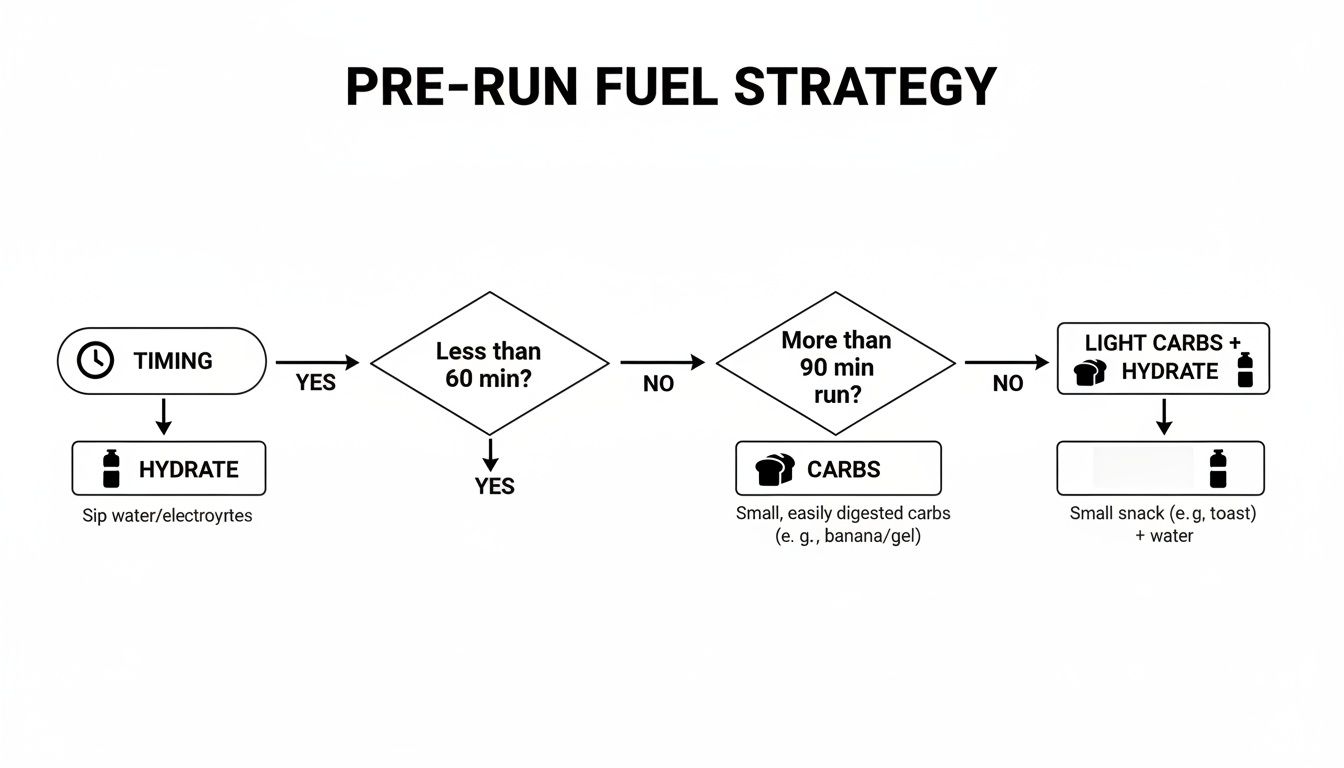
The core principle is simple. The more time you have, the more substantial your meal can be. When time is short, you need quick, simple fuel.
The Ideal 2-4 Hour Window
The sweet spot for a larger meal is between 2 and 4 hours before heading out. This timeframe gives your digestive system a solid window to break down food. It converts them into the glycogen your muscles need to fire on all cylinders.
This is your prime opportunity to have a real meal. Think about a solid lunch before an afternoon long run. A marathon with a late morning start allows for a substantial breakfast. Research points to this 2-4 hour slot as ideal for performance. It lets you load up on calories without discomfort. You can dig deeper into the science of workout nutrition timing with the experts at NASM.
The 2-4 hour window isn't just about avoiding stomach issues. It's a strategic move to maximize your muscle glycogen stores. This ensures you have sustained energy for longer, more demanding efforts.
The Quick 30-60 Minute Window
Life doesn't always offer up a perfect two-hour digestive window. For early morning runners, the 30-60 minute window is your best friend. The strategy here shifts dramatically from a balanced meal to a quick snack.
The goal is to get a fast-acting carbohydrate source. This gives you a rapid energy boost without weighing you down. This is not the time for fiber, fat, or a lot of protein. Those macronutrients slow down digestion.
Here are a few go-to options for this tight turnaround:
- A small banana: Often called nature's power bar for a reason.
- A handful of pretzels or a couple of rice cakes: These offer a quick hit of simple carbohydrates.
- An energy gel or some chews: These are designed for rapid absorption.
- A piece of toast with a thin layer of jam: This classic is simple and effective.
Think about a busy professional trying to get a run in during their lunch break. Grabbing a banana 45 minutes before you change is a perfect strategy. A marathoner might top off with an energy gel 30 minutes before the starting gun. This shows how you can layer your fueling strategy to fit any schedule.
Fueling Strategically for Different Run Types
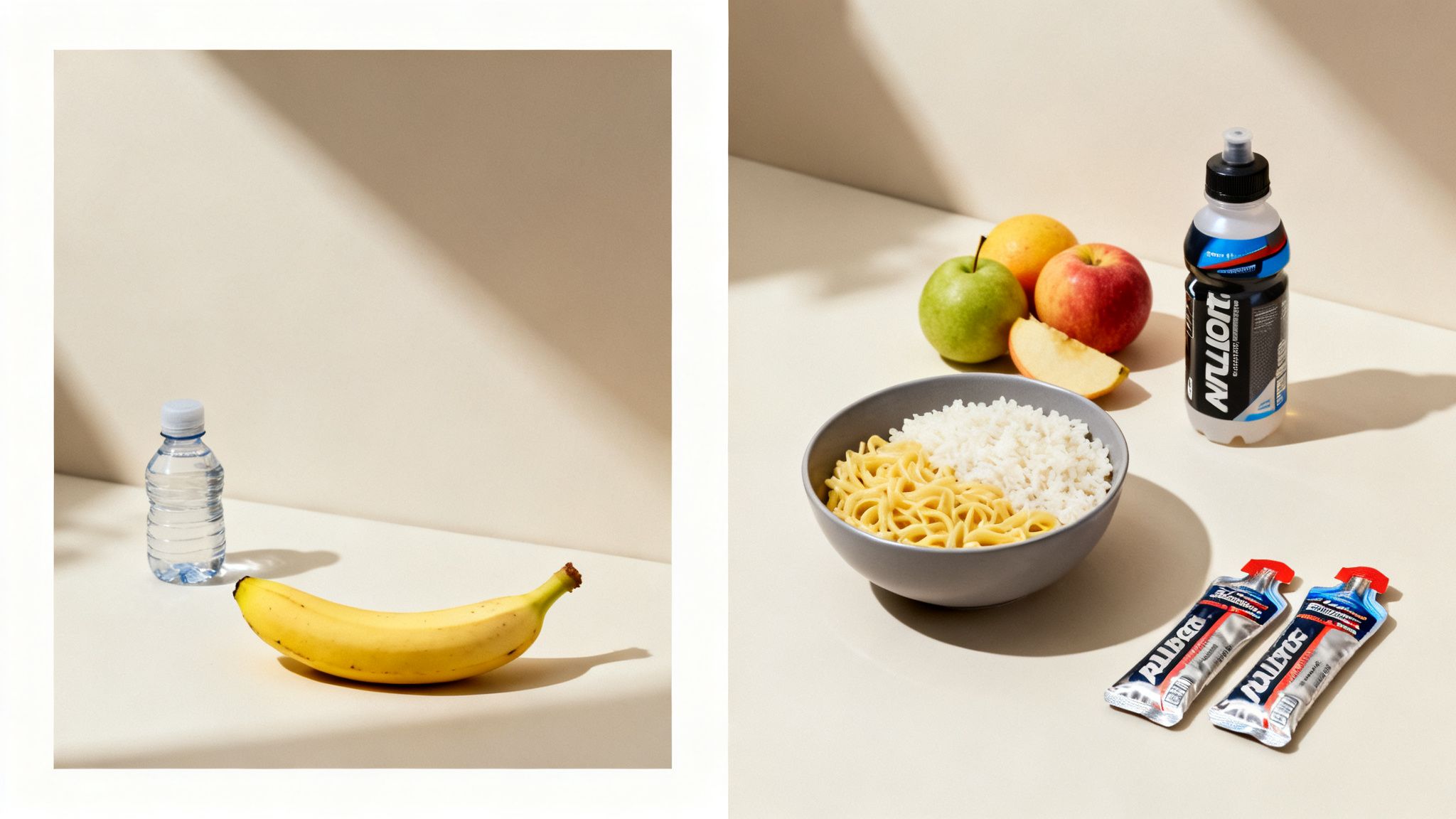
Many runners make the mistake of eating the same thing before every run. Your training isn't one-size-fits-all. So why should your fueling be? The crackers that get you through a 3-miler won't work for a two-hour long run.
Learning how to adjust what you eat before running separates savvy runners from the pack. It means you will have the right energy at the right time. This helps you dodge the dreaded bonk without loading up on unneeded calories.
Let's break down how to approach this.
Easy and Short Runs Under 60 Minutes
For shorter runs lasting less than an hour, you don't need to overthink it. Your body's glycogen stores are usually well-stocked enough to get you through.
That said, running on an empty stomach isn't always the best feeling. A small, easy-to-digest snack can make a surprising difference.
- The Focus: A small bite of simple carbs about 30-60 minutes before you head out.
- The Goal: Keep your blood sugar stable and give you a little kickstart.
- Real-World Examples: Think half a banana, a couple of rice cakes, or a small handful of plain crackers.
The key here is simplicity. You're not fueling for a marathon. You're just taking the edge off to prevent feeling sluggish. For more detail, check this guide on what to eat before running a 10k.
Long Runs and High-Intensity Workouts
Now we're talking about workouts where nutrition strategy is mission-critical. Long runs and intense sessions drain your glycogen stores like nothing else. Go into one of these under-fueled, and you're setting yourself up to hit the wall. Hard.
Your main job here is to load up on carbohydrates. This process really begins the day before your big workout.
The Power of Carb-Loading
For anyone tackling long distances, "carb-loading" is more than just an excuse to eat pasta. It is a proven method for getting the most out of your body. The idea is to ramp up your carbohydrate intake for 1-3 days before a long run. This pushes your muscle glycogen stores beyond their normal capacity.
A proper carb-load can boost your endurance by 2-3%. That might not sound like much. But over a marathon, it can mean shaving off several minutes.
This is not about just eating more; it is about eating smarter. Most elite guidelines suggest aiming for 7-10 grams of carbohydrates per kilogram of body weight. A study of elite mountain runners found they averaged 7.69 g/kg two days before a race. You can dive deeper into the specific fueling findings from elite endurance athletes.
Getting the Macronutrient Mix Right
Carbs are the king of pre-run fuel. But the other macros have their place too.
Protein: A little protein in your pre-run meal is not a bad thing. It can help reduce muscle breakdown during the run. It also gives your recovery a head start.
Fat and Fiber: These are the two you need to watch. Both slow digestion way down. Healthy fats and high-fiber foods are crucial for your overall diet. But having them right before you run can cause stomach cramps and bloating. Save the big salad or avocado toast for a post-run meal.
When you match your fuel to your workout, you are performing a critical part of your training. This thoughtful approach will have you running stronger and longer.
Practical Meal And Snack Ideas For Runners
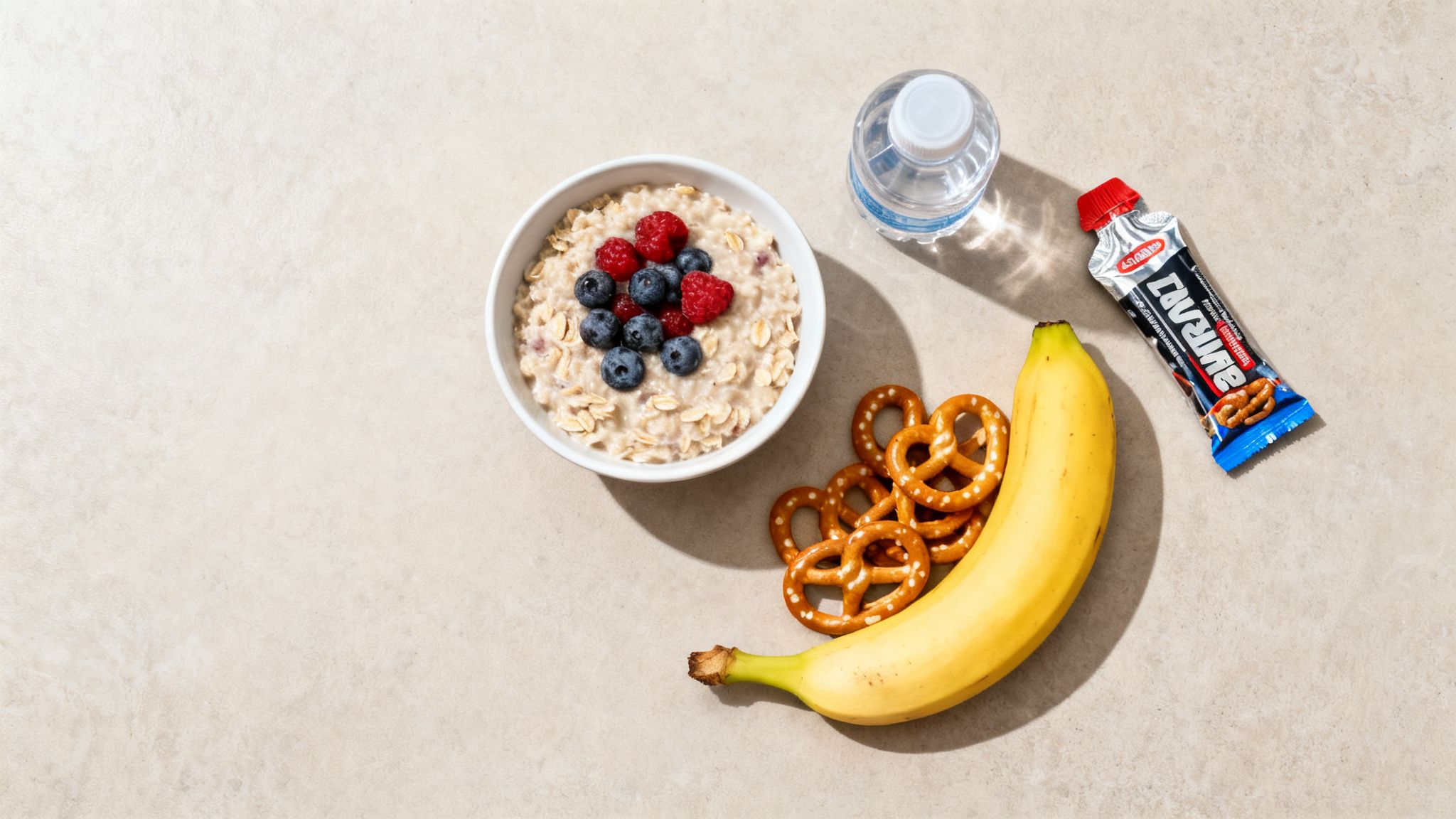
It is one thing to know the science behind pre-run fueling. It is another to stand in your kitchen trying to figure out what to eat. The real test is matching the right food to the right run. You need fuel that provides sustained energy without sitting like a rock in your stomach.
Let's move from the "what" and "why" to the "how." I've put together some runner-tested meal and snack ideas. They are broken down by how much time you have before you head out. This should help take the guesswork out of fueling up.
Fueling In The 2 To 4 Hour Window
When you've got a generous 2 to 4-hour window, you can eat a more complete meal. This is your prime opportunity to top off those glycogen stores. The key is to focus on complex carbs and moderate protein. You should also keep the fat and fiber low.
Here are a few go-to options for this timeframe:
- A bowl of oatmeal with berries and a swirl of honey. This is a classic for a reason. Oatmeal delivers slow-releasing carbs for lasting energy.
- A turkey and Swiss sandwich on whole-wheat bread. You get a fantastic balance here. Just go easy on high-fat spreads like mayo.
- Grilled chicken with a side of sweet potato. This is an ideal lunch for an afternoon long run. The sweet potato is a nutrient-dense carbohydrate powerhouse.
If you're looking for creative ways to bump up protein, learning about protein powder in cooking can be a game-changer.
Quick Snacks For The 30 To 60 Minute Window
Life is busy. Sometimes you only have an hour or less before you need to be out the door. When you're in a time crunch, your strategy shifts to simple, fast-acting carbs.
These are perfect for a quick energy boost:
- A medium banana. It's often called nature's power bar for good reason. A banana is packed with simple carbs and potassium.
- A handful of pretzels. These are simple, low-fiber carbs that your body can process with minimal effort. The extra salt can also encourage you to drink more water.
- An energy gel or a few energy chews. These are designed for athletes and deliver a concentrated dose of carbs. They are the ultimate grab-and-go fuel.
The goal here isn't a full meal—it's a quick top-off. You're just giving your body a little easily accessible fuel to stabilize blood sugar and start your run strong.
Sample Pre-Run Meals and Snacks by Timing
To make things even easier, here's a quick reference table. Think of it as a cheat sheet for grabbing the right fuel at the right time.
| Timing Window | Meal/Snack Example | Best For (Run Type) |
|---|---|---|
| 3-4 Hours Out | Oatmeal with fruit, toast with peanut butter & banana | Long Runs, Marathons, Hard Workouts |
| 2 Hours Out | Small bagel with jam, turkey sandwich (light on mayo) | Medium-Length Runs (60-90 mins) |
| 30-60 Mins Out | Banana, energy gel, small granola bar, handful of pretzels | Any Run, especially early morning or short on time |
This table should give you a solid starting point. Over time, you'll learn exactly which foods work best for your body.
Real-World Fueling Scenarios
Let's put this into practice with a couple of common situations every runner faces.
Scenario 1: The Early Morning Runner
You wake up at 5:30 AM for a 6:00 AM run. There is no time to digest a real meal.
- Solution: Grab a small banana or a piece of toast about 30 minutes before you leave. It is just enough to give you a quick hit of carbs.
Scenario 2: The Lunch Break Runner
You're planning to squeeze in a run at 12:30 PM during your lunch hour.
- Solution: Have a small snack like a granola bar around 11:30 AM. This will top off your energy after a long morning.
Finding the perfect pre-run fuel is a personal journey of trial and error. For more inspiration, check out our guide to https://rundreamachieve.com/healthy-snacks-for-runners/.
Beyond Food: Dialing In Hydration and Caffeine
While we talk a lot about what to eat before running, a complete fueling strategy must include what you drink. Proper hydration is fundamental for regulating your body temperature and moving nutrients.
Get your hydration right, and your run feels easier. Get it wrong, and you're fighting an uphill battle. Dehydration is a surefire way to kill your performance. It brings on fatigue, headaches, and a major hit to your endurance.
The trick is not to chug a massive bottle of water right before you lace up. It is about consistent, steady sipping throughout the day.
Your Pre-Run Hydration Game Plan
Great hydration for a run is an all-day, every-day habit. You never want to start a run already in a fluid deficit.
A good rule of thumb is to drink about 16 to 20 ounces of water in the 2-3 hours before your run. This gives your body plenty of time to absorb the fluid.
Then, about 15-20 minutes before you head out, take in another 8 ounces. This final top-off ensures you're ready to go without that awful sloshing feeling.
If you're heading out for a long run or it's a hot day, add an electrolyte mix to your water. The key electrolyte, sodium, helps your body hold onto water much more effectively.
The Caffeine Edge: Timing is Everything
Let’s talk about caffeine. It is one of the most proven, effective, and legal performance aids a runner can use. When you time it right, it can give you a serious boost in endurance. It also lowers your perception of effort. That hard pace suddenly feels a little more manageable.
How does it work? Caffeine stimulates your central nervous system. It boosts alertness and holds off fatigue. It essentially tricks your brain into feeling less tired.
So, how much do you need? The science points to an effective dose of 3-6 milligrams of caffeine per kilogram of body weight.
A simple cup of coffee or a caffeinated gel isn't just a morning ritual; it's a strategic tool. Used correctly, it can provide a powerful mental and physical edge right when you need it.
For a 150-pound (68 kg) runner, that works out to roughly 200-400 mg of caffeine. A standard 8-ounce cup of coffee has about 95 mg.
To get the maximum benefit, aim to have your caffeine about 60 minutes before your run. This window allows it to hit peak concentration in your bloodstream.
If you're thinking of adding caffeine to your routine, here's how to do it smartly:
- Start small. If you're not a regular coffee drinker, start with around 100 mg.
- Test it in training. This is critical. Never try caffeine for the first time on race day.
- Don't forget to hydrate. Caffeine can have a mild diuretic effect. Keep up with your fluid intake.
By thoughtfully weaving both hydration and caffeine into your pre-run routine, you're building a much more robust fueling strategy. If you're looking for more ways to fine-tune your performance, our guide on nutrition supplements for runners has some great insights.
Solving Common Pre-Run Fueling Problems
Even the most carefully planned pre-run meal can sometimes go sideways. We have all been there. The sudden side stitch, the gurgling stomach, or hitting the wall. These common complaints can derail a run. The good news is they almost always stem from simple, fixable mistakes in your fueling.
Figuring out the root cause is half the battle. The culprit is often eating too close to your run or choosing foods high in fat or fiber. Let's walk through how to troubleshoot these issues so you can get back on track.
Decoding Runner's Stomach and Side Stitches
"Runner's stomach" is a catch-all term for cramps, bloating, and nausea. That sharp pain under your ribcage known as a side stitch can also be triggered by digestive chaos. The most common cause is undigested food bouncing around in your stomach.
Foods high in fiber and fat are the usual suspects. They take a long time to digest. A big leafy salad is a recipe for disaster an hour before a run. When you start running, your body diverts blood flow away from your digestive system. This leaves your stomach with fewer resources to do its job.
Think of your pre-run meal as a simple task for your gut. The more complex the food, the harder your digestive system has to work. This creates a conflict with your running muscles—a conflict you’re bound to lose.
The fix is to stick with simple, low-fiber carbohydrates. If you're still feeling that sloshing or cramping, try giving yourself more time. Push your pre-run snack from one hour out to two, and see how you feel.
Preventing the Dreaded Bonk
There's no feeling quite like "bonking" or "hitting the wall." It is that sudden, dramatic drop in energy. Your legs turn to lead, and every step feels like a monumental effort. This is not just in your head. Your body is physically running out of its most accessible fuel source, glycogen. It typically happens on runs lasting over 90 minutes.
Thankfully, this problem has a very direct solution. You did not eat enough carbohydrates beforehand. Your muscles can only store a finite amount of glycogen. When those stores run dry, your performance grinds to a halt.
Here’s how to avoid it:
- Load Up on Carbs: Make sure your pre-run meal is centered around carbohydrates.
- Fuel the Day Before: What you ate on Friday matters for your weekend long run.
- Bring Fuel With You: Start taking in simple carbs around the 45-minute mark on long runs.
Your Personal Fueling Log
The single best tool for cracking your own fueling code is to keep a simple log. We are all different. What works for your running partner might be a disaster for you. For a week or two, jot down what you ate, when you ate it, and how you felt.
It doesn’t have to be complicated. It could look something like this:
- Monday: Oatmeal with berries 90 mins before an easy 4-miler. Felt great.
- Wednesday: Greek yogurt 60 mins before a tempo run. Felt a bit bloated.
- Saturday: Bagel with peanut butter 2 hours before a 10-miler. Felt strong.
You'll be surprised how quickly patterns emerge. This self-experimentation is the key to building a fueling plan that makes you feel confident and strong.
Common Questions About Pre-Run Fueling
Even with a solid plan, questions about what to eat before running inevitably pop up. We are always trying to dial in our strategy. Let's tackle some of the most common uncertainties runners face. Getting these sorted out will help you feel much more confident in your fueling choices.
Can I Run On An Empty Stomach?
Ah, the classic debate: to eat or not to eat before a morning run. Running fasted is a hot topic, and for good reason.
For short, easy runs—think anything under an hour—it's generally fine. Your body has enough stored glycogen from the night before to get you through. But once you start pushing into longer distances or higher intensity, you're rolling the dice. You risk hitting that dreaded wall and seriously compromising your performance.
Many runners have questions about the optimal timing of their nutrition. For a comprehensive guide, delve into the topic of when to eat before or after working out.
Should I Eat The Same Thing Before Every Run?
Definitely not. You wouldn't put the same amount of gas in your car for a trip to the grocery store as you would for a cross-country road trip. Your body is no different.
Your fuel needs to match the demands of the day's run. A small banana might be the perfect, light boost for a quick 3-miler. But that same snack is going to leave you stranded during a 15-mile long run.
- For short, easy runs: A small, simple carb snack is usually all you need.
- For long, hard runs: These demand a more substantial, carbohydrate-heavy meal eaten 2-3 hours beforehand.
Tailoring your intake like this ensures you're not under-fueled for a tough workout or over-stuffed for an easy one.
What If I Have A Sensitive Stomach?
If running sends your stomach into knots, trust me, you are not alone. This is one of the most common frustrations for runners. The solution almost always comes down to careful, patient experimentation.
Start by simplifying your pre-run snacks. I'm talking about the blandest stuff you can think of. Plain toast, rice cakes, a few saltines. From there, try increasing the time between when you eat and when you run.
Your best friend in this process is a food log. Seriously, write it all down. This is the single best way to pinpoint your personal trigger foods. For many runners, the usual suspects are foods high in fiber, high in fat, or dairy. Once you know what bothers you, you can make sure to avoid it.


