

Difference Between Brooks Glycerin and Glycerin GTS
Wondering what is the difference between Brooks Glycerin and Glycerin GTS? Choosing between the plush Brooks Glycerin and the Glycerin GTS comes down to how much guidance you want underfoot. Both are cushioned daily trainers for comfortable miles, but the standard Glycerin offers a neutral ride, while the GTS adds Brooks’ GuideRails support system to help limit excess movement.
That difference can affect how each shoe feels as you settle into your stride. Fit and ride can vary, too, and Brooks may update both models with each generation, so compare the versions you’re considering. Understanding the differences in support, cushioning feel, and fit will help you choose the right Glycerin for your training.
Key Takeaways
- The main difference between Brooks Glycerin and Glycerin GTS is support: the standard Glycerin is neutral, while the GTS adds GuideRails to help manage excess movement.
- Both models offer plush cushioning, but their fit and ride can vary by generation. Compare the exact versions you’re considering.
- Choose the standard Glycerin if you prefer a neutral feel. Pick the GTS if you want added guidance, though its support doesn’t guarantee injury prevention.
- Check the current Brooks Glycerin lineup and try both when possible; comfort and fit matter as much as support.
The Difference Between Brooks Glycerin and Glycerin GTS, Explained
The main difference between the Brooks Glycerin and Glycerin GTS is the support underfoot. The standard Glycerin is a neutral cushioned trainer, while the GTS version adds Brooks’ GuideRails system to help manage excess movement. Both belong to the same comfort-focused road-running family, but they offer different kinds of guidance as you run.
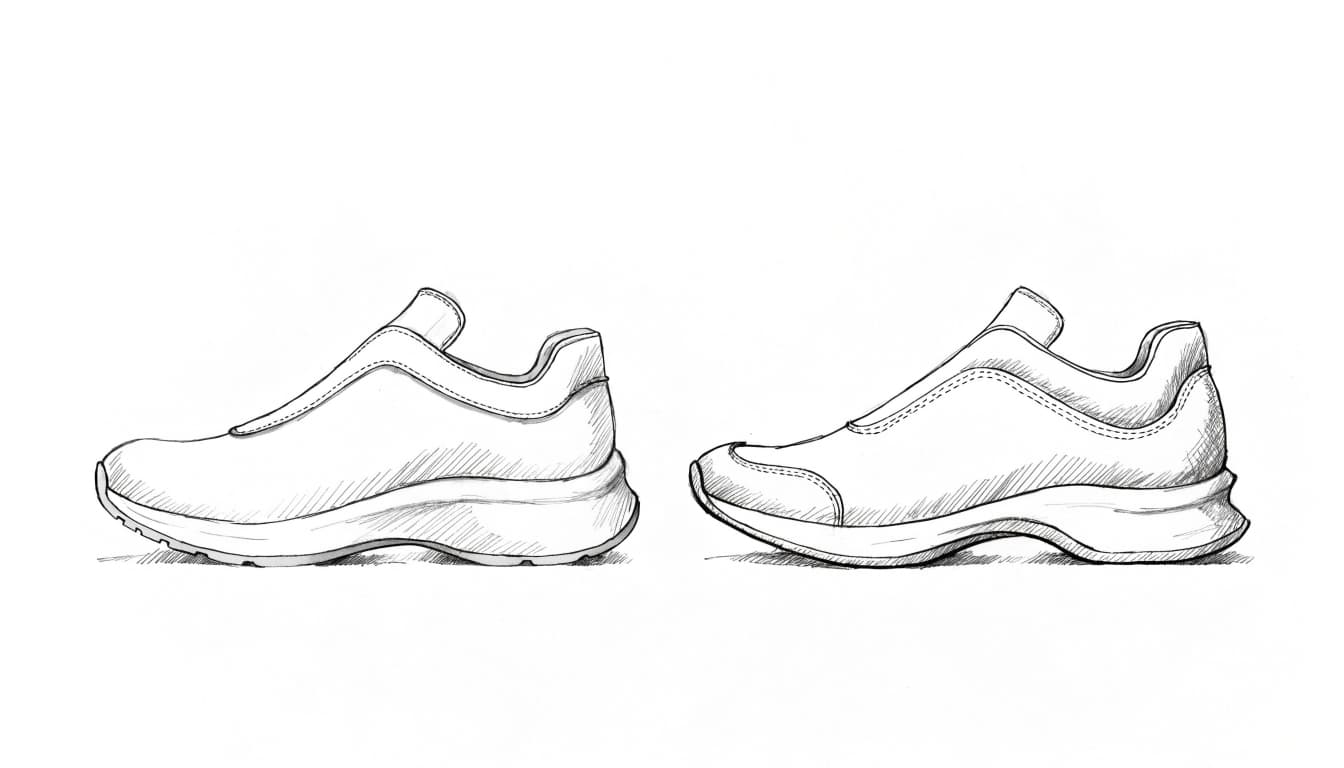
What the Glycerin and Glycerin GTS have in common
Both shoes are built for road running, with soft cushioning intended to make everyday training more comfortable. That plush feel can suit easy runs, steady mileage, and longer efforts when you want a protective ride beneath your feet. The cushioning is a shared part of their identity, though the exact foam, geometry, and ride can change between model years.
Their outsoles also serve the same basic purpose: providing grip and durability on paved routes. Specific rubber placement and outsole designs may differ by generation, so don’t assume the two versions have identical construction. Instead, compare the exact models you’re considering if outsole details matter for your routes or wear patterns.
At a general level, both shoes aim for a comfortable fit suitable for daily miles. However, upper materials, toe-box shape, and the sensation around the midfoot can vary by version. A shoe that feels roomy or secure in one year’s model may feel different in the next. Brooks’ Glycerin series overview can help you identify current options, but trying on the specific pair remains the best way to judge fit.
How GuideRails change the Glycerin GTS
The Glycerin GTS keeps the cushioned daily-training purpose and adds Brooks GuideRails. In plain terms, GuideRails are support features along the sides of the shoe that are designed to help manage excess inward or outward movement as you run. They’re intended to provide guidance when needed, rather than hold every runner’s foot in one fixed position.
That approach differs from a traditional medial post, a firmer section placed along the inside of some stability shoes. A medial post applies support in a more localized way. GuideRails take a broader approach around the foot, with the goal of helping limit excess motion without dictating every part of your stride. Brooks describes the concept in its explanation of how GuideRails suppor runners.
The system doesn’t correct everyone’s gait, and it can’t guarantee that you’ll avoid an injury. Instead, it changes how the shoe feels when your foot moves through a stride. Runners who prefer a neutral ride may notice the guidance and find it more structured than they want. Others may appreciate the added sense of support, particularly when they feel less steady late in a run. Comfort and personal response matter more than a label alone.
Choose Your Distance, Duration and Goal Time
Make three quick selections and open the exact plan built for your race target.
Looking for a Fully Personalized Training Plan?
The training plans above are an excellent choice if they match your goal. However, if you’d rather train with a plan built specifically around your current fitness, goal race, preferred training days, weekly mileage, and target finish time, our RDA Custom Training Plans provide a personalized solution. We also have running courses available for runners seeking to run faster from the mile to the marathon.
Why Choose a Custom Training Plan?
| Standard Training Plan | RDA Custom Training Plan |
|---|---|
| Follows a fixed schedule | Built around your schedule |
| Standard weekly mileage | Peak mileage customized for you |
| Fixed workout days | Train on the days you choose |
| Same structure for everyone | Designed around your current fitness |
| Static plan | Updated as your fitness improves |
| One-time purchase | Ongoing personalized coaching and support |
What You’ll Receive
- A training plan built specifically for your goal
- Personalized training paces
- Long runs, tempo runs, threshold workouts, interval sessions, recovery runs, and easy runs
- Peak weekly mileage matched to your experience level
- Flexible training schedule that fits your life
- Ongoing plan adjustments as your fitness improves
Ready to Train Smarter?
Stop guessing and start following a plan built specifically for you, your schedule, and your racing goals.
Neutral cushioning or added guidance: the main distinction
A neutral shoe provides cushioning without built-in stability features designed to manage excess motion. That’s what the standard Glycerin offers: a soft road-running platform without the added GuideRails structure. Neutral support doesn’t mean the shoe is unstable or minimal. It describes the type of support, not how much cushioning the shoe has.
The Glycerin GTS adds GuideRails to that cushioned platform. It’s designed for runners who want extra guidance as part of the shoe’s feel, including some who experience excessive inward movement, often called overpronation. Still, seeing inward movement doesn’t automatically mean you need a GTS. Feet move differently, and movement by itself doesn’t determine which shoe will feel best or work well for your running.
Foot type alone can’t make the decision for you. Two runners with similar arches may prefer different rides, while the same runner may respond differently to two models with comparable cushioning. Consider how secure and comfortable each shoe feels during a run, not just how it looks on a store shelf. If possible, test both options at an easy pace and pay attention to whether the GTS guidance feels reassuring or intrusive.
Choose the standard Glycerin if you want plush cushioning with a neutral feel. Consider the Glycerin GTS if you prefer that same general comfort with GuideRails support. Neither option is automatically better; the right choice depends on your gait, comfort, and how much structure you want underfoot.
How each shoe feels on easy runs, long runs, and everyday miles
Both the Brooks Glycerin and Glycerin GTS are designed for cushioned road miles, but their underfoot feel isn’t identical. The neutral model leaves the ride more open, while the GTS adds a sense of guidance that some runners notice more as they tire. Fit, foam updates, and personal preference can shape that experience as much as the model name.
Cushioning and ride feel underfoot
The Glycerin line is known for a plush, protective feel underfoot. On an easy run, that cushioning can soften the repeated impact of pavement and make a relaxed pace feel comfortable. Both versions are built around cushioning, so the GTS isn’t simply a firm stability shoe, nor is the neutral Glycerin automatically softer.
Instead, pay attention to how each shoe transitions through your stride. The neutral Glycerin may feel less structured as your foot moves from landing to toe-off. In the GTS, the GuideRails can add a more guided sensation, especially if your foot tends to move around inside the shoe or your form changes late in a run. That feeling may be reassuring to one runner and distracting to another.
Foam and geometry can change with each update, so don’t assume a new Glycerin will feel exactly like an older pair. For example, Brooks describes the Glycerin 22’s DNA Tuned cushioning as designed for soft landings and responsive toe-offs. The Glycerin 22 product details and Glycerin GTS 22 specifications are useful for comparing that specific generation. Even then, softness and responsiveness are subjective. If GuideRails feel unfamiliar, try both shoes at an easy pace before deciding.
Fit, upper comfort, and sizing differences
A comfortable ride starts with a secure fit. Check whether your toes can spread without pressing against the front or sides, then notice how the midfoot holds your foot. The heel should feel secure without rubbing or forcing you to overtighten the laces.
Try both shoes with the socks you typically wear for running. That simple step can reveal pressure around the toes or instep that you might miss while wearing thin store socks. Also compare the fit while standing and jogging, since your foot can shift differently once you move.
Don’t assume the GTS fits exactly like the neutral Glycerin because the names are related. Upper materials, lacing, heel shape, and the feel of the midfoot can vary by generation. Available widths and sizing options may also differ by model and market, so check the specific pair rather than relying on an old fit memory.
Weight can vary, too. For the men’s Glycerin 22, Brooks lists 10.2 ounces; its Glycerin GTS 22 listing gives 10.7 ounces. Those figures apply to the listed models and size specifications, not every size or future version. A difference on a product page may feel small in your hand but more noticeable over many miles, so use weight as one comparison point, not a verdict.
What to expect during daily and long-distance training
Either shoe can work for steady training, including recovery runs and regular easy mileage. The neutral Glycerin may suit you if you want cushioning without GuideRails. The GTS may feel better if you prefer the extra guidance, particularly when your stride feels less controlled as fatigue builds. Comfort should carry more weight than the words neutral or stability on the label.
For a short recovery run, notice whether the shoe lets you relax into your pace. On longer outings, check for hot spots, pressure, or a change in how the support feels after several miles. A model that feels pleasant during a quick try-on may behave differently once your feet warm up and swell slightly.
Neither shoe should be treated as a racing shoe by default. Both are primarily cushioned daily trainers, and whether either suits a race depends on your preferences, pace, and experience with the fit. Before using a new pair for a long run or race, test it on a shorter outing first. If the ride feels comfortable and predictable, build mileage gradually rather than making its first test your biggest run of the week.
Which Brooks Glycerin should you choose for your running style?
The best choice depends on how each shoe feels when you run, not on a label for your foot or stride. Use your preference for guidance, comfort on the move, and the exact version you plan to buy to make the call.
Choose the standard Glycerin if you want a neutral ride
The standard Glycerin is a sensible pick if you want plush cushioning without Brooks GuideRails. Its neutral design can work for many different runners, whether you land on your heel, midfoot, or forefoot, and whether your arches are high, low, or somewhere in between. You don’t need a particular foot strike or arch type to choose a neutral shoe.
Instead, consider how you want the shoe to feel during your usual training. If the Glycerin feels comfortable and predictable through easy runs, long runs, and everyday miles, you may have no reason to add more guidance. Neutral describes the shoe’s support design, not a lack of cushioning or stability for every runner.
The standard model may also suit you if you prefer your foot to move naturally through each stride without feeling guided at the sides. That preference is personal. A runner can have visible inward foot motion and still prefer a neutral shoe, so don’t choose based only on how your feet look while standing or on a wet-foot test.
Choose the Glycerin GTS if you prefer built-in support
The Glycerin GTS may fit your preferences if you like a steadier, more guided sensation. GuideRails are part of that ride, so notice whether they feel reassuring or whether you become aware of the structure with every step. Brooks explains the Glycerin GTS’ role in its comparison of the Glycerin models.
You might already know the feel from another Brooks shoe with GuideRails. If that shoe has worked well for you, the GTS offers a familiar kind of support in the Glycerin family. Still, don’t assume the models will feel identical. The cushioning, upper, and fit can vary by generation, so test the specific pair if you can.
Use comfort and control as your guide. If the GTS feels natural at an easy pace and remains comfortable as you pick up the pace, it may be the better match. If its structure feels distracting, try the standard Glycerin instead. A gait label or past shoe recommendation can inform your choice, but it doesn’t have to decide it for you.
Try both and compare fit, price, and model year
When possible, try the standard Glycerin and Glycerin GTS from the same generation. That gives you a clearer comparison because shoe construction and cushioning can change between updates. The current Glycerin GTS 23 product listing is one place to check exact model details, but confirm you’re comparing the same generation and compatible sizing options.
Try shoes late in the day or after a run, when your feet may be slightly larger than they are first thing in the morning. Wear your usual running socks, then check that your toes have room to spread and your heel feels secure without rubbing. Walk or jog in each pair; a few steps can reveal pressure or unwanted movement that you won’t notice while standing still.
Before buying, run through this quick checklist:
- Compare the same generation when possible, since updates can change the ride and fit.
- Check toe room, heel hold, and any pressure across the midfoot.
- Walk or jog in both shoes and note which feels more comfortable and controlled.
- Compare available widths, listed specifications, and the fit of the exact size you need.
- Review prices and return terms before ordering.
Prices vary by generation, retailer, and sale, so an older version may cost less than the newest release. A lower price can make a previous model appealing, but confirm its width, fit, and return policy before you buy. In the end, choose the shoe that feels right on your feet and suits the amount of guidance you want for your regular training.
Frequently Asked Questions
The key difference between Brooks Glycerin and Glycerin GTS is the GTS model’s GuideRails support, but a few practical details can help you choose. Consider how the shoes feel during your usual activities, and check the exact generation before buying.
Is the Glycerin GTS a stability shoe?
Yes. Brooks classifies the Glycerin GTS as a supportive option, with GuideRails designed to help manage excess movement while allowing your stride to feel natural. That guidance may feel different from traditional stability designs, so try the shoe on a run and see whether the support feels comfortable.
Can a neutral runner wear the Glycerin GTS?
Yes, you don’t need a particular gait diagnosis to wear it. The useful test is how the added guidance feels: if it feels natural and comfortable during a run, the GTS may suit you. If you notice the support with every step or find it distracting, try the neutral Glycerin.
Is the Glycerin or Glycerin GTS better for walking?
Either can work for walking if the fit and cushioning feel good. Check for secure heel hold and enough room for your toes, then notice whether the GuideRails feel comfortable as you walk. A supportive feel that works on a short try-on should still feel pleasant after more time on your feet.
Can I switch from the Glycerin to the Glycerin GTS?
Make the change gradually, starting with a short, easy run rather than a long workout. The added guidance may feel unfamiliar at first, so give yourself time to notice how it feels without pushing the pace. Stop using the shoe if it causes persistent discomfort.
Are the Glycerin and Glycerin GTS the same shoe?
They belong to the same cushioned training family, but the GTS includes GuideRails support. Materials, weight, and fit can also differ between generations, so compare the exact models rather than relying on the family name alone. Brooks’ Glycerin series page lets you review the current lineup.
How long do Brooks Glycerin shoes last?
There isn’t a guaranteed mileage cutoff because shoe life depends on your size, running surfaces, mileage, and care. Replace your pair when the cushioning feels noticeably less comfortable or the outsole shows substantial wear, rather than relying on a fixed number alone.
Conclusion
The difference between Brooks Glycerin and Glycerin GTS comes down to the support you want underfoot. The standard Glycerin offers plush cushioning with a neutral feel, while the GTS adds GuideRails for runners who prefer more guidance during their stride.
Neither model is universally better. Your best choice depends on which shoe feels comfortable and secure during the runs you actually do. Compare the same generation of each model, since fit and ride can change with updates, and test both when possible. Let comfort lead the decision.


