

Denver Colfax Marathon Hotels: Where to Stay
Booking a room for race weekend can be harder than it looks. The best Denver Colfax Marathon hotels should put you near the start and finish while keeping transportation, pre-race meals, and recovery options within easy reach.
Your ideal choice depends on your race distance, budget, travel group, and how much you value a simple race-morning routine. A marathon runner may prioritize a short trip to the start, while spectators, families, and runners in shorter events may prefer more space, dining, or convenient access to downtown attractions.
This guide compares nearby Denver neighborhoods and hotel options, along with transportation choices, typical costs, booking advice, and questions to ask before reserving. Before you book, confirm the current race dates, road closures, shuttle details, and hotel policies through official race and property sources, then use the location guidance below to narrow your search.
Key Takeaways
- Choose Denver Colfax Marathon hotels by balancing race access, transportation, dining, recovery space, and your total budget.
- Downtown, Capitol Hill, City Park, and Aurora each offer different advantages for runners, families, and spectators.
- A hotel near the start or finish can simplify race morning, but confirm shuttle routes, parking, and walking times before booking.
- Expect rolling road closures between 5 a.m. and 1 p.m.; review the official course and closure map before choosing your route.
- Reserve early, then verify cancellation policies, breakfast hours, luggage storage, and late checkout.
Best Denver Colfax Marathon Hotels by Location and Race-Day Convenience
The best Denver Colfax Marathon hotel isn’t always the one closest to the course. A useful location should fit your race distance, morning transportation plan, and need for food, rest, and post-race recovery. Start by comparing the hotel’s position with the start area, City Park finish, official shuttles, and the roads you may need to cross.
Plan Your Complete Marathon Weekend
Choosing the right hotel can reduce race-day stress, shorten travel time, improve sleep, and make your entire marathon weekend smoother.
More Denver Colfax Marathon Hotel Guides
The course and access rules can change each year. Before booking, review the current Denver Colfax course map and closure information, then confirm start times, shuttle locations, and parking rules through the official race website.
Downtown Denver for transportation and dining
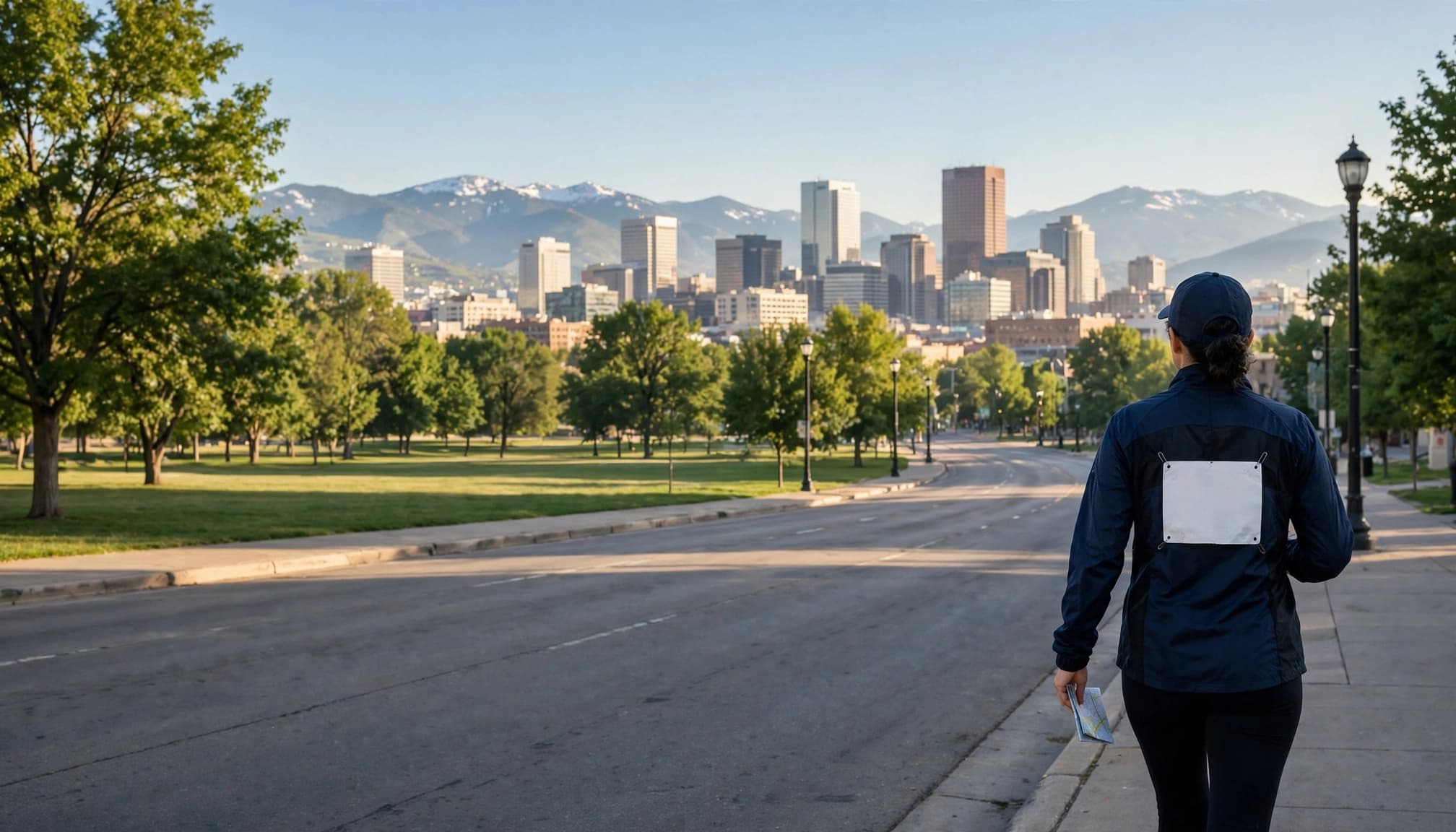
Downtown is a strong choice for runners who want restaurants, coffee shops, and transportation options within walking distance. Hotels around the 16th Street area, Union Station, and the Convention Center can work well for visitors without a car, especially if the official race transportation connects conveniently with your hotel area.
The tradeoff is race-morning traffic. Downtown sits near several course sections, but a short map distance doesn’t guarantee an easy route. Rolling closures can block streets, delay rideshares, and make a direct drive unreliable. Ask the hotel whether it offers race-morning breakfast, luggage storage, late checkout, or a quiet room away from street activity.
Downtown works particularly well for:
- Runners traveling without a car.
- Groups that need restaurants and attractions nearby.
- Spectators who want several transportation choices.
Capitol Hill for central access and neighborhood convenience
Capitol Hill offers a central location with independent restaurants, grocery stores, cafes, and a more residential feel. Depending on the year’s route and transportation plan, runners may find it easier to reach downtown or City Park than they would from a farther suburb.
However, hotel-to-start convenience varies by block. Check the walking route instead of relying on the neighborhood name alone. A hotel near a closed intersection may require a long detour, while a nearby shuttle stop could make the same property practical.
Capitol Hill is a good fit when you want a balance between race access and everyday convenience. It also gives spectators a reasonable base for reaching different viewing points, although road closures can still affect the return trip.
City Park and nearby neighborhoods for the finish
City Park is the finish area and race festival location, so nearby hotels can simplify the final part of race day. That matters after a marathon, when even a short walk can feel long. The area also suits families and spectators who want to stay close to the finish rather than coordinate a pickup across town.
The main limitation is getting to the start. Marathon runners should confirm the official shuttle plan before choosing a City Park hotel. Shorter-distance participants may have a different start location, so the most convenient hotel can change with the event.
Check the official marathon course overview alongside your race distance. The route passes through multiple Denver areas, and the marathon, 10-mile, half-marathon, and relay events don’t create identical travel needs.
Aurora and farther-out options
Aurora hotels often provide more parking, larger rooms, and lower rates than central properties. They can suit families, groups, or travelers extending their stay beyond race weekend.
Still, the added distance creates more dependence on driving or official transportation. During the closure window, a normal trip may take much longer. Choose Aurora only after checking your planned route, shuttle access, parking arrangements, and expected race-morning departure time.
How to Choose a Denver Marathon Hotel for Your Race Distance
Your race distance should shape your hotel choice as much as its neighborhood. A full marathon creates different sleep, transportation, and recovery needs than a 10K or relay. Before reserving one of the Denver Colfax Marathon hotels, map the property against your assigned start, finish, packet pickup location, and post-race area for the current event.
Race details can change, so check the official pages for the Denver marathon course, half-marathon logistics, and relay instructions before booking.
Full marathon runners need sleep and recovery
Marathon runners benefit most from a hotel that supports an early, predictable morning. Prioritize a quiet room, blackout curtains, reliable air conditioning, in-room coffee, and a bathroom that won’t require a long wait in a shared space. A short walk to the start can also reduce stress when road closures make rideshares unreliable.
The finish matters just as much. After 26.2 miles, a hotel near the post-race area, a shuttle stop, or a simple pickup route can save your legs. Confirm late checkout, luggage storage, elevator access, and nearby food before choosing a room. The cheapest rate may cost more if you need an expensive ride or cannot rest after the race.
Half marathon and 10K runners have more flexibility
Half-marathon runners still need an early start, but recovery demands are usually easier to manage. You can consider a hotel farther from the finish if it offers better sleep, breakfast access, parking, or a lower total price. The key question is whether you can reach the assigned start without crossing closed roads.
For a 10K, convenience often matters more than finish-line proximity. A short event may leave you with enough energy to walk, explore, or return to a hotel farther away. Families and spectators may prefer extra beds, a pool, breakfast, and easy parking, even when those amenities add a few minutes to the race commute.
Relay teams should plan around handoffs
Relay runners need to think beyond one start and finish. Each team member may travel to a different exchange point, while the team also needs a practical place to meet afterward. Choose a hotel with easy vehicle access, enough room for gear, and dependable communication service.
Packet pickup also needs attention. The official relay information states that teams must collect packets before race day, so check the current expo schedule before selecting a hotel. A property near the expo may be more useful than one near the finish, especially when several teammates arrive at different times.
Use a simple hotel decision framework
Compare each property using four questions:
- Walking distance: Can you walk to your start, finish, shuttle, or post-race meeting point?
- Transportation: Will you depend on a shuttle, car, rideshare, or public transit during closures?
- Total budget: Do parking, resort fees, meals, and extra nights change the advertised rate?
- Amenities: Does the room support sleep, breakfast, storage, showers, and recovery?
Choose the hotel that removes the most race-morning decisions, not simply the one with the shortest map distance.
Where you stay for the Denver Colfax Marathon can make race weekend a lot smoother. Whether you want a quick walk to the start line, an easy spot for family to cheer you on at the finish, a budget-friendly option, or a bit of luxury to reward yourself after 26.2 miles, our hotel guides help you find the right fit close to the action.
Beyond accommodations, our race guides cover everything else you need to know before race day — course details, elevation, start times, road closures, and registration info — so you can plan your trip with confidence and focus on running your best race.
Denver Colfax Marathon Hotels and Accommodation Guides
- Where to Stay for the Denver Colfax Marathon
- Best Luxury Hotels Near the Denver Colfax Marathon
- Best Cheap Hotels Near the Denver Colfax Marathon
- Best Hotels Near the Denver Colfax Marathon Start Line
- Best Hotels Near the Denver Colfax Marathon Finish Line
Denver Colfax Marathon Race Guides
- Denver Colfax Marathon Review
- Denver Colfax Marathon Route
- Denver Colfax Marathon Results
- Denver Colfax Marathon Expo
- Denver Colfax Marathon Road Closures Guide
- Denver Colfax Marathon Registration Review
Hotel Amenities That Matter Most on Colfax Marathon Weekend
Once you narrow your search by neighborhood and race distance, compare the hotel itself. The right amenities can make race morning calmer, but policies often change for busy weekends. Confirm every important detail with the property before you book.
Race-specific amenities to confirm
Hotels may offer special services for runners, but don’t assume they will be available during the Colfax Marathon. Ask whether the property provides:
- Early breakfast or grab-and-go food. A normal restaurant may open too late for your start time. Confirm the serving hours and whether the menu includes simple options such as fruit, oatmeal, toast, or coffee.
- Late checkout. After a marathon, access to your shower and bed can make a major difference. Ask whether late checkout is complimentary, available for a fee, or limited by occupancy.
- Luggage storage. This matters if checkout comes before the race or if you plan to leave your bags while attending the finish festival. Confirm where luggage is stored and whether the desk accepts bags before check-in.
- Race transportation. Some properties may provide a shuttle or easy access to an official pickup point, but routes and times can vary. Review the current Colfax Marathon race information and ask the hotel how guests should reach the start.
- A quiet room. Request a room away from elevators, bars, busy streets, and large group blocks. Sleep quality matters more than a view when your alarm rings before sunrise.
- Fitness and recovery access. A gym, pool, or basic stretching area can help, although these facilities may have restricted hours or limited equipment.
Call the property directly if its website gives vague answers. Ask for the front desk or manager, and request written confirmation for special breakfast hours, shuttle arrangements, and late checkout.
A hotel may advertise a standard breakfast, but that doesn’t mean it will open early enough for your assigned start.
General comforts that still matter
Race-specific services get attention, yet everyday hotel comforts often affect your stay just as much. Look for a comfortable bed, blackout curtains, reliable air conditioning, and a private bathroom with consistent hot water. These details support rest before the race and recovery afterward.
Parking can change the total cost of a room. Confirm the nightly rate, in-and-out privileges, garage clearance, and whether road closures could limit access on race morning. If you’re traveling with family, check for two beds, a mini-fridge, a microwave, connecting rooms, or enough floor space for gear.
Food access also deserves a close look. A nearby grocery store or restaurant gives you backup options when race-weekend crowds fill hotel dining rooms. The official race weekend events page lists post-race food and refreshments, but you should still plan meals before and after the event.
Before reserving, compare each finalist against this short list:
- Can I sleep well and reach the start without crossing closed roads?
- Can I eat, shower, store my bags, and rest on my schedule?
- Have I confirmed every special policy directly with the hotel?
The strongest Denver Colfax Marathon hotels remove uncertainty from race morning, even when they don’t offer the largest room or lowest advertised rate.
What Denver Colfax Marathon Hotels Cost and When to Book
Hotel prices for the Denver Colfax Marathon can change quickly, so avoid planning around a single “average” rate. Your final cost depends on the race date, hotel class, neighborhood, room type, taxes, parking, breakfast, resort or destination fees, cancellation terms, and weekend demand. Check live prices for your exact dates before making a decision.
Choose Your Distance, Duration and Goal Time
Make three quick selections and open the exact plan built for your race target.
Looking for a Fully Personalized Training Plan?
The training plans above are an excellent choice if they match your goal. However, if you’d rather train with a plan built specifically around your current fitness, goal race, preferred training days, weekly mileage, and target finish time, our RDA Custom Training Plans provide a personalized solution. We also have running courses available for runners seeking to run faster from the mile to the marathon.
Why Choose a Custom Training Plan?
| Standard Training Plan | RDA Custom Training Plan |
|---|---|
| Follows a fixed schedule | Built around your schedule |
| Standard weekly mileage | Peak mileage customized for you |
| Fixed workout days | Train on the days you choose |
| Same structure for everyone | Designed around your current fitness |
| Static plan | Updated as your fitness improves |
| One-time purchase | Ongoing personalized coaching and support |
What You’ll Receive
- A training plan built specifically for your goal
- Personalized training paces
- Long runs, tempo runs, threshold workouts, interval sessions, recovery runs, and easy runs
- Peak weekly mileage matched to your experience level
- Flexible training schedule that fits your life
- Ongoing plan adjustments as your fitness improves
Ready to Train Smarter?
Stop guessing and start following a plan built specifically for you, your schedule, and your racing goals.
Compare the full cost, not the room rate
A lower nightly price may not be the better deal once extra charges appear. Compare hotels using the same dates, occupancy, room type, and cancellation terms. Then calculate the total for the entire stay.
Include these costs in your comparison:
- Room rate and applicable taxes.
- Parking, including overnight and in-and-out charges.
- Resort, destination, or facility fees.
- Breakfast, coffee, and other meal expenses.
- Transportation to the start, finish, expo, or shuttle stop.
- Extra nights required because of arrival or departure times.
- Cancellation or change penalties.
For example, a cheaper hotel outside central Denver may require paid parking and a longer race-morning drive. A more expensive downtown room could cost less overall if you can walk to meals, avoid parking, and use a nearby race shuttle. Review the current official Colfax Marathon information before comparing locations, since race logistics can affect transportation costs.
When to book your Denver marathon hotel
Start checking Denver Colfax Marathon hotels as soon as you know your race weekend and travel plans. Popular properties near downtown, City Park, and major transportation routes may have limited availability well before race day. Early booking also gives you more room types and cancellation options.
A practical timeline looks like this:
- Several months ahead: Compare neighborhoods, confirm your race distance, and reserve a refundable room if the rate fits your budget.
- Two to three months ahead: Recheck prices, parking rules, breakfast hours, and transportation details. Cancel and rebook only after confirming the new reservation.
- Several weeks ahead: Review the current course map, road closures, shuttle information, and hotel policies. Confirm arrival, checkout, and luggage plans.
- Race week: Check the final total, save your reservation details, and ask the front desk about early breakfast, quiet rooms, and race-day access.
Booking early doesn’t guarantee the lowest price, and waiting doesn’t guarantee a discount. A flexible, refundable reservation gives you protection while you monitor rates. However, read the cancellation deadline carefully. Some discounted bookings become nonrefundable immediately.
The best hotel value is the property that keeps your total cost and race-morning decisions manageable.
Match price to your priorities
Full-marathon runners may gain more from a quiet room, short transportation route, and late checkout than from a large room or extra amenities. Families may value two beds, parking, breakfast, and a pool. Relay teams should also consider room size, luggage storage, and access to multiple exchange points.
Before booking, place your finalists in a simple comparison:
| Cost factor | Hotel A | Hotel B |
|---|---|---|
| Room and taxes | Check live rate | Check live rate |
| Parking and hotel fees | Confirm directly | Confirm directly |
| Breakfast and meals | Estimate per guest | Estimate per guest |
| Race transportation | Walk, shuttle, or ride | Walk, shuttle, or ride |
| Cancellation terms | Review deadline | Review deadline |
Live prices must be checked for your dates because marathon-weekend demand can change both availability and total cost. Choose the room that fits your budget after every charge is included, not the one with the lowest headline rate.
Race-Day Transportation From Your Denver Hotel
A good hotel location helps, but your race-morning transportation plan matters just as much. Before you arrive, identify your start area, the best route from your hotel, expected road closures, and at least one backup option. Race routes, transit service, shuttle locations, and access rules can change for the current Colfax Marathon, so confirm the latest details through official race and transportation sources.
Compare your race-day transportation options
Walking is often the simplest choice when your hotel is close to the start. It avoids traffic and gives you a predictable travel time, but check the complete route rather than estimating by neighborhood. Construction, barricades, and closed intersections may force a detour.
Public transit can work well for visitors without a car. Check the first scheduled departure, required transfers, stop locations, and any event-related service changes before race morning. Leave enough time to walk from the station to the start, especially if you are carrying layers or race gear.
Official race shuttles may offer the most direct access from designated pickup points. However, a shuttle stop may not be near your hotel, and popular departures can fill quickly. Confirm the pickup location, departure window, required credentials, and return arrangements before relying on this option.
Rideshares and taxis provide flexibility, yet drivers may face barricades or restricted drop-off areas. Set your destination to an approved access point instead of assuming the driver can reach the start line. Taxis can be useful as a backup, but availability may be limited during the busiest hours.
Driving gives you more control over luggage and family members, although it creates the most uncertainty near the course. Check garage access, event parking, street closures, and whether you can leave the area after the race. A hotel with parking is only convenient if you can reach it when roads are restricted.
Bicycles can suit experienced riders staying within a reasonable distance. Plan where you will lock or store the bike, and avoid assuming every course crossing will remain open. Ask your hotel about secure storage before bringing one.
Build a backup plan before you arrive
Write down your primary route, backup route, departure time, and the address of your start area. Save shuttle details and transit information offline because early-morning service can be harder to check when your phone battery is low.
Allow extra time for security checks, bathroom lines, packet pickup, gear checks, transit delays, and road closures. Your travel estimate should include walking from the drop-off point, not just the vehicle portion of the trip.
A practical plan includes:
- Primary option: Walking, transit, shuttle, rideshare, taxi, driving, or cycling.
- Backup option: A different method that remains possible if roads close or service changes.
- Meeting point: A clear location for family or relay teammates after the race.
- Return plan: Directions back to your hotel, including luggage and post-race transportation.
Test your route on a map before race weekend, then ask the hotel front desk about current access conditions when you check in. The best Denver Colfax Marathon hotels make race morning easier, but a written backup plan keeps one blocked street from disrupting your start.
A Simple Booking Checklist for Denver Colfax Marathon Hotels
Before you pay for a room, check the details that can turn a convenient hotel into a race-day headache. Use this process to compare Denver Colfax Marathon hotels with your actual start time, finish location, transportation plan, and total trip cost.
1. Confirm the current race information
Start with the official Colfax Marathon race information. Confirm your event, start time, start line, finish area, packet pickup schedule, shuttle details, and road closures. These details can change by race year, so don’t rely on an old map or a previous runner’s itinerary.
Save the official course and transportation pages to your phone. If you plan to drive, check whether your route crosses a closed street or restricted intersection.
2. Match the hotel to your start and finish
Next, compare the hotel’s real walking and driving routes with your assigned race locations. A property may look close on a map but sit behind a closure, one-way street, or difficult intersection.
Ask yourself:
- Can you reach the start on foot, by shuttle, or by transit?
- How will you return after the race?
- Is the hotel near the finish, a shuttle stop, or a practical pickup point?
- Can your family reach the finish without crossing the course?
For marathon runners, a short and predictable morning route usually matters more than a scenic view. Shorter-distance participants and spectators may prefer better dining, parking, or room space.
3. Compare the complete booking cost
Look past the advertised nightly rate. Add taxes, parking, destination fees, breakfast, transportation, and extra nights. Then compare the full stay under the same cancellation terms.
A downtown room may cost more but eliminate parking and rideshare expenses. An Aurora hotel may offer a lower rate but require a longer drive and paid parking. Use the final total, not the headline price, to make your choice.
4. Call the property before paying
Hotel websites rarely answer every race-weekend question. Call the front desk and confirm:
- Early breakfast or grab-and-go food.
- Late checkout and post-race shower access.
- Luggage storage before check-in or after checkout.
- Race shuttle access and pickup instructions.
- Parking availability, cost, and in-and-out privileges.
- Quiet-room options away from elevators and busy streets.
Request written confirmation when a special arrangement affects your decision.
5. Save every confirmation detail
After booking, save the confirmation number, cancellation deadline, hotel phone number, address, rate breakdown, and special requests. Keep screenshots available offline in case cell service is slow on race morning.
Avoid these common mistakes:
- Choosing by map distance alone.
- Ignoring cancellation deadlines.
- Waiting until race week to reserve.
- Assuming breakfast, parking, or late checkout is included.
- Forgetting to check the route back to the hotel after the finish.
A few minutes of checking before payment can prevent expensive surprises during race weekend.
Frequently Asked Questions
Even after comparing neighborhoods, prices, and transportation, a few practical questions can affect your final hotel choice. These answers cover details that often matter once race weekend gets closer.
How many nights should I book for the Colfax Marathon?
Most runners should plan to arrive at least one night before the race. Arriving earlier can make sense if you need to attend packet pickup, adjust to travel, or avoid a rushed morning after a late flight.
A post-race night is useful for marathon runners who want a shower, meal, and full night’s sleep before traveling home. Shorter-distance runners may be comfortable leaving the same day, but only if transportation and checkout times fit their schedule.
Should I stay near the start or the finish?
Choose the start when your main concern is sleep, punctuality, and a simple pre-race routine. Choose the finish when recovery, family meetups, and post-race convenience matter more.
For full marathoners, the finish can be several hours away from the start on foot. Review your event’s transportation plan before selecting a hotel, because the closest property to one location may create a difficult trip to the other.
Can my hotel accommodate a race-day late checkout?
Some hotels offer late checkout, but availability usually depends on occupancy and the property’s policy. Ask about the fee, latest possible departure time, and whether you can access a shower if the room itself is unavailable.
Request late checkout when you book, then confirm it again at check-in. If the hotel cannot approve it, verify luggage storage and identify a nearby place where you can change or clean up after the race.
What should families look for in a marathon hotel?
Families often benefit from two beds, a mini-fridge, breakfast options, parking, and a room that offers enough space for race gear. A hotel near restaurants or a grocery store also gives you flexible meal choices when race-day schedules change.
Spectators should plan how they will reach the finish and return to the hotel while roads remain closed. A property with simple transit access may be more useful than one that only appears close on a map.
Is a hotel pool useful after the race?
A pool can be a welcome recovery amenity, but don’t assume it will be open or suitable for post-race use. Confirm operating hours, facility rules, towel availability, and whether the hotel restricts access during busy weekends.
A comfortable bed, private bathroom, and nearby food usually matter more than a pool. Prioritize the features you will use before and after your race.
What should I do if my race plans change?
Book a rate with clear cancellation or modification terms whenever possible. Check the exact deadline, payment schedule, and penalties before confirming, since some discounted reservations cannot be changed.
If your race distance, arrival time, or travel group changes, update the hotel promptly. Recheck the room type, occupancy, breakfast plan, parking needs, and late checkout request rather than assuming your original reservation still fits.
Conclusion
The best Denver Colfax Marathon hotel supports your full race-day plan, not simply the one with the shortest map distance. Before booking, confirm the current course, start location, road closures, and transportation options. Then compare Downtown, Capitol Hill, City Park, Aurora, and other nearby areas based on your race distance, sleep needs, finish-line plans, and travel group.
Calculate the complete cost, including parking, meals, transportation, taxes, and hotel fees. Check race-friendly amenities such as early breakfast, luggage storage, late checkout, quiet rooms, and post-race shower access. When possible, choose flexible reservation terms so you can adjust your plans if race logistics or travel details change.
Book early for the best selection, especially if you want to stay near the start, finish, or a convenient shuttle route. Before race weekend, verify every important detail with the hotel and official race sources. A well-planned stay helps you spend less time solving logistics and more time focusing on the course.


