

Crowne Plaza Los Angeles Harbor Hotel by IHG Review: LA Marathon
Race weekend can turn a simple hotel stay into a logistical problem. With LA Marathon crowds, road closures, early start times, and limited dining options, you need a place that supports sleep, easy meals, race-day transportation, and recovery rather than adding more stress.
This Crowne Plaza Los Angeles Harbor Hotel by IHG review looks at the San Pedro property through a marathon runner’s lens. The key questions are practical: how far it is from the start and finish areas, whether getting to the course is manageable, how comfortable and quiet the rooms are, and whether breakfast, fitness facilities, and recovery options fit a runner’s schedule. Parking and the total cost matter too, especially when race-weekend rates rise and transportation plans can change.
The hotel may suit runners who value a quieter base outside central Los Angeles, while others may prefer to stay closer to the race route despite higher prices or heavier crowds. Marathon plans, shuttle rules, road closures, and hotel policies can change, so confirm the current details before booking. First, let’s examine the hotel’s location and what it means for getting to the LA Marathon on race morning. Remember, book your Los Angeles Marathon hotels early and save more.
Key Takeaways
- Crowne Plaza Los Angeles Harbor Hotel by IHG offers a quieter San Pedro base, but it sits away from the LA Marathon route and requires careful race-morning planning.
- Expect extra travel time, traffic, parking limits, and road closures, so review the LA Marathon transportation and shuttle details before booking.
- The hotel fits runners who value rest, on-site convenience, and easier recovery over staying near downtown crowds.
- Confirm breakfast hours, parking fees, room policies, and transportation arrangements directly with the hotel before race weekend.
Crowne Plaza Los Angeles Harbor Hotel by IHG Review: The Quick Verdict for Marathon Runners
The Crowne Plaza Los Angeles Harbor Hotel by IHG is a better fit for runners who value a calm home base than those who want to stay beside the LA Marathon start. Its San Pedro location offers harbor scenery, everyday conveniences, and more breathing room than the busiest parts of downtown Los Angeles. However, that quieter setting comes with a clear cost: race-morning transportation requires advance planning.
What the San Pedro location gets right
San Pedro gives you a slower backdrop for race weekend. Waterfront views, open paths, and harbor air can help settle pre-race nerves when your mind keeps replaying pacing plans and logistics. After 26.2 miles, the area also offers space to decompress instead of dropping straight into downtown crowds.
Nearby restaurants can make dinner easier, while grocery stops help you pick up breakfast items, sports drinks, fruit, or familiar snacks. Those details matter when you don’t want to depend entirely on hotel dining hours. Still, check current business hours and walking distances before relying on them.
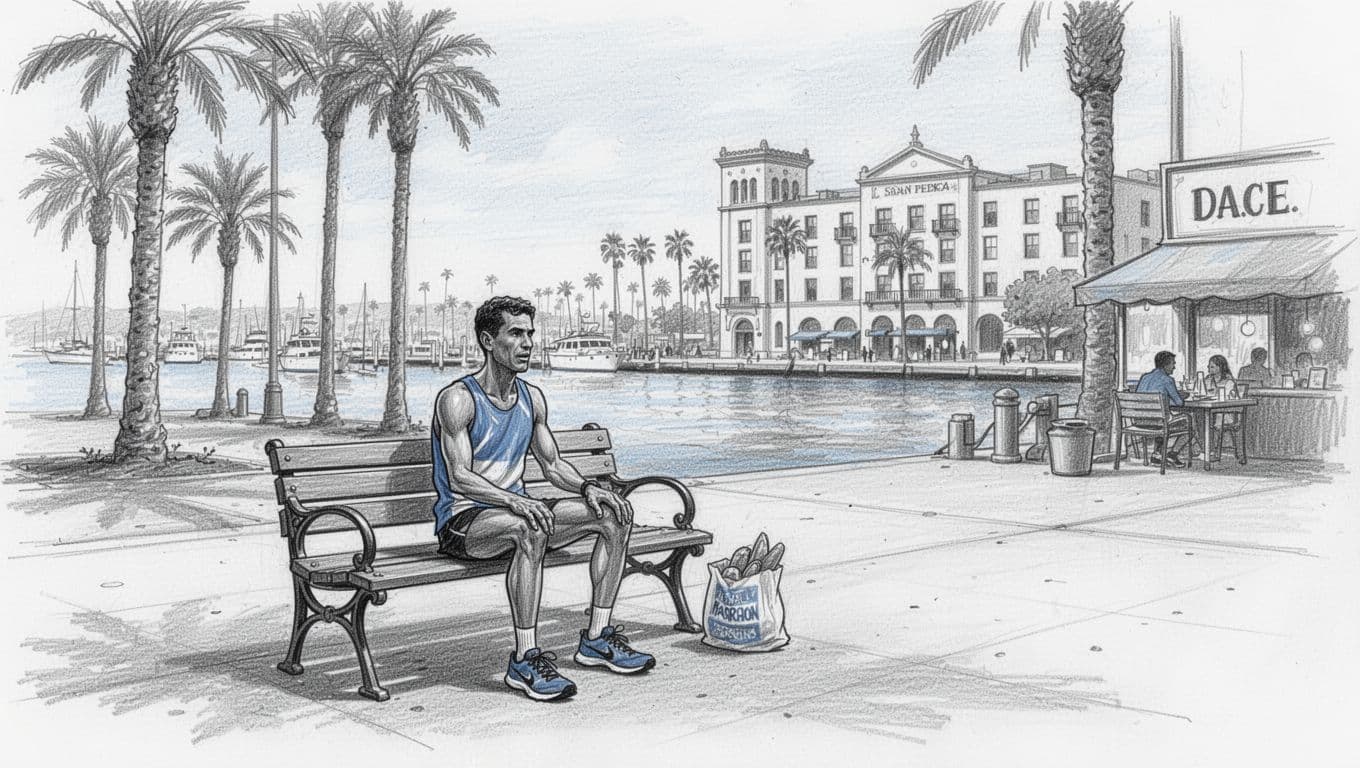
The setting may appeal most to runners who arrive before race weekend, travel with a car, bring family members, or prefer a quieter base. A support crew can enjoy the harbor area while you focus on sleep and race preparation. In contrast, runners seeking a short walk to the start, a large elite-style recovery program, or an easy walk from the finish to the room may find the property less convenient.
The tradeoff is simple. You gain a scenic, less hectic location, but you give up the convenience of staying near the course.
The main drawback: marathon transportation takes planning
Treat hotel-to-start and finish-to-hotel transportation as a major booking question. The Crowne Plaza Los Angeles Harbor Hotel isn’t a start-line hotel, so a normal travel-day plan may fail when streets close and traffic builds before dawn.
Race morning can involve an early wake-up, restricted parking, road closures, crowded rideshares, and limited transit service. Even a reservation made in advance may face delays if pickup zones change. After the finish, tired legs make a long transfer feel much harder than it looked on a map.
Review the current LA Marathon course and closure guidance, then confirm the official transportation information for your race year. Ask the hotel whether it offers a marathon shuttle, when it operates, and whether reservations are required. Also check parking fees, late checkout options, and cancellation terms before you pay a nonrefundable rate.
The hotel can work well, but only if transportation is part of the booking decision rather than an afterthought.
Getting to the LA Marathon Start and Back After the Finish
The Crowne Plaza Los Angeles Harbor Hotel by IHG is outside the main race area, so transportation deserves the same attention as sleep and breakfast. Separate your plan into four parts: normal hotel travel, the official LA Marathon start, participant transportation, and spectator travel. Each follows different rules on race day.
Distance, drive time, and why normal estimates can fail
A map’s mileage only shows the distance between two points. It doesn’t show rolling road closures, restricted turns, shuttle queues, security checks, limited parking, or a rideshare driver being unable to reach your preferred entrance. A route that looks manageable during a normal morning can become unreliable before sunrise.
Compare the usual drive time with a race-day scenario, then check the current LA Marathon course information and official parking and shuttle guidance. Review closure notices close to race weekend, too. For the 2026 race, reported closures began as early as 3 a.m., but dates, routes, and access rules can change each year.
Confirm your required arrival time, not only the advertised start time. Then map your hotel departure around that deadline and add a generous buffer for traffic and lines. The runner’s route to the start may not match the route home after the finish, especially if streets remain closed.
A simple race-morning transportation checklist
Use the evening before the race to remove as many decisions as possible:
- Ask the front desk whether early coffee, breakfast, or a grab-and-go option will be available.
- Confirm checkout time, late checkout policies, and whether the hotel can store your luggage after checkout.
- Reserve or schedule transportation when appropriate, but verify the pickup location and cancellation terms.
- Choose a backup pickup point in case the hotel’s entrance becomes difficult to reach.
- Charge your phone, GPS watch, and headphones, then pack a phone battery pack.
- Lay out your bib, shoes, socks, clothing, nutrition, and identification before going to bed.
- Allow extra time for security screening, shuttle lines, parking walks, and bathroom queues.
Spectators need their own plan. They shouldn’t assume they can follow the runner’s route, reach every viewing point, or enter the finish area without restrictions. Controlled access may affect where family members can meet you, so agree on a meeting method and backup location before race morning.
The post-race return matters as much as the trip to the start
After 26.2 miles, tired legs and wet or cold clothing can turn a simple pickup into a long ordeal. Arrange your return before leaving the hotel. If rideshare is your choice, select a prearranged meeting point outside the most congested finish-area streets and confirm that drivers can access it.
A support person can help, but give them the same closure information you use for the morning. Official participant transportation may be the better option if the race provides it, although you should confirm where it departs and whether it returns near the Crowne Plaza Los Angeles Harbor Hotel.
Pack a change of clothes, familiar snacks, fluids, and your phone battery pack. Keep your phone accessible, since you may need to walk farther than expected before meeting your ride. A reliable return plan protects your recovery and keeps a strong race from ending with an avoidable transportation problem.
Rooms, Sleep, and Recovery at the San Pedro Hotel
A marathon hotel room should help you protect sleep, manage pre-race nerves, and recover after the finish. At the Crowne Plaza Los Angeles Harbor Hotel by IHG, evaluate the room as part of your race strategy, not simply as a place to leave your luggage.
Can you get the deep sleep a marathon requires?
Sleep affects more than energy. A poor night can make your target pace feel harder, shorten your patience, and lead to rushed decisions when fatigue or unexpected race conditions appear. Good sleep won’t replace training, but it gives your body and mind a better starting point.
Bed comfort, room size, cleanliness, bathroom setup, temperature control, and blackout conditions all matter. Check whether the curtains block early sunlight, whether the air-conditioning controls respond quickly, and whether the bathroom layout lets you prepare without waking a roommate. Hallway noise and elevators can disrupt sleep even when the room itself feels comfortable.
Ask for a room away from:
- Elevators and ice machines.
- Main entrances, parking areas, and loading zones.
- Meeting rooms, event spaces, and busy corridors.
- Street-facing areas if outside traffic could disturb you.
A room that looks peaceful at check-in can become noisy after an evening event or an early housekeeping shift.
Bring familiar earplugs, an eye mask, and the alarm you trust. Set the hotel alarm as a backup, but don’t rely on an unfamiliar clock alone. Keep the room-temperature plan simple: adjust the thermostat before bed, pack sleepwear that suits a warm or cool room, and avoid waiting until midnight to solve a temperature problem.
Fitness, stretching, and recovery options
Current confirmation required: Verify whether the hotel currently offers a fitness center, pool, or other recovery amenities before booking. Availability, hours, closures, and access rules can change, especially during renovations.
Before the race, a light shakeout, gentle mobility routine, and short walk are enough for most runners. You don’t need to turn the hotel gym into a final training session. Save your legs by avoiding heavy lifting, hard intervals, long treadmill runs, and unfamiliar exercises.
Afterward, prioritize fluids, familiar food, warmth, and sleep. Gentle movement may reduce stiffness, but aggressive stretching or intense exercise can make sore tissue feel worse. Use the LA Road Runners training resources for broader guidance on pacing, nutrition, and race preparation. Don’t assume massage is available unless the hotel confirms it directly.
Choose Your Distance, Duration and Goal Time
Make three quick selections and open the exact plan built for your race target.
Looking for a Fully Personalized Training Plan?
The training plans above are an excellent choice if they match your goal. However, if you’d rather train with a plan built specifically around your current fitness, goal race, preferred training days, weekly mileage, and target finish time, our RDA Custom Training Plans provide a personalized solution. We also have running courses available for runners seeking to run faster from the mile to the marathon.
Why Choose a Custom Training Plan?
| Standard Training Plan | RDA Custom Training Plan |
|---|---|
| Follows a fixed schedule | Built around your schedule |
| Standard weekly mileage | Peak mileage customized for you |
| Fixed workout days | Train on the days you choose |
| Same structure for everyone | Designed around your current fitness |
| Static plan | Updated as your fitness improves |
| One-time purchase | Ongoing personalized coaching and support |
What You’ll Receive
- A training plan built specifically for your goal
- Personalized training paces
- Long runs, tempo runs, threshold workouts, interval sessions, recovery runs, and easy runs
- Peak weekly mileage matched to your experience level
- Flexible training schedule that fits your life
- Ongoing plan adjustments as your fitness improves
Ready to Train Smarter?
Stop guessing and start following a plan built specifically for you, your schedule, and your racing goals.
Room requests that can make race weekend easier
Ask about a mini-fridge, coffee maker, microwave access, extra towels, ice, quiet floors, early housekeeping preferences, late checkout, and luggage storage. Runners with mobility needs should also ask about accessible rooms and the bathroom setup before arrival.
Requesting a quiet room or late checkout is helpful, but neither is guaranteed. Fees and policies vary, so get important answers in writing. Also ask whether the property is undergoing renovations, which areas could be affected, and whether construction follows restricted hours.
A few confirmed details can protect your race weekend better than a long list of advertised amenities.
Food, Hydration, Parking, and Other Details Runners Actually Need
The Crowne Plaza Los Angeles Harbor Hotel by IHG can support a runner well during the 48 hours around the LA Marathon, but convenience depends on preparation. Breakfast timing, food access, parking rules, Wi-Fi, and transportation costs all deserve attention before race weekend.
Pre-race meals without gambling on your stomach
Choose simple, carbohydrate-rich foods that already fit your routine. Oatmeal, rice, bananas, bagels, sports drink, and familiar snacks are safer choices than an impressive restaurant meal you have never tried before. High-fat, spicy, or experimental foods can leave you bloated, uncomfortable, or searching for a bathroom at the wrong time.
Check the hotel’s restaurant and breakfast hours before arrival. Ask whether an early breakfast, coffee service, or grab-and-go option will be available. If dinner or breakfast hours don’t match your schedule, order takeout ahead of time or use a nearby grocery store for reliable basics.
Pack shelf-stable backup food in case a restaurant closes early, a delivery runs late, or race traffic limits your options. Good choices include instant oatmeal, bagels, bananas, crackers, sports chews, and the same snacks you use during long training runs. Runners with allergies or dietary restrictions should confirm ingredients directly and avoid assuming that a menu item is safe.
The hotel’s official amenities information can help you check current dining and property details, but confirm hours with the hotel shortly before your stay.
Parking, rideshare, Wi-Fi, and hidden race-weekend costs
Break down every likely charge before booking. Ask about the current on-site parking rate, whether you can leave and re-enter freely, and whether parking remains available after checkout. Vehicle height limits may affect guests with vans or roof boxes, while race closures can make a normal entrance or rideshare pickup point unusable.
Request clear instructions for rideshare pickups, including the exact hotel entrance and a backup meeting location. After the marathon, your driver may not be able to reach the closest course-side street. A short walk to an accessible pickup area could save substantial time.
Confirm whether Wi-Fi is included, whether the connection reaches every room, and whether the elevators require a key. Ask the front desk about luggage storage, ice, water, early arrival, late checkout, and support if your transportation plan changes. A small request can become difficult when many runners need help at once.
Your real hotel cost includes more than the room rate:
- Room taxes and mandatory destination or resort fees, if any.
- Parking, meals, groceries, and bottled drinks.
- Transportation to the start and back after the finish.
- Early check-in, late checkout, or luggage-related charges.
Don’t rely on an old review for current prices. Get important fees and policies directly from the hotel in writing.
What to pack when the hotel is not next to the course
Because you can’t quickly return to your room, pack for delays and changing weather. Keep these items together:
- Race shoes, bib, pins, race outfit, and an extra pair of socks.
- Light layers, a hat, sunscreen, and anti-chafing products.
- Familiar gels, snacks, sports drink, and hydration supplies.
- Chargers, a portable battery, medications, and identification.
- Recovery clothes, comfortable shoes, and post-race snacks.
Extra clothing matters when a long wait follows the finish. Personal food matters because nearby stores may be closed, crowded, or hard to reach. Pack what your training has already tested, then confirm the hotel’s food, parking, Wi-Fi, elevator, and front-desk policies before race week.
Who Should Book the Crowne Plaza Los Angeles Harbor Hotel for the LA Marathon?
The Crowne Plaza Los Angeles Harbor Hotel by IHG is best for runners who want a calmer place to sleep, organize their gear, and recover after the race. Its San Pedro location makes more sense for travelers who accept a longer race-day transfer in exchange for space, parking, and a less crowded base.
The hotel makes sense if sleep, space, and a calmer base come first
Choose this hotel if you plan to stay several nights, travel with family, or bring enough gear to make a small room feel crowded. A quieter harbor setting can help you settle before the race, while nearby dining and grocery options give you more control over meals and snacks.
Runners traveling with a car may also appreciate having their own schedule. You can carry recovery clothes, food, hydration supplies, and extra layers without worrying about fitting everything into a small day bag. Families and support crews have room to relax between race activities instead of spending the entire weekend in the busiest parts of downtown Los Angeles.
The tradeoff remains transportation. A peaceful room doesn’t remove the need to reach the start early or find a reliable route back after the finish. Review the official marathon parking and shuttle guidance and build your plan around the required arrival time.
Choose another area if the start line is your top priority
A hotel closer to official marathon transportation or the start area may justify a higher weekend rate when convenience matters most. Solo runners without a car, first-time marathoners who want fewer decisions, and runners who dislike pre-dawn travel may benefit from staying nearer the race operation.
A closer location can also simplify race-related activities and shorten the trip back after the finish. That matters when your legs are exhausted and every extra transfer feels longer than expected. Couples who want to walk to restaurants, meetings, or race events may prefer downtown access as well.
However, proximity has costs beyond the room rate. Hotels near the start can face heavier crowds, street noise, limited availability, and less convenient parking. A nearby room also won’t guarantee a smooth race morning if shuttle reservations, road closures, or controlled access change.
A booking checklist for comparing total value
Score both locations before choosing. Consider the full weekend cost, not just the advertised nightly rate:
- Add the room, taxes, parking, meals, and transportation.
- Compare sleep quality, room setup, and space for family or gear.
- Check breakfast hours, dining access, and post-race recovery comfort.
- Review cancellation terms, then choose a flexible rate if your plans may change.
- Confirm parking, late checkout, luggage storage, and transportation policies.
Book the Crowne Plaza Los Angeles Harbor Hotel when sleep, space, parking, and post-race comfort outweigh easy start-line access. Choose a closer hotel when avoiding early travel is worth paying more. Recheck the hotel’s current policies and the official race guidance as the marathon approaches, because transportation rules and access details can change.
How to Make This Hotel Stay Work With Your Marathon Training and Race Plan
The Crowne Plaza Los Angeles Harbor Hotel by IHG can support a strong marathon weekend, but the hotel won’t manage your preparation for you. Your taper, race pace, nutrition, sleep, and transportation plan still need to run on schedule.
Use the first day to settle in, not chase every attraction
Arrive early enough to unpack, organize your race gear, inspect your route plan, and buy anything you forgot. Confirm transportation details before you feel tired, especially because the San Pedro hotel requires more planning than a property near the LA Marathon start.
If your training plan calls for a shakeout, keep it short and easy. A relaxed walk near the harbor can also help you loosen up after traveling. San Pedro’s waterfront atmosphere offers a calmer setting for that first-day reset, with less pressure to fill every hour.
Avoid turning arrival day into a sightseeing tour. Long walks, unfamiliar workouts, extra shopping, and late nights can quietly damage your taper. Your goal is to arrive at race morning with fresh legs and a settled mind, not a full camera roll.
Protect your taper, fueling, and race-day routine
Treat the hotel room as your performance base. Keep your meals, caffeine timing, supplements, bedtime, and shoe choices familiar. Race weekend is a poor time to test a new restaurant, recovery product, pair of shoes, or breakfast routine.
Prepare breakfast and race nutrition before the evening gets busy. Pack foods you have already used during long runs, such as oatmeal, bagels, bananas, sports drinks, gels, or chews. Hydrate steadily, but don’t force excessive fluids late at night.
Set more than one alarm, charge your watch and phone, and lay out every item before bed. Check the forecast, then adjust clothing, hydration, sunscreen, and warm-up plans for the expected conditions. Mental preparation matters too. Review your opening pace, fueling intervals, and the response you will use when the race becomes uncomfortable.
Marathon performance depends more on repeatable habits than on luxury features, attractive views, or an impressive lobby.
A realistic final recommendation for different runners
The Crowne Plaza Los Angeles Harbor Hotel may be a good marathon base if you want a comfortable San Pedro stay and accept transportation planning. It is less convenient for anyone expecting walkable access to the start or a simple return to the room after finishing.
A budget-conscious runner should compare the total cost, including parking, rideshare expenses, food, and possible early checkout. The hotel can make sense when the room rate is lower than start-area options and you can share transportation.
A family with a car may find the property easier to justify. Extra space, a familiar vehicle, and a quieter harbor setting can reduce weekend stress, provided the driver understands race-day closures and pickup restrictions.
A first-time marathoner seeking the simplest morning should choose a hotel closer to official race transportation or the start if the price fits the budget. Removing a long pre-dawn transfer may be worth more than saving money on the room.
For RunDreamAchieve runners focused on execution and personal bests, book this hotel only when its location fits your plan. Control the basics, protect your routine, and let the comfortable room support the work your training already built.
Frequently Asked Questions
The Crowne Plaza Los Angeles Harbor Hotel by IHG can work for marathon weekend, but its location requires more planning than a hotel near Dodger Stadium. These answers cover the practical details that can affect your cost, sleep, and race-morning routine.
Is the Crowne Plaza Los Angeles Harbor Hotel within walking distance of the LA Marathon start?
You should not assume the hotel is walkable or convenient on foot from the LA Marathon start. The start location, course plan, street closures, and official transportation arrangements can change for each race year.
Check the official LA Marathon transportation details before booking. A route that looks reasonable on a normal day may become impractical when roads close before sunrise.
Does the hotel offer an LA Marathon shuttle?
A marathon shuttle is not guaranteed. Transportation may be arranged by the hotel, the race organizers, both parties, or neither, so ask before you commit to the reservation.
Confirm the pickup location, departure schedule, reservation rules, cost, and return options. Also ask what happens if you miss the scheduled shuttle or need transportation back after the finish.
What should runners ask the hotel before reserving a room?
Ask questions that could change your final bill or disrupt your race-morning routine. Confirm the race-weekend rate, cancellation deadline, parking fees, and any early check-in or late checkout charges.
You should also ask about early breakfast, luggage storage, quiet-room requests, refrigerator access, and transportation support. Get important answers in writing, especially if you are comparing a flexible rate with a cheaper nonrefundable booking.
Is San Pedro a good area for a marathon weekend?
San Pedro can suit runners who want a calmer harbor setting, nearby food options, and room to recover after the race. It may feel less hectic than staying in the center of Los Angeles, particularly if you travel with family or a support crew.
However, the area can require more transportation planning than a hotel near the start. Choose San Pedro when rest and space matter most; choose a closer location when reducing race-day travel is your priority.
Should I stay at the hotel the night before the marathon?
Staying nearby can reduce long-distance travel on race morning, but the Crowne Plaza Los Angeles Harbor Hotel still requires a verified race-day plan. Arrive early enough to test the room, organize your gear, confirm transportation, and settle into your normal sleep and fueling routine.
Avoid arriving just before bedtime if possible. You need time to solve practical problems before they become stressful at 4 a.m.
What is the biggest reason to choose or skip this hotel?
Choose the hotel for its calmer location and general convenience when you already have transportation arranged. Skip it if your main goal is the shortest, simplest route to the LA Marathon start.
The central tradeoff is comfort versus proximity. A peaceful San Pedro base can support recovery, but it won’t remove the work required to reach the course.
Conclusion
The Crowne Plaza Los Angeles Harbor Hotel by IHG offers a calmer San Pedro base for LA Marathon weekend, with room to organize gear, protect sleep, and recover after the race. Its distance from the course is the main compromise, since race-morning travel and the return trip can become complicated when streets close and transportation demand rises.
This hotel can work well for runners who plan ahead, especially those traveling with family, staying several nights, or using a car. However, convenience depends on your transportation plan, not just the room itself. Before booking, check the official LA Marathon course, shuttle, road-closure, and parking information for the current race year. Confirm the hotel’s breakfast hours, parking fees, luggage policies, and any transportation support as well.
For runners who value comfort and recovery more than the shortest route to the start, the hotel is a practical choice. A smooth marathon weekend comes from protecting your sleep, fueling, pacing, and recovery, not from choosing the flashiest address.


