

Copenhagen Half Marathon Review and Guide
Before sunrise, Copenhagen is already humming: runners gather near the start, volunteers guide waves into place, and the streets fill with nervous energy as race day begins. Once the course opens, the event carries you through broad boulevards, historic streets, cheering spectators, and fast, crowded racing.
This review looks beyond the finish time to the full runner experience. You’ll get a practical look at the course, crowd support, organization, race-day logistics, entry cost, weather, and the atmosphere shaping each kilometer. You’ll also get a clear sense of which runners will enjoy this event most.
Because entry details, course maps, start times, and other race information can change with each edition, confirm the latest updates on the official race website before making travel plans or setting training targets. First, let’s examine how the course feels underfoot and what its layout means for pacing.
Remember, make sure to book your Copenhagen Half Marathon hotels early to save on costs later.
Build Your Complete Race-Day Setup
The right shoe helps, but faster racing comes from better training, pacing, recovery, fueling, and execution.
More Guides for This Shoe
Key Takeaways
- The event offers a 21.1-kilometer route, making it a strong choice for steady pacing and ambitious race goals. Check the official route details before race day.
- Crowd support lines key sections of the course, creating an upbeat atmosphere that helps runners manage difficult middle kilometers.
- Race-day organization, transportation, start corrals, and baggage planning can shape your experience as much as the course itself.
- Expect a fast, busy event where smart positioning and a controlled opening pace matter.
- The race suits runners who want city scenery, strong crowd support, and a serious but welcoming half marathon setting.
Copenhagen Half Marathon Review: The Race at a Glance
The half marathon covers 21.1 kilometers, or 13.1 miles, through Denmark’s capital in a major road running event. It has the profile of a fast city race, yet the experience feels broader than a stopwatch: local runners fill the field, spectators bring energy to the streets, and visitors get a moving introduction to Copenhagen.
The event usually sits on the fall racing calendar, although the exact date can change. Its current world athletics classification is a gold label road race, but confirm that status for the current edition. Check the official race website for the current date, entry details, field size, start waves, start times, time limits, and race rules before booking travel or setting a goal time.
As a large mass race, it brings together participants with different goals and experience levels. Elite runners help create a competitive atmosphere, but the event’s high-level status doesn’t guarantee world records or identical conditions each year.
What makes this Copenhagen race stand out
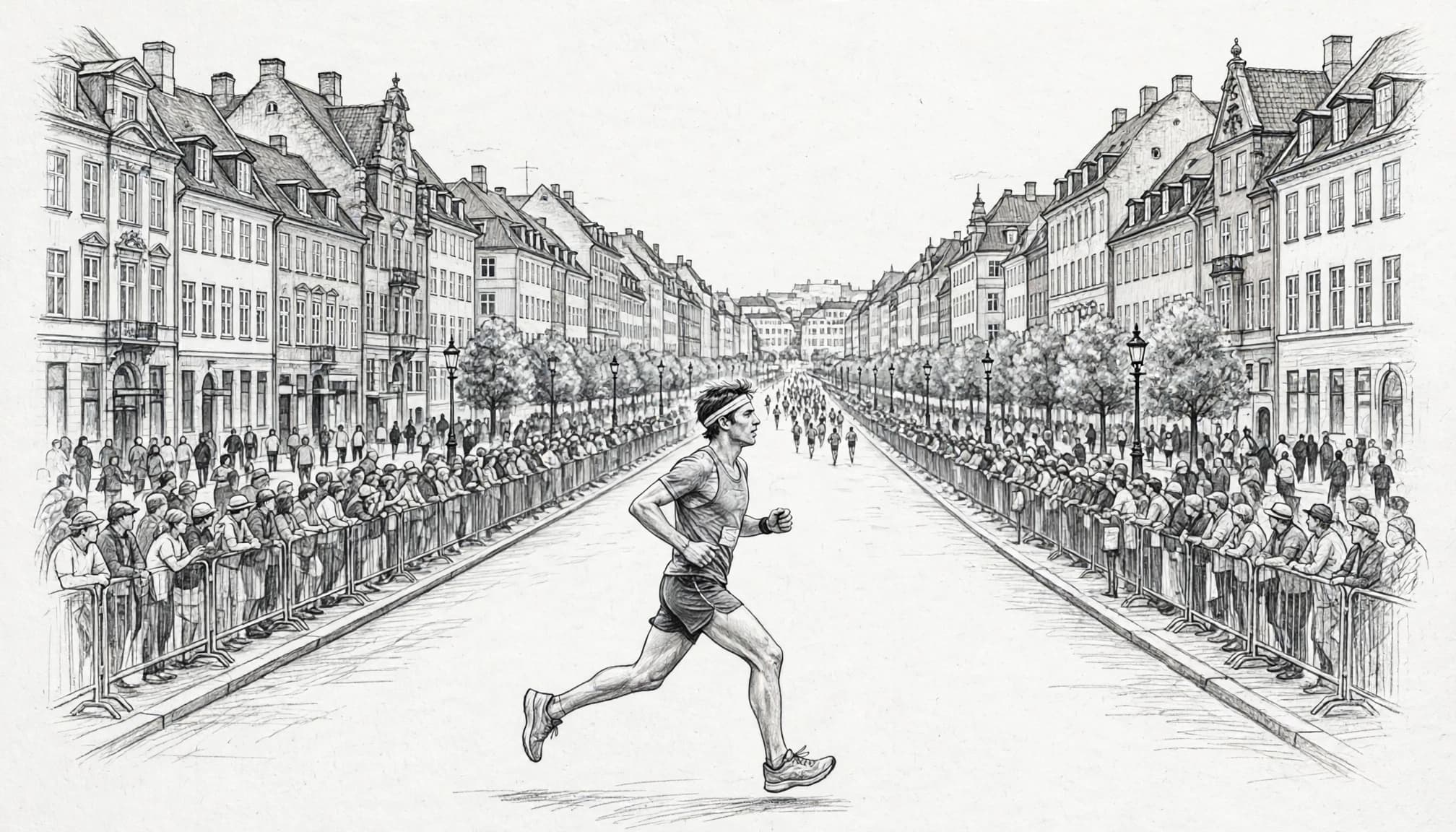
Copenhagen gives the race a strong sense of place. Broad roads, historic buildings, clean urban lines, and pockets of local neighborhoods create a course that feels like a city event rather than a closed-loop competition. The flat road profile also supports an even rhythm, which is one reason runners often choose this event for a personal-best attempt.
That speed comes with a lively setting. Local participation gives the field a shared energy, while spectators gather at key points to encourage runners through the harder middle miles. You may arrive focused on splits, then find yourself looking up as the race passes through another distinctive part of the city.
For international runners, this half marathon format is approachable. The distance is serious enough to reward structured training, but it doesn’t require the same time commitment as a marathon. A first international race can feel manageable here because the event has a major-city atmosphere without asking you to race for an entire morning.
Copenhagen’s established running culture adds to that appeal. The race attracts ambitious competitors, club groups, recreational runners, and travelers who want a memorable weekend built around a goal.
Who will get the most from the experience
This event fits runners who want a fast, social road race with plenty happening around them. It can work especially well for:
- Personal-best seekers who prefer flat terrain and a large field that supports competitive pacing.
- First-time runners at this distance who want clear race infrastructure and an exciting international setting.
- Travelers who would rather combine a serious race with restaurants, museums, neighborhoods, and a walkable city.
- Club runners who enjoy traveling together and sharing the noise of a major starting area.
- Marathon trainees who need a controlled hard effort during a fall build, provided the timing fits their marathon plan.
However, the event won’t suit every runner. Someone seeking a quiet trail event, a small local field, or a relaxed start may find the crowds and race-day movement overwhelming. The official race FAQ is useful for confirming practical requirements before you decide whether the event matches your preferred racing style.
The Copenhagen Half Marathon Course: Fast, Scenic, and Built for Rhythm
The race follows a flat urban route, but flat doesn’t mean effortless. Long straights, frequent turns, exposed sections, crowd density, and road texture all shape how the race feels. Before setting a time goal, study the official interactive course map, since streets, landmarks, aid stations, and route details can change between editions.
How flat is the course, and does it suit a personal best
The route is a flat course that supports personal bests, especially for runners who maintain an even effort. Still, small rises, bridge approaches, corners, and surface changes can interrupt your rhythm. A turn may cost only a few seconds, yet repeated sharp corners can make passing harder and force small surges.
Wind can matter more than hills. Open roads and exposed stretches may feel easy with a tailwind, then demanding when the direction changes. Weather conditions also affect hydration, cooling, and perceived effort. A cool, calm day may help more than a perfectly flat profile.
Use your effort as the main guide instead of chasing every split. A half marathon rewards controlled pacing and steady effort. On straight sections, settle into your planned rhythm. Through turns or crowded areas, accept a brief pace change and return smoothly to effort once the road opens. Start slightly controlled, then assess your breathing and leg response after the first few miles.
The scenery and landmarks runners may remember
The pleasure of this race comes from seeing the city at street level. Urban neighborhoods, broad avenues, changing building lines, and open views can make the distance feel less repetitive than a closed circuit. Crowd support also helps runners stay engaged through the middle kilometers, when the early excitement has faded.
Route details deserve careful checking before race weekend. The event’s official course information explains what runners can expect along the current route, but don’t assume every edition follows the same streets or passes the same landmarks.
Sightseeing and racing require different attention. If your priority is the experience, look up during calmer sections and use the crowd as a reason to stay present. If you’re chasing a time, preview the route, identify places where you can safely glance around, and keep your eyes forward through turns and busy sections.
Where the course may become difficult
The opening kilometers can feel faster than planned because the field is excited and tightly packed. Hold back until your group settles, then use efficient tangents rather than weaving between runners. A clean line saves energy and reduces unnecessary surges.
Aid stations can also create sudden congestion. Move toward the side you plan to use before reaching one, take fluids without stopping if possible, and rejoin the racing line gradually. Near the finish, tired legs make ordinary corners feel sharper, while wind can magnify fatigue on exposed roads.
Create a simple response plan before the start:
- If the first mile feels too quick, shorten your stride and let the pace settle.
- If wind rises, protect your effort and use nearby runners for shelter when practical.
- If congestion appears, wait for space instead of forcing a risky pass.
- If you feel strong late, increase effort gradually rather than sprinting after every turn.
That approach keeps the race fast without making it reckless.
Race-Day Experience, Organization, and Crowd Support
The Copenhagen Half Marathon is a gold label road race with a polished, energetic feel when you arrive prepared. Still, details can change between editions, so use the current runner guide as your final authority.
Registration, bib pickup, and getting to the start
Before traveling, review your registration details and check the event’s official practical information. Confirm your bib collection window, race village location, identification requirements, transfer policy, start times, and assigned wave. Some races require photo identification for pickup, while others publish different collection rules, so don’t assume a friend can collect your bib without written authorization.
Bib pickup and the expo or race village may operate only during set hours. If you arrive late, you could face a closed desk or a rushed morning. Plan to collect your bib early, inspect the timing tag, attach the race number correctly, and confirm where bag drop and toilets are located.
The organizers’ current runner guide lists a three-hour maximum time cap. That’s approximately 8:32 per kilometer or 13:44 per mile. Stay ahead of the official cutoff, sweeper, or traffic-release schedule to receive an official “finish time.” Check the guide for any published checkpoint or pacing requirements.
On race day, Copenhagen’s public transportation makes travel practical, but trains, Metro services, road closures, and station access can affect your route. Check traffic information before leaving, and consider walking if your hotel is nearby.
Either way, arrive early enough to handle queues, use the restroom, drop your bag, and reach the starting line and correct corral without hurrying. Also check the forecast and any event updates covering weather conditions. The Copenhagen Half Marathon FAQ is the best place to confirm rules that may change each year.
Choose Your Distance, Duration and Goal Time
Make three quick selections and open the exact plan built for your race target.
Looking for a Fully Personalized Training Plan?
The training plans above are an excellent choice if they match your goal. However, if you’d rather train with a plan built specifically around your current fitness, goal race, preferred training days, weekly mileage, and target finish time, our RDA Custom Training Plans provide a personalized solution. We also have running courses available for runners seeking to run faster from the mile to the marathon.
Why Choose a Custom Training Plan?
| Standard Training Plan | RDA Custom Training Plan |
|---|---|
| Follows a fixed schedule | Built around your schedule |
| Standard weekly mileage | Peak mileage customized for you |
| Fixed workout days | Train on the days you choose |
| Same structure for everyone | Designed around your current fitness |
| Static plan | Updated as your fitness improves |
| One-time purchase | Ongoing personalized coaching and support |
What You’ll Receive
- A training plan built specifically for your goal
- Personalized training paces
- Long runs, tempo runs, threshold workouts, interval sessions, recovery runs, and easy runs
- Peak weekly mileage matched to your experience level
- Flexible training schedule that fits your life
- Ongoing plan adjustments as your fitness improves
Ready to Train Smarter?
Stop guessing and start following a plan built specifically for you, your schedule, and your racing goals.
Aid stations, toilets, and on-course support
The current runner guide should tell you where water, sports drink, toilets, medical points, and course marshals are placed. Station layouts and available products can change, so check those details before race morning. Clear signs and volunteers usually help runners find the correct lanes, but a crowded station can still cost time and disrupt your rhythm.
Carry fuel you’ve already tested in training, especially if your stomach reacts to unfamiliar gels or sports drinks. A half marathon may require little fuel for some runners, while others perform better with planned carbohydrate intake. Don’t experiment because a product is available on the course.
Toilets near the start and along the route can develop lines, so use one before entering your wave. Course marshals, timing mats, and medical personnel add confidence, but they don’t replace personal judgment. Slow down and seek help if you experience chest pain, confusion, severe dizziness, or symptoms beyond normal race fatigue.
How the crowds and finish area shape the experience
The atmosphere builds in layers. Volunteers keep runners moving, local clubs add noise, music breaks up quieter stretches, and crowd support often becomes most valuable during the middle kilometers. By the final kilometer, tiredness competes with the sound of the finish zone, and the crowd can make the last turns feel shorter.
After crossing the line, follow the finish-flow signs instead of stopping immediately in the finish area. Collect your medal, take the offered refreshments, and move clear so other runners can pass. Bag retrieval may take time, especially when many runners finish together.
Set a meeting point with family or friends before the race. Choose a location outside the busiest finish zone, share your expected finish window, and keep your phone accessible if possible. A simple reunion plan prevents confusion when tired legs, crowds, and temporary access restrictions make the area difficult to navigate.
Travel, Costs, Weather, and Where to Stay in Copenhagen
A copenhagen half marathon trip costs more than the race entry. Your real budget includes transportation, lodging, meals, local travel, and the small purchases that accumulate during a busy race weekend. Plan those pieces together, then decide whether the event offers the experience you want.
Is the Copenhagen Half Marathon worth the total cost
The half marathon itself can offer strong value when you care about a fast course, reliable organization, energetic crowds, and racing in a memorable European city. However, entry availability and pricing can change by edition, with possible registration phases, price tiers, or lottery arrangements. Check the current CPH Half entry information before booking flights.
Separate the race budget from the weekend budget. Alongside registration, allow room for:
- Flights, rail tickets, or driving costs.
- Travel insurance and airport transfers.
- Two or more hotel nights, depending on your schedule.
- Public transportation or occasional taxis.
- Restaurant meals, coffee, and race-weekend snacks.
- Merchandise, replacement gear, and baggage fees.
The race may feel reasonably priced on its own, yet a full weekend becomes expensive when hotel rates rise and every meal happens near the city center. Booking early, sharing accommodation, and staying one or two stops outside the center can improve the value without weakening the experience.
Best areas to stay for a smooth race weekend
Choose lodging for race-morning access and sleep quality, not only for sightseeing. Central neighborhoods make restaurants, museums, and waterfront areas easy to reach, but they may bring more noise, higher prices, and a longer trip to the race village.
Areas with convenient Metro or train connections can offer a useful middle ground. You may sleep farther from the busiest tourist streets while still reaching the start with a short, predictable journey. Check current traffic information and race village logistics before reserving a room, since road closures can change routes to the start between editions.
A hotel or apartment near the start sounds ideal, but proximity alone doesn’t guarantee convenience. Look for a quiet room, flexible breakfast hours, luggage storage, and a grocery store nearby. Those details matter when you need an early meal, a calm evening, or a place to rest after finishing.
How to handle Copenhagen weather on race day
Late-summer and early-fall conditions can shift quickly. Cool temperatures may support strong pacing, while warmth, humidity, rain, or wind can raise the effort of an otherwise flat course. Check the forecast again during race week, since changing weather conditions can affect clothing choices and pacing.
For cool weather, use light layers that you can discard or store. If rain is likely, protect yourself before the start with an inexpensive outer layer, then keep race clothing simple and tested. Warm conditions call for lighter fabrics, earlier hydration, and a longer period of shade before the gun. Wind requires patience on exposed roads.
Don’t force your planned split when conditions change. Use breathing, effort, heart rate, and thirst as practical guides, then adjust hydration to the temperature and your sweat rate. A slightly slower pace can produce a stronger finish than chasing a target that no longer matches the forecast.
Training and Race Strategy for a Strong Race
A fast event rewards patience before it rewards speed. Build fitness gradually, practice your target pace, and arrive with a race plan that protects your energy through the crowded opening kilometers.
Build fitness for a flat, fast event
Start with your current fitness, weekly mileage, and injury history. A beginner may need 10 to 12 weeks of consistent running, while an experienced runner can use a shorter, more focused block. Increase training gradually, and avoid adding speed, distance, and intensity in the same week.
Most running should feel easy enough for relaxed conversation. Add one weekly quality session, such as a threshold run, tempo effort, or controlled intervals. For example, you might run several 1-kilometer repetitions near half-marathon effort with easy jogging between them. Include short strides after an easy run to improve coordination without creating heavy fatigue.
Long runs build the endurance needed for the final 5K. Keep most of them comfortable, then add occasional sections at goal half-marathon pace when your body handles the workload well. Strength training twice per week can support your calves, hamstrings, hips, and core. Keep those sessions controlled, especially before hard running days.
Practice your goal pace during training rather than discovering it on race morning. Sleep, recovery days, regular meals, and tested fueling matter as much as any single workout. Reduce volume during a short taper while keeping a few brief, quicker efforts so your legs stay responsive.
A flat course makes pacing easier, but it also removes many natural pauses. Your preparation must teach you to hold steady effort for a long time.
A practical pacing plan from start to finish
Treat the first 5K as controlled work, not an opportunity to bank time. Crowded waves and faster runners can pull you into an unsustainable pace within minutes. Start near your assigned pace group, protect your space, and let the field spread before making passes.
Use kilometer or mile splits as checkpoints, but pair them with breathing and effort. During the middle section, your breathing should feel firm and controlled rather than desperate. Wind, turns, and congestion may change a split slightly, so respond to conditions instead of forcing every kilometer to match your watch.
After 16 kilometers, assess your legs. If your form remains smooth and your breathing is under control, progress gradually through the final 5K. Increase effort first, then pace. Runners chasing a strong result should focus on reaching the final kilometer with enough strength to compete, rather than sprinting early.
Fueling, hydration, and recovery after the race
Eat a familiar carbohydrate-based meal before the race. Carry gels you have already tested during long runs, and take them according to your training plan rather than waiting until fatigue arrives. Drink according to thirst, temperature, wind, weather conditions, and your usual sweat rate. Never test an unfamiliar gel, drink, or supplement on race day.
After finishing, walk for several minutes before sitting down. Replace fluids, eat carbohydrates with some protein, and use gentle mobility later if it feels comfortable. A relaxed meal, extra sleep, and an easy day afterward will help your body absorb the effort.
Common mistakes that can ruin an otherwise good race
- Arriving late creates stress before the start, so check transport and race instructions the day before.
- Ignoring the runner guide can lead to missed bib, bag-drop, or wave details. Read it early.
- Starting too quickly damages the final kilometers. Settle into effort before chasing pace.
- Weaving through the field wastes energy. Hold your line and pass only when space opens.
- Skipping fuel can turn a strong race into a long final 5K. Follow your tested plan.
- Wearing new shoes invites preventable problems. Race in footwear and socks you have already used.
- Sightseeing for hours the day before can leave your legs tired. Keep walking modest and purposeful.
- Cold weather can hide dehydration and stiff muscles. Warm up gradually and keep drinking as conditions require.
The Verdict: Is the Copenhagen Half Marathon Right for You?
The race is a strong choice if you want a fast urban event with international energy, scenic streets, and a full destination-weekend experience. It asks more planning and money than a small local race, but the payoff is a memorable event with a serious racing atmosphere.
The biggest strengths runners should expect
Copenhagen gives the event a setting that feels worth traveling for. The flat course supports steady pacing, while historic streets, broad boulevards, and changing neighborhoods keep the route visually engaging. You can review the current layout and race details on the official CPH Half course page.
Spectator support adds energy when the early excitement fades. Crowd support and volunteers help runners through busy areas, while the large field gives participants plenty of pace groups to follow. The event has also held gold label road race status in selected editions, so check the current designation before assuming it applies to your race. You can find recent field sizes in the official facts and statistics. For performance context, consult official current course records rather than treating them as a guaranteed finish time.
The drawbacks to plan around
A popular city race brings practical tradeoffs. Hotels may cost more around race weekend, nearby rooms can sell out early, and restaurants or public transportation may feel crowded. Road closures can also complicate race-morning travel, especially if you stay far from the start area.
The start itself may feel busy rather than calm. A mass race can mean large corrals, narrow passing spaces, and crowded aid stations during the first few kilometers. Weather adds another variable because wind, rain, or unexpected warmth can change how a flat course feels.
These issues are manageable when you prepare. Book lodging early, check transport routes, read the official CPH Half FAQ before traveling, and verify course or schedule changes close to race day. A small local race is usually cheaper and simpler, but it won’t offer the same scale or destination appeal.
Final recommendation for different kinds of runners
The race is best for runners who want a fast, organized city event and enjoy competing in a large, energetic field. Runners targeting personal bests should value the flat profile, but they must control the opening pace and accept some congestion.
It’s also a good first international event with preparation. Give yourself extra time for bib pickup, transportation, weather changes, and unfamiliar race procedures. Travelers who want a serious half marathon paired with museums, food, and city exploration will find a strong match here.
The event is less suitable for runners who want solitude, trails, or minimal travel. If you prefer a quiet road, low entry costs, and a simple morning near home, a neighborhood race may fit better. Your decision should come down to your goal, budget, and tolerance for crowds.
Frequently Asked Questions
The event is straightforward to enjoy when you prepare for details outside your training plan. These answers cover practical concerns runners often have before race weekend.
Is the event beginner-friendly?
Yes, the supportive atmosphere and clearly marked road course can make this event approachable for a first-time runner tackling a half marathon. Volunteers, spectators, course signs, and other runners offer reassurance when the distance feels demanding.
Still, a welcoming race won’t make 13.1 miles easy. Follow a steady training plan, practice realistic pacing, and test your gels or sports drinks during long runs before race day.
Is this event a good race for a personal best?
The fast urban course, strong competition, and energetic crowds can create excellent conditions for a personal best. A large field also gives experienced runners pace groups and competitors to follow through much of the race.
However, wind, turns, congestion, and unexpected weather can change the effort. Review the current course profile before setting a target, then base your pacing plan on the latest route rather than an older race report.
What time limits apply to finishers?
The latest runner guide lists a three-hour official time cap. That requires an average pace of approximately 8:32 per kilometer, or 13:44 per mile.
Runners may need to remain ahead of a sweeper or the scheduled traffic reopening process. Finishing after the official cutoff may mean your result isn’t recorded as an official finish time. Verify the limit and procedures against the current edition before publication.
What should runners bring to the event?
Bring your entry details, bib information, familiar shoes, tested race clothing, and nutrition you’ve already used in training. Pack a light weather layer, required identification, and a phone or clear meeting plan if friends or family will be nearby.
Bag-drop rules and prohibited-item policies can change between editions. Read the official practical information and runner guide before packing, especially if you plan to check clothing or personal items.
How early should runners arrive on race morning?
Allow enough time for transportation, toilet lines, bag drop, a gradual warmup, and finding your assigned start corral. Arriving rushed can raise your heart rate before the race begins and leave you searching for the correct entrance.
Your best arrival time depends on the official schedule, wave assignment, and lodging location. Plan backward from your corral closing time using the published race guide, then add extra time for unfamiliar streets or transit delays.
What is the best way to get around Copenhagen during race weekend?
Walking works well for short distances, and cycling can be practical when you know the route and feel comfortable riding in the city. Public transportation is often the most reliable choice for longer trips, especially because race-day transportation changes and road closures can affect access.
Check closures before leaving your lodging, and avoid unnecessary standing or long sightseeing walks before the race. Save your legs for the course by combining nearby activities with rest.
When should runners register for the event?
Register as soon as your plans are firm because popular international races can fill early. Depending on the edition, organizers may use changing entry prices, limited entry phases, or a lottery.
Monitor the official entry page, read the transfer and cancellation policies, and confirm what your entry includes. Avoid unofficial ticket sellers, since a cheaper-looking entry may be invalid or impossible to transfer.
Conclusion
The event offers more than a final result. Its flat, fast course combines strong crowd support with the sights, sounds, and character of Copenhagen, creating a race that feels competitive without losing its sense of place.
Runners chasing a personal best, preparing for a first international half marathon, or planning a race-focused city trip should find plenty to like here. However, those seeking a quiet, low-cost event with minimal logistics may prefer a smaller local race.
Before you commit, check the official course, entry, transportation, and race-day details for the current edition. Then build a smart training and travel plan around your goal, because good preparation lets you enjoy the city and complete the race with confidence.


