

Columbus Ohio Marathon Route Review
As dawn settles over Columbus, runners gather beneath cool morning air, their breath visible as they wait for the streets to open and the Nationwide Children’s Hospital Columbus Marathon to begin. The city soon comes alive around the course, but your race is shaped by more than the starting line and finish banner.
Understanding the Columbus Ohio marathon route helps you set a realistic pace, plan fueling, build confidence, and make smarter race-day decisions. Because the course can change from year to year, confirm the current official map, road closures, aid stations, and start details before race morning.
This guide examines the course shape, Columbus neighborhoods and landmarks, hills, running surfaces, pacing strategy, logistics, and spectator planning. First, we’ll look at the route itself so you can see how each section may affect your race. Looking for where to stay for the Columbus Marathon? Make sure to reserve your rooms early to save more money.
Key Takeaways
- The Columbus Ohio marathon route has minimal elevation change, but steady pacing still matters across 26.2 miles.
- Review the official Columbus Marathon course for current streets, landmarks, aid stations, and race details.
- Start conservatively, especially through downtown, then settle into goal pace once your breathing and effort feel controlled.
- Practice fueling, hydration, and race-pace running before race day so those choices feel automatic.
- Expect course details, closures, and logistics to change, so confirm the latest information before traveling to Columbus.
Columbus Ohio Marathon Route: Course Layout, Distance, and Official Map
The Columbus Ohio marathon route covers the standard 26.2 miles, but the best way to understand it is to study the current course materials rather than memorize old turns. Streets, permits, construction, and race logistics can change, so use the official Nationwide Children’s Hospital Columbus Marathon website, runner guide, GPX file, and race-week updates as your final source of truth.
Build Your Running Performance System
Move from research to action with training, recovery, nutrition, pacing, and performance tools built for runners.
More Guides for This Runner Goal
How to Study the Map Before Race Weekend
Break the route into manageable sections instead of viewing 26.2 miles as one long effort. You might use 5K segments, five-mile blocks, or another system that matches your pacing plan. Mark the halfway point at 13.1 miles, then note where you expect to change effort, take fuel, or protect your pace.
On the official Columbus course map, identify the following before race morning:
- The start and finish lines, including the downtown area if the selected race year places them there.
- Mile markers, timing mats, aid stations, medical points, restrooms, and entertainment zones.
- Major turns, narrow sections, bridges, exposed roads, and any point where the route changes direction.
- Relay or half-marathon splits, if those features apply to the current event.
- The halfway point and the sections where your planned pace may change.
Next, compare the map with the elevation profile. Even a course with modest hills can feel different when a climb arrives late in a long segment or follows a fast downhill. Mark effort changes rather than forcing the same watch pace everywhere. For example, you may hold back slightly on an early incline, settle into marathon effort on flatter roads, and avoid overstriding on a descent.
Save an offline copy of the map, download the GPX file if available, and keep a screenshot on your phone. Then check the course PDF again after any official update. GPS watches can show a slightly different distance because of turns, tall buildings, trees, and signal loss, so follow official mile markers and timing mats when they disagree with your device.
Knowing the route reduces decision fatigue. Instead of wondering where to turn, when to fuel, or whether a difficult stretch is still ahead, you can focus on breathing, effort, and execution.
What to Verify When the New Course Is Released
Online videos and older race reports can show the atmosphere, but they cannot replace the current official map. When the new Columbus course is released, verify:
- Road closures and the times streets open or reopen.
- Parking areas, shuttle access, and the walking route to the start.
- Corral assignments, start-line entry points, and wave procedures.
- Bag-drop rules, pickup locations, and permitted items.
- Restroom locations near the start, along the route, and around the finish.
- Course time limits and any cutoff points.
- Street crossings, traffic-control points, and areas where spectators must use designated crossings.
- Construction changes, permit-related reroutes, or removed landmarks.
- Aid stations, medical support, timing mats, and race-specific split points.
Read the runner guide with the map open beside it. That simple habit connects the route to the practical details that shape your morning, from where you leave your bag to where you can meet family after finishing.
What You Will See Along the Columbus Marathon Course
The Columbus Ohio marathon route changes character as it moves through the city. Downtown buildings, riverfront views, older neighborhoods, residential streets, parks, and open avenues can each affect your pace and attention. Check the current official Columbus Marathon course before race day, because landmarks and route sections may change.
Downtown Energy at the Start and Finish
Corrals often feel electric before the race begins. Spectators gather near the course, music carries between buildings, and downtown skyscrapers give the opening miles a clear sense of place. That energy can help you feel ready, but it can also push your first mile faster than planned.
Control your adrenaline before the crowd settles. Start at your planned effort, avoid weaving through runners, and leave enough attention for course signs, timing mats, turns, and race instructions. Early surges may feel easy, yet they can create a cost you notice much later.
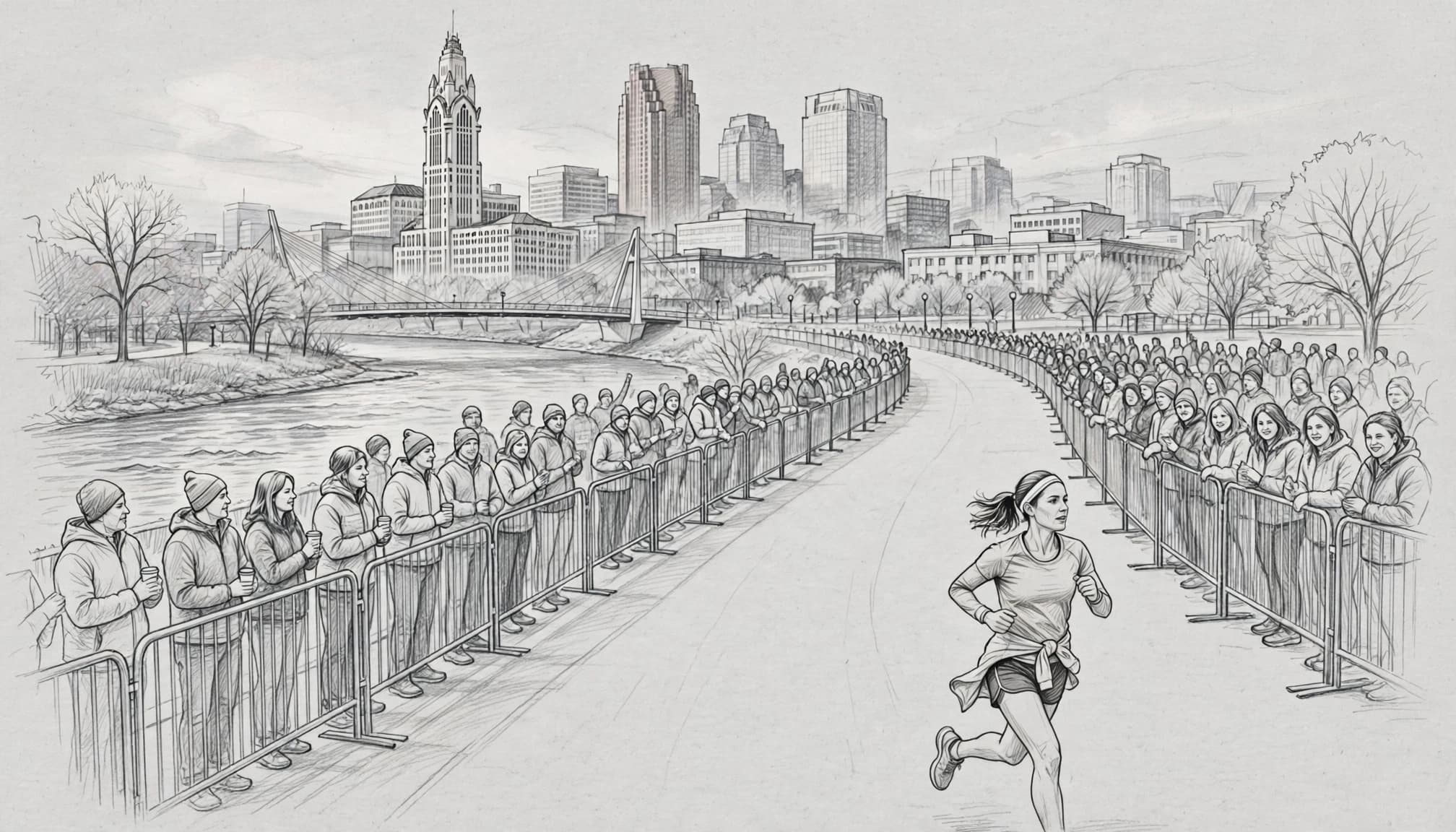
The final approach can feel completely different. Tired legs may respond to familiar buildings, louder cheering, and the sight of downtown ahead. When the finish area comes into view, that concentrated energy often provides an emotional lift, but keep following volunteer directions until you cross the line.
Historic Streets, Residential Blocks, and Open Sections
Older neighborhoods can bring tighter turns, changing pavement, and buildings close to the road. German Village may appear on a particular course map, but verify it for your race year rather than assuming it is included. Its brick-lined streets and historic homes would create a different rhythm from a broad avenue.
Residential blocks may offer steady shade and local spectators, while wider roads can make it easier to hold a consistent line. Bridges, parks, and open stretches bring other demands. Exposed pavement can increase sun and wind, and quiet sections may require more discipline when external energy drops.
Before race morning, scan the official map for:
- Narrow turns and surface changes.
- Bridges, exposed roads, and possible headwinds.
- Shaded neighborhoods and sunlit open sections.
- Parks, campus areas, or surrounding communities included on the current route.
Crowds, Music, and Landmarks That Help You Stay Present
Use cheering zones, bands, volunteers, mile signs, and familiar buildings as mental checkpoints. Rather than thinking about all 26.2 miles, focus on reaching the next landmark at controlled effort. After that, choose another short target.
Crowd levels vary with weather, time of day, and location. Carry the nutrition and hydration you have practiced, because spectators may not be present when you need them. A landmark can lift your focus, but your race plan must still guide your pace and fueling.
Is the Columbus Marathon Route Hilly or Beginner Friendly?
The Columbus Ohio marathon route is generally manageable for a first marathon when you prepare for more than total elevation gain. Small rollers, bridges, turns, changing pavement, wind, and late-race fatigue can make a modestly undulating course feel demanding after 20 miles. Compared with a truly mountainous marathon, however, Columbus is unlikely to require the same climbing strength or downhill control.
Always compare your race-year elevation profile with the official route map. Streets, bridges, aid stations, and course segments can change.
How to Read the Elevation Profile and Find the Hardest Miles
An elevation chart can make a short rise look dramatic because the vertical scale is compressed. A brief bump may cost little, while a gentle grade that continues for a mile can affect your breathing and pace after several hours.
Look for sustained climbs first. Then mark repeated rollers, fast downhill sections, sharp turns, bridges, and the final 10K. A downhill may feel helpful early, but overstriding can leave your quads tired before the hardest miles arrive. Repeated small climbs also add up when you never get a long recovery.
Use the map and profile together. A turn at the top of a rise may interrupt your rhythm, while an exposed bridge could add wind to the same section. During long runs, practice similar terrain and learn to adjust effort without chasing an exact watch pace.
Surface, Weather, and Wind Matter as Much as Hills
The road under your shoes changes how the course feels. Asphalt usually allows a smooth rhythm, while concrete can feel firmer and more repetitive. Brick or uneven historic streets, if included on the current course, demand shorter steps and more attention to foot placement.
Weather can change the race even when the elevation profile stays the same. Cool fall temperatures may support strong pacing, but sun on open roads can raise effort. Rain can make turns and uneven surfaces less comfortable, while wind can turn a mild bridge or exposed avenue into a sustained effort.
Use breathing and perceived effort alongside your pace watch. Heat, wind, and slick pavement may slow your split without reflecting poor fitness. Adjusting early protects your fueling plan and reduces the risk of forcing marathon pace when conditions demand more energy.
Course Preparation for First-Time Marathoners
Build long runs that include controlled hills, bridges, frequent turns, and a steady final 10K. Add sections at marathon effort after fatigue appears, because the closing miles test judgment more than raw speed.
Practice legal tangent lines by staying on the shortest reasonable path without cutting corners or crossing inside barriers. At aid stations, move to the side before taking fluids, keep your stride relaxed, and avoid stopping abruptly in front of other runners.
A first marathon doesn’t require a perfect course. Consistent preparation, conservative early pacing, practiced fueling, and calm responses to changing effort matter more. If you can stay relaxed when the route rises, turns, or feels crowded, Columbus becomes a manageable test rather than a surprise.
Choose Your Distance, Duration and Goal Time
Make three quick selections and open the exact plan built for your race target.
Looking for a Fully Personalized Training Plan?
The training plans above are an excellent choice if they match your goal. However, if you’d rather train with a plan built specifically around your current fitness, goal race, preferred training days, weekly mileage, and target finish time, our RDA Custom Training Plans provide a personalized solution. We also have running courses available for runners seeking to run faster from the mile to the marathon.
Why Choose a Custom Training Plan?
| Standard Training Plan | RDA Custom Training Plan |
|---|---|
| Follows a fixed schedule | Built around your schedule |
| Standard weekly mileage | Peak mileage customized for you |
| Fixed workout days | Train on the days you choose |
| Same structure for everyone | Designed around your current fitness |
| Static plan | Updated as your fitness improves |
| One-time purchase | Ongoing personalized coaching and support |
What You’ll Receive
- A training plan built specifically for your goal
- Personalized training paces
- Long runs, tempo runs, threshold workouts, interval sessions, recovery runs, and easy runs
- Peak weekly mileage matched to your experience level
- Flexible training schedule that fits your life
- Ongoing plan adjustments as your fitness improves
Ready to Train Smarter?
Stop guessing and start following a plan built specifically for you, your schedule, and your racing goals.
How to Pace and Fuel the Columbus Ohio Marathon Route
A strong Columbus Ohio marathon route strategy protects your energy before you need it. Use a simple framework: settle in early, hold steady through the middle miles, assess after mile 20, then race the final 10K according to your fitness and condition.
A Simple Plan for the First 10 Miles
The opening crowd can make your goal pace feel strangely easy. Adrenaline, fresh legs, and downtown noise often pull runners into an unsustainable rhythm before the race has settled.
Use lap pace, breathing, and effort together. Watch pace may jump around through turns or crowded sections, so don’t chase every fluctuation. Your breathing should remain controlled, and your stride should feel smooth rather than urgent.
Take fluids early, even if you don’t feel thirsty. Small, regular sips are easier to manage than trying to catch up later. Keep your cadence light through turns, avoid weaving, and stay on a practical tangent when space allows.
Use this decision rule: if the pace feels effortless, stay patient rather than speeding up. Early comfort is a reason to protect your plan, not permission to race the first 10 miles.
Stay Steady Through the Middle of the Course
Miles 10 through 20 are where discipline protects the finish. Divide them into short checkpoints, such as two-mile or 5K blocks, and judge each one by effort, posture, and fueling rather than emotion.
Take carbohydrates on your practiced schedule. Many marathoners use gels or another portable source at regular intervals, often aiming for roughly 30 to 60 grams of carbohydrate per hour, but your stomach and training history should determine the exact plan. Practice the same products, timing, and fluid pairing during long runs.
Fluids and electrolytes also require a plan. Drink according to thirst and race conditions instead of forcing a fixed volume. Heat, humidity, wind, and sweat rate can change your needs, so review current fluid replacement guidance and follow the race’s aid-station instructions.
On hills, keep effort even instead of forcing goal pace uphill. Let the watch show a slower split if the road rises, then regain rhythm over the crest without sprinting. The same rule applies to headwinds and congestion. Spend less energy fighting conditions, because the miles after 20 will expose every unnecessary surge.
Execute the Final 10K Without Gambling Too Early
After mile 20, assess before increasing effort. Check your posture, shoulder tension, stomach comfort, hydration, and remaining energy. If your form is collapsing or your stomach feels unsettled, hold your pace and focus on reaching the next aid station or landmark.
Relax your shoulders, keep your steps quick and light, and maintain a compact arm swing. Break the final 10K into small targets, then reassess after each one. A familiar building, turn, or cheering zone can give your mind a clear point to reach.
Caffeine can help some runners, but only if they have tested its timing and dose in training. The same applies to gels, sports drink, and electrolytes. Never introduce a new product on race morning.
A dramatic negative split is not required. Hold pace when your energy is limited, your stomach is uncertain, or heat has raised your effort. Increase only when your form remains strong and you can accelerate without sacrificing the final miles.
Race-Day Logistics for the Columbus Marathon Start and Finish
A strong Columbus Ohio marathon route strategy begins before you reach the starting line. Downtown closures, parking rules, shuttles, and corral access can change each year, so read the current runner guide before race weekend and build your plan around official instructions.
Build a Calm Race-Morning Timeline
Work backward from the official start time instead of arriving at the last minute. Your plan should include travel from the hotel, parking or public transit, shuttle delays, entry procedures, restroom stops, bag drop, a light warm-up, and enough time to reach your assigned corral.
A sample schedule might look like this:
- Eat breakfast three hours before the start, using familiar foods and fluids.
- Leave the hotel with extra time for road closures, walking, or shuttle lines.
- Arrive near the event area 60 to 90 minutes before the gun.
- Use the restroom, complete bag check, and take a short easy warm-up.
- Reach your corral at least 15 minutes before the start.
Check whether bibs, shirts, or other race materials must be collected before race morning. Some events require packet pickup at a designated expo, and that detail can change your travel schedule. Also confirm whether your hotel sits within a road closure zone, whether public transit runs early enough, and where post-race transportation will operate.
What to Carry and What to Leave at the Hotel
Lay out your gear the night before. Bring your bib, pins or race belt, tested shoes, weather-appropriate clothing, practiced nutrition, identification, and a phone. A disposable sweatshirt or poncho can keep you comfortable while you wait in cool fall weather.
Don’t rely on a last-minute purchase for shoes, socks, clothing, gels, or headphones. Race morning is the wrong time to test anything that could cause blisters, chafing, stomach trouble, or distraction.
If you check a bag, use the official event bag and follow its labeling rules. Leave valuables, bulky items, and anything prohibited at the hotel. Keep your bib accessible, because volunteers may need to see it before you enter the start area.
Know the Finish Area Before You Cross the Line
After finishing, follow volunteer directions through medal pickup, water, food, medical screening, and gear retrieval. Crowded walking routes can make family reunions difficult, especially when runners and spectators leave through different exits.
Choose a meeting point away from the finish chute, then share it before the race. Keep a warm layer available, either in checked gear or with a spectator. Finally, review the official participant and spectator maps so you know where to collect belongings, find transportation, and leave downtown without guessing.
Best Places for Spectators to Watch the Columbus Marathon
The best spectator plan usually includes one or two well-chosen viewing spots, not a race around the city. Use the current official Columbus Marathon course map and road-closure information to choose locations with clear access, then leave enough time to reach the finish area.
How Runners and Spectators Can Coordinate Split Times
Estimate arrival times from the runner’s realistic marathon pace, not the pace shown in an ambitious goal plan. A runner targeting 4:15 may average about 9:44 per mile in ideal conditions, but crowding, aid stations, bathroom stops, turns, and late-race fatigue can slow that average.
For example, a five-mile viewing point might theoretically come 49 minutes after the start. Add five to 10 minutes for start-line delays, crowded opening miles, and normal race interruptions. A practical arrival window could be roughly 55 to 60 minutes after the official start, not one exact minute.
The same method works later in the race:
- Estimate the runner’s expected pace for that section.
- Add time for aid stations, brief stops, congestion, and fatigue.
- Build a 10- to 15-minute viewing window.
- Give yourself extra time to walk there and reach the finish afterward.
Agree on the side of the street before race morning. Ask the runner to look for a specific shirt color, hat, or other distinctive clothing, and send a text after passing each planned point. Spectators should stand where the runner can see them clearly, rather than hiding behind a crowd or moving unpredictably.
Spectator Etiquette and Safety Around Closed Roads
A good viewing point has a clear sightline, easy pedestrian access, nearby restrooms or food, and enough time for you to reach the finish before the runner arrives. Check closures first, because a short drive can become a long walk when streets are blocked. Never treat a familiar landmark as guaranteed until the current race map confirms it.
Stay behind barriers and follow volunteer instructions. Keep children close, control pets with short leashes, and never step into the course for a photograph or quick greeting. Leave open space for emergency vehicles and avoid sudden crossings, even when no runners appear nearby.
Runners appreciate short, clear encouragement such as “You look strong,” “Keep your rhythm,” or “You’re on pace.” Avoid handing out untested food, homemade drinks, or unfamiliar supplements. A runner’s stomach may already be sensitive, and an unexpected item can disrupt the race. Offer support with a smile, a familiar phrase, and a clear view instead.
A Smart Training Plan for This Columbus Marathon Course
The Columbus Ohio marathon route rewards steady preparation more than dramatic workouts. Build mileage gradually, practice the course’s specific demands, and arrive fresh enough to use your fitness.
Work the Course Features Into Your Long Runs
Keep a weekly long run as the foundation of your plan, but don’t try to copy all 26.2 miles every weekend. Increase distance in manageable steps based on your experience, training history, and injury record. Beginners may benefit from a run-walk structure, while experienced runners can add controlled marathon-effort segments late in selected long runs.
Use at least two or three route-specific sessions during your build:
- Run a long route with frequent turns, bridges, and changes in direction so those interruptions feel normal.
- Add a rolling workout with gentle rises, keeping effort steady instead of forcing the same pace uphill.
- Finish one long run with a controlled late effort, such as several miles near marathon effort after fatigue appears.
Practice aid-station habits, too. Sip fluids while moving, take gels at planned intervals, and rehearse how you will slow briefly without stopping in front of other runners. Test your race shoes, socks, pacing device, clothing, gels, and fluids during training. Exposed roads and crowded paths may change your rhythm, so practice holding effort when your watch pace fluctuates.
Strength work should support your running rather than exhaust you. Include exercises for the calves, glutes, hips, and core two times each week during the main build. Reduce the load as mileage peaks and avoid unfamiliar movements late in training. Specificity builds confidence, but every long run still needs a clear purpose.
Taper, Recover, and Arrive Ready to Race
During the taper, reduce training volume while keeping a few short, controlled faster efforts. Those brief sessions maintain coordination without creating fatigue. A week-by-week marathon taper guide can help you understand the shift from building fitness to protecting it.
Prioritize sleep, familiar meals, easy recovery runs, and normal hydration. Avoid heavy strength sessions, experimental foods, and last-minute attempts to gain fitness. Your final week should feel calm and predictable.
Use this checklist before race morning:
- Confirm the latest course map, route updates, and aid-station details.
- Collect your bib and review start-line instructions.
- Check the weather, then choose tested clothing.
- Plan transportation around closures, parking, or shuttles.
- Pack the nutrition and fluids you have already practiced.
Freshness matters more than one final hard workout. Adjust the plan for injury, experience, and training history, and seek personalized coaching when your situation requires it.
Frequently Asked Questions
The Columbus Ohio marathon route may look simple on a map, yet small details can affect your race morning. Use the answers below as a final planning check, then confirm race-year information through the official Columbus Marathon FAQ.
Where does the Columbus Marathon start and finish?
Confirm the start and finish locations in the current official runner guide because event layouts can change. Review the start corrals, finish chute, parking, shuttle routes, and family meeting maps together instead of relying on one street address.
A location that looks close on a map may sit behind road closures or restricted pedestrian routes. Save the latest maps to your phone, and share the family meeting point before race morning.
Does the Columbus Ohio marathon route change each year?
Organizers may adjust streets, turns, aid stations, and race logistics because of permits, construction, safety needs, or event planning. Even a small reroute can affect your landmarks, spectator plan, and pacing expectations.
Check the official race website and final race-week communications for the course you will actually run. Older maps, videos, and race reports can help with atmosphere, but they shouldn’t guide your navigation.
Is the Columbus Marathon a good first marathon?
It can suit a first-time marathoner, but your preparation matters more than a label such as flat or fast. Consider your training consistency, weather tolerance, time goal, and comfort with the course profile.
Prioritize a conservative opening pace, practiced fueling, and a complete training plan. A manageable route still requires patience after mile 20, when small hills, turns, wind, or fatigue can change how the course feels.
How can I track a runner during the race?
Tracking may be available through the event’s official platform or race-week app, although features can change. The official runner tracking information explains how participant locations and course updates may appear.
Agree on one or two viewing points before the race, then use predicted split windows rather than one exact arrival time. Phone signals, GPS updates, and timing data can arrive late, especially around crowded streets and tall buildings.
What should I do if my GPS watch shows more than 26.2 miles?
Extra distance is common when you run wide turns, weave through runners, lose signal, or follow a line outside the shortest practical route. Buildings, trees, and brief GPS errors can also affect the recording.
Keep your watch running, but follow official mile markers and elapsed time during the race. Chasing an exact GPS distance can cause unnecessary surges and distract you from steady effort.
When should I arrive for the Columbus Marathon?
Arrive early enough to handle transportation, parking, restrooms, bag check, warm-up, and corral access without rushing. Your exact schedule depends on the current start time, security rules, road closures, and transportation plan.
Use the official event guide as the final authority. Work backward from corral access, then add extra time for shuttle lines, long walks, and unexpected delays.
Conclusion
The Columbus Ohio marathon route rewards runners who arrive with a clear plan and the patience to follow it. Study the current official map, review the neighborhoods and physical demands, and identify where turns, bridges, open roads, and late-race fatigue may affect your rhythm. Because course details can change, use official race materials as your final guide before race morning.
Your preparation should also include practiced pacing, fueling, hydration, transportation, bag check, restroom stops, and finish-area logistics. Start conservatively, adjust your effort for hills, wind, weather, and congestion, and protect your energy for the final 10K. A smart race doesn’t depend on perfect conditions. It depends on preparation and your ability to respond calmly to the day in front of you.
When dawn breaks over Columbus and the streets fill with runners, each decision will add up. Manage one mile with purpose, then choose the next. With patience in your legs and a complete plan in your mind, you can move through the course with control and reach the finish ready to take in the noise, the relief, and the satisfaction of completing 26.2 miles on your terms.


