

Cleveland Marathon Route: Course Map and Race Tips
Picture yourself running along Cleveland’s streets with Lake Erie nearby, downtown buildings rising ahead, and spectators lining the course. The right Cleveland Marathon route information helps you prepare for more than the distance, because every turn, hill, neighborhood, aid station, and road closure can shape your race.
The official course may change from year to year, so confirm the current map, start line, and finish area on the Cleveland Marathon website before you travel. Next, you’ll find practical guidance for reading the course, planning your pace, handling key sections, and arriving ready for race day. Make sure to book your Cleveland Marathon hotels early to save on costs.
Key Takeaways
- Check the official Cleveland Marathon course maps before race week because routes, elevation details, and water stops can change.
- Study the Cleveland marathon route early, then divide it into manageable sections instead of racing the full distance mentally.
- Protect your pace on hills by shortening your stride, relaxing your arms, and saving effort for the final miles.
- Use aid stations with a simple plan for fluids, electrolytes, and fueling.
- Confirm the start area, finish location, parking, weather, and road closures before race morning.
Cleveland Marathon Route: A Clear Look at the Course
The Cleveland Marathon route can change with construction, permits, and safety requirements, so treat older maps as background information only. Start with the official Cleveland Marathon course maps, then confirm the race year, distance, start area, finish location, mile markers, water stops, and timing mats.
Which Cleveland landmarks and neighborhoods appear on the current map?
The current marathon information highlights a downtown Cleveland start and course sections through Hingetown, Ohio City, Gordon Square, Lakewood, and the lakefront. The route also includes a stretch along the shoreway before returning toward the finish area. Use those landmarks to understand the race’s shape rather than trying to memorize every street name.
Build Your Running Performance System
Move from research to action with training, recovery, nutrition, pacing, and performance tools built for runners.
More Guides for This Runner Goal
On the official PDF or interactive map, first locate the downtown core and the start-finish symbol. Next, trace the line toward the lakefront and note where the course enters Ohio City, Hingetown, Gordon Square, and Lakewood. Zoom in at every turn, turnaround, bridge crossing, aid station, and split point. The broad map gives you the race’s story, while the close view reveals the details that affect pacing.
A neighborhood shown on a past Cleveland Marathon map may not appear on the current course. Always follow the latest race-year map.
University Circle, Tremont, and other familiar Cleveland areas should only enter your race plan if the current official map includes them. Save the PDF to your phone, take screenshots of complex sections, and keep a printed copy if you expect poor service on race morning.
How the marathon route differs from the half marathon course
The half marathon shares the opening 13.1 miles of the full course, according to the official half marathon information. That means the early downtown, lakefront, and west-side sections may look similar, but half marathon runners turn toward their finish while marathon runners continue into the second half.
The full course can therefore include different turnarounds, later neighborhood sections, and additional lakefront roads. Before race weekend, confirm all four details:
- Your event distance and color-coded map.
- Your assigned start wave and corral.
- The full marathon’s cutoff rules and course limits.
- The location of timing mats, aid stations, and the finish.
The marathon race page is also useful for checking the neighborhoods and water-stop locations tied to the full event. Study the correct map at normal scale, then zoom in until every major decision point feels familiar.
What the Cleveland Course Feels Like Under Your Feet
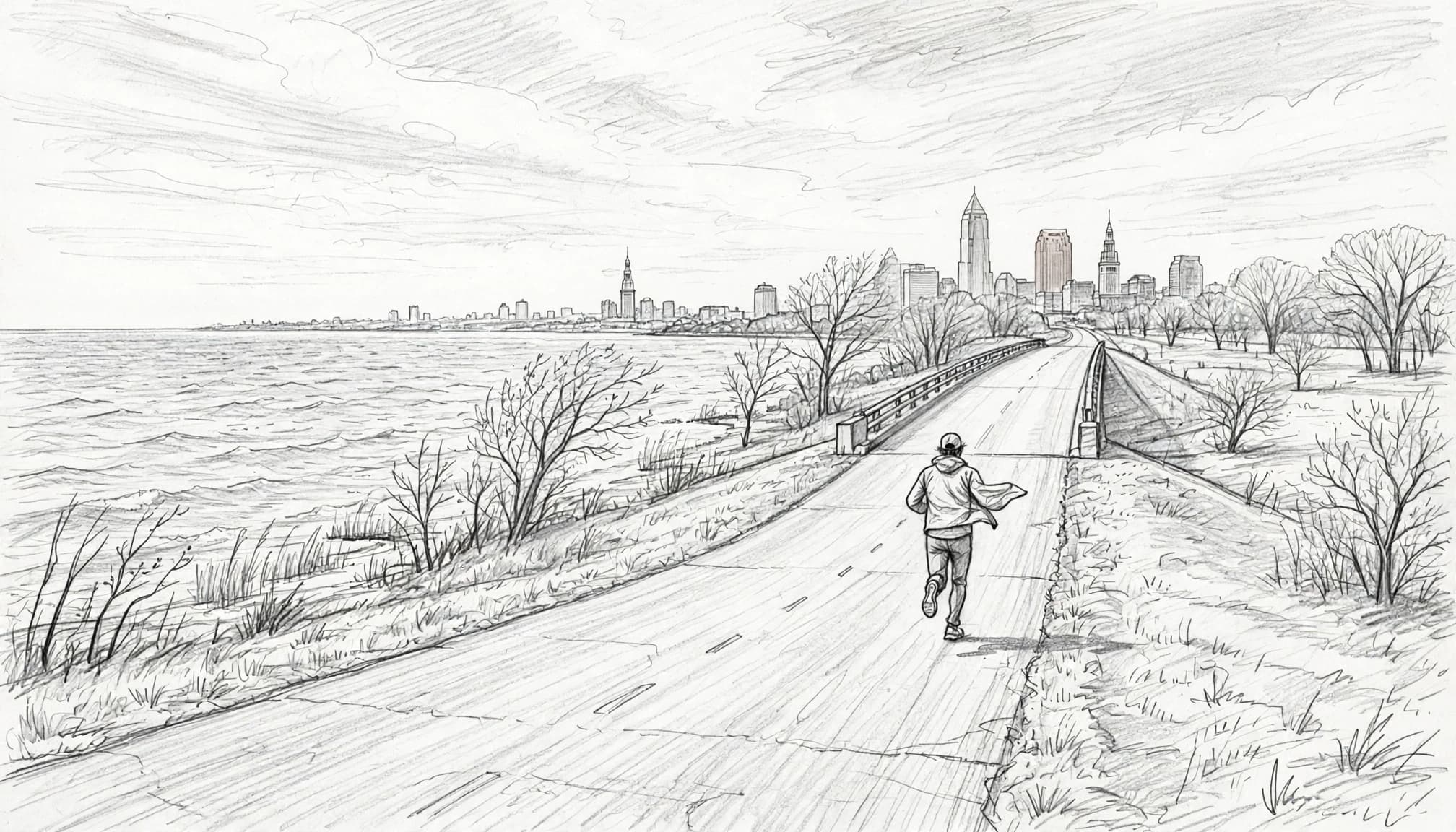
The Cleveland Marathon route may look flat on a map, but flat does not mean effortless. Wind off Lake Erie, bridge ramps, modest rises, exposed pavement, frequent turns, and long straight sections can all change how the miles feel.
Use the official Cleveland Marathon course information to inspect the current elevation profile and major turns. However, read GPS elevation carefully. The race notes that bridges can create large false elevation spikes, so compare the official map with a trusted GPS platform instead of treating every graph mark as a real hill.
Where wind, bridges, and turns can change your pace
A headwind can make a flat road feel like a gradual climb. Lake Erie weather can shift during spring, too, so a cool start may give way to sun, warmth, or stronger gusts on exposed roads. Downtown buildings may offer shade, while open lakefront stretches leave you facing the full wind.
Run bridges and ramps by effort, not by forcing your goal pace. Shorten your stride, keep your shoulders relaxed, and let your speed change slightly as the road rises. Heart rate and breathing can guide you better than your watch during warm or windy sections.
When conditions allow, tuck behind a compatible group and share the work safely. Still, avoid surging the moment you leave an exposed section. That sudden acceleration can waste energy you will need later, especially after several miles of fighting the wind. Frequent turns also interrupt rhythm, so approach them smoothly, look ahead, and settle back into pace instead of attacking every corner.
How to use the course profile to set a realistic goal
Build a pace range rather than choosing one rigid number. Start slightly controlled, then accept small pace changes on inclines, ramps, turns, and windy roads. The goal is steady effort, not identical splits on every surface.
Use the course in three broad stages:
- Opening miles: Stay patient while the field spreads out. Keep your breathing easy and resist racing downhill, into a tailwind, or through the excitement of downtown.
- Middle miles: Settle into a sustainable rhythm. Check your shoulders, fueling plan, and effort whenever the road becomes exposed or the weather warms.
- Final 10K: Spend the energy you protected earlier. If your legs and breathing remain controlled, gradually increase effort rather than launching one dramatic surge.
A recent half marathon, consistent long-run workouts, current training volume, and race-day weather should shape your target. If training has been uneven or spring conditions turn warm and windy, choose the conservative end of your range. The Cleveland marathon route rewards runners who manage effort early and still have strength when the final long stretches begin.
How to Plan Your Cleveland Marathon Race Strategy
A smart Cleveland Marathon race strategy protects your energy before it asks for speed. Use the official Cleveland Marathon course map and water-stop list to mark turns, exposed roads, aid stations, and mental checkpoints. Then divide the race into small decisions instead of carrying 26.2 miles in your head at once.
Choose Your Distance, Duration and Goal Time
Make three quick selections and open the exact plan built for your race target.
Looking for a Fully Personalized Training Plan?
The training plans above are an excellent choice if they match your goal. However, if you’d rather train with a plan built specifically around your current fitness, goal race, preferred training days, weekly mileage, and target finish time, our RDA Custom Training Plans provide a personalized solution. We also have running courses available for runners seeking to run faster from the mile to the marathon.
Why Choose a Custom Training Plan?
| Standard Training Plan | RDA Custom Training Plan |
|---|---|
| Follows a fixed schedule | Built around your schedule |
| Standard weekly mileage | Peak mileage customized for you |
| Fixed workout days | Train on the days you choose |
| Same structure for everyone | Designed around your current fitness |
| Static plan | Updated as your fitness improves |
| One-time purchase | Ongoing personalized coaching and support |
What You’ll Receive
- A training plan built specifically for your goal
- Personalized training paces
- Long runs, tempo runs, threshold workouts, interval sessions, recovery runs, and easy runs
- Peak weekly mileage matched to your experience level
- Flexible training schedule that fits your life
- Ongoing plan adjustments as your fitness improves
Ready to Train Smarter?
Stop guessing and start following a plan built specifically for you, your schedule, and your racing goals.
A practical pacing plan for the first half and final 10K
Before the start, set your watch to show elapsed time, lap pace, and effort cues. Tall downtown buildings can disrupt GPS, so don’t chase every sudden pace spike. If the opening streets feel crowded, relax your stride and let the field spread instead of weaving through runners.
For the first 5K, run conservatively. Your breathing should feel controlled, and your effort should seem almost too easy. At 5K and 10K, check your shoulders, breathing, and pace. A first-time marathoner might hold a conversational effort early, while an advanced runner may settle near planned marathon effort without forcing exact splits. Neither runner should race the clock before the body is ready.
Through the middle miles, protect a sustainable rhythm. Take small drinks at planned stations, begin carbohydrates before you feel empty, and follow the fueling schedule you practiced during long runs. A missed turn, crowded station, or unexpected headwind calls for calm adjustment. Rejoin your effort gradually rather than sprinting to recover lost seconds.
At halfway, ask whether your effort still feels controlled. From there, treat the final 10K as a series of decisions:
- Hold steady through 20 miles if your breathing and legs remain stable.
- After 20 miles, increase effort gradually only when you still have control.
- If fatigue rises sharply, maintain form and protect forward progress.
Manageable discomfort feels like heavy legs, rising effort, or sustained fatigue that still allows normal coordination. Sharp pain, altered movement, dizziness, chest discomfort, or symptoms that worsen require slowing down, stopping, or seeking medical attention.
Fueling and hydration around the aid stations
Study the official marathon water-station details and carry enough fuel to reach the next planned stop. The race website lists water stations, sports drink availability, and gel locations, but confirm the current race instructions before race day.
Take small drinks rather than waiting until thirst becomes urgent. Use water and sports drink thoughtfully, and carry gels if a station may be crowded or its timing doesn’t match your plan. Never introduce an unfamiliar gel, drink, or supplement during the race. Practice the exact timing during long runs, including when you take carbohydrates, water, and sports drink.
Weather may change your needs, so follow race instructions and your personal medical guidance. Keep the plan simple, repeatable, and flexible enough to handle a missed station without panic.
Race-Day Logistics Along the Cleveland Marathon Route
A smooth Cleveland Marathon morning starts before you reach the start line. Confirm every detail in the current official race information, then build a plan that still works if downtown traffic slows or a road closes earlier than expected.
Start-line, parking, and road-closure planning
The fastest route by car on an ordinary day may be useless on race morning. Streets near the start can close before dawn, while runners, spectators, hotel guests, and emergency vehicles compete for access. Check the official updates for:
- The start line, finish area, wave times, bathrooms, and bib pickup deadlines.
- Approved parking garages, public lots, transit service, and shuttle locations.
- Street closures, reopening times, hotel access, and any restricted turns.
- Bag-check rules, timing mats, course cutoffs, and medical-station locations.
- The required arrival time for your distance and starting wave.
Review the race’s official parking information, but don’t stop there. Save the current course map and race-week instructions to your phone. If you stay outside downtown, arrange a pickup location away from the finish area because blocked streets can make rideshare access slow or impossible.
Allow extra time to walk from your garage, hotel, transit stop, or shuttle drop-off. That walk may include detours, security lines, bathroom stops, and a long route around closed intersections. Arriving early feels inconvenient, but rushing to the corral can raise your heart rate before the race begins.
What to carry and what to leave at gear check
Pack only what supports the race and the hours around it. Your small race-day kit should include:
- A fully charged phone and photo identification.
- Your bib, pins, timing chip, and any required race documents.
- Tested gels or chews, plus a familiar drink if you use one.
- Sunscreen, a hat, and weather-appropriate layers.
- A small recovery layer for the finish, especially if spring wind or rain is possible.
Wear a disposable warm layer over your racing clothes while you wait. An old sweatshirt, inexpensive poncho, or light long-sleeve shirt can keep muscles comfortable before the gun. Remove it before entering the corral or follow the race’s disposal instructions.
If you use gear check, attach the provided bag tag securely and remember where pickup occurs. Keep valuables, medication, keys, and anything prohibited out of the checked bag. Exact bag-check procedures, permitted items, pickup deadlines, and finish-area flow can change, so follow the current race rules rather than relying on last year’s routine.
Best Places to Watch and Support Runners on the Course
A good spectator plan helps you see your runner without turning race day into a citywide chase. Choose one or two accessible viewing points, confirm them against the current Cleveland Marathon race information, and allow far more travel time than the map suggests. Downtown crowds, bridges, closed roads, and limited parking can make a short distance take much longer.
Use major landmarks or transit connections only after confirming they appear on the current Cleveland Marathon route. A location that worked last year may be unavailable because of construction, a revised course, or a temporary street closure. Spectators should stay behind barriers, follow police and volunteer directions, and never cross the course between runners.
How to choose a reliable meeting point after the finish
Plan your viewing schedule around the runner’s pace, wave start, and live timing updates. Marathon and half marathon runners may pass the same location at different times, so don’t rely on the race clock alone. Add the runner’s expected travel time from the start, then allow extra minutes for crowded roads, aid stations, and pace changes.
Choose a viewing point with enough room for your group, a clear route to a restroom, and a safe way to leave. Families with children should avoid narrow sidewalks and busy crossings. Bring a stroller only where the space and race rules allow it. Spectators with mobility needs should check the race’s current accessibility information before choosing a route, curb, viewing area, or restroom.
Support can stay simple and useful. A sign with the runner’s name gives them a familiar face to search for, while a phone charger helps the group stay connected. Offer water, a jacket, or other supplies only where the race permits handoffs, and never step into the runners’ path to deliver them. If your runner uses a specific gel, layer, or medication, agree in advance on who carries it and where the exchange can happen safely.
After the finish, select a landmark outside the busiest finish chute. A nearby public building, large park entrance, or clearly named corner is usually easier to find than a barricade, tent, or temporary arch. Agree on a backup location before the race, then share everyone’s phone numbers and write down the plan.
Runners may leave the finish area slowly, have a nearly dead phone, or be unable to cross closed streets quickly.
Keep the meeting point on the same side of major closures whenever possible. A runner who has just finished may need medical attention, food, a restroom, or several minutes to collect gear before walking. Give the plan enough flexibility to handle a tired athlete and a moving crowd.
How to Train for the Cleveland Marathon Route
The Cleveland Marathon route rewards runners who train for more than mileage. Prepare for long straight sections, exposed wind, gentle climbs, frequent turns, pavement, and fatigue that arrives late in the race.
Workouts that prepare you for wind, turns, and late-race fatigue
Use the official Cleveland Marathon course maps to match training with the current route. You don’t need to copy every street. Instead, recreate its demands within your existing marathon plan.
Once every two or three weeks, finish a long run with a controlled marathon-effort segment. For example, run 16 miles comfortably, then run the final 3 to 5 miles at planned marathon effort. Keep the first part easy enough that you can maintain form when fatigue arrives. Beginners can use 2 to 3 miles, while experienced runners may extend the segment when recovery remains strong.
Add a marathon-effort workout on roads with gentle changes in grade. Try 3 x 2 miles at marathon effort with 3 minutes of easy running between repetitions. Run the uphill sections by effort, then settle back into rhythm instead of chasing pace over the crest. This prepares your legs for small rises and bridge ramps without requiring a demanding hill workout.
Turns deserve practice, too. During an easy run, choose a route with several corners and approach each one under control. Brake slightly before the turn, keep your stride compact, look through the corner, and return to pace over the next 20 to 30 seconds. Don’t sprint out of every bend. That habit wastes energy and rarely gains meaningful time.
After one or two easy runs each week, add four to six relaxed strides of 15 to 20 seconds. Strides improve coordination without creating heavy fatigue. Keep your shoes, fuel, and clothing familiar during long runs, especially when wind or changing temperatures may affect comfort.
A simple four-week route-specific adjustment can fit inside a larger plan:
- Four weeks out, complete a steady long run with the final 3 miles at marathon effort.
- Three weeks out, run 3 x 2 miles at marathon effort on gently rolling roads.
- Two weeks out, repeat a shorter long-run finish and practice your planned fueling.
- Race week, reduce volume and protect freshness.
Add modest strength work for your calves, hips, glutes, and core. Two short sessions per week are enough during marathon training. Avoid sudden hill blocks or dramatic mileage increases before race day.
The final week: taper without trying to gain fitness
The final week is for arriving rested, not building new strength. Reduce your running volume while keeping a small amount of familiar faster running, such as four relaxed strides or a few short marathon-effort intervals. Stop every session feeling sharp rather than depleted.
Keep meals, fluids, caffeine, and supplements normal. Race week is a poor time to test new gels, shoes, recovery products, or unusually large meals. Check the forecast, prepare layers for wind or rain, and review the route once more so turns and aid stations feel familiar.
Pack your bib, shoes, fuel, clothing, and gear-check items early. Prioritize sleep across the whole week instead of chasing one perfect night before the race. Nervousness is normal, but it doesn’t require extra workouts. Trust the training you completed, then begin the Cleveland Marathon route with patience.
Frequently Asked Questions
The Cleveland Marathon route rewards runners who prepare for details that a broad course map cannot show. Conditions, access rules, and race-day instructions can change, so use the current official information alongside your training plan.
Is the Cleveland Marathon route flat?
The course may feel mostly runnable, but “flat” can hide the details that affect your legs. Grades, ramps, bridges, frequent turns, exposed roads, and wind can all change your pace, especially near the lakefront. Run those sections by effort instead of forcing an exact GPS split.
Elevation descriptions from older race reports may no longer match the current course. Check the official Cleveland Marathon course maps and race-year elevation information before setting your goal pace.
Where does the Cleveland Marathon start and finish?
The start and finish areas are announced by race organizers, and those locations can change between editions. Confirm the exact points on the current race map, runner guide, and race-week emails before booking parking or planning a meeting spot.
Also check access instructions, corral details, gear-check locations, and road closures. A familiar downtown landmark may sit close to the race area but still be difficult to reach once streets close.
Does the Cleveland Marathon route pass the lakefront?
Lakefront sections have appeared on Cleveland race routes, but the exact roads, direction, and distance can vary by year. Open shoreline roads may also expose you to wind, bright sun, or changing temperatures, so don’t build a pacing plan around an old map.
Before race day, confirm the current course and use it to plan spectator stops, water expectations, and effort changes. The official marathon race page can help you verify the active route and event details.
What is the best pace strategy for the Cleveland Marathon?
Start under control, even if the opening miles feel fast because of the crowd and race-day energy. When wind, small hills, bridges, or congestion affect GPS pace, maintain steady effort and let your split change slightly.
Your realistic goal should come from recent race results, long-run data, training consistency, and expected weather. The route matters, but it shouldn’t determine your entire target by itself. Protect your energy early so you can make clear decisions after 20 miles.
Can spectators cross the Cleveland Marathon course?
Crossings may be restricted while runners pass, and road closures can separate streets that appear close together on a map. The race’s current spectator and security guidance may prohibit spectators from entering the official course, so follow volunteer, police, and barricade instructions.
Plan viewing locations with public transit information and prearranged meeting points. Choose spots on the correct side of major closures, and never assume a nearby intersection will remain open during the race.
When should runners check the Cleveland Marathon route?
Check the Cleveland Marathon route when you register, again during your training cycle, and once more during race week. That schedule gives you time to adjust workouts, fueling plans, parking, and spectator arrangements.
Construction, permits, safety needs, and weather plans can lead to updates. Save the latest map and runner instructions to your phone, then review them before leaving for the start.
Conclusion
Study the current Cleveland Marathon route, then prepare for its wind, small grade changes, turns, and exposed lakefront sections during training. Plan your fueling, travel, and race-day logistics early so those details don’t distract you when the miles begin to build.
Route knowledge isn’t about memorizing every street. It’s about knowing where to stay patient, where to fuel, and where to protect your effort so you can finish with strength. Arrive prepared and adaptable, then enjoy Cleveland’s energy as you run with confidence.


