

Cleveland Marathon Registration Guide
The Cleveland lakefront comes into view as runners gather near the start line, bibs secured and training weeks about to become one important morning. Before you picture yourself on the course, you need to choose the right Cleveland race, complete registration through the official Cleveland Marathon website, and understand what your entry includes.
Race dates, prices, course details, and entry limits can change, so confirm the current information on the official site before you pay. That quick check can help you avoid registering for the wrong distance, missing a deadline, or planning around outdated race details.
Whether you’re preparing for your first event, returning to Cleveland for another finish, or chasing a personal best, the right planning starts before race day. Next, you’ll find practical guidance for selecting your distance, checking registration details and costs, and knowing what to expect after you enter. Be sure to book your Cleveland Marathon hotels in advance to save on higher prices later.
Key Takeaways
- Cleveland marathon registration starts with choosing the distance that matches your current fitness, goals, and available training time.
- Review the official Cleveland Marathon registration details for current race dates, entry fees, deadlines, course information, and participant policies.
- The event typically includes marathon, half marathon, 10K, and 5K options, giving runners several ways to join race weekend.
- Build your training plan around the selected distance, then schedule long runs, recovery days, strength work, and race-pace sessions.
- Confirm packet pickup, parking, start times, and course updates before race morning so small details don’t disrupt your preparation.
What to Know Before Starting Cleveland Marathon Registration
Cleveland Marathon registration involves more than choosing a distance and entering your payment details. Before you commit, confirm the official race date, start times, available events, entry limits, age rules, deadlines, and policies that affect your registration after purchase.
Build Your Running Performance System
Move from research to action with training, recovery, nutrition, pacing, and performance tools built for runners.
More Guides for This Runner Goal
Use the official Cleveland Marathon website as your starting point. Search results and ticket pages can mix several Cleveland races, or lead to unofficial sellers with outdated information. The current event listing includes the full marathon, half marathon, 10K, and 5K, but always verify the details for your race year before paying.
Which Cleveland race fits your goal?
Choose the event that matches your training history, available time, and reason for racing. The full marathon requires the longest and most structured build, with regular long runs, recovery days, and enough weeks to increase distance safely. A half marathon still demands focused preparation, especially if you want a personal best, while the 10K and 5K can fit runners with less training time or a shorter performance goal.
A shorter race is not a lesser challenge. Running a fast 5K requires speed, pacing control, and consistent workouts. Meanwhile, the half marathon may offer a strong middle ground if you want a serious test without committing to marathon-level mileage.
Consider these questions before selecting your event:
- Are you trying to finish comfortably, set a personal best, or enjoy race weekend with friends?
- How many weekly runs can you complete without crowding out sleep, work, or recovery?
- Have previous injuries made higher mileage risky?
- Do you have enough time for a gradual, consistent marathon build?
Your answer should guide both the distance and the training plan that follows.
Check dates, entry limits, and rules before paying
Review early-bird pricing, scheduled price increases, registration deadlines, and possible sellouts. If the event uses a waitlist, find out how it works before assuming you can enter later. Also confirm minimum age requirements, charity entries, discount codes, military or student pricing, and group registration options for the current year.
Registration policies deserve equal attention. Read the Cleveland Marathon FAQs and official race rules for the current position on refunds, cancellations, bib transfers, deferrals, and timing chips. The FAQ states that the event does not offer refunds or deferrals to future events, so don’t assume an entry can be changed after purchase.
Finally, save your confirmation email and check the latest terms again before race week. Keep your registration details, selected distance, packet pickup instructions, and start time in one place. That simple record can prevent an avoidable mistake when race morning arrives.
How to Complete Cleveland Marathon Registration Online
Cleveland Marathon registration is easier when you gather your information first and follow each screen carefully. Use the official Cleveland Marathon website rather than a resale page, search advertisement, or unfamiliar ticket seller.
Have your runner details ready before opening the form
Keep these details nearby before you begin:
- Your legal name, date of birth, mailing address, phone number, and email address.
- An emergency contact’s name, relationship, and phone number.
- Your shirt size, estimated finish time, and club or team information, if requested.
- Payment details for the card or account you plan to use.
A trustworthy registration page should use the official event domain, display a secure connection in your browser, and clearly identify the Cleveland Marathon, its race distances, current dates, and participant policies. Check the address bar before entering personal or payment information. If the page redirects you through an unfamiliar site or shows outdated race details, close it and return to the official event website.
Follow this simple registration flow:
- Open the official Cleveland Marathon registration link from the event website.
- Choose your event, such as the marathon, half marathon, 10K, or 5K.
- Create an account or sign into an existing registration account, if prompted.
- Enter your personal information, emergency contact, estimated finish time, and team details.
- Select optional extras, such as merchandise, race insurance, or a charity donation.
- Review the complete total, including fees and selected add-ons.
- Accept the event rules, waivers, and registration policies after reading them.
- Submit payment and wait for the confirmation page before closing your browser.
Give an honest pace or finish-time estimate. Race organizers may use it to assign corrals, and a realistic estimate helps place you near runners with a similar rhythm. Choosing an overly ambitious time can create congestion early, while an overly slow estimate may place you behind runners with different goals.
Use an email account you check often. Race updates, bib information, packet pickup instructions, and schedule changes may arrive there.
Review the final price, add-ons, and confirmation email
The amount shown at checkout can include more than the base entry fee. Processing charges, optional race insurance, merchandise, charity donations, and other extras may change the final total. Review each line before payment, then confirm that the selected race and shirt size are correct.
After submitting payment, screenshot or download the confirmation page. Save the email as well, and review the Cleveland Marathon FAQs if you need clarification about registration records or event procedures.
If your payment goes through but no confirmation appears, check your spam, promotions, and junk folders first. Then sign into your registration account and look for the event under your participant history. If the charge remains but your entry is missing, contact official event support before trying again. Registering twice can create duplicate charges and may not automatically produce a refund. For policy details, review the event’s official race rules before contacting support.
Understand Cleveland Marathon Entry Fees and Registration Deadlines
Cleveland Marathon registration costs more than the number shown beside your chosen distance. Your budget should also account for processing fees, optional merchandise, travel, parking, meals, and any training or recovery expenses. Check the official Cleveland Marathon registration page for the current fee table, race dates, and deadlines before making plans.
What your registration fee may cover
Your entry usually pays for the race operation as well as your place in the starting field. Depending on the event and distance, standard benefits may include:
- An official bib and race number.
- Chip timing and recorded results.
- Marked roads, course marshals, and volunteer support.
- Aid stations with water or other supplies.
- Medical personnel and emergency planning.
- A finisher medal for eligible finishers.
- A participant shirt, when the current event offers one.
- Access to post-race services, such as results, recovery areas, or refreshments.
Those benefits have value beyond the item you carry home. Road closures require permits and staff, while volunteers, police support, medical teams, timing crews, and course setup keep thousands of runners moving safely. Your fee helps fund that large operation.
Optional purchases are separate. Merchandise, upgraded apparel, race insurance, charitable donations, and some post-race products can increase your checkout total. Review every line before paying, and don’t assume an add-on is included because it appears during registration. The Cleveland Marathon FAQ can help clarify current policies and participant services.
Choose Your Distance, Duration and Goal Time
Make three quick selections and open the exact plan built for your race target.
Looking for a Fully Personalized Training Plan?
The training plans above are an excellent choice if they match your goal. However, if you’d rather train with a plan built specifically around your current fitness, goal race, preferred training days, weekly mileage, and target finish time, our RDA Custom Training Plans provide a personalized solution. We also have running courses available for runners seeking to run faster from the mile to the marathon.
Why Choose a Custom Training Plan?
| Standard Training Plan | RDA Custom Training Plan |
|---|---|
| Follows a fixed schedule | Built around your schedule |
| Standard weekly mileage | Peak mileage customized for you |
| Fixed workout days | Train on the days you choose |
| Same structure for everyone | Designed around your current fitness |
| Static plan | Updated as your fitness improves |
| One-time purchase | Ongoing personalized coaching and support |
What You’ll Receive
- A training plan built specifically for your goal
- Personalized training paces
- Long runs, tempo runs, threshold workouts, interval sessions, recovery runs, and easy runs
- Peak weekly mileage matched to your experience level
- Flexible training schedule that fits your life
- Ongoing plan adjustments as your fitness improves
Ready to Train Smarter?
Stop guessing and start following a plan built specifically for you, your schedule, and your racing goals.
Ways to save without missing your chance to enter
Race organizers often use pricing stages. The fee may rise after an early-registration date, then increase again as race weekend approaches. Waiting can cost more, and a popular event may reach its entry limit before the final deadline.
Use the current official price table for exact amounts. As an illustration, the 2027 registration page lists different fees for the marathon, half marathon, 10K, and 5K, but those prices are tied to that event year and are not a promise for another race.
You may also find legitimate savings through:
- Early registration, if your training and travel plans are reliable.
- Club or team discounts listed by the event.
- Charity partnerships that provide entries or fundraising options.
- Volunteer programs, when the organizer offers them.
- Employer wellness benefits or race reimbursement.
The tradeoff is commitment. Registering early can protect your spot and lower the fee, but it may leave less flexibility if illness, injury, work, or travel disrupts your plans. Check the official event newsletter and social channels for verified announcements. Avoid resale offers from strangers, since transferred or invalid bibs can leave you without an approved entry.
Choose the Right Cleveland Marathon Event for Your Training Plan
Your Cleveland Marathon registration should match the training you can complete consistently, not only the distance that sounds most impressive. Look at your current weekly mileage, longest recent run, recovery ability, injury history, and time available before race day. The best entry gives you enough challenge to grow without forcing rushed mileage or neglected recovery.
Is the full marathon the right challenge for you?
The full marathon is a major endurance project. It usually requires a structured plan with gradual mileage increases, regular long runs, fueling practice, strength work, and patience when progress feels slow. Beginners often need several months to build safely, while experienced runners may use a shorter, focused cycle if they already have a strong aerobic base.
Your weekly mileage matters because marathon training adds stress beyond the long run. You also need enough recovery between workouts, plus time for sleep, meals, strength sessions, and easy running. If your current routine includes only occasional short runs, a marathon entry may demand more preparation than your schedule can support.
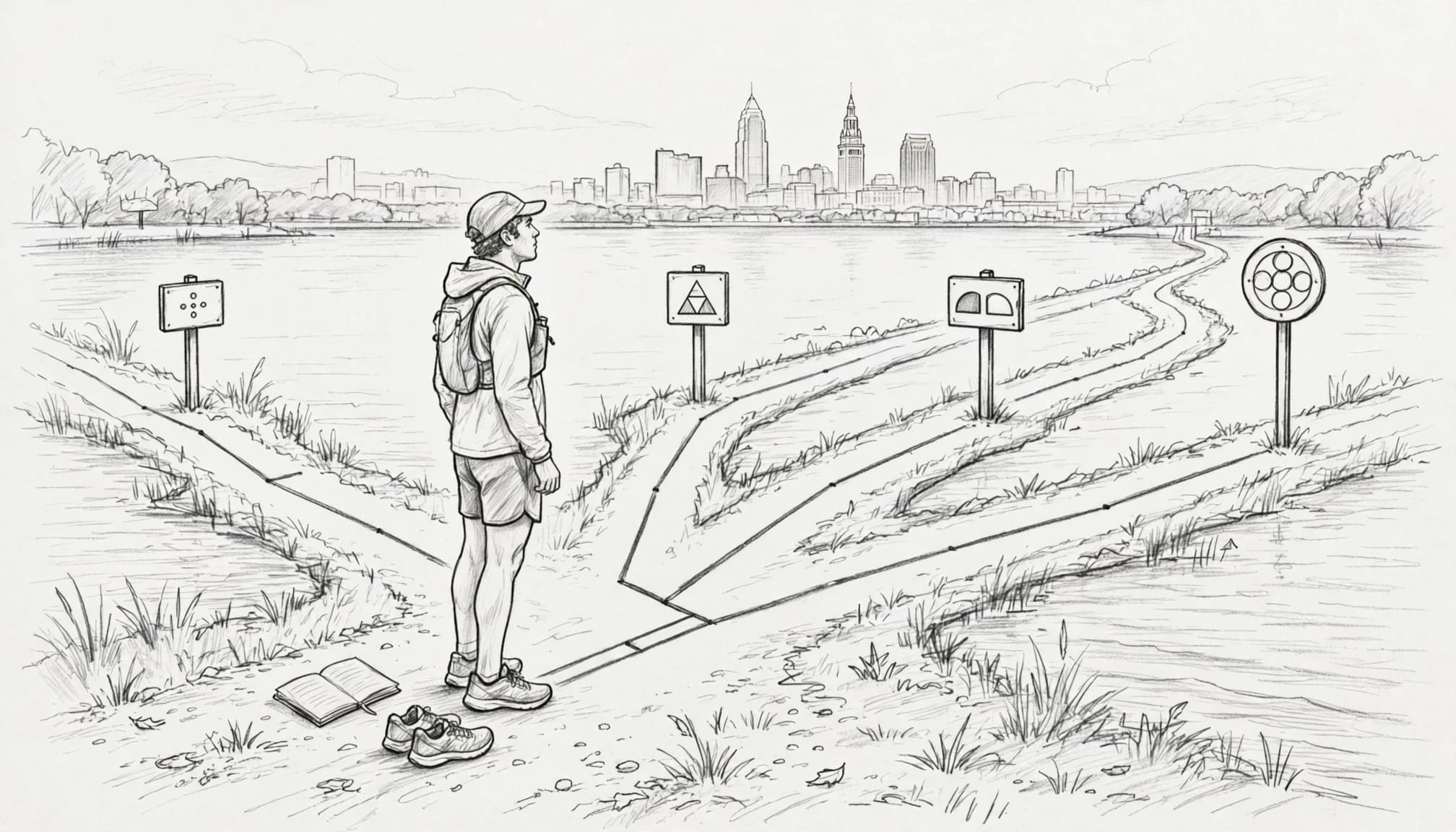
A half marathon or shorter Cleveland event may be wiser if you have:
- A low weekly running base or little experience with long runs.
- Repeated injuries that worsen when mileage increases.
- Limited preparation time before race weekend.
- Work, family, travel, or sleep demands that leave little room for recovery.
Choosing a shorter distance protects consistency. You can always build toward the marathon at a later Cleveland race after your body has handled the required workload.
When the half marathon, 10K, or 5K makes more sense
Shorter events fit a wide range of runners. Beginners can gain race experience without taking on marathon mileage, while runners returning from injury can test their fitness with less stress. Families may prefer the 5K, and experienced marathoners can use the 10K or half marathon as a tune-up race.
Set a goal that matches the distance and your current training. You might finish the 5K at a controlled effort, run the 10K with even pacing, or target a personal best in the half marathon. The Cleveland Marathon’s official course information can also help you understand the race setting before choosing your event.
Match your entry to a smart race goal
A completion goal focuses on finishing under control, with enough energy to manage the final miles. A time goal uses measurable targets, such as holding an even pace or finishing under a specific time. An experience goal focuses on practicing race skills, such as taking fuel at set intervals, staying relaxed through aid stations, or learning how your body responds to race effort.
Your goal can change during training. Health concerns, hot weather, missed workouts, or better-than-expected fitness may require a different approach. Strong race planning includes flexibility, because protecting recovery and choosing a goal you can train for consistently matter more than defending an old prediction.
What Happens After You Register for the Cleveland Marathon
Cleveland Marathon registration is the starting line for your preparation, not the finish. Once your payment is complete, turn your attention to the details that shape your training, travel, and race-day experience.
Build a training calendar around the race date
Count backward from race day and divide your preparation into four phases: base building, specific endurance, taper, and recovery. Early weeks should establish consistent easy running before you add longer efforts or harder workouts. Later, include long runs, controlled quality sessions, strength training, and full rest days.
Increase mileage gradually instead of forcing large jumps after registration. Your training pace should reflect your current fitness, not the time you hope to run months from now. Easy days should feel easy enough to support the next workout, while quality sessions should have a clear purpose.
Practice your intended race pace during selected workouts, especially after you have built a reliable aerobic base. Use long runs to test the shoes, clothing, hydration, and fueling products you plan to use in Cleveland. Waiting until race morning to try a new gel or drink can turn a small unknown into a major problem.
If you have a medical condition, recurring injury, or medication concern, address it early with a qualified health professional. A training plan works best when it accounts for your actual needs.
Prepare for bib pickup, travel, and race morning
Save your confirmation email, registration number, selected distance, and start time in one accessible place. Then watch for the official athlete guide, because packet pickup hours, locations, parking, transit, bag check, gear rules, start corrals, shuttles, and road closures can change.
The Cleveland Marathon FAQ explains key participant procedures, while the official course maps and water-stop information can help you review the route. Check both again close to race weekend rather than relying on an old screenshot or previous year’s schedule.
Local runners should still allow extra time for traffic and crowded parking areas. Visitors need to account for hotel check-in, meals, transportation, and unfamiliar roads. Lay out your clothing, bib, shoes, nutrition, and weather layers the night before. Arrive early enough to use the restroom, reach your corral, and handle unexpected delays without rushing.
Use Cleveland’s course and weather to shape your plan
Study the official course map for major turns, elevation changes, aid stations, and exposed sections. Knowing where support appears can help you plan when to drink and fuel, while reviewing turns reduces surprises during a hard effort.
Spring weather near Lake Erie can shift between cool, windy, rainy, and mild conditions. Train with flexible clothing options, including a light layer you can remove and clothing that remains comfortable when wet. Keep at least two pacing plans available as well. On a difficult weather day, effort-based pacing is safer than forcing a target pace that no longer fits the conditions.
Your race plan should respond to the weather you receive, not the forecast you wanted.
Finally, monitor race-week emails and official event updates. Those messages may contain the latest instructions for packet pickup, transportation, course access, and race-day logistics.
Registration Mistakes That Can Derail Race Day
Small registration errors can create major problems once race weekend arrives. Before you commit to a Cleveland Marathon event, check your distance, pace estimate, payment total, email address, and participant policies. A few minutes of careful review can protect your entry and keep race morning focused on running.
Protect your entry and personal information
Use the official Cleveland Marathon website and your registration account for every change. Never share your password, payment details, or login code with another runner. Also, don’t pay a stranger for a bib unless the race organizer confirms an approved transfer process.
A bib belongs to the registered participant, not simply to the person holding the number. If the organizer doesn’t record the transfer correctly, the bib may remain tied to someone else’s name, waiver, emergency contact, and timing record. Race staff may refuse the entry, and unofficial transfers can also create problems with course access, awards, medical treatment, or results.
Check every detail before submitting your form, especially:
- Your legal name and selected distance.
- Your email address and phone number.
- Your emergency contact’s name and number.
- Medical information that responders may need during the event.
- Your payment total, including fees and optional purchases.
If you choose the wrong event, enter an unrealistic pace, see a duplicate charge, or need to correct your name, contact information, or distance, reach out to official race support. The Cleveland Marathon FAQ provides current registration contacts and policy details. Don’t rely on advice from a reseller or social media comment.
Know when to change your plan
Illness, injury, pregnancy, a new work schedule, or travel trouble can make race participation unsafe or impossible. Read the event’s refund, transfer, and deferral rules as soon as you register, because deadlines may apply and some fees may not be recoverable.
Missing a registration fee is better than turning a manageable health problem into a serious injury. If pain changes your stride, fever leaves you weak, or a medical professional advises against racing, follow that guidance and check the organizer’s policy before making plans.
Email problems create another common failure point. Use an address you monitor, check spam folders, and save every official update. Race-week messages may include packet pickup hours, parking instructions, start times, road closures, and course changes. Waiting until race week to learn those details can leave you rushing through a crowded morning.
Before race day, confirm your entry, reread the latest email, and review the official participant information. That final check catches the mistakes that are easiest to fix before they reach the starting line.
Frequently Asked Questions
Cleveland Marathon registration becomes easier when you verify each detail before paying and understand what happens if your plans change. These answers cover common questions about official entry, bib changes, cancellations, training readiness, and confirmation problems.
Where should I register for the Cleveland Marathon?
Start with the official Cleveland Marathon website and follow its current registration link. Before entering payment information, confirm the domain, event year, selected race distance, and displayed event details. Your entry isn’t complete until you receive a payment receipt or registration confirmation that matches the race you intended to enter.
Can I transfer my Cleveland Marathon bib to another runner?
Bib transfer rules can change by event year and race distance. Read the current Cleveland Marathon FAQs, then use only the organizer’s approved transfer or distance-change process. An informal name swap can create timing, safety, waiver, medical, and eligibility problems, even if the other runner has the physical bib.
What if I need to cancel after registering?
Refunds, deferrals, registration insurance, and cancellation windows depend on the current event policy. Act before any posted deadline, because waiting may remove the available options. Contact official event support rather than assuming you will receive a refund, credit, or entry for a future race.
Can a beginner register for the Cleveland Marathon?
Yes, beginners can enter if they have enough time to build a safe training base and follow a structured plan. First-time marathoners should prepare for regular running, long-run recovery, fueling practice, strength work, and the mental strain of extended effort. If the full distance doesn’t fit your current fitness or schedule, the half marathon, 10K, or 5K may provide a better starting point.
When should I start training after I register?
Begin training according to your current fitness and the time remaining until race day, not simply the date your payment goes through. Start with a gradual base phase, then add planned long runs, recovery days, and race-specific work as your body adapts. If the preparation window is too short, adjust the goal or choose a shorter event instead of forcing missed training into a few weeks.
What should I do if I don’t receive a confirmation email?
Check your spam, junk, and promotions folders, then confirm whether your card or payment account shows a charge. Sign into your registration account if one is available, and search your inbox for a receipt, registration number, or event confirmation. If the status remains unclear, contact official event support before submitting a second registration, since another payment could create a duplicate entry or charge.
Conclusion
Cleveland Marathon registration is the first step toward an exciting race weekend, but the strongest results begin with careful decisions before training starts. Choose the event that matches your goals, current fitness, and available preparation time. Then use the official registration channel, verify the current date, fees, deadlines, and rules, and review every policy before submitting payment.
After you register, save your confirmation details and build a realistic training plan around the race date. Consistent easy running creates the foundation, while smart pacing, practiced fueling, strength work, quality sleep, and planned recovery help you handle the demands of race day. Stay ready to adjust your goal when weather, health, or missed training changes the plan.
With the logistics settled, you can focus on the work that brings Cleveland’s lakefront course into view. Approach each training week with patience and purpose, then arrive at the starting line prepared to run the race your preparation supports.


