

Charlotte Marathon Spectator Guide: Best Places to Watch & Cheer
Before sunrise, Charlotte’s streets begin to stir. Shoes tap against the pavement, volunteers call out directions, and the first cheers rise as runners move through the city with their focus fixed on the miles ahead. Along the course, families, friends, and local spectators gather with coffee, signs, cowbells, and plenty of encouragement.
A good viewing plan helps you see more than the starting line. This Charlotte Marathon Spectator Guide will help you choose a spot with a clear view, follow your runner between course points, plan parking and transportation, and support the athletes without missing the finish. You’ll also find practical tips for bringing children, staying comfortable, and making race morning easier for everyone in your group.
Course details, start times, road closures, and spectator rules can change each year, so confirm the final information with the official race organizers before heading out. With that step handled, you can choose your viewing strategy and enjoy the energy of Charlotte Marathon race day.
Key Takeaways
- Check the official Charlotte Marathon course map, start times, road closures, and spectator rules before race morning. Be sure to book your Charlotte Marathon hotels early and well in advance.
- Choose one viewing area near a major course point, then confirm you can reach it safely and on time.
- Use public transportation or arrive early, since parking access and street closures may change during the race.
- Track your runner’s pace so you can estimate arrival times and move between viewing spots without rushing.
- Pack layers, comfortable shoes, snacks, water, phone chargers, and simple signs to stay ready for changing conditions.
Charlotte Marathon Spectator Guide: Know the Race Before You Go
A successful race-day plan starts with two tools: the official course map and the runner tracking system. Use both before leaving home, then build a viewing plan that gives you time to move safely between locations.
How to Use the Course Map and Runner Tracking App
Start by studying the current course map on the official race website. Look for the start and finish areas, mile markers, major intersections, parks, aid stations, and places where spectators can cross or move between streets. The route may pass through Uptown Charlotte, nearby neighborhoods, parks, and major roads, but organizers can change the course each year.
Next, estimate when your runner should reach each viewing point. Divide the distance by the runner’s expected pace, then add a small time cushion. For example, a runner averaging 10-minute miles may reach mile 6 in about one hour, but that estimate begins at the runner’s actual start time. If the marathon has multiple race distances, confirm that you’re following the correct course and start wave.
When available, live tracking can show a runner’s most recent split, location, or estimated finish time. Check how often the app refreshes because tracking may update only when the runner crosses timing mats. A delayed update doesn’t automatically mean something is wrong.
Pace also changes during a long race. Hills can slow runners even when their effort stays steady. Heat, rain, wind, crowded sections, aid stations, and bathroom stops can add more time. A runner who holds a consistent effort may arrive several minutes later than a simple pace calculation suggests.
Choose two or three viewing points rather than chasing your runner across Charlotte. A practical plan might include one early-mile location, a second point near the middle of the course, and the finish area. Leave enough time for walking, street closures, restroom stops, and unexpected delays. If your runner has a pace goal, ask which location matters most to them and make that spot your priority.
Build your plan around reliable access, not the greatest number of sightings. Two calm, well-timed cheers are better than four rushed ones.
What to Pack for a Long Morning Outside
Race mornings can begin cold and end warm, especially when you stand still for long periods. Wear comfortable walking shoes and bring weather layers that you can remove or tie around your waist. Sunscreen, sunglasses, and a hat help even on a cool morning, while a light rain jacket protects you from changing conditions.
Pack water and simple snacks such as granola bars, fruit, or crackers. A portable phone power bank is useful because tracking, maps, messages, and photos can drain a battery before your runner finishes. Tissues, hand sanitizer, and small cash can also help, although mobile payment may be accepted in many areas.
Keep your bag small. Race areas may have security restrictions, limited storage, or rules against large backpacks and bulky items. Check the event’s spectator guidance before packing.
Children need extra layers, snacks, and a clear meeting plan if the group separates. Older adults may prefer a viewing point with nearby seating, restrooms, and less walking. For anyone with limited mobility, confirm accessible routes in advance and avoid assuming every sidewalk, crossing, or viewing area will remain open during the race. Bring a written emergency contact and your runner’s bib number in case phone service becomes unreliable.
The Best Places to Watch the Charlotte Marathon
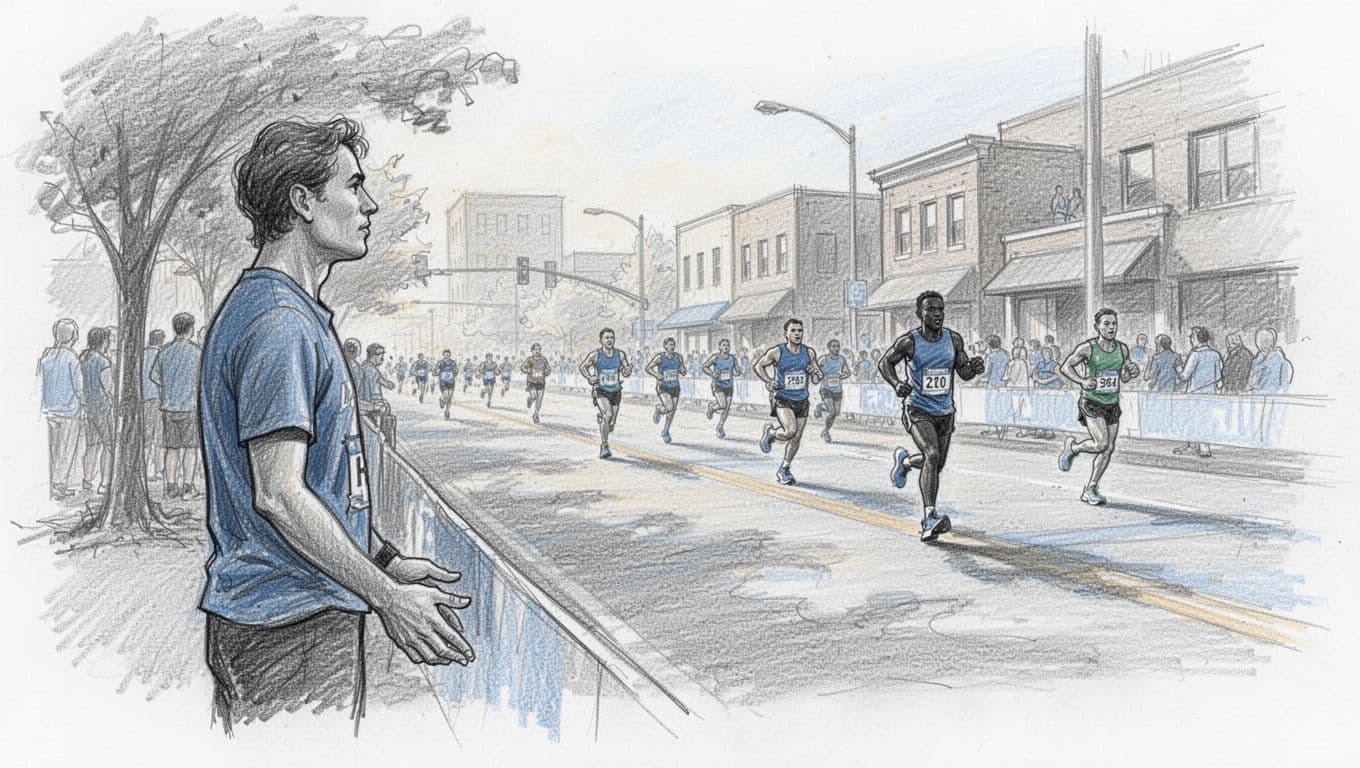
The best Charlotte Marathon viewing spot depends on the experience you want. Start and finish areas offer the biggest crowds and loudest atmosphere, while neighborhood sections often provide better visibility and more space. Before choosing a location, check the current official course map, race schedule, road closures, and spectator guidance because the route can change each year.
 ### Watching Near the Start and Finish Areas
The start line has a surge of energy. Runners gather under early-morning lights, music fills the streets, and spectators watch the field move forward in waves. It is a great choice if you want to see the race begin, but the crowd can make it difficult to find your runner or move quickly afterward.
The finish area brings a different kind of excitement. Friends wait for the final turn, runners search for familiar faces, and every finish carries its own story. However, barriers, security, volunteers, and the finish chute often limit where spectators can stand. Never assume you can enter a restricted area simply because you see an opening.
Choose a legal viewing point just outside the finish zone. Look for an open sidewalk or approved spectator area with a clear view of the final approach. Arrive early, especially if your runner has a specific finish window. For current traffic and closure details, review this Charlotte Marathon road closure guide before race morning.
Finish-line crowds can grow quickly because runners finish at different times and families often wait in the same narrow spaces. Set a family meeting place away from the chute, such as a quiet block, landmark, or designated public area. That backup point matters when cell service is slow and people leave the finish area in different directions.
Finding a Quieter Spot Where Your Cheer Matters Most
Support often means more to runners after the halfway point, when the early excitement has faded and fatigue begins to build. A quieter neighborhood section can give your runner a clean sightline and enough time to recognize your voice or sign.
Look for a safe, open location with room to stand without blocking runners, volunteers, residents, driveways, or sidewalks. Avoid corners where spectators spill into the course or narrow streets where a large group could create a hazard. Neighborhood sections may offer fewer restrooms and food options, so plan accordingly.
Generic yelling blends into the crowd. A short personal message works better, such as “Keep your pace, Maya” or “Mile 18, you’ve got this!” Use the runner’s name, goal, or a phrase they recognize. Keep signs easy to read and hold them above shoulder height without blocking another spectator’s view.
Can You See Your Runner at More Than One Point?
Seeing one runner twice is realistic when the locations are close and your route stays on the spectator side of the course. Walking is often the simplest option near central Charlotte. Light rail may help connect viewing areas, but confirm station access and race-day service before relying on it.
Biking can work for experienced riders who understand the route and have a secure place to leave the bike. Rideshare vehicles may face blocked streets or limited drop-off points. Driving offers flexibility in theory, yet road closures and crowds can make parking or crossing the course slow or impossible.
Plan one primary spot and one backup. Leave a large time cushion, then use runner tracking only as an estimate because timing updates may lag. Never cross the course outside designated crossings, even when you can see your runner approaching. Missing one sighting is safer than interrupting the race or placing yourself in danger.
Race-Day Transportation, Parking, and Road Closures in Charlotte
Getting to a Charlotte Marathon viewing spot takes more planning than choosing a location on the course map. Race barricades, traffic restrictions, limited parking, and crowded sidewalks can change how quickly you move through the city. Review the official race website before race morning for current road closure notices, parking guidance, transit changes, streetcar or light rail updates, restricted zones, and accessibility information.
Why Driving Between Spectator Spots Can Backfire
Driving may look convenient, especially when two viewing points appear close together. However, a short trip can become a long detour once race barricades close intersections and traffic shifts to one-way patterns. You may also find that your preferred garage or lot has restricted entry, a full sign, or an exit blocked by the course.
The biggest risk is missing your runner while searching for parking. After you park, you still need time to walk around barricades, find a legal crossing, use a restroom, and reach a clear viewing area. A route that normally takes 10 minutes can take much longer during the race.
Walking often works best when your two locations sit near one another. Public transportation, including light rail or streetcar service, may also reduce the stress of downtown driving, but check race-day service changes and station access before relying on it. Biking can help experienced riders, although you need a safe place to leave the bike and a route that avoids restricted streets.
Rideshare drop-offs create their own problems. Drivers may not reach the exact address you enter, and pickup zones can shift when streets close. Choose a location outside the busiest race area, confirm the meeting point by text, and expect to walk several blocks.
Plan for the route you can walk safely, not the route that looks shortest on a map.
Pick one primary viewing area and one nearby backup. If your group can’t reach the second location, stay at the first approved spot rather than splitting up in a rush. Send your runner one message with your final location, then meet after the race at a landmark away from the finish crowd.
Planning for Children, Mobility Needs, and Weather
Families should choose viewing areas with enough sidewalk space for a stroller, nearby restrooms, and a place to sit. Check whether curb ramps, elevators, crossings, and accessible paths remain open during the race. If you need accessible parking, review the event’s guidance early and bring any required permit. Never assume a familiar parking entrance will remain available after closures begin.
Children need clear boundaries near the course. Keep them behind barricades, hold hands near intersections, and never let them step into the runner lane for a photo or high-five. Give each child the group’s meeting location and an adult’s phone number. If someone gets separated, stay at the agreed meeting point instead of sending children through the crowd to search.
Weather can change the best viewing plan. Bring shade protection, water, sunscreen, and cooling layers for warm conditions. For cold mornings, pack extra layers and hand warmers. A compact rain jacket helps more than an umbrella, which can block views and crowd narrow sidewalks. Before leaving home, identify an indoor or covered backup area that remains outside restricted zones.
Check the race’s accessibility and spectator rules before traveling. That final review can reveal changes to restrooms, parking, transit access, and approved viewing areas.
How to Cheer Marathon Runners Without Adding Stress
Thoughtful support helps a runner stay focused, confident, and connected to the race plan. The best cheer is personal, easy to understand, and timed for the moment. Before race day, ask what your runner wants to hear, whether they may need a familiar snack or clothing layer, and where they expect to see you.
What to Say at the Start, Halfway Point, and Final Miles
Early in the race, keep your voice calm and confident. Runners are settling into pace, checking effort, and avoiding the temptation to start too fast. Try phrases such as:
- “You look strong, Maya. Settle into your pace.”
- “Your training brought you here. Stay relaxed.”
- “Great start. Trust your plan.”
Near the halfway point, remind the runner of the work already completed without pressuring them to speed up. Mention their pacing strategy, upcoming landmark, or a phrase they used during training. You might say, “You held your rhythm through the first half,” or, “Keep following your plan through Uptown.” If they requested nutrition or a clothing layer, offer it clearly and only from a safe, approved spot.
Late in the race, shorter phrases are easier to process. Fatigue can make long instructions confusing, so focus on the next mile marker, turn, or aid station:
- “One landmark at a time.”
- “Keep moving to the next corner.”
- “Your effort is steady.”
- “You know how to finish.”
- “I see you, and you’re doing well.”
Avoid shouting pace changes, finish-time predictions, or conflicting directions unless the runner asked you to coach them. A runner may look tired while following the exact plan they practiced.
Signs should use large, simple wording and stay above the crowd without blocking other spectators. Cowbells and music can add energy, but lower the volume as your runner approaches so they can hear their name and any course instructions. Skip air horns, aggressive yelling, or anything that startles runners. Take photos from behind the barricade, and never step into the road for a better angle.
How to Support a Runner After the Finish
Wait in the official family reunion area whenever the race provides one. Check the current event map for its location, entrance rules, and runner exit path before race morning. If the race doesn’t publish a reunion area, choose a landmark outside the finish zone and share the plan before the start.
A finished marathoner may need several minutes before talking, hugging, or walking far. Their legs can feel unsteady, and heat, cold, dehydration, or stomach discomfort may affect them. Bring a warm layer, fluids, and familiar recovery food, but offer each item instead of pushing it into their hands. Don’t provide unapproved food or supplements, especially if the runner has nausea or a known medical concern.
Follow barriers, volunteer directions, bag rules, and restricted-area policies. If your runner seems confused, collapses, has severe breathing difficulty, or cannot respond, alert a race volunteer or medical worker immediately. Give the runner space and let trained personnel manage the emergency rather than attempting medical treatment yourself. A clear meeting plan and calm presence help far more than rushing into the finish chute.
Build a Better Charlotte Marathon Weekend Plan
Race-day logistics become easier when you plan the entire Charlotte Marathon weekend, not just your viewing spots. Arrive early enough for packet pickup, review any course updates, and choose lodging that reduces unnecessary travel before the race.
Choose a Meeting Point Everyone Can Actually Find
Pick a landmark outside the busiest finish area, such as a public building entrance, a clearly named park feature, or a large intersection that remains accessible after the race. Write down the full address, save it offline, and share it with everyone in your group before race morning.
Avoid directions such as “near the finish” or “by the big crowd.” Those phrases mean different things to different people, especially when barricades change walking routes. A visual landmark gives everyone the same target and makes it easier to ask a volunteer or local resident for help.
Choose a backup location several blocks away in case the primary point becomes crowded or restricted. Your plan should also account for:
- Dead phone batteries and lost chargers.
- Weak cell service near the start or finish.
- Delayed runners, especially late in the marathon.
- Weather changes that force your group indoors.
- Medical needs that require someone to leave the course area.
Keep a printed note with the meeting address, your runner’s bib number, and at least one emergency contact. If the group separates, send one clear message with the final location instead of creating several competing plans. After the finish, allow your runner time to exit the recovery area before expecting them to walk across Charlotte.
A Simple Spectator Schedule for Race Morning
Use this flexible timeline rather than relying on exact race times, which can change with each event:
- Arrive before the start, allowing time for parking or transit, restrooms, security, and a walk to your first viewing area.
- Watch the opening wave or your runner’s start, then leave the busiest zone before crowds make movement difficult.
- Move to your chosen mid-course location only if the route is practical and you have a generous time cushion.
- Check runner tracking for the latest split, while remembering that updates may lag behind the runner’s actual position.
- Relocate again only when the route, crossing points, and timing make success likely.
- Meet at the agreed post-race landmark after your runner leaves the finish area.
Build extra time into every move. A short distance can take much longer when streets close, sidewalks fill, or your runner slows late in the race. Seeing your runner once with a clear view and meaningful encouragement is often better than rushing between several spots and missing them each time.
For visitors staying in Charlotte, choose lodging based on access rather than rankings. A place near the start or finish can reduce early-morning travel, while lodging near transit may make spectator movement easier. Nearby restaurants also help after the race, but confirm hours and reservations before the weekend.
Schedule packet pickup and any last-minute race errands before race morning. Keep the runner’s Saturday plan light with an easy meal, a short walk, a museum visit, or an indoor activity that fits the weather. After the marathon, prioritize fluids, a familiar meal, and recovery time before planning a busy celebration. The best weekend plan leaves room for tired legs, changing weather, and an unhurried finish.
Choose Your Distance, Duration and Goal Time
Make three quick selections and open the exact plan built for your race target.
Looking for a Fully Personalized Training Plan?
The training plans above are an excellent choice if they match your goal. However, if you’d rather train with a plan built specifically around your current fitness, goal race, preferred training days, weekly mileage, and target finish time, our RDA Custom Training Plans provide a personalized solution. We also have running courses available for runners seeking to run faster from the mile to the marathon.
Why Choose a Custom Training Plan?
| Standard Training Plan | RDA Custom Training Plan |
|---|---|
| Follows a fixed schedule | Built around your schedule |
| Standard weekly mileage | Peak mileage customized for you |
| Fixed workout days | Train on the days you choose |
| Same structure for everyone | Designed around your current fitness |
| Static plan | Updated as your fitness improves |
| One-time purchase | Ongoing personalized coaching and support |
What You’ll Receive
- A training plan built specifically for your goal
- Personalized training paces
- Long runs, tempo runs, threshold workouts, interval sessions, recovery runs, and easy runs
- Peak weekly mileage matched to your experience level
- Flexible training schedule that fits your life
- Ongoing plan adjustments as your fitness improves
Ready to Train Smarter?
Stop guessing and start following a plan built specifically for you, your schedule, and your racing goals.
Frequently Asked Questions
Even with a solid Charlotte Marathon spectator plan, a few race-day details can still create uncertainty. These answers cover common situations that affect spectators before, during, and after the marathon.
Can spectators enter the finish-line chute?
Usually, spectators must remain outside the finish chute and designated recovery areas. These spaces need to stay clear so volunteers can direct finishers, provide medical support, and manage the flow of runners. Meet your runner at the official family reunion area or at a prearranged landmark away from the finish.
What should I do if I miss my runner?
Stay calm and return to your planned meeting point instead of searching randomly through the crowd. Check the runner’s latest tracking update, then send one short message with your location and wait for a response. If the runner’s phone is unavailable, their bib number can help race volunteers direct you to the appropriate post-race area.
Can I bring a dog to watch the Charlotte Marathon?
Pet rules can vary by course section, venue, and local safety requirements. A dog may be difficult to manage near crowded sidewalks, loud music, cowbells, barricades, and passing runners, even when pets are allowed in public areas. Confirm the event’s current policy, use a short leash, and choose a quieter viewing location if you bring one.
Are spectators allowed to hand food or drinks to runners?
A runner may accept a personal item from a spectator if the handoff happens from a safe, legal location outside the course. Ask your runner in advance what they want, label bottles or packages clearly, and avoid stepping toward the roadway. Never throw food, clothing, or bottles onto the course because those items can create a tripping hazard.
How can I follow race results after the marathon?
Use the event’s official results page or timing platform once organizers publish the current link. Results may appear in stages, with preliminary times posted before corrections or age-group awards are finalized. Save your runner’s bib number, race distance, and name spelling so you can find the correct result quickly.
What happens if severe weather changes race plans?
Race organizers may delay, shorten, reroute, or cancel an event when weather creates a safety risk. Monitor official race alerts before leaving your hotel or home, and keep your phone charged so you receive updates. If conditions worsen during the race, follow instructions from volunteers and public safety staff rather than moving toward the course for a closer view.
The final race instructions take priority over any spectator plan. Check them again the night before and on race morning, because access, timing, and safety procedures can change.
Conclusion
A memorable Charlotte Marathon race morning starts with a clear plan before the first runners leave the line. Confirm the current course, start times, road closures, transportation updates, and spectator rules. Then choose realistic viewing spots that you can reach safely, leave enough time between locations, and follow official crossing points.
Your support matters most when it helps rather than distracts. Cheer from behind the barriers, keep handoffs safe, and set a reliable meeting place away from the finish crowd. The strongest Charlotte Marathon spectator guide comes down to preparation, patience, and being present when your runner needs encouragement.
Bring energy, a personal message, and enough patience for changing conditions. Your runner may forget how many miles you saw, but they will remember hearing your voice when the course felt hardest.


