

Calgary Marathon Start Time: Race Schedule, Corrals & When to Arrive
When does the Calgary Marathon begin? The answer depends on the race distance, since marathon weekend includes multiple events with separate start times. The Calgary Marathon start time can also change each year, so confirm the official race guide and the latest runner emails before race morning.
Arriving at the wrong time can add stress before you’ve even reached the start line. This guide will help you find your correct start time, plan when to arrive, prepare for race morning, and avoid common timing mistakes. Whether you’re running your first marathon or chasing a personal best, you’ll know what to check before the starting horn sounds. Be sure to book your Calgary Marathon hotels early and in advance to save on costs.
Key Takeaways
- The Calgary Marathon start time depends on your event, since marathon weekend includes multiple races with separate schedules.
- Confirm your distance, start wave, and line-closing time on the official event information page before race morning.
- Check runner emails and the race guide for updates, venue details, transportation instructions, and last-minute changes.
- Plan to arrive early enough for parking, transit, bag check, restrooms, warm-up, and the walk to your starting area.
- Save the schedule to your phone and set alarms so you can focus on pacing instead of watching the clock.
Calgary Marathon Start Time: Find the Official Race-Day Schedule
The Calgary Marathon start time depends on the race year and distance. The full marathon, half marathon, 10K, 5K, and youth events can run on different days or begin at separate times. Your correct schedule is the one assigned to your registered event.
Before making travel plans, check the official Calgary Marathon event information. Then compare it with your race guide, registration dashboard, and latest runner email. These sources carry the details you need for race morning.

Check the schedule for your race distance
Race weekend includes several events, and each one may have its own start area, opening time, and cutoff schedule. The full marathon is listed as the 42.2-kilometer event, while the half marathon covers 21.1 kilometers.
The 10K, 5K, youth race, and fun-run events may have different staging instructions. Some may take place on Saturday, while longer races may run on Sunday. Therefore, don’t rely on a general race-weekend schedule without confirming your event.
When you review the official page, look for:
- Your registered distance and race date.
- The scheduled gun time or wave start.
- Start-area opening and line-closing times.
- Bag check, bike lock-up, and restroom hours.
- Transportation, parking, and course access instructions.
The official Calgary Marathon race-day information provides event-day details, including opening times and race logistics. Keep checking it as race weekend approaches because organizers can update instructions after registration closes.
Understand what the listed time means
A schedule may show more than one time for the same event. The start-area opening time tells you when runners can enter the staging zone. The gun time is when the race officially begins. A wave start means runners leave in assigned groups rather than all at once.
Those times affect your arrival plan. If the start area opens at 5:45 a.m. but your race begins later, you don’t necessarily need to arrive at the opening minute. However, you still need time for parking or transit, bib access, restrooms, bag check, warm-up, and the walk to your corral.
Read every time beside its label. A line-closing time is not another start time, and a post-race schedule is not a substitute for your race start. The official website currently publishes separate race-day and post-race information, so use the page that matches the detail you’re checking.
Use a current source, not an old schedule
Search results, old blog posts, and social media comments can display schedules from a previous year. Even a small change can affect road closures, transit routes, start waves, or your arrival window. Race organizers may also adjust times when they update the course or venue plan.
Use this order when confirming your Calgary Marathon start time:
- Check the current official event information and race-day pages.
- Open the race guide for your specific year.
- Review your registration dashboard for your distance, bib, and wave.
- Search your email for the newest runner instructions.
- Read on-site signs and announcements when you arrive.
For example, an example schedule only might show a 5K at 9:45 a.m., a youth race at 11:00 a.m., and longer events on a separate day. Those times illustrate how the weekend can be divided; they aren’t confirmation of the current schedule.
Save the official schedule to your phone, write down your gun time, and set two alarms. That simple preparation keeps race morning focused on your warm-up and pacing instead of last-minute clock watching.
How Early Should You Arrive Before the Calgary Marathon?
The published Calgary Marathon start time is the moment your race begins, not the time you should leave home or reach the venue. Most runners should arrive 60 to 90 minutes before their start, while marathoners driving from outside Calgary may need two hours or more for travel, parking, and unexpected delays.
Your goal is to reach the start area with enough time to handle practical tasks without standing outside so long that you get cold, tired, or anxious. Check the official Calgary Marathon race-day information for current access, transit, parking, and venue instructions before race morning.
Build your race-morning timeline backward
Start with your assigned corral-entry time, then work backward. A practical marathon timeline may look like this:
- 3 to 4 hours before the start: Wake up, drink the amount of fluid you normally tolerate, and eat your familiar pre-race meal.
- 2.5 to 3 hours before the start: Dress in tested race clothing, apply anti-chafing products, and check your bib, shoes, watch, nutrition, and weather layers.
- 90 to 120 minutes before the start: Leave your hotel or home, allowing extra time for unfamiliar roads, road closures, and traffic.
- 60 to 90 minutes before the start: Arrive at the venue, find the correct entrance, use the restroom, and drop your bag if needed.
- 30 to 45 minutes before the start: Complete a short, easy warm-up and mobility routine. Keep moving, but save your legs.
- 15 to 20 minutes before the start: Enter your corral, perform a final equipment check, and settle into your assigned area.
Your eating schedule should match your training. Avoid testing a new breakfast, supplement, or coffee routine on race morning. A calm meal at home or in your hotel room is usually easier than searching for food near a crowded venue.
Adjust your arrival time to your travel plan
Runners staying nearby can often arrive about 60 minutes early, provided they already know the route and don’t need extensive bag-check or restroom time. Still, leave a cushion for elevators, hotel exits, and crowded sidewalks.
Public transit requires more planning. Calgary Marathon guidance recommends checking Calgary Transit’s app and using nearby LRT parking when appropriate. Add time to walk from the station, find the correct entrance, and manage a busy platform. Read the current event information and schedule before choosing your train.
If you’re driving from outside Calgary, plan to arrive at least 90 to 120 minutes early. Road closures can change the route, and a nearby parking lot may fill before you arrive. Calgary Parking’s marathon road-closure information can help you plan where to leave your vehicle and when restrictions apply.
Shorter-event runners may need less time, especially without bag drop. Even so, arrive 45 to 60 minutes before the start for parking, restrooms, bib checks, and the walk to the start area. A 5K still becomes stressful when you reach the venue with only ten minutes remaining.
Marathoners should avoid cutting arrival too close because small delays can disrupt fueling, warm-up, and corral entry. However, arriving several hours early can backfire in cold or wet Calgary weather. Wait indoors when possible, wear a disposable outer layer if needed, and keep your pre-race movement light. You want to begin ready to run, not stiff from standing in the elements.
Race Morning Logistics That Can Change Your Start Time Plan
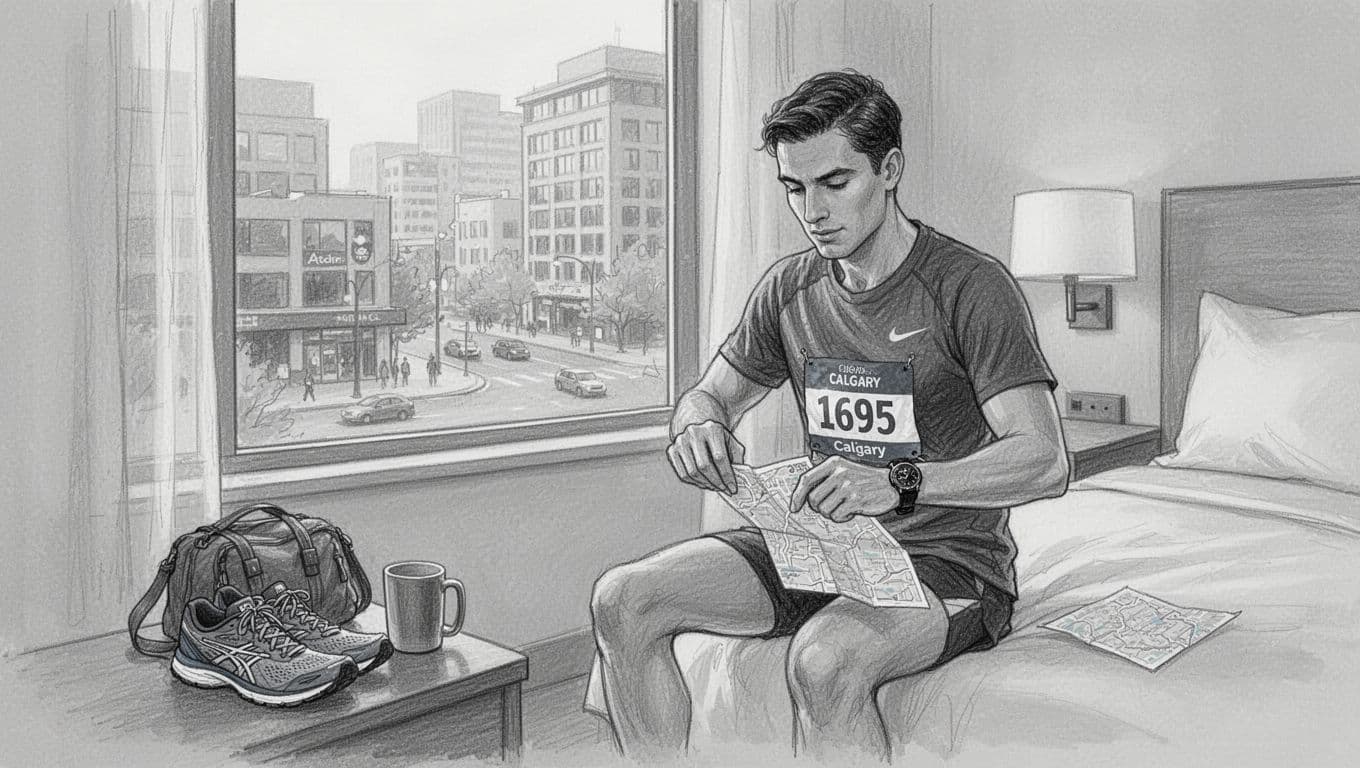
Your planned arrival time can change once you account for corrals, bag drop, road closures, and the distance between transportation stops and the start line. The listed Calgary Marathon start time is only one part of the morning. Your bib, assigned wave, access route, and final announcements may determine when you need to be in place.
Allow time for corrals and timing mats
Your bib number may place you in a specific corral or assigned wave. That group controls when you enter the starting area and when you move toward the line. Arriving at the venue doesn’t mean you’re ready to start if you still need to find your corral.
Follow the signs and volunteer instructions when you reach the venue. Keep your bib visible, since volunteers may use it to direct you. If you enter the wrong area, you might need to walk back through a crowded staging zone and lose valuable time.
Timing mats also affect how the race records your result. Many events use a mat at the start, and your official timing begins when you cross it. However, you still need to reach your assigned start wave before officials close access. Don’t assume a timing mat gives you permission to start late.
Treat bag check and course access as fixed deadlines
Bag check often closes before the race begins. If you plan to store clothing or other belongings, find the drop location as soon as you arrive. A long line, a misplaced tag, or a walk to the wrong tent can consume the spare minutes you thought you had.
Course access rules can affect runners and spectators differently. Certain streets may close to vehicles and pedestrians, while volunteers direct runners through approved entrances. Study the official Calgary Marathon race-day information and the current course map before traveling to the venue.
Downtown Calgary traffic can slow well before the gun time. The event’s road-closure information states that closures begin at 4:45 a.m. on Saturday and Sunday, subject to change. Construction, parking limits, detours, and transit changes can add extra walking time, even when your route looks short on a map.
Check Calgary Transit updates and event transportation notices the day before. If you’re driving, identify a backup parking area and the walking route from that location. A plan that depends on one downtown entrance or one parking garage leaves little room for a last-minute restriction.
Road closures can affect your route before sunrise, so calculate travel time using the race-day access plan rather than a normal weekday trip.
Use this day-before logistics checklist
Review these details before you go to sleep:
- Confirm your start location, race distance, and assigned wave time.
- Check whether you need to pick up your bib, and verify the pickup hours and location.
- Save your parking plan, transit route, backup option, and walking directions.
- Confirm the bag-drop location, labeling instructions, and closing deadline.
- Review the forecast, then set out clothing that matches the expected conditions.
- Choose a meeting point away from the busiest part of the start area.
- Save the official schedule and transportation notices to your phone.
- Set alarms for waking up, leaving, and reaching your corral.
Start-line announcements can change the morning plan because of weather, safety concerns, course access, or operational delays. Keep your phone volume on while traveling, listen for public-address updates, and watch for official messages.
If the schedule changes, follow volunteers and race directors instead of relying on advice from other runners. They control access to the corrals and course. Your job is to stay calm, move where you’re directed, and protect enough time to reach the correct start area.
Match Your Race-Day Timing to the Distance You Are Running
The Calgary Marathon weekend schedule separates runners by event, distance, and staging needs. The marathon, half marathon, 10K, 5K, youth races, and relay events may use different start times or corrals, so never assume every runner begins together.
Check your registered event against the official Calgary Marathon schedule before setting alarms or booking transportation. Your distance affects more than the gun time. It also determines when you should eat, warm up, reach the corral, and prepare your pacing plan.
Marathoners need the earliest and calmest routine
A marathon start often comes early, which means your morning begins several hours before the race. Eat your familiar breakfast early enough to let it settle, usually two to four hours before the gun. Choose foods you have tested during long training runs, and avoid adding a new supplement or oversized meal because race-day nerves can make digestion less predictable.
A small carbohydrate snack may help during the final hour if you normally tolerate one. Sip fluids according to your training routine rather than forcing large amounts. Your goal is to reach the start line fueled and comfortable, not weighed down by food or water.
Keep the warm-up short. A few minutes of easy jogging, dynamic mobility, and relaxed strides can prepare your legs without spending energy you need later. If you arrive far ahead of the start, wear an extra layer and keep your body warm while you wait.
The marathon also demands careful pacing from the first kilometer. Adrenaline can make your goal pace feel too slow, but that controlled opening protects your legs for the final third of the race. Reach your corral with time to breathe, check your watch, and settle into your planned effort. A rushed start can disrupt breakfast, warm-up, fueling, and pacing before the race has properly begun.
Half marathon and shorter races still require planning
Half marathon runners usually need less fuel and a shorter warm-up than marathoners. However, the later Calgary Marathon start time for a shorter event doesn’t always mean you can arrive later. Packet pickup, parking, restrooms, bag drop, and shared entrances may become busy as other races gather.
For a half marathon, eat a familiar meal or snack one to three hours before starting. A short easy jog and a few mobility exercises are often enough, especially if the weather is warm. Shorter races may require little or no mid-race fueling, but runners should still carry what they practiced using if the effort will last long enough to need it.
A 10K or 5K runner may spend less time on the course, yet the opening pace can feel more demanding. Start close to your intended pace instead of sprinting through the first mile. Your warm-up should match your goal: an easy jog and a few strides help runners racing hard, while a relaxed walk and mobility work may suit a recreational effort.
Account for teams, friends, and accessibility needs
Relay teams should confirm exchange zones, team check-in rules, transportation, and the time each runner must reach their assigned area. A relay runner may have a later personal start but still need to travel early because roads and facilities close before the first race begins.
If you’re meeting friends, choose a location outside the busiest start corral. Everyone should follow their own event assignment rather than waiting for the group to begin together. Runners with accessibility needs should review the current race-day guidance, contact organizers before race weekend when accommodations are required, and allow extra time for accessible entrances, transportation, or positioning in the correct start area.
Choose Your Distance, Duration and Goal Time
Make three quick selections and open the exact plan built for your race target.
Looking for a Fully Personalized Training Plan?
The training plans above are an excellent choice if they match your goal. However, if you’d rather train with a plan built specifically around your current fitness, goal race, preferred training days, weekly mileage, and target finish time, our RDA Custom Training Plans provide a personalized solution. We also have running courses available for runners seeking to run faster from the mile to the marathon.
Why Choose a Custom Training Plan?
| Standard Training Plan | RDA Custom Training Plan |
|---|---|
| Follows a fixed schedule | Built around your schedule |
| Standard weekly mileage | Peak mileage customized for you |
| Fixed workout days | Train on the days you choose |
| Same structure for everyone | Designed around your current fitness |
| Static plan | Updated as your fitness improves |
| One-time purchase | Ongoing personalized coaching and support |
What You’ll Receive
- A training plan built specifically for your goal
- Personalized training paces
- Long runs, tempo runs, threshold workouts, interval sessions, recovery runs, and easy runs
- Peak weekly mileage matched to your experience level
- Flexible training schedule that fits your life
- Ongoing plan adjustments as your fitness improves
Ready to Train Smarter?
Stop guessing and start following a plan built specifically for you, your schedule, and your racing goals.
Frequently Asked Questions
Race schedules can look simple until you account for distance, corrals, transportation, and last-minute instructions. These answers cover the details runners often still need after reviewing the Calgary Marathon schedule.
What time does the Calgary Marathon start?
The official Calgary Marathon start time can vary by race year and distance. Organizers may adjust the schedule because of the course plan, venue setup, wave assignments, or other race-day requirements.
Check the current Calgary Marathon event information for the confirmed time, then compare it with your registration details and race guide. Your latest runner email is also important because it may include updates released after the website schedule was published.
Is the Calgary Marathon start time the same for every race?
No. The full marathon, half marathon, 10K, 5K, and youth or fun events may have separate start times, corrals, and staging areas. Some events can also use different start-line locations or take place on different days during race weekend.
Check the event printed on your bib and listed in your registration portal. Don’t follow the schedule for another distance just because the races share the same venue. A later 5K start, for example, doesn’t change the time assigned to marathon runners.
How early should I arrive for the Calgary Marathon?
Plan to arrive early enough for travel, parking or transit, bag drop, bathrooms, and corral entry. Many runners should allow at least 60 to 90 minutes before their start, while those driving from outside Calgary may need more time for road closures, parking, and the walk to the venue.
First-time participants should add extra time because finding the correct entrance and corral can take longer than expected. Review the official race-day schedule before leaving, then set a departure alarm instead of relying only on the gun time.
Where can I verify the Calgary Marathon schedule?
The best sources are the official Calgary Marathon website, the current race guide, your registration portal, and the latest runner communications. Event-day signs, volunteers, and public-address announcements can provide final instructions when you reach the venue.
Avoid depending on old third-party pages, forum posts, or social media comments. Those sources may show a previous year’s start time, course layout, parking plan, or wave structure. Save the current schedule to your phone before race morning in case you need to check it without a reliable connection.
What happens if I miss my assigned start wave?
Wave and corral rules are controlled by the race organizers. You may not be allowed to move freely between start groups, especially if doing so creates crowding or affects course operations.
Speak with event staff or a volunteer as soon as you realize you’ve missed your wave. Don’t enter a different corral on your own, since staff may direct you to a later wave or provide instructions based on available course access.
Can the Calgary Marathon start time change because of weather or safety?
Yes. Race directors may delay, adjust, or cancel a start because of severe weather, an emergency, unsafe course conditions, or another operational concern. A change can happen before runners reach the venue or after participants have entered the staging area.
Monitor official race emails, website updates, and event-day announcements. When conditions change, follow instructions from organizers and volunteers, even if those directions differ from your original schedule. Safety decisions take priority over the listed Calgary Marathon start time.
Conclusion
Knowing the Calgary Marathon start time is only one part of a smooth race morning. Verify your exact event, race wave, and start-area instructions through the official schedule and runner communications. Then plan transportation around road closures, allow a comfortable arrival buffer, and prepare your bib, clothing, nutrition, and alarms the night before.
A calm morning gives you more control when the starting area fills and the clock begins to matter. With the logistics handled, you can focus on steady pacing, practiced fueling, and enjoying every mile through Calgary.


