

Calgary Marathon Pacers: Pace Groups, Goal Times & How to Choose
The sun lifts over Calgary, cool air settles across the start line, and thousands of runners check their watches as the marathon countdown begins. Somewhere in the crowd, a pacer holds a steady rhythm, helping runners protect their energy and stay close to a target finish time.
A Calgary Marathon pacer is an experienced runner assigned to maintain a consistent pace for a specific goal, such as a 3:30, 4:00, or 4:30 marathon. Following that group can make 26.2 miles feel more manageable because you don’t have to calculate every split alone, although you’ll still need to listen to your body, fuel properly, and adjust when conditions change.
Pacer availability, pace bands, meeting points, and course details can change each year, so confirm the current information on the official Calgary Marathon website before race day. This guide will help first-time marathoners and experienced runners chasing a personal best choose a realistic goal, prepare for the pace group, and use smart race-day tactics. First, we’ll look at how Calgary’s pacer groups work and how to match one with your training.
Remember, ensure to book your Calgary Marathon hotels early to save on costs.
Key Takeaways
- Choose a Calgary Marathon pacer whose finish-time goal matches your training, recent race results, and realistic race-day fitness.
- Use the pace group to control early enthusiasm, settle into even effort, and reduce the need to calculate every split.
- Stay flexible when heat, wind, hills, crowds, or fatigue affect your pace. Protect your effort before chasing the clock.
- Fuel and hydrate consistently, then let the pacer’s rhythm guide your decisions rather than forcing every kilometer.
- Check the official Calgary Marathon pacer details before race weekend because groups, meeting points, and procedures can change.
What Calgary Marathon Pacers Do for Runners
Calgary marathon pacers are trained pace leaders who help runners stay close to a chosen finish-time goal. Instead of watching your GPS every few minutes, you can settle into the group, manage your effort, and focus on fueling, form, and the road ahead.
A pacer is different from a personal coach or running partner. A target finish-time group supports anyone pursuing that goal, while a coach works directly with one runner and provides individualized feedback. The pacer cannot adjust your training plan or monitor your health, but they can offer a steady reference point across 26.2 miles.
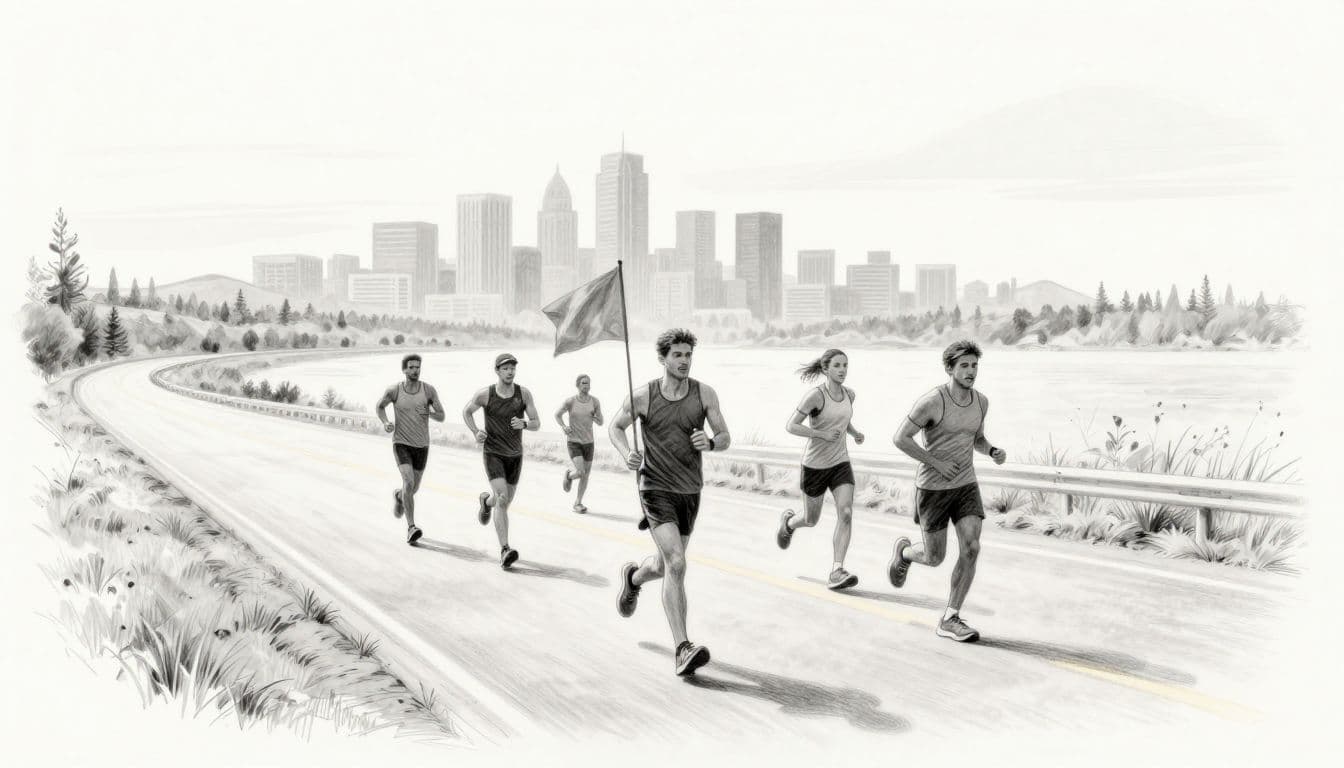
How a pace leader manages effort
A strong pacer does more than run at one exact split repeatedly. They usually maintain an even, controlled race effort, allowing the clock pace to change slightly when the course or conditions demand it.
Turns, hills, wind, aid stations, and crowded sections can all affect individual mile or kilometer times. A brief slowdown through a busy water station may be followed by a gradual return to pace. On a downhill stretch, the group might gain time without forcing the effort.
That approach protects your energy. Running every early mile too fast can leave you paying for it after the halfway point, even when your watch shows a promising average. A capable pacer helps the group avoid that mistake and keeps the race from becoming a series of emotional surges.
A pace group gives you a moving reference point, not permission to ignore fatigue, pain, heat, or poor fueling.
The group also reduces mental clutter. You still need to check in with yourself, but you don’t have to calculate every split or wonder whether a small pace change has ruined your goal. The pacer becomes one steady marker in a long day.
What to expect before and during the race
At the start, you may see pace signs, flags, marked shirts, or a designated meeting area. Event procedures can change, so review the Calgary Marathon pace team information before race weekend rather than relying on an old race photo or runner’s recollection.
Join your chosen group early enough to avoid last-minute crowding. Introduce yourself if you have a chance, then listen for the pacer’s plan. They may explain the intended effort, how they handle hills, and when the group should expect aid stations.
During the race, stay near the group without forcing your way through other runners. Keep enough space to move, drink, and take fuel. If the pace feels too hard before the halfway mark, let the group go and protect your race. A finish-time sign cannot tell you what your body needs that morning.
Find the Right Calgary Marathon Pacing Group for Your Goal
Choosing among Calgary marathon pacers starts with an honest question: what finish time can you sustain for 26.2 miles, not merely survive for the first half? Your best group should match your recent race results, long-run training, and the conditions you may face on race morning.
Use these average pace targets as a starting point. Official pacer bands may not include every finish time, so you may need to follow the closest available group.
| Finish goal | Approx. per mile | Approx. per kilometer |
|---|---|---|
| 3:00 | 6:52 | 4:16 |
| 3:30 | 8:01 | 4:58 |
| 4:00 | 9:09 | 5:41 |
| 4:30 | 10:18 | 6:24 |
| 5:00 | 11:27 | 7:07 |
| 5:30 | 12:36 | 7:50 |
These numbers are averages, not instructions to force every split. A few seconds per mile can become several minutes across the full marathon, especially when you add turns, aid stations, hills, wind, and crowded sections. A pace that feels easy for five miles may feel costly after 20.
How to Check Official Pacer Times and Race Details
Confirm the current year’s pace groups, pacer names, meeting location, and start-wave rules through the official Calgary Marathon race-day information. Review the runner guide and pre-race emails as well. The race expo may provide updated pace-band details, maps, and instructions that were not available when you registered.
Check the course time limits and any changes to the marathon or half marathon before you travel to the start line. Race-day announcements can also affect corral access, wave timing, meeting points, or pacing procedures.
Old blog posts, social media comments, and unofficial pace charts can help you understand how a past race felt, but they cannot confirm current procedures. Organizers may change course layouts, start waves, time limits, pacer assignments, or meeting areas. Treat those sources as background, not as your final authority.
When You Should Not Join a Faster Pace Group
A faster group is probably the wrong choice if you haven’t completed enough long runs at controlled effort. Short-distance speed can suggest potential, but a fast 5K doesn’t prove you can hold that pace after two hours on the road.
Watch your body during the opening miles. Heavy breathing, an unusually high heart rate, tight muscles, or repeated surges to catch the pacer are clear warnings. Let the group move ahead before early discomfort grows into a late-race crisis.
Your primary goal should allow room for Calgary weather, wind, hills, crowding, and brief aid-station slowdowns. Set a backup goal that you can pursue if conditions turn difficult, and consider a negative-split plan that begins slightly slower before building effort after halfway.
Stepping back to a slower Calgary Marathon pacing group is a smart race decision, not a failure. The strongest finish often belongs to the runner who protects energy early and still has control during the final miles.
How to Train Before Following a Marathon Pacer
Following Calgary marathon pacers becomes easier when your training has already taught you to hold steady effort while tired. Long runs, marathon-pace workouts, easy mileage, strength work, recovery, sleep, and fueling all prepare you for the demands behind a finish-time goal.
Use recent half marathon results and training data as clues, not guarantees. An injury, missed training, illness, poor sleep, or extreme weather can change what your body can handle. Adjust your goal before race day when those factors affect your preparation.
Practice the Skills a Pace Group Requires
A pace group is a moving crowd, so rehearse more than the target split. During long runs, practice settling behind other runners without clipping heels. Leave enough room to shorten your stride, move around a slower runner, or find space when the group spreads across the road.
Aid stations need practice too. Take fluids and fuel while maintaining relaxed shoulders and controlled breathing. Move toward the side before reaching the table, slow slightly if needed, and rejoin the running line without stopping in front of others. If you need to pass, check the space ahead and move gradually rather than cutting across several runners.
Include steady running in different conditions. Practice marathon effort on hills, into wind, in cool weather, and when your legs feel heavy near the end of a long run. One useful workout might include an easy warmup, controlled marathon-pace blocks separated by relaxed running, and a cooldown. Adjust the distance and number of blocks to fit your training history instead of copying one workout for every runner.
Your GPS watch should support the plan, not replace effort awareness. Buildings, turns, tunnels, and signal errors can produce misleading readings. Look at pace trends when useful, then lift your eyes and notice breathing, posture, and muscle tension. Can you hold the effort without staring at the screen every few seconds?
Fuel and Hydrate Without Losing the Group
Use long runs to test the carbohydrates, fluids, and electrolytes you may carry or collect during the race. Start with products you can tolerate, then adjust timing, texture, and flavor through repeated practice. The Korey Stringer Institute’s marathon fueling guidance offers useful background for runners building that routine.
Your needs depend on personal tolerance, body size, sweat rate, running intensity, and weather. Hot Calgary conditions can change fluid needs, while a cool morning may require less. Follow your race’s official aid-station details, and don’t assume every station will offer the same drink, gel, or spacing as another event.
Practice opening packets, carrying bottles, and drinking without rushing. If you stop briefly, let the pace group move ahead rather than sprinting after it. Once you finish fueling, return to a controlled rhythm and allow the group to come back into view gradually. A short gap costs less than a hard surge that damages the rest of your race.
Choose Your Distance, Duration and Goal Time
Make three quick selections and open the exact plan built for your race target.
Looking for a Fully Personalized Training Plan?
The training plans above are an excellent choice if they match your goal. However, if you’d rather train with a plan built specifically around your current fitness, goal race, preferred training days, weekly mileage, and target finish time, our RDA Custom Training Plans provide a personalized solution. We also have running courses available for runners seeking to run faster from the mile to the marathon.
Why Choose a Custom Training Plan?
| Standard Training Plan | RDA Custom Training Plan |
|---|---|
| Follows a fixed schedule | Built around your schedule |
| Standard weekly mileage | Peak mileage customized for you |
| Fixed workout days | Train on the days you choose |
| Same structure for everyone | Designed around your current fitness |
| Static plan | Updated as your fitness improves |
| One-time purchase | Ongoing personalized coaching and support |
What You’ll Receive
- A training plan built specifically for your goal
- Personalized training paces
- Long runs, tempo runs, threshold workouts, interval sessions, recovery runs, and easy runs
- Peak weekly mileage matched to your experience level
- Flexible training schedule that fits your life
- Ongoing plan adjustments as your fitness improves
Ready to Train Smarter?
Stop guessing and start following a plan built specifically for you, your schedule, and your racing goals.
Race-Day Strategy for Running With Calgary Marathon Pacers
Calgary marathon pacers can help you hold a steady race plan, but they cannot run the course for you. Use the group as a moving reference while you monitor effort, breathing, fueling, weather, and course conditions. Your goal is to reach the final 10K with enough strength to keep making smart decisions.
Before race morning, review the official Calgary Marathon race-day information and confirm the current course map. Urban turns, bridges, small rises, wind exposure, and changing temperatures can affect your watch pace even when your effort stays consistent.
The First Half Should Feel Almost Too Easy
The opening miles often feel faster than they really are. Adrenaline rises, the course is crowded, and fresh legs make marathon pace feel closer to half-marathon effort. Resist that feeling. A marathon pace should feel controlled enough that you can speak a few words without gasping, settle your breathing after a turn, and keep your shoulders relaxed.
Stay near the pacer without weaving through runners. Constant side-to-side movement wastes energy, increases the risk of clipping someone’s foot, and forces repeated accelerations. Hold your line, take the open space in front of you, and let the group spread naturally.
The pacer may appear to surge briefly after a sharp turn, bridge, aid station, or crowded section. That doesn’t always mean the planned effort has changed. A short slowdown can make the next few seconds look fast on your watch while the overall average remains appropriate.
Use several signals together:
- Breathing and effort tell you how hard your body is working.
- Lap pace offers a useful short-term trend, but GPS can fluctuate around buildings and turns.
- Elapsed time helps you judge progress without chasing every instant split.
- Course markers provide fixed references when your watch becomes unreliable.
Sun exposure can warm the pavement and your body faster than the morning air suggests. Wind may slow you on an exposed stretch, while a sheltered section can make the same effort feel easier. Calgary’s elevation may also affect runners who aren’t accustomed to the city’s altitude, especially when fatigue and dry air add up.
Protect your legs during the first half. Banking time usually means borrowing energy at a high interest rate, and the bill arrives after 20 miles.
What to Do When You Fall Behind the Pace Group
If the pacer disappears ahead, take a breath before reacting. Check whether your breathing has become strained, whether your stride feels forced, and whether you need fuel or fluid. Take care of that need first.
Don’t sprint to close a growing gap. Instead, choose the next course marker, aid station, or watch split as a fresh reference point. Return to a sustainable rhythm and reassess after several minutes. A personal best can still be possible after losing contact because the pace group is a guide, not a finish-time guarantee.
If the group vanishes around a turn, keep following your plan. Your watch may show an inaccurate instant pace, so combine lap pace with elapsed time and body signals. Smart runners let a temporary gap remain temporary rather than turning it into a race-ending surge.
When to Move Ahead of the Pacer
Wait until late in the race before increasing effort. Ideally, you have passed the halfway point with comfortable breathing, steady legs, reliable fueling, and manageable heat and wind. Even then, move gradually.
Try shortening the gap by a few seconds per mile or kilometer rather than launching a dramatic surge. Hold the new rhythm through the next marker, then check your breathing and form. If both remain controlled, progress again later.
An early move can turn a good race into a difficult final 10K. Stay with the pacer until your body gives you a clear reason to change the plan, then finish by effort instead of chasing a number at any cost.
Benefits and Limits of Using a Marathon Pace Group
Calgary marathon pacers can make race day simpler, but they aren’t a substitute for your own judgment. A pace group offers structure, shared rhythm, and encouragement when the miles begin to feel long. Still, your best plan may involve leaving the group when weather, terrain, crowding, or physical signals make the advertised pace unrealistic.
Pacer Group or Personal Race Plan?
Following a group removes much of the mental math. You can spend less time calculating splits and more time checking your breathing, fueling, posture, and stride. The runners around you also create a shared rhythm, which can make difficult miles feel less lonely. When motivation drops, staying with others may help you hold a conservative pace instead of chasing early excitement.
However, a pace group has limits. A large crowd may force you to weave, slow at aid stations, or run closer than you prefer. GPS readings can jump around turns, bridges, and tall buildings, so your watch may disagree with the pacer’s actual pace. The pacer may also use a different strategy, such as even effort, slight course adjustments, or a planned cushion for stops.
Your chip time may differ from the advertised group time, too. Gun time starts when the race begins for everyone, while chip time usually starts when you cross the timing mat. A delayed start behind the line can create a difference, and course movement through crowded sections can affect how closely you match the pacer’s finish time.
Running independently may suit you better if you have:
- A highly specific negative-split plan that starts slower and builds after halfway.
- A history of anxiety in crowded groups or discomfort with tight running space.
- A need to change pace sharply for hills, wind, heat, or technical sections.
You can also combine both methods. Start with Calgary marathon pacers to settle your opening pace, then switch to effort-based pacing when conditions make exact splits misleading. Heart rate, breathing, muscle tension, and perceived effort can guide you more reliably than a fluctuating GPS number.
How to Choose a Backup Plan Before the Start
Write down three goals before race morning:
- Your primary goal, such as a personal-best finish.
- An adjustment goal for heat, wind, fatigue, or a difficult course.
- A completion goal that prioritizes reaching the finish safely.
Decide in advance what will make you change pace. Sharp pain, dizziness, nausea, chills, confusion, or worsening form require immediate attention, not a stronger push to stay with the group. The NYRR runner health and safety guidance also lists dizziness, faintness, chest discomfort, and trouble breathing as warning signs.
If your stride becomes uneven or you cannot regain controlled breathing, slow down and seek course support. Alert a volunteer, medical worker, or aid-station staff member when needed. A finish-time goal is useful only while your body can pursue it safely.
Calgary Marathon Pacer Questions Runners Often Ask Before Race Day
A few practical questions can make race morning feel far less uncertain. Calgary Marathon pacers help runners follow a finish-time plan, but group availability, meeting points, and race procedures can change each year. Check the official Calgary Marathon FAQ and current race communications before you travel.
Can beginners follow a Calgary Marathon pacer?
Yes, beginners can use a pace group if they choose a realistic goal. You don’t need years of racing experience, but you do need enough training to sustain the planned effort for most of the marathon.
Choose a group based on completed long runs, recent race results, and how training has felt in similar conditions. A first-time marathoner should usually favor a conservative target rather than chasing the fastest finish that seems possible on paper.
Stay near the edge of the group instead of getting trapped in the center. That position gives you room to take fluids, adjust your stride, and step away if the pace becomes too hard.
Do Calgary Marathon pacers cover the half marathon?
Pacer coverage for the half marathon may differ from the full marathon. Some events provide pace leaders for both races, while others offer groups only for selected finish times or distances. Don’t assume that a marathon pace group automatically applies to the half marathon.
Check the current pace-team listing, runner guide, and race-week announcements. The official event information should confirm which distances have pacers, the available finish goals, and where each group meets.
If no half-marathon pacer matches your goal, write down your own kilometer or mile splits. Use those numbers as reference points, then adjust for hills, wind, aid stations, and how your body feels.
How early should you arrive to join a pacer?
Arrive early enough to park, use the restroom, warm up, reach your corral, and find the pace group without rushing. Give yourself extra time if you don’t know the start area or expect large crowds.
A practical plan is to reach the venue well before your wave begins, then locate the pace flags or meeting area as soon as you enter. Listen for announcements because organizers may move groups or change access instructions.
Keep your essentials ready before joining the crowd. Your bib, watch, fuel, fluids, clothing, and safety items should be settled before the starting line becomes busy.
What happens if my pacer is absent?
A pacer may become ill, arrive late, or withdraw before the race. The event may replace that runner, combine groups, or operate without a leader. Check official updates rather than waiting at an old meeting point.
If your pacer doesn’t appear, follow your backup plan. Run the opening miles by effort, use lap pace instead of unstable instant GPS readings, and reassess at each aid station. A missing flag doesn’t erase your training.
How should weather change my pacing plan?
Weather should change your effort before it changes your confidence. Heat, strong wind, rain, or an unusually cold morning can make your planned finish pace too demanding.
Start conservatively and monitor breathing, thirst, muscle tension, and coordination. If conditions worsen, move behind a slower Calgary Marathon pacing group or run by effort. Protecting your health and finishing under control matter more than forcing an advertised time.


