

Calgary Marathon Expo Guide: Bib Pickup, Hours, Location & What to Expect
You arrive in Calgary during race week with a race bag in the trunk, a training plan in your head, and a few last-minute questions about the start line. Before race morning, the calgary marathon expo gives registered runners a place to collect their bib, confirm event details, and pick up the gear they need for a confident start.
The expo also matters if you’re supporting a runner or preparing for one of the Calgary Marathon events. You can check where to go, learn how race-day logistics work, browse running products, and build a practical plan around travel, meals, rest, and transportation. A few minutes spent getting organized can prevent unnecessary stress when the streets fill with runners and spectators.
Expo dates, hours, venue details, and pickup procedures can change each year, so confirm the latest information on the official Calgary Marathon website before you travel. This guide will help you check those details, prepare for bib pickup, choose race gear wisely, plan your schedule, and arrive ready to run. First, start with the information that can change your entire race-week plan: the expo date and location. Be sure to book your Calgary Marathon hotels in advance to save your budget and on costs.
Key Takeaways
- Confirm the Calgary Marathon expo’s date, hours, venue, and pickup rules on the official pre-race information page before traveling.
- Bring your registration details and photo identification, then inspect your bib before leaving the package pickup area.
- Choose race-day shoes, clothing, nutrition, and accessories that you have already tested in training.
- Plan transportation, parking, meals, sleep, and your route to the start line before race morning.
- Review official race-day information for start times, bag check instructions, course access, and runner services.
What to Know About the Calgary Marathon Expo
The Calgary Marathon Expo connects your race-week preparations with race morning. Registered participants may attend to collect a bib, receive their race kit, review event details, and find products or services that support their run.
The Calgary Marathon, half marathon, 10K, 5K, youth races, and other registered events may use the expo. However, the included events can change each year. Before traveling, check the official pre-race information for the current dates, opening hours, location, parking details, entry rules, and package pickup requirements.
Bib Pickup, Race Kits, and Required Identification
Start by checking the runner list or your registration confirmation. At the pickup area, staff may ask for your confirmation details and photo ID, so bring both unless the current participant guide says otherwise. Policies for ID, proxy pickup, transfers, and lost bibs can change, so confirm each requirement before you leave home.
After staff verify your entry, collect the race kit and inspect everything before walking away. Check that:
- Your name and race distance are correct.
- The bib matches your registered event and assigned wave, if waves apply.
- Any timing device, pins, stickers, or instructions are included.
- The race shirt or other kit items fit your registration details.
If someone else must pick up your packet, don’t assume a screenshot or verbal permission will work. Ask the race organizers whether proxy pickup is allowed and which authorization form, identification, or confirmation details they require. If your name, event, or registration information is wrong, speak with the help desk before leaving the expo. Report a lost bib to race staff immediately, since replacement and timing rules are event-specific.
The Best Time to Visit the Expo
An early visit usually gives you more time and fewer lines. If the expo opens on a weekday or has an opening period, that window may also make parking and vendor browsing easier. You can collect your kit, ask questions, and leave without spending unnecessary time indoors.
Peak hours often bring longer queues, crowded aisles, and slower access to parking. They can also make shopping less comfortable, especially when many runners arrive after work or after traveling into Calgary. Out-of-town participants should build in a backup window rather than planning to arrive just before closing.
The expo is part of race preparation, not a full-day sightseeing stop. Wear comfortable shoes, keep your visit focused, and avoid extra standing before the race. Once you finish pickup, return to your hotel or accommodation, eat your planned meals, hydrate, and rest your legs.
What Supporters and Non-Runners Can Do There
Family members and friends can attend without taking over the runner’s schedule. They can browse vendors, learn about the course and race-day access, and ask practical questions about meeting points or transportation. Local running fans may also find community groups, charities, and race-related services.
Supporters can make race morning easier by confirming the route to the start, checking parking or transit plans, and helping carry nonessential gear. They might also pick up supplies the runner forgot, such as safety pins or warm layers, if vendors have them available.
Before leaving, agree on where you’ll meet after the race. Review the latest race-day information together, then let the runner head home before fatigue and crowded expo aisles interfere with sleep.
How to Plan a Smooth Visit to the Calgary Marathon Expo
A low-stress expo visit begins before you leave your hotel or home. Save the official event page, confirm the current schedule, and build a simple plan around bib pickup rather than treating the Calgary Marathon Expo as an open-ended shopping trip.
What to Bring and What to Leave at Home
Start by reading the current Calgary Marathon event information carefully. Check the expo date, hours, venue address, parking details, pickup requirements, and any updates about access. Save your registration confirmation email as a phone screenshot, then keep a backup copy in your email account. If photo identification is required, place it beside your keys the night before.
A small crossbody bag or daypack should hold everything you need:
- Your photo ID and registration confirmation.
- A phone with a full battery and a small charger or power bank.
- A payment method for approved purchases.
- A written note with questions about transfers, race rules, waves, transportation, or bag check.
- A reusable water bottle, if the venue permits one.
- A lightweight layer for walking between transit, parking, and the entrance.
A written question list helps when the venue is noisy and the help desk is busy. You can also record the answers in your phone before leaving, especially if staff provide instructions about race-morning access.
Leave bulky luggage, large backpacks, and valuables at your accommodation whenever possible. Crowded aisles make oversized bags awkward, and some venues may restrict them at entry. Follow the event’s current bag, security, and prohibited-item rules rather than assuming every race expo follows the same policy.
Your race shoes should stay familiar, too. Brand-new shoes can create hot spots, blisters, or unexpected pressure when you need predictable comfort most. If you buy gear at the expo, treat it as a future training purchase unless you have already tested the exact item.
Use this compact plan before setting out:
- Confirm the official hours and venue address.
- Save your registration email and required documents.
- Map your route and identify parking or transit alternatives.
- Choose a visit window with extra time for lines and delays.
- Write down your questions and pack only the essentials.
- Check transit alerts, road closures, weather, and venue access again near race day.
Local runners can choose a quieter visit window and return home afterward. Hotel guests should plan the route from their accommodation, including elevator, parking, and check-in delays. Runners traveling from outside Calgary need a larger buffer for traffic, luggage storage, and unfamiliar roads.
How Long Should You Spend at the Expo?
For most runners, 45 to 90 minutes is a reasonable planning estimate. That includes time for the line, bib pickup, race-kit inspection, essential questions, and a short look at useful gear. Your visit may take less time during a quiet period or much longer when crowds, parking, or package issues slow the process.
Collect your bib first, confirm the details, and handle anything that requires staff assistance. After that, browse only with a clear purpose. A tempting purchase can wait if it adds standing, decision fatigue, or a late return to your hotel.
Leave before your legs feel heavy. Race week favors sleep, familiar meals, steady hydration, and time off your feet. Check the official race-day details before leaving the expo, then head back to rest and protect the routine you built during training.
What You Can Find at the Race Expo
The Calgary Marathon Expo is more than a bib pickup line. Once you collect your race kit, you can browse running gear, sample nutrition products, meet local organizations, and ask questions that may help after race weekend.
The best purchases solve a problem you already understand. A product that looks appealing on a crowded vendor table still needs to fit your training, race rules, budget, and body.
Race Shoes, Apparel, and Last-Minute Gear
Running shoes, socks, shorts, shirts, jackets, belts, and other accessories often fill the expo aisles. However, race weekend is a poor time to test a completely new shoe, sock, hydration system, or outfit. Even a comfortable product can cause rubbing, pressure, chafing, or stomach trouble after several miles.
Use the expo for practical replacements instead. You might find a familiar shoe model, replace a damaged belt, or buy the same socks you already trust. If the forecast calls for cool conditions, a backup layer can also make sense, provided it fits over your planned race clothing and won’t restrict movement.
Before buying, ask yourself:
- Have I used this exact product during a long training run?
- Does it fit the weather and distance I expect?
- Can I return or exchange it if the size is wrong?
- Will race rules allow me to use it?
Whenever possible, test any purchase during training. Your race-day kit should feel predictable, like a familiar route under your feet. Save experiments for ordinary runs, when you can adjust without a finish line clock running.
Fuel, Hydration, and Recovery Products
Nutrition booths may offer gels, chews, sports drinks, electrolyte mixes, hydration tablets, caffeine products, and other options. Compare ingredient labels rather than choosing based on packaging or a free sample. Look at carbohydrate amounts, caffeine, sodium, sweeteners, serving size, and any ingredients that have caused problems during training.
A sample can help you learn whether a product is worth researching. It shouldn’t automatically become part of your race-day nutrition. Use only fuel and fluids that fit your training plan and that your stomach has handled during comparable runs. The Korey Stringer Institute’s marathon fuel guide also recommends checking what food and drink the race provides before planning what to carry.
Recovery vendors may display compression socks, sleeves, massage tools, rollers, mobility products, and short recovery services. These items can be useful after the race or during future training, but avoid aggressive massage or unfamiliar treatments immediately before competing. Your legs need calm, familiar preparation, not a last-minute experiment.
Official Merchandise and Local Running Community Booths
Event shirts, hats, medals, hoodies, and other official items give you a physical reminder of race weekend. Check the fabric, sizing, care instructions, and return policy before buying. A shirt that feels good at the booth may fit differently after washing, so ask whether it’s machine washable and whether another size is available.
Community booths can matter long after the expo closes. Local running clubs, charities, coaches, training groups, race organizers, and race partners may offer group runs, volunteer opportunities, future events, or guidance for your next goal. Beginners can ask how often groups meet and whether different paces are welcome. Experienced runners may find a local race or training connection that fits their calendar.
Before purchasing or signing up, ask whether a product is race legal, refundable, washable, available in another size, and suitable for your distance. Those simple questions separate a useful decision from an impulse buy.
Use the Expo to Strengthen Your Race-Day Plan
The Calgary Marathon Expo should leave you with fewer questions, not another bag of untested gear. Before heading home, confirm the details that affect your start, pacing, fueling, safety, and finish-line routine. The official participant guide and race-day information always take priority over general advice, social media comments, or another runner’s guess.
Questions to Ask Before You Leave the Venue
Write these questions in your phone before arriving. Ask an expo staff member or volunteer whenever an answer is unclear:
- Where should I park or catch transit, and which roads may close before the race?
- Where does my race enter the start area?
- What time should I arrive for my wave or corral?
- Can I move between corrals, and where should I wait before the start?
- Where is gear check, and what type of bag or label does it require?
- Where are the toilets, and are there additional facilities near the corrals?
- Will official pace groups be available for my target finish time?
- What course time limits or cutoff points apply to my event?
- Where can I find medical support before, during, and after the race?
- What will each aid station offer, such as water, sports drink, or other supplies?
- Where should I meet family or friends after finishing?
- How do I collect a checked bag and leave the finish area?
The race’s official FAQ may confirm services such as bag check, aid-station spacing, and post-race food. Still, event details can change, so verify the current instructions at the expo. A confident answer from race staff is more useful than a comment from a runner who may be describing another distance or a previous year.
Choose Your Distance, Duration and Goal Time
Make three quick selections and open the exact plan built for your race target.
Looking for a Fully Personalized Training Plan?
The training plans above are an excellent choice if they match your goal. However, if you’d rather train with a plan built specifically around your current fitness, goal race, preferred training days, weekly mileage, and target finish time, our RDA Custom Training Plans provide a personalized solution. We also have running courses available for runners seeking to run faster from the mile to the marathon.
Why Choose a Custom Training Plan?
| Standard Training Plan | RDA Custom Training Plan |
|---|---|
| Follows a fixed schedule | Built around your schedule |
| Standard weekly mileage | Peak mileage customized for you |
| Fixed workout days | Train on the days you choose |
| Same structure for everyone | Designed around your current fitness |
| Static plan | Updated as your fitness improves |
| One-time purchase | Ongoing personalized coaching and support |
What You’ll Receive
- A training plan built specifically for your goal
- Personalized training paces
- Long runs, tempo runs, threshold workouts, interval sessions, recovery runs, and easy runs
- Peak weekly mileage matched to your experience level
- Flexible training schedule that fits your life
- Ongoing plan adjustments as your fitness improves
Ready to Train Smarter?
Stop guessing and start following a plan built specifically for you, your schedule, and your racing goals.
Avoid These Common Expo Mistakes
Waiting until the final hour for bib pickup can leave you stuck in a long line or dealing with a registration problem under pressure. Pick up early, inspect your bib, and leave a backup window.
Walking through every aisle for hours can tire your feet before race morning. Set a time limit and sit down once your essential tasks are complete. Buying unfamiliar fuel may cause stomach trouble, while changing race shoes can create blisters or pressure points. Use new products during future training, and race in gear you have tested.
Forgetting identification can delay or prevent packet pickup. Put your photo ID beside your registration confirmation before leaving your accommodation. Weather can also shift during Calgary race weekend, with chilly early mornings and changing conditions. Check the official forecast, then adjust layers without abandoning clothing you know works.
Finally, skipping the course briefing can leave you unsure about turns, aid stations, corrals, or finish procedures. Spend a few minutes reviewing the guide and asking questions. That small investment gives you a clearer plan when the start area becomes crowded.
A Simple Race-Eve Checklist for Calgary Runners
After the expo, lay everything out before dinner. Check each item rather than trusting a rushed morning memory:
- Confirm your bib, race distance, wave, and timing instructions.
- Pin the bib to the clothing you will actually wear.
- Set two alarms and charge your phone.
- Prepare breakfast, fuel, and water according to your training routine.
- Place your tested shoes, socks, and clothing layers together.
- Pack warm post-race clothing, especially for a cool morning.
- Confirm transportation, parking, start-area entry, and departure time.
- Check the official forecast and choose layers based on your experience.
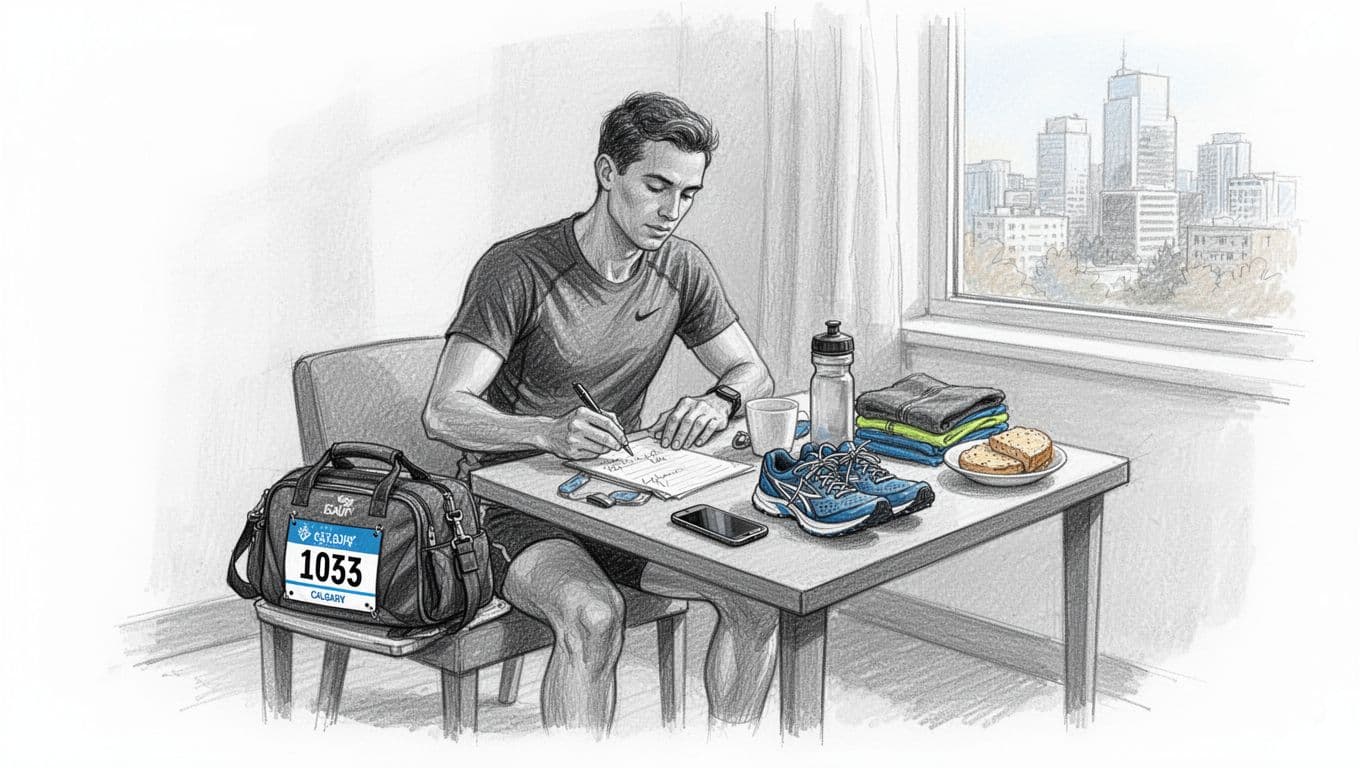
Calgary weather can change, and early-morning temperatures may feel colder than expected. Use the current official forecast alongside what you learned during training. Once your bib is secure and your plan is visible, stop preparing and get off your feet.
Getting to the Expo and Managing Race-Weekend Logistics
Race weekend can make familiar Calgary routes feel unfamiliar. Traffic, road closures, busy parking lots, luggage, and changing weather all affect how easily you reach the expo and return to your accommodation. Check the current venue details first, then build a travel plan with enough room for delays.
Travel Tips for Visitors Staying Outside Calgary
If you’re arriving from another city or province, choose lodging based on reliable access, not just the lowest nightly rate. A hotel near the expo or a dependable transit route may reduce driving stress, while a quieter location outside central Calgary could work if you have a clear car, rideshare, or transit plan.
Compare your options before race weekend:
- Driving offers control over luggage and meal timing, but parking may fill quickly or cost more than expected.
- Public transit can avoid downtown traffic, although you should check early-morning schedules and service changes.
- Rideshare reduces parking concerns, but pickup zones may shift around a crowded venue.
- Walking works well for nearby lodging, provided the route is safe, familiar, and manageable with your race equipment.
The official Travel to Calgary information may include event transportation notices, shuttle details, and road-closure updates. Use those instructions instead of relying on a normal weekday route. The race-day page currently notes that road closures can begin as early as 4:45 a.m., and schedules remain subject to change.
Collect your bib early whenever the official schedule allows. Traveling to the expo on your arrival day creates unnecessary pressure, especially after a delayed flight, long drive, or lost luggage. Don’t depend on same-day arrival for a race-critical task unless the official schedule clearly supports it.
Plan meals before you leave home. Pack familiar snacks, identify a nearby grocery store, and confirm whether your lodging has a refrigerator or microwave. Keep your ID, registration confirmation, travel documents, medication, reservation details, and payment cards together in one accessible pouch. Add extra time for airport delays, construction, traffic, check-in, and finding the venue entrance.
Weather, Accessibility, and Comfort Considerations
Calgary weather can change quickly during race weekend. Heat may increase fatigue during the walk from parking, while cold, wind, or rain can make waiting outside uncomfortable. Pack layers, weather-resistant outerwear, comfortable shoes, and a dry change of clothes for the trip back to your hotel.
Before traveling, contact the venue or event team if you need accessibility support. Ask about accessible entrances, seating, washrooms, elevators, parking, drop-off areas, and support services. The official adaptive athlete resources can also help runners review race-day considerations.
Runners managing an injury, pregnancy, a medical condition, or travel with children should build in more rest stops and easier access to food, washrooms, and seating. Carry the items you personally need, and ask the event team about procedures before race weekend. Choose a clear meeting point with your group, since crowded entrances and changing weather can quickly separate people.
Frequently Asked Questions
Race-week details can change, so use the current participant instructions as your final source before traveling to the Calgary Marathon Expo. The answers below cover common planning questions, but the official event guidance always takes priority if a policy changes.
Do I Have to Attend the Calgary Marathon Expo to Run?
You generally need to receive your official bib and race materials before entering the event. However, attendance rules, late pickup procedures, and alternate collection options can vary by race year and distance. Check the current participant instructions before assuming you can skip the expo or collect your package on race morning.
Your bib connects you to your registration and timing record, so resolve any issue before leaving pickup. If travel prevents an in-person visit, contact the organizers through the official channels listed in your registration information.
Where Is the Calgary Marathon Expo Held?
The expo venue may change from one Calgary Marathon year to the next. Don’t rely on an old race guide, a hotel recommendation, or a previous runner’s directions when planning your trip.
Check the official Calgary Marathon website, your confirmation email, and the current participant guide for the address. Review the listed entrance, parking arrangements, transit access, accessibility information, and any security restrictions before you leave your accommodation.
Can Someone Else Pick Up My Race Bib?
Some races allow proxy pickup, while others require the registered runner to attend or provide specific forms. The Calgary Marathon’s current rules may require authorization, identification, registration details, or a signed document from the participant.
Before sending someone else, confirm the requirements and deadline with the race organizers. A helper should carry the exact documents requested, since verbal permission or a phone screenshot may not be enough to release your race kit.
What Should I Buy at the Expo Before a Marathon?
Buy only familiar products or low-risk replacements that fit your existing race plan. Replacement socks, a known fuel product, or a weather-appropriate layer can help when you already understand how the item feels and performs.
Avoid testing new shoes, nutrition, hydration systems, or technical clothing during the race. Even a product that feels comfortable in the expo can cause blisters, chafing, or stomach trouble after several hours. Save unfamiliar purchases for training runs after race weekend.
How Early Should I Visit the Expo?
Choose a visit window based on the official hours, your travel distance, expected lines, and the rest of your race-week schedule. Arrive with enough time for package pickup, bib inspection, questions, and unexpected delays, rather than planning to enter just before closing.
At the same time, protect your sleep, meals, hydration, and recovery. A long expo visit can leave you standing when your race plan calls for rest, so finish the essential tasks and return to your accommodation.
Can I Attend the Expo If I Am Not Registered for a Race?
Supporters and visitors may be welcome, but access rules can differ between race years. The organizer may limit entry to registered participants, require a ticket, or allow visitors only in vendor and community areas.
Confirm the current public access policy before making the trip. If you attend with a runner, agree on a meeting place and leave enough time for the participant to complete bib pickup without feeling rushed.
Conclusion
The Calgary Marathon Expo should make race weekend easier, not become another endurance event. Confirm the official date, hours, venue, access rules, and pickup requirements before you travel. Then collect your bib early, check your name, distance, wave, timing materials, and race kit, and ask staff about any practical details that could affect race morning.
Use the expo for information and familiar replacements, not last-minute experiments. Avoid untested shoes, clothing, fuel, or hydration products, then protect your recovery by limiting time on your feet, eating familiar meals, hydrating, and getting enough sleep. Before leaving Calgary Marathon Expo, confirm transportation, parking or transit, start-area access, bag check, meeting points, and the essentials you need for race morning.
When your plan is clear, the crowded streets and early alarm feel more manageable. Careful preparation gives you fewer decisions to make at the start line, so you can focus on pacing, effort, and the work you put in during training. Arrive calm, trust your preparation, and give yourself the best chance to run with confidence.


