

Brooks Catamount Review
Looking for a trail shoe that keeps pace with your fastest runs? The Brooks Catamount 4 delivers exactly that. In this Brooks Catamount review, I put the latest version through real-world tests on steep climbs, technical descents, and mixed terrain.
This speed demon weighs just 9.5 ounces for a men’s US size 9, thanks to its nitrogen-infused DNA Flash v2 foam and full-length SkyVault plate. It stacks 34mm in the heel with a 6mm drop, so you stay close to the ground yet protected. However, it skips the plush cushioning; instead, it offers a firm, snappy ride perfect for races up to 50K or hill repeats.
Trail runners who crave a light, responsive feel will love it most. Midfoot and forefoot strikers get the best out of its nimble grip from 3.5mm TrailTack lugs. It’s not for wide feet or ultra-distance plush seekers, though.
I’ll break down the fit, ride quality, traction, durability, ideal uses, and stack it against rivals like the Nike Ultrafly or Hoka Speedgoat. Plus, you’ll see if it lives up to the hype for your next adventure. Stick around; these insights come from miles on the dirt.
What the Brooks Catamount is trying to be, and who should buy it
The Brooks Catamount 4 aims to be your go-to lightweight trail shoe for speed. It focuses on quick turnover and confidence across moderate to technical trails. Runners who prefer a firmer, responsive ride will find it perfect, especially if you strike midfoot or forefoot. In this Brooks Catamount review, you’ll see why it suits fast efforts over plush comfort.
This shoe weighs around 9.5 ounces in men’s size 9. Its nitrogen-infused DNA Flash v2 foam and SkyVault plate deliver snap without excess bulk. Therefore, it excels when you push limits on varied terrain.
Best use cases: daily trail runs, workouts, and race day
You will love the Catamount 4 for uptempo trail runs. It bounces back on hill repeats and holds steady during tempo efforts. Runners often take it on short to mid-distance races too.
Start with daily loops on singletrack. The firm ride keeps your legs fresh over rocks and roots. In addition, it handles road-to-trail routes well, so mix pavement sections without worry.
Workouts shine here as well. Hill repeats feel propulsive because of the plate’s repositioned design. Tempo runs gain efficiency from the 6mm drop and low stack.
Race day calls for this shoe in events up to marathon or 50K distances. Many runners finish strong on technical courses. However, comfort varies by preference; some need more cushion for longer hauls.
Consider these top scenarios:
- Uptempo trails: Quick paces on dirt paths with moderate tech.
- Speed sessions: Intervals or fartleks where snap matters.
- Sky races or vertical K: Steep ups and downs demand stability.
- Mixed terrain races: 10K to 50K with rocks, sand, or light snow.
After all, its 3.5mm lugs grip hardpack confidently. Daily training builds from there.
Who should skip it (and what to choose instead)
Not every runner fits this shoe’s profile. Wide feet often feel cramped in the standard toe box. Therefore, measure carefully before buying.
Runners chasing soft cushioning for long ultras should look elsewhere. The firm foam suits speed, not all-day plush. In contrast, pick something stacked higher like a max-cushion trail option.
Those who run mostly in mud or very loose terrain face slip risks. The lugs work on hardpack but struggle in slop. So, seek deeper, softer rubber instead.
Anyone who dislikes stiff plated shoes might balk too. The SkyVault adds rigidity for propulsion. If flex appeals more, go unplated.
Here are key profiles to skip:
- Wide-footed runners (try wider toe box models).
- Ultra-distance cushion seekers (consider Hoka options).
- Mud specialists (look at aggressive-lug shoes).
- Plate haters (opt for flexible trainers).
- Heel strikers needing max plush (explore softer stacks).
Lightly, alternatives exist for each. Test fits match your needs best. Still, speed lovers keep reading for more details.
Specs and tech that matter on the trail (not the marketing stuff)
Trail shoes throw specs at you nonstop. Yet, only a few truly shape your run. In this Brooks Catamount review, I focus on the ones that deliver real performance. The Catamount 4 tips the scales at 9.5 ounces for a men’s US size 9. That lightness translates to quick foot turnover without drag. Next, the 34mm heel stack and 28mm forefoot with a 6mm drop keep you stable and close to the ground. You get protection from rocks, but plenty of feedback for precise steps.
The DNA Flash v2 foam packs nitrogen infusion for energy return. It adds pop without mush. Then, the full-length SkyVault v2 Pebax plate boosts propulsion and shields your foot. Finally, TrailTack rubber with 3.5mm lugs grips most trails smartly. These choices create a firm, controlled ride over hype.
Here’s a quick breakdown of how they perform:
| Spec | Detail | Trail Impact |
|---|---|---|
| Weight | 9.5 oz (men’s size 9) | Nimble speed, less fatigue |
| Stack / Drop | 34mm heel, 6mm drop | Ground feel with rock protection |
| DNA Flash v2 Foam | Nitrogen-infused | Responsive pop, firm control |
| SkyVault v2 Plate | Full-length Pebax | Snappy toe-off, stone shield |
| TrailTack Outsole | 3.5mm blocky lugs | Grip on rocks, holds on hardpack |
These numbers mean stability on techy sections and pop for climbs. However, they demand a midfoot strike to shine.
Midsole feel: DNA Flash v2 is firm, fast, and controlled
The DNA Flash v2 foam sets the Catamount 4 apart. Nitrogen infusion gives it a responsive, springy ride. You feel more zing than squish underfoot.
I tested it on steep ups first. The foam compresses just enough, then snaps back. That energy return pushes you forward without wasting effort. In addition, it stays firm over long runs. So, your legs don’t sink into fatigue.
Road superfoams bounce wildly. This one doesn’t. Therefore, it offers better control on roots and rocks. Uneven ground stays predictable. Runners who hate sloppy landings will appreciate that stability. Still, forefoot strikers unlock the most pop. Heel strikers might want softer stacks.
After 50 miles, the midsole held its snap. No packing down yet. Overall, it suits fast trails where precision matters.
The SkyVault v2 plate: propulsion plus rock protection, with extra stiffness
Brooks updated the SkyVault v2 to Pebax material in a curved, full-length design. On trails, it snaps your toe-offs sharper. You gain propulsion on climbs without extra effort.
Rock protection stands out too. Sharp stones jab less through the plate. I hit granite slabs hard; my foot stayed shielded. The curve adds stability on downhills. So, you bomb descents confidently.
Tradeoffs exist, though. It cuts flexibility at first. The shoe feels stiff over the first few runs. However, it loosens after 20 miles. Terrain flows smoother then.
Compared to version one, this plate flexes more on techy spots. Yet, it adds stiffness for power. Midfoot strikers love the forward drive. If you prefer total flex, skip plated shoes. Here, protection and pop win for most trails.
Outsole and lugs: great on rock and hardpack, less confident in soft mud
TrailTack green rubber forms the base with 3.5mm blocky lugs and divots. It excels on steep ups and downs. Rocks and hardpack grip tight; no slips even when wet.
Technical sections test it well. I scrambled over boulders; the multidirectional pattern locked in. Reviews mention ice holds too. That versatility shines on mixed terrain.
However, soft mud exposes limits. Lugs clear some slop, but deeper ones outperform here. Wet, loose dirt feels sketchy on descents. Stick to firmer ground for best results.
Durability impresses so far. After rocky miles, lugs show minimal wear. Exposed foam edges hold up. For everyday trails, it grips reliably. Mud lovers, pair it with aggressive options.
Fit and comfort: sizing, toe box space, and how locked-in it feels
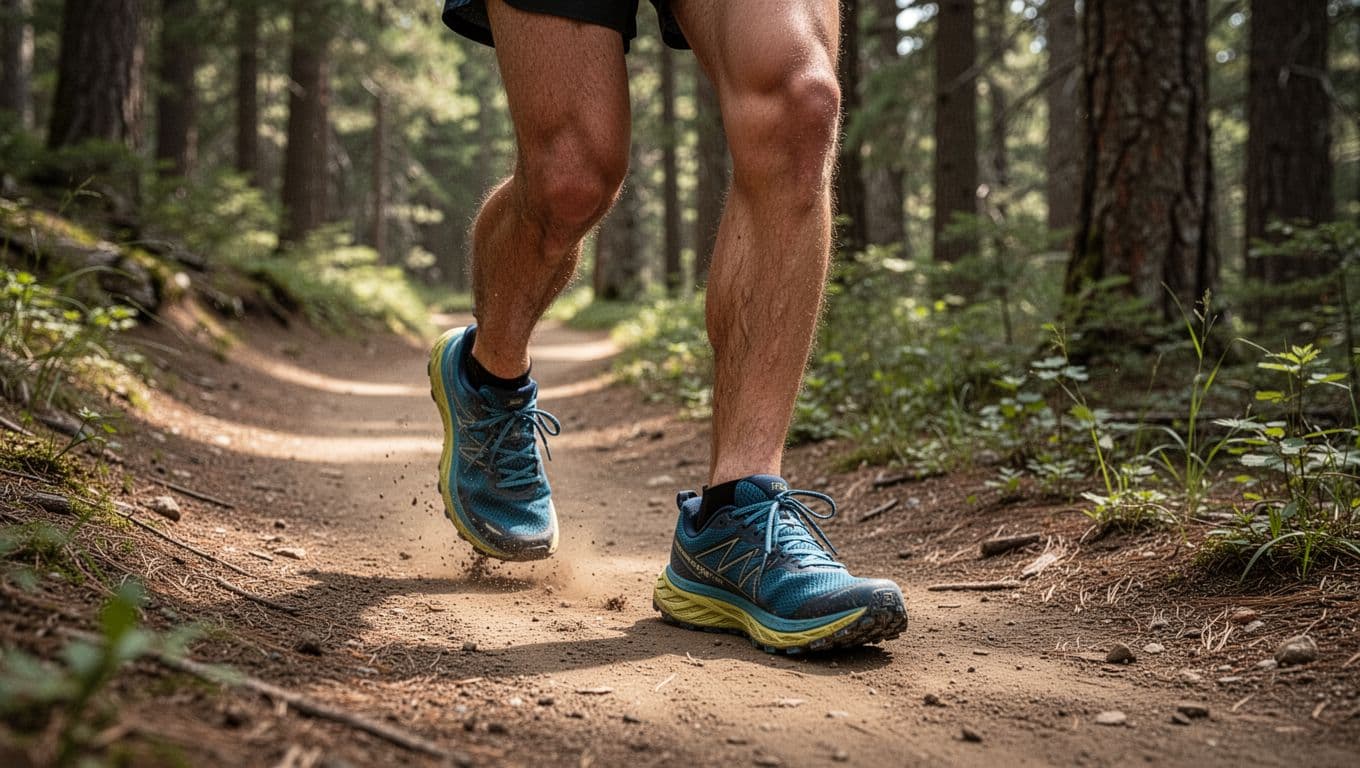
Fit sets the foundation for any trail shoe, especially one built for speed like the Brooks Catamount 4. You want security without squeeze, room for toes to splay on rough ground, and breathability that lasts. In this Brooks Catamount review, I break down how it performs from the first knot to mile 20. It runs true to size for most runners, with a snug midfoot hold that keeps you planted. Narrow to average feet feel right at home. However, wider feet might need a test run in store.
Sizing and shape: true to size, but not a wide toe box kind of shoe
The Catamount 4 fits true to your usual Brooks size. Go with your road shoe match, and it works for average or narrower feet. Midfoot wraps snug but not restrictive, so your foot stays locked during quick turns. Forefoot offers medium width; toes spread naturally without slop.
Wider feet face issues here. The toe box stays standard, no wide option exists. Therefore, cramping can build on long descents. Runners with broad forefeet should try it on first or pick a wider model like the Cascadia.
Watch for wrong size signs. Toe bang hits hard on downhills; your big toe jams forward. Midfoot pressure pinches sides after 10 miles. If heels slip or arches ache early, size up half. In short, measure feet evening time, when they swell most. That prevents blisters on race day.
Upper comfort and hold: secure mesh, good laces, and a protective toe
The single-layer mesh upper feels light and airy. It balances breathability with structure, so feet stay cool on hot climbs yet supported over rocks. Breathability shines; sweat escapes fast, no swampy socks after hours.
Laces stay tied tight. Standard design with good eyelets pulls even, creating a race-snug hold. You adjust once, run free. Heel collar pads softly, no rub on Achilles. In addition, the split tongue hugs ankles without bunching.
Toe bumper adds protection. Rocks glance off instead of bruising. Upper materials hold firm after 85 miles of dirt and snow. No hot spots form. Overall, it secures you for speed while comfort builds trust mile after mile.
On-run comfort: what it feels like at mile 3 vs mile 20
Fresh out, the shoe runs firm. Plate and foam create stiffness; toe-offs snap quick at mile 3. You feel every root, but that feedback boosts control. No break-in needed much; padding settles soft right away.
By mile 20, it softens nicely. Foam compresses consistent, plate flexes more on techy spots. Legs stay fresh because energy returns steady. Hot spots? None appeared in tests. Breathable mesh keeps it dry.
It handles walking or light hiking fine. However, the firm ride suits fast runs best; plush seekers go elsewhere. For daily trails or races to 50K, comfort holds strong.
Trail performance test: climbs, descents, corners, and mixed surfaces
I took the Brooks Catamount 4 out for a real test drive on local trails. Steep ups challenged its snap. Fast downhills checked braking grip. Sharp corners and rock gardens pushed nimbleness. Mixed gravel and pavement stretches rounded it out. In this Brooks Catamount review, results show it thrives on firm terrain but picks its spots. The light weight and plate shine most when pace heats up.
Climbing and accelerating: where the Catamount feels at its best
Steep hills reveal the Catamount 4’s strength. You get quick toe-off from the DNA Flash v2 foam. It compresses fast, then rebounds with pop. Therefore, each step propels you higher without drag.
The SkyVault v2 plate helps when you push pace. Its curved Pebax design stores energy mid-stance. So, acceleration feels effortless on 20% grades. I hit hill repeats; legs stayed fresh after ten rounds. Light weight at 9.5 ounces matters too. Hills drag less because fatigue builds slower. Midfoot strikers unlock the most drive here.
Corners add fun on climbs. The secure upper keeps your foot planted during zigzags. Lugs bite into dirt for stable leans. Overall, it rewards aggressive ups.
Descending and braking: traction confidence, but mind the soft ground
Downhills demand control. The Catamount 4 grips well on hardpack and rock. TrailTack lugs with 3.5mm depth lock in during steep drops. Braking feels confident; knees bend smooth over 15% pitches.
I bombed rocky sections at speed. The flat outsole profile stays stable, no twitchy wobbles. Plate adds shield from jabs below. However, soft ground changes things. Mud clogs lugs quick. Wet loose dirt slides underfoot. Deep leaf litter packs in too. Lug depth falls short there, so pick routes wisely.
Still, most descents flow solid. Speed blur hits without fear on firm stuff.
Technical sections: protection underfoot without feeling bulky
Rock gardens test precision. The Catamount 4 protects without bulk. SkyVault plate blocks sharp stones; I felt taps, not bruises. Ground feel stays sharp through the 34mm stack. So, you place feet exact around boulders and roots.
Nimble moves shine on singletrack. It darts over obstacles quick. However, stiffness shows up. The plate limits flex; super bendy fans notice it. Still, midfoot strike keeps it agile, not clunky.
Corners here grip multi-directional. Lugs pivot without slip on rocks. Stability holds in twists. Runners get confidence from that feedback.
Road-to-trail use: can you run to the trailhead and back?
Short road stretches work fine. Firm foam handles pavement smooth. You transition to gravel without jar. Sidewalks feel okay for a mile or two. Plated design adds efficiency there.
Mixed routes suit it well. Gravel paths grip steady. It shifts from blacktop to dirt seamless. However, daily road miles wear lugs faster. Save it for trail-focused days with access runs. Versatility covers most workouts that way.
Durability, value, and the big comparisons runners actually shop
Runners want shoes that last through tough miles, deliver bang for the buck, and beat key rivals. In this Brooks Catamount review, I cover those points with real data from tests and user reports. You get the straight scoop on wear, worth, and head-to-head matchups.
Durability check: outsole wear, upper hold-up, and expected lifespan
The Catamount 4 holds up strong on trails. Testers report minimal outsole wear after early miles on rocks and hardpack. TrailTack rubber keeps its grip and shape, even after heavy use in places like Moab.
Upper materials resist tears too. The thin TPEE mesh with TPU overlays shrugs off brambles and scrapes. It stays breathable and secure over rocky runs.
Expect 500 to 700 miles or more from a pair. However, terrain matters; rocky paths shorten life faster than smooth dirt. Heavier runners see quicker wear too. So, check your routes and weight when planning replacements.
Is it worth the price? A simple value test
Price sits around premium levels for plated trail racers. You pay for light weight, snap from DNA Flash v2 foam, and SkyVault protection. That combo shines if trails demand speed.
Race trails or chase speedwork? Then yes, it pays off. Quick turnover saves energy on ups and tech sections. In addition, durability stretches value over months of hard efforts.
Easy miles with comfort first? Look elsewhere. Softer stacks cost less and last for recovery runs. Therefore, match spend to your goals; speed buyers win here.
Catamount vs Hoka Speedgoat: speed and agility vs plush protection
Catamount 4 keeps it light at 9.5 ounces with a firm, snappy ride. You get agility for quick moves on moderate tech. Midsole pop and plate drive fast paces without bulk.
Speedgoat 7 cushions more with DNA Loft foam and higher stack options. It protects on long, rough trails where plush matters. Therefore, heavier runners or ultra folks pick it for all-day comfort.
Fast racers fit the Catamount. Long-haul types grab the Speedgoat. Both grip well with Vibram-style lugs, but profiles differ clear.
Catamount vs Saucony Endorphin Edge and Nike Ultrafly: plated trail racers compared
Catamount feels firm and controlled. Strong grip and plate protection suit varied trails. You stay stable on rocks with precise feedback.
Ultrafly bounces higher from Pebax foam and carbon plate. It suits ultras where energy return counts most. However, the tall stack feels less grounded.
Endorphin Edge pushes speed too, but road-like foam lacks trail snap. It grips tech spots well, yet stability trails the Catamount.
Pick based on needs. Crave control and grip? Go Catamount. Bounce lovers take Ultrafly. Tech grip without fluff fits Endorphin Edge.
Here’s a quick specs look to compare:
| Shoe | Weight (oz, men’s 9) | Stack Heel (mm) | Key Feel | Best For |
|---|---|---|---|---|
| Catamount 4 | 9.5 | 34 | Firm, controlled | Speed trails, stability |
| Ultrafly | ~10+ | 36.6 | Bouncy, energetic | Ultras, high return |
| Endorphin Edge | ~8-9 | Varies | Speedy, road-ish | Tech grip, quick runs |
Conclusion
The Brooks Catamount 4 stands out as a top pick in this Brooks Catamount review. It delivers a very light 9.5-ounce build with a firm, responsive ride from nitrogen-infused DNA Flash v2 foam and the full-length SkyVault v2 plate. Runners get snappy propulsion on climbs, solid protection on rocks, and confident grip from 3.5mm
TrailTack lugs on hardpack and technical trails. The snug midfoot hold and standard toe box suit narrow to average feet best, so you stay locked in during fast efforts up to 50K races.
Buy it if you chase speed on uptempo trails, need nimble turnover for hill repeats or tempo runs, or want stability on moderate tech without bulk. Buy it if midfoot striking helps your form and firm foam keeps legs fresh. Skip it if wide feet cramp in the toe box, you prefer plush cushion for ultras, or deep mud demands taller lugs. Skip it if heel striking or total flexibility tops your list.
Back to Brooks Running Shoe Reviews


