

Brooks Catamount 5 Durability: How Long Do They Last?
The Catamount series is well-known for its ability to handle technical trails while keeping your feet comfortable over long distances. Whether you are racing or training on rocky paths, the Brooks Catamount 5 durability becomes a key factor in your gear choice.
You want a shoe that keeps its shape and traction for hundreds of miles, especially when the terrain gets tough. Understanding how long these shoes hold up helps you plan your training cycles without worrying about mid-run equipment failure.
We will look at the construction of this model so you can decide if it meets your needs for trail running shoes.
Understanding the Brooks Catamount 5 Durability Standards
A durable trail shoe needs to survive the constant friction and impact of rugged environments. It faces challenges from sharp rocks, abrasive mud, and tangled roots every time you step outside. To meet these demands, companies use reinforced textiles and specialized rubber compounds. You can expect a reliable trail runner to protect your feet while keeping the structural integrity of the shoe intact for hundreds of miles.
Build Your Complete Race-Day Setup
The right shoe helps, but faster racing comes from better training, pacing, recovery, fueling, and execution.
More Guides for This Shoe
The Brooks Catamount 5 stands out because it balances weight with toughness. It avoids being heavy or clunky, yet it remains sturdy enough to handle technical terrain. By focusing on specific zones, this shoe manages to resist common wear patterns that often retire other trail runners early.
Upper Material Strength
The upper part of a trail shoe usually takes the most abuse during a run. Brooks uses a high-performance engineered mesh that feels light while providing a barrier against trail debris. This material is woven tightly enough to block out small pebbles and sand, yet it maintains high airflow to keep your feet cool during intense efforts.
Overlays play a major role in reinforcing the areas most prone to tearing. You will notice protective strips wrapped around the toe cap and along the sides. These sections handle the inevitable scuffs from hidden roots or granite edges. Because these overlays are bonded securely to the mesh, they prevent fraying without adding unnecessary bulk to the overall build.
The lacing system also integrates with these overlays to lock your foot in place. This design minimizes internal movement, which is essential because friction inside the shoe eventually damages the interior lining. By keeping the foot stable, the upper remains under less stress, effectively extending the lifespan of the fabric.
Midsole Compression and Energy Return
Cushioning is the engine of your shoe, but it can fade if the foam breaks down too quickly. Brooks designs the midsole of the Catamount 5 to provide consistent energy return across a wide range of temperatures and surfaces. The foam material resists flattening out even after long, repeated impact cycles on hard pack or gravel paths.
Many runners worry that softer shoes lose their support after a few months. However, the specific compound in this model maintains its bounce by recovering quickly after each foot strike. You are essentially getting a platform that stays responsive throughout its entire service life.
- Consistent Response: You do not have to worry about the feel changing drastically from mile one to mile four hundred.
- Structural Recovery: The foam material is built to spring back into shape immediately.
- Supportive Geometry: The shape of the midsole helps guide your stride, which reduces the chance of uneven foam compression over time.
Because the foam stays stable, you get a predictable experience on every run. If you are preparing for long-distance efforts, this durability means you spend less time breaking in new pairs and more time focusing on your form. When you feel the foam finally start to thin out, it is usually a sign that the outsole rubber has already reached its own limit, ensuring a balanced retirement for the shoe.
Outsole Performance and Wear Patterns
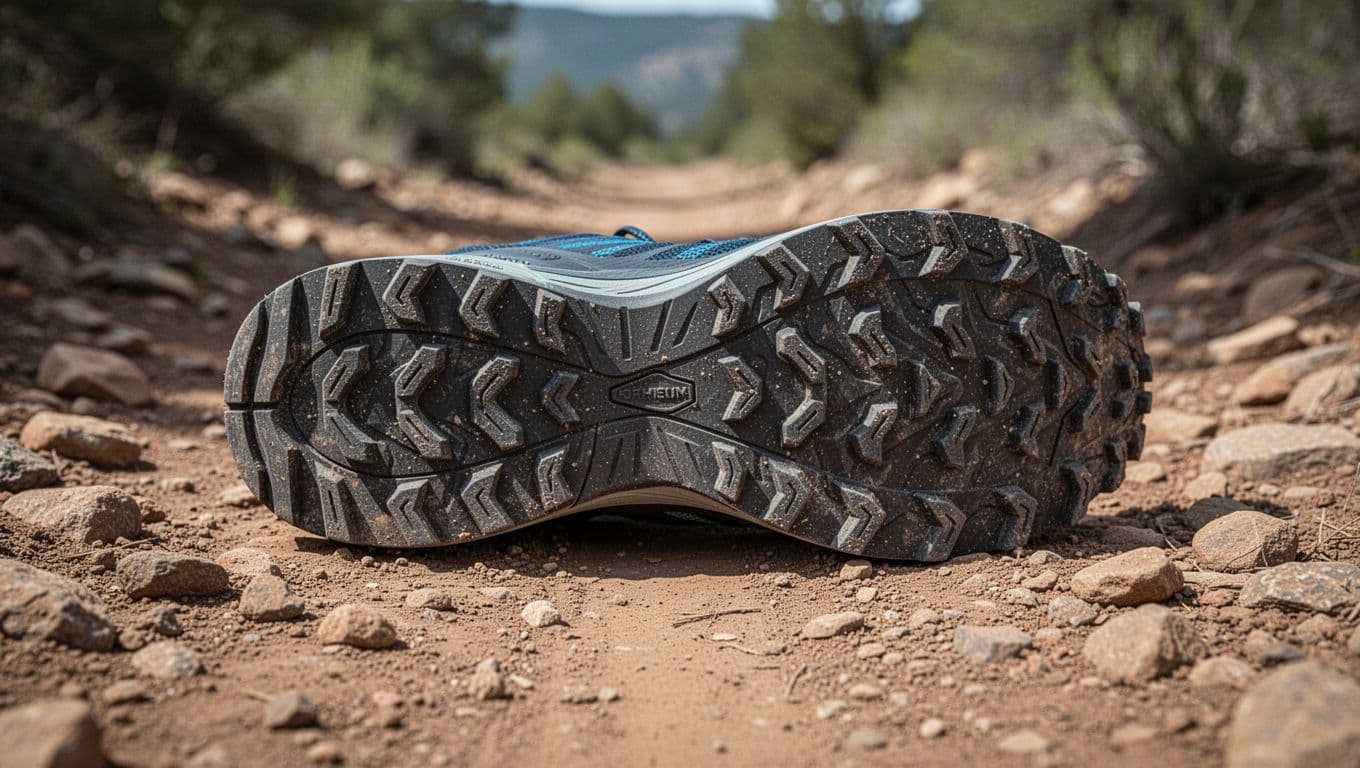
The outsole is where trail shoes either earn trust or lose it. With the Brooks Catamount 5, the tread is built for grip first, then balanced for longer wear. That balance matters, because the same rubber that sticks well on the trail usually shows wear faster on abrasive ground.
Grip Reliability Over Hundreds of Miles
The Catamount 5 keeps its traction even after the lugs start to round off. Early in the shoe’s life, the edges bite hard into dirt, gravel, and rock. Later, those edges soften, but the outsole still keeps enough shape to hold steady on most trail surfaces.
That happens because Brooks uses a blend of softer and firmer rubber zones. Softer rubber gives you better grip when the ground gets slick or uneven. Harder rubber helps the outsole last longer, especially in the high-wear areas under the heel and forefoot. This mix is a smart tradeoff for the Brooks Catamount 5 durability story, because it keeps the shoe usable long after the sharpest tread edges fade.
Loose gravel wears the lugs in a different way than hard-packed dirt. Gravel tends to sand down the edges faster, while firm dirt and dry paths flatten the tread more slowly but steadily. If you run a lot of mixed terrain, you will probably see the center lugs smooth out first, then the outer edges follow. Even then, the outsole should keep enough grip for confident running on most non-technical routes.
For a useful reference on how rubber choice affects grip and wear, this outsole grip breakdown from SoleReview explains the softer-rubber versus harder-rubber tradeoff well.
Soft rubber grips better, but it gives up its sharp edge sooner on abrasive ground.
If you want the most life out of the outsole, avoid using the Catamount 5 on lots of pavement or repeated dry, rocky descents. Those conditions chew through tread faster than shaded forest singletrack. Still, for a trail shoe built around speed and traction, the wear pattern is predictable rather than messy, which makes mileage tracking much easier.
Comparing Real World Wear to Manufacturer Claims
Brands often provide durability estimates based on controlled testing environments, but your actual experience may differ. While the manufacturer might suggest a specific mileage range for the Brooks Catamount 5, these numbers are averages gathered from standardized testing machines.
Your personal wear patterns reflect how you move and where you spend your time. Factors like running form, body weight, and local climate play a significant role in how quickly your shoes show signs of age.
Comparing your experience to these general expectations is a helpful way to gauge the health of your gear. If you find your outsoles wearing down faster than anticipated, it might be due to specific terrain choices rather than a defect in the shoe. Understanding these differences allows you to adjust your expectations and manage your gear rotation more effectively.
Terrain Impact on Shoe Longevity
The surface beneath your feet is the most significant factor in how long your shoes last. Running on technical, rocky trails places immense stress on both the outsole rubber and the protective upper. Sharp rocks act like sandpaper against the outsole, while jagged edges can snag or tear the mesh fabric. In contrast, smooth forest paths or dirt trails offer a softer landing that preserves the tread for much longer.
Identifying your specific trail style is the first step toward predicting how much life you will get from your runners. Take a look at your local loops and consider the surface composition.
- Aggressive Technical Trails: If your frequent routes include loose scree, sharp granite, or constant steep descents, expect your shoes to retire closer to the lower end of the mileage spectrum.
- Maintained Forest Paths: Running on soft pine needles, dirt, or gravel roads significantly reduces friction, allowing the rubber to remain intact for hundreds of extra miles.
- Mixed Conditions: Most runners use a variety of paths, so checking your lugs after every few runs can reveal which sections of the shoe are wearing down the fastest.
If you spend most of your time on technical terrain, you will notice the lugs rounding off significantly sooner. This isn’t a failure of the design; it’s simply the reality of how materials interact with abrasive ground.
To extend the life of your gear, consider alternating between a more rugged pair of shoes for rocky adventures and your Catamount 5 for flatter, less demanding runs. By matching your footwear to the specific demands of the trail, you help maintain the integrity of your equipment for much longer.
If you find that your shoes consistently lose their grip within a certain timeframe, look at the composition of your most common routes. Adjusting your path choices or rotating your footwear can prevent premature wear and keep you running confidently for months to come.
How to Extend the Life of Your Brooks Trail Shoes
Taking care of your gear prevents premature retirement and keeps your performance consistent during your longest efforts. You can significantly influence the overall Brooks Catamount 5 durability by adopting a few simple, routine habits. These small actions minimize the impact of harsh trail elements on the materials, helping the shoes maintain their structure and comfort throughout their intended lifespan.
Cleaning and Maintenance Tips
Mud and debris are the primary enemies of long-lasting trail footwear. When dirt enters the mesh or dries inside the fabric, it acts like sandpaper against the fibers. Over time, this friction wears down the synthetic materials and compromises the integrity of the upper.
Regularly knocking the dried mud off your shoes after a run is the most effective way to protect the upper. If the buildup is heavy, use a soft-bristled brush or a dry cloth to gently sweep away particles. Avoid using harsh chemical cleaners or detergents, as these can strip away protective treatments and damage the adhesives holding the shoe together.
Stick to lukewarm water and a very mild soap if you need to tackle stains or odors. Always air dry your shoes at room temperature away from direct heat sources like heaters or fireplaces. Intense heat can warp the foam midsole and cause the rubber outsole to peel prematurely. Remove the insoles and stuff the shoes with newspaper to absorb moisture from the inside out, which helps maintain the internal shape.
The Benefit of Rotating Your Footwear
Running in the same pair of shoes every single day does not give the midsole foam enough time to fully recover. The cushioning materials need a period of rest to decompress and return to their original shape after being crushed under your weight during a run. Rotating between two pairs of shoes effectively doubles the recovery time for each pair.
This strategy prevents the foam from flattening out too early, which keeps the ride responsive and supportive for more miles. When selecting a rotation partner for your Catamount 5, look for a shoe with slightly different characteristics to engage different muscles in your feet and lower legs. For example, you could pair your primary racers with a more cushioned, stable model for easier recovery runs or shorter training days on smoother paths.
- Midsole Recovery: Giving your foam 24 to 48 hours between runs allows it to bounce back.
- Uniform Wear: Alternating shoes keeps the tread wear patterns consistent across both pairs.
- Improved Hygiene: A rotation gives each pair ample time to dry out completely, which discourages bacterial growth.
If you are looking to build a balanced gear stash, check out these durable trail running shoes that offer great performance for diverse terrain. By swapping your footwear, you ensure that neither pair is overworked, helping you stay comfortable while getting the most value out of every single mile.
Conclusion
The Catamount 5 manages to hold its own against rugged terrain through a smart blend of durable mesh and responsive foam. You will find that it withstands hundreds of miles of technical use if you rotate your shoes and clear away debris after every run. This model is a solid choice for runners who want a lightweight feel without sacrificing the durability needed for long days on the trail.
This shoe best suits runners who mix forest paths with occasional technical climbs. It rewards those who maintain their gear with consistent performance across a full training cycle. If you are preparing for a race or simply logging high weekly mileage, the construction of this model stays reliable and predictable.
Consider your primary terrain before making your next purchase. Do you prioritize long-term value on varied surfaces, or do you need a specialized shoe for the roughest paths? Review your specific goals to see if this pair matches your current rotation. If you need more guidance on selecting gear, check out our trail running shoes to find the best fit for your next adventure.


