

Brighton Marathon Review: Is It Worth Running? Course, Crowds & Costs
The Brighton Marathon starts with a surge of footsteps through the city, the sea flashing beside the road as crowds gather behind the barriers and runners settle into the long day ahead. That setting gives the race a memorable identity, but a beautiful coastline can’t make up for poor pacing, tough logistics, or a training plan that falls short.
This Brighton Marathon review looks at the course, crowd support, race organization, travel and logistics, training demands, and overall cost. You’ll also get a realistic view of who will enjoy the event most, what first-time marathoners should expect, and whether experienced runners can use Brighton to chase a strong performance. Race dates, entry fees, start times, and event rules can change, so confirm the latest details with the official race organizers before making plans.
First, we’ll examine the course itself, including its fastest sections, likely challenges, and the race-day conditions that can shape your result. Remember, ensure to book your Brighton Marathon hotels early to save on costs too.
Key Takeaways
- The Brighton Marathon offers a scenic coastal course, strong crowd support, and a memorable finish near the seafront.
- Flat sections can help runners pursue a personal best, but wind, weather, and late-race fatigue still demand smart pacing.
- Budget for entry, travel, lodging, meals, transportation, and possible gear or race-day extras.
- Arrive early, plan your route to the start, and confirm the latest race rules and timings.
- First-time marathoners should respect the distance, while experienced runners can benefit from disciplined pacing and focused preparation.
Brighton Marathon Review: The Overall Race Experience
The Brighton Marathon is one of the most memorable major UK road races because it combines a fast, coastal course with a loud, highly visible race atmosphere. Its seaside setting gives the event a clear identity, while the large field creates energy that carries runners through difficult miles.
My overall verdict is positive: Brighton is an excellent choice for charity runners, first-time marathoners, and experienced athletes chasing a personal best. However, you should expect crowded early miles, limited privacy along much of the route, possible coastal wind, and a long day of travel, waiting, racing, and recovery.
What Makes Brighton Stand Out
Many major road races offer big crowds, but Brighton brings them together with the seafront, city streets, and a finish close to the water. Spectators line the route with signs, music, and steady encouragement, so runners rarely feel isolated. That support matters most after halfway, when the excitement of the start has faded and every mile demands more focus.
The large field adds its own rhythm. You will spend the opening miles finding space, settling into pace, and moving around runners with different goals. For some athletes, that buzz is motivating. Others may find the congestion frustrating, especially when they are trying to hold an exact marathon pace.
Brighton also welcomes a wide range of runners. Charity groups bring color and purpose to the field, first-timers benefit from the constant support, and faster runners can use the flatter sections for controlled pacing. The race feels serious without becoming exclusive.
Brighton’s crowd support can lift your mood, but it cannot replace a pacing plan when fatigue arrives late in the race.
A Balanced Race-Day Verdict
The following ratings reflect the overall runner experience rather than official race scores.
| Category | Verdict | Why it matters |
|---|---|---|
| Course | 4.5/5 | Scenic and mostly fast, with wind and late fatigue as possible challenges |
| Atmosphere | 5/5 | Strong spectator support and lively large-field energy |
| Organization | 4/5 | A polished major event, though busy areas require patience |
| Logistics | 3.5/5 | Travel, start-area access, and post-race movement can take planning |
| Value | 4/5 | Strong race experience, especially for charity and first-time runners |
The race usually takes place in spring, often in April, when conditions can shift quickly. A cool, calm morning may produce ideal marathon weather, while sunshine, rain, or wind can change the effort required along exposed coastal sections. Check the forecast, but prepare for more than one version of race day.
Brighton is at its best when you treat the event as a full-day operation. Plan your transportation, arrive early, protect your energy before the start, and avoid spending too much time standing around. If you want quiet roads and complete control over your pace, the crowded opening may test your patience. If you want a scenic course with vocal support and a memorable finish, Brighton is a strong pick.
What the Brighton Marathon Course Is Really Like
The Brighton Marathon typically starts at Preston Park before carrying runners through Brighton and Hove toward long stretches beside the English Channel. The route can change, so check the official Brighton Marathon course information before race day.
Early roads feel busy, especially when thousands of runners leave Preston Park together. The course then opens into wider city streets and seafront roads, with turns, gentle rises, and exposed sections that demand more concentration than the flat profile suggests. Aid stations and toilets appear along the route, but queues and congestion are still possible near the start and finish.
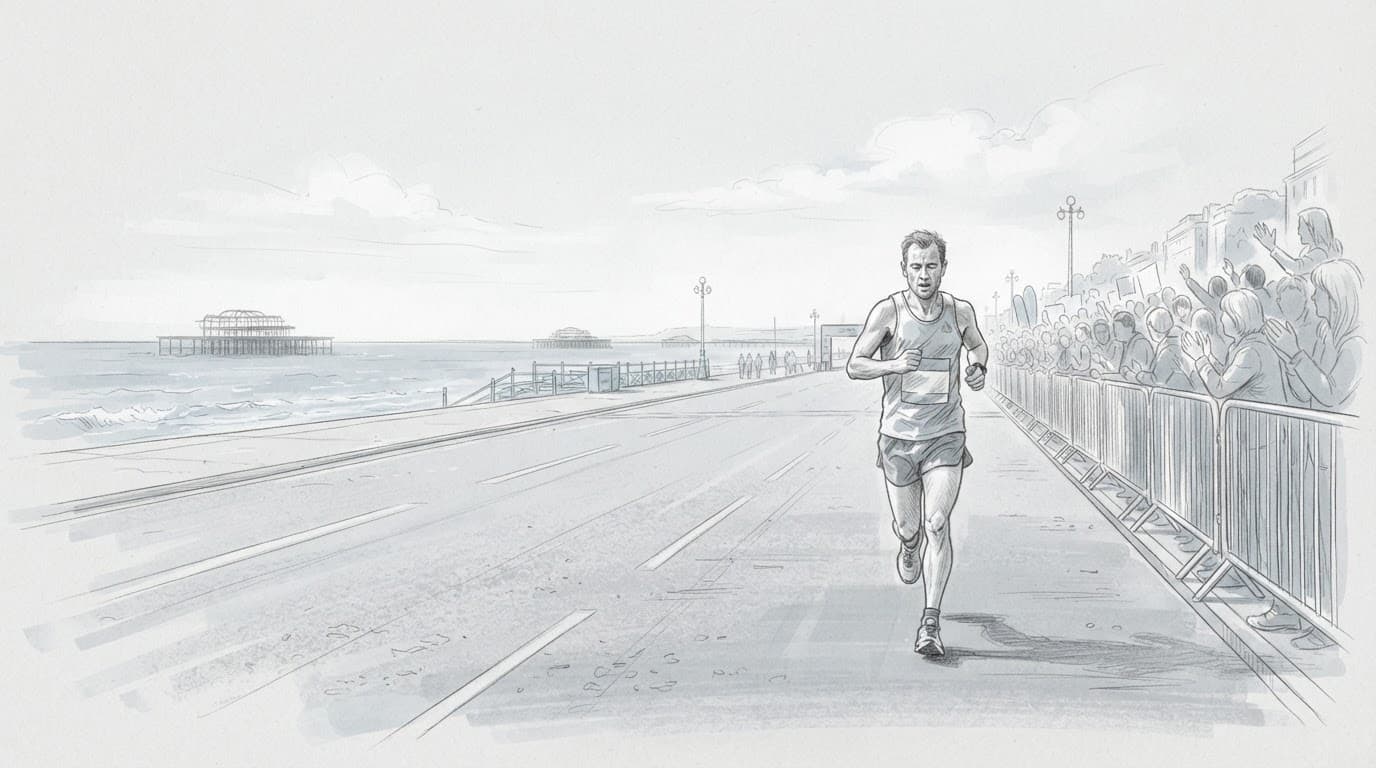
Where runners gain and lose time on the route
The opening section offers a pacing opportunity and a clear risk. Excitement, crowd noise, and the movement of nearby runners can pull you faster than planned. Congested roads may also encourage short surges as you look for space. Those seconds feel harmless early, but they can become expensive after the halfway point.
Once the field spreads, settle into your goal effort rather than forcing every split. Brighton is broadly fast, yet it isn’t automatically easy. Small rises, repeated turns, and the long middle miles can make the race feel mentally heavy before late fatigue arrives.
Wind direction matters along the exposed seafront. A headwind can quietly increase effort, while a tailwind may tempt you to run faster than your marathon plan allows. Use breathing, perceived effort, and average pace together. Your watch may fluctuate around turns or under trees, so chasing every instant reading can damage a sound race strategy.
How the crowds, views, and finish-line setting affect performance
Music, spectators, landmarks, and the sea give the Brighton course a strong emotional lift. Support can carry you through difficult stretches in Hove and along the eastern seafront, while the final approach toward Madeira Drive creates a powerful finish-line pull.
That energy has a downside for inexperienced runners. Noise can hide rising breathing effort, and excitement can make a sustainable pace feel too slow. Keep checking your posture, breathing, and fueling even when the crowd is loudest.
Sun, rain, and sea air can also change how the course feels. Save enough energy for the final miles instead of relying on adrenaline to solve a fading pace. When you reach the seafront finish, a controlled push will feel far better than trying to survive the last stretch.
Race-Day Logistics, Organization, and Runner Support
The Brighton Marathon is a large city race, so good organization helps you protect energy before the start and after the finish. Registration, race communications, bib collection, wave times, baggage arrangements, and medical support can change each year. Read the official runner guide as soon as it arrives, then build your race-day plan around those details.
Getting to the start and away from the finish
Travel to Brighton the day before when possible. Train services can become busy, while road closures and race-day traffic may make driving slower than expected. If you drive, check parking restrictions and avoid assuming that you can reach your hotel or the start by car on race morning.
Choose lodging near a reliable transport route rather than simply booking the closest available hotel. A room within walking distance of a train station or a practical bus connection may be more useful than a slightly closer room on a closed road. Before race weekend, learn the route from your accommodation to the start at Preston Park, including a backup option.
Allow extra time for security checks, toilets, wave entry, and baggage drop. Rushing through the race village can raise your stress before you have taken a single stride. Pack warm layers that you can discard or store, because spring mornings near the coast may feel cold while you wait.
The start and finish are not necessarily in the same place. Arrange your post-race transport before leaving home, and don’t treat the journey back as an afterthought. Ask your spectators to meet at a quiet location away from the finish area, since barriers, crowds, and tired runners can make the immediate finish zone difficult to use.
A meeting point should be easy to describe, visible, and separate from the busiest roads. Keep your phone charged, carry a portable battery if needed, and agree on a plan that still works if mobile service becomes unreliable.
Aid stations, pacers, and support for first-time marathoners
Race communications usually explain bib collection, wave starts, toilets, baggage drop, aid stations, medical points, and post-race recovery areas. Study that information before race morning. Large events can feel efficient, but busy queues and narrow spaces still reward patience.
At each aid station, move to the side, slow down with control, and avoid stopping suddenly in front of other runners. Take fluids early rather than waiting until thirst becomes strong. Carry familiar gels or other fuel from your long runs, because an untested product can upset your stomach at the worst possible time.
Official pacers can make marathon pace easier to judge, especially when your watch readings jump around crowded turns. However, pace groups may attract clusters of runners, and you can lose space or become boxed in. Use the pacer as a reference, not a command. If the group feels too crowded or too fast, step away and return to your planned effort.
First-time marathoners should rehearse the same fueling, fluid, clothing, and pacing strategy during long runs. Aid stations and medical teams provide valuable support, but your preparation remains the foundation of a controlled race.
Is the Brighton Marathon a Good Race for Your Goal?
The Brighton Marathon suits runners who want a major road race with scenery, noise, and a strong sense of occasion. It can work for a first marathon, a charity challenge, a social weekend, or a serious personal-best attempt. Your best choice depends on how you respond to crowds, travel demands, and a course where weather can influence the day.
Best reasons to choose Brighton
The seaside course gives the race a setting that stays memorable long after the finish. You run through Brighton and Hove, pass recognizable city streets, and spend part of the day beside the English Channel. That changing scenery breaks the marathon into smaller chapters, which helps when the distance starts to feel overwhelming.
Spectator support is another major advantage. Crowds, music, charity groups, and signs create regular bursts of energy, particularly after the halfway point. When your legs feel heavy around the late miles, a familiar voice behind the barrier can help you hold form and keep moving toward the next landmark.
Charity runners often find extra purpose in the event. Fundraising gives difficult miles a personal meaning, while running alongside other charity participants creates an instant support network. Social runners also benefit from the shared excitement, especially when friends or training partners make a weekend of the race.
First-time marathoners may appreciate the constant activity and visible support. The course never feels like a solitary test, and the major-event atmosphere can help you stay engaged when fatigue disrupts your original plan. Competitive athletes can also find personal-best potential on the broadly fast road course, provided they control the opening pace and prepare for wind, weather, and crowded sections.
Reasons another marathon may suit you better
Brighton is a large, highly visible event, so the opening miles can feel busy. You may need patience while finding space, settling into your pace, and moving through aid stations. Spectators are plentiful, but quiet stretches are limited, which can frustrate runners who prefer a private, controlled effort.
The trip also adds cost and planning. Accommodation prices can rise around race weekend, while transportation, meals, parking, and extra nights quickly increase your budget. A local marathon may offer a simpler experience if you want to sleep at home and avoid race-day travel.
Coastal weather brings another variable. Strong wind can make exposed sections feel harder than the elevation profile suggests, and warm spring sunshine can affect fueling and hydration. Course changes, crowd density, and your training consistency matter more than Brighton’s reputation for speed.
Use this checklist before entering:
- Confirm that the travel time and accommodation cost fit your budget.
- Match your expected finish time with a training plan you can follow consistently.
- Decide whether a large field will motivate you or make pacing harder.
- Check whether you want a memorable city event or a small, quiet trail race.
- Consider another race if you prefer a low-cost local event or a flat, indoor-feeling course with minimal distractions.
If the crowds give you energy and the seaside setting excites you, Brighton is a strong match. If you want complete control, silence, and simple logistics, choose a smaller race.
How to Prepare for Brighton Marathon Without Burning Out
A strong Brighton Marathon starts with a gradual training block, not a heroic final month. Build mileage patiently, keep most easy runs genuinely comfortable, and give your body enough sleep and recovery to absorb the work.
Include one weekly long run, then add controlled quality sessions such as marathon-pace intervals or moderate tempo work. Strength training twice weekly can support your hips, calves, hamstrings, and core, but keep it simple and consistent. You don’t need to copy the entire Brighton route every week. Instead, practice running in coastal wind, on gentle hills, and on tired legs after several days of training.
A sensible pacing and fueling plan
Start the marathon slightly slower than your target effort feels reasonable. The early crowds, fresh legs, and seafront atmosphere can make marathon pace feel deceptively easy. Hold back, settle into a sustainable effort, and let the field spread around you.
After halfway, reassess your breathing, posture, legs, and pace. If everything feels controlled, gradually increase your effort. If wind or warmth has raised the cost of each mile, protect your effort rather than forcing an exact split. Effort-based pacing matters more than watch pace when conditions change.
Practice your marathon fueling during long training runs. Test the carbohydrates, drinks, timing, and amounts that your stomach handles well. Some runners prefer gels, while others use chews or sports drink, so avoid copying someone else’s schedule without testing it first. Take fuel and fluids at regular intervals according to your tolerance, and begin before fatigue becomes severe.
The final 10K requires patience, not panic. Keep your stride compact, maintain relaxed shoulders, and focus on reaching the next aid station or landmark. A small pace loss is easier to manage than a sharp surge that leaves you walking later.
What to pack and what to practice before race day
Use your long runs as rehearsals for the full race morning. Practice breakfast timing, bathroom routines, warm-up needs, bib placement, fueling, and the clothing you will wear. Your goal is to remove avoidable decisions before the start.
Pack these essentials:
- Familiar shoes that already feel comfortable over long distances.
- Tested socks, shorts, a shirt, and weather layers suited to the forecast.
- Race nutrition and any drink mix you have practiced using.
- Anti-chafing products for areas that rub during long runs.
- A charged phone, identification, travel details, and a small portable battery if needed.
- Warm post-race clothing, since standing around after finishing can feel cold.
- A simple travel plan covering the start, baggage, meeting point, and trip home.
During the final week, reduce your training volume while keeping a little intensity through short, relaxed efforts. Continue practicing your normal fueling, protect your sleep, and avoid last-minute shoe, clothing, or nutrition changes. Arrive with a familiar routine, not a new experiment.
Brighton Marathon Pros, Cons, and Final Value Assessment
The Brighton Marathon earns its reputation through a strong combination of scenery, support, and race-day energy. However, the experience comes with the practical demands of a major city marathon. Your final opinion will depend on whether those demands add excitement or unnecessary stress.
The main advantages of running Brighton
The coastal setting is the race’s clearest strength. Brighton and Hove provide changing scenery throughout the route, while the seafront gives the middle and closing miles a memorable backdrop. Reaching the finish near the water feels rewarding after several hours on the road.
Crowd support is another major benefit. Spectators line many sections with music, signs, and encouragement, so you rarely feel alone. That atmosphere can help first-time marathoners stay engaged, and it gives experienced runners extra energy during the hardest miles.
The race also welcomes a broad range of goals. Charity runners gain a visible platform for fundraising, social runners can share the weekend with friends, and competitive athletes can pursue a personal best on a broadly fast course. Few events make those different experiences feel so compatible.
For spectators, Brighton offers more than a finish-line view. The city’s compact layout, seafront, restaurants, and public transportation make it possible to support runners at more than one location. A well-planned spectator day can help your family stay involved without following the entire course.
The drawbacks that affect value
The same popularity that creates atmosphere can make the race feel crowded. Opening miles may require patience, especially when runners have different paces and goals. Busy aid stations, narrow areas, and heavy pedestrian traffic can also make precise pacing harder.
Travel costs deserve close attention. Entry is only one part of your budget. Depending on your plans, you may also pay for:
- Hotel nights near the start or finish.
- Train fares, gas, parking, or local transportation.
- Meals, snacks, and pre-race groceries.
- Race clothing, nutrition, and recovery items.
- Extra accommodation for family or supporters.
Spring weather adds another variable. Wind along exposed coastal roads can increase effort, while sun or rain can change clothing and hydration needs. The race is mostly fast, but weather can erase some of that advantage.
The Brighton Marathon’s value comes from the complete weekend experience, not the entry fee alone.
Who should enter Brighton?
Enter if you want a memorable city marathon with reliable crowd support, charity potential, and a scenic finish. It’s especially suitable for first-time marathoners who enjoy a lively environment and experienced runners who can manage pacing in a large field.
Think twice if you need quiet roads, minimal travel, or tightly controlled race conditions. Runners on a strict budget may find a local marathon more practical, while athletes chasing a personal best should compare Brighton’s travel demands and weather exposure with their target race.
For most runners, Brighton offers strong value when the atmosphere matters as much as the stopwatch. Plan the full cost before registering, then decide whether the seaside setting justifies the extra logistics.
Choose Your Distance, Duration and Goal Time
Make three quick selections and open the exact plan built for your race target.
Looking for a Fully Personalized Training Plan?
The training plans above are an excellent choice if they match your goal. However, if you’d rather train with a plan built specifically around your current fitness, goal race, preferred training days, weekly mileage, and target finish time, our RDA Custom Training Plans provide a personalized solution. We also have running courses available for runners seeking to run faster from the mile to the marathon.
Why Choose a Custom Training Plan?
| Standard Training Plan | RDA Custom Training Plan |
|---|---|
| Follows a fixed schedule | Built around your schedule |
| Standard weekly mileage | Peak mileage customized for you |
| Fixed workout days | Train on the days you choose |
| Same structure for everyone | Designed around your current fitness |
| Static plan | Updated as your fitness improves |
| One-time purchase | Ongoing personalized coaching and support |
What You’ll Receive
- A training plan built specifically for your goal
- Personalized training paces
- Long runs, tempo runs, threshold workouts, interval sessions, recovery runs, and easy runs
- Peak weekly mileage matched to your experience level
- Flexible training schedule that fits your life
- Ongoing plan adjustments as your fitness improves
Ready to Train Smarter?
Stop guessing and start following a plan built specifically for you, your schedule, and your racing goals.
Frequently Asked Questions
The Brighton Marathon rewards runners who prepare for more than the distance alone. These answers cover the practical concerns that can shape your race experience, especially if this is your first visit to Brighton.
Is the Brighton Marathon suitable for a first marathon?
Yes, the supportive crowds and well-known event structure can make Brighton a strong choice for a first marathon. Spectators, aid stations, pacers, and clear race procedures give beginners plenty of external support when the miles become difficult.
However, the distance, large field, and race-day logistics still require serious preparation. Follow a structured training plan, complete regular long runs, and rehearse your fueling strategy until it feels routine. Your first marathon should test your fitness, not your ability to improvise.
Is the Brighton Marathon course flat?
The course is generally runnable and relatively fast, but it isn’t perfectly flat. Expect turns, gentle rises, and exposed coastal sections where wind can increase the effort required to hold your target pace.
A calm day may make the route feel quick, while a strong headwind can change the race completely. Use effort as well as watch pace, particularly beside the seafront. Small rises and repeated turns may seem minor early, yet they can feel significant during the final 10K.
How difficult is it to get to the Brighton Marathon?
Getting to Brighton is manageable with advance planning, especially if you travel by rail. Race-day road closures, busy services, and traffic can still slow your journey, so avoid treating a normal weekend timetable as a reliable plan.
The separate start and finish areas add another detail to solve. Check the current transport information and official event instructions, then plan how you will reach Preston Park and leave the seafront after finishing. Build in a backup route and avoid scheduling an important appointment soon after the race.
What should I do if the weather is windy or warm?
Adjust your effort instead of forcing your goal pace through difficult conditions. Start conservatively, keep your early effort controlled, and let breathing and perceived exertion guide you when wind or heat affects your pace.
Drink according to the conditions and your practiced race plan, rather than waiting until you feel severely thirsty. Use sunscreen, a hat, and lightweight clothing in warm weather; add suitable layers if the morning feels cold. Weather can change the strategy for every ability level, including runners targeting a personal best.
How early should I arrive for the Brighton Marathon?
Allow generous time for travel, toilets, baggage drop, wave access, and unexpected queues. Arriving early gives you space to solve small problems without draining energy through stress or rushing.
Use the official runner information for the required arrival time, wave procedures, baggage rules, and start-area access. Once you arrive, keep moving calmly through each step, then protect your energy while waiting for the race to begin.
Conclusion
The Brighton Marathon offers more than a time trial. Its coastal course, vocal crowds, and seafront finish create a lively race-day experience, while the distance, weather, and crowded sections still demand serious preparation and disciplined pacing.
That balance makes Brighton a strong choice for runners who value atmosphere, support, and a memorable finish. Those seeking quiet roads, simple travel, or highly predictable conditions should weigh the extra logistics and coastal exposure before entering.
Check the latest official race details, build a structured training plan, and rehearse your pacing and fueling before race day. Arrive ready to stay patient early, manage your effort, and enjoy the miles that make this marathon memorable.


