

Brighton Marathon Spectator Guide: Best Places to Watch & How to Get Around
Race morning in Brighton starts with a buzz around Preston Park, where runners gather under race-day nerves and excited cheers before the field moves toward the seafront. As the miles unfold along the coast, the best viewing spots can fill quickly, and road closures may make a short journey across the city take much longer than expected.
A good Brighton Marathon spectator guide helps you plan around the crowds, choose practical places to watch, and avoid poor transport choices. You’ll also need a clear meeting point, suitable clothing and snacks, and a way to follow official updates if timings or access change during the day.
This guide covers where to watch, how to move around Brighton, what to bring, how to reunite with runners after the finish, and how to keep your plans flexible. Start with the key viewing areas and build your race-day route around them. Be sure to book your Brighton Marathon hotels early to ensure you save on overall costs.
Key Takeaways
- Choose a viewing spot near Preston Park, central Brighton, or the seafront, then arrive early before crowds build.
- Plan around race-day road closures, limited parking, and slower cross-city travel. Check the official Brighton Marathon spectator guide before leaving.
- Wear comfortable shoes, carry water and snacks, and agree on a meeting point before the race starts.
- Use live race updates to track your runner, but keep your schedule flexible because crowd movement and runner times can change.
- After the finish, meet away from the busiest exit areas for a calmer reunion.
Start With the Route and Race-Day Plan
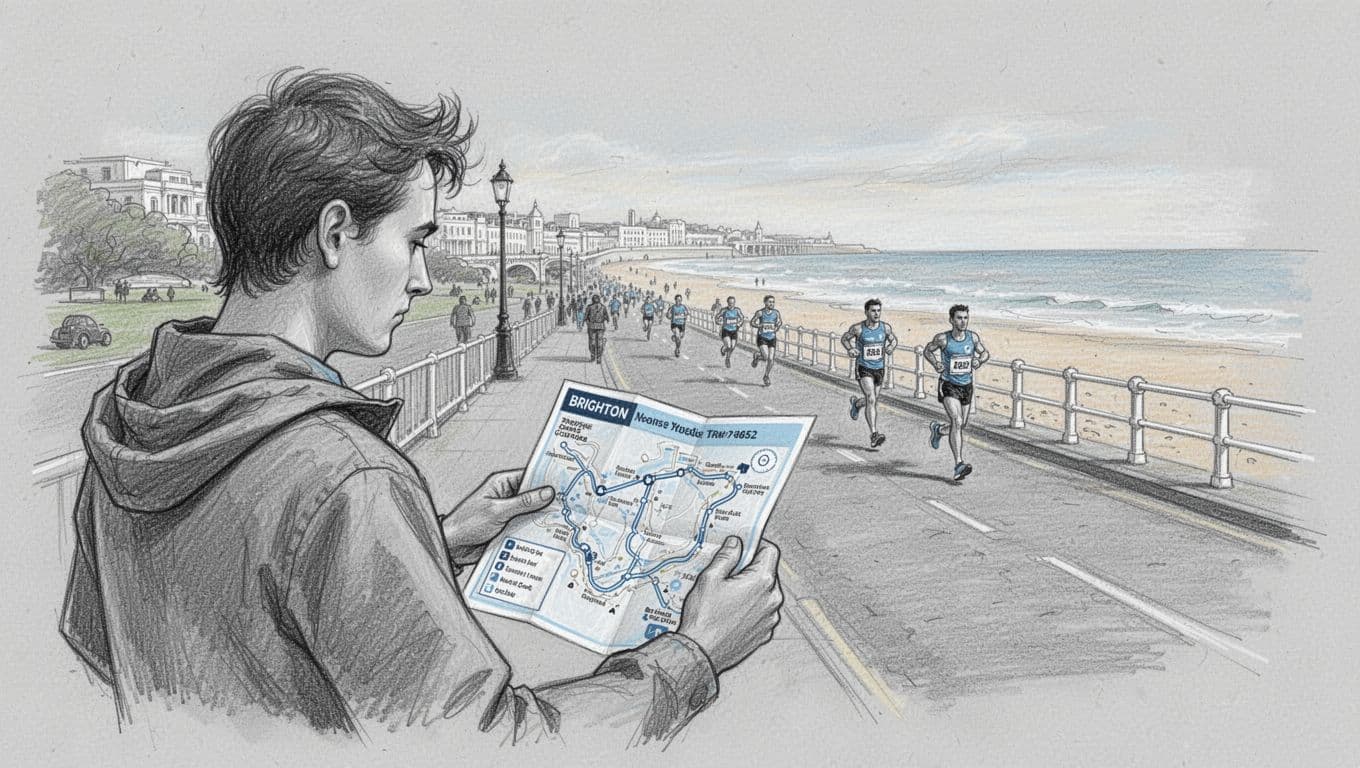
Brighton Marathon race day usually flows from the Preston Park start toward Brighton’s coastal roads, with runners finishing on Madeira Drive. That layout can change, so check the official Brighton Marathon road closure information and race-week updates for the current start area, finish area, course map, event times, and travel restrictions.
Build your day around two or three viewing points, rather than trying to follow the race from one side of Brighton to the other. Walking takes longer when roads are closed, sidewalks are crowded, and toilets or food stops add delays.
Use Your Runner’s Pace to Predict Where They Will Be
Start with your runner’s goal pace, then compare it with a recent race result. A recent half marathon, 10-mile race, or long training run can reveal whether the target pace is realistic. If your runner usually slows after halfway, build that change into your estimate instead of assuming every mile will match.
For example, a four-hour marathon requires an average pace of about 9:10 per mile. On paper, your runner would reach halfway near two hours and finish around four hours. In practice, they might pass halfway in 1:59, slow slightly through the later miles, and finish at 4:03 or 4:08.
Use that estimate to decide when to leave each viewing area. Add a 10- to 15-minute cushion for crowded sidewalks, aid stations, brief stops, and delays reaching the course. Hills, wind, weather, and dense groups of runners can shift the schedule even more.
If the event provides official runner tracking, save the tracking page before race morning and check it during the day. The signal may update in steps rather than continuously, so use it as a guide instead of expecting an exact arrival time.
What to Check Before Leaving Home
Race-week information matters more than an old course map. Before you travel, confirm:
- The current course map, start area, finish area, and event schedule.
- Your runner’s start wave, bib number, and estimated finish time.
- Road closures, parking restrictions, and public transit changes.
- The forecast, temperature, and wind along the seafront.
- A meeting place away from the finish-line crowds.
- Your phone battery, portable charger, water, snacks, and weatherproof clothing.
- An emergency contact and a backup way to reach your group.
Save the map, bib number, meeting point, and travel details offline. Mobile service can become unreliable near busy viewing areas, especially when many spectators use the same cell towers. A screenshot or printed note can prevent a small signal problem from becoming a full-day search.
Also check whether your runner is competing in the marathon, Brighton 10K, or another linked event. Those races can have different start times and routes, so a plan built for the marathon may place you in the wrong location.
A simple schedule might include the start at Preston Park, one mid-course spot reached by foot, then the Madeira Drive finish. Leave the mid-course area early enough to reach the finish before your runner does, and agree on the meeting point before the starting gun.
The Best Places to Watch the Brighton Marathon
The best Brighton Marathon spectator spot depends on what you want most: race-day atmosphere, easy access to food and restrooms, a clear coastal view, or a realistic chance to see your runner more than once. The route begins near Preston Park, moves through central Brighton, follows the seafront toward Hove, and finishes near Madeira Drive, so your location affects both the experience and your travel time.
Check the official Brighton Marathon course before race morning. Exact access points, barriers, road closures, and crowd controls can change.
Preston Park Gives You the Biggest Race-Morning Atmosphere
Preston Park has the loudest early-morning energy, with runners arriving, supporters gathering, and the start area filling with anticipation. However, spectators should stay in approved public viewing areas and keep clear of barriers, entrances, emergency routes, and runner access points. Follow directions from event staff rather than trying to reach a restricted section.
Arrive early if you want a useful view. Crowds build quickly, and late arrivals may find themselves behind several rows of people. A child may struggle to see over the crowd, while older adults or anyone with limited mobility may need extra time to find a comfortable position away from tightly packed walkways.
The start offers a memorable atmosphere, but it can complicate the rest of your day. If you want to see your runner later, leave as soon as access allows and use a planned walking route. Waiting for the entire field to pass or trying to cross closed roads can cost you the chance to reach central Brighton in time.
Central Brighton and the Seafront Make Strong Mid-Race Choices
Central Brighton streets work well for supporters who want services close by. Cafes, restaurants, restrooms, shops, and indoor places to rest make this area more practical for families and longer waits. Choose a broad zone near a recognizable landmark, such as a major square, street junction, or prominent public building, rather than relying on one exact curbside position.
The city center also gives you more flexibility. You may be able to watch your runner, walk a short distance, and reposition without crossing the entire course. Still, confirm that spectators can stand in your chosen area, and never block doorways, sidewalks, crossings, or staff routes.
Along the seafront, the open view can make it easier to spot a runner approaching. The water and promenade create a memorable backdrop, yet the exposure brings stronger wind, bright sun, and sudden weather changes. Bring a warm layer and protect snacks or phones from the elements. Spectators with young children should stay well back from the course and choose a spot near seating or a clear exit.
Hove Can Offer More Room and a Clearer View
Moving west toward Hove may give you more space and lighter crowds than the busiest central areas. A less congested stretch can make it easier to identify your runner, especially if you agree on clothing, a bib detail, or a precise landmark beforehand.
The tradeoff is distance. Once you move toward Hove, reaching Madeira Drive before your runner finishes becomes harder, particularly with road closures and crowded pedestrian routes. This location suits supporters who prefer one relaxed viewing point, or those following a runner with a later expected finish.
The finish area near Madeira Drive can provide strong race-day emotion, but spectators may face restricted access, dense crowds, and slow exits. Treat it as a separate destination, not a guaranteed final viewing point, and plan a meeting place outside the busiest finish approaches.
How to Get Around Brighton on Marathon Day
Brighton Marathon race day changes the city’s normal rhythm. A short trip across town can take much longer when roads close, buses divert, and thousands of spectators gather along the seafront. Plan a one-way journey between viewing points, then leave extra time for every transfer.
Plan Around Road Closures and Public Transit Changes
Review the latest road closure schedule and transport alerts before leaving home. A normal Sunday timetable won’t tell you how Brighton Marathon race restrictions will affect your route. Brighton & Hove Buses publishes marathon weekend travel updates, including diversions and temporary service changes.
Buses may skip stops, follow different roads, or become crowded near popular viewing areas. Train stations can also be busy, particularly around arrival times and after the race. Taxi and rideshare pickup points may move when vehicles can’t reach closed roads, Madeira Drive, or parts of the central seafront.
Before race morning, identify:
- Your first viewing location and the nearest practical transit stop.
- An alternate walking route if a bus cannot reach your destination.
- A backup viewing location in case your preferred area becomes too crowded.
- A meeting point away from the finish zone.
- A second way to contact your group if mobile service slows.
Park-and-ride may be available for some events, but don’t assume it operates unless the official race notices confirm it. Check event travel information again before you set out because access plans and closure times can change.
A route that takes 15 minutes on an ordinary Sunday may take 40 minutes when barriers, diversions, and crowds remove the direct path.
Walking Between Viewing Points Is Often the Most Reliable Option
Walking gives you the most control when the course divides the city. Use the official course map to mark viewing areas, pedestrian crossings, restrooms, and landmarks that are easy to recognize. Major squares, hotels, public buildings, and wide intersections are better reference points than an exact spot beside the curb.
Wear comfortable shoes because you may cover several miles while waiting for your runner. Carry water, a snack, and a light layer for wind or changing weather. Add at least 10 to 15 minutes to normal walking estimates, then allow more time if you travel with children, older relatives, or anyone with limited mobility.
Follow marked crossings and directions from race staff. Never cross the course, squeeze through barriers, or stop in a narrow area where runners, wheelchairs, bikes, or race vehicles need space. If a crossing closes temporarily, wait for staff instructions instead of forcing a gap.
Why You Should Avoid Driving to the Finish
Driving toward Madeira Drive or the central seafront creates more problems than it solves. Parking is limited, access roads may close, and pedestrian traffic can make the final approach painfully slow. Even if you reach Brighton, you may need to park far away and walk the rest of the distance.
Cycling can work for some spectators, but barriers and crowded promenades may limit where you can ride or leave a bike. Taxis and rideshares are useful for accessible travel or longer connections, yet drivers may need to drop you outside the restricted zone.
Arrange to meet your runner at an agreed cafe, hotel, or open public area away from the busiest finish exits. Choose somewhere accessible after roads reopen, and confirm the plan before the race starts. Don’t assume a particular business or street will remain open during the event.
How to Support Your Runner Before, During, and After the Race
Good race-day support is practical, calm, and easy for your runner to recognize. Your job is not to manage every mile. Instead, help them feel prepared before the start, encouraged without pressure during the race, and confident that a sensible plan awaits after the finish.
Make Your Encouragement Easy to Hear and Remember
Before the race, ask your runner what kind of support helps most. Some runners want quiet reassurance, while others enjoy loud cheering and humor. Use their name, a short phrase, a familiar joke, or a clear sign they can recognize quickly.
Simple messages often work better than telling someone to run faster. Try phrases such as:
- “You look strong!”
- “Keep your rhythm.”
- “You are right on plan.”
- “Only focus on this mile.”
These words support the runner’s pacing and confidence without demanding extra effort when fatigue is building. If your runner looks distressed, confused, or physically unwell, avoid shouting performance goals. Alert a marshal if you believe they need medical help.
Runners may not see or hear you at all. Sun glare, wind, music, fatigue, crowds, and the sound of thousands of feet can hide even a loud voice. A missed wave is not a personal slight, and it doesn’t automatically mean something has gone wrong. Use official tracking when available, such as the Brighton Marathon tracking app, to judge their progress between sightings.
Pack for Brighton’s Unpredictable Coastal Weather
Brighton’s seafront can feel cold when you’re standing still, even if the forecast looks mild. Wind and rain can make a comfortable afternoon feel raw, while bright sun can leave you exposed for hours. Check the forecast again before leaving, then pack layers rather than trusting one temperature reading.
Bring a waterproof jacket or light rain layer, sunscreen, a hat, and comfortable shoes with good support. You may walk between viewing points and stand on hard pavement longer than expected. Water, a snack, and a portable battery keep you comfortable and connected while you wait.
Carry a phone with the runner’s bib details saved, but don’t depend on cash for food or drinks. Many vendors favor card or contactless payments, so check your payment method before race morning.
Spectators bringing children need a little more structure. Pack familiar snacks, warm layers, water, and something small to occupy them during long waits. Choose a visible meeting point, explain what to do if someone becomes separated, and make sure every adult knows the plan.
Choose a Meeting Point Before the Runner Crosses the Finish Line
The finish line is a poor place to search for someone. Barriers, tired runners, baggage collection, medical areas, and dense crowds can make a quick reunion impossible. Follow the official Brighton Marathon event information for instructions about the runner exit area and baggage collection.
Before the start, agree on a named place outside the busiest finish zone, with a backup point nearby. Share the runner’s bib number, clothing description, and expected finish window. Decide who will call first, how long you’ll wait, and where you’ll go if phone reception fails.
A tired runner may need warmth, water, food, and time before walking anywhere. Keep the meeting plan simple, stay clear of restricted areas, and choose a location that remains practical in rain or cold.
Safety, Accessibility, and Spectator Etiquette Along the Course
A safe viewing spot helps everyone enjoy Brighton Marathon, including runners, volunteers, residents, and fellow spectators. Stay behind barriers, use designated crossings, and follow marshal instructions even when your runner is approaching.
Watching With Children, Older Adults, or a Dog
Choose a quieter viewing area away from the start, finish approaches, and narrow sections of pavement. Open spaces near central Brighton or less crowded stretches toward Hove may give your group more room to sit, move, and leave without pushing through the crowd.
Bring enough water, food, medication, and warm clothing for a longer wait than expected. Plan rest stops near accessible toilets, cafes, benches, or indoor spaces. Before the race begins, set a meeting point that everyone can recognize, plus a backup location if phone service becomes unreliable.
Children and pets can become unsettled by loud cheering, barriers, sirens, and sudden movement. Keep children close, hold hands near crossings, and never let anyone step into the runners’ path for a photo. Keep dogs on a short leash and away from moving feet, bikes, wheelchairs, and crowded entrances.
A busy event area may be unsuitable for a dog, even if the animal is normally calm. Leave your dog at home when the route, noise, or crowd density could cause distress. Check the event’s current rules and local requirements before bringing any pet.
For wheelchair users and spectators with limited mobility, check the official Brighton Marathon spectator guide for accessible viewing areas and steward arrangements. Avoid narrow pavements, identify accessible toilets in advance, and confirm transport options before race morning. If you have a detailed access question, contact the event team ahead of time rather than relying on conditions at the course.
What to Do If a Runner Needs Help
Normal marathon fatigue can look uncomfortable. A runner may slow down, walk briefly, stretch, or stop at an aid station while remaining alert and able to respond. Serious distress can look different. Watch for confusion, collapse, difficulty breathing, severe bleeding, or an inability to stand or communicate normally.
You don’t need to diagnose the problem. Tell the nearest marshal, first-aid volunteer, or emergency service immediately. Give clear details: the runner’s location, direction of travel, bib number if visible, and what you observed. Point to a landmark, intersection, or barrier marker so help can find the runner quickly.
Never enter the course, block medical staff, or try to carry an injured runner. Move back and create space when instructed. Keep umbrellas, bicycles, large signs, and loose bags out of crowded viewing areas, and take litter with you so the route stays clear for runners and support crews.
Choose Your Distance, Duration and Goal Time
Make three quick selections and open the exact plan built for your race target.
Looking for a Fully Personalized Training Plan?
The training plans above are an excellent choice if they match your goal. However, if you’d rather train with a plan built specifically around your current fitness, goal race, preferred training days, weekly mileage, and target finish time, our RDA Custom Training Plans provide a personalized solution. We also have running courses available for runners seeking to run faster from the mile to the marathon.
Why Choose a Custom Training Plan?
| Standard Training Plan | RDA Custom Training Plan |
|---|---|
| Follows a fixed schedule | Built around your schedule |
| Standard weekly mileage | Peak mileage customized for you |
| Fixed workout days | Train on the days you choose |
| Same structure for everyone | Designed around your current fitness |
| Static plan | Updated as your fitness improves |
| One-time purchase | Ongoing personalized coaching and support |
What You’ll Receive
- A training plan built specifically for your goal
- Personalized training paces
- Long runs, tempo runs, threshold workouts, interval sessions, recovery runs, and easy runs
- Peak weekly mileage matched to your experience level
- Flexible training schedule that fits your life
- Ongoing plan adjustments as your fitness improves
Ready to Train Smarter?
Stop guessing and start following a plan built specifically for you, your schedule, and your racing goals.
Frequently Asked Questions
Race day becomes easier when you answer the practical questions before leaving home. These Brighton Marathon spectator tips cover viewing costs, meeting runners, arrival times, transport, and the small items that can prevent avoidable problems.
Can spectators watch the Brighton Marathon for free?
Yes, roadside spectating is generally free. You can usually stand along publicly accessible sections of the route without buying a spectator ticket, although barriers, marshals, and crowd controls may limit where you can wait.
Certain event areas may follow separate rules. Hospitality zones, transport services, grandstand areas, toilets, or organized viewing facilities could involve a charge or restricted access. Check the official Brighton Marathon information before race day for current restrictions, access arrangements, and ticket details.
Where is the best place to meet a Brighton Marathon runner?
Agree on a meeting point outside the busiest finish area before race morning. The finish line is a poor reunion spot because runners may need to pass through barriers, collect belongings, visit medical support, or follow a one-way exit route before they can meet you.
Choose one clear landmark, such as a named cafe, hotel entrance, public square, or prominent building. A specific location is easier to find than saying, “Meet at the finish line,” especially when phone service slows and thousands of people leave at once. Confirm that spectators can reach the landmark after the runner exits the event zone, and choose a backup nearby.
What time should spectators arrive at the Brighton Marathon?
Your arrival time depends on your viewing location and whether you want to see the start. Preston Park and central Brighton attract large crowds, so arrive early if you want a clear position, easy access, or time to find restrooms and food.
Allow extra time for transit delays, security checks, pedestrian diversions, and road closures. Even a short walk may take much longer when barriers redirect foot traffic. If you’re watching only a later section of the course, you can arrive later, but check your runner’s expected pace and leave a generous margin.
Can I move between different Brighton Marathon viewing spots?
You can move between viewing spots when the course layout, barriers, and pedestrian routes allow it. However, choose realistic locations rather than planning several sightings across opposite sides of Brighton.
Check walking times in advance, then add a generous cushion for crowds and temporary crossing restrictions. Never cross the race line or push through a barrier to reach your runner. If staff close a crossing, follow their instructions and wait for an approved route.
Is public transportation available during the Brighton Marathon?
Trains, buses, and other services may operate, but routes and schedules can change during the event. Buses may divert around closed roads, while stations and stops near popular viewing areas can become crowded.
Check current operator information and event updates before traveling. Brighton & Hove Buses’ marathon updates can help you identify diversions. Also save a walking route and backup plan in case your preferred service cannot reach the course.
What should I bring when watching the Brighton Marathon?
Pack for several hours outdoors, even if you plan to watch for only a short time. Useful items include:
- A charged phone, portable battery, runner photo, and bib number.
- Comfortable shoes, water, snacks, sunscreen, and weather layers.
- A clear meeting plan, including a backup location and contact method.
Large bags, umbrellas, and bulky signs can become difficult to carry in crowded spaces. Some areas may restrict them, so use a small bag and a compact sign if event guidance permits it.
Conclusion
The best Brighton Marathon spectator experience starts with a simple plan and room to adjust. Check official race updates, choose a few realistic viewing areas, and use walking or public transit wisely because closures and crowds can change travel times.
Prepare for coastal weather with comfortable shoes, water, snacks, and warm or waterproof layers. Stay behind barriers, follow marshal instructions, and set a clear meeting point before race morning so you and your runner don’t have to search through the finish crowds.
With those details settled, you can focus on the reason you’re there: giving steady support when your runner needs it most. The day ends with tired legs, a hard-earned finish, and the seafront glowing behind them as cheering crowds carry them down Madeira Drive.


