

Brighton Marathon Route: Course Map, Hills, Wind & Pacing Strategy
Race morning in Brighton begins with nerves and crowded streets near the start, then unfolds toward the seafront finish, where the sound of spectators carries across the final miles. The Brighton Marathon route offers more than a line on a map, and knowing its direction, landmarks, turns, hills, and exposed coastal stretches can help you spend your effort wisely.
Runners searching for the course usually want practical answers: where to settle into marathon pace, when to expect changes in elevation, which sections may bring strong wind, and where crowd support can lift tired legs.
You’ll also need current details about transportation, toilets, baggage, wave starts, aid stations, road closures, and finish-area access. Organizers can adjust start areas, closures, aid stations, and other course arrangements from year to year, so confirm the latest official race information before race day.
The guide below follows the course in running order, highlights the points that deserve your attention, and explains how to prepare for Brighton’s coastal sections. First, we’ll look at the opening miles and the early pacing decisions that shape the rest of your race. Remember to book your Brighton Marathon hotels in advance to save.
Key Takeaways
- The Brighton Marathon route covers about 26.3 miles, with roughly 500 feet of elevation gain on tarmac roads.
- Plan for notable climbs around miles 1, 7, 9, and 11, even though the course is widely viewed as fast.
- Use the official Brighton Marathon course details to check the latest route information.
- Hold back early, run hills by effort, and protect your target pace for the second half.
- Expect exposed coastal sections, where wind can increase effort and make disciplined pacing especially important.
Brighton Marathon Route: What the Full Course Looks Like
The Brighton Marathon route is a paved road course with a strong out-and-back feel. It begins in Brighton, follows the Sussex coast east toward Rottingdean and Ovingdean, then turns back toward the city for a seafront finish.
The official marathon distance is 26.2 miles, or 42.195 kilometers. GPS watches may show slightly more because of the racing line, turns, and measurement differences. The organizer’s current course details can help you understand the route’s shape, but always check the latest official map for the exact start line, turnaround points, and road layout.
Route at a glance
In broad running order, the course follows this pattern:
- Start in Brighton and settle into the opening city streets.
- Head east through the coastal neighborhoods toward Rottingdean.
- Continue toward Ovingdean and the farther turnaround area.
- Retrace the coastal direction toward Brighton.
- Run the late miles along the seafront before reaching the finish.
Landmarks, crossings, start areas, and road arrangements can change between race editions. Treat this list as a course overview rather than a substitute for the race-day map.
What the course feels like underfoot
Most of the Brighton Marathon route is paved, urban, or suburban. You should still expect small changes in surface, road camber, cornering, and lane position. Those details rarely look significant during a course preview, yet they can affect your stride after 20 miles.
The opening roads may feel crowded, so avoid forcing your way to goal pace immediately. As the course moves east, the scenery becomes more open and the coastal setting becomes a larger part of the race. You may run beside exposed stretches where wind changes the effort required to hold the same pace.
The return toward Brighton can feel faster because familiar streets and louder crowds draw you forward. Keep your effort controlled until the late stages, then use the seafront atmosphere to build toward the finish. The course is commonly described as fast, but its hills, turns, and wind still reward patience more than early aggression.
The Brighton Marathon Course in Running Order
The Brighton Marathon route rewards runners who treat each phase as a separate task. The early city miles demand restraint, the eastern coast tests patience, and the return leg asks you to manage fatigue before the final seafront push.
Starting strong without wasting energy in the opening miles
A crowded start can make the first few miles feel faster than planned. Runners surge around slower groups, turns interrupt their rhythm, and the noise encourages an effort that feels exciting rather than controlled.
Choose your corral based on your realistic goal pace, not your best short-distance speed. Once the race begins, let the first mile settle naturally. A few seconds slower than target pace is usually harmless, while an early acceleration can cost you later.
If you start near a pace group, stay close without fighting for every position. Let the group absorb some wind and help you find a steady rhythm. However, don’t follow blindly if the pace feels too hard. Your breathing and effort should remain controlled.
Runners caught in congestion should move around others safely. Look ahead, signal gently, pass on the outside when space opens, and avoid sharp bursts before or after corners. Every unnecessary surge spends energy that belongs in the final 10K.
Treat the opening miles as controlled effort, not a test of how fresh you feel.
The eastern coastal stretch and turnaround
As the Brighton Marathon course heads east toward the coastal neighborhoods and turnaround area, the race becomes more open. The sea views can lift your mood, but exposed roads also make wind more noticeable. A headwind may slow your pace even when your effort stays steady.
This section is a test of patience and rhythm. Break it into small landmarks, aid-station intervals, or 10-minute blocks rather than staring at the distant turnaround. Changing crowd density can also affect your perception of speed. Use nearby runners as reference points, but don’t chase every competitor who passes.
Confirm the exact turnaround location on the latest official Brighton Marathon course information. Race layouts can change, so avoid relying on an old map or a remembered landmark.
The return to Brighton and the final seafront miles
After the turnaround, the route feels familiar, but your legs may not. Wind direction can change the effort, while road camber and repeated coastal views may make the return feel longer than expected. Check your breathing, posture, and pace before allowing the growing crowd to pull you forward.
Take fuel according to your plan rather than waiting for hunger. Keep the effort even, then reassess when you reach the late seafront miles. Brighton’s crowds can give you another gear, but the finish is still far enough away to punish an early sprint.
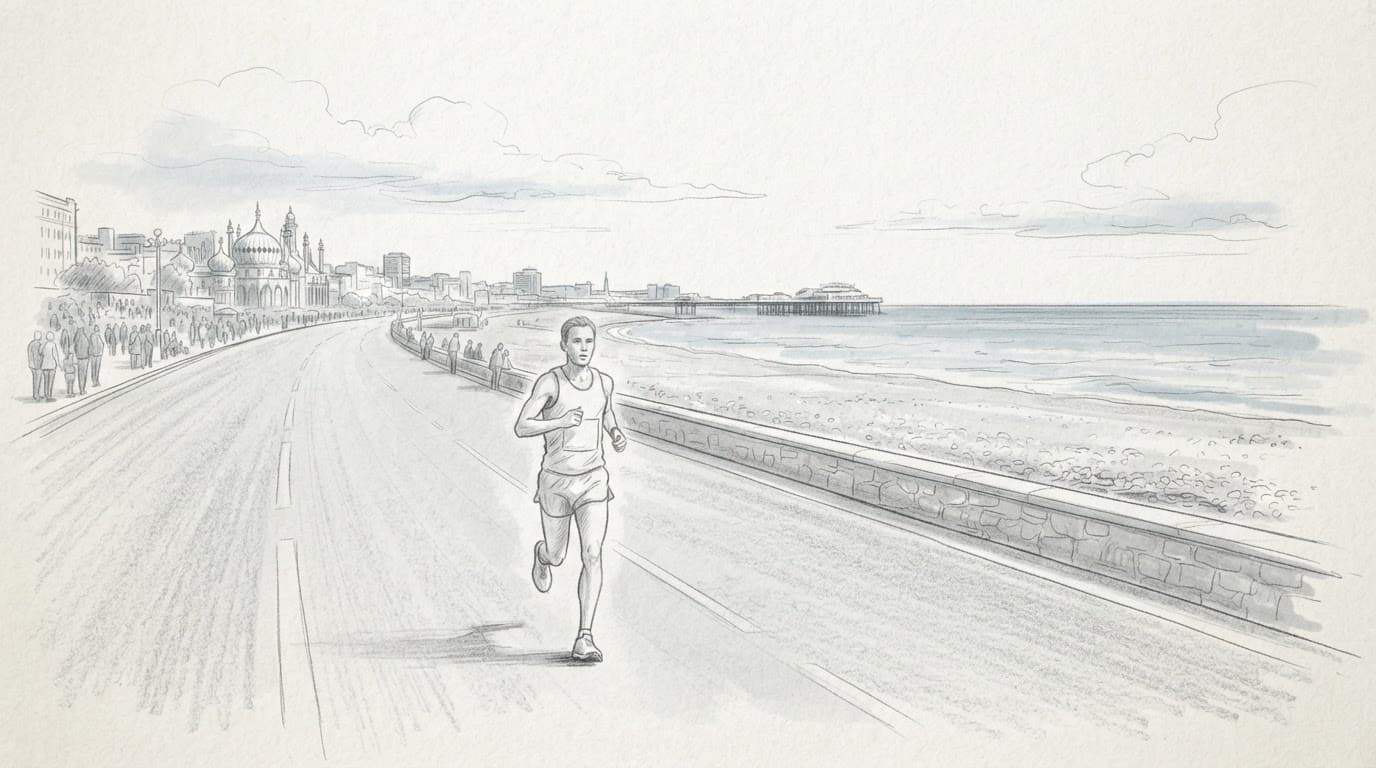
Save your strongest push for when the finish is genuinely close. Until then, run tall, protect your cadence, and use the spectators as support rather than a reason to abandon your pacing plan.
Hills, Wind, and Surface Changes You Need to Respect
The Brighton Marathon route may look flat on a map, but that view hides the demands of 26.2 miles. Short climbs, rolling sections, tight turns, sloped road surfaces, and coastal wind can steadily increase the cost of your pace.
Use the official Brighton Marathon course details for the current elevation profile and route file. Don’t guess exact grades from memory or from a simplified map, especially near the eastern end of the course.
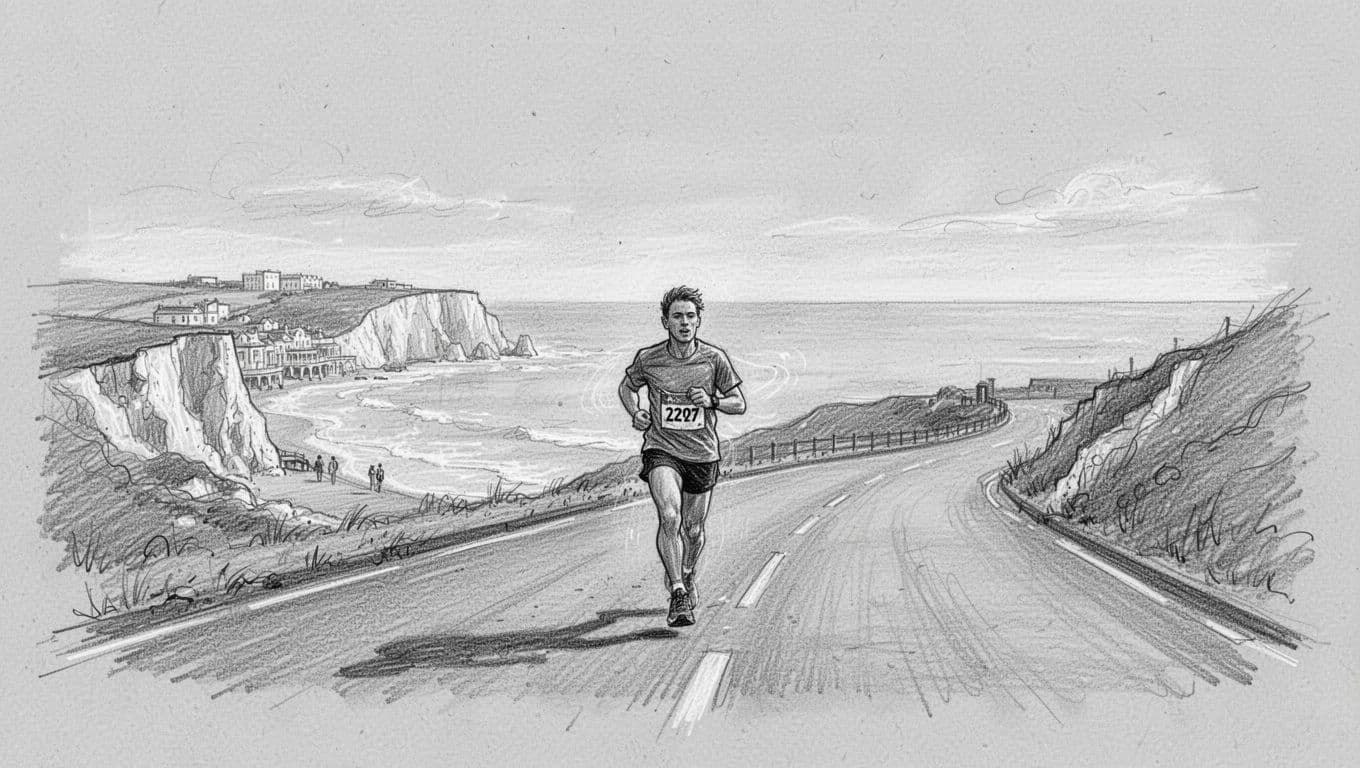
How to pace the Brighton coastal hills
Run the climbs by effort, not by watch pace. As the road rises, shorten your stride slightly, keep your cadence comfortable, and avoid forcing your speed back to target pace. Your pace may slow for a short period, but your breathing and muscular effort should remain controlled.
When you reach the crest, resist the urge to sprint. Stay relaxed for several steps, then let your stride length and rhythm return gradually on the flatter road. A hard push over the top can feel productive, yet it often leaves your legs carrying unnecessary fatigue into the next section.
This approach supports an even-effort or negative-split marathon. Hold back when the course asks for more strength, then regain time naturally on easier ground. Beginners may accept a noticeable pace change while they protect steady breathing. Recreational runners can use effort zones and landmarks to stay disciplined. Experienced marathoners may keep the pace closer to target, but they should still adjust for grade instead of fighting every second.
How to handle wind, sea exposure, and road camber
Near the water, a sheltered stretch can make the Brighton Marathon course feel unusually quick. A headwind can change that within seconds. Relax your shoulders, keep your arms compact, and maintain a slight forward lean from the ankles. Let gusts affect pace without responding with sudden surges.
When conditions allow, run near a group or another runner for some shelter, while leaving enough space to move safely and following race rules. Be careful when temporary protection disappears. If you suddenly run into the wind, keep the same effort rather than chasing the pace shown on your watch.
Road camber creates another small drain. A sloped surface can load one foot, hip, and calf more than the other, particularly after many miles. Change your position across the road when it is safe and legal, and use turns or flatter sections to restore symmetry. Small adjustments now can help preserve your stride late in the race.
How to Train for the Brighton Marathon Course
Training for the Brighton Marathon route should prepare you for steady effort, exposed coastal roads, gentle climbs, and long stretches without constant entertainment. Start your formal marathon plan early enough to build endurance gradually. Your local roads, a treadmill incline, a bridge, or a rolling park loop can all recreate parts of the course.
The key workouts to practice before race day
Use these sessions across your training cycle, but avoid stacking hard days together:
- Long easy runs build the endurance needed for the final 10K. Keep the pace conversational and practice running for long periods without music, crowds, or constant distractions.
- Long runs with marathon-pace segments teach you to settle into race rhythm when your legs are already tired. Begin with short blocks and add time gradually as your fitness improves.
- Controlled hill sessions prepare your calves and hips for Brighton’s climbs. Run gentle repetitions by effort, stay relaxed, and avoid sprinting uphill. A treadmill incline or bridge works when local roads are flat.
- Steady runs teach patience. Run faster than an easy pace, but well below an all-out effort, so you learn to hold back while maintaining good form.
Harder sessions usually need only one or two placements each week, depending on your experience and total mileage. Keep easy days genuinely easy so your body can absorb the work. Strength exercises for the calves, glutes, hamstrings, and core can support your stride, while rest days protect your progress.
How to practice fueling for a long coastal race
Test every gel, chew, sports drink, and breakfast during training. Take fuel before you feel empty, because waiting for hunger often means you’re already behind. Practice water timing as well, especially during long runs that include marathon-pace work.
Your plan must match your personal tolerance, expected weather, and the aid-station choices available on race day. Check the official Brighton Marathon information for current event details, then carry backup fuel if the supplied options don’t suit you.
How to prepare for changing weather
Brighton may bring sun, cloud, rain, or strong wind, even when an earlier forecast looks mild. Practice in different layers, and test sunglasses, a cap, sunscreen, and any anti-chafing products before race morning.
Wear familiar shoes and clothing on race day. A local windy route can help, but you can also use an exposed park or open bridge to practice holding effort when your pace slows. Gradual, race-specific practice gives you more control when the seafront conditions change.
Pacing and Race-Day Strategy for Every Part of the Route
The Brighton Marathon route rewards controlled decisions more than perfect splits. Use your target pace as a guide, then adjust for hills, wind, crowding, heat, and how your body responds.
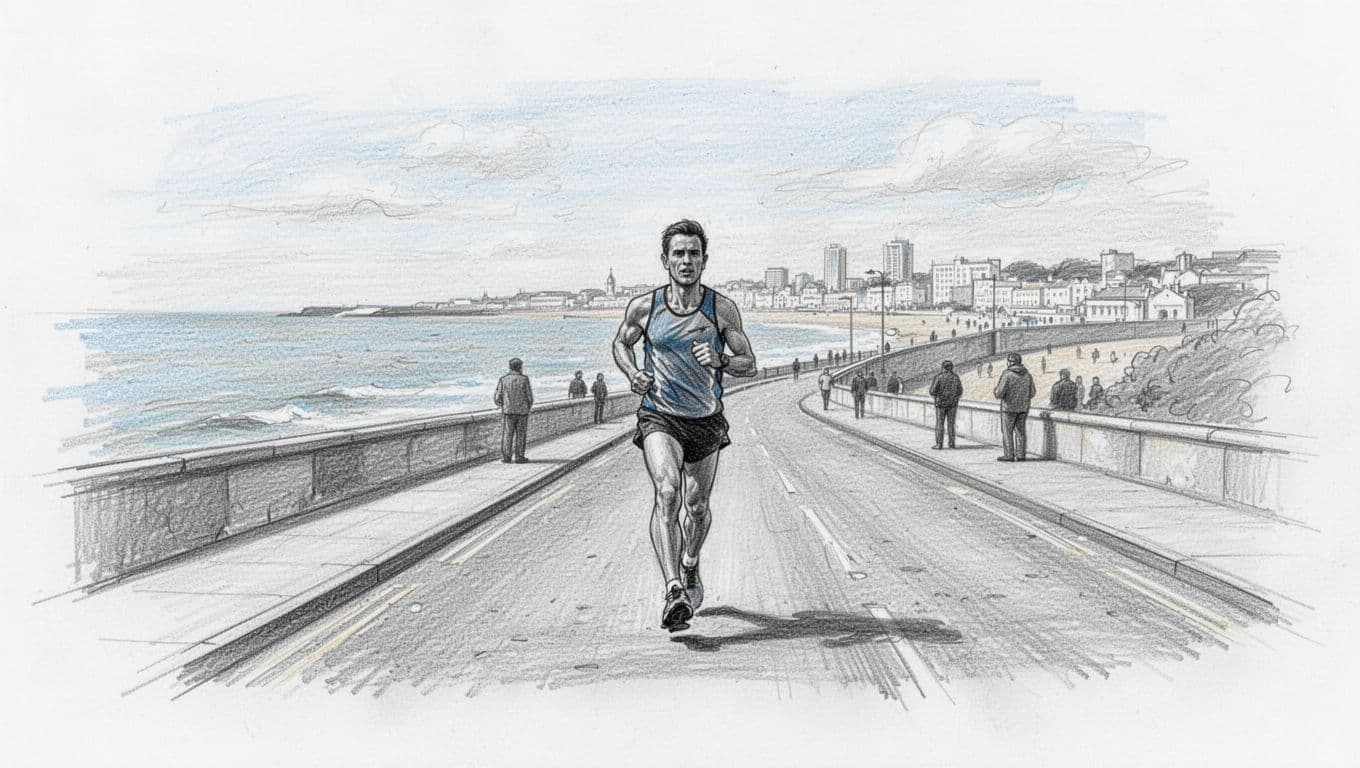
A simple pacing plan from the start to the finish
For the first 10 kilometers, keep your effort relaxed and restrained. The start-line energy, downhill sections, and fresh legs can make your goal pace feel far too easy. Let that happen. A small early error, such as running 10 seconds per mile too fast, can become a major loss when fatigue reaches your legs late in the race.
Through the middle miles, settle into steady work. Run the climbs by effort, allow your pace to slow into a headwind, and return to rhythm when the road improves. Keep your shoulders loose, your stride compact, and your fueling regular. Smooth form and consistent effort matter more than chasing every instant GPS split.
After the turnaround, reassess your breathing, legs, fuel, and posture. If you still feel strong, gradually commit to a faster finish during the final 10 kilometers. Runners chasing a personal best can use a pace band and lap pace, while those aiming to finish should focus on effort and aid-station landmarks. A heart-rate alert or simple effort scale can help, but don’t let any single number control the race.
Buildings, turns, and crowded roads can make instant GPS pace unreliable. Set your watch to show average lap pace, elapsed time, distance, and heart rate or effort. Press the lap button at each mile or kilometer marker, then compare your average rather than reacting to every fluctuation.
Set A, B, and C goals before race morning. Base them on your fitness, health, weather forecast, and course conditions.
Goal A might be your personal-best target. Goal B can reflect a sensible adjustment for wind or heat, while Goal C protects a strong finish when training or health has been limited.
What to do if the course feels harder than expected
If the Brighton Marathon route feels unusually tough, slow slightly for several minutes, take fluids, and reassess. Protecting your finish is smarter than forcing a pace your body can’t sustain. Runners returning from injury or limited training should choose the conservative goal early and use planned run-walk breaks if needed.
Normal discomfort includes heavy legs, rising effort, and manageable muscle soreness. Sharp pain, dizziness, confusion, chest symptoms, severe shortness of breath, or loss of coordination are warning signs. Stop, alert a marshal or medical volunteer, and seek medical help immediately. Check the latest Brighton Marathon race-day guidance before traveling, especially for weather and clothing advice.
Start, Finish, Transport, and Spectator Planning
The Brighton Marathon route is only part of race-day preparation. Your result can also depend on how calmly you reach the start, handle practical tasks, and reunite with your support crew afterward. Use the official Brighton Marathon event guide for confirmed facilities, then check the latest runner instructions for details that may change each year.
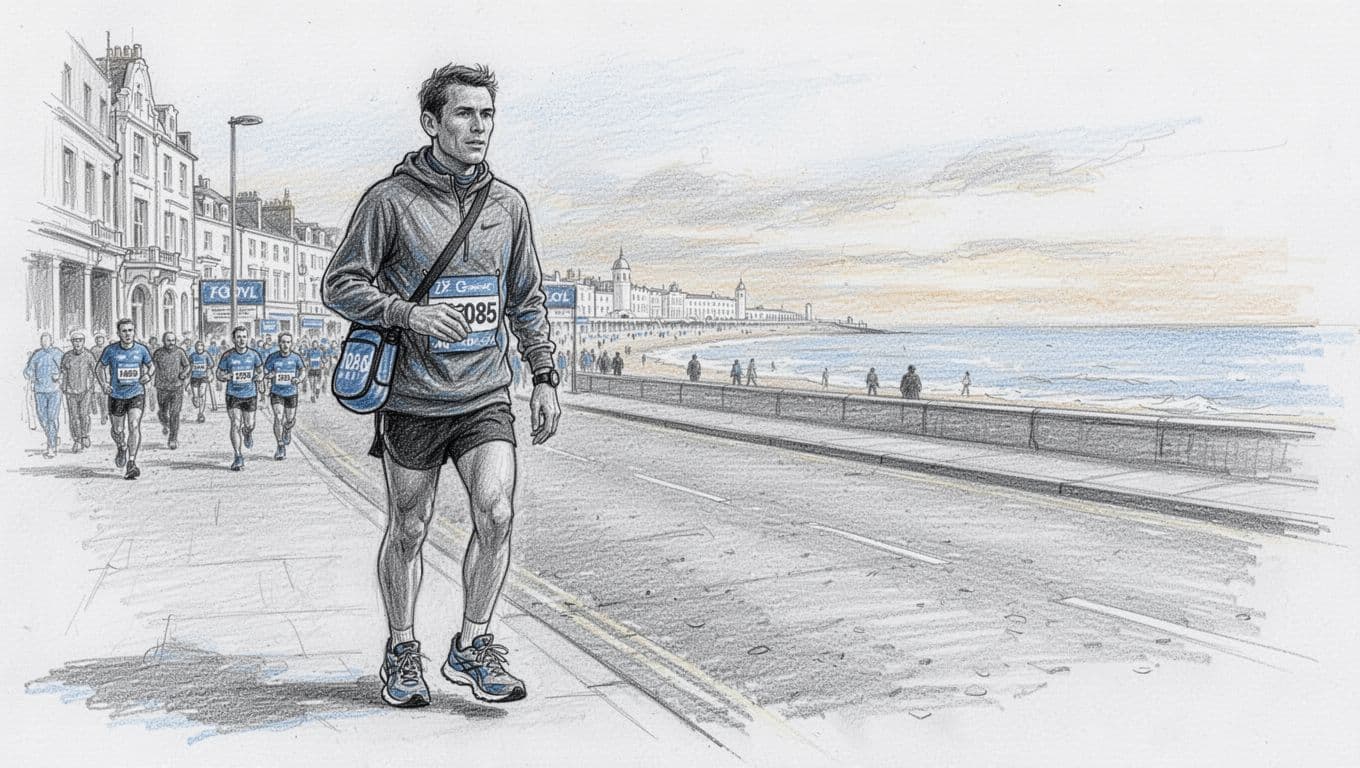
How runners can plan race morning around the route
Arrive early enough to absorb delays without sacrificing your warmup. Brighton’s busy race morning can affect buses, parking, hotel access, and walking routes, while security and road closures may add extra time. Check the official start travel information before leaving your accommodation.
Use this race-morning checklist:
- Confirm your travel route, backup option, and walking time from drop-off or transit.
- Wear clothing suited to the forecast, with a throwaway layer if you need warmth before the start.
- Attach your bib securely and check that the timing chip is positioned as instructed. Don’t bend, remove, or cover it with tape.
- Drop your bag at the designated facility, using the correct label or collection process.
- Visit the bathroom early, then allow time for another stop before entering your corral.
- Warm up gently with easy jogging and mobility. A rushed, aggressive warmup wastes energy before 26.2 miles.
- Eat your familiar breakfast and carry the fuel you practiced using. Take fluids according to your plan.
- Enter your assigned wave or corral before the stated cutoff. Race access rules can prevent late entry.
The event currently lists bag drop, toilets, accessible toilets, and course drink stations, but exact locations and procedures can change. Review the latest instructions for wave times, road closures, aid stations, medical points, and finish-area procedures. The organizer also publishes current road-closure information, which matters if family members plan to reach the seafront.
The best way for spectators to support runners
Spectators should choose one or two accessible viewing points instead of trying to follow the entire Brighton Marathon route. Because the course has an out-and-back shape, supporters may see you more than once if local transport remains practical and event rules allow movement between locations.
Agree on a recognizable meeting point before race morning. Share expected split times, but allow for crowded roads, bathroom stops, wind, and late-race fatigue. A plan based on exact minute-by-minute movement can fail quickly when roads close.
Supporters should carry warm layers, water, and a fully charged phone or backup battery. They also need a fixed post-race meeting location, since finish-area crowds can make phone calls and spontaneous searching difficult. Avoid last-minute crossings or plans that depend on driving through closed roads. Let the course dictate your movement, and place your support where the runner can count on finding it.
Common Brighton Marathon Route Mistakes to Avoid
The Brighton Marathon route is manageable when you respect its small demands. Most poor races come from simple errors: spending too much energy early, ignoring the return leg, or arriving without checking the latest race information.
Starting too fast because the race feels easy
Fresh legs, cheering crowds, and downhill sections can pull you well ahead of your planned pace. That early speed feels free, but your body pays for it after 18 miles when glycogen falls and tired muscles lose efficiency.
Settle into controlled effort during the opening 5K. Let crowded roads limit your speed if necessary, and avoid surging around slower runners. Your first mile should feel almost too easy.
Underestimating the exposed return leg
Many runners focus on reaching the eastern turnaround and forget that the return can bring stronger fatigue, changing wind, and long views toward Brighton. A headwind on the way back can turn familiar roads into a slow grind.
Break the return into short sections, such as aid stations or one-mile markers. Keep your effort steady instead of forcing your watch pace. If the wind rises, tuck behind a safe group when possible and protect your shoulders, arms, and breathing.
Road camber creates another gradual strain. Running for miles on a sloped surface can load one calf, hip, or side of your body more than the other. Change your position across the road when race conditions allow, and use flatter sections to reset your stride.
Delaying fuel or changing your race setup
Waiting until you feel hungry or weak is too late for many marathon runners. Take fuel according to the plan you practiced, and drink at the aid stations without stopping suddenly in front of other runners.
Race morning is also a poor time to test new shoes, gels, breakfast foods, socks, or clothing. Familiar equipment reduces surprises such as blisters, stomach problems, and chafing. Confirm the latest official Brighton Marathon course details instead of trusting a map saved from a previous year.
Before leaving for Brighton, check:
- The current course map and event guide.
- Weather, wind, temperature, and clothing needs.
- Start wave instructions, bag drop, toilets, and aid-station details.
- Your travel route, backup plan, and spectator meeting point.
Don’t ask supporters to cross the entire city between sightings. Choose realistic viewing locations, then agree on one post-race meeting place. The official spectator travel tool can help families plan around closures and crowded roads.
Choose Your Distance, Duration and Goal Time
Make three quick selections and open the exact plan built for your race target.
Looking for a Fully Personalized Training Plan?
The training plans above are an excellent choice if they match your goal. However, if you’d rather train with a plan built specifically around your current fitness, goal race, preferred training days, weekly mileage, and target finish time, our RDA Custom Training Plans provide a personalized solution. We also have running courses available for runners seeking to run faster from the mile to the marathon.
Why Choose a Custom Training Plan?
| Standard Training Plan | RDA Custom Training Plan |
|---|---|
| Follows a fixed schedule | Built around your schedule |
| Standard weekly mileage | Peak mileage customized for you |
| Fixed workout days | Train on the days you choose |
| Same structure for everyone | Designed around your current fitness |
| Static plan | Updated as your fitness improves |
| One-time purchase | Ongoing personalized coaching and support |
What You’ll Receive
- A training plan built specifically for your goal
- Personalized training paces
- Long runs, tempo runs, threshold workouts, interval sessions, recovery runs, and easy runs
- Peak weekly mileage matched to your experience level
- Flexible training schedule that fits your life
- Ongoing plan adjustments as your fitness improves
Ready to Train Smarter?
Stop guessing and start following a plan built specifically for you, your schedule, and your racing goals.
Frequently Asked Questions
The Brighton Marathon route is straightforward to understand, but small details can shape your race-day experience. These answers cover the questions runners often still have after reviewing the course, hills, wind, and pacing strategy.
Is the Brighton Marathon route flat?
The course is generally coastal and relatively fast in character, but “flat” can create false confidence. Expect hills, rolling sections, turns, road camber, and exposed stretches where wind can increase the effort of holding pace.
The official course information lists climbs around miles 1, 7, 9, and 11. Check the latest Brighton Marathon elevation profile and course details instead of relying on the course being described as flat.
Where does the Brighton Marathon start and finish?
Start and finish arrangements can change by event year, wave, and operational planning. The race remains centered around Brighton’s seafront, but your exact start area, access point, finish route, and meeting arrangements may differ.
Read the current official runner guide and map before traveling. Those documents contain the latest information about corrals, entry routes, bag drop, meeting rules, and finish-area access.
How long is the Brighton Marathon course?
A marathon covers 26.2 miles, or 42.195 kilometers. Your GPS watch may record slightly more because of weaving around runners, repeated turns, road position, and temporary signal errors.
Don’t chase an exact watch distance during a crowded race. Use the official mile or kilometer markers for pacing, then compare your watch data with elapsed time and average pace.
What landmarks are on the Brighton Marathon route?
The Brighton seafront is the main visual anchor, while the coastal neighborhoods east of the city provide much of the middle-course scenery. The route’s open views can help you judge progress, especially on the outward and return sections.
Exact landmarks, road access, and viewing points can change. Use the latest official map, and treat landmarks as mental checkpoints rather than depending on an outdated list from a previous race.
Is the Brighton Marathon suitable for first-time marathon runners?
Yes, the supportive atmosphere and clear road course can appeal to beginners. However, 26.2 miles still demands a consistent training base, sensible fueling, and enough preparation for wind, hills, and long periods on your feet.
Arrive with a realistic finish goal rather than chasing an ambitious time without evidence from training. A controlled start gives first-time runners more options when fatigue builds after the halfway point.
What should I check before following the Brighton Marathon route?
Confirm the race date, official map, start instructions, road closures, aid stations, weather, transport, and any course changes. Check these details again during race week because organizers can update arrangements after older guides are published.
The official event information takes priority over blog posts, social media updates, and saved map files. A familiar route can still have different access points, closures, or facilities on race morning.
Conclusion
The Brighton Marathon route rewards runners who control the early miles and stay flexible when the course or weather demands a change. Settle into your pace through the opening streets, run the climbs by effort, and expect coastal wind to alter your speed without letting it dictate your race. A steady rhythm matters more than perfect splits.
Fuel before fatigue becomes severe, then use the eastern turnaround as a clear mental checkpoint. Once you turn back toward Brighton, focus on efficient form and measured effort until the seafront crowds bring the finish within reach. That final stretch can give you extra energy, but only if you have protected your legs during the first 20 miles.
With smart preparation, the Brighton Marathon route becomes a test of execution rather than guesswork. Respect the early pace, adapt to changing conditions, and trust the work you completed in training. Before traveling, check the latest official race information for the current course, start arrangements, closures, aid stations, and race-day instructions.


