

Big Sur International Marathon Registration Guide
Running beside California’s rugged coastline is the kind of experience that makes the Big Sur International Marathon a bucket-list race, but securing a bib takes more than a strong training plan. You need to know when registration opens, how entries are assigned, what the race costs, and what options remain if the event sells out.
Big Sur International Marathon registration may involve limited entry and race-specific policies, so timing matters for runners planning travel, lodging, and a full marathon build. Dates, prices, entry rules, and sellout policies can change, which means you should confirm every final detail on the official Big Sur International Marathon website before booking your trip.
The guide below explains how registration works and what you can do to improve your chances of earning a place on the starting line. Make sure to reserve your Big Sur International Marathon hotels early to save on higher pricing later on.
Key Takeaways
- Big Sur International Marathon registration can fill quickly, so track the official opening dates and prepare before registration begins.
- Entry may use a drawing, with no application charge and payment collected only if you’re selected. Check the official registration FAQs for current rules.
- Budget for the race entry fee, processing charges, travel, lodging, and transportation along the remote coastal route.
- Confirm your race distance, cancellation policy, and required deadlines before committing to a marathon training plan.
Big Sur International Marathon Registration: Dates, Entry Options, and the Official Process
Big Sur International Marathon registration should begin with the official race website, not a resale marketplace or social media post. The race’s current registration page is the safest place to verify opening dates, entry limits, fees, race rules, and any drawing or transfer policy. Because these details can change each year, check the event page before arranging flights, lodging, or a training schedule.
Build Your Running Performance System
Move from research to action with training, recovery, nutrition, pacing, and performance tools built for runners.
More Guides for This Runner Goal
What to Check Before Registration Opens
Registration often opens well before race weekend, but the exact date depends on the event year and entry system. Some popular races use a drawing or another allocation process, while others release entries on a first-come, first-served basis. A popular distance can reach capacity quickly, so don’t rely on an old calendar or a post from a previous race.
Before registration opens, review these details:
- Confirm the event year, race date, and official opening time.
- Create or update your registration account, including your email address and contact information.
- Check age requirements, qualifying standards, time limits, and any rules for the full marathon.
- Keep your payment card and billing details available before entries go live.
- Decide whether you want the full marathon, a shorter race, or another race-weekend event.
- Subscribe to official email alerts so you don’t miss an opening announcement or deadline.
The official race site should remain your reference point even when runners share updates in online groups. Social posts can contain outdated dates, incomplete rules, or links that lead to an unofficial seller.
How to Avoid Registration Mistakes
When registration opens, move carefully rather than rushing through every screen. Choose the correct distance first, then check your details before submitting payment. An incorrect birth date can affect age-group eligibility, while a wrong emergency contact could create a serious problem on race day.
The process will usually ask you to select an event, enter personal and emergency information, accept the race rules, and pay any required entry and processing fees. Read the refund, cancellation, deferral, and transfer policies before accepting them. A bib may not be transferable unless the race specifically allows an approved transfer through its official system.
After payment, wait for the confirmation page and save the receipt email. Closing the browser too early can leave you unsure whether the transaction finished. Log in to your registration dashboard afterward and confirm your event, name, payment status, and race details.
A registration receipt confirms your race entry, but it doesn’t reserve a hotel room, flight, shuttle seat, or other travel arrangement. Book those separately, and remember that coastal lodging near Big Sur can become limited well before race weekend.
Finally, avoid unofficial resale listings and social media claims that promise guaranteed entries. If a seller cannot direct you to the official registration platform, the offer may leave you with no valid bib and no reliable refund.
How Much Does the Big Sur Marathon Cost?
The Big Sur Marathon cost includes more than the registration fee. Your total budget may also cover lodging, transportation, meals, parking, training, shoes, and travel protection. Before you commit, check the current checkout page because entry prices, processing charges, and optional add-ons can change by race year and registration tier.
What Your Race Entry Usually Includes
A standard Big Sur International Marathon registration package typically covers the basics needed to participate. That usually means a race bib, official timing, course aid stations, medical support, and finisher recognition. You should also receive access to race-weekend instructions, participant updates, pickup details, and other information needed before the starting gun.
The exact package can change each year, so read the itemized checkout summary before paying. Your entry may not include transportation to the start, lodging, race-weekend parking, meals, merchandise, or optional protection. Expo purchases and commemorative items may cost extra as well.
Entry fees can vary by registration tier and may increase as capacity fills. Review each charge before completing your purchase, including:
- The base race entry fee and processing charge.
- Optional donations or charitable contributions.
- Merchandise, photographs, and other race-weekend purchases.
- Refund protection, cancellation coverage, or similar add-ons.
- Any separate transportation or shuttle reservation.
A lower registration tier can reduce the first payment, but it doesn’t always produce the cheapest trip. A runner who saves on the bib may still spend more on a last-minute hotel or expensive transportation.
Refunds, Deferrals, Transfers, and Sold-Out Entries
These policies describe different outcomes, so don’t treat the terms as interchangeable. A refund returns some or all of your eligible entry payment. A deferral moves your entry to a future race year, often subject to a deadline, fee, or qualifying condition. An approved participant transfer changes the registered runner through the race’s official process.
Before buying, check the cutoff dates, administrative fees, qualifying conditions, and documentation requirements. Also confirm whether the policy covers illness, injury, travel disruption, or only specific circumstances.
Buying a bib from an unknown person creates both safety and eligibility problems. The race may reject an unofficial transfer, and the original name, emergency information, and timing record may remain attached to the wrong runner. Use only an approved transfer channel when the event offers one.
For a practical budget, list each category before registration:
- Race entry, processing charges, and optional protection.
- Hotel, vacation rental, or shared lodging.
- Flights, fuel, rental cars, shuttles, and parking.
- Meals, groceries, and race-weekend supplies.
- Training plans, coaching, shoes, and replacement gear.
- Travel insurance or other nonrefundable-trip protection.
That worksheet shows the real cost of running Big Sur, not just the amount displayed beside the registration button.
Choose the Right Big Sur Race for Your Goal
The full Big Sur International Marathon suits runners who want a demanding coastal experience and have enough time to train for sustained hills. The famous views are real, but this is not an easy, flat course designed for chasing a personal best. Before completing your registration, match the race distance with your fitness, available training time, and main goal for race day.
Is the Big Sur Course a Good Fit for a First Marathon?
A first-time marathoner can enjoy Big Sur with a steady training plan, realistic pacing, and regular hill practice. You don’t need years of racing experience, but you do need to respect the course. Elevation changes place extra stress on your legs, while long exposed stretches can make the distance feel even greater when conditions turn windy or warm.
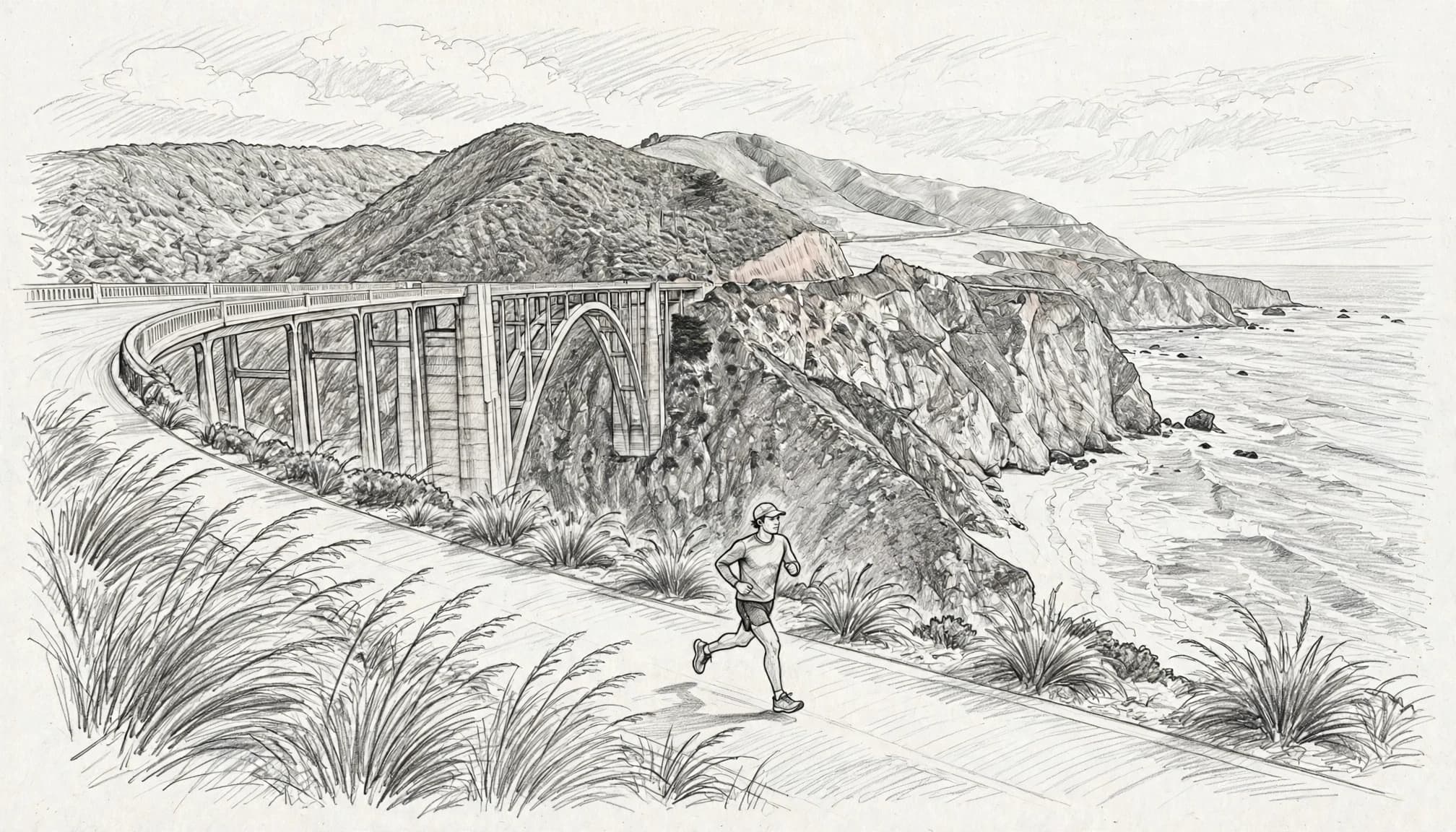
The route also includes bridges, rolling terrain, and extended sections with limited shelter. That combination rewards runners who build endurance gradually and practice staying relaxed when the road rises. Include both uphill and downhill running in training, because descending can create as much fatigue as climbing.
Your best strategy is to run by effort rather than forcing an aggressive pace during the opening miles. Early restraint protects your legs for the later sections, when accumulated hills and distance can expose weak preparation. A first marathon goal based on finishing strong is usually more suitable than an ambitious time target.
How the Course and Conditions Affect Race Strategy
Big Sur’s coastal setting creates much of its appeal, yet the ocean also brings changing wind and variable temperatures. Spring weather may feel cool at the start, then shift with sun exposure along open roads. No forecast can guarantee race-day conditions, so practice fueling and clothing choices across different training environments.
During preparation, rehearse the skills that matter most:
- Climb at a controlled effort instead of attacking every hill.
- Descend with short, comfortable steps to limit unnecessary braking.
- Carry or access fluids and fuel according to your marathon plan.
- Hold back during the opening miles, even when your legs feel fresh.
- Use effort, breathing, and terrain to guide pace when wind changes.
Runners seeking speed should compare Big Sur with a flatter marathon before setting a personal-best goal. Meanwhile, those who want a memorable destination race may find the hills worthwhile. Shorter or companion events offered during the same weekend can provide a better fit for runners with less training time, injury concerns, or a preference for a scenic challenge without the full marathon distance.
Check the official event schedule for your target year before choosing. Available races, distances, time limits, entry rules, and transportation arrangements can change. Select the full marathon when you have time to prepare for hills and long-distance fueling; choose a shorter event when the experience matters more than completing 26.2 miles.
Choose Your Distance, Duration and Goal Time
Make three quick selections and open the exact plan built for your race target.
Looking for a Fully Personalized Training Plan?
The training plans above are an excellent choice if they match your goal. However, if you’d rather train with a plan built specifically around your current fitness, goal race, preferred training days, weekly mileage, and target finish time, our RDA Custom Training Plans provide a personalized solution. We also have running courses available for runners seeking to run faster from the mile to the marathon.
Why Choose a Custom Training Plan?
| Standard Training Plan | RDA Custom Training Plan |
|---|---|
| Follows a fixed schedule | Built around your schedule |
| Standard weekly mileage | Peak mileage customized for you |
| Fixed workout days | Train on the days you choose |
| Same structure for everyone | Designed around your current fitness |
| Static plan | Updated as your fitness improves |
| One-time purchase | Ongoing personalized coaching and support |
What You’ll Receive
- A training plan built specifically for your goal
- Personalized training paces
- Long runs, tempo runs, threshold workouts, interval sessions, recovery runs, and easy runs
- Peak weekly mileage matched to your experience level
- Flexible training schedule that fits your life
- Ongoing plan adjustments as your fitness improves
Ready to Train Smarter?
Stop guessing and start following a plan built specifically for you, your schedule, and your racing goals.
Plan Travel, Lodging, and Race-Weekend Logistics After You Register
A Big Sur International Marathon entry only secures your place in the race. You still need a plan for lodging, parking, transportation, bib pickup, and race-morning arrival. Coastal roads can take longer than expected, so build extra time into every part of the weekend.
Where to Stay and How Early to Book
Lodging near the start area can simplify race morning. You may spend less time in the car, reduce the risk of missing a shuttle, and return to your room sooner after a demanding race. However, rooms close to Big Sur and the coast can be limited and expensive, especially during race weekend.
Staying in a nearby town may give you more hotels, vacation rentals, restaurants, grocery stores, and parking choices. The tradeoff is a longer morning drive, possible traffic delays, and greater dependence on the official transportation plan. Compare the full cost, not just the nightly rate. A cheaper room can become less attractive if it requires extra fuel, parking, or an early rental-car pickup.
Book as soon as your entry is confirmed, but choose a refundable reservation when possible. Race policies, entry status, travel plans, and personal circumstances can change. Confirm the cancellation deadline and avoid assuming that a reservation can be modified without a fee.
Before selecting a location, check:
- How far the lodging is from your assigned shuttle or pickup point.
- Whether the property offers early breakfast, parking, and late checkout.
- How you will reach the expo and bib pickup.
- Whether race-day road closures could change your route.
- If spectators can travel separately after dropping you off.
The official race-day transportation information should guide your lodging decision. Your pickup location may depend on where you stay the night before, so don’t book a remote room until you understand the bus assignments.
What to Confirm in the Official Race Guide
Read the current race guide when organizers release it. Old blog posts and previous-year PDFs may show different shuttle times, pickup locations, course rules, or packet instructions.
Verify these details before race weekend:
- Bib pickup dates, expo hours, location, and required identification.
- Whether another person can collect your bib and what authorization is required.
- Shuttle reservation rules, pickup locations, ticket requirements, and departure times.
- Your start corral, assigned wave, and the time runners must arrive.
- Bag-check rules, approved bags, labeling instructions, and gear collection.
- Restroom locations, aid-station offerings, medical stations, and course time limits.
- Race-day communication procedures for emergencies, delays, or route changes.
- Post-race shuttles, finish-area transportation, and spectator access.
Also confirm where you can park, whether parking is free or limited, and how early lots open. Ask whether race-morning packet pickup is available for your distance, because some events require every runner to collect a bib before race day. The current guide is the final authority for these details, not a search result or a runner’s memory from a previous year.
Build a Training Plan for Big Sur After You Secure Your Entry
Once your Big Sur International Marathon registration is confirmed, connect the race date to a plan that matches your current fitness. A runner already completing regular long runs may need a focused 12- to 16-week build. Someone returning from a break, injury, or shorter-distance training may need several weeks of base work first.
Increase weekly mileage gradually, then schedule a lighter recovery week when fatigue begins to accumulate. Your plan should include long runs, hill work, marathon-effort running, strength training, fueling practice, and a taper. The goal is steady preparation, not a dramatic jump in training.
The Key Workouts for a Hilly Coastal Marathon
Long runs on rolling terrain build endurance while teaching your legs to handle repeated changes in elevation. Keep most of these runs comfortable, and add distance in small steps. Avoid increasing mileage and hills in the same week if your body isn’t ready for both.
Uphill repeats strengthen the muscles used for climbing and improve your ability to maintain effort when the road rises. Run them under control rather than sprinting. Afterward, practice relaxed downhill running with short steps, a tall posture, and minimal braking. Controlled descents protect your quadriceps, which can become heavily fatigued late in Big Sur.
Steady aerobic runs fill the middle of your training week. They improve stamina without the stress of a hard workout. Later in the build, add marathon-effort segments on rolling roads. Focus on breathing and effort instead of forcing a precise pace, since wind and hills can make goal pace unreliable.
Strength work should support your running rather than leave you sore for key sessions. Include exercises such as:
- Calf raises and bent-knee calf raises for lower-leg strength.
- Split squats, step-ups, and bridges for the glutes and hamstrings.
- Planks and dead bugs to help your core stay stable when fatigue affects form.
Add these exercises consistently, then reduce the load as your longest runs peak.
Fueling, Hydration, and Gear to Practice Before Race Day
Use long runs to rehearse your complete race routine. Eat the breakfast you expect to have before Big Sur, then practice gels, chews, sports drinks, or other carbohydrates at regular intervals. Test your fluid intake as well, especially on runs lasting more than 90 minutes.
The race’s official aid-station information can help you compare your plan with available course support. Use products offered on the course only after confirming the current race information and testing those products in training.
Clothing deserves the same attention. Practice your layers, sunglasses, sunscreen, socks, and shoes during long runs in changing conditions. Coastal weather can shift, and gear that feels comfortable for five miles may irritate you after 20.
Schedule your hardest training weeks before the taper, then reduce volume while keeping some short, controlled efforts. On race day, start conservatively, stay relaxed over the climbs, and fuel early and consistently. If your body still feels strong in the final miles, use a controlled push rather than chasing lost time. Never introduce new shoes, fuel, supplements, or breakfast on race morning.
Final Registration Checklist for a Smooth Big Sur Race Experience
Big Sur International Marathon registration is only the first step. Use this chronological checklist to protect your entry, organize travel, and arrive at the start with a calm, conservative race plan.
Before Registration
- Confirm the event year, race date, registration deadline, and opening time.
- Choose the correct race distance before submitting your entry.
- Check the spelling of your participant name, date of birth, email address, and emergency contact.
- Review age requirements, entry limits, refund rules, transfer policies, and cutoff times.
- Save the official Big Sur Marathon registration dates to your calendar.
- Prepare your payment details, then use only the official registration platform.
Immediately After Payment
Wait for the confirmation page before closing your browser. Save the confirmation email, receipt, and registration number in two places, such as your email account and a phone note.
Log back into your participant account and confirm your name, race distance, payment status, and contact details. Correct mistakes quickly, because some changes may have firm deadlines or administrative fees. Also record every deadline for transfers, deferrals, transportation, packet pickup, and refund requests.
Several Weeks Before Travel
Book flexible lodging and travel whenever possible. Compare the location of your hotel with shuttle pickup points, bib pickup, parking areas, and likely race-morning traffic.
Read the current race guide from beginning to end. Confirm expo hours, identification requirements, bib collection rules, bag policies, start times, course limits, aid stations, and post-race transportation. Review the official race-day bus information before finalizing your lodging and morning route.
Race Week
Collect your bib during the permitted pickup window, and bring the required identification. Check that the bib matches your participant information before leaving the expo.
Lay out your shoes, clothing, fuel, pins, watch, and transportation details. Recheck official emails for road closures, weather updates, shuttle changes, and emergency instructions.
Race Morning
Arrive early at the assigned transportation point and carry only what the race permits. Follow the shuttle plan instead of improvising a last-minute drive to the start.
Begin with a conservative pacing strategy. Run the opening miles by effort, stay controlled on climbs, and save your strongest push for the final section. The most reliable information comes from official race emails and the current Big Sur International Marathon website.
Frequently Asked Questions
Big Sur International Marathon registration details can change by race year, so confirm the latest information before making travel plans. These answers cover the questions runners often still have after reviewing dates, costs, race choices, and logistics.
When does Big Sur International Marathon registration open?
The opening date depends on the race year and the entry method. Check the official Big Sur registration FAQs and join the event’s email list for the current announcement.
Before registration begins, create or update your account and have your payment information ready. Popular race entries may fill quickly, leaving little time to search for a card, correct an account issue, or decide between distances.
Can I register for the Big Sur Marathon if I live outside the United States?
International runners can generally use the same official online registration path as U.S. participants. Before paying, confirm that your card and billing address will work, then review identification rules, travel documents, and any country-specific entry requirements.
Race registration only gives you permission to participate in the event. It does not give you permission to enter the United States, so check the visa or admission requirements that apply to your nationality.
Can someone else use my Big Sur marathon bib?
Never assume that another runner can use your bib. An informal swap can create safety issues, incorrect emergency information, timing problems, and eligibility concerns.
Follow the race’s current name-change or transfer policy instead. The official registration FAQs currently state that Big Sur no longer offers a transfer program, so a runner who cannot participate should not promise the bib to someone else.
What happens if the marathon sells out?
First, check whether the event offers a waitlist, official resale process, deferral option, or another approved entry route. These choices can differ by race year, distance, and registration status.
Avoid buying a bib through a third party unless the race explicitly verifies that process. An unofficial purchase may leave you without valid registration, race support, accurate timing, or a safe way to receive medical assistance.
Is Big Sur International Marathon a Boston Marathon qualifying race?
Confirm the race’s current certification and qualifying information through the official event details and the Boston Athletic Association’s athlete information. Certification status and qualifying rules can change, so don’t rely on an old race listing.
Even if you run under the required qualifying time, Boston entry isn’t automatic. You must apply during the proper window, meet the applicable standards, and follow the Boston Athletic Association’s own selection process.
What should I do if my registration details are wrong?
Contact the official registration support team as soon as you notice the error. This matters most when the mistake involves your name, birth date, emergency contact, race distance, or medical information.
Don’t change details through an unofficial channel or create a second entry without guidance. Support staff can explain whether the correction has a deadline, requires documentation, or carries an administrative fee.
Conclusion
Successful Big Sur International Marathon registration is only the first step toward a rewarding race weekend. Verify the official dates, entry requirements, transfer rules, transportation details, and race policies before you make nonrefundable travel plans. Then protect your investment with flexible lodging and transportation whenever possible.
Your preparation should match the course. Build strength for the hills, practice fueling on long runs, and test clothing and pacing in changing conditions. Because coastal weather and rolling terrain can challenge even experienced runners, arrive with a race plan that guides you without forcing an exact pace.
Most importantly, give yourself room to adjust. Hold back early, respond to the wind and climbs, and save energy for the later miles. The best Big Sur experience may not produce a perfect split sheet, but it can give you a strong, memorable run beside the Pacific, where steady effort matters more than a flawless number on your watch.


