Best GPS Watch for Trail Running
Mile six felt easy until the trail split into three faint paths and the tree cover swallowed the sky. A runner checked their wrist, saw a weak signal, and had to slow down to figure out where the route actually went.
That kind of moment is why the best GPS watch for trail running matters. On rough terrain, it helps you track distance, pace, and elevation while also giving you a safer way to stay on course. For example, a good watch can keep you moving when the trail marker is hard to spot and your legs are getting tired.
However, trail running puts more pressure on a watch than road running does. Thick trees, steep climbs, and long outings can lead to poor signal and fast battery drain, so the right model has to handle both accuracy and endurance. It also needs to stay readable when you’re sweating, climbing, or moving fast over uneven ground.
In the picks below, you’ll see watches built for different needs, from rugged battery life to sharp maps and easy controls. You’ll also get a clear look at the features that matter most, so you can choose a watch that fits your trails, your pace, and your budget.
Key Features That Define the Best GPS Watches for Trails
Trail running asks a watch to do more than count miles. It has to stay accurate under trees, last through long climbs, and feel good when your run turns into an all-day effort. The best GPS watch for trail running brings those pieces together without getting in your way.
A strong trail watch should help you stay steady when the route gets rough. That means solid battery life, reliable location data, tough materials, and navigation tools you can trust when the trail fades or splits.
Long Battery Life to Handle Epic Trail Adventures
Battery life matters more on trails than almost anywhere else. Once your run stretches past a few hours, a watch with 20+ hours of GPS use gives you breathing room for long training days, mountain races, and slow climbs that last far longer than expected.
Solar charging can help, but it works best as a boost, not a full replacement for charging. Watches like the Garmin Enduro line show how solar can stretch endurance on bright days, while regular trail use still depends on efficient power management.
In real-world reviews, some top models hold up well on long outings, yet the numbers often drop once you turn on stronger GPS modes, maps, and wrist-based sensors. For that reason, you want a watch that keeps its promise when the trail gets hard, not just in ideal lab tests. Garmin Enduro 3 battery performance is a good example of how far modern trail battery life has come.
Precise GPS and Altimeter for Tricky Terrain
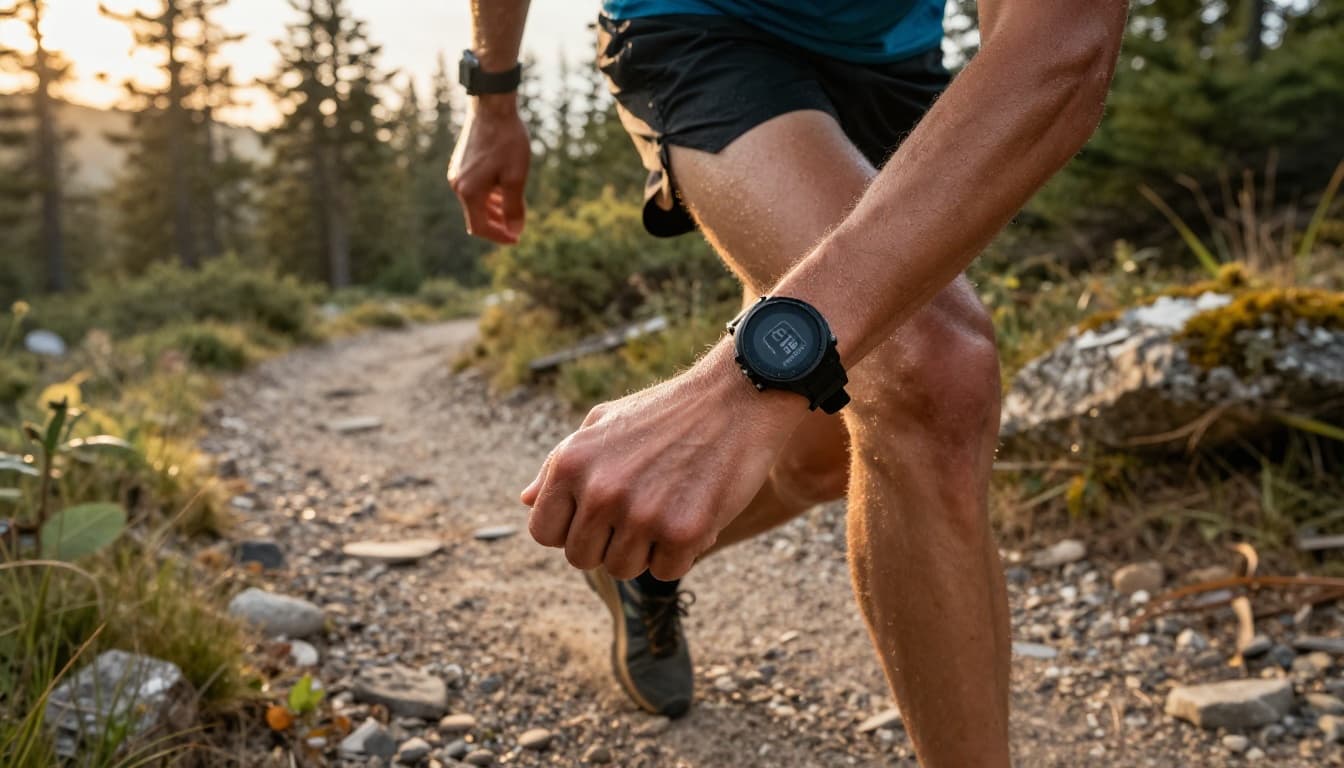
Trail runners need more than basic GPS. Multi-band GPS helps the watch read satellite signals more accurately in forests, canyons, and steep valleys where a phone app often drifts. That matters when a narrow track bends behind a ridge or the route cuts through heavy tree cover.
A barometric altimeter is just as useful. It gives cleaner elevation data than phone-only tracking, so climbs, descents, and total ascent make more sense after the run. On rugged routes, that can mean the difference between a watch that guesses and one that actually tracks what happened. If you want a deeper look at how trail-specific watches handle navigation and accuracy, the best GPS watches for trail running guide is a helpful next step.
Rugged Durability and Comfort for All-Day Wear
Trail watches take hits. Rocks, mud, rain, and sweat all test the case and band, so look for MIL-STD toughness and water resistance up to 100m if you run in rough weather or cross streams often. A durable watch should survive brush, falls, and repeated use without feeling bulky.
Comfort matters just as much. Many of the best models stay under 70g, which helps on long runs when every ounce starts to matter. Breathable nylon or soft silicone bands also help the watch sit steady without trapping sweat. For runners who want a tougher, more mountain-ready option, the Garmin Fenix 8 for trail running is a strong example of that balance.
Offline Maps and Navigation to Explore Confidently
Offline maps are a huge upgrade for trail runners. Preloaded topo maps, breadcrumb trails, and turn-by-turn directions help you stay on course when phone service drops out or the route gets messy. That makes a big difference at trail forks, summit descents, and unfamiliar race courses.
A watch with onboard navigation cuts your dependence on a phone, which saves battery and keeps your hands free. In short, preloaded maps give you a better shot at moving smoothly when the trail stops being obvious. The Fenix 8 trail navigation review shows why map support matters so much on longer adventures.
Our Top Picks: The Best GPS Watches for Trail Running in 2026
The best GPS watch for trail running depends on how far you go, how rough the terrain gets, and how much data you want on your wrist. Some runners want a monster battery for ultras. Others want a lighter watch that still handles maps, music, and daily training without fuss.
The five picks below cover the strongest mix of accuracy, durability, battery life, and value. Each one fits a different kind of trail runner, so you can match the watch to your routes instead of settling for a one-size-fits-all choice.
| Rank | Watch | Best For | Price Range |
|---|---|---|---|
| #1 | Garmin Fenix 8 | Serious ultrarunners | $1,000+ |
| #2 | Coros Vertix 2S | Long remote efforts | Around $700 |
| #3 | Suunto Vertical Titanium Solar | Technical trail days | Around $600 |
| #4 | Garmin Forerunner 965 | Everyday trail runners | Around $600 |
| #5 | Apple Watch Ultra 2 | Casual trail lovers | Around $800 |
Garmin Fenix 8: Top Choice for Serious Trail Runners
The Garmin Fenix 8 is the strongest all-around pick for trail runners who want premium maps, deep training data, and a bright AMOLED display. It feels built for big days, and the 30-plus hour battery life gives you real confidence when a run turns into an ultra.
Its navigation tools are excellent. You get advanced maps, strong route detail, and training metrics that help you judge effort before you blow up on a climb. For runners who train hard and race long, that mix matters more than flashy extras. The Garmin Fenix 8 for full Ironman races also shows how well this watch handles endurance-heavy efforts outside trail running.
The downside is simple, it costs a lot. At $1,000 and up, it sits at the top of the price ladder. Still, if you run ultras, mountain races, or long adventure days, it earns that price more than most watches do.
Key specs:
- AMOLED display
- 30-plus hours of GPS battery life
- Advanced offline maps
- Strong training and recovery metrics
- Price: $1,000+
Best for: ultra runners, mountain racers, and anyone who wants a premium trail watch that does almost everything well.
If you want one watch that can handle hard training and race day, this is the safest bet.
Coros Vertix 2S: Battery King for Remote Trails
The Coros Vertix 2S is the watch to beat if battery life matters most. With up to 140 hours of GPS battery, it is made for long adventures where charging isn’t an option. That makes it a smart choice for remote trails, long races, and multi-day efforts.
It also brings dual-band GPS and a titanium build, so it feels tough without getting overly heavy. At around $700, it costs less than many high-end rivals while still giving you the durability and tracking quality serious runners want. The COROS Vertix 2S battery for ultras is a big reason ultra runners keep talking about it.
The tradeoff is the screen. It is smaller than the Garmin Fenix 8, so map checking and mid-run glances can feel less comfortable. If you care more about endurance than display size, that weakness is easy to live with.
Key specs:
- Up to 140 hours of GPS battery
- Dual-band GPS
- Titanium case
- Price: Around $700
- Smaller display than some rivals
Best for: long-distance trail runners, backpack-style efforts, and runners who want the best battery value.
Suunto Vertical Titanium Solar: Balanced Powerhouse
The Suunto Vertical Titanium Solar hits a nice middle ground. It gives you solar charging, offline maps, and a sturdy build that feels ready for rough trails. For runners who spend a lot of time on technical routes, that combination is hard to ignore.
Its maps work well for planning and course corrections, and the solar support helps stretch battery life when you train or race in the sun. At about $600, it lands in a more approachable price range than the most premium models, which makes it easier to justify for serious trail use. If you want more detail on how it stacks up in the field, the Suunto Vertical Titanium Solar Watch Review is worth a look.
The weak spot is the app. Suunto’s software is less polished than Garmin’s, so the whole experience can feel a bit less smooth. Even so, many trail runners care more about performance than polish.
Key specs:
- Solar charging
- Offline maps
- Titanium case
- Price: Around $600
- Strong for technical terrain
Best for: runners who want dependable navigation, long battery support, and a rugged watch without paying Garmin Fenix money.
Garmin Forerunner 965: Best Value for Everyday Trails
The Garmin Forerunner 965 is the best value pick for runners who spend time on trails but do most of their training on mixed terrain. It has a bright screen, music storage, and a 23-hour battery, which is enough for most trail runs and many races.
It gives you a lot of Garmin’s best running tools without the heavier build of the Fenix line. That makes it a smart option if you want solid maps, training data, and daily comfort in one watch. It also works well for runners who split time between road and trail, because it feels lighter and less bulky than rugged adventure watches. The Garmin Forerunner 970 running tunes guide is useful if music matters to you on the trail.
Its main weakness is toughness. The Forerunner 965 is less rugged than the Fenix 8, so it does not feel as armored for rock strikes, hard falls, or years of abuse.
Key specs:
- Bright AMOLED display
- Music storage
- Up to 23 hours of GPS battery
- Price: Around $600
- Lighter, less rugged build
Best for: everyday runners, half-marathon to marathon trail racers, and anyone who wants premium features without paying for the toughest shell.
Apple Watch Ultra 2: Smart Option for Casual Trail Lovers
The Apple Watch Ultra 2 is a good pick if you want trail features and strong smart-watch skills in one device. Its Action button, loud siren, and deep Apple ecosystem support make it easy to use, especially if you already live with an iPhone.
For casual trail runners, it feels fun and capable. The screen is bright, the controls are simple, and the watch handles day-to-day life better than most sport watches. It also works well for phone-free runs, which many runners appreciate on short to medium trail outings. If that fits your routine, the Apple Watch Ultra 3 for phone-free runs gives a clear idea of the Apple-style experience.
Battery life is the main drawback. It does not match the endurance of Garmin, Coros, or Suunto watches, so it is a weaker choice for ultras and long mountain days. At around $800, it makes the most sense for Apple users who want convenience first and trail power second.
Key specs:
- Action button
- Loud siren
- Strong Apple integration
- Price: Around $800
- Shorter battery than top trail watches
Best for: Apple users, shorter trail runs, and runners who want a smart watch that can also handle the dirt.
How to Choose the Right GPS Watch for Your Trail Runs
Choosing the best GPS watch for trail running gets easier when you match the watch to the way you actually run. A watch built for short daily loops will feel different from one made for 50K races, long climbs, or remote ridgelines.
Start with your goals, then work outward to comfort and phone support. That keeps you from paying for extras you will never use, while still covering the basics that matter on the trail.
Match the Watch to Your Trail Running Goals and Budget
Your budget should follow your running habits. If you run local trails a few times a week, a watch under $500 can handle the job well. Models in this range usually cover GPS tracking, basic navigation, and enough battery for most daily runs, which makes them a smart fit for newer trail runners or anyone who wants simple value. See budget-friendly GPS watches for trail runners for a solid starting point.
A $500 to $800 watch fits runners who want stronger maps, better accuracy, and longer battery life. This is the sweet spot for many trail athletes because it supports marathon training, mountain routes, and longer weekend outings without pushing into full premium pricing.
Premium watches make sense for ultras, race travel, and runners who spend hours off-grid. If you chase long distances or rough terrain, the extra cost usually buys better battery life, stronger build quality, and deeper navigation tools. For trail runners who want a more rugged option, the Garmin Fenix 7 trail running review is a useful comparison point.
Test Fit, Comfort, and Daily Wear Before Buying
Fit matters more than many runners expect. A watch that feels fine for ten minutes can rub, slide, or feel heavy after two hours on the trail. If possible, try it on in store, move your wrist through a normal arm swing, and check whether the case digs into your wrist bone.
Band choice matters too. Silicone feels easy to clean, while nylon often sits lighter and more secure on long runs. Also check the screen outdoors, because a display that looks sharp inside can wash out fast in bright sun.
Check Compatibility with Your Phone and Apps
Your watch should work with the phone you already use. iPhone users should confirm smooth iOS support, while Android runners should check app stability and sync speed. Ecosystem matters because it affects setup, software updates, and how easily your data moves.
If you log workouts in Strava, make sure the watch syncs cleanly with it. That saves time and keeps your trail runs in one place. A watch with poor app support can feel clumsy fast, even if the hardware is strong. For a broader look at trail-ready app support, the best GPS running watches of 2026 roundup helps compare ecosystems side by side.
Tips to Make Your Trail GPS Watch Last and Perform Best
A great trail watch does more than record miles. With the right setup and care, it holds a signal better, lasts longer on long runs, and stays useful season after season. Small habits add up fast, especially when mud, sweat, and long battery demands hit the same watch.
Quick Setup and Training Features to Use Right Away
Start by setting up the features that help you on the trail, not the ones that just look nice. Custom workouts are a smart place to begin, since they let you build hill repeats, long-run blocks, and recovery runs around your real training plan. If your watch offers VO2 max estimates and recovery guidance, turn them on early so the watch can learn from your runs.
That data can help you avoid chasing every hard effort. A high VO2 max score looks nice, but recovery tells you when your legs are ready for the next climb. For trail runners, that matters because steep terrain can hide fatigue until it hits hard.
Try this before your next outing:
- Load one custom workout for hills.
- Turn on recovery or training readiness features.
- Set your data screen to show only the stats you use most.
- Test the route on a short run before race day.
If you want a deeper look at battery-friendly setup, Garmin’s battery life tips for the Forerunner 255 are worth a look.
A clean setup saves more battery than most runners expect.
Maintenance Habits That Extend Battery and Life
Trail grime wears on a watch faster than most people think. After muddy runs, wipe the band and case with a soft cloth, then rinse sweat or salt off the skin-contact areas. Dirt trapped under the band can irritate your wrist and shorten band life.
Software updates matter too. They often fix GPS bugs, improve sensor accuracy, and patch battery drain problems. Check for updates every few weeks, especially before race season or travel.
Storage also makes a difference. If you will not use the watch for a while, store it with a partial charge in a cool, dry place. Don’t leave it baking in a hot car or tossed in a damp gear bag.
A few simple habits keep your watch ready for the next run, the next climb, and the next long day on the trail.
Conclusion
For most trail runners, the Garmin Fenix 8 is the best GPS watch for trail running because it brings together strong battery life, clear maps, and dependable tracking in one package. It fits the runner who wants fewer worries on long climbs, rough descents, and race day miles.
The Coros Vertix 2S and Suunto Vertical Titanium Solar are strong picks too, especially if battery life or rugged navigation matters more than anything else. If you want a lighter daily option, the Coros Pace 4 GPS watch for trail running is worth a look as well.
Before you buy, check current deals, because prices on trail watches can change fast. Pick the watch that matches your routes, your budget, and how far you really run. That choice will help you stay safer, train smarter, and enjoy more confident miles on the trail.