

Baltimore Marathon Results Guide
Crossing the finish line is a huge moment, but the race often isn’t over in your mind. You may already be refreshing your phone, waiting to see your official Baltimore Marathon results and confirm how the race went.
Runners, families, and fans may be searching for an official finish time, overall place, age-group ranking, award status, or detailed splits. You might also want to compare this year’s performance with a past Baltimore Marathon or use the numbers to plan your next race. The first results posting can change if race officials review timing data, course records, or finish-line information, so a result marked unofficial may not be final.
This guide shows where to find trusted Baltimore Marathon results, how to read each part of a result listing, and what can delay an official time. You’ll also learn how to turn your pace, splits, and rankings into practical goals for your next training cycle. Loking for the best hotels near the Baltimore Marathon? Make sure you reserve early to save money.
Key Takeaways
- Find current Baltimore Running Festival results by searching your name, bib number, or event.
- Check whether your finish time is unofficial or official before celebrating a personal best.
- Review gun time, chip time, pace, overall place, gender ranking, and age-group position.
- Use past Baltimore race results to compare performances across different years.
- Examine course splits to spot pacing changes and choose a focused goal for your next marathon.
Where to Find the Official Baltimore Marathon Results
The most reliable Baltimore Marathon results come from the race’s official channels, not a screenshot shared online. Start with the Baltimore Running Festival website, then follow its results links to the event’s timing partner or registration platform. The marathon, half marathon, 10K, 5K, and other festival races may appear on separate result pages, so select the correct distance and year before searching.
Build Your Running Performance System
Move from research to action with training, recovery, nutrition, pacing, and performance tools built for runners.
More Guides for This Runner Goal
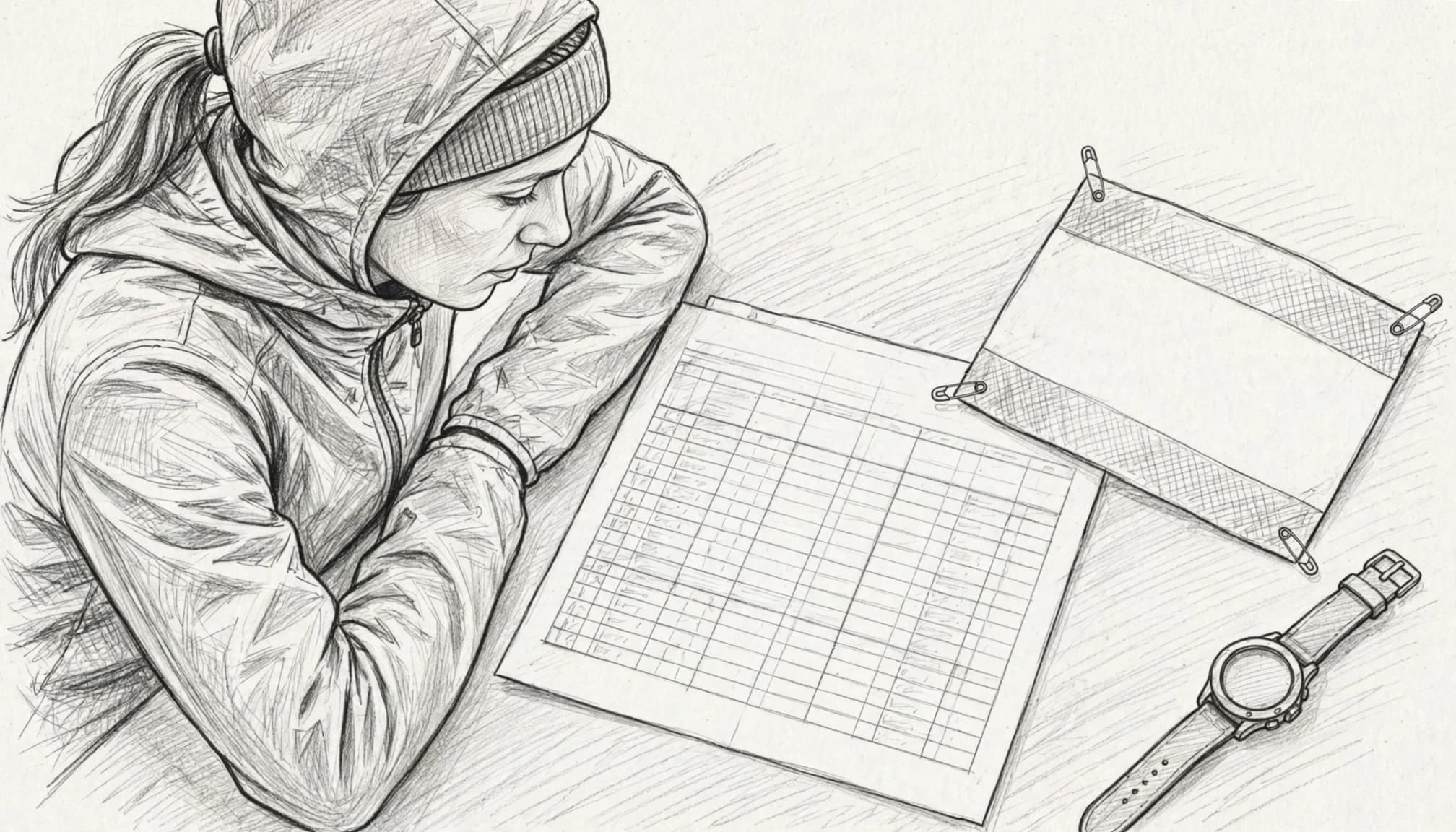
When Are Race Results Usually Posted?
Live timing may appear during the race as runners cross timing mats. These updates can show an estimated position, split, or finish time, but they are not always final. A timing page may also display an athlete’s progress before the runner reaches the finish line.
Soon after the race, organizers usually post preliminary finish results. These listings help runners find an early time, place, and pace. However, a preliminary result can change while officials review the timing data.
Large races may need to investigate missed timing mats, duplicate bib scans, course issues, or congestion near the finish line. Volunteers and timing systems can record several runners within seconds, which sometimes requires a manual review. A runner may also appear under the wrong event if a bib was transferred or scanned incorrectly.
Certified or corrected results may arrive later, depending on the year, race distance, and timing process. For that reason, don’t treat a live update or early listing as final proof of an official result. Check the status shown on the results page, and revisit the official race channels if your time looks incomplete or incorrect.
A missing result does not always mean you didn’t register a finish. Timing data may still be under review or attached to another event listing.
The exact posting schedule varies. A major marathon can publish early results at a different pace than the 10K or half marathon, so avoid relying on a fixed number of hours.
How to Search by Bib Number, Name, or Finish Time
Have a few details ready before opening the results page:
- Your bib number, if you still have it available.
- The name used during registration.
- Your registration email or confirmation details.
- Your race distance and the event year.
- An estimated finish time, especially if the name search fails.
The official race results page often lets you search by name or bib number. Bib number is usually the fastest method because it avoids problems with spelling, shortened names, hyphenated surnames, or registration privacy settings. Enter the number carefully, then confirm that the listed distance matches the race you completed.
If you search by name, try the spelling used on your registration rather than a nickname. Some platforms hide or limit personal information, and a runner may be listed under a registration name that differs from the name used socially.
Next, check the gender, age-group, overall place, gun time, chip time, and split fields. If you find the correct listing, save the page as a PDF, print it, or take a screenshot for your records. You can also compare it with the event’s past race results.
Social media posts, shared screenshots, live-tracking links, and third-party race databases can help you locate clues, but they should not replace the official listing. When a result page loads slowly or disappears temporarily, return to the race website’s official channels rather than trusting an unverified result.
How to Read Your Baltimore Marathon Results
Your Baltimore Marathon results contain more than one finish time. They show how long you took, where you placed, how steadily you ran, and where your pace changed across the course. Read each field together rather than judging the race by one number.
Gun Time Versus Chip Time, Explained Simply
Gun time starts when the race director gives the official starting signal. It ends when you cross the finish line. Everyone in the field receives a gun time based on the same start, whether they stand near the front or wait several minutes behind a crowded starting group.
Chip time, also called net time, starts when you cross the starting timing mat. It ends when you cross the finish mat. If thousands of runners begin together, you may spend several minutes moving toward the start line after the gun fires. Your chip time removes that delay.
For example, imagine that the Baltimore Marathon starts at 8:00 a.m. You cross the starting mat at 8:06 and finish at 12:06. Your gun time is 4:06, while your chip time is 4:00. The six-minute gap doesn’t mean the results are wrong. It shows when your race actually began under the timing system.
Most runners use chip time for personal performance because it measures the time spent running the course. It is usually the fairest number for comparing your effort with a previous race, especially when you start far back in the field. However, official awards may use gun time, particularly when runners finish close together.
Qualifying rules can also differ. The Boston Athletic Association states that qualifying times use official submitted net time, or chip time, but another race or governing body may apply a different standard. Check the race rules and the requirements for the event you want to enter before assuming one timing method applies everywhere.
Choose Your Distance, Duration and Goal Time
Make three quick selections and open the exact plan built for your race target.
Looking for a Fully Personalized Training Plan?
The training plans above are an excellent choice if they match your goal. However, if you’d rather train with a plan built specifically around your current fitness, goal race, preferred training days, weekly mileage, and target finish time, our RDA Custom Training Plans provide a personalized solution. We also have running courses available for runners seeking to run faster from the mile to the marathon.
Why Choose a Custom Training Plan?
| Standard Training Plan | RDA Custom Training Plan |
|---|---|
| Follows a fixed schedule | Built around your schedule |
| Standard weekly mileage | Peak mileage customized for you |
| Fixed workout days | Train on the days you choose |
| Same structure for everyone | Designed around your current fitness |
| Static plan | Updated as your fitness improves |
| One-time purchase | Ongoing personalized coaching and support |
What You’ll Receive
- A training plan built specifically for your goal
- Personalized training paces
- Long runs, tempo runs, threshold workouts, interval sessions, recovery runs, and easy runs
- Peak weekly mileage matched to your experience level
- Flexible training schedule that fits your life
- Ongoing plan adjustments as your fitness improves
Ready to Train Smarter?
Stop guessing and start following a plan built specifically for you, your schedule, and your racing goals.
What Splits and Pace Reveal About Your Race
Splits divide your marathon into checkpoints, such as 10K, halfway, 20 miles, and the finish. Compare those figures to see whether your pace stayed controlled or changed as fatigue set in.
An even-paced race has similar pace across the opening and closing portions. A positive split occurs when the second half is slower than the first. If your halfway split was 1:55 and your finish was 4:10, the second half took 2:15. That difference may point to an aggressive opening pace, missed fueling, heat, or accumulated fatigue.
A strong finish tells a different story. If your final miles were faster than your middle miles, you may have conserved energy early or responded well to fueling. That information can guide your next training block:
- Practice holding marathon goal pace after an easy opening.
- Improve fueling before the point where your pace usually fades.
- Add controlled long-run finishes to prepare for late-race effort.
- Review whether your opening miles were faster than your planned pace.
Your results page may also show average pace, but confirm whether it uses gun time or chip time. A runner with a four-minute start delay can have a noticeably slower gun-time pace than chip-time pace. Use the same timing method when comparing races, personal records, or training goals.
Finally, review your overall place, gender place, and age-group place alongside the splits. A late slowdown may affect your ranking more than your finish time alone reveals. When you save your Baltimore Marathon results, keep the full breakdown so your next training decision rests on evidence rather than memory.
What to Do If Your Baltimore Marathon Time Is Missing or Wrong
A missing or incorrect Baltimore Marathon result can feel alarming, especially when you know you crossed the finish line. Before assuming the race record is lost, check the event, year, distance, spelling, and result status. Many apparent errors come from a wrong search setting or timing data that officials have not finished reviewing.
Missing Timing Data Does Not Always Mean You Did Not Finish
A runner can finish the marathon even if one timing mat fails to record a split. Bibs can also go unscanned in crowded areas, especially when runners move close together through an aid station, detour, or finish chute. In other cases, the timing chip may not read correctly, or your result may appear under the wrong event because you selected the half marathon, 10K, or a different race year.
Start by checking the official results page with your bib number, registration name, distance, and approximate finish time. If you used a nickname, shortened name, or a different spelling during registration, search with the exact information from your race confirmation email.
Timing teams can compare several forms of evidence before correcting a record, including:
- The scan from the starting mat and the finish-line scan.
- Timing records from other course checkpoints.
- Course photographs and finish-line images.
- GPS data, race video, and race staff reports.
- Bib assignments, registration records, and nearby runner scans.
Wait for the results page to update before filing a question if the race has only recently ended. A live tracker or social media screenshot may show incomplete information, so don’t treat one unofficial listing as the final answer. Race organizers commonly use correction forms for missing or inaccurate results. For example, NYRR’s results correction guidance asks runners to report missing information through the official correction process rather than relying on public comments.
Before contacting race support, gather your bib photo, GPS file, finish-line photo, race email, and approximate time of day when you crossed the line. These details give the timing team a clearer trail to follow.
How Corrections, Disqualifications, and Course Issues Affect Rankings
Your first Baltimore Marathon results listing may be marked unofficial. That label means officials can still review timing errors, duplicate records, course cutting, wrong turns, bib transfers, or other rule concerns. An unofficial time is not the same as a final certified result.
Rankings may shift when the race removes a duplicate entry, assigns a missing scan, corrects a finish time, or disqualifies a runner. A course detour or congestion near an aid station can also create unusual split patterns that require manual review. Read the race rules and any correction notices before sharing a result publicly or using it for a qualifying application.
Use the official inquiry or correction form when one is available, and keep your message factual. Include:
- Your full registration name and bib number.
- The event distance and race year.
- Your expected finish time and approximate crossing time.
- The problem, such as a missing finish, incorrect chip time, or wrong age group.
- Links or attachments for your GPS file, bib photo, race email, or finish photo.
A clear request might say:
My name is [full name], bib number [number], and I ran the Baltimore Marathon in [year]. My finish is missing or shows an incorrect time of [listed time]. I crossed the finish line at approximately [time]. I have attached my bib photo, GPS file, and finish-line photo for review.
After submitting the form, save the confirmation and monitor the official results page. Wait for the race’s final update before treating the corrected time as certified.
Using Baltimore Marathon Results to Measure Your Next Goal
Your Baltimore Marathon results are more useful when you treat them as a performance record, not just a finish-time lookup. The time tells you what happened, while your splits, effort, fueling, and race conditions help explain why.
Review the race in sections, then choose one manageable adjustment. A beginner may celebrate finishing 26.2 miles while improving hydration next time. An experienced runner may use a late-race slowdown to set a more realistic pace target.
Turn Your Finish Data Into a Better Training Plan
Start by dividing the race into three checkpoints: the first 10K, the middle miles, and the final 10K. Each section answers a different question.
During the first 10K, did you settle into your planned pace, or did excitement pull you ahead? A fast opening followed by a large slowdown often points to pacing, fueling, or both. Your next training cycle could include easier first miles, marathon-pace practice, and long runs with nutrition taken on schedule.
The middle miles show how well you managed effort. If your pace stayed steady but your effort climbed sharply, review your training volume, long-run distance, sleep, and recovery between hard sessions. You may have had enough speed but lacked the endurance to hold it comfortably.
Finally, study the last 10K. A sharp fade can suggest insufficient fueling, poor hydration, too much early effort, or limited preparation for running while fatigued. A steady pace or strong finish may support a modest goal increase, especially when your recovery was good and the race conditions were demanding.
Write down what happened while you still remember the race:
- Record when you drank, fueled, slowed down, or noticed rising effort.
- Compare your race pace with marathon-pace workouts and long-run finishes.
- Review sleep, illness, soreness, weekly mileage, and recovery during the final month.
- Choose one change that you can practice consistently before the next race.
A personal best after poor sleep or missed fueling may show that your fitness is ahead of your race execution. A slower result after heat, hills, or crowded miles may deserve more context before you lower your goal.
Compare Results Fairly Across Baltimore Race Distances
A marathon time cannot be compared directly with a half marathon, 10K, or relay result. Each event creates a different pacing problem, and relay runners may cover only one segment of the course.
Course layout matters as well. Baltimore’s hills, turns, crowd support, aid stations, and road conditions can affect pace even when your effort remains controlled. Weather also changes the meaning of a finish time. Heat, humidity, wind, rain, and cold can alter hydration needs and make a planned pace feel harder. USA Track & Field’s marathon guidance also recommends adapting pacing to elevation gain and loss.
For a fair comparison, review these measures together:
- Compare pace and effort, using chip time and your perceived exertion rather than finish time alone.
- Check your age-group and overall placement against the size and strength of that year’s field.
- Note weather, hills, turns, start-line delays, crowding, and any course changes.
- Compare results across years only when the course layout and race conditions were reasonably similar.
A slower Baltimore Marathon can still be your stronger performance if you managed difficult weather, held a steady effort, and finished well. Conversely, a faster time on a cooler, less crowded course may not prove that your fitness improved by the same margin.
Use the result to set a target you can defend with evidence. Beginners should celebrate completion, then select one practical improvement. Experienced runners can combine consistent splits, strong recovery, and favorable conditions to test a small pace increase rather than making a dramatic jump.
Frequently Asked Questions
Baltimore Marathon results can answer more than one question at the finish line. Use the official listing to confirm your event, year, timing method, ranking, and any later corrections before saving the result as a permanent race record.
Are Baltimore Marathon results available for every race in the Baltimore Running Festival?
Yes, but each distance may use its own result list, tab, or filter. The marathon, half marathon, 10K, 5K, relay, and other Baltimore Running Festival events can appear separately on the official Baltimore results page, even when they share one event website.
Before trusting a listing, confirm both the race name and year. A runner with the same name may appear in several distances or multiple annual editions, and the time will only be meaningful when it matches the event you completed.
Can I find a Baltimore Marathon result without my bib number?
Most race-result systems allow you to search by the name used during registration. However, spelling differences, hyphenated surnames, privacy settings, nickname use, and incomplete registration details can prevent a match.
Try the exact name shown in your confirmation email, then check nearby result filters for the correct distance and year. If the search still fails, review your registration email, race photos, or finish-line images, and contact official race support with your approximate finish time and event details.
The timing partner may also provide a correction or support option. For recent events, SVETiming’s race results platform can help you search the event and submit a question about an incomplete record.
Which Baltimore Marathon time counts as my personal record?
Runners typically use their chip time, also called net time, as their personal performance because it measures the period between crossing the start and finish mats. This approach is especially useful when you begin several minutes behind the starting line.
Still, race rules can define official rankings, awards, or qualifying standards differently. Save both your gun time and chip time, then check the rules for the race or qualifying program connected to your goal before reporting the result.
Why did my finish time change after race day?
Preliminary Baltimore Marathon results can change after officials review timing records, course checks, duplicate entries, or possible rule violations. A missed scan may be added, a duplicate finish may be removed, or a disqualification decision may alter the rankings.
Timing teams can also correct an incorrect event assignment or update a split after comparing mat data with finish photos and other records. Use the final official listing when you document a personal record, submit a qualifying time, apply for an award, or share your ranking.
How can I use my Baltimore Marathon results to set a new goal?
Start with your splits rather than your finish time alone. Compare your opening 10K, halfway point, and final 10K, then review pacing, weather, hills, fueling, hydration, and how your legs felt late in the race.
A major slowdown may call for better nutrition or more controlled pacing, while a steady finish may support a modest goal increase. Choose an adjustment that your training evidence supports instead of selecting an aggressive target from one finish-time number. Your best next goal should fit the pattern shown by the race, not just the ambition you felt after crossing the line.
Conclusion
Your Baltimore Marathon results are more than a finish time. Start with the official race source, confirm the correct distance and year, then review your chip time, pace, splits, and rankings together. If something looks wrong or missing, use the race organizer’s official correction process and provide clear supporting details.
The result is both a record of what happened and a guide to what comes next. Use it to adjust your pacing, fueling, recovery, or training goals with purpose. Whether you finished your first marathon, missed your target, earned a personal best, or are still preparing for the starting line, every race record gives you useful information for the next step.


