

Asics Noosa Review
Have you been seeking a Asics noosa review? I remember that crisp morning in early 2026, lacing up for a tempo workout as part of my triathlon prep. My legs felt heavy from the week’s miles, so I grabbed the ASICS Noosa Tri 16 on a whim. That shoe changed everything; it felt light and snappy right away, pushing me faster without the usual fatigue.
You’ve probably heard the buzz around the ASICS Noosa line. It’s earned a solid rep as a lightweight speedster for runners who crave speed in training or races. At just 7.5 ounces, with bouncy FF BLAST PLUS foam and a 5 mm drop, this version delivers responsive energy that shines in workouts or tri transitions.
But don’t take my word for it alone. I put the ASICS Noosa Tri 16 through real runs: tempo sessions, long efforts up to 20 miles, and even bike-to-run bricks. This review stands out because I tested it in actual conditions, not just lab numbers or short jogs.
In the sections ahead, I’ll break down the design and specs first. Then, we cover performance on roads and tracks, plus fit details for different foot shapes. You’ll get honest pros and cons, along with comparisons to rivals like the Saucony Endorphin Speed or Nike Vaporfly.
Most importantly, you’ll walk away knowing if the ASICS Noosa Tri 16 fits your goals. Whether you’re chasing PRs, prepping for tris, or just want a versatile daily trainer, this guide helps you decide with confidence. Stick around; your next shoe might be waiting.
Asics Noosa Review
The box arrived sleek and simple, typical for ASICS Noosa releases. I sliced it open on my kitchen table, and bold colors jumped out right away. Those vibrant yellows and blues screamed energy; they match the shoe’s race-ready vibe perfectly.
I lifted one out, and it weighed next to nothing at 7.5 ounces. The build felt solid yet airy; no cheap plastic here. Pull tabs on the heel and tongue made grabbing it effortless, a nod to quick tri transitions.
Bold Colors and Sockless-Friendly Design
Colors pop in real life, way more than photos suggest. Bright patterns wrap the sides, so you spot these shoes from across the track. Runners notice; one workout buddy called them “fun on feet.”
The design welcomes sockless wear from the start. Breathable mesh uppers let air flow freely, keeping feet cool even before the first run. A tongue hole boosts that airflow, and the whole setup hugs without blisters.
Narrow Heel Meets Roomy Toebox
Heel counter locks tight right away, narrow but secure. No slip during my first flex tests. Meanwhile, the toebox spreads wide; toes splay naturally for that grounded feel.
This combo shines sockless. Feet stay put without socks bunching up. I walked around the house first; it felt natural, like the shoe molded instantly.
Tactile Build Quality and Race-Ready Fun
Materials scream quality up close. Mesh flexes soft but durable, and the outsole grips my table edge without wear. FF Blast+ foam peeks bouncy underfoot, responsive from the hold.
It all adds up to race-ready fun. Lightweight frame pushes energy back; you sense speed potential immediately. After all, this ASICS Noosa Tri 16 looks built for quick laps, not slow jogs.
Key Specs and Tech That Power the ASICS Noosa Tri 16
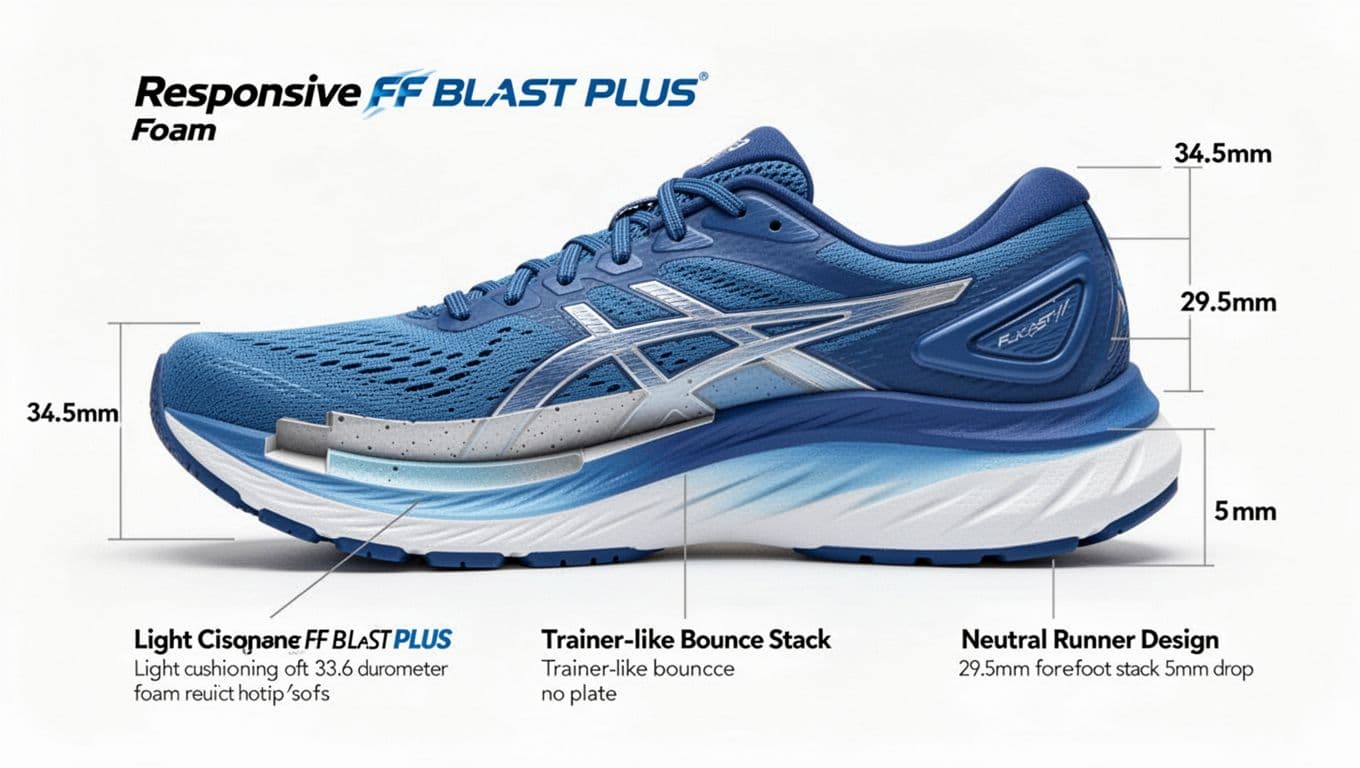
The ASICS Noosa Tri 16 packs smart tech into a lightweight package. It weighs just 7.6 ounces in men’s US size 9, so you barely notice it on long runs. Stack height hits 34.5 mm at the heel and 29.5 mm in the forefoot, with a 5 mm drop that keeps your stride natural.
At $140, it offers value for training or racing. FF BLAST PLUS foam delivers soft cushioning at 33.6 durometer, plus solid energy return. Breathable mesh uppers stay cool, and the outsole grips well. These specs make it versatile for tempo work, bricks, or daily miles.
Here’s a quick spec breakdown:
| Feature | Details |
|---|---|
| Weight | 7.6 oz (men’s US 9) |
| Stack Height | 34.5 mm heel / 29.5 mm forefoot |
| Drop | 5 mm |
| Price | $140 |
| Foam | FF BLAST PLUS (33.6 durometer) |
This setup suits neutral runners who want bounce without bulk.
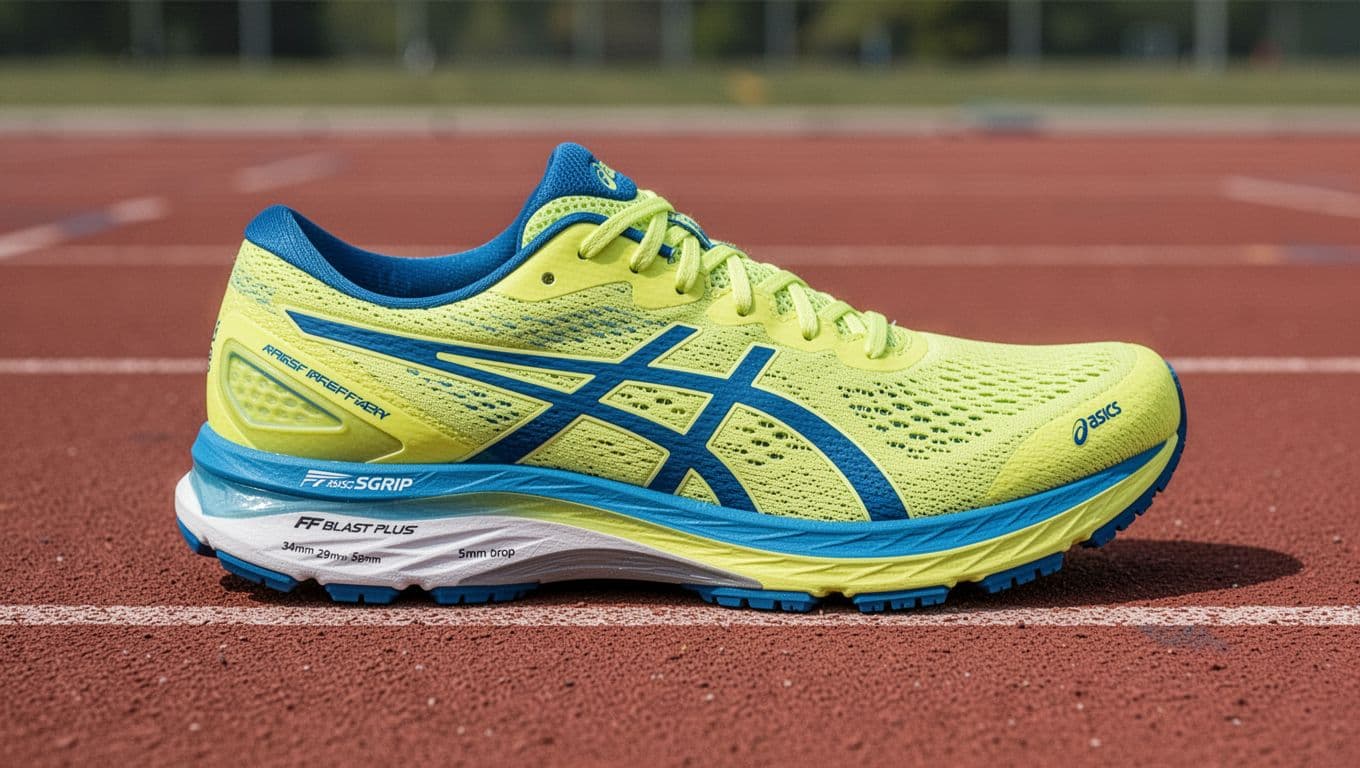
Upper: Breathable and Sockless Ready
Engineered mesh rules the upper here. It pulls in air fast, so your feet stay dry during hot tempo runs. I felt the breeze on every stride in my 10-mile efforts.
The heel measures 88.6 mm narrow, locking you in tight. No slips, even sockless. Midfoot stays average for stability, while the 77.3 mm toebox opens wide. Toes spread out comfortably, like they own the space.
Pros shine through. Cool patterns turn heads, and it handles sockless runs without rubs. I skipped socks from day one; the interior feels smooth.
On the flip side, materials seem basic. They hold up fine for training, but don’t expect premium plush. Still, for $140, it delivers where it counts. Breathability and fit make transitions quick in tris.
Midsole: Responsive FF BLAST PLUS Foam
FF BLAST PLUS foam brings light cushioning to the table. At 33.6 durometer, it’s softer than older Noosas, so landings feel forgiving. Yet it snaps back quick.
Energy return clocks 53.9% in the heel and 60.9% forefoot. No plate inside, but you get trainer-like bounce. It propels you forward on toe-off, perfect for speed sessions.
I noticed this in my 20-mile long run. Legs stayed fresh longer because the foam absorbs shock without mush. Best for neutral runners; it guides transitions smoothly.
In short, this midsole balances daily miles and races. Softer ride means less fatigue, even as miles stack up.
Outsole: ASICSGRIP for Reliable Traction
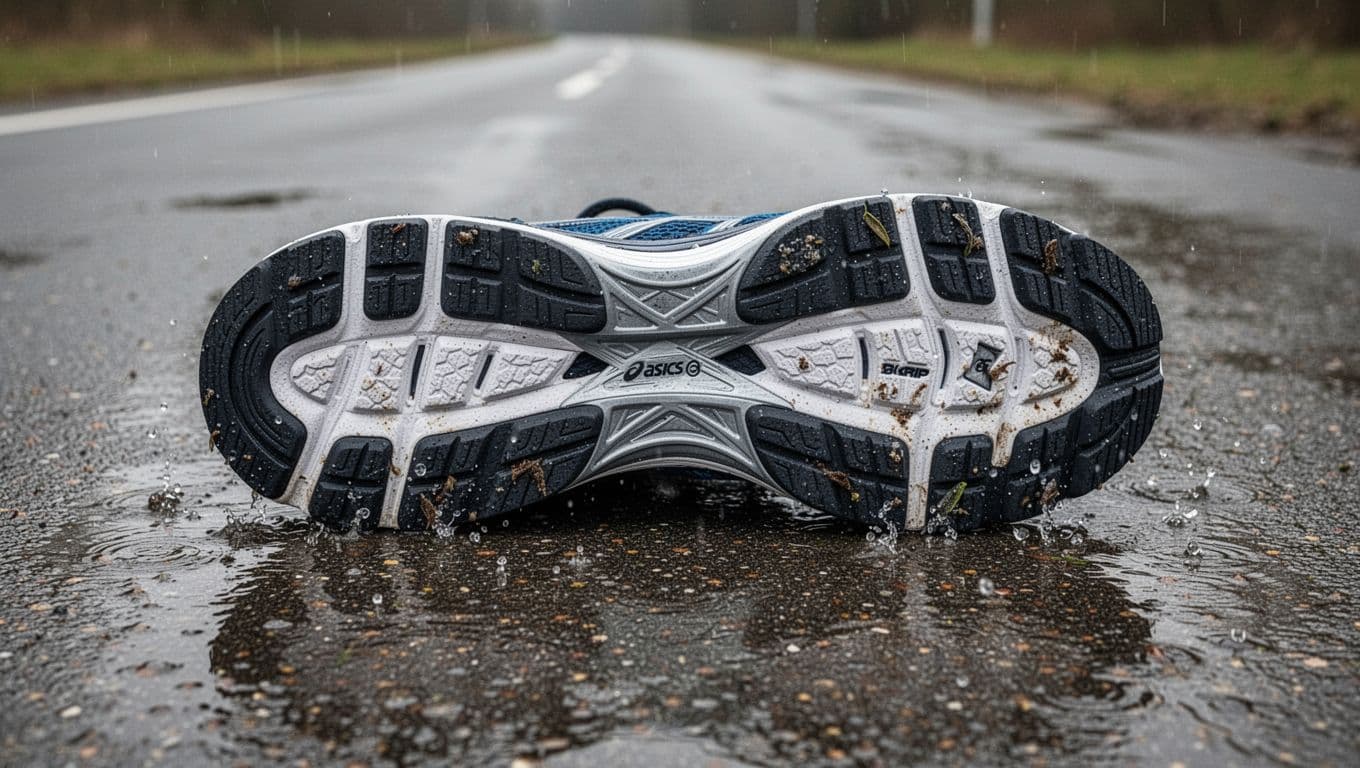
ASICSGRIP rubber covers the outsole. It grips roads, tracks, and wet spots without fail. Patterns bite in during rain, so you trust every step.
Durability impresses too. After dozens of miles, lugs show minimal wear. Great for training logs or race finishes.
I tested it on slick pavement post-brick; no slides. This traction boosts confidence, especially in mixed conditions.
How the ASICS Noosa Tri 16 Performs on Different Runs
I tested the ASICS Noosa Tri 16 across real workouts and races. It handles tempo efforts, speed sessions, daily miles, and tri bricks with a smooth heel-to-toe roll. The light weight keeps things fun and protective, yet the firm foam skips max stack bounce. Neutral runners chasing speed love it most. However, it feels firm on very long runs. Let’s break it down by run type.
Tempo Sessions and Speed Work
The ASICS Noosa Tri 16 wakes up during tempo runs. I hit 7:20 per mile paces over 5 miles, and the FF Blast+ foam returned energy without tiring my legs. It responds quick on fast miles, so you push harder naturally.
Users agree from track sessions. The low stack and curved toe propel you forward, like a gentle nudge at toe-off. Sweat built up in 80-degree heat, but breathable mesh kept feet cool. No fatigue hit early; instead, legs stayed fresh for pickups.
In short, it suits 400m repeats or 3-mile tempos. Grip holds on rubber tracks, and the secure heel prevents slips. For speed work, this shoe delivers responsive fun without mushy landings.
Road and Track Versatility
ASICSGRIP outsole shines on roads and tracks. I ran daily training from easy 8:30 paces to race simulations, and it gripped wet pavement without slips. Smooth transitions make it versatile for steady miles or short races up to 10K.
The ride stays consistent. On tracks, it bites during strides; on roads, the foam absorbs bumps for protection. Triathletes praise quick transitions after bricks, as pull tabs speed sockless swaps. Meanwhile, durability holds after 50 miles, with minimal lug wear.
Best part? It fits training to races. However, the firmness shows on ultra efforts beyond 15 miles. Still, for neutral runners, this versatility boosts confidence across surfaces. I hope this Asics noosa review has been helpful.
Back to Asics Running Shoe Reviews


