

Asics Metaspeed Sky Review
You’ve laced up for race day, but is the hype around super shoes worth the spend? In this Asics Metaspeed Sky review, I break down the latest Sky Tokyo, released in July 2025. It’s a $270 carbon-plated racer built for stride runners who lengthen their steps to hit peak speed. Welcome to RunDreamAchieve. I hope you find this review helpful.
We’ll cover real-world fit, ride feel, speed, stability, durability, and value from my Tokyo rides. This featherlight shoe shines for 5K to marathons if you strike forefoot or midfoot. However, heel strikers might find it tricky, so stick around to see if it fits your style.
Metaspeed Sky Tokyo at a glance: specs that actually matter on race day
You want the quick facts on the Asics Metaspeed Sky Tokyo before race day hits. These specs drive its performance, from featherlight speed to late-mile protection. Runners notice them most during hard efforts, so let’s break down what counts.
Weight, stack height, and drop, explained in plain English
This shoe tips the scales at 5.7 to 5.9 oz for a men’s US 9. That lightness lets you forget your feet exist during fast paces. You push harder because nothing drags you down.
Build Your Complete Race-Day Setup
The right shoe helps, but faster racing comes from better training, pacing, recovery, fueling, and execution.
More Guides for This Shoe
The heel stack measures 39.5 mm, while the forefoot sits at 34.5 mm. High stacks like this absorb impacts over long miles. Your legs stay fresher past 20K, as the foam crushes less harshly under fatigue.
A 5 mm drop keeps things balanced. Some runners feel it nudges them forward, almost like a gentle toe-off boost. Others prefer it neutral. Either way, it suits stride-lengtheners who open up on race day.
The foam setup: FF Turbo Plus plus FF Leap and why it changes the feel
Asics stacks two foams here for a smart ride. The bottom layer uses FF Leap, now lighter and bouncier than before. It softens landings, so your feet hit plush ground first.
Then FF Turbo Plus tops it off, firmer for snap-back energy. Together, they deliver soft cushion plus quick rebound. You notice the trampoline pop underfoot, especially at paces under 4:30 per km.
Runners report it feels explosive yet stable. The combo cuts weight from older models. In short, your strides gain speed without mushy slowdowns.
This setup shines in the Asics Metaspeed Sky review tests. It propels you forward on tired legs, a real edge for 5K to half marathons.
Carbon plate shape and placement: what “higher, flatter plate” does
A full-length carbon plate runs inside, placed higher and flatter than past versions. It sits close to your foot for direct power transfer. You feel it lift your stride upward, smooth and effortless.
That flatter profile opens your gait naturally. Your legs extend farther with less effort, like gliding on rails. Runners say it clicks during surges, keeping momentum alive.
On race day, this helps through the final kilometers. The stiffness pushes back hard, so you maintain form when others fade. No wobble, just consistent forward drive.
Upper and lockdown: Motion Wrap 3.0 fit expectations
Motion Wrap 3.0 uses lightweight mesh for a snug embrace. It locks your foot in place, perfect for high speeds. Breathability keeps things cool as you heat up.
Expect race-day hold from heel to midfoot. However, the narrow toebox grips tight; it suits slim feet best. Wide-footed runners might feel pressure if sizing runs small.
Dial in lacing for the best fit. Those with higher arches or wider forefeet need extra loops upfront. Once set, it stays secure mile after mile
How the Metaspeed Sky feels when you run: cushioning, bounce, and speed
You step into the Asics Metaspeed Sky Tokyo and hit the roads or track. How does it ride from easy warmups to marathon pace and surges? This Asics Metaspeed Sky review pulls from Tokyo runs plus lab data on cushioning, bounce, and speed. The dual foams and plate create a responsive feel that builds with effort. It softens impacts yet snaps back fast, so you hold pace longer
Step-in feel and the first mile: soft, firm, or both?
The FF Leap base foam softens your first steps right away. Landings feel smoother than older Metaspeed Sky models because it absorbs shock better, with lab tests at 147 SA in the heel. Yet it stays responsive, never mushy.
Some reviewers call it firm-riding overall. That firmness helps during races since it avoids energy loss from too-soft collapse. You warm up easy at 5:00 per km, and it nudges you forward without slop. In short, it balances plush entry with race-ready snap from the start.
Energy return and “pop”: what the numbers suggest in real life
Lab tests clock energy return at 78.5% in the heel and 78.2% in the forefoot, well above the 58.6% average. This top-tier bounce translates to real runs as lively pop underfoot.
You roll through marathon pace with less effort, like the shoe shares the work. Surges feel explosive; your legs rebound quicker at goal pace. Late in long efforts, that FF Turbo Plus layer pushes stronger, so fatigue hits slower. Runners notice easier strides overall, especially forefoot strikers.
Stiffness and propulsion: when the plate helps, and when it can feel harsh
The plate scores 21.1 N stiffness in bend tests, 33% more than past Edges. Strong calves and solid mechanics love it at faster paces because it propels you ahead with each step.
However, it demands good form. During slow warmups or recovery jogs, the rigidity can feel harsh on calves. Newer runners might tire quicker below marathon pace. Still, at race speeds, the plate guides your foot into smooth toe-off, boosting efficiency.
Best distances and paces: 5K to marathon, where it shines most
ASICS targets marathons and longer with this shoe’s cushion and bounce. The high stack and rocker keep legs fresh past halfway, ideal for steady efforts.
Yet some testers prefer it for half marathons or shorter. Speed-focused runners thrive because the pop shines in surges, but stability dips on tired legs over full marathons. Your strength matters; stable stride-lengtheners go the distance, while others excel at 5K to 21K. Pick paces under 4:30 per km for the best ride.
Fit and stability: getting the right size and avoiding race-day surprises
Nobody wants blisters or wobbles mid-race. In this Asics Metaspeed Sky review, fit and stability make or break your Tokyo. The narrow race upper and soft heel foam demand smart choices upfront. Runners in Tokyo tests nailed it with test runs first. Let’s break it down so you avoid surprises.
Sizing and shape: who will love the fit and who should be cautious
Narrow feet slip right in and love the grip. Average shapes fit snug too, because the Motion Wrap 3.0 hugs without slack. Wider forefeet squeeze a bit, however; the toebox stays narrow despite good height.
That tight upper feels secure at speed, but it pinches if you skip race socks. Thin ones let toes splay just enough. Wide runners size up half a size, then lace loose upfront.
Try it on with your race socks. Do fast strides around the block. Your feet tell the truth before checkout.
Heel and cornering stability: what reviewers liked, and what they flagged
Reviewers praise forefoot snap, but stability scores lower than speed in expert rundowns. The soft FF Leap foam in the heel wobbles on tired legs. Heel geometry adds lift, yet it tips during sharp leans.
Tokyo riders liked secure lockdown from the heel counter. It holds at steady paces. However, full-speed turns flag issues; the mush feels unstable for heel strikers.
Lock laces tight around the heel. Skip sharp corners at max effort. Test on cambered roads first, so you know your limits.
Comfort over long races: hotspots, tongue pressure, and lockdown checks
Long races test every seam. Heel padding scores perfect in labs, so rubs stay rare. Still, watch for slip as foam softens.
Before your tune-up race, run a checklist on a 20K effort:
- Heel slip: Tug back and forth; add extra eyelets if loose.
- Lace bite: Loosen over the tongue if it digs.
- Toe bang: Ensure room ahead; swap socks if cramped.
- Arch pressure: Adjust midfoot loops for even hold.
Break it in smart. Log 10 to 15K total before race day. Don’t overuse, because the foams compress over time. Your feet stay happy through the finish.
Metaspeed Sky Tokyo vs Metaspeed Edge Tokyo: pick the right one for your running style
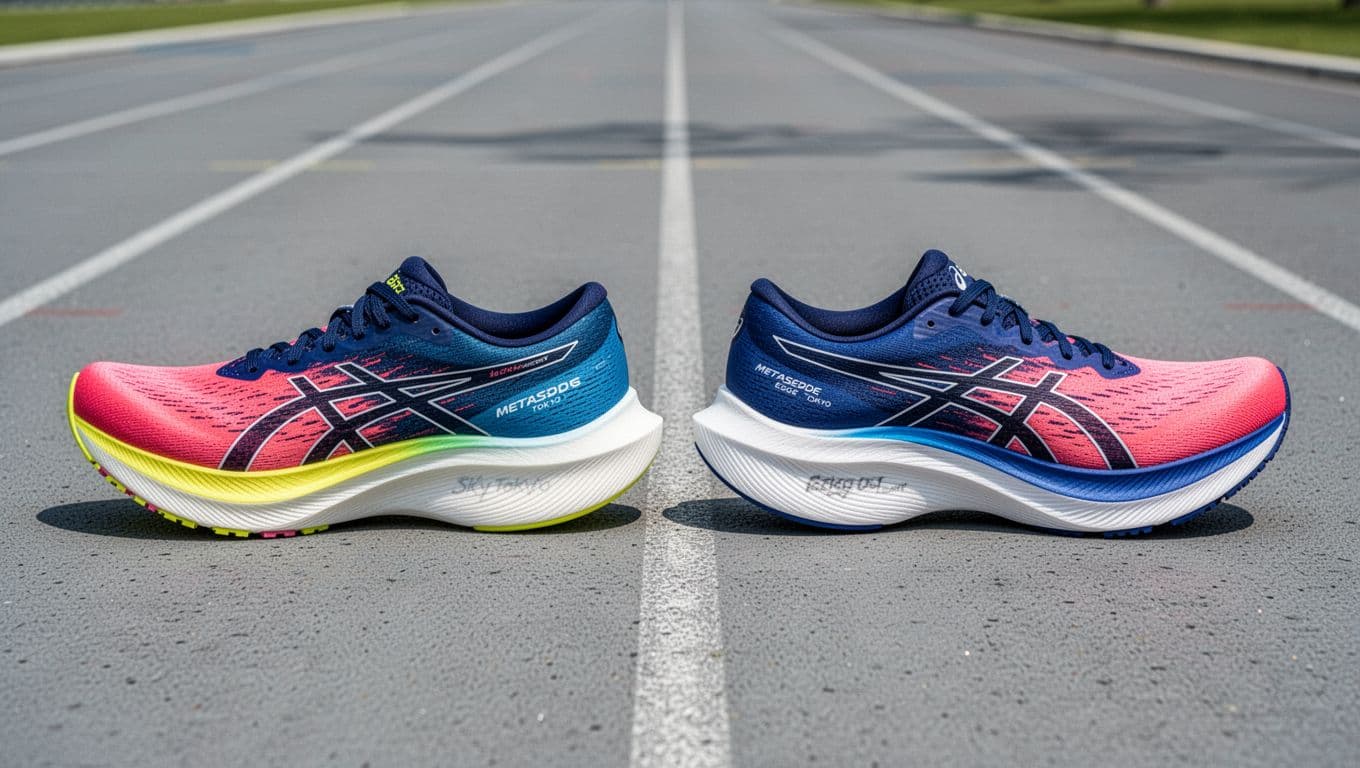
Both the Metaspeed Sky Tokyo and Edge Tokyo share the same light weight, stack height, and foams. However, they flip the foam order and tweak the carbon plate. These changes create big ride differences. Stride runners love the Sky’s vertical bounce for longer steps. Cadence runners prefer the Edge’s forward roll for quick feet. In this Asics Metaspeed Sky review, pick the match for your style and race smarter.
A quick self-test: are you more stride-based or cadence-based?
Figure out your style fast with these signs from workouts. First, notice how you speed up. Stride runners lengthen steps and drive from the hips. Cadence runners take shorter, quicker steps with faster feet.
Here are simple checks to spot your type:
- Speed-up habit: Do you open your stride wide during intervals, or pump your legs faster for the same kick?
- Cadence shift: Does your step rate jump over 185 spm at top speed, or stay around 170-180 with bigger reaches?
- Effort spot: Feel pull in your hips and glutes, or burn in calves from rapid turnover?
- Past shoe wins: Loved bouncy Nike Alphaflys or Saucony Endorphins for pop? That’s stride. Excelled in Hokas or Adidas Adios Pros for smooth roll? Go cadence.
- Footstrike: Land forefoot or midfoot often? Lean stride. Heel first most times? Cadence fits better.
Most runners fit one side clearly. However, midfoot strikers sometimes overlap.
What’s different underfoot: foam layers and plate geometry in Sky vs Edge
The foams swap places between models. Sky puts soft FF Leap on the bottom for plush landings. Firmer FF Turbo Plus sits above it. This setup plus a flatter, higher carbon plate gives vertical push. You get longer strides with peppy toe-off, perfect for stride types.
Edge reverses it. FF Turbo Plus forms the firm bottom base. Softer FF Leap tops for quick forefoot feel. A curved, lower plate adds forward roll. Cadence runners roll heel to toe smoothly, with stable support.
Both feel light and bouncy overall. Yet Sky bounces up for extension. Edge propels ahead for turnover. Runners notice Sky wobbles more at heels. Edge grips turns better.
Which one to buy for your next race (simple decision guide)
Match your test results to these picks. Stride types grab the Sky Tokyo for flats or steady marathons at 3:30-4:30 per km. Cadence folks choose Edge Tokyo for rolling courses or races with turns at similar paces.
| Runner Type | Best Shoe | Pace Range | Course Fit |
|---|---|---|---|
| Stride (long steps, forefoot/midfoot) | Sky Tokyo | Under 4:30/km | Flat straights, marathons |
| Cadence (quick feet, heel strike) | Edge Tokyo | Under 4:30/km | Rolling hills, twisty 10Ks |
| Mixed or unsure | Test both | Any race pace | All distances |
Sky excels on open roads because its bounce suits surges. Edge shines in varied terrain; the rocker handles ups and downs plus leans. Between the two? Run 6 to 10 x 20-second strides in each. Your legs pick the winner fast.
Value, durability, and how it stacks up to other top carbon racers
The Asics Metaspeed Sky Tokyo costs $270. That price tag raises eyebrows, but it delivers top lightness and bounce for serious racers. In this Asics Metaspeed Sky review, we weigh if it pays off long-term, how long it lasts, and where it fits among rivals. Frequent PR chasers get the most from it, while casual runners might look elsewhere.
Is the $270 price worth it? Who gets the most value
You race a handful of goal events each year. Then this shoe shines because its 78.5% energy return saves seconds per kilometer. Frequent racers, say three to five big efforts annually, squeeze max value from the light weight and propulsion.
PR hunters love it most. The foams and plate help you lengthen strides during surges, so you hit new times in 5Ks to marathons. However, if you race once a year, the cost stings more.
Consider opportunity cost too. One super shoe equals a solid trainer plus a basic racer. That combo covers daily miles and workouts, while the Sky sits for race days only. Serious athletes pick the Sky for its edge; others build a versatile rotation first.
Durability expectations for a super shoe: outsole grip and foam life
Super shoes like this prioritize speed over endless miles. Expect 100 to 150 miles of sharp performance before changes set in, far less than trainers that handle 300 plus. Rotate it with daily shoes to stretch life; save it for hard sessions and races.
Watch these wear signs closely. Loss of pop means the foams compress and rebound slows. Outsole smoothing erases grip on wet roads. Upper tears near the heel signal it’s done.
The ASICSGRIP outsole resists wear well. Forefoot and heel lugs stay intact longer than average racers. Still, heel strikers see faster breakdown because they stress the rear more.
How it compares in feel to today’s “super shoes” (without hype)
This shoe stands out as one of the lightest at 5.6 to 5.7 ounces. High energy return gives strong bounce, while the plate drives propulsion for longer strides. It feels slightly less stable than wider-based options, especially in heels.
Start with fit and stability when comparing. Narrow feet lock in best here; test that first against roomier rivals. Then chase ride feel: its vertical lift suits stride extenders over quick-turnover types.
Rivals offer smooth rolls or max cushion. This one bounces upward with peppy snap. Forefoot strikers match its energy best, but check your needs before buying.
Who should skip it: common reasons this shoe might not work for you
Stability seekers pass. Its neutral setup wobbles on turns or tired legs; pick a wider racer instead.
Stiff plates bother some. If rigidity strains calves during warmups, try a plated trainer with softer flex.
Easy-pace runners waste money here. The firm ride drags below marathon effort; grab a lightweight non-plated option.
Roomy uppers appeal to wide feet. This narrow toebox pinches; size up or choose generous fits.
Low-drop shoes tweak Achilles or calves for sensitive runners. The 5 mm drop works for most, but if you need more, select higher-drop racers.
Alternatives fit better in those cases. Stable racers hold turns firm. Plated trainers handle workouts. Non-plated lights speed up without plates. Match your style to avoid regrets.
Conclusion
The Asics Metaspeed Sky Tokyo delivers top performance for stride runners and forefoot strikers. It stands out with its featherlight weight, strong bounce from 78% energy return, and quick propulsion at race paces under 4:30 per km. You hold speed longer because the foams and plate work together for effortless strides.
However, heel strikers face stability issues on turns or tired legs. The firm ride feels off at slow paces, and the $270 price demands you race often to justify it. Narrow feet fit best, so test sizing first.
Back to Asics Running Shoe Reviews


